



ISSN 1004-132X
CN 42-1294/TH
CN 42-1294/TH
中国机械工程 ›› 2026, Vol. 37 ›› Issue (10): 2418-2427.DOI: 10.3969/j.issn.1004-132X.2026.10.004
吴电建1,2( ), 黄帅康1(), 丁子璨1, 张三强1,2, 曹卫东3
收稿日期:2025-11-28
出版日期:2026-10-25
发布日期:2026-11-10
通讯作者:
黄帅康
作者简介:吴电建,男,1990年生,博士、讲师。研究方向为农机智能装备设计与优化。E-mail:hbut_wdj@163.com基金资助:
WU Dianjian1,2(), HUANG Shuaikang1(), DING Zican1, ZHANG Sanqiang1,2, CAO Weidong3
Received:2025-11-28
Online:2026-10-25
Published:2026-11-10
Contact:
HUANG Shuaikang
摘要:
针对多品种、不同规模的矩形件排样问题,提出了一种精英型遗传策略和空隙动态填充机制相融合的矩形件优化排样方法。根据矩形件容差
中图分类号:
吴电建, 黄帅康, 丁子璨, 张三强, 曹卫东. 基于精英型遗传策略和空隙动态填充机制的矩形件优化排样方法[J]. 中国机械工程, 2026, 37(10): 2418-2427.
WU Dianjian, HUANG Shuaikang, DING Zican, ZHANG Sanqiang, CAO Weidong. An Optimization Nesting Method for Rectangular Parts Based on Elite Genetic Strategy and Dynamic Gap-filling Mechanism[J]. China Mechanical Engineering, 2026, 37(10): 2418-2427.
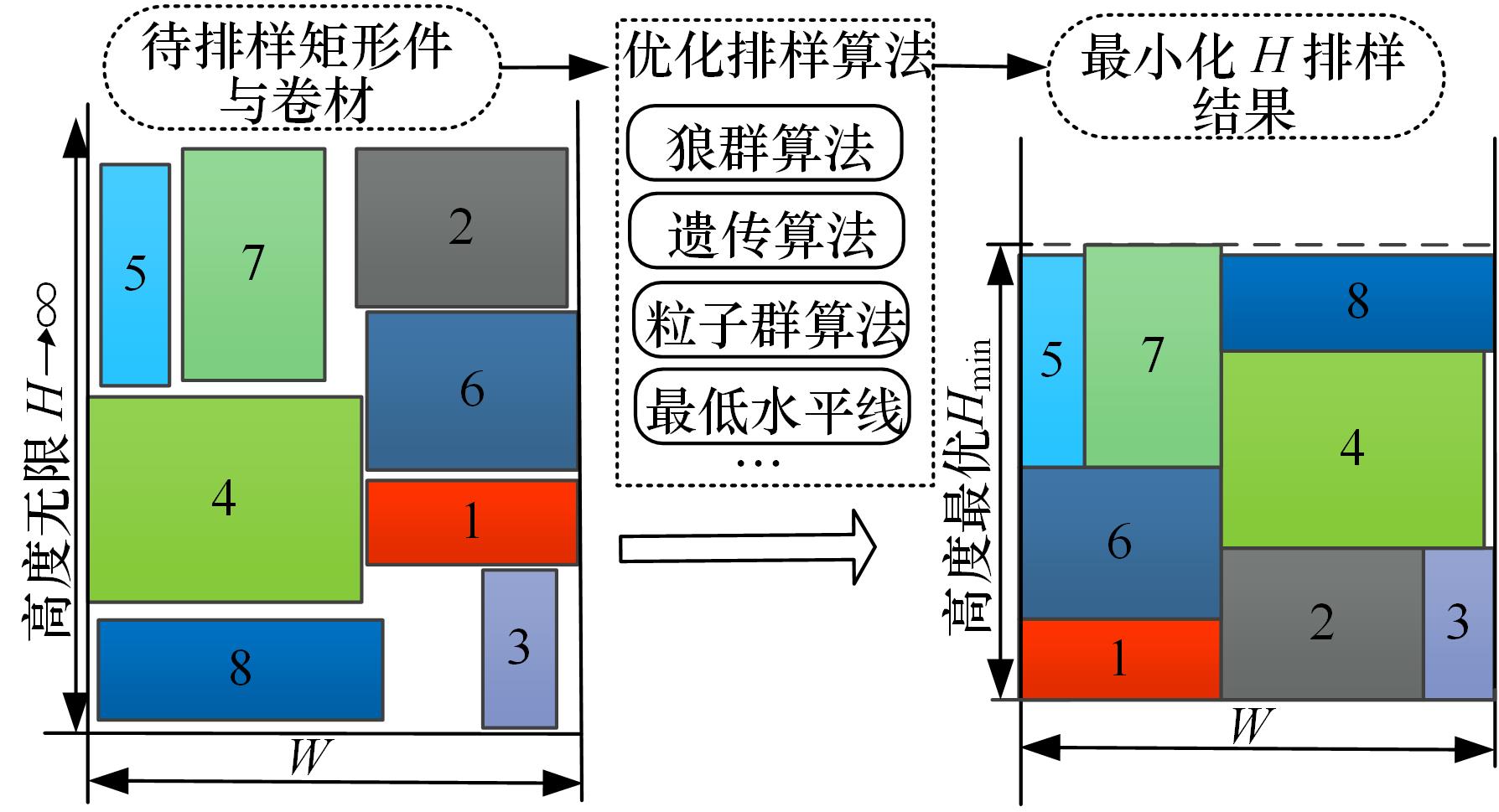
图1 矩形件在卷材上的排样
Fig.1 Rectangular parts layout diagram
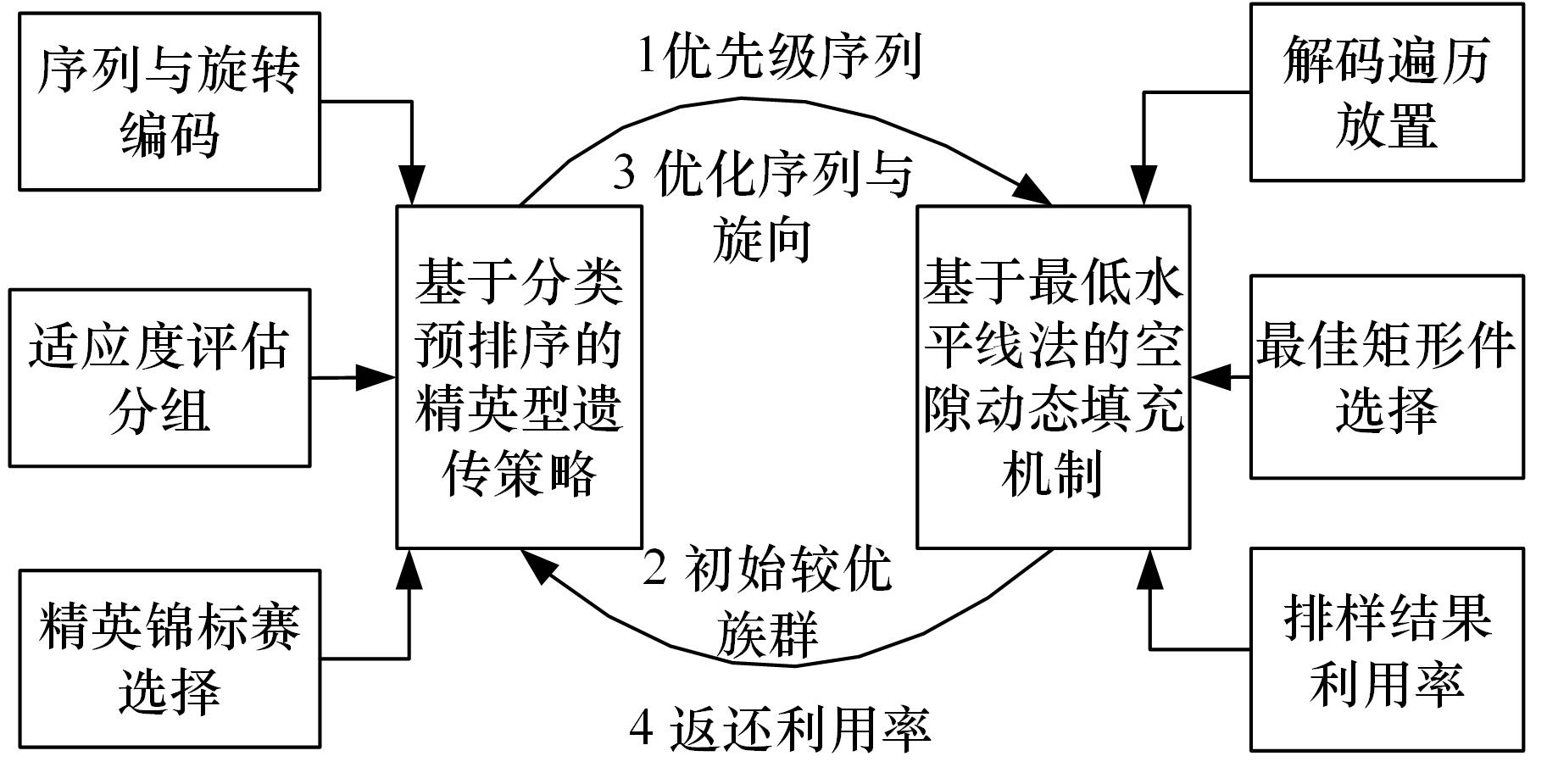
图2 EPI-HGA和LS-OGF交互关系
Fig.2 Interaction between EPI-HGA and LS-OGF
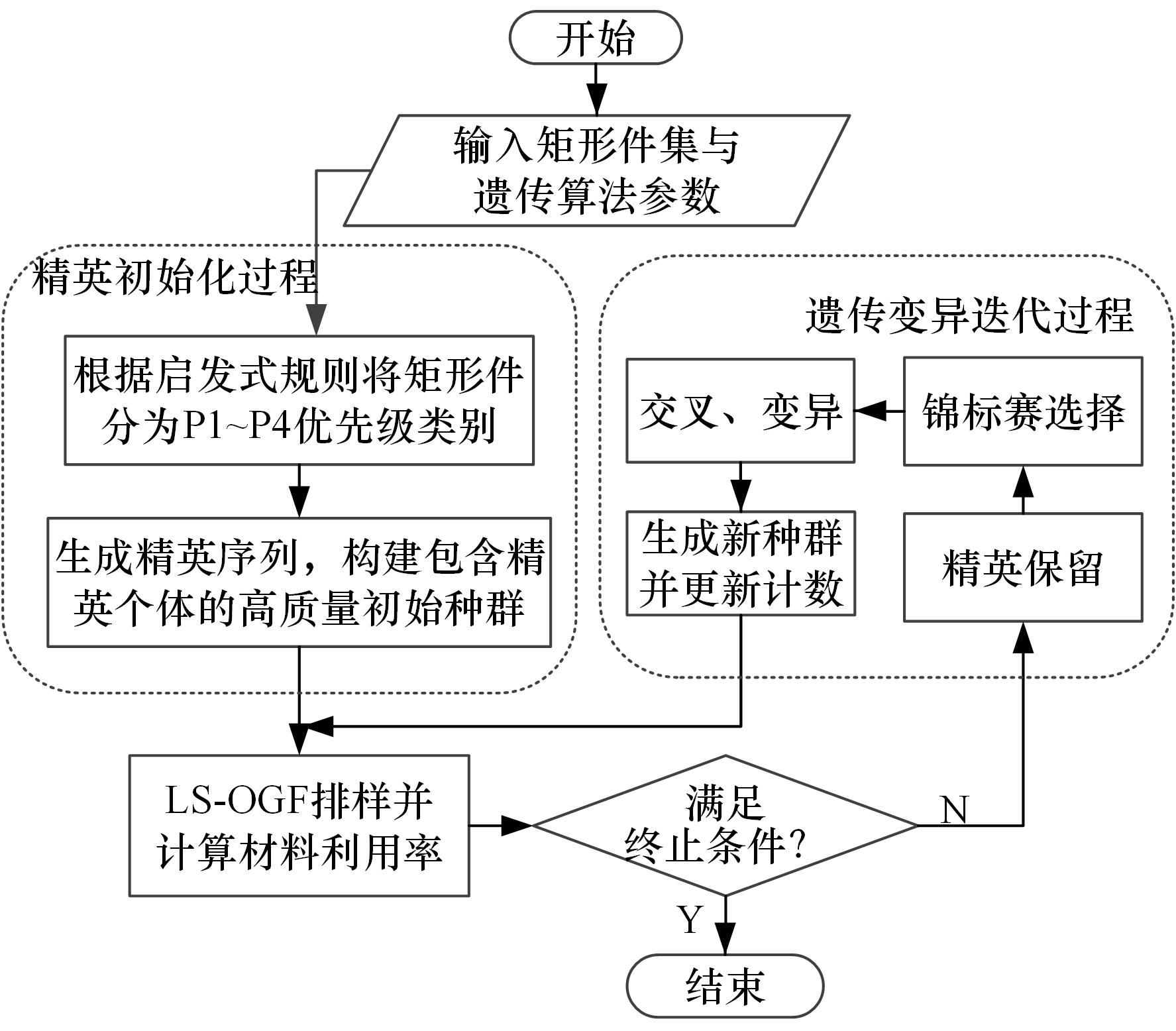
图3 基于分类预排序的精英型遗传策略流程
Fig.3 Elite genetic strategy based on classification pre-ranking
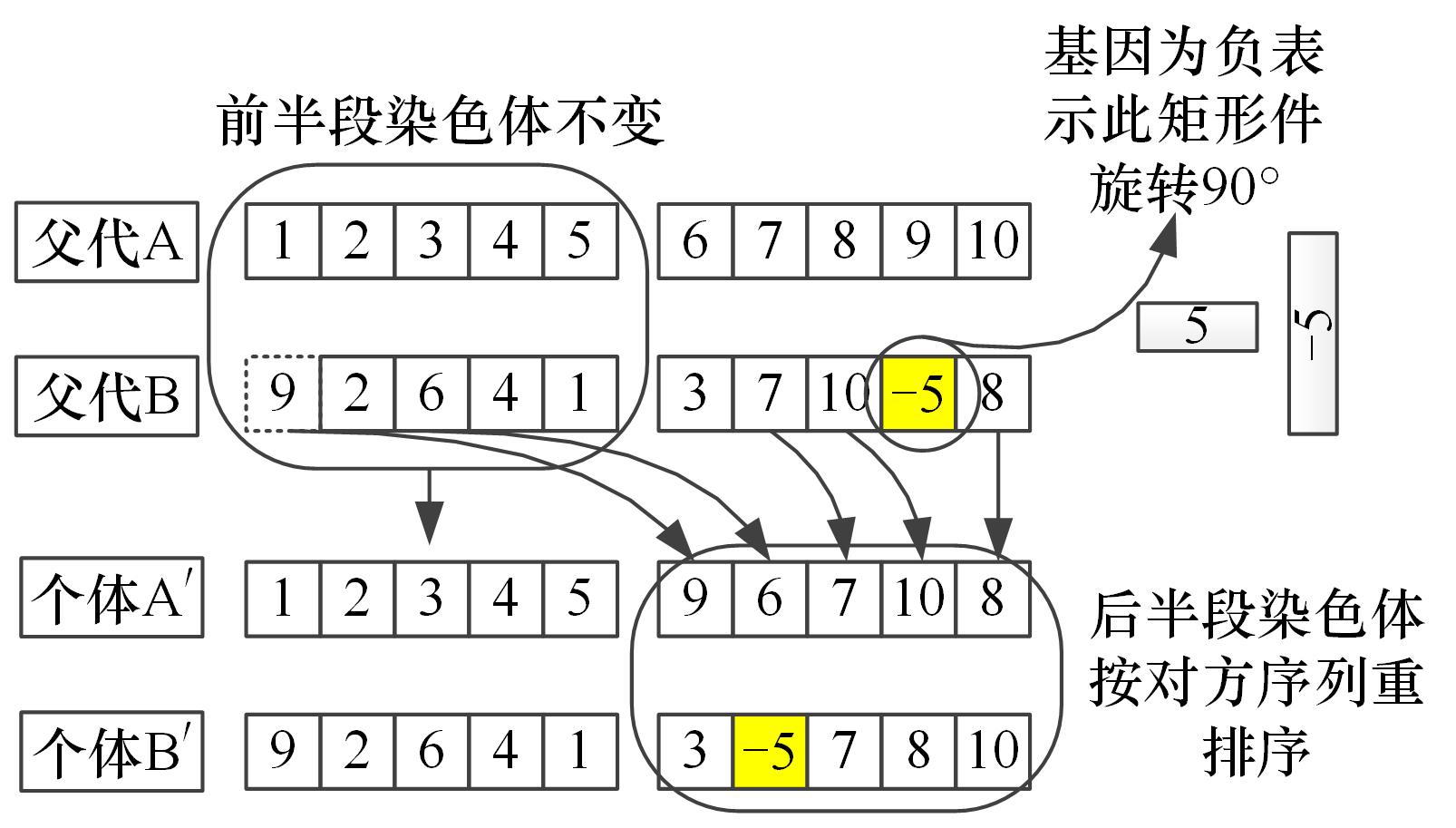
图4 个体十进制编码及其交叉遗传示意图
Fig.4 Individual decimal coding and its cross-genetic schematic
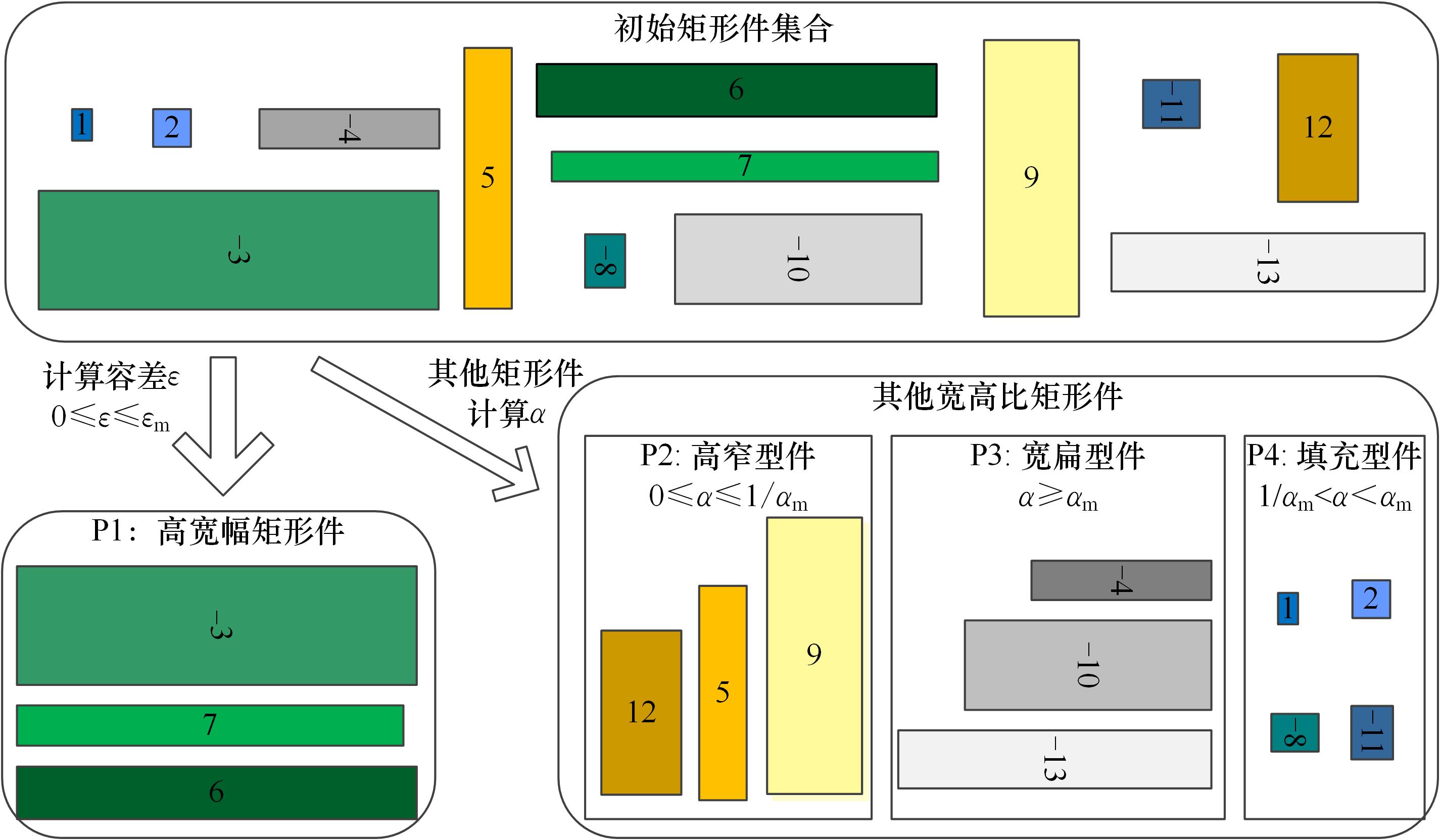
图5 空隙动态填充示意图
Fig.5 Rectangular part classification diagram
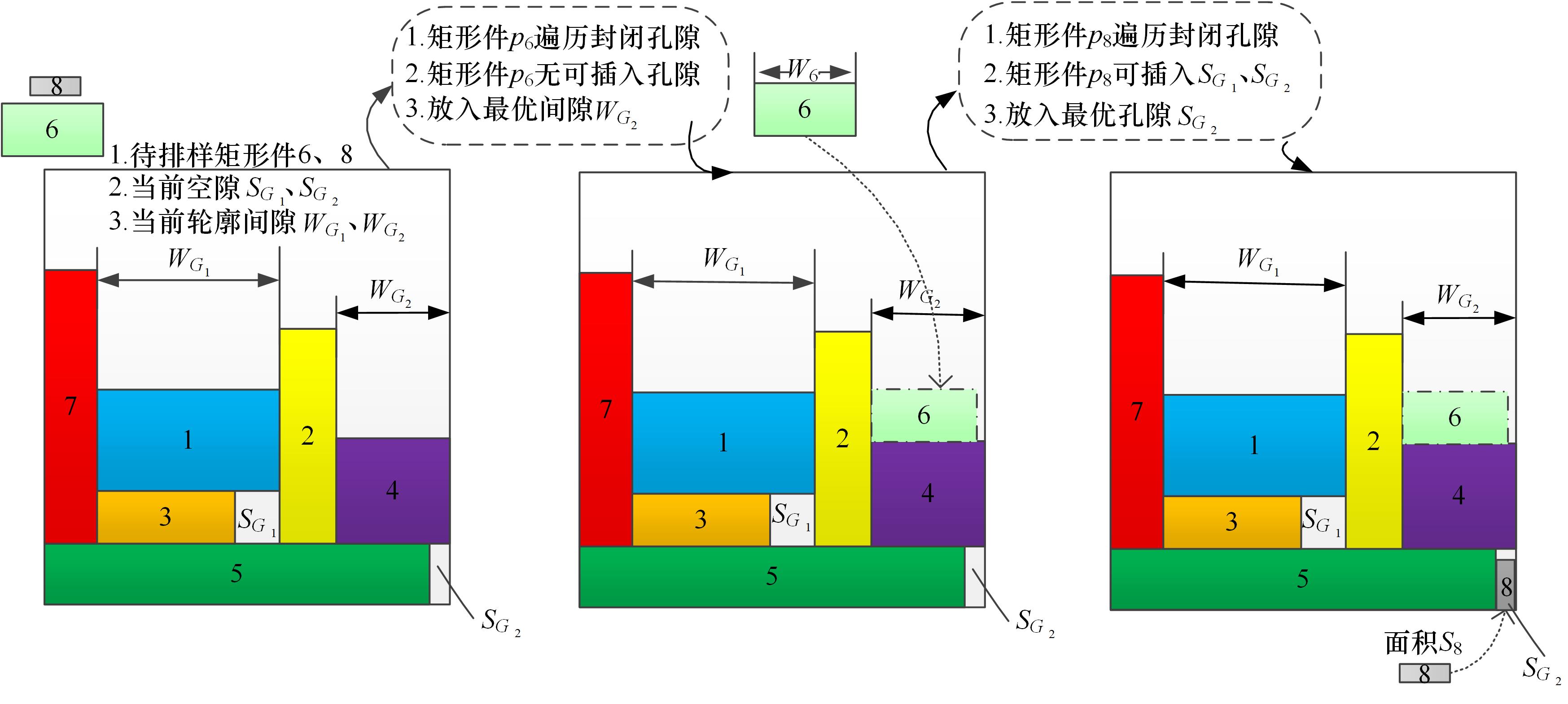
图6 空隙动态填充示意图
Fig.6 Schematic diagram of dynamic gap-filling
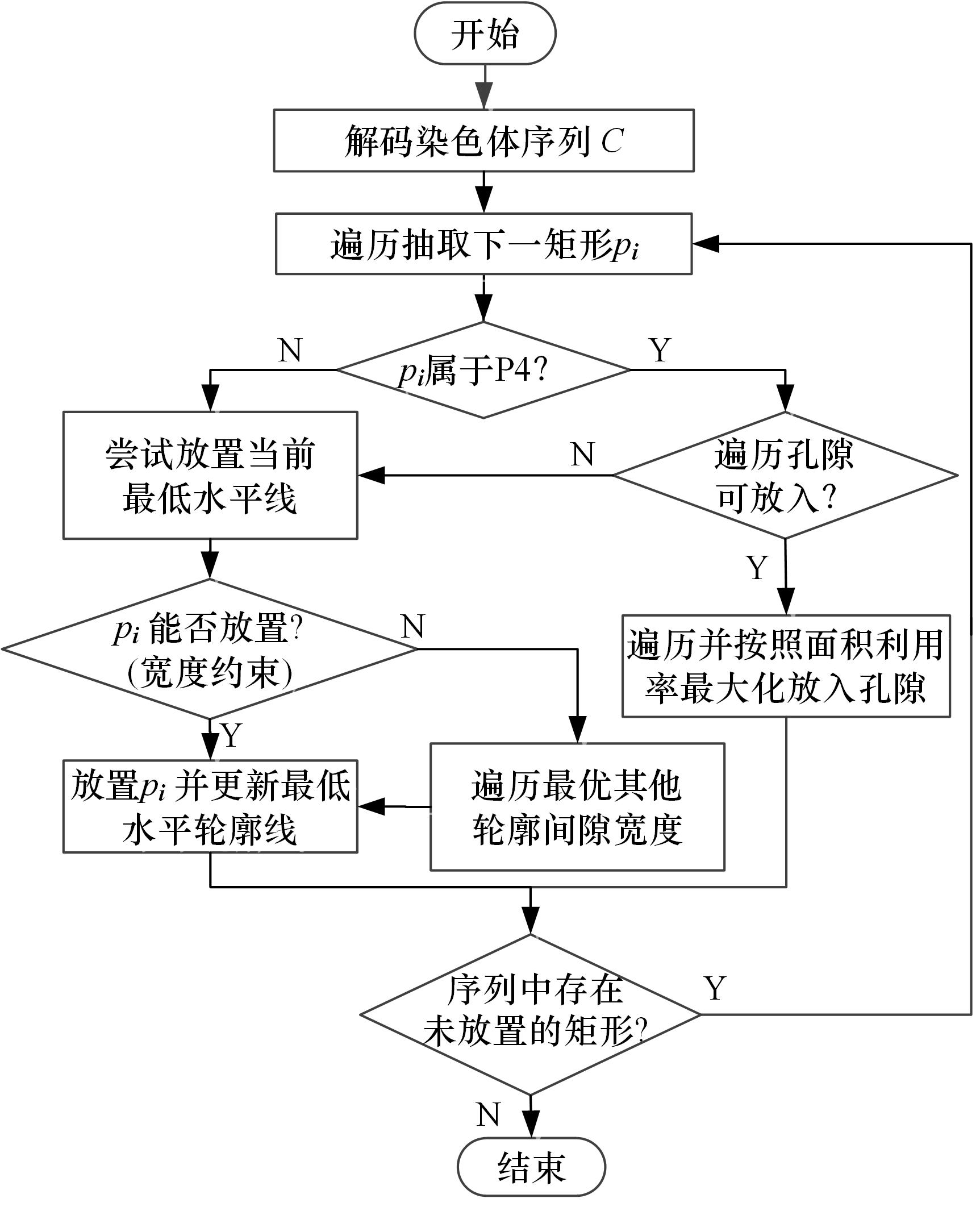
图7 空隙动态填充实现工作流程图
Fig.7 Workflow diagram for dynamic gap-filling
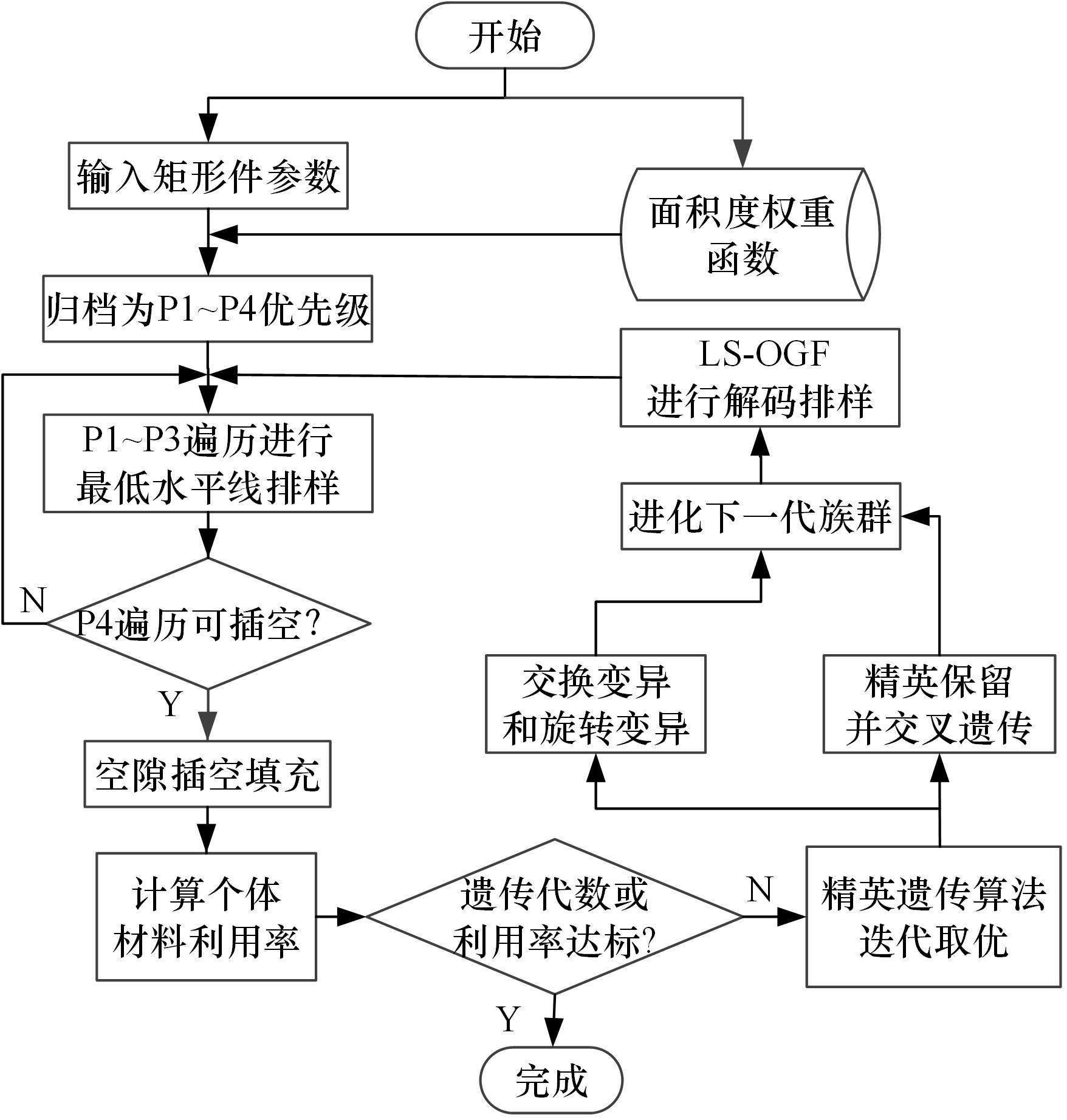
图8 排样方法总体框架
Fig.8 Overall framework of layout method
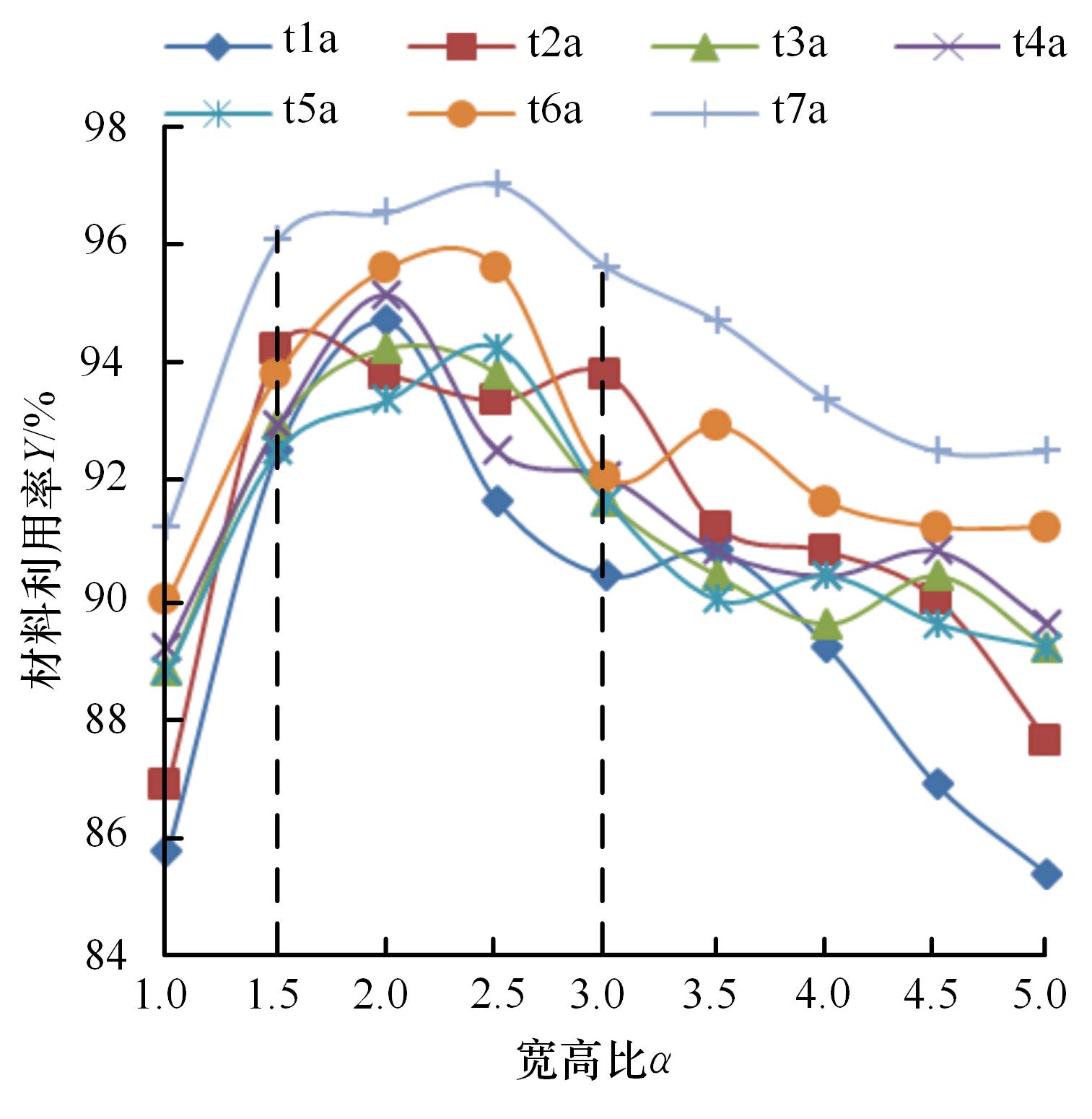
图9 α搜索范围内材料利用率对比
Fig.9 Comparison chart of nesting utilization within α search range
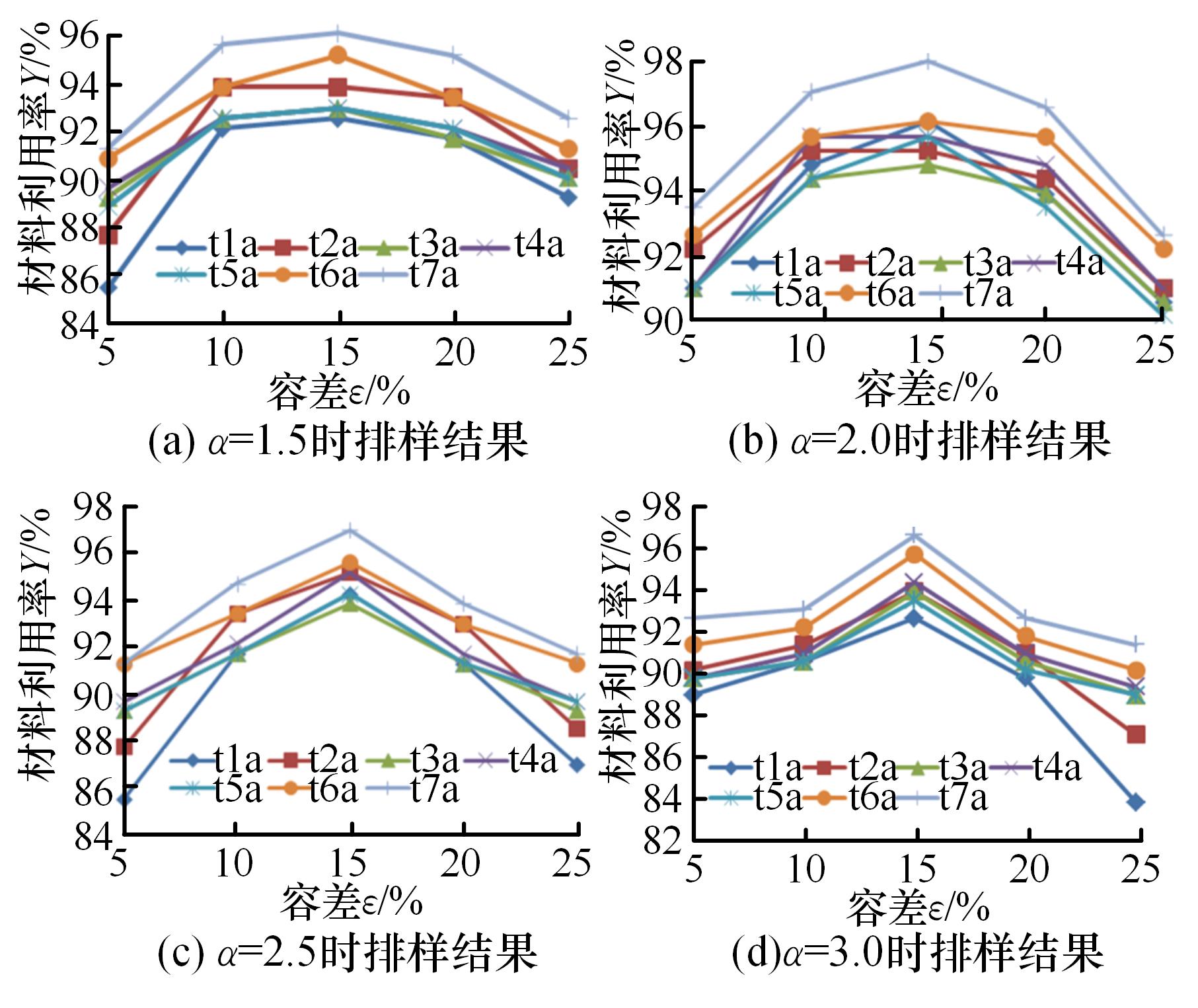
图10 ε搜索范围内排样利用率对比
Fig.10 Comparison chart of nesting utilization within ε search range
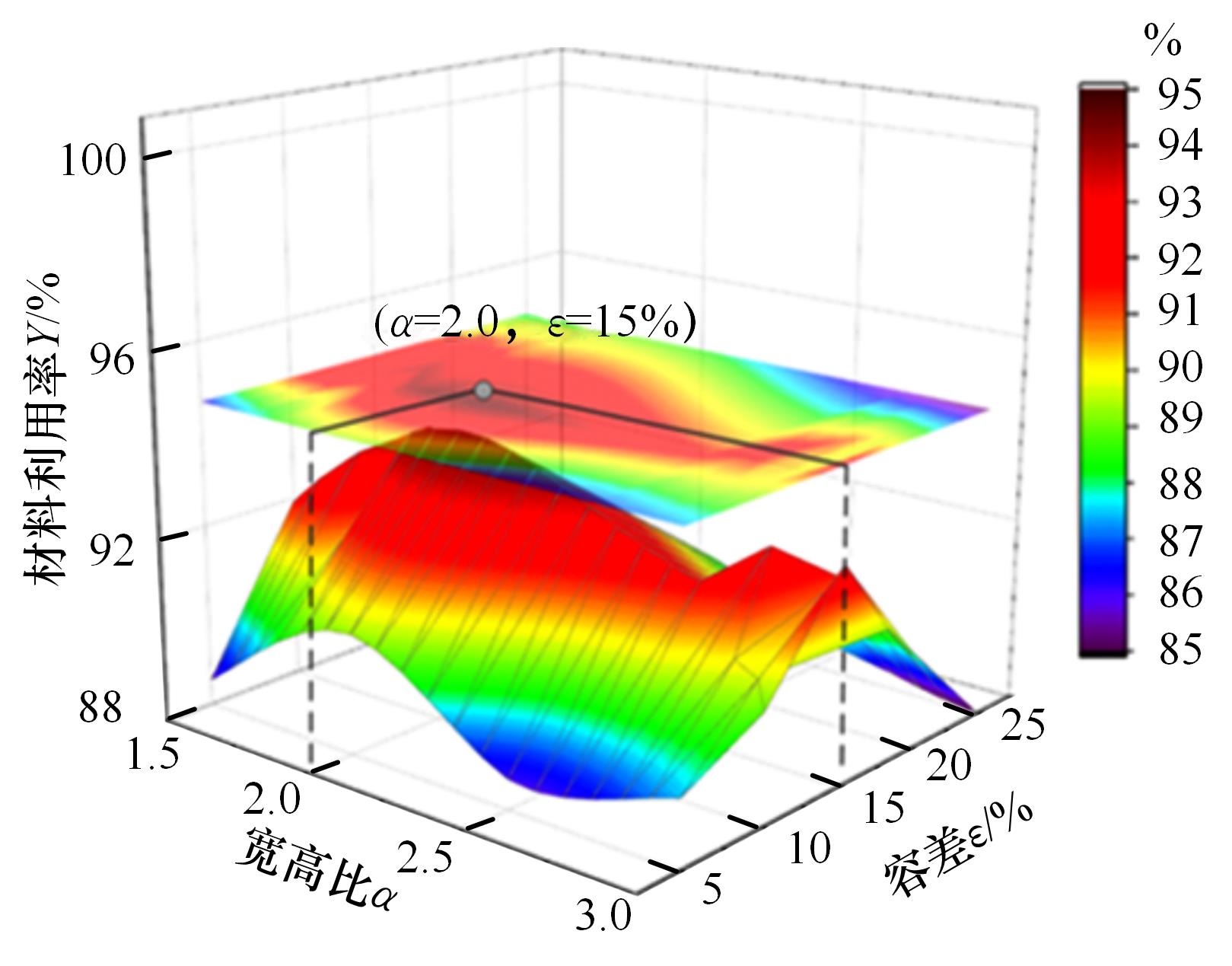
图11 平均材料利用率和(α, ε)组合的关联关系
Fig.11 Correlation between average layout utilization and (α, ε) combinations
| 编号 | n | W | H最优 | 相对误差δ/% | ||||
|---|---|---|---|---|---|---|---|---|
| SR-DM | PSO-BL | GWO-BL | Cut-OP | EGGF | ||||
| N1 | 10 | 40 | 40 | 15.00 | 10.00 | 10.00 | 0 | 0 |
| N2 | 20 | 30 | 50 | 24.00 | 12.00 | 6.00 | 4.00 | 2.00 |
| N3 | 30 | 30 | 50 | 24.00 | 10.00 | 8.00 | 4.00 | 2.00 |
| N4 | 40 | 80 | 80 | 15.00 | 11.25 | 6.25 | 5.00 | 3.75 |
| C1P1 | 16 | 20 | 20 | 25.00 | 10.00 | 15.00 | 0 | 0 |
| C1P2 | 17 | 20 | 20 | 30.00 | 20.00 | 15.00 | 10.00 | 5.00 |
| C1P3 | 16 | 20 | 20 | 15.00 | 25.00 | 15.00 | 10.00 | 5.00 |
| C2P1 | 25 | 40 | 15 | 20.00 | 20.00 | 20.00 | 6.67 | 6.67 |
| C2P2 | 25 | 40 | 15 | 20.00 | 20.00 | 13.33 | 6.67 | 6.67 |
| C2P3 | 25 | 40 | 15 | 0 | 26.67 | 20.00 | 13.33 | 6.67 |
| t4a | 49 | 200 | 200 | 54.00 | 6.50 | 11.50 | 3.50 | 4.00 |
| t4b | 49 | 200 | 200 | 24.50 | 7.00 | 10.00 | 3.00 | 4.00 |
| t4c | 49 | 200 | 200 | 70.00 | 11.50 | 10.50 | 3.00 | 3.50 |
| t4d | 49 | 200 | 200 | 65.50 | 6.50 | 12.50 | 1.50 | 3.50 |
| t4e | 49 | 200 | 200 | 34.50 | 9.00 | 11.50 | 3.00 | 5.00 |
| 小规模算例平均相对误差 | 29.10 | 13.69 | 12.31 | 4.91 | 3.85 | |||
表1 小规模算例对比
Tab.1 Comparison of small-scale examples
| 编号 | n | W | H最优 | 相对误差δ/% | ||||
|---|---|---|---|---|---|---|---|---|
| SR-DM | PSO-BL | GWO-BL | Cut-OP | EGGF | ||||
| N1 | 10 | 40 | 40 | 15.00 | 10.00 | 10.00 | 0 | 0 |
| N2 | 20 | 30 | 50 | 24.00 | 12.00 | 6.00 | 4.00 | 2.00 |
| N3 | 30 | 30 | 50 | 24.00 | 10.00 | 8.00 | 4.00 | 2.00 |
| N4 | 40 | 80 | 80 | 15.00 | 11.25 | 6.25 | 5.00 | 3.75 |
| C1P1 | 16 | 20 | 20 | 25.00 | 10.00 | 15.00 | 0 | 0 |
| C1P2 | 17 | 20 | 20 | 30.00 | 20.00 | 15.00 | 10.00 | 5.00 |
| C1P3 | 16 | 20 | 20 | 15.00 | 25.00 | 15.00 | 10.00 | 5.00 |
| C2P1 | 25 | 40 | 15 | 20.00 | 20.00 | 20.00 | 6.67 | 6.67 |
| C2P2 | 25 | 40 | 15 | 20.00 | 20.00 | 13.33 | 6.67 | 6.67 |
| C2P3 | 25 | 40 | 15 | 0 | 26.67 | 20.00 | 13.33 | 6.67 |
| t4a | 49 | 200 | 200 | 54.00 | 6.50 | 11.50 | 3.50 | 4.00 |
| t4b | 49 | 200 | 200 | 24.50 | 7.00 | 10.00 | 3.00 | 4.00 |
| t4c | 49 | 200 | 200 | 70.00 | 11.50 | 10.50 | 3.00 | 3.50 |
| t4d | 49 | 200 | 200 | 65.50 | 6.50 | 12.50 | 1.50 | 3.50 |
| t4e | 49 | 200 | 200 | 34.50 | 9.00 | 11.50 | 3.00 | 5.00 |
| 小规模算例平均相对误差 | 29.10 | 13.69 | 12.31 | 4.91 | 3.85 | |||
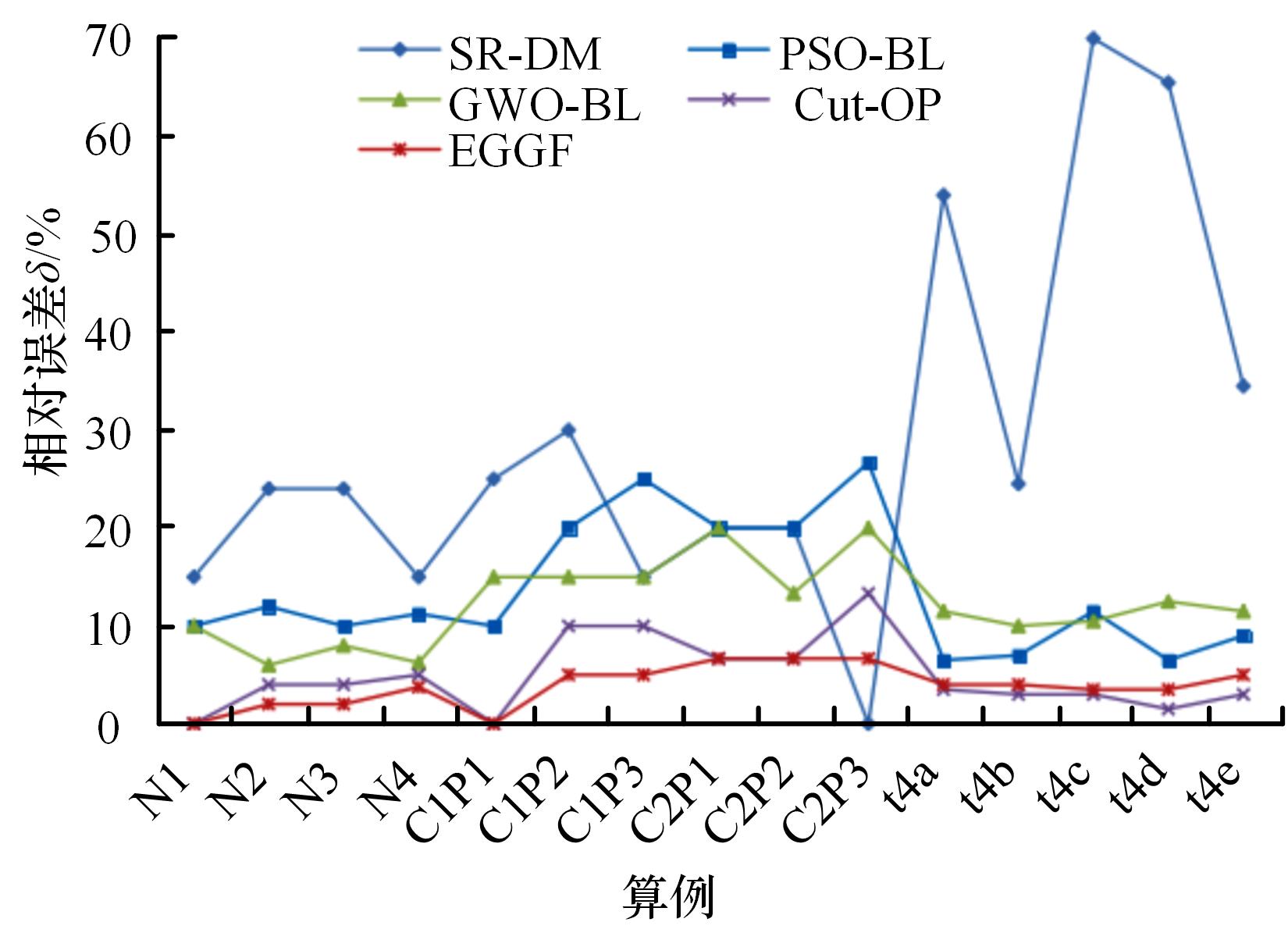
图12 小规模算例相对误差对比曲线
Fig.12 Comparison curve of relative errors for small-scale test cases
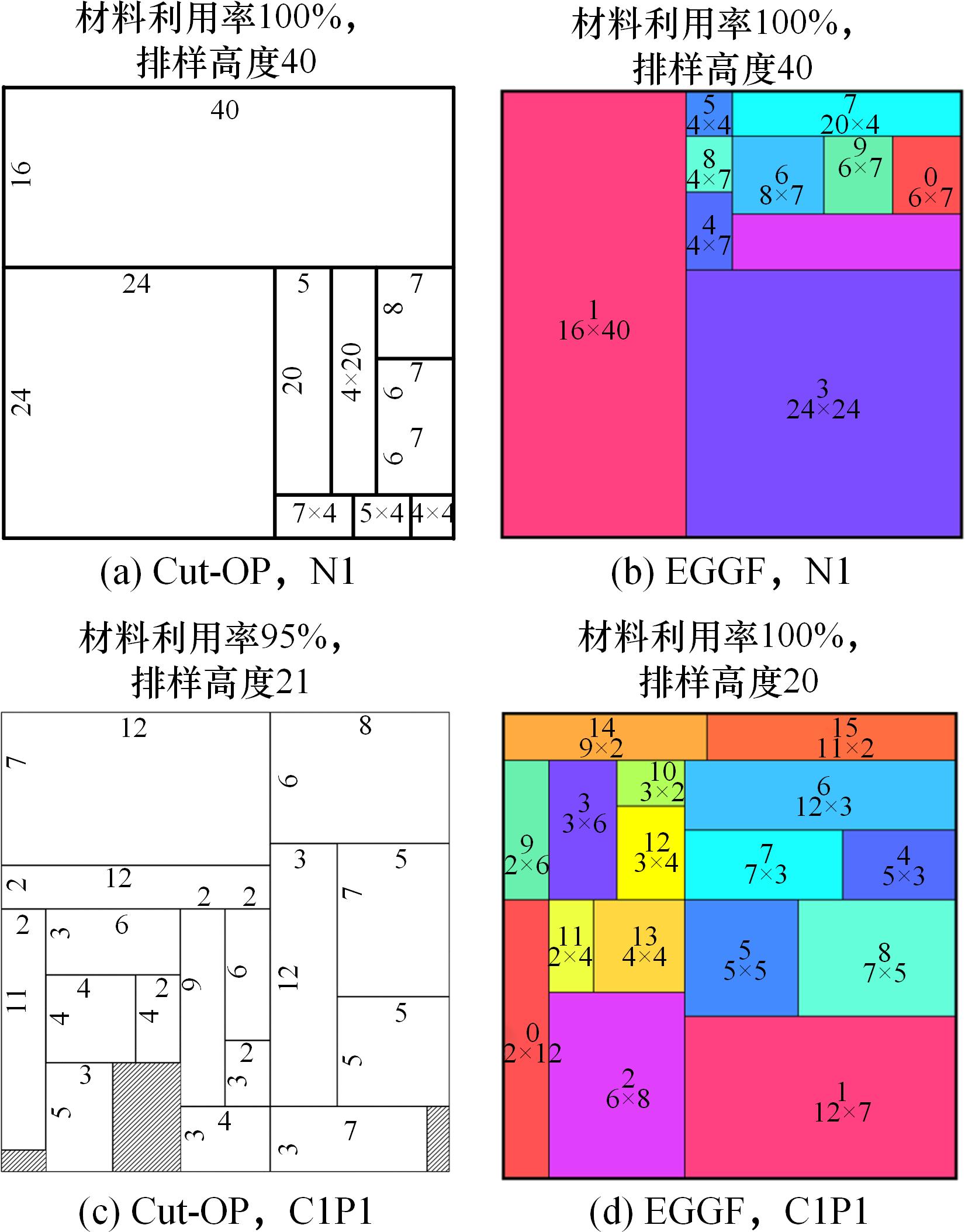
图13 小规模算例的排样方案结果对比
Fig.13 Comparison of layout plan results for small-scale nesting
| 编号 | n | W | H最优 | 相对误差δ/% | ||||
|---|---|---|---|---|---|---|---|---|
| SR-DM | PSO-BL | GWO-BL | Cut-OP | EGGF | ||||
| N5 | 50 | 100 | 100 | 12.00 | 21.00 | 4.00 | 4.00 | 3.00 |
| N6 | 60 | 50 | 100 | 21.00 | 12.00 | 7.00 | 3.00 | 2.00 |
| N7 | 70 | 80 | 100 | 34.00 | 14.00 | 7.00 | 4.00 | 4.00 |
| N8 | 80 | 100 | 80 | 10.00 | 8.75 | 10.00 | 2.50 | 2.50 |
| C5P1 | 73 | 60 | 90 | 5.56 | 8.89 | 6.67 | 4.44 | 2.22 |
| C5P2 | 73 | 60 | 90 | 7.78 | 14.44 | 8.89 | 4.44 | 3.33 |
| C5P3 | 73 | 60 | 90 | 7.78 | 13.33 | 11.11 | 5.56 | 2.22 |
| C6P1 | 97 | 80 | 120 | 10.00 | 7.50 | 10.00 | 2.50 | 2.50 |
| C6P2 | 97 | 80 | 120 | 10.83 | 11.67 | 8.33 | 1.67 | 4.17 |
| C6P3 | 97 | 80 | 120 | 11.67 | 8.33 | 6.67 | 3.33 | 2.50 |
| t5a | 73 | 200 | 200 | 73.00 | 8.00 | 7.50 | 3.00 | 4.50 |
| t5b | 73 | 200 | 200 | 80.00 | 7.00 | 7.50 | 2.00 | 4.50 |
| t5c | 73 | 200 | 200 | 40.50 | 8.00 | 9.00 | 2.00 | 4.50 |
| t5d | 73 | 200 | 200 | 46.50 | 10.00 | 8.00 | 2.50 | 5.00 |
| t5e | 73 | 200 | 200 | 97.00 | 7.50 | 11.50 | 3.00 | 3.00 |
| 中规模算例平均相对误差 | 31.17 | 10.69 | 8.21 | 3.20 | 3.33 | |||
表2 中规模算例对比
Tab.2 Comparison of medium-scale examples
| 编号 | n | W | H最优 | 相对误差δ/% | ||||
|---|---|---|---|---|---|---|---|---|
| SR-DM | PSO-BL | GWO-BL | Cut-OP | EGGF | ||||
| N5 | 50 | 100 | 100 | 12.00 | 21.00 | 4.00 | 4.00 | 3.00 |
| N6 | 60 | 50 | 100 | 21.00 | 12.00 | 7.00 | 3.00 | 2.00 |
| N7 | 70 | 80 | 100 | 34.00 | 14.00 | 7.00 | 4.00 | 4.00 |
| N8 | 80 | 100 | 80 | 10.00 | 8.75 | 10.00 | 2.50 | 2.50 |
| C5P1 | 73 | 60 | 90 | 5.56 | 8.89 | 6.67 | 4.44 | 2.22 |
| C5P2 | 73 | 60 | 90 | 7.78 | 14.44 | 8.89 | 4.44 | 3.33 |
| C5P3 | 73 | 60 | 90 | 7.78 | 13.33 | 11.11 | 5.56 | 2.22 |
| C6P1 | 97 | 80 | 120 | 10.00 | 7.50 | 10.00 | 2.50 | 2.50 |
| C6P2 | 97 | 80 | 120 | 10.83 | 11.67 | 8.33 | 1.67 | 4.17 |
| C6P3 | 97 | 80 | 120 | 11.67 | 8.33 | 6.67 | 3.33 | 2.50 |
| t5a | 73 | 200 | 200 | 73.00 | 8.00 | 7.50 | 3.00 | 4.50 |
| t5b | 73 | 200 | 200 | 80.00 | 7.00 | 7.50 | 2.00 | 4.50 |
| t5c | 73 | 200 | 200 | 40.50 | 8.00 | 9.00 | 2.00 | 4.50 |
| t5d | 73 | 200 | 200 | 46.50 | 10.00 | 8.00 | 2.50 | 5.00 |
| t5e | 73 | 200 | 200 | 97.00 | 7.50 | 11.50 | 3.00 | 3.00 |
| 中规模算例平均相对误差 | 31.17 | 10.69 | 8.21 | 3.20 | 3.33 | |||
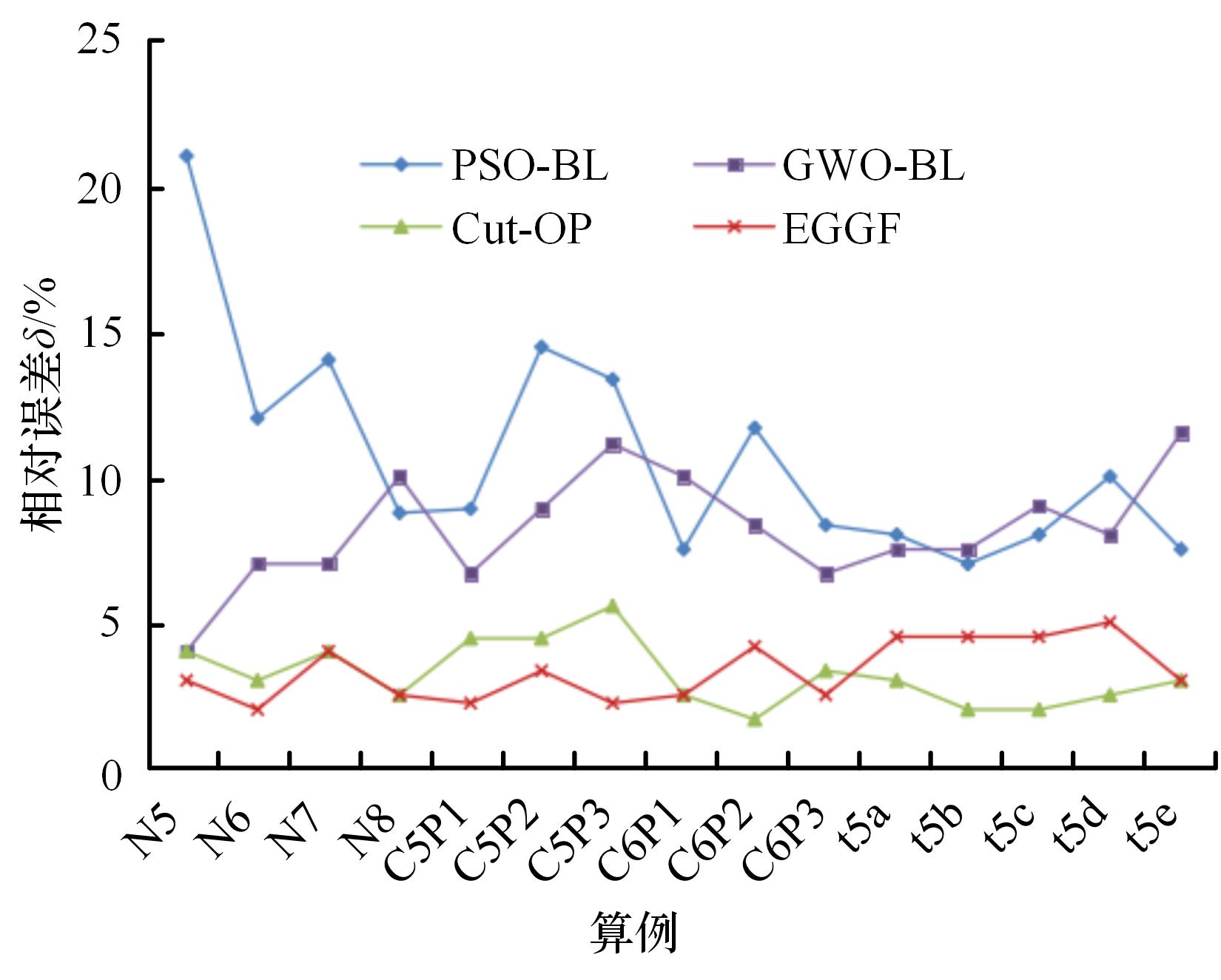
图14 中规模算例相对误差对比曲线
Fig.14 Comparison curve of relative errors for medium-scale test cases
| 编号 | n | W | H最优 | 相对误差δ/% | ||||
|---|---|---|---|---|---|---|---|---|
| SR-DM | PSO-BL | GWO-BL | Cut-OP | EGGF | ||||
| N9 | 100 | 50 | 150 | 18.00 | 9.33 | 6.67 | 2.00 | 0.67 |
| N10 | 200 | 70 | 150 | 8.00 | 8.00 | 5.33 | 2.00 | 0.67 |
| C7P1 | 196 | 160 | 240 | 5.83 | 10.00 | 5.00 | 1.67 | 2.08 |
| C7P2 | 197 | 160 | 240 | 10.00 | 8.33 | 5.83 | 2.50 | 1.67 |
| C7P3 | 196 | 160 | 240 | 8.33 | 6.25 | 3.33 | 1.67 | 1.67 |
| t7a | 197 | 200 | 200 | 63.00 | 11.50 | 4.00 | 1.50 | 2.00 |
| t7b | 199 | 200 | 200 | 48.50 | 10.50 | 4.00 | 2.00 | 2.50 |
| t7c | 199 | 200 | 200 | 47.50 | 9.00 | 6.00 | 3.00 | 3.00 |
| t7d | 199 | 200 | 200 | 32.50 | 7.50 | 7.00 | 2.00 | 1.50 |
| t7e | 199 | 200 | 200 | 79.00 | 4.50 | 5.50 | 2.50 | 2.50 |
| 大规模算例平均相对误差 | 32.07 | 8.49 | 5.27 | 2.08 | 1.83 | |||
表3 大规模算例对比
Tab.3 Comparison of large-scale examples
| 编号 | n | W | H最优 | 相对误差δ/% | ||||
|---|---|---|---|---|---|---|---|---|
| SR-DM | PSO-BL | GWO-BL | Cut-OP | EGGF | ||||
| N9 | 100 | 50 | 150 | 18.00 | 9.33 | 6.67 | 2.00 | 0.67 |
| N10 | 200 | 70 | 150 | 8.00 | 8.00 | 5.33 | 2.00 | 0.67 |
| C7P1 | 196 | 160 | 240 | 5.83 | 10.00 | 5.00 | 1.67 | 2.08 |
| C7P2 | 197 | 160 | 240 | 10.00 | 8.33 | 5.83 | 2.50 | 1.67 |
| C7P3 | 196 | 160 | 240 | 8.33 | 6.25 | 3.33 | 1.67 | 1.67 |
| t7a | 197 | 200 | 200 | 63.00 | 11.50 | 4.00 | 1.50 | 2.00 |
| t7b | 199 | 200 | 200 | 48.50 | 10.50 | 4.00 | 2.00 | 2.50 |
| t7c | 199 | 200 | 200 | 47.50 | 9.00 | 6.00 | 3.00 | 3.00 |
| t7d | 199 | 200 | 200 | 32.50 | 7.50 | 7.00 | 2.00 | 1.50 |
| t7e | 199 | 200 | 200 | 79.00 | 4.50 | 5.50 | 2.50 | 2.50 |
| 大规模算例平均相对误差 | 32.07 | 8.49 | 5.27 | 2.08 | 1.83 | |||
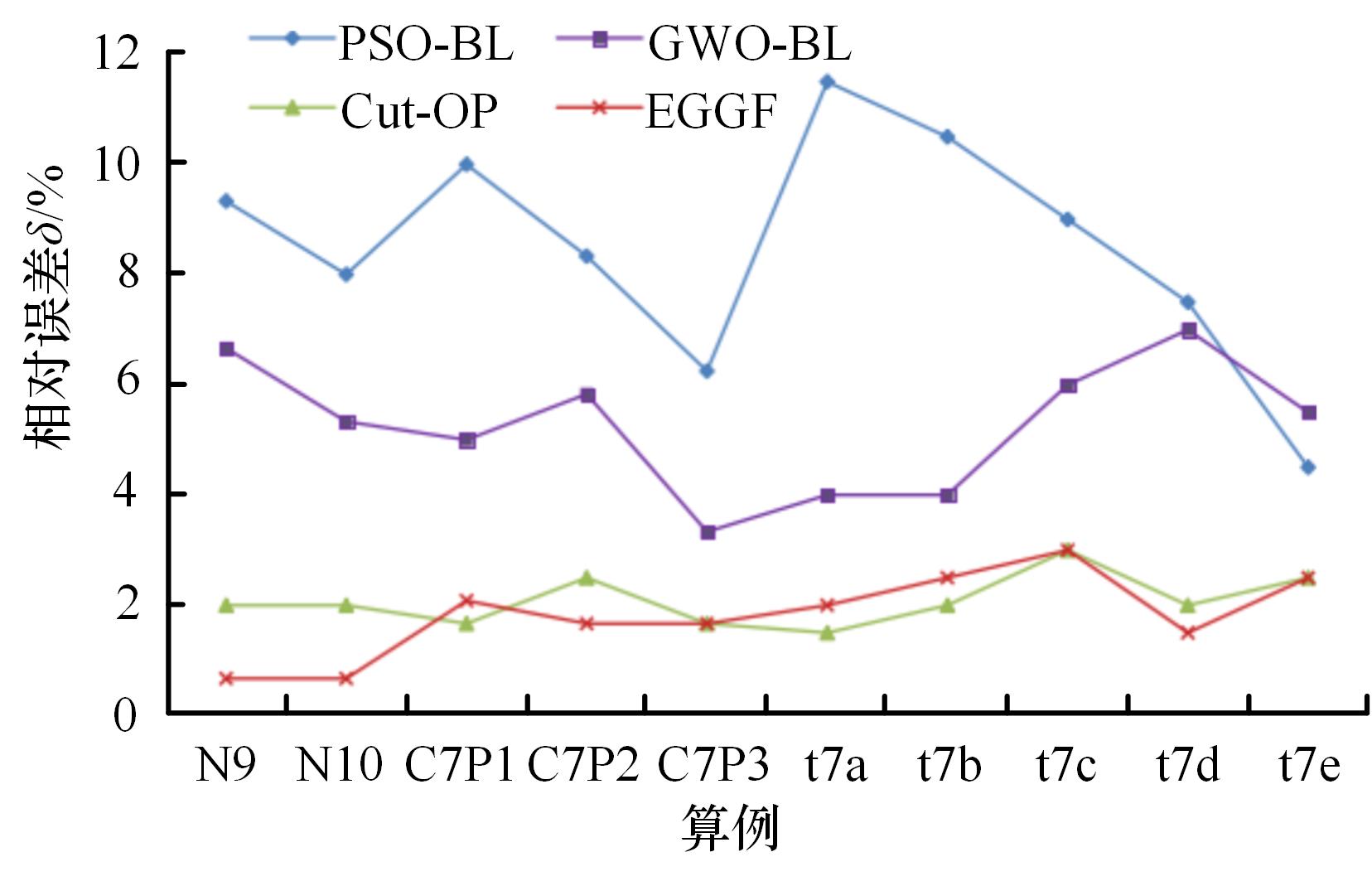
图15 大规模算例相对误差对比曲线
Fig.15 Comparison curve of relative errors for large-scale test cases
| 编号 | 长度/mm | 宽度/mm | 数量 |
|---|---|---|---|
| 1 | 900 | 400 | 15 |
| 2 | 680 | 400 | 8 |
| 3 | 320 | 240 | 8 |
| 4 | 400 | 320 | 22 |
表4 案例1的排样零件数据表
Tab.4 Data sheet of layout parts for instance 1
| 编号 | 长度/mm | 宽度/mm | 数量 |
|---|---|---|---|
| 1 | 900 | 400 | 15 |
| 2 | 680 | 400 | 8 |
| 3 | 320 | 240 | 8 |
| 4 | 400 | 320 | 22 |
| 编号 | 长度/mm | 宽度/mm | 数量 |
|---|---|---|---|
| 1 | 557 | 395 | 30 |
| 2 | 1124 | 420 | 20 |
| 3 | 984 | 338 | 28 |
| 4 | 557 | 520 | 30 |
| 5 | 515 | 400 | 40 |
| 6 | 347 | 97 | 57 |
| 7 | 515 | 100 | 50 |
表5 案例2的排样零件数据表
Tab.5 Data sheet of layout parts for instance 2
| 编号 | 长度/mm | 宽度/mm | 数量 |
|---|---|---|---|
| 1 | 557 | 395 | 30 |
| 2 | 1124 | 420 | 20 |
| 3 | 984 | 338 | 28 |
| 4 | 557 | 520 | 30 |
| 5 | 515 | 400 | 40 |
| 6 | 347 | 97 | 57 |
| 7 | 515 | 100 | 50 |
| 案例 | n | W/ mm | 材料利用率Y/% | |||
|---|---|---|---|---|---|---|
| PSO-BL | GWO-BL | Cut-OP | EGGF | |||
| 案例1 | 53 | 1220 | 96.18 | 93.39 | 97.21 | 97.85 |
| 案例2 | 255 | 2440 | 88.31 | 88.47 | 95.44 | 96.06 |
| 平均材料利用率 | 92.25 | 90.93 | 96.33 | 96.96 | ||
表6 真实生产案例对比
Tab.6 Comparison of Production Examples
| 案例 | n | W/ mm | 材料利用率Y/% | |||
|---|---|---|---|---|---|---|
| PSO-BL | GWO-BL | Cut-OP | EGGF | |||
| 案例1 | 53 | 1220 | 96.18 | 93.39 | 97.21 | 97.85 |
| 案例2 | 255 | 2440 | 88.31 | 88.47 | 95.44 | 96.06 |
| 平均材料利用率 | 92.25 | 90.93 | 96.33 | 96.96 | ||
| [1] | 吴电建, 张三强, 杨光友. 复杂下料工艺约束下的二维不规则零件优化排样方法[J]. 中国机械工程, 2023, 34(21): 2615-2621. |
| WU Dianjian, ZHANG Sanqiang, YANG Guangyou. Optimal Layout Method of 2D Irregular Parts under Complex Cutting Process Constraints[J]. China Mechanical Engineering, 2023, 34(21): 2615-2621. | |
| [2] | 韩伟, 张子成. 基于模拟退火的贯通约束不规则排样[J]. 中国机械工程, 2016, 27(24): 3326-3331. |
| HAN Wei, ZHANG Zicheng. A Simulated Annealing Algorithm for Irregular Guillotine Packing Problems[J]. China Mechanical Engineering, 2016, 27(24): 3326-3331. | |
| [3] | 王淑青, 陈军, 潘健, 等. 基于最小包络矩形的不规则凸多边形的三角形处理算法[J]. 计算机应用与软件, 2016, 33(11): 197-199. |
| WANG Shuqing, CHEN Jun, PAN Jian, et al. A Triangle Processing Algorithm for Irregular Convex Polygon Based on Smallest Envelope Rectangle[J]. Computer Applications and Software, 2016, 33(11): 197-199. | |
| [4] | 汤德佑, 周子琳. 基于临界多边形的不规则件启发式排样算法[J]. 计算机应用, 2016, 36(9): 2540-2544. |
| TANG Deyou, ZHOU Zilin. No-fit-polygon-based Heuristic Nesting Algorithm for Irregular Shapes[J]. Journal of Computer Applications, 2016, 36(9): 2540-2544. | |
| [5] | 罗立宏, 冯开平, 叶家玮. 基于图像的2维板件排样方案评价方法研究[J]. 四川大学学报(工程科学版), 2013, 45(6): 162-169. |
| LUO Lihong, FENG Kaiping, YE Jiawei. Research of Layout Estimating Method of 2-D Parts Packing Based on Image[J]. Journal of Sichuan University (Engineering Science Edition), 2013, 45(6): 162-169. | |
| [6] | VERSTICHEL J, de CAUSMAECKER P, VANDEN BERGHE G. An Improved Best-fit Heuristic for the Orthogonal Strip Packing Problem[J]. International Transactions in Operational Research, 2013, 20(5): 711-730. |
| [7] | 董德威, 颜云辉, 张尧, 等. 矩形件优化排样的自适应遗传模拟退火算法[J]. 中国机械工程, 2013, 24(18): 2499-2504. |
| DONG Dewei, YAN Yunhui, ZHANG Yao, et al. Adaptive Genetic Simulated Annealing Algorithm in Optimal Layout of Rectangular Parts[J]. China Mechanical Engineering, 2013, 24(18): 2499-2504. | |
| [8] | 罗强, 李世红, 袁跃兰, 等. 基于复合评价因子的改进遗传算法求解矩形件排样问题[J]. 锻压技术, 2018, 43(2): 172-181. |
| LUO Qiang, LI Shihong, YUAN Yuelan, et al. Rectangular Workpiece Nesting Based on an Improved Genetic Algorithm of Composite Evaluation Factor[J]. Forging & Stamping Technology, 2018, 43(2): 172-181. | |
| [9] | 张新华. 基于强化学习和蚁群算法的协同依赖多任务网格集群调度[J]. 长沙大学学报, 2016, 30(2): 50-53. |
| ZHANG Xinhua. Grid Cluster Cooperative Dependent Multi Task Scheduling Method Based on Reinforcement Learning and Ant Colony Algorithm[J]. Journal of Changsha University, 2016, 30(2): 50-53. | |
| [10] | LEUNG S C H, ZHANG D, SIM K M. A Two-stage Intelligent Search Algorithm for the Two-dimensional Strip Packing Problem[J]. European Journal of Operational Research, 2011, 215(1): 57-69. |
| [11] | HOPPER E. Two-dimensional Packing Utilising Evolutionary Algorithms and Other Meta-heuristic Methods[D]. Cardiff: Cardiff University, 2000. |
| [12] | 周梓博.大规模不规则矩形件的下料系统设计与实现[D]. 成都:电子科技大学,2024. |
| ZHOU Zibo. Design and Implementation of Cutting System for Large-scale Irregular Rectangular Parts[D]. Chengdu:University of Electronic Science and Technology of China, 2024. | |
| [13] | HOPPER E, TURTON B C H. An Empirical Investigation of Meta-heuristic and Heuristic Algorithms for a 2D Packing Problem[J]. European Journal of Operational Research, 2001, 128(1): 34-57. |
| [14] | 刘志雄. 求解矩形条带装箱问题的改进剩余矩形法[J]. 计算机集成制造系统, 2025, 31(7): 2605-2617. |
| LIU Zhixiong. Improved Surplus Rectangle Algorithm for Rectangle Strip Packing Problem[J]. Computer Integrated Manufacturing Systems, 2025, 31(7): 2605-2617. | |
| [15] | 梁利东, 钟相强. 粒子群算法在不规则件排样优化中的应用[J]. 中国机械工程, 2010, 21(17): 2050-2052. |
| LIANG Lidong, ZHONG Xiangqiang. Applications of Particle Swarm Optimization for Solving Irregular Part Nesting Problems[J]. China Mechanical Engineering, 2010, 21(17): 2050-2052. | |
| [16] | 吴正佳, 李金雄, 单飞祥, 等. 灰狼算法在定制化家具矩形件排样中的应用[J]. 机电信息, 2023(4): 85-88. |
| WU Zhengjia, LI Jinxiong, SHAN Feixiang, et al. Application of Grey Wolf Algorithm in Layout of Customized Furniture Rectangular Parts[J]. Mechanical and Electrical Information, 2023(4): 85-88. | |
| [17] | ProgramsOptimal. Cutting Optimization Pro [CP/OL]. (2024) [2025-11-22]. . |
| [18] | 张国梁, 蔡小娜, 侯晓鹏, 等. 面向零件的人造板材矩形件锯切排样数学建模及遗传算法求解[J]. 林业科学, 2016, 52(5): 150-159. |
| ZHANG Guoliang, CAI Xiaona, HOU Xiaopeng, et al. Part-oriented Cutting Layout Mathematical Modeling and Solving by Genetic Algorithm for Rectangular Wood Based Panel Parts[J]. Scientia Silvae Sinicae, 2016, 52(5): 150-159. |
| [1] | 李佳奇, 齐书韬, 郑书材, 孙玉文. 基于工艺特征结构优化的薄壁腔体构件数控加工刚度增强方法[J]. 中国机械工程, 2026, 37(10): 2586-2593. |
| [2] | 朱佳怡, 高杰, 高亮, 曹淮. 轻量化液压双足机器人机械腿拓扑优化设计[J]. 中国机械工程, 2026, 37(9): 2185-2193. |
| [3] | 耿瑞文, 杨蔚华, 谢启明, 田助新, 李立军, 吴海华. 微激光辅助切削硒化锌晶体去除机理研究[J]. 中国机械工程, 2026, 37(9): 2298-2304. |
| [4] | 王国彪, 苗恺, 宋建丽. 增材制造的前世今生:从快速原型(RP)到“3D打印+X”[J]. 中国机械工程, 2026, 37(9): 2372-2381. |
| [5] | 鲍玺宇, 刘焕牢, 王宇林, 张泽堃. 五轴机床旋转轴位置无关几何误差的快速辨识方法[J]. 中国机械工程, 2026, 37(8): 1928-1936. |
| [6] | 乐庾忻, 李聪波, 黄康华, 汪广平, 苏栗, 安庆强. 考虑刀具磨损的TB6钛合金镗削表面粗糙度预测及工艺参数优化[J]. 中国机械工程, 2026, 37(8): 1965-1975. |
| [7] | 张国辉, 王文迪, 余娜娜, 邬昌军, 寇晓菲. 考虑异构运输资源的柔性作业车间集成调度问题[J]. 中国机械工程, 2026, 37(7): 1695-1707. |
| [8] | 刘设, 李佳欣, 田志强, 张诗曼. 考虑客户满意度的模糊柔性作业车间调度优化方法[J]. 中国机械工程, 2026, 37(7): 1734-1745. |
| [9] | 吴重军, 吴春雪, 康坤海, 吴鑫锐, 秦洪远. 多因素影响的铝蜂窝夹层结构热固化变形预测及验证[J]. 中国机械工程, 2026, 37(7): 1771-1778. |
| [10] | 啜世达, 叶林征, 祝锡晶, 刘瑶, 王润宇. 超声空化微磨粒协同抛光改性TC17钛合金的机理[J]. 中国机械工程, 2026, 37(7): 1635-1640. |
| [11] | 卢海飞, 王振宇, 罗开玉, 鲁金忠. 热处理对激光定向能量沉积GH5188钴基合金微观组织与力学性能的影响[J]. 中国机械工程, 2026, 37(6): 1305-1317. |
| [12] | 姜世杰, 郭佳欣, 刁龙越, 刘显赫, 王金榜, 王宁. ZrO2生物陶瓷挤出成形支架及其性能研究[J]. 中国机械工程, 2026, 37(6): 1345-1352. |
| [13] | 张勇, 杨树华, 太兴宇, 吴天健, 安仁鹏, 英洪玮, 姜世杰. 陶瓷材料挤出成形工艺及其制品静力学性能研究[J]. 中国机械工程, 2026, 37(6): 1362-1370. |
| [14] | 郭炯棋, 于攀宇, 刘清涛, 吕景祥, 张义超. 基于响应面法与改进灰狼算法的柔性电路喷墨打印工艺优化[J]. 中国机械工程, 2026, 37(6): 1383-1392. |
| [15] | 曹卫东, 汪袁烁, 李闽榕, 陈富祺, 陈行政, 吴电建, 胡可心. 滚齿刀具和控制参数超启发优化与决策[J]. 中国机械工程, 2026, 37(4): 846-854. |
| 阅读次数 | ||||||
|
全文 |
|
|||||
|
摘要 |
|
|||||
