



ISSN 1004-132X
CN 42-1294/TH
CN 42-1294/TH
中国机械工程 ›› 2026, Vol. 37 ›› Issue (10): 2586-2593.DOI: 10.3969/j.issn.1004-132X.2026.10.021
李佳奇( ), 齐书韬, 郑书材, 孙玉文()
收稿日期:2025-05-18
出版日期:2026-10-25
发布日期:2026-11-10
通讯作者:
孙玉文
作者简介:李佳奇,男,2000年生,硕士研究生。研究方向为航空薄壁件数控加工技术。E-mail: 15834123428@163.com基金资助:
LI Jiaqi(), QI Shutao, ZHENG Shucai, SUN Yuwen()
Received:2025-05-18
Online:2026-10-25
Published:2026-11-10
Contact:
SUN Yuwen
摘要:
在航空薄壁腔体类构件数控铣削加工过程中,由于材料去除量大,导致型腔腹板等部位加工时刚性不足,极易产生颤振和加工精度下降等问题,同时,一些悬空腹板等加工部位也难以采用辅助支承和外部抑振装置。提出了一种基于工艺特征结构优化的薄壁腔体构件数控加工刚度增强策略。对薄壁腔体构件薄弱区域进行了动态特性分析,基于振动响应幅值设计出工艺特征结构;基于响应曲面法进行了工艺特征结构优化设计,通过有限元和模态试验验证了响应曲面函数的准确性,优化后结构的一阶固有频率提高36.7%,中心点振动幅值降低70.26%;提出了适用于工艺特征结构的粗精混合铣削加工方法,生成了针对工艺特征结构的刀具轨迹。试验结果表明,所提出的刚度增强加工策略能够有效避免颤振和提高加工表面质量。
中图分类号:
李佳奇, 齐书韬, 郑书材, 孙玉文. 基于工艺特征结构优化的薄壁腔体构件数控加工刚度增强方法[J]. 中国机械工程, 2026, 37(10): 2586-2593.
LI Jiaqi, QI Shutao, ZHENG Shucai, SUN Yuwen. Stiffness Enhancement Method for Thin-walled Cavity Components in CNC Machining Based on Process Feature Structure Optimization[J]. China Mechanical Engineering, 2026, 37(10): 2586-2593.
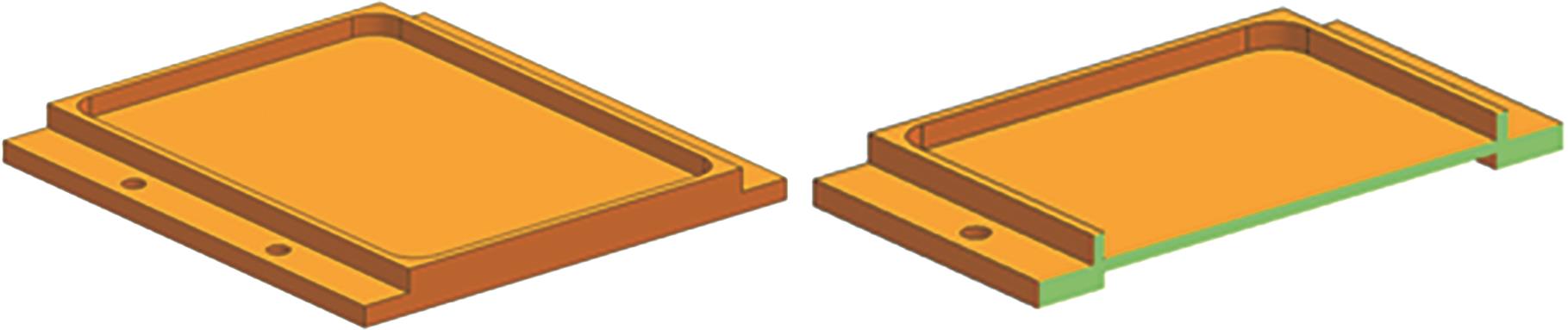
图1 薄壁件结构
Fig.1 Thin-walled components
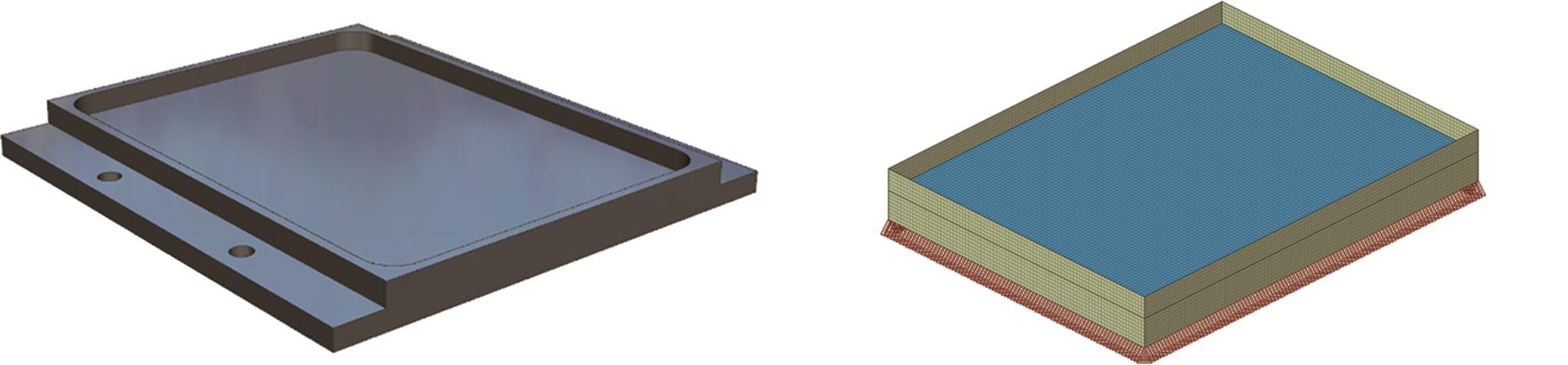
Fig.2 图2 几何模型图3 有限元模型
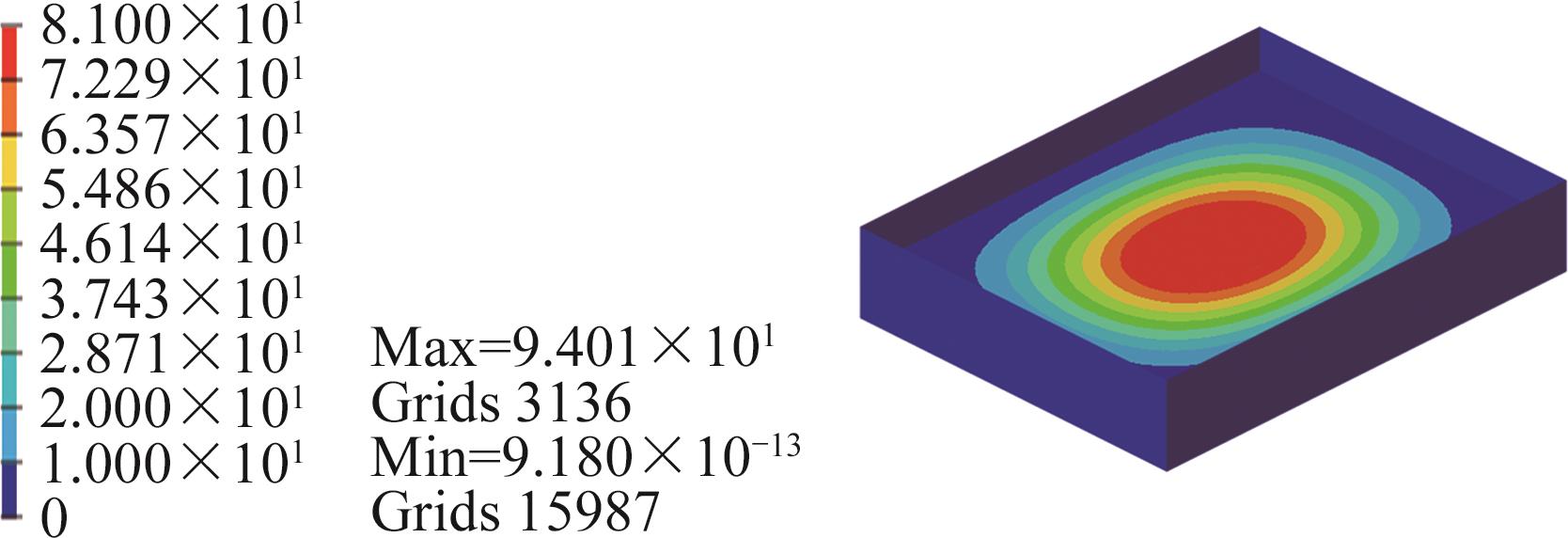
图4 模态振型
Fig.4 Mode shapes
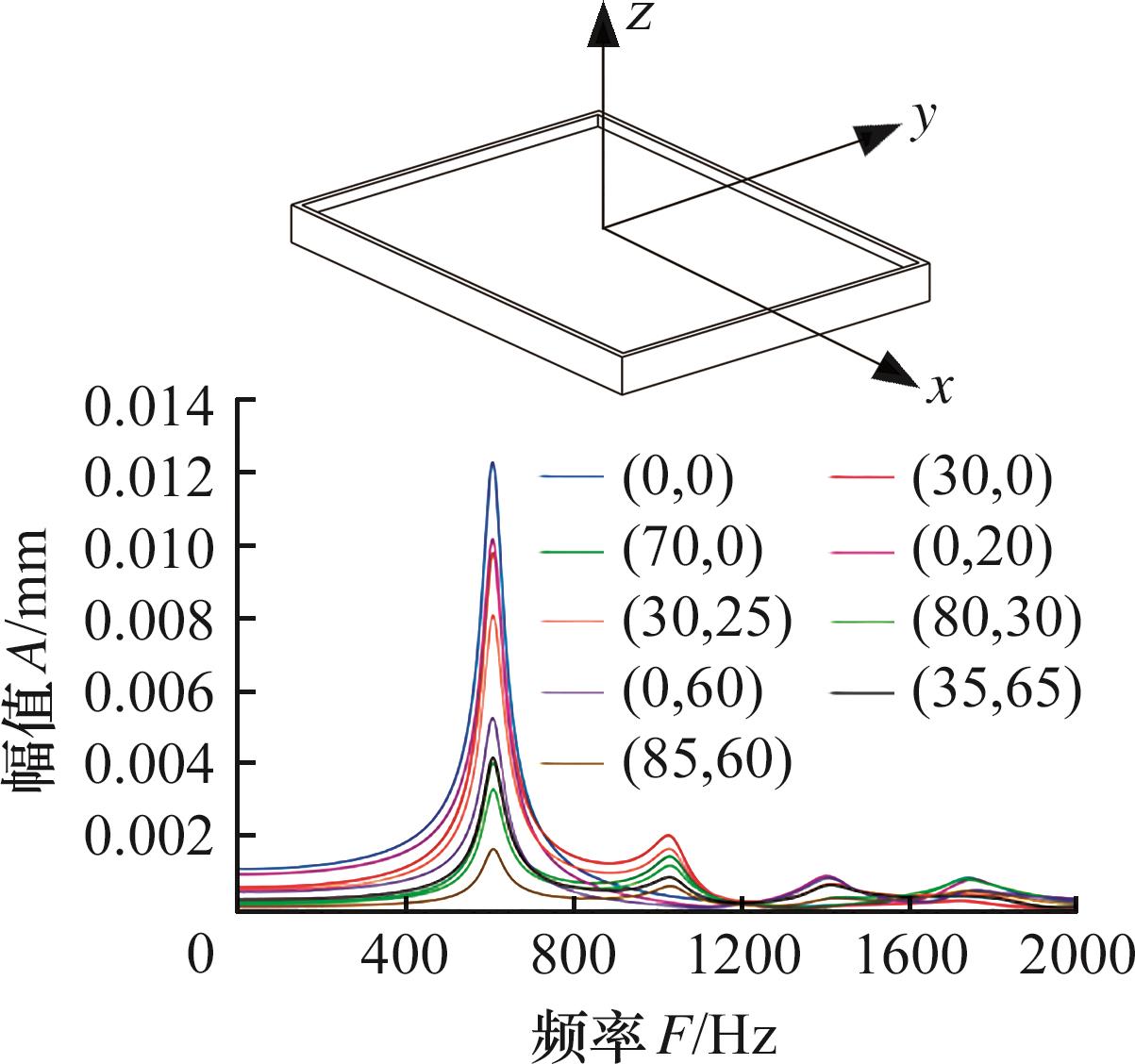
图5 工件位置划分及各点频响函数
Fig.5 Workpiece position division and frequency response function at each point
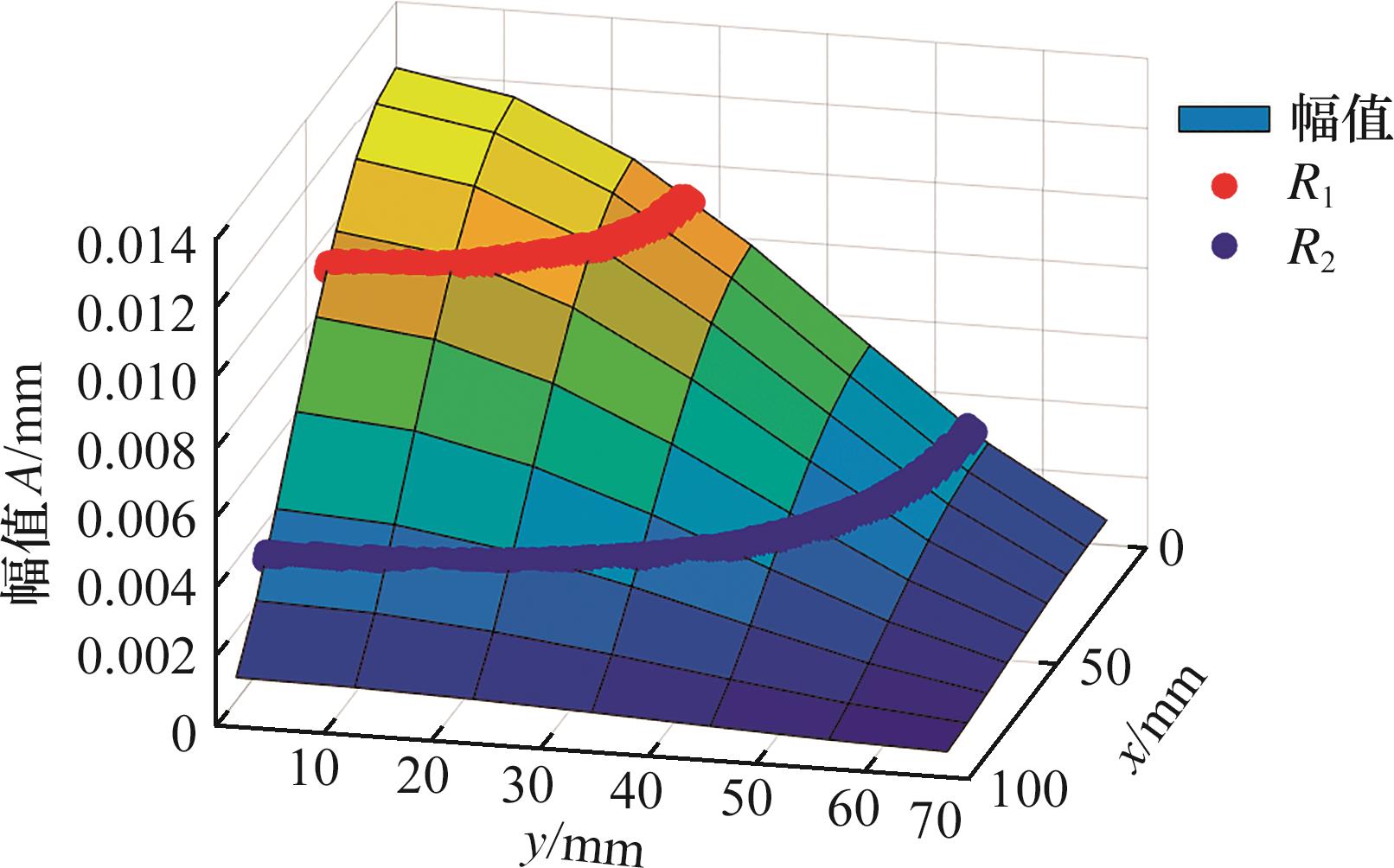
图6 幅值随构件位置变化图
Fig.6 Amplitude variation with component position graph
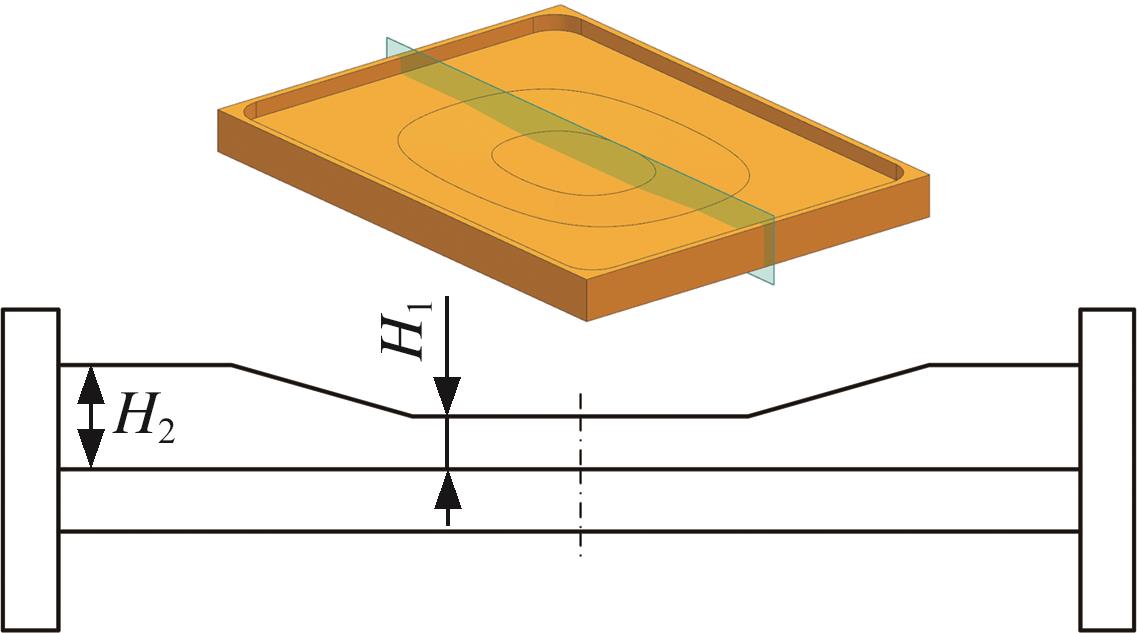
图7 工艺特征结构构件
Fig.7 Process feature structural component
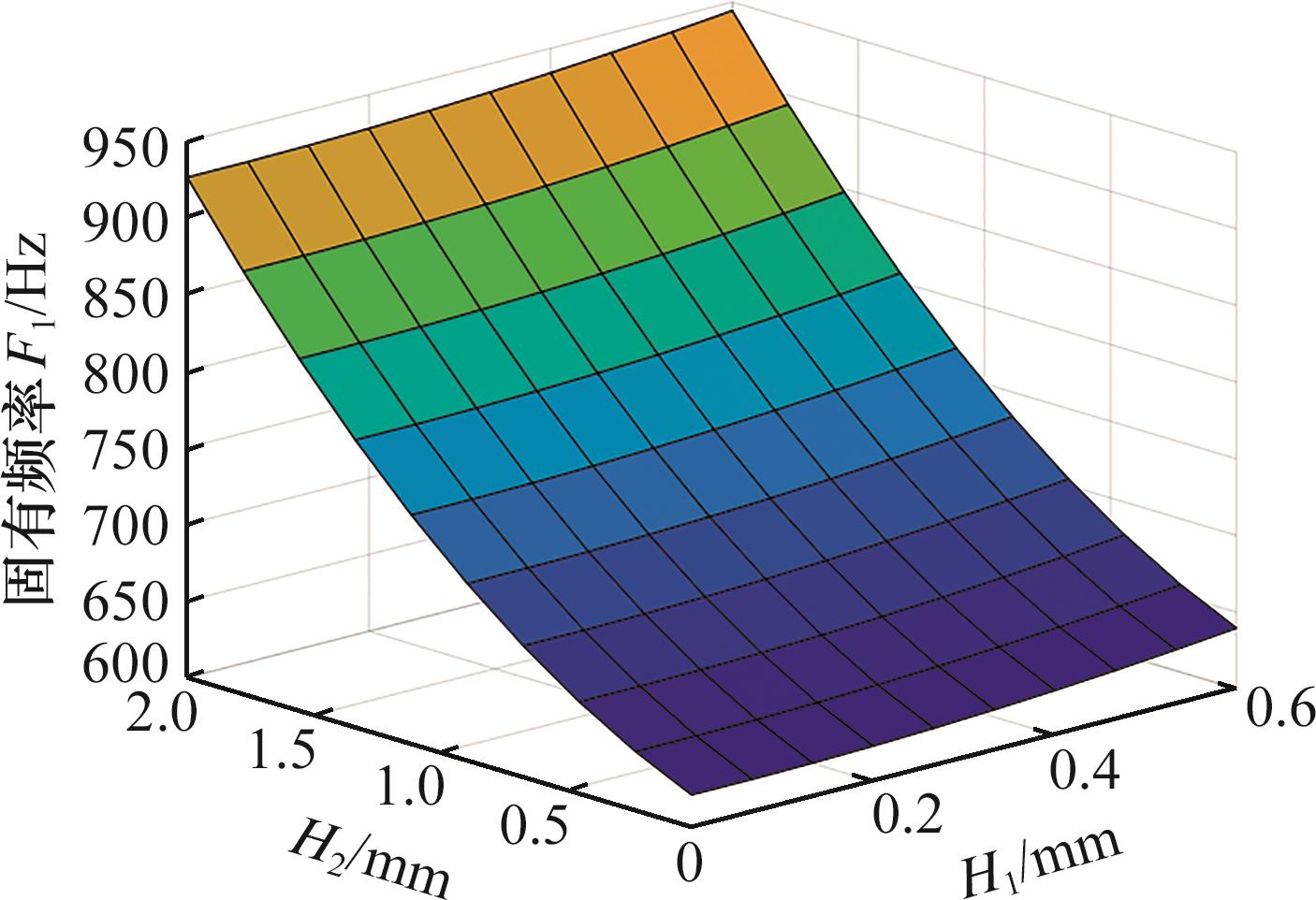
图8 工艺结构高度与固有频率的散点图
Fig.8 Scatter plot of process structure height and natural frequency
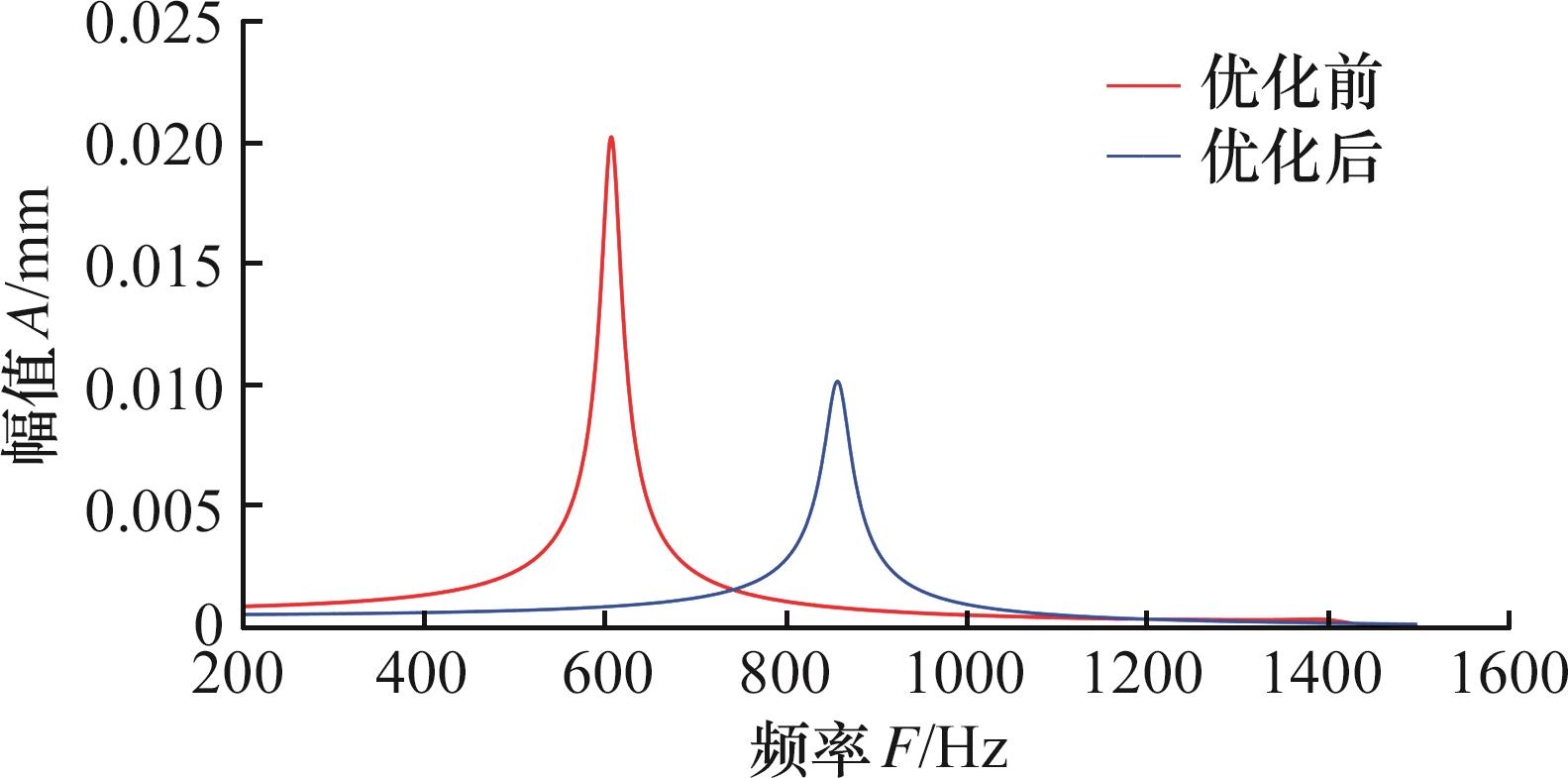
图9 优化前后频响函数曲线
Fig.9 Frequency response function curves before and after optimization
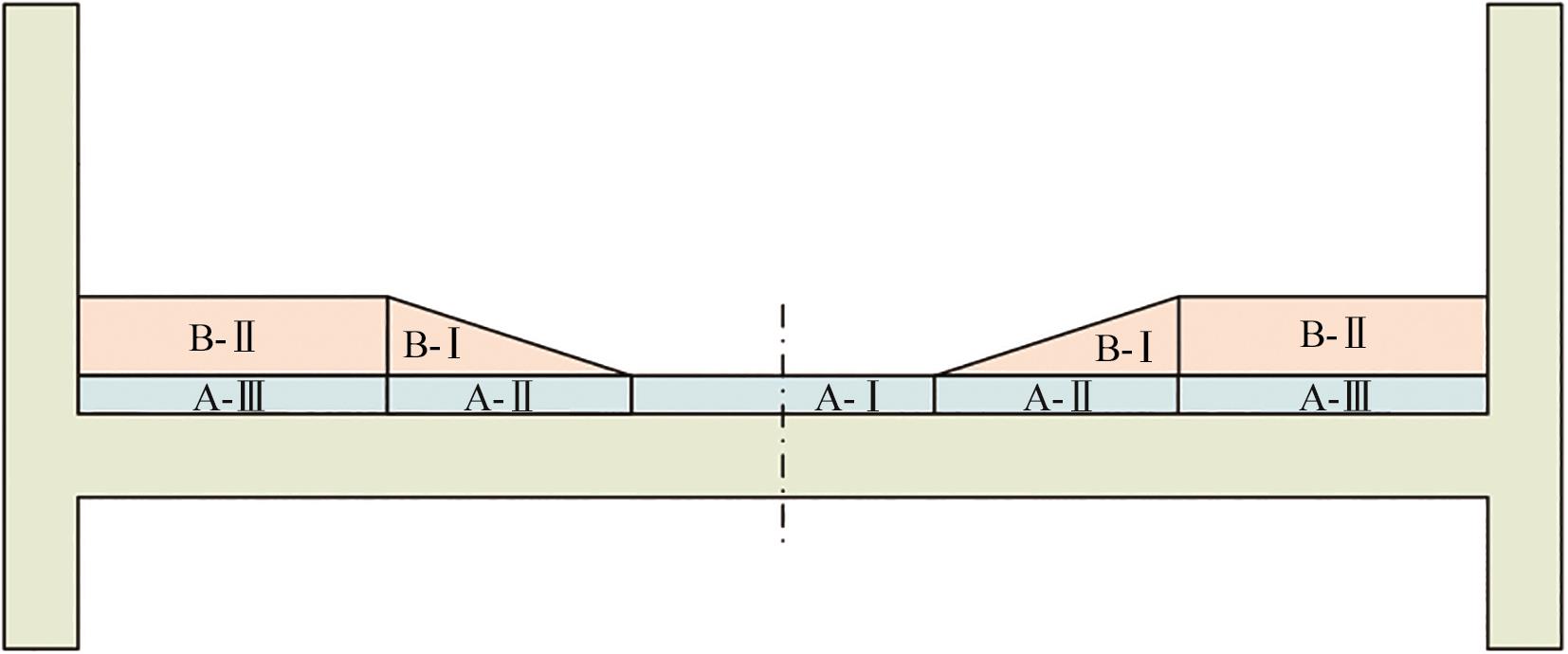
图10 腹板分层加工示意图
Fig.10 Web layered machining diagram
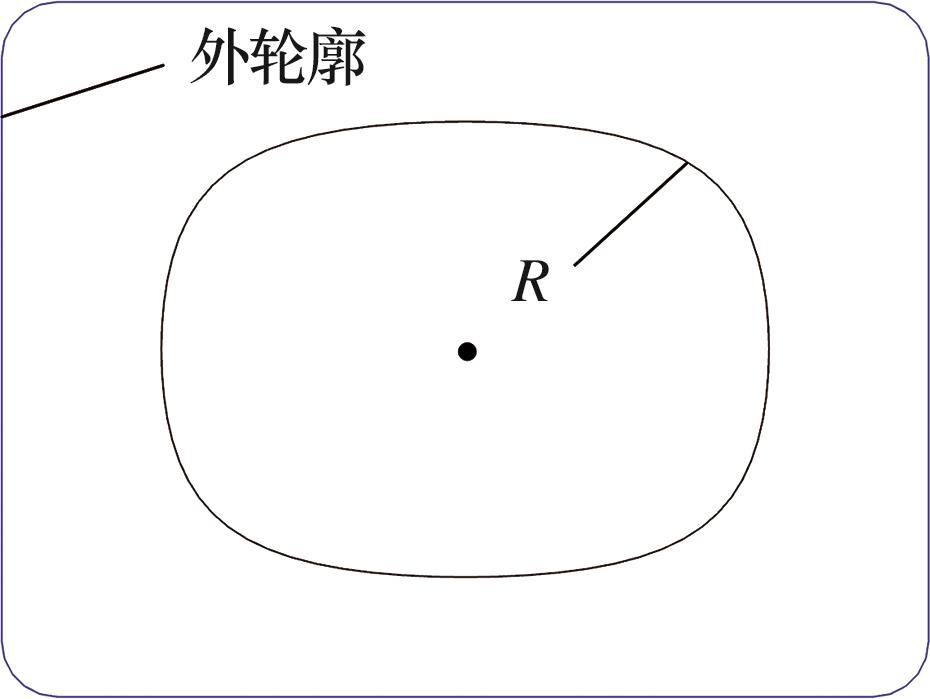
图11 腔体轮廓
Fig.11 Cavity profile
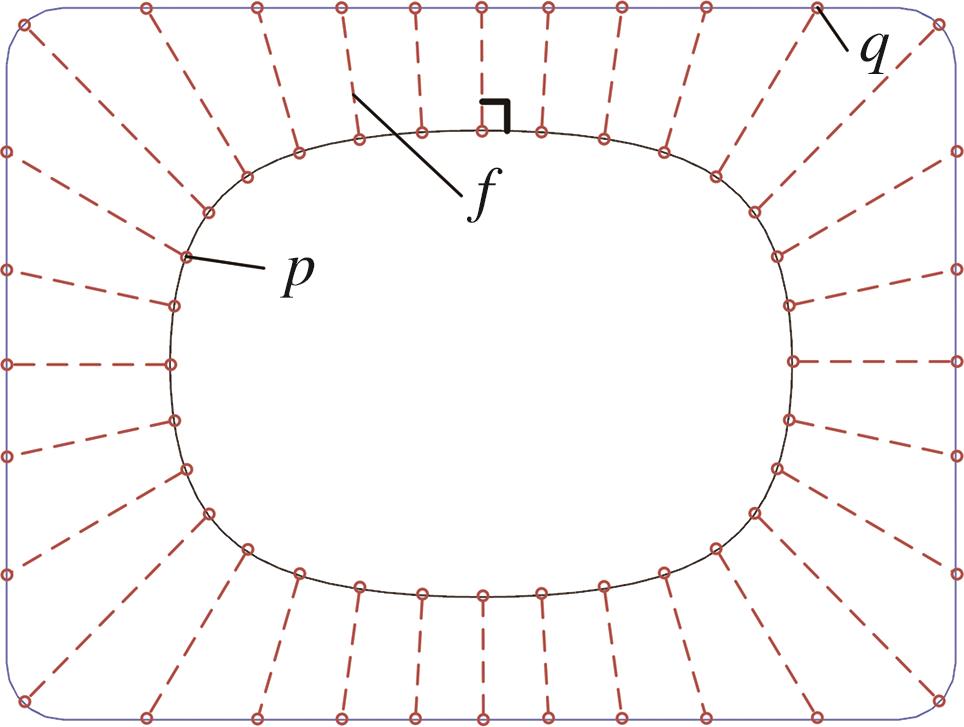
图12 放样线生成
Fig.12 Layout line generation
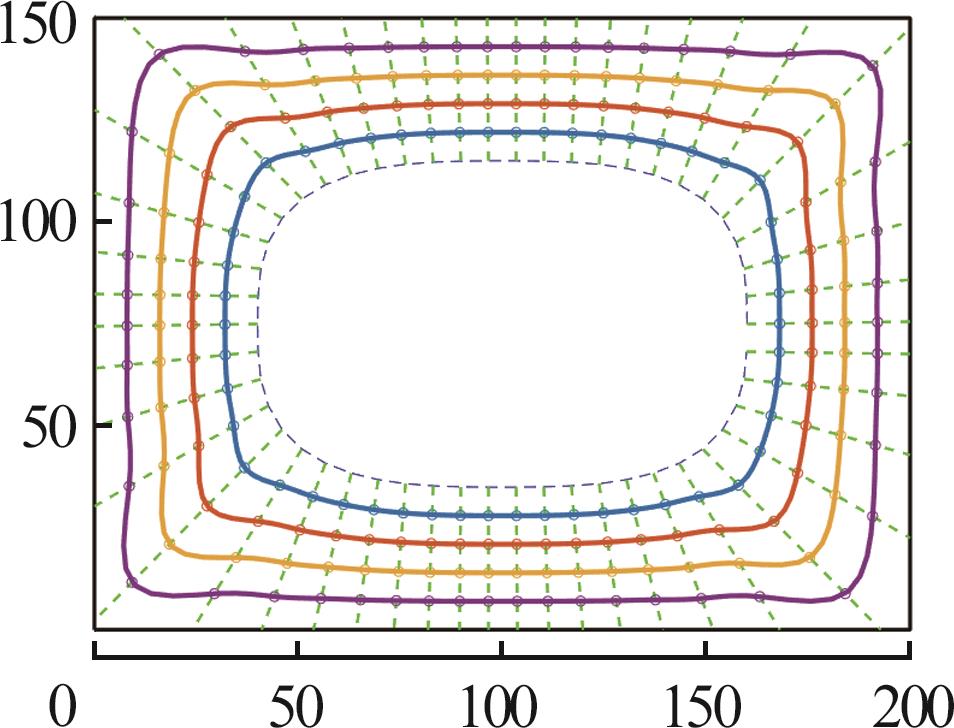
图13 工艺结构刀轨路径
Fig.13 Process structure toolpath
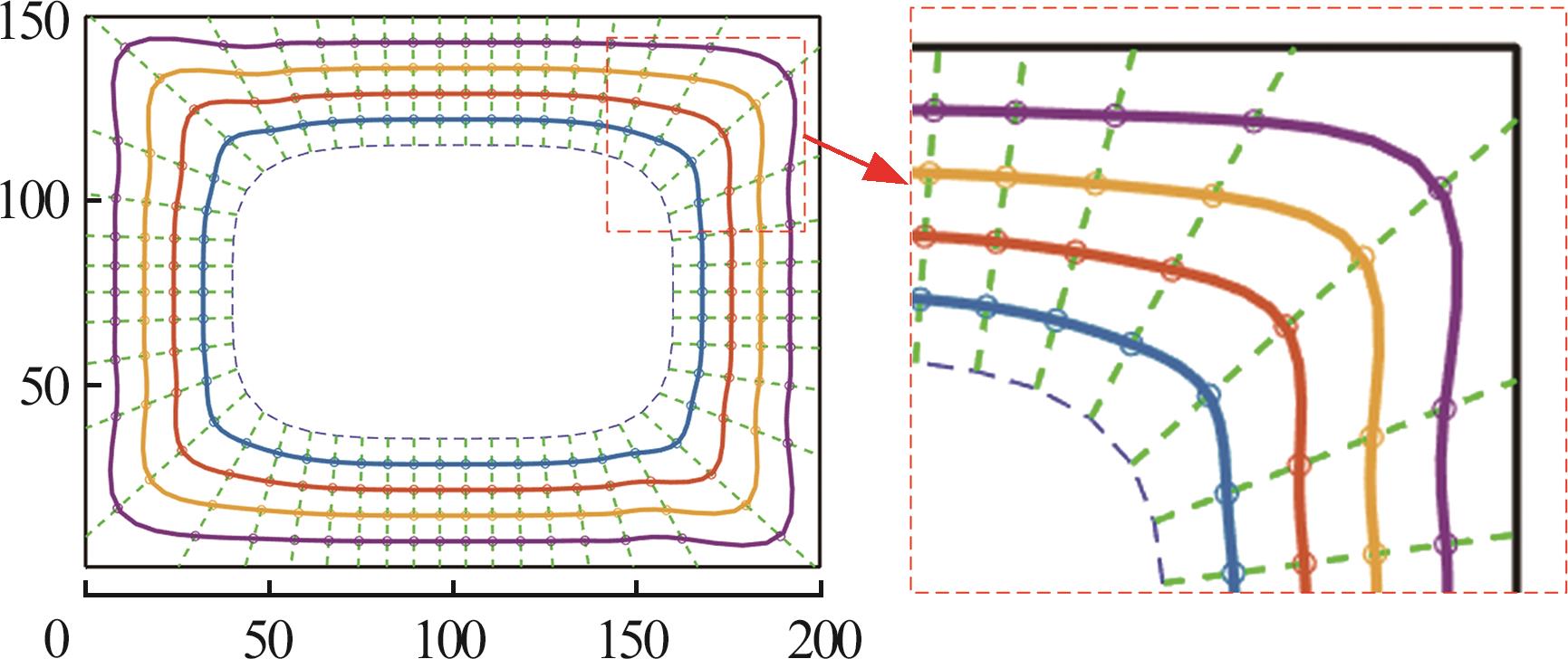
图14 波纹状刀轨路径
Fig.14 Corrugated toolpath
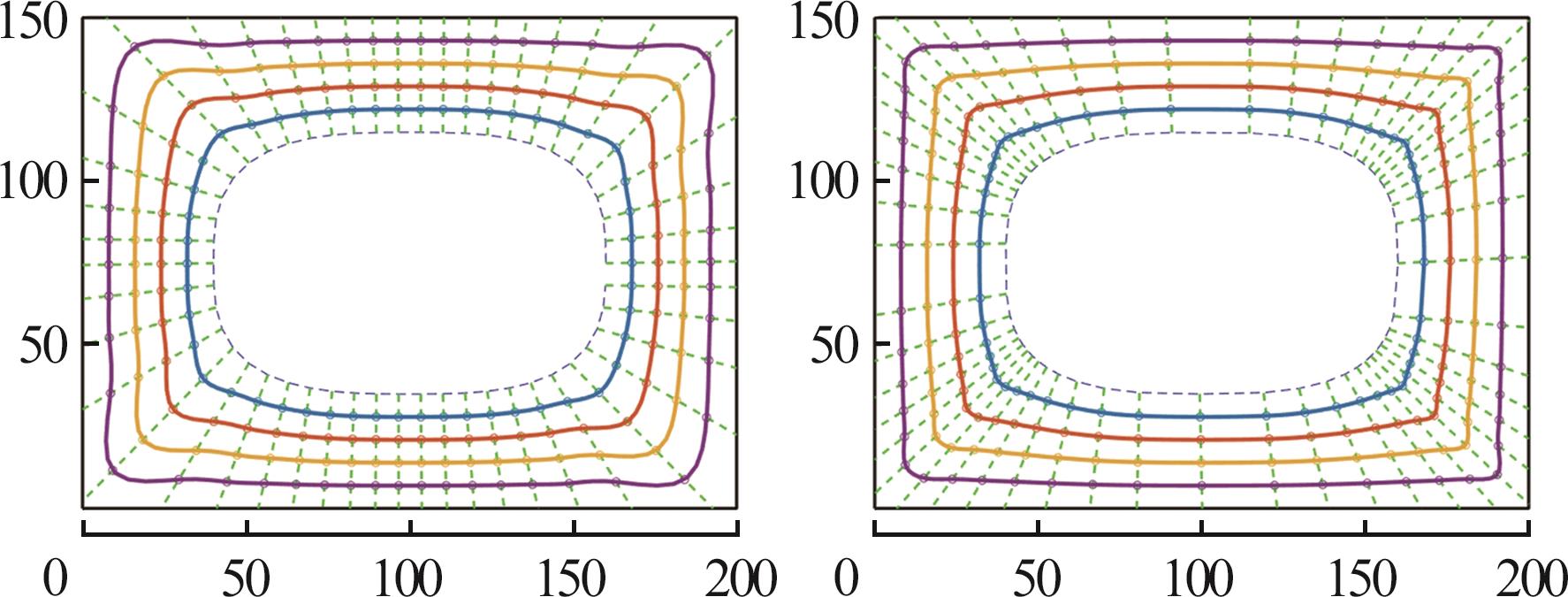
图15 优化前后刀轨路径
Fig.15 Toolpath before and after optimization
| 区域 | 径向切深/mm | 加工时间/s |
|---|---|---|
| A-Ⅰ | 4 | 234 |
| B-Ⅰ | 6 | 530 |
| A-Ⅱ | 4 | 791 |
| B-Ⅱ | 6 | 1218 |
| A-Ⅲ | 4 | 2298 |
表1 各区域径向切深及加工时间
Tab.1 Radial cutting depth and machining time for each area
| 区域 | 径向切深/mm | 加工时间/s |
|---|---|---|
| A-Ⅰ | 4 | 234 |
| B-Ⅰ | 6 | 530 |
| A-Ⅱ | 4 | 791 |
| B-Ⅱ | 6 | 1218 |
| A-Ⅲ | 4 | 2298 |
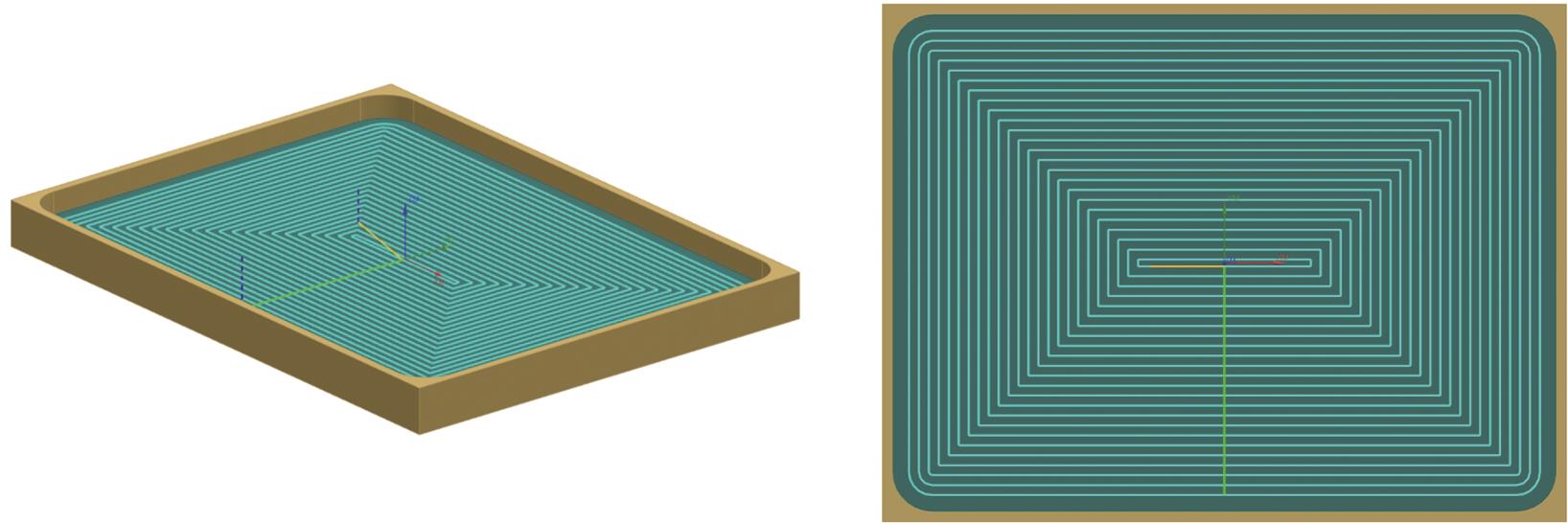
图16 传统等距偏置法刀具轨迹
Fig.16 Traditional equidistant offset toolpath
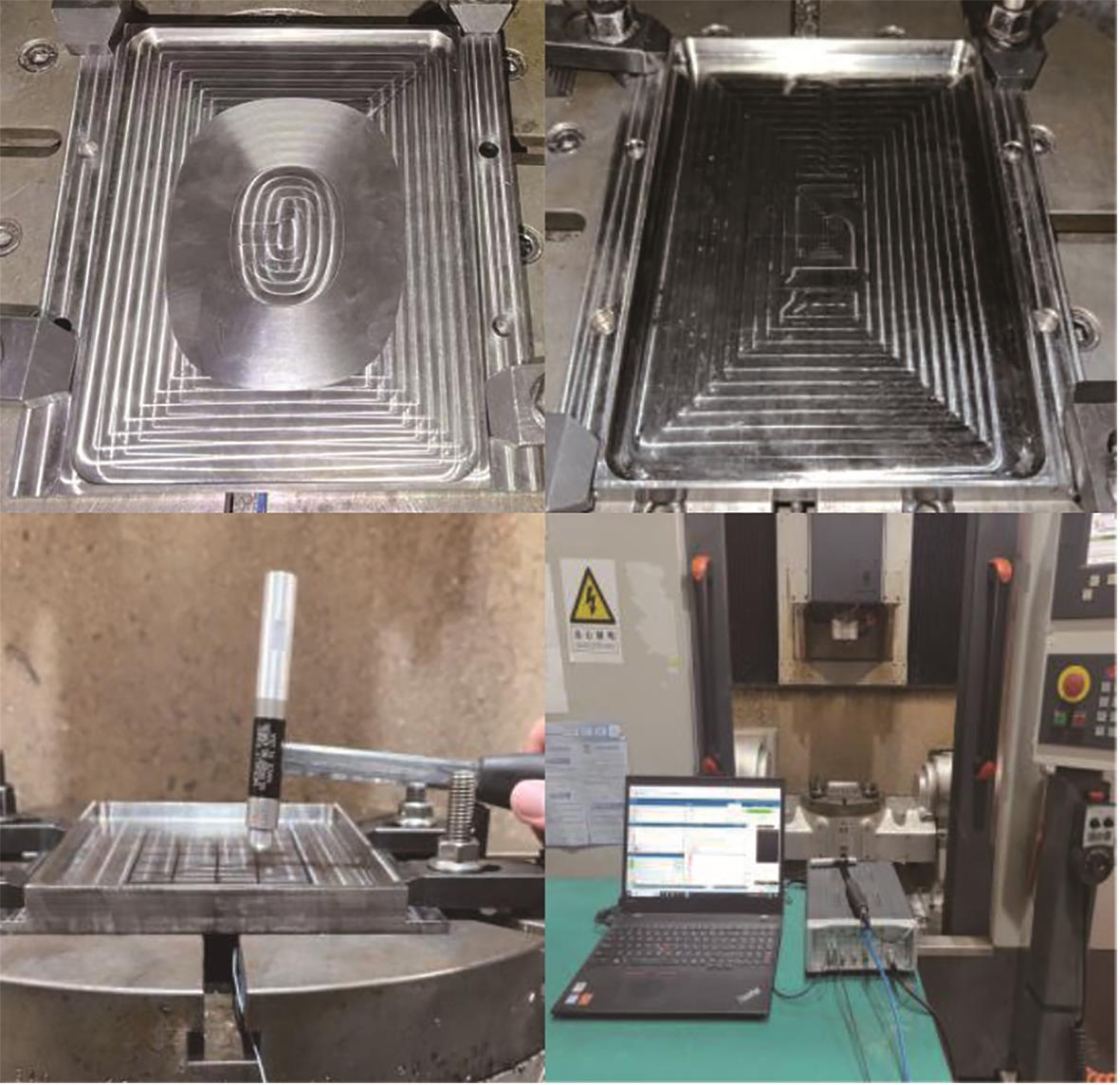
图17 薄壁件实物及模态试验现场
Fig.17 Thin-walled parts physical and modal testing site
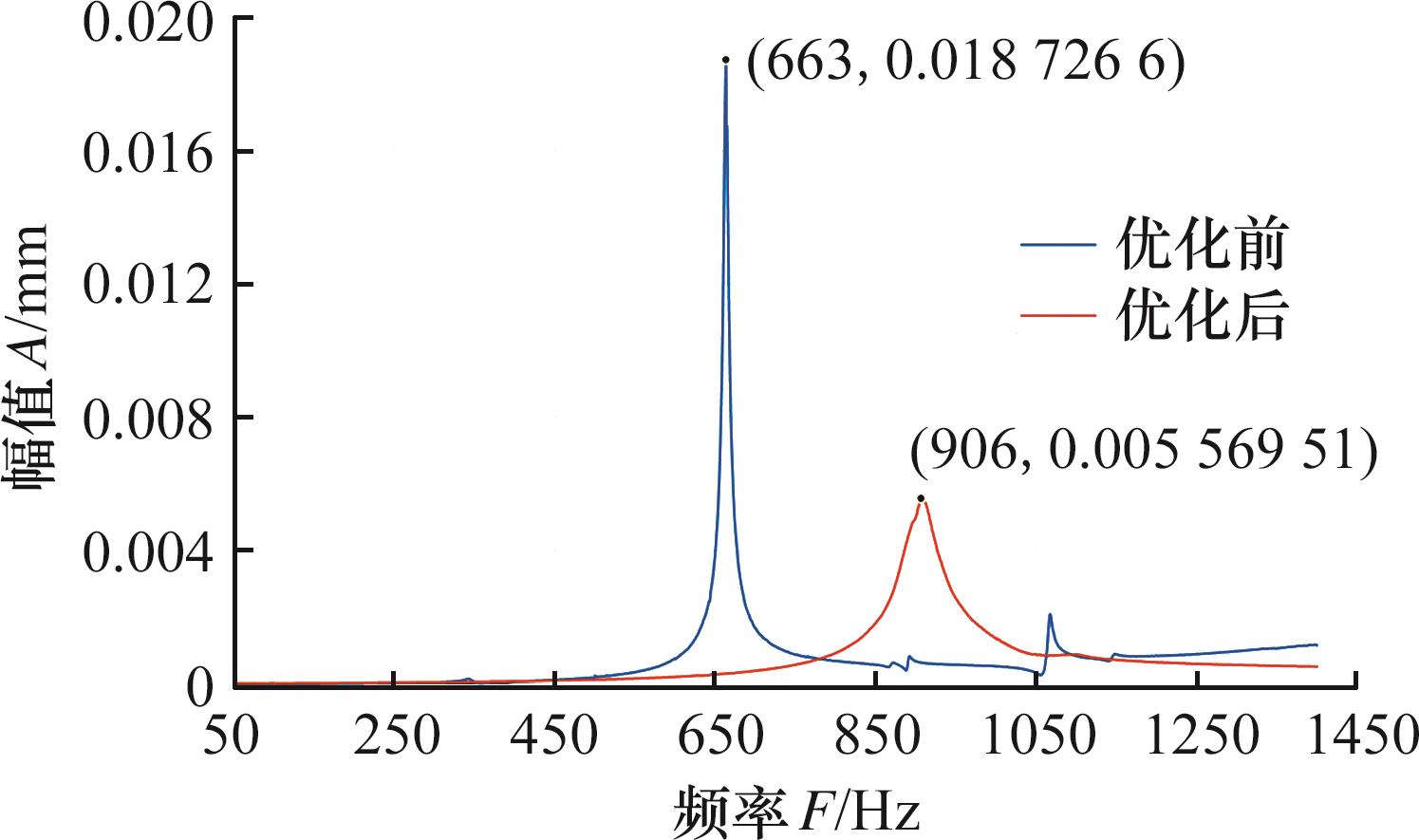
图18 频响曲线对比
Fig.18 Comparison of frequency response
| 模型 | 固有频率/Hz | |
|---|---|---|
| 有限元分析 | 优化前 | 624 |
| 优化后 | 858 | |
| 锤击试验 | 优化前 | 663 |
| 优化后 | 906 | |
表2 试验与有限元分析结果
Tab.2 Experimental and finite element analysis results
| 模型 | 固有频率/Hz | |
|---|---|---|
| 有限元分析 | 优化前 | 624 |
| 优化后 | 858 | |
| 锤击试验 | 优化前 | 663 |
| 优化后 | 906 | |
| 加工方法 | 主轴转速/ (r·min | 径向切深/mm | 每齿进给/mm | 轴向切深/mm | |
|---|---|---|---|---|---|
等距 偏置 刀轨 | 粗加工 | 1200 | 6 | 0.07 | 1.0 |
| 精加工 | 1000 | 4 | 0.05 | 0.5 | |
粗精 混合 刀轨 | 粗加工 | 1200 | 6 | 0.07 | 1.0 |
| 精加工 | 1000 | 4 | 0.05 | 0.5 | |
表3 各加工方式加工参数
Tab.3 Machining parameters for each machining method
| 加工方法 | 主轴转速/ (r·min | 径向切深/mm | 每齿进给/mm | 轴向切深/mm | |
|---|---|---|---|---|---|
等距 偏置 刀轨 | 粗加工 | 1200 | 6 | 0.07 | 1.0 |
| 精加工 | 1000 | 4 | 0.05 | 0.5 | |
粗精 混合 刀轨 | 粗加工 | 1200 | 6 | 0.07 | 1.0 |
| 精加工 | 1000 | 4 | 0.05 | 0.5 | |
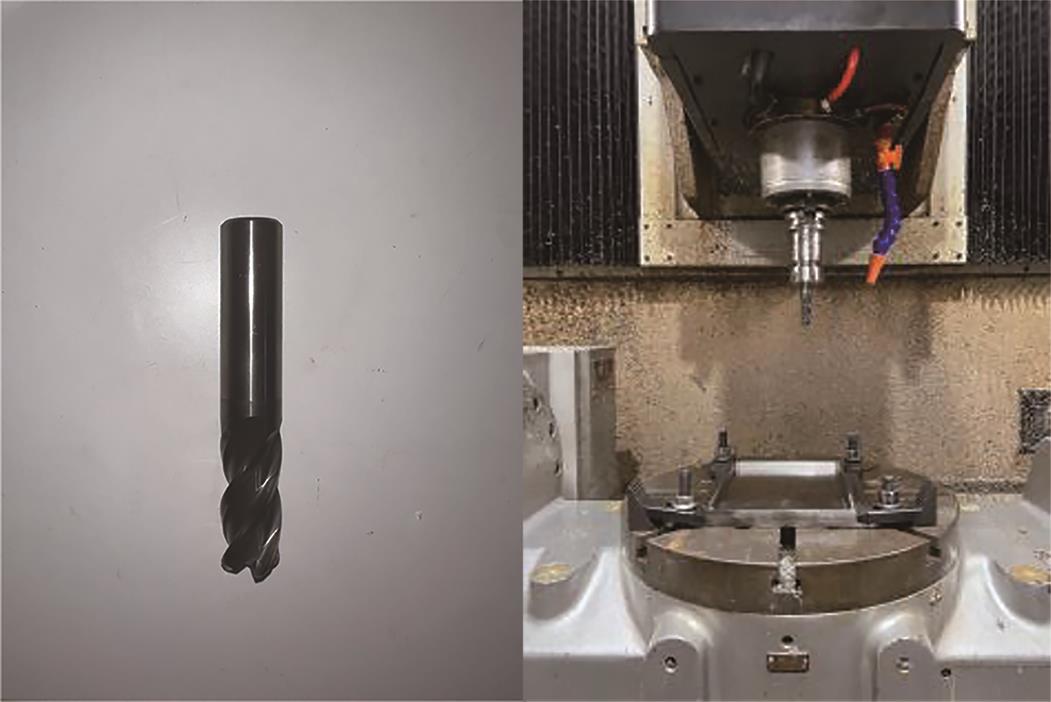
图19 加工试验现场及刀具
Fig.19 Machining test site and tool
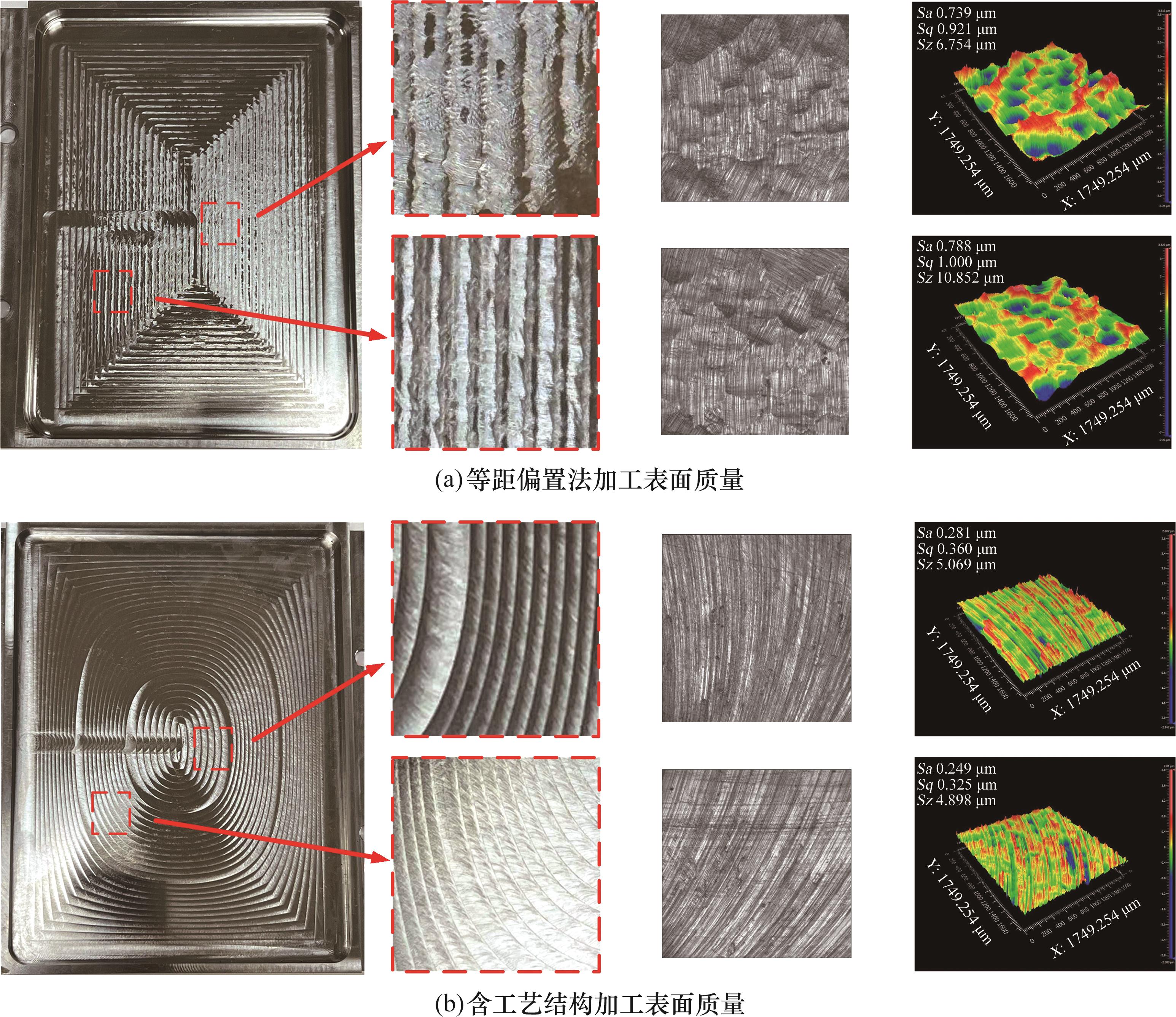
图20 两者加工表面质量对比
Fig.20 Comparison of the surface quality of the two machined surfaces

图21 各区域表面粗糙度
Fig.21 Surface roughness of each area
| [1] | SUN Y, ZHENG M, JIANG S, et al. A State-of-the-art Review on Chatter Stability in Machining Thin-walled Parts[J]. Machines, 2023,11(3): 1-44. |
| [2] | ADETORO O B, SIM W M, WEN P H. An Improved Prediction of Stability Lobes Using Nonlinear Thin Wall Dynamics[J]. Journal of Materials Processing Technology, 2010, 210(6/7): 969-979. |
| [3] | 刘强, 尹力. 一种面向数控工艺参数优化的铣削过程动力学仿真系统研究[J]. 中国机械工程, 2005, 16(13): 1146-1150. |
| LIU Qiang, YIN Li. Study on Milling Process Dynamics Simulation System about the Process Parameter Optimization of NC Machine Tools[J]. China Mechanical Engineering, 2005, 16(13): 1146-1150. | |
| [4] | ZENG S, WAN X, LI W, et al. A Novel Approach to Fixture Design on Suppressing Machining Vibration of Flexible Workpiece[J]. International Journal of Machine Tools and Manufacture, 2012, 58: 29-43. |
| [5] | 杨毅青, 谢日成, 徐东东. 旋转变刚度阻尼器抑制薄壁零件铣削颤振[J]. 振动与冲击, 2018, 37(2): 72-75. |
| YANG Yiqing, XIE Richeng, XU Dongdong. Milling Chatter Suppression for Thin-walled Part Using Rotary Passive Damper with Tunable Stiffness[J]. Journal of Vibration and Shock, 2018, 37(2): 72-75. | |
| [6] | JIN X, SUN Y, GUO Q, et al. 3D Stability Lobe Considering the Helix Angle Effect in Thin-wall Milling[J]. The International Journal of Advanced Manufacturing Technology, 2016, 82(9): 2123-2136. |
| [7] | 宋清华, 艾兴, 万熠, 等. 小径向切深下进给量对铣削稳定性的影响[J]. 中国机械工程, 2008, 19(10): 1148-1152. |
| SONG Qinghua, AI Xing, WAN Yi, et al. Stability Prediction for High-speed Milling Including Feed Rate in Low Radial Immersion[J]. China Mechanical Engineering, 2008,19(10): 1148-1152. | |
| [8] | YAN S, SUN Y. Early Chatter Detection in Thin-walled Workpiece Milling Process Based on Multi-synchrosqueezing Transform and Feature Selection[J]. Mechanical Systems and Signal Processing, 2022, 169: 108622. |
| [9] | WU S, MA W, BAI H, et al. Engagement Angle Modeling for Multiple-circle Continuous Machining and Its Application in the Pocket Machining[J]. Chinese Journal of Mechanical Engineering, 2017, 30(2): 256-271. |
| [10] | CORSON G, TYLER C, DVORAK J, et al. Minimum Cost, Stability Constrained Preform Optimization for Hybrid Manufacturing[J]. Manufacturing Letters, 2024, 39: 1-5. |
| [11] | SMITH S, WILHELM R, DUTTERER B, et al. Sacrificial Structure Preforms for Thin Part Machining[J]. CIRP Annals, 2012, 61(1): 379-382. |
| [12] | 刘强, 柳万珠. GH4169G整体叶盘阶梯铣削稳定性研究[J]. 航空动力学报, 2016, 31(5): 1025-1031. |
| LIU Qiang, LIU Wanzhu. Stability Research on Step Milling of GH4169G Blisk[J]. Journal of Aerospace Power, 2016, 31(5): 1025-1031. | |
| [13] | 白万金. 航空薄壁件精密铣削加工变形的预测理论及方法研究[D]. 杭州: 浙江大学, 2009. |
| BAI Wanjin. Study on Deformation Prediction Theory and Methods of the Aerospace Thin-walled Components during Precision Milling Process[D]. Hangzhou: Zhejiang University, 2009. | |
| [14] | 单晨伟, 赵颖, 刘维伟, 等. 一种薄壁悬臂叶片数控加工非均匀余量刚度补偿方法[J]. 航空学报, 2013, 34(3): 686-693. |
| SHAN Chenwei, ZHAO Ying, LIU Weiwei, et al. A Nonuniform Offset Surface Rigidity Compensation Strategy in Numerical Controlled Machining of Thin-walled Cantilever Blades[J]. Acta Aeronautica et Astronautica Sinica, 2013, 34(3): 686-693. | |
| [15] | 于长亮,张辉,王仁彻,等.机床整机动刚度薄弱环节辨识与优化方法研究[J].机械工程学报,2013,49(21):11-17. |
| YU Changliang, ZHANG Hui, WANG Renche, et al. Study on Method for Weak Link Identification of Dynamic Stiffness of a Machine Tool and Optimization Design[J]. Journal of Mechanical Engineering, 2013,49(21):11-17. | |
| [16] | 王永菲, 王成国. 响应面法的理论与应用[J]. 中央民族大学学报(自然科学版), 2005, 14(3): 236-240. |
| WANG Yongfei, WANG Chengguo. The Application of Response Surface Methodology[J]. Journal of Minzu University of China (Natural Sciences Edition), 2005, 14(3): 236-240. | |
| [17] | 高晓平. 基于等距法的数控加工刀具轨迹规划[D]. 大连: 大连理工大学, 2006. |
| GAO Xiaoping. Offset Algorithm Based Tool-path Planning for NC Machining[D]. Dalian: Dalian University of Technology, 2006. |
| [1] | 郑燕. 磨料水射流修复钢轨工艺参数优化研究[J]. 中国机械工程, 2025, 36(05): 1132-1141. |
| [2] | 焦纪强1, 2, 蒙峻2, 谢文君2, 郭方准1. 钛合金内衬薄壁腔体结构设计与性能研究[J]. 中国机械工程, 2025, 36(02): 265-270. |
| [3] | 刘伟1,2;商圆圆1,2;邓朝晖1,2;刘仁通1,2;肖周强2. 基于响应曲面法的轴承钢GCr15高速外圆磨削参数优化[J]. 中国机械工程, 2019, 30(23): 2829-2834. |
| [4] | 盛精1,2;解若愚1. 一种塑制汽车离合器泵的旋转摩擦焊接工艺参数的设计方法[J]. 中国机械工程, 2019, 30(14): 1742-1747. |
| [5] | 罗威1;周云山1,2;瞿道海1;张飞铁1;胡哓岚1. 无级变速器减压回路压力脉动关键参数识别及优化验证[J]. 中国机械工程, 2019, 30(10): 1178-1187. |
| [6] | 关玉明;赵越;崔佳;于盼;李朝;商鹏. 软包锂电池电芯封装铝塑膜外壳拉深工艺[J]. 中国机械工程, 2019, 30(08): 988-993. |
| [7] | 袁巨龙1,3,4;毛美姣1,2;李敏1,3,4;刘舜2;吴锋2;胡自化2;秦长江2. 基于响应曲面法的YG8硬质合金刀片化学机械抛光工艺参数优化[J]. 中国机械工程, 2018, 29(19): 2290-2297. |
| [8] | 尹业熙1,2;秦衡峰1;周后明1. 基于定向距离理论的五轴加工刀具轨迹规划算法[J]. 中国机械工程, 2017, 28(22): 2681-2688. |
| [9] | 王敏. 铁基非晶合金涂层切削工艺参数优化和切削力预测[J]. 中国机械工程, 2017, 28(21): 2627-2631,2638. |
| [10] | 邓朝晖1,2;符亚辉1,2;万林林1,2;张华1,2. 面向绿色高效制造的铣削工艺参数多目标优化[J]. 中国机械工程, 2017, 28(19): 2365-2372. |
| [11] | 赵刚, 王强, 阮丹, 张学豪. 基于工艺参数响应曲面的干式铣削机床能效分析[J]. 中国机械工程, 2016, 27(21): 2944-2948. |
| [12] | 袁彬, 韩江, 吴路路, 田晓青, 夏链. 基于粒子群算法的滚削齿面综合轮廓误差预测模型与试验研究[J]. 中国机械工程, 2016, 27(20): 2705-2711. |
| [13] | 张伟, 毛建国, 魏特特, 何小明. 基于响应曲面法的煤油发动机气门正时优化[J]. 中国机械工程, 2016, 27(07): 933-938. |
| [14] | 赵林峰, 胡金芳, 张荣芸. 重型牵引车驾驶室悬置与悬架参数的集成优化设计[J]. 中国机械工程, 2016, 27(06): 791-795,808. |
| [15] | 吕东升, 徐九华, 傅玉灿, 丁文锋, 严凯. 低温喷雾射流铣削Ti40阻燃钛合金的刀具耐用度[J]. 中国机械工程, 2015, 26(5): 569-574. |
| 阅读次数 | ||||||
|
全文 |
|
|||||
|
摘要 |
|
|||||
