



ISSN 1004-132X
CN 42-1294/TH
CN 42-1294/TH
中国机械工程 ›› 2026, Vol. 37 ›› Issue (10): 2484-2491.DOI: 10.3969/j.issn.1004-132X.2026.10.011
耿端阳( )
收稿日期:2025-11-27
出版日期:2026-10-25
发布日期:2026-11-10
作者简介:耿端阳,男,1997年生,博士、助理教授。研究方向为可持续设计、能源浪费、制造业可持续发展。发表论文10篇。E-mail:dy.geng@sjtu.edu.cn。
基金资助:
GENG Duanyang()
Received:2025-11-27
Online:2026-10-25
Published:2026-11-10
摘要:
针对当前制造过程能耗管理中海量能耗数据难以转化为节能价值以及系统性能源浪费难以识别的问题,提出了基于产品能谱(PEP)模型的能源浪费识别与量化方法。该方法首先将分析单元从生产设备转向产品价值创造过程,构建描述单位产品各工序能耗构成的PEP模型;然后通过对历史生产大数据的统计学习,生成代表企业最优实践的数据驱动型能耗基准;最后将实际生产能耗与该基准进行对标,实现工序级能源浪费的精准量化与诊断。石膏板生产案例表明,该方法能够有效量化系统性能源浪费,在9天内识别出电力和天然气分别有16.93%和17.69%的优化潜力;能谱波动分析揭示了高能耗工序不等同于高浪费潜力工序的关键洞见。
中图分类号:
耿端阳. 基于产品能谱模型的制造过程能耗基准建模与浪费识别方法[J]. 中国机械工程, 2026, 37(10): 2484-2491.
GENG Duanyang. Product Energy Profile Model-based Method for Energy Benchmark Modeling and Waste Identification for Manufacturing Processes[J]. China Mechanical Engineering, 2026, 37(10): 2484-2491.
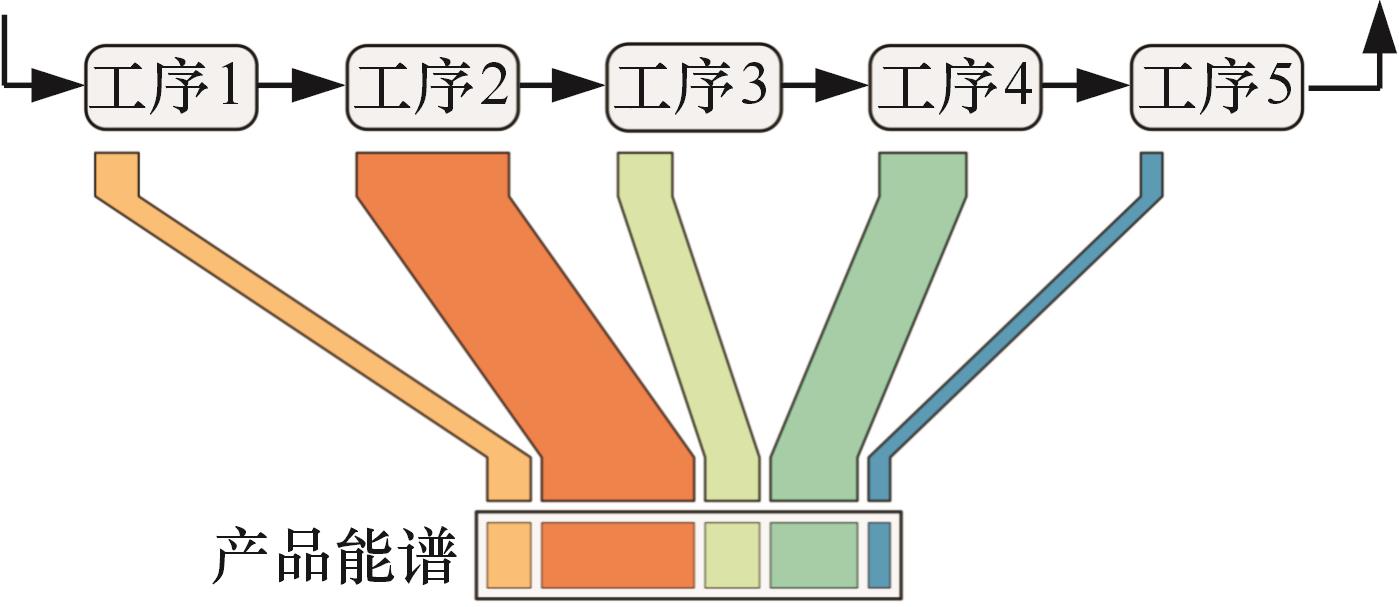
图1 产品能谱可视化示例
Fig. 1 Visualisation of product energy profile
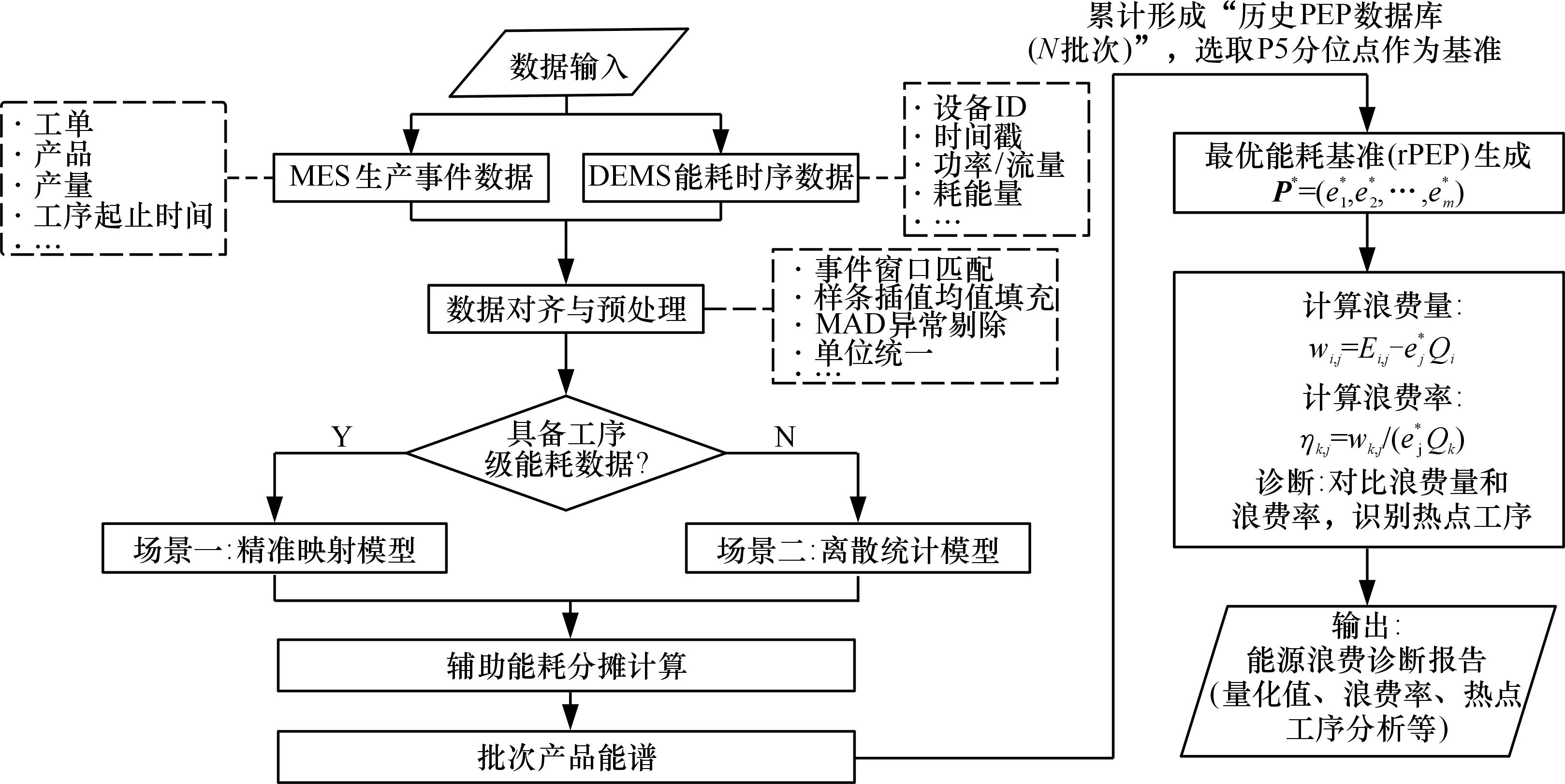
图2 基于产品能谱的能源浪费识别与量化流程
Fig.2 Process flowchart for energy waste identification and quantification using product energy profile
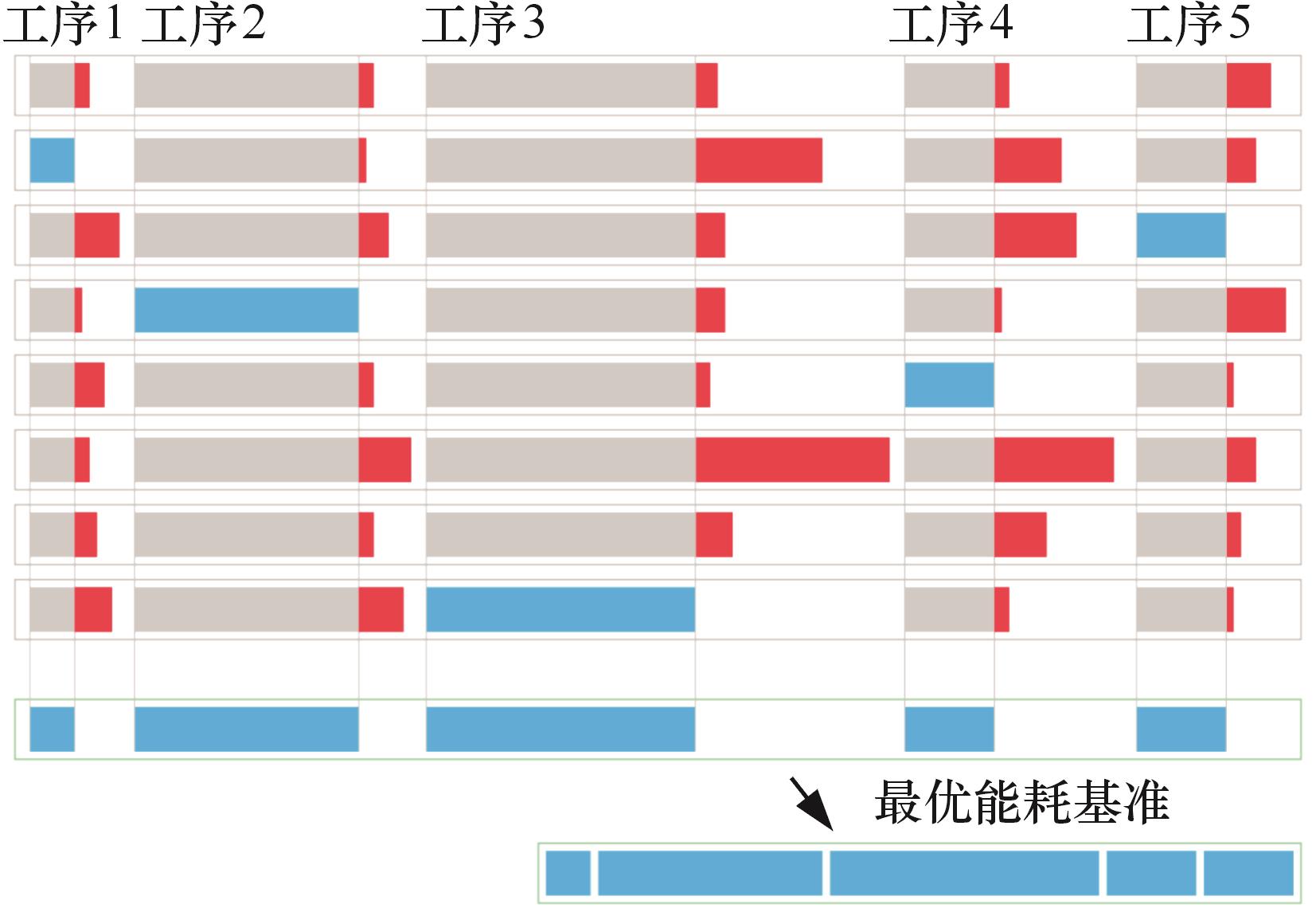
图3 基于产品能谱的最优能耗基准生成
Fig.3 Generating the optimal energy consumption benchmark from product energy profile
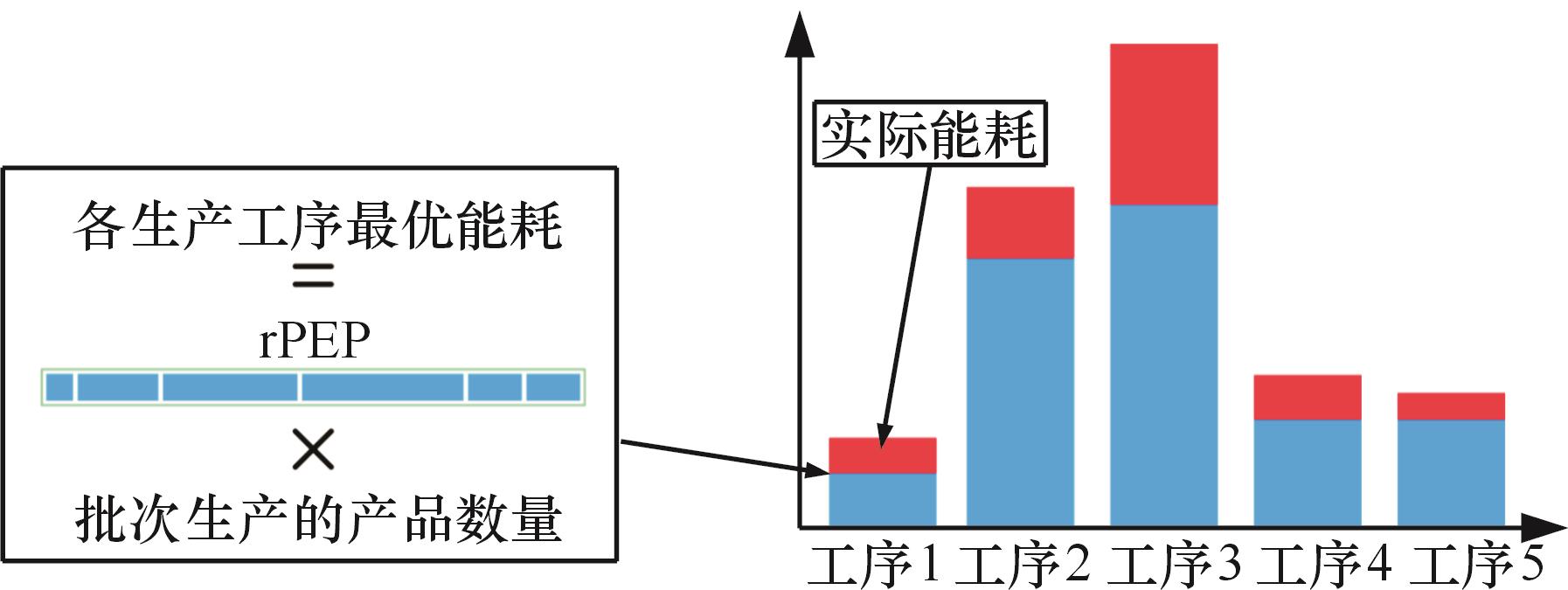
图4 基于最优能耗基准的浪费量与浪费率分析
Fig.4 Analysis of waste amount and waste rate based on the optimal energy consumption benchmark
| 工序ID | 工序名称 | 能源类型 | 主要耗能子系统/设备类型(对应能耗计量单元) |
|---|---|---|---|
| S1 | 原料制备 | 电 | 破碎及输送系统(原热车间辅机电表) |
| S2 | 生料粉磨与煅烧 | 电、气 | 球磨系统(制粉主电表);煅烧系统(原料车间天然气表、三控电表) |
| S3 | 配料与制浆 | 电、气 | 制浆及搅拌系统(粉料制备车间电表) |
| S4 | 板材成形与凝固 | 电 | 成形系统(一控电表) |
| S5 | 板材干燥与成品处理 | 电、气 | 干燥窑系统(制板车间天然气表、二控电表) |
表1 石膏板生产工序与能耗单元映射关系
Tab.1 Mapping relationship between gypsum board production processes and energy consumption units
| 工序ID | 工序名称 | 能源类型 | 主要耗能子系统/设备类型(对应能耗计量单元) |
|---|---|---|---|
| S1 | 原料制备 | 电 | 破碎及输送系统(原热车间辅机电表) |
| S2 | 生料粉磨与煅烧 | 电、气 | 球磨系统(制粉主电表);煅烧系统(原料车间天然气表、三控电表) |
| S3 | 配料与制浆 | 电、气 | 制浆及搅拌系统(粉料制备车间电表) |
| S4 | 板材成形与凝固 | 电 | 成形系统(一控电表) |
| S5 | 板材干燥与成品处理 | 电、气 | 干燥窑系统(制板车间天然气表、二控电表) |
| 工序ID | 工序名称 | 平均单位电耗/ (10-4 kW·h·m-²) | 平均单位热耗/ (10-4 N·m³·m-²) | 平均单位综合能耗/ (10-4 kW·h·m-²) | 综合能耗占比/% |
|---|---|---|---|---|---|
| 合计 | 2435.82 | 3868.76 | 41 123.42 | 100.0 | |
| S1 | 原料制备 | 394.91 | 394.91 | 1.0 | |
| S2 | 生料粉磨与煅烧 | 522.14 | 1836.12 | 18 883.34 | 45.9 |
| S3 | 配料与制浆 | 132.69 | 132.69 | 0.3 | |
| S4 | 板材成形与凝固 | 74.87 | 74.87 | 0.2 | |
| S5 | 板材干燥与成品处理 | 1311.21 | 2032.64 | 21 637.61 | 52.6 |
表2 普通9.5 mm石膏板产品能谱数据
Tab.2 Refined energy product profile data of standard 9.5 mm gypsum board products
| 工序ID | 工序名称 | 平均单位电耗/ (10-4 kW·h·m-²) | 平均单位热耗/ (10-4 N·m³·m-²) | 平均单位综合能耗/ (10-4 kW·h·m-²) | 综合能耗占比/% |
|---|---|---|---|---|---|
| 合计 | 2435.82 | 3868.76 | 41 123.42 | 100.0 | |
| S1 | 原料制备 | 394.91 | 394.91 | 1.0 | |
| S2 | 生料粉磨与煅烧 | 522.14 | 1836.12 | 18 883.34 | 45.9 |
| S3 | 配料与制浆 | 132.69 | 132.69 | 0.3 | |
| S4 | 板材成形与凝固 | 74.87 | 74.87 | 0.2 | |
| S5 | 板材干燥与成品处理 | 1311.21 | 2032.64 | 21 637.61 | 52.6 |
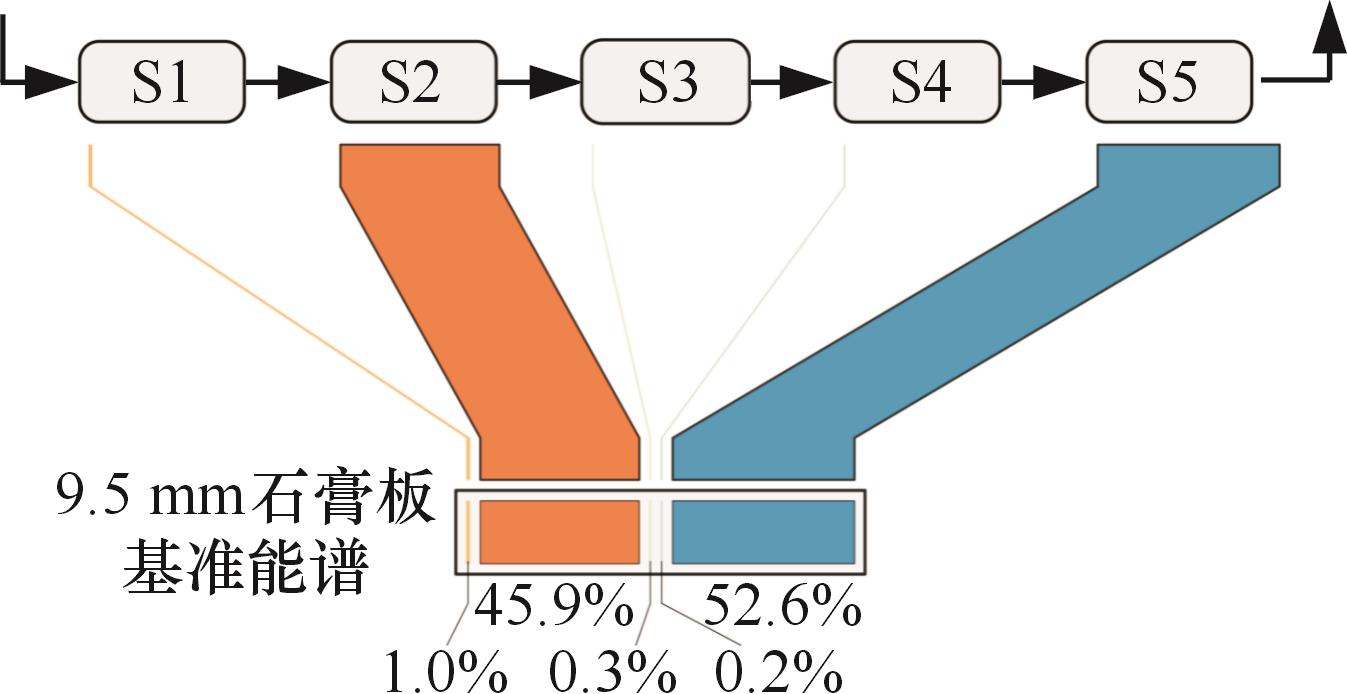
图5 9.5 mm石膏板产品能谱可视化
Fig.5 Visualisation of the rPEP for 9.5 mm gypsum board products
| 排序 | 工序ID | 能源类型 | 单位平均 能耗 | 标准差 | 波动率/% |
|---|---|---|---|---|---|
| 1 | S3 | 电 | 132.69 | 43.28 | 32.61 |
| 2 | S2 | 天然气 | 1836.12 | 357.43 | 19.47 |
| 3 | S1 | 电 | 394.91 | 75.85 | 19.21 |
| 4 | S2 | 电 | 522.14 | 92.28 | 17.67 |
| 5 | S4 | 电 | 74.87 | 5.95 | 7.95 |
| 6 | S5 | 电 | 1311.21 | 103.98 | 7.93 |
| 7 | S5 | 天然气 | 2032.64 | 152.52 | 7.50 |
表3 各工序能耗波动率分析
Tab.3 Analysis of CV for energy consumption process
| 排序 | 工序ID | 能源类型 | 单位平均 能耗 | 标准差 | 波动率/% |
|---|---|---|---|---|---|
| 1 | S3 | 电 | 132.69 | 43.28 | 32.61 |
| 2 | S2 | 天然气 | 1836.12 | 357.43 | 19.47 |
| 3 | S1 | 电 | 394.91 | 75.85 | 19.21 |
| 4 | S2 | 电 | 522.14 | 92.28 | 17.67 |
| 5 | S4 | 电 | 74.87 | 5.95 | 7.95 |
| 6 | S5 | 电 | 1311.21 | 103.98 | 7.93 |
| 7 | S5 | 天然气 | 2032.64 | 152.52 | 7.50 |
| 工序ID | 能源 类型 | 实际 总用量 | 理论 最佳总量 | 可优化量 | 可优化百分比/% |
|---|---|---|---|---|---|
| S3 | 电 | 15 824.52 | 9316.46 | 6508.06 | 41.13 |
| S2 | 电 | 61 966.42 | 42 776.43 | 19 189.99 | 30.97 |
| S2 | 天然气 | 216 680.07 | 151 999.25 | 64 680.82 | 29.85 |
| S1 | 电 | 46 533.09 | 34 258.81 | 12 274.28 | 26.38 |
| S4 | 电 | 8896.34 | 8179.09 | 717.25 | 8.06 |
| S5 | 电 | 155 648.79 | 145 432.87 | 10 215.92 | 6.56 |
| S5 | 天然气 | 241 619.72 | 225 251.66 | 16 368.06 | 6.77 |
| 合计 | 电 | 288 869.16 | 239 963.66 | 48 905.51 | 16.93 |
| 天然气 | 458 299.79 | 377 250.91 | 81 048.89 | 17.69 |
表4 能源浪费量化与优化潜力(9天合计)
Tab.4 Quantification of energy waste and optimisation potential (9-day total)
| 工序ID | 能源 类型 | 实际 总用量 | 理论 最佳总量 | 可优化量 | 可优化百分比/% |
|---|---|---|---|---|---|
| S3 | 电 | 15 824.52 | 9316.46 | 6508.06 | 41.13 |
| S2 | 电 | 61 966.42 | 42 776.43 | 19 189.99 | 30.97 |
| S2 | 天然气 | 216 680.07 | 151 999.25 | 64 680.82 | 29.85 |
| S1 | 电 | 46 533.09 | 34 258.81 | 12 274.28 | 26.38 |
| S4 | 电 | 8896.34 | 8179.09 | 717.25 | 8.06 |
| S5 | 电 | 155 648.79 | 145 432.87 | 10 215.92 | 6.56 |
| S5 | 天然气 | 241 619.72 | 225 251.66 | 16 368.06 | 6.77 |
| 合计 | 电 | 288 869.16 | 239 963.66 | 48 905.51 | 16.93 |
| 天然气 | 458 299.79 | 377 250.91 | 81 048.89 | 17.69 |
| [1] | International Energy Agency. Energy Technology Perspectives 2023[R]. Paris: IEA, 2023. |
| [2] | YANG M, EVANS S. Rapid Decarbonization Requires Industrial Efficiency[J]. Nature Reviews Clean Technology, 2025, 1(1): 4-5. |
| [3] | SCHMITT T, MATTSSON S, FLORES-GARCÍA E, et al. Achieving Energy Efficiency in Industrial Manufacturing[J]. Renewable and Sustainable Energy Reviews, 2025, 216: 115619. |
| [4] | 耿端阳, 许通, 朱庆华, 等. 数字化能源管理系统促进工业界节能减碳的分析与建议[J]. 中国科学院院刊, 2024, 39(2): 311-322. |
| GENG Duanyang, XU Tong, ZHU Qinghua, et al. Analysis and Recommendations for Energy Conservation and Carbon Emission Reduction in Industry Boosted by Digital Energy Management Systems[J]. Bulletin of Chinese Academy of Sciences, 2024, 39(2): 311-322. | |
| [5] | MAY G, STAHL B, TAISCH M, et al. Energy Management in Manufacturing: from Literature Review to a Conceptual Framework[J]. Journal of Cleaner Production, 2017, 167: 1464-1489. |
| [6] | SOORI M, AREZOO B, DASTRES R. Internet of Things for Smart Factories in Industry 4.0, a Review[J]. Internet of Things and Cyber-Physical Systems, 2023, 3: 192-204. |
| [7] | MA S, DING W, LIU Y, et al. Digital Twin and Big Data-driven Sustainable Smart Manufacturing Based on Information Management Systems for Energy-intensive Industries[J]. Applied Energy, 2022, 326: 119986. |
| [8] | ÁLVAREZ-ÁLVAREZ T, BARBÓN A, BAYÓN L, et al. Energy, Exergy, Sustainability, Environmental Emission, and Fuel Cost Analysis of a Hot-dip Galvanised Steel Wire Process[J]. Energy, 2025, 319: 134897. |
| [9] | SUN W, CAI J, DU T, et al. Specific Energy Consumption Analysis Model and Its Application in Typical Steel Manufacturing Process[J]. Journal of Iron and Steel Research, International, 2010, 17(10): 33-37. |
| [10] | LI Y, CHEN J, WANG Y, et al. Multi-objective Modeling and Evaluation for Energy Saving and High Efficiency Production Oriented Multidirectional Turning Considering Energy, Efficiency, Economy and Quality[J]. Energy, 2024, 294: 130780. |
| [11] | da SILVA F A V, FRANZÃO H S, OUTEIRO J C. Prediction of the Energy Consumption and Surface Integrity in Machining of Inconel 718 Superalloy Using an Orthogonal Cutting Model Considering the Stress State[J]. Journal of Manufacturing Processes, 2025, 149: 82-97. |
| [12] | LONG Y, CAI W, YIN H, et al. Mechanism of a High Performance and Energy Efficiency Parallel Ultrasonic Vibration-assisted Cutting[J]. Energy, 2025, 326: 136244. |
| [13] | XIE Y, DAI Y, ZHANG C, et al. An Integration Model Enabled Deep Learning for Energy Prediction of Machine Tools[J]. Journal of Cleaner Production, 2025, 495: 145075. |
| [14] | BOUSNINA K, HAMZA A, YAHIA N BEN. Modeling Surface Quality, Cost and Energy Consumption during Milling of Alloy 2017A: a Comparative Study Integrating GA-ANN and RSM Models[J]. International Journal of Modelling and Simulation, 2026, 46(1): 16-34. |
| [15] | MA S, ZHANG Y, LV J, et al. Big Data Driven Predictive Production Planning for Energy-intensive Manufacturing Industries[J]. Energy, 2020, 211: 118320. |
| [16] | LI H, YANG D, CAO H, et al. Data-driven Hybrid Petri-net Based Energy Consumption Behaviour Modelling for Digital Twin of Energy-efficient Manufacturing System[J]. Energy, 2022, 239: 122178. |
| [17] | ZHANG M, WANG R. Energy Consumption Forecasting in Non-stationary Machining Processes Based on a Physics-guided Transformer[J]. Computers in Industry, 2025, 171: 104321. |
| [18] | XU Z, ZHANG B, YIP W S, et al. Deep-learning-driven Intelligent Component-level Energy Prediction of Ultra-precision Machine Tools with IoT Platform[J]. Energy, 2025, 320: 135378. |
| [19] | REICHARDT A, MURAWSKI M, BICK M. The Use of the Internet of Things to Increase Energy Efficiency in Manufacturing Industries[J]. International Journal of Energy Sector Management, 2025, 19(2): 369-388. |
| [20] | ZHANG J, LI C, DENG C, et al. Toward Digital Twins for Intelligence Manufacturing: Self-adaptive Control in Assisted Equipment through Multi-sensor Fusion Smart Tool Real-time Machine Condition Monitoring[J]. Journal of Manufacturing Systems, 2025, 82: 301-318. |
| [1] | 梁强, 徐彬源, 徐永航, 胡开群, 陈伟灵, 陈红. 基于小样本数据驱动的H13钢表面激光硬化及抛光工艺参数优化[J]. 中国机械工程, 2026, 37(8): 1917-1927. |
| [2] | 凌启辉, 严勇勇, 李新宇, 戴巨川, 胥小强. 导弹道路运输振动环境模拟试验激励信号重构[J]. 中国机械工程, 2026, 37(8): 2058-2067. |
| [3] | 张冀, 袁海博, 王智璇, 朱思华, 白振华. 物理引导的神经网络模型预测铝带冷轧轧制力[J]. 中国机械工程, 2026, 37(5): 1199-1209. |
| [4] | 王黎明, 肖兴源, 李方义, 汪晓光, 李剑峰, 聂延艳, 刘伟彤, 李柳沅, 王忆同, 王泊云, 崔羽齐. 数据驱动的机电产品低碳设计与制造研究综述与展望[J]. 中国机械工程, 2026, 37(4): 764-779. |
| [5] | 孙悦, 黄辉, 尹方辰. 高负载动态工况下工业机器人的能耗预测[J]. 中国机械工程, 2026, 37(4): 939-947. |
| [6] | 杨亮亮, 陈泓, 鲁文其. 执行器约束下基于轨迹学习的核正则化最优迭代学习控制[J]. 中国机械工程, 2025, 36(10): 2274-2283. |
| [7] | 贾晨帆, 刘怀举, 朱才朝, 陈泰民, 陈进筱. 基于CatBoost的航空齿轮本体温度预测方法与验证研究[J]. 中国机械工程, 2025, 36(08): 1658-1667. |
| [8] | 郭飞燕1, 张辉2, 宋长杰1, 张硕1. 机理与数据融合驱动的复杂航空复材部件关键装配误差元素辨识方法[J]. 中国机械工程, 2025, 36(07): 1530-1543. |
| [9] | 胡胜1, 2, 高冰冰1, 张溪1, 刘登基1. 基于局部线性嵌入的制造过程多重共线性参数特征选择[J]. 中国机械工程, 2025, 36(06): 1238-1246. |
| [10] | 赵培瑞1, 邓超1, 朱波1, 闫文斌1, 梁敏2, 谌敏2. 基于多元动因驱动的中药制药车间动态调度建模与优化[J]. 中国机械工程, 2025, 36(06): 1247-1260,1299. |
| [11] | 肖刚, 顾海瑞, 董锦锦, 王琪冰, 陆佳炜. 仿真数据驱动的长期服役电梯导轨故障迁移诊断方法[J]. 中国机械工程, 2024, 35(01): 125-135. |
| [12] | 张炜, 侯亮. 云平台数据驱动的产品与供应商资源主从协同优化[J]. 中国机械工程, 2021, 32(09): 1061-1072. |
| [13] | 李聪波;尹誉先;肖溱鸽;龙云;赵希坤. 数据驱动下基于元动作的数控车削能耗预测方法[J]. 中国机械工程, 2020, 31(21): 2601-2611. |
| [14] | 姜少飞;邬天骥;彭翔;李吉泉;李治;孙涛. 基于XGBoost特征提取的数据驱动故障诊断方法[J]. 中国机械工程, 2020, 31(10): 1232-1239. |
| [15] | 吴扬东, 张太华, 刘丹, 王宜全. [数据驱动的产品设计]复杂产品设计方案的数据驱动多属性优化决策[J]. 中国机械工程, 2020, 31(07): 865-870. |
| 阅读次数 | ||||||
|
全文 |
|
|||||
|
摘要 |
|
|||||
