



ISSN 1004-132X
CN 42-1294/TH
CN 42-1294/TH
中国机械工程 ›› 2026, Vol. 37 ›› Issue (9): 2334-2342.DOI: 10.3969/j.issn.1004-132X.2026.09.026
朱峰1,2( ), 余飞龙1,2, 周恩涛3, 万海浪1,2, 马运五1,2(), 葛恩德3, 赵亦希1,2, 李永兵1,2
收稿日期:2025-08-17
出版日期:2026-09-25
发布日期:2026-10-21
通讯作者:
马运五
作者简介:朱峰,男,2000年生,硕士研究生。研究方向为复钛叠层材料的铆焊连接工艺。E-mail: f1109_zhu@sjtu.edu.cn基金资助:
ZHU Feng1,2(), YU Feilong1,2, ZHOU Entao3, WAN Hailang1,2, MA Yunwu1,2(), GE Ende3, ZHAO Yixi1,2, LI Yongbing1,2
Received:2025-08-17
Online:2026-09-25
Published:2026-10-21
Contact:
MA Yunwu
摘要:
针对预制孔复合材料与钛合金叠层构件,提出基于半空心铆钉的复材单层制孔摩擦铆焊(C-PDFR)工艺:驱动钛合金铆钉进入CFRP板材预制孔,铆钉高速旋转与钛合金板材相互作用,实现管状铆钉体与板材的摩擦焊连接,并通过钉帽锁紧CFRP板材,实现CFRP与钛合金的高性能连接。研究了外倾型、对称型、内倾型铆钉尖端结构对摩擦焊过程中材料流动方向、铆钉/钛板界面焊合质量的影响规律,分析了典型接头的微观组织特征、硬度分布及拉剪性能。结果表明,铆钉/钛板界面形成了细晶搅拌区,在铆钉的旋转进给作用下,细晶区形成金属飞边,并向铆钉内外侧流动。采用外倾型或对称型铆钉时,大量金属飞边流向铆钉内部,造成界面焊合质量降低。而内倾型铆钉能够有效抑制金属飞边向内部流动,进而改善界面焊合质量。外倾型铆钉获得的接头在拉剪测试中呈现低强度界面失效,而内倾型铆钉的接头呈现高强度铆钉剪切断裂,拉剪峰值力和能量吸收分别提高了137.0%和159.1%。
中图分类号:
朱峰, 余飞龙, 周恩涛, 万海浪, 马运五, 葛恩德, 赵亦希, 李永兵. 铆钉结构对CFRP/钛合金摩擦铆焊工艺及接头力学行为的影响[J]. 中国机械工程, 2026, 37(9): 2334-2342.
ZHU Feng, YU Feilong, ZHOU Entao, WAN Hailang, MA Yunwu, GE Ende, ZHAO Yixi, LI Yongbing. Effect of Rivet Structure on Friction Riveting Process and Mechanical Behavior of CFRP/Titanium Alloy Joints[J]. China Mechanical Engineering, 2026, 37(9): 2334-2342.
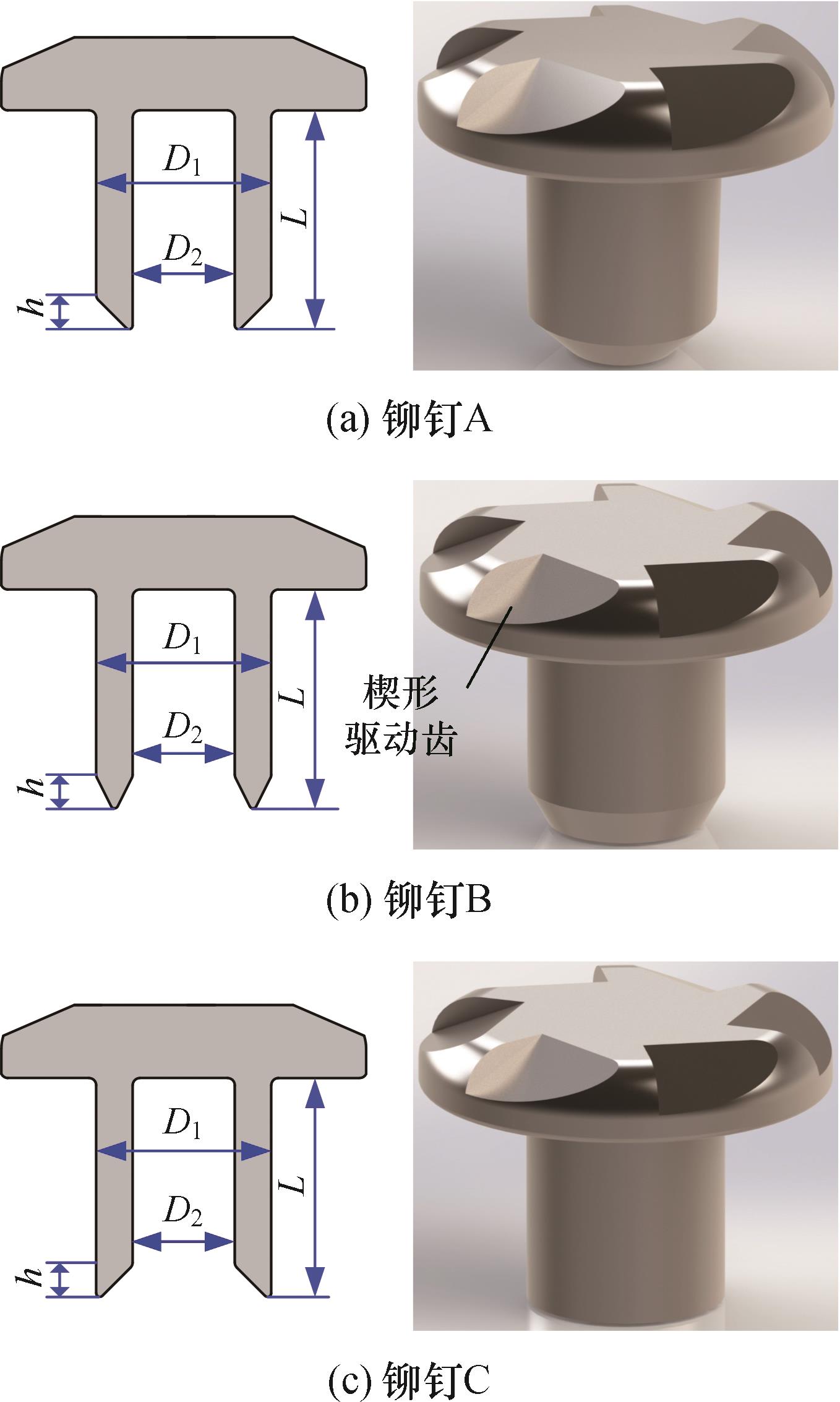
图1 不同铆钉结构的外观形貌与几何尺寸
Fig.1 The appearance and dimension of different rivets
| 材料牌号 | w(Ti) | w(Al) | w(V) | w(Fe) | w(Si) | w(C) | w(N) | w(H) | w(O) |
|---|---|---|---|---|---|---|---|---|---|
| TC4 | 余量 | 5.5∼6.8 | 3.5∼4.5 | 0.30 | 0.10 | 0.10 | 0.05 | 0.015 | 0.015 |
表1 TC4钛合金材料的化学成分(质量分数) (%)
Tab.1 The chemical composition of TC4 titanium alloy (mass fraction)
| 材料牌号 | w(Ti) | w(Al) | w(V) | w(Fe) | w(Si) | w(C) | w(N) | w(H) | w(O) |
|---|---|---|---|---|---|---|---|---|---|
| TC4 | 余量 | 5.5∼6.8 | 3.5∼4.5 | 0.30 | 0.10 | 0.10 | 0.05 | 0.015 | 0.015 |
| 材料 | 弹性模量/GPa | 屈服强度/MPa | 极限抗拉强度/MPa | 延伸率/% |
|---|---|---|---|---|
| CFRP-T300 | 230 | 911 | 2.0 | |
| TC4(板材) | 110 | 860 | 996 | 12.0 |
| TC4(铆钉) | 110 | 825 | 932 | 18.0 |
表2 CFRP-T300复合材料及TC4钛合金的力学性能
Tab.2 The mechanical properties of CFRP-T300 and TC4 titanium alloy
| 材料 | 弹性模量/GPa | 屈服强度/MPa | 极限抗拉强度/MPa | 延伸率/% |
|---|---|---|---|---|
| CFRP-T300 | 230 | 911 | 2.0 | |
| TC4(板材) | 110 | 860 | 996 | 12.0 |
| TC4(铆钉) | 110 | 825 | 932 | 18.0 |
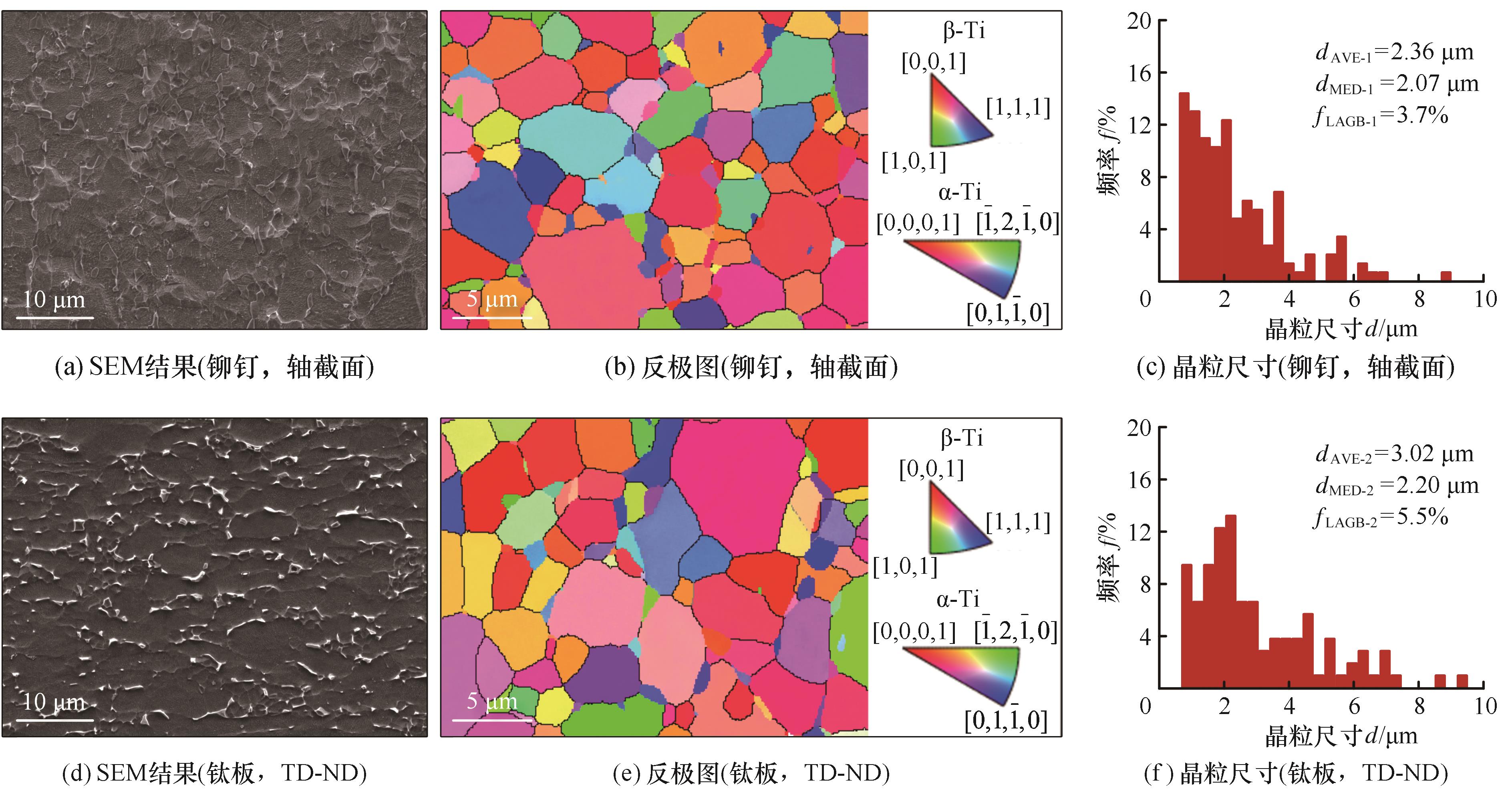
图2 TC4母材的SEM与EBSD结果
Fig.2 SEM and EBSD results of TC4 base material
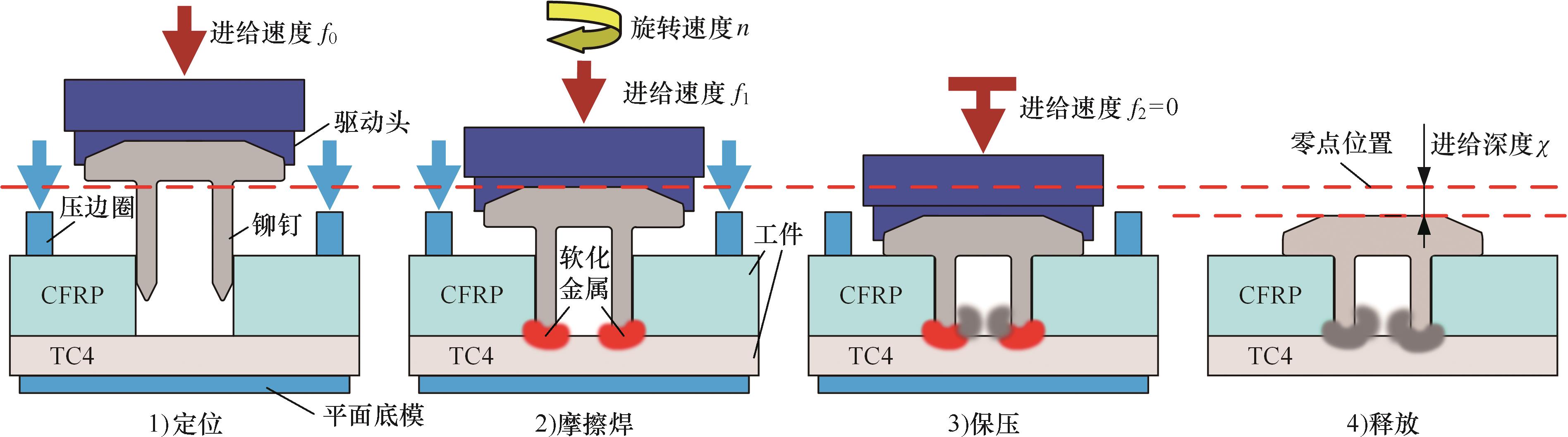
图3 C-PDFR工艺过程示意图
Fig.3 Schematic diagram of C-PDFR process
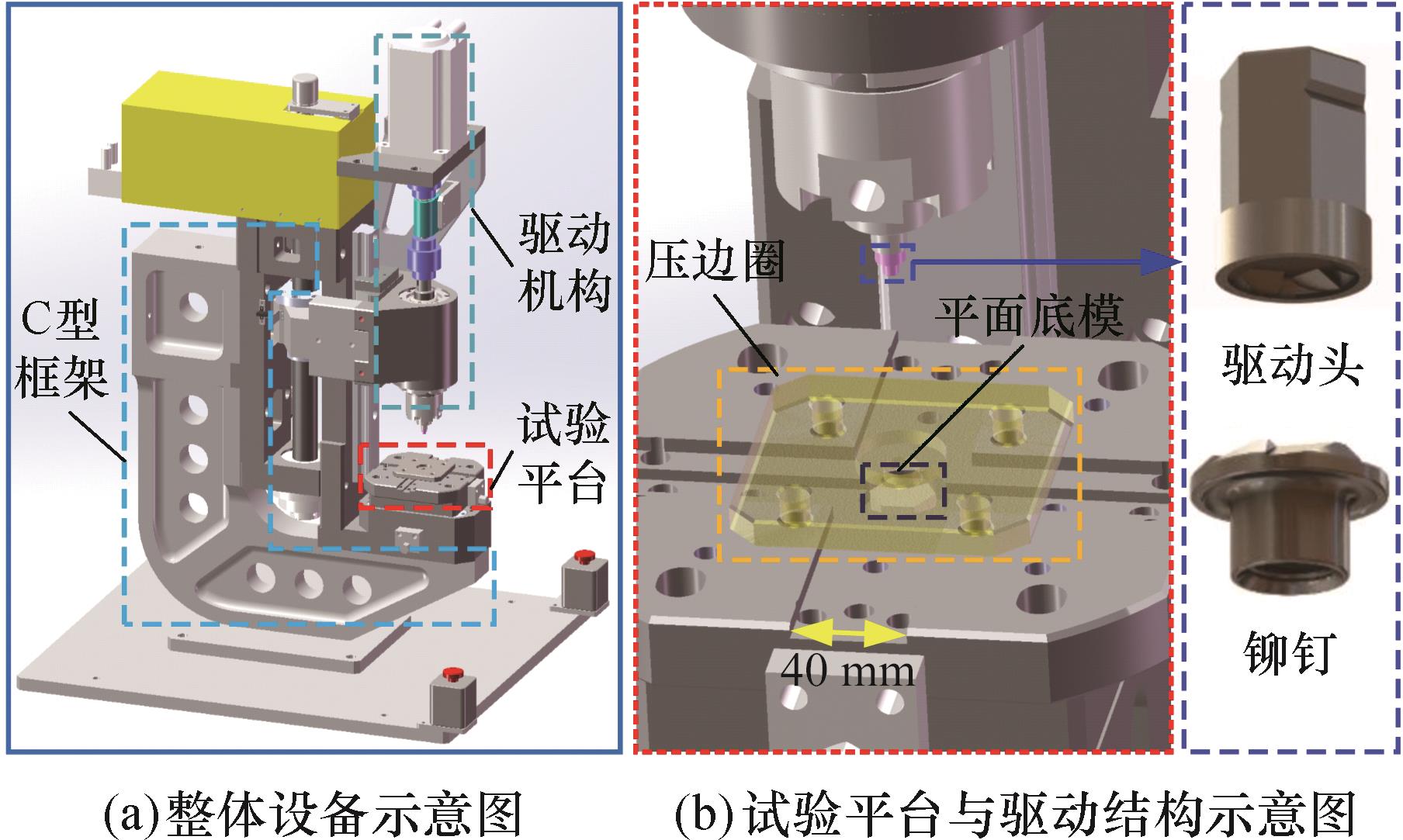
图4 C型框架摩擦铆焊实验系统
Fig.4 Friction self-piercing riveting experimental system
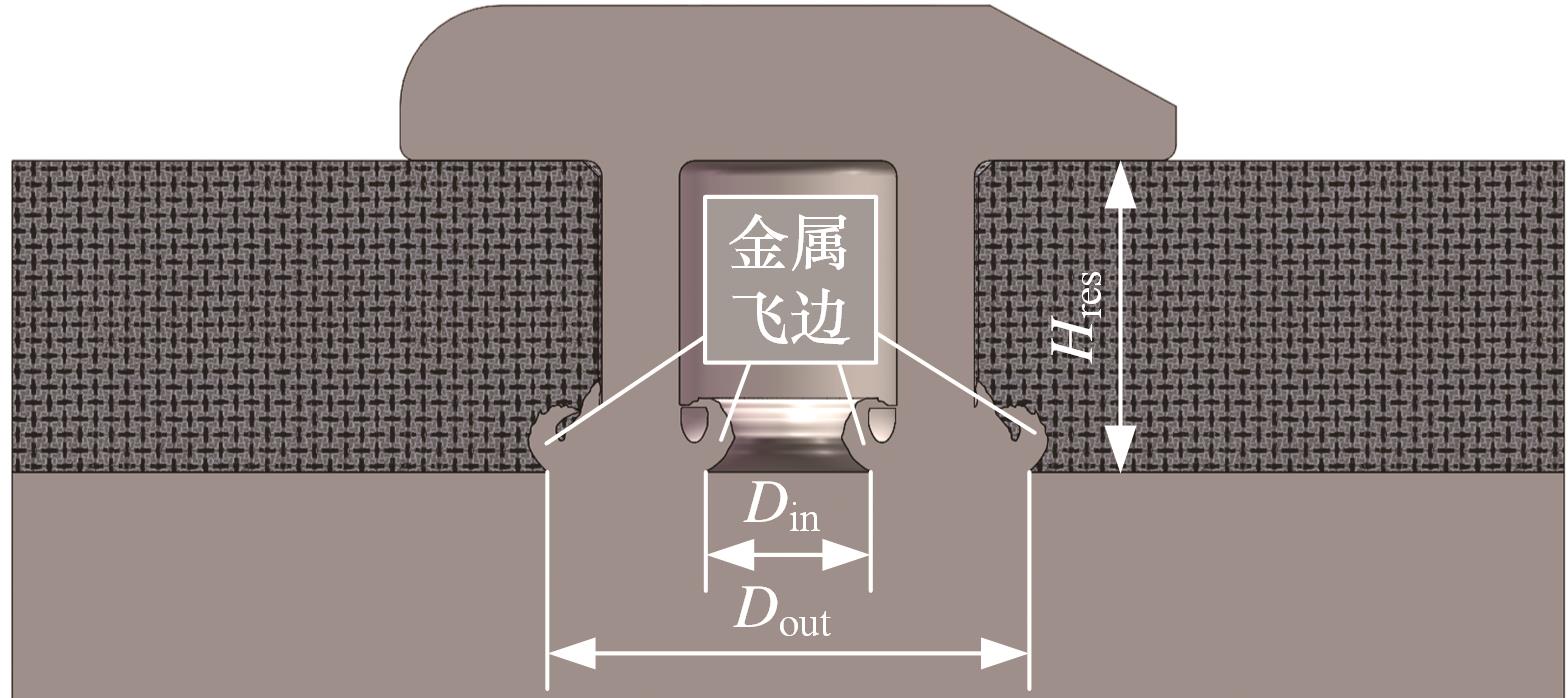
图5 C-PDFR接头的几何特征示意图
Fig.5 The schematic showing geometrical features of C-PDFR
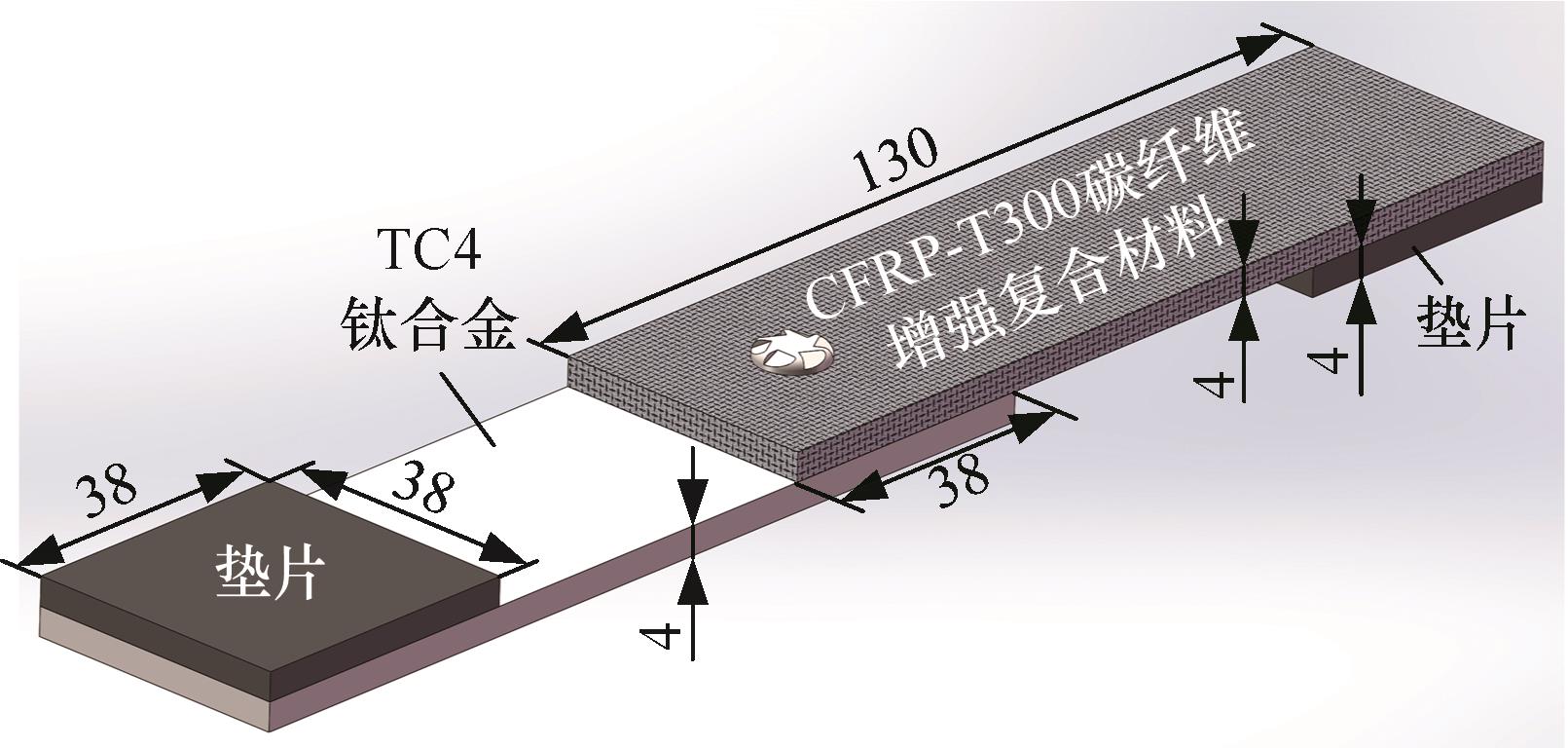
图6 接头力学性能拉剪试样尺寸
Fig.6 The sample size of tensile-shear specimens for joint mechanics performance testing
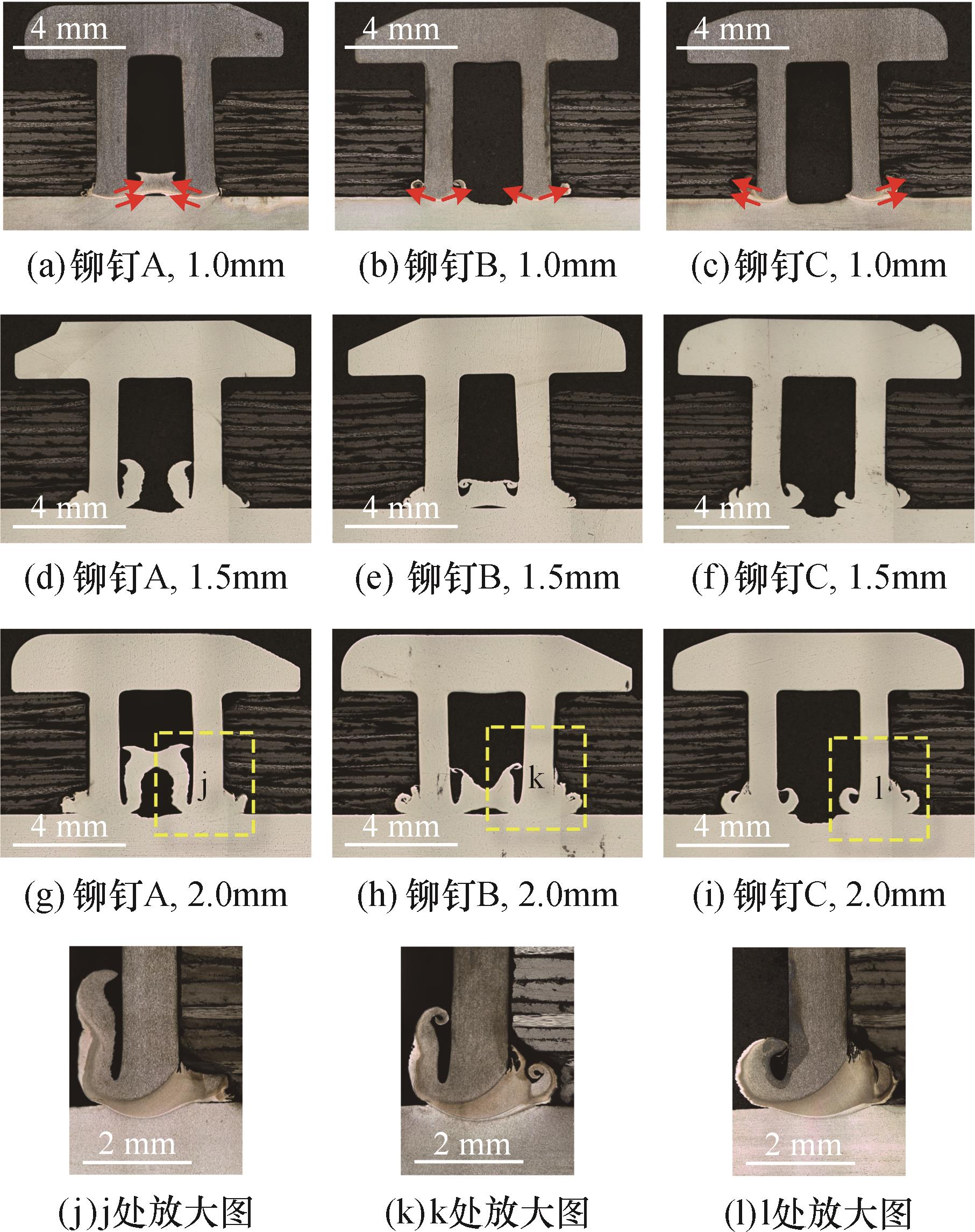
图7 不同结构铆钉的接头金相宏观形貌对比
Fig.7 The comparative macro-metallography for different riveting joints
| 铆钉类型 | 铆钉剩余高度 | ||
|---|---|---|---|
| 铆钉A | 5.21 mm | 4.71 mm | 4.24 mm |
| 铆钉B | 5.13 mm | 4.59 mm | 4.19 mm |
| 铆钉C | 5.10 mm | 4.55 mm | 4.17 mm |
表3 不同结构铆钉接头的铆钉剩余高度
Tab.3 The residual joint height of different riveting joints
| 铆钉类型 | 铆钉剩余高度 | ||
|---|---|---|---|
| 铆钉A | 5.21 mm | 4.71 mm | 4.24 mm |
| 铆钉B | 5.13 mm | 4.59 mm | 4.19 mm |
| 铆钉C | 5.10 mm | 4.55 mm | 4.17 mm |
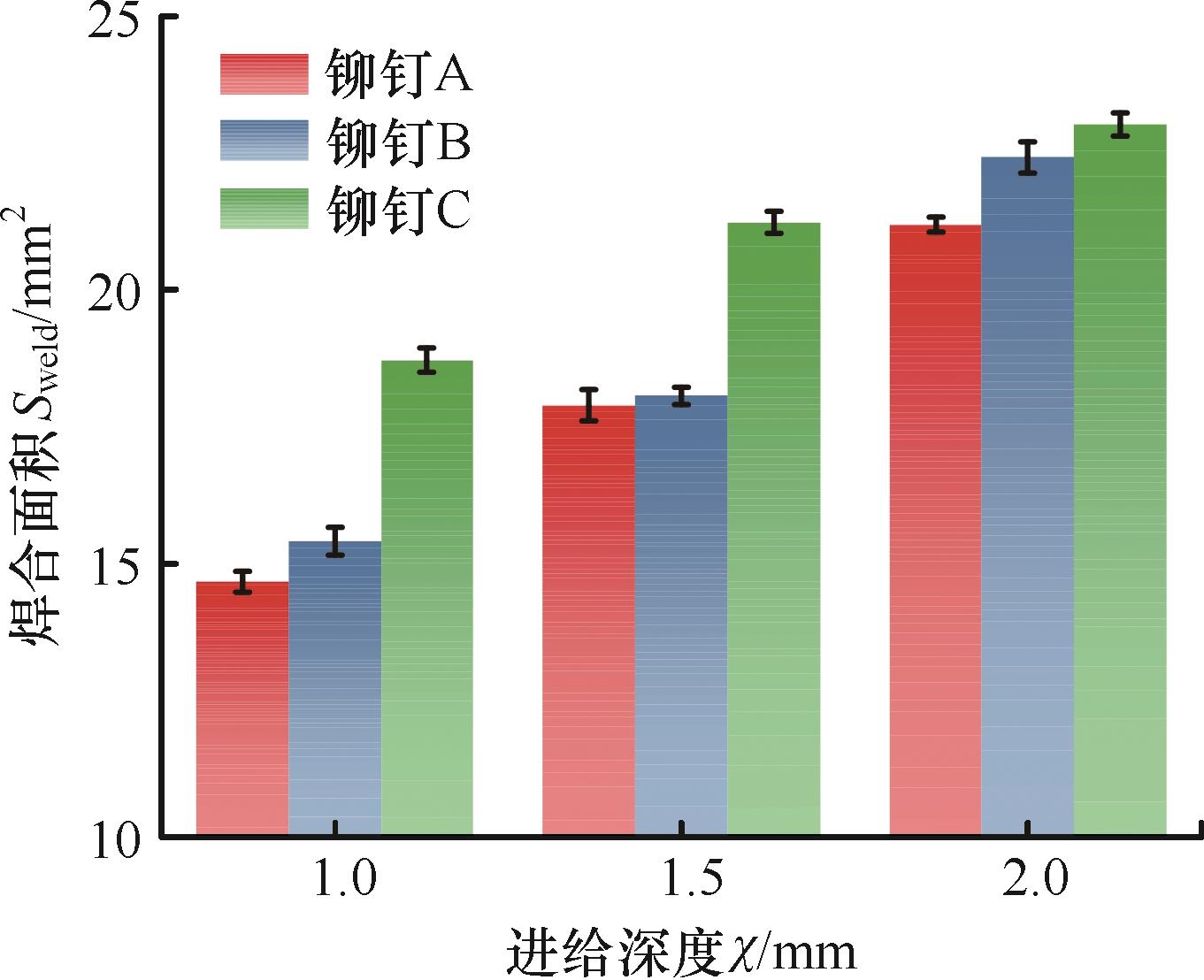
图8 不同结构铆钉接头的焊合面积(χ=1.0,1.5,2.0 mm)
Fig.8 The welding area for different riveting joints(χ=1.0,1.5,2.0 mm)
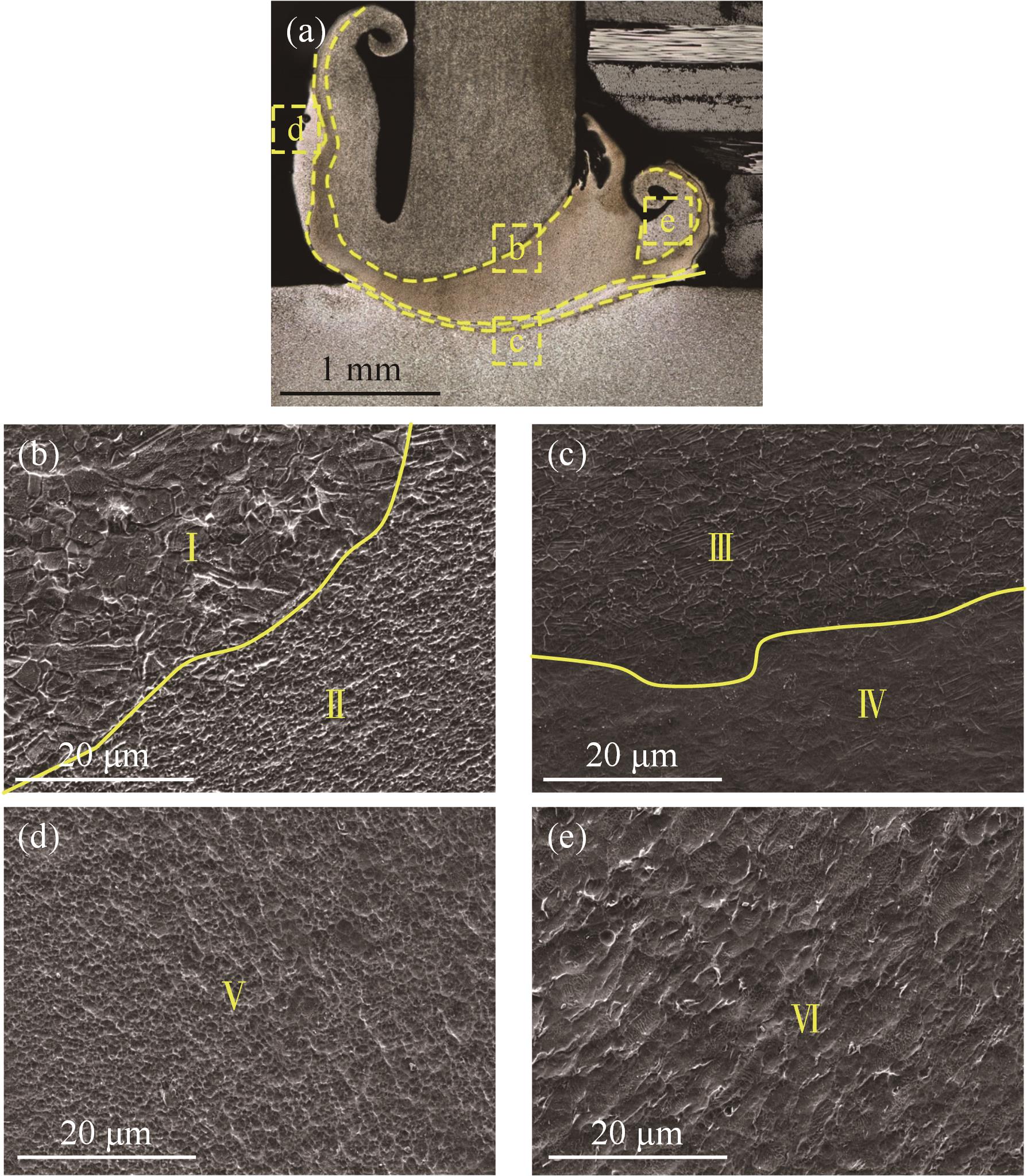
图9 C-PDFR接头的界面连接特征(铆钉B)
Fig.9 The interface joining characteristics of C-PDFR joint(rivet B)

图10 铆钉B的接头各区域EBSD结果
Fig.10 EBSD results of different sections for rivet B joint
| 区域 | 平均晶粒 尺寸/μm | 晶粒尺寸 中位数/μm | 小角度晶界 占比/% |
|---|---|---|---|
| Ⅰ区 | 2.30 | 1.65 | 22.9 |
| Ⅱ区 | 0.93 | 0.65 | 14.3 |
| Ⅲ区 | 2.68 | 1.48 | 65.2 |
| Ⅳ区 | 3.26 | 2.35 | 49.4 |
| Ⅴ区 | 1.07 | 0.92 | 19.0 |
| Ⅵ区 | 1.16 | 0.87 | 23.1 |
表4 不同区域的晶粒尺寸以及小角度晶界占比(铆钉B)
Tab.4 Grain size and low-angle grain boundary fraction in different regions(rivet B)
| 区域 | 平均晶粒 尺寸/μm | 晶粒尺寸 中位数/μm | 小角度晶界 占比/% |
|---|---|---|---|
| Ⅰ区 | 2.30 | 1.65 | 22.9 |
| Ⅱ区 | 0.93 | 0.65 | 14.3 |
| Ⅲ区 | 2.68 | 1.48 | 65.2 |
| Ⅳ区 | 3.26 | 2.35 | 49.4 |
| Ⅴ区 | 1.07 | 0.92 | 19.0 |
| Ⅵ区 | 1.16 | 0.87 | 23.1 |
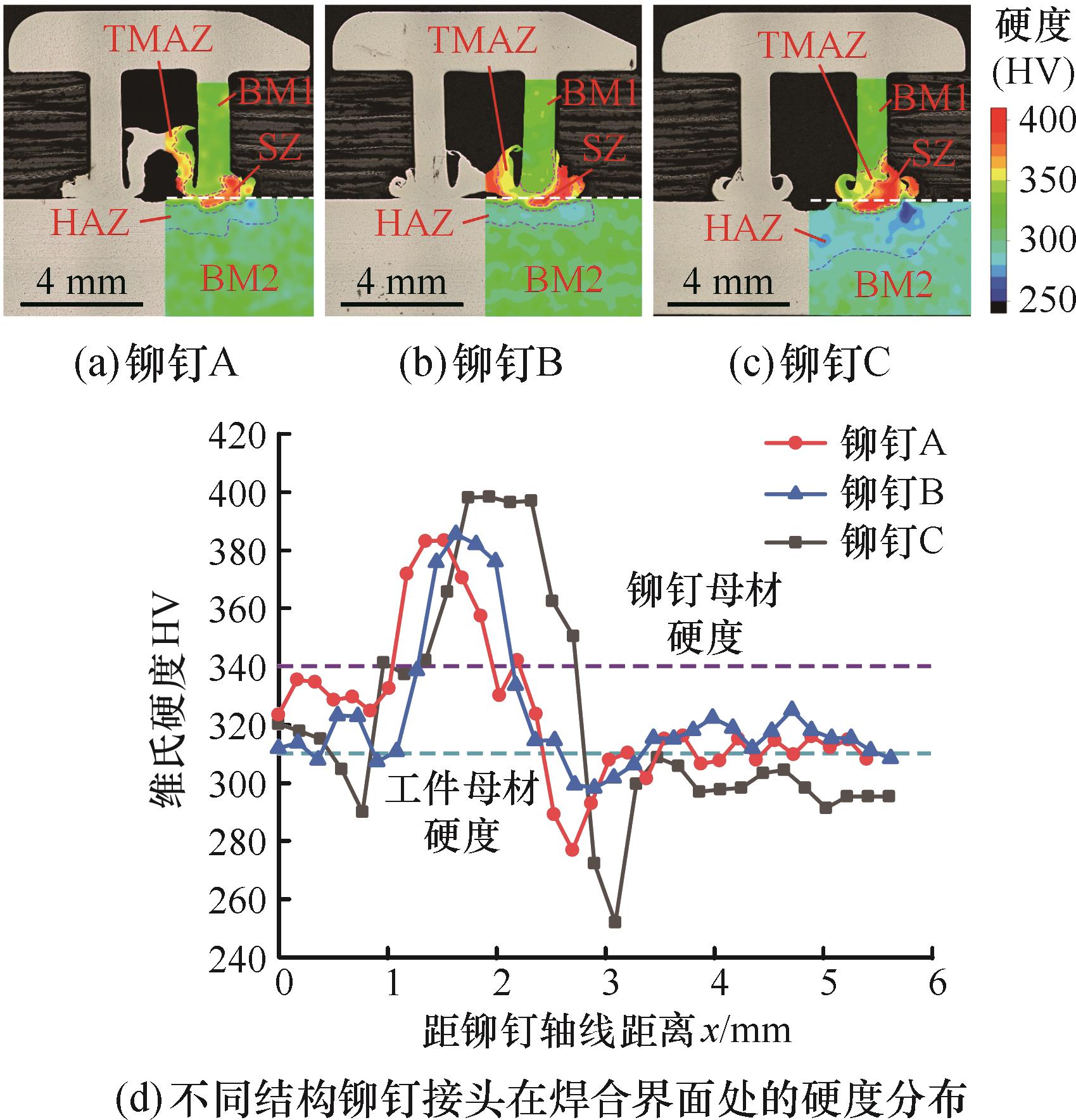
图11 不同铆钉接头的硬度分布特征以及影响区域划分
Fig.11 The hardness characteristic and affected zone partition of different rivet joints
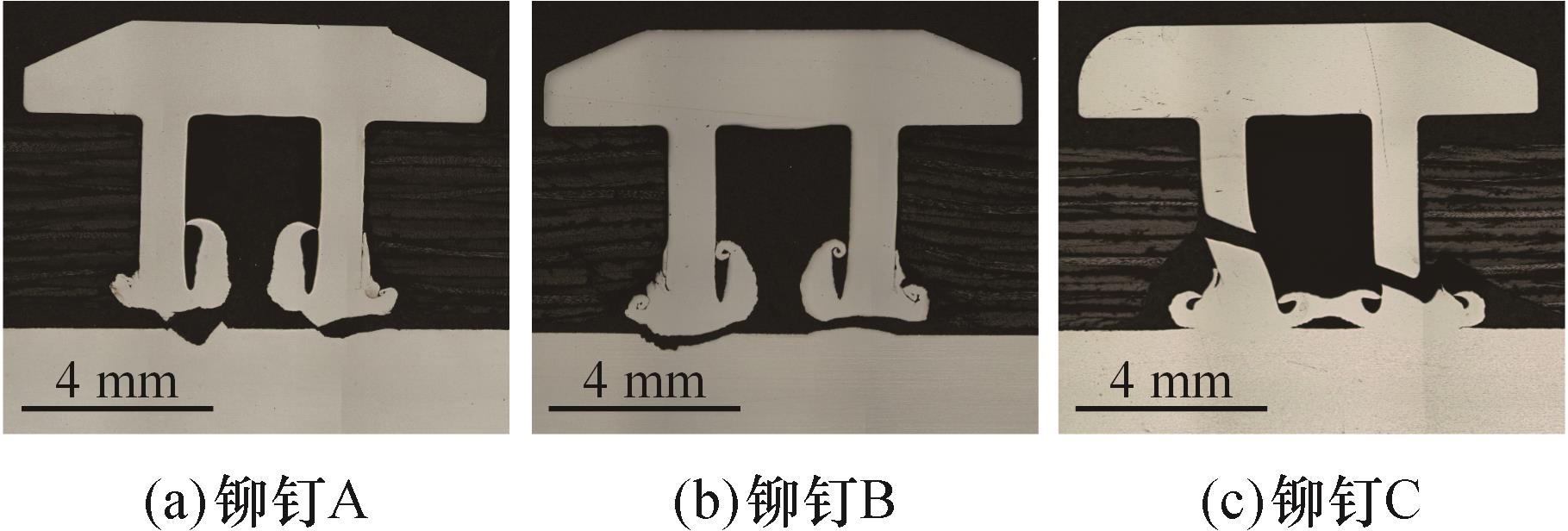
图12 不同铆钉接头的拉剪失效截面
Fig.12 The tensile-shear fracture section of different rivet joints
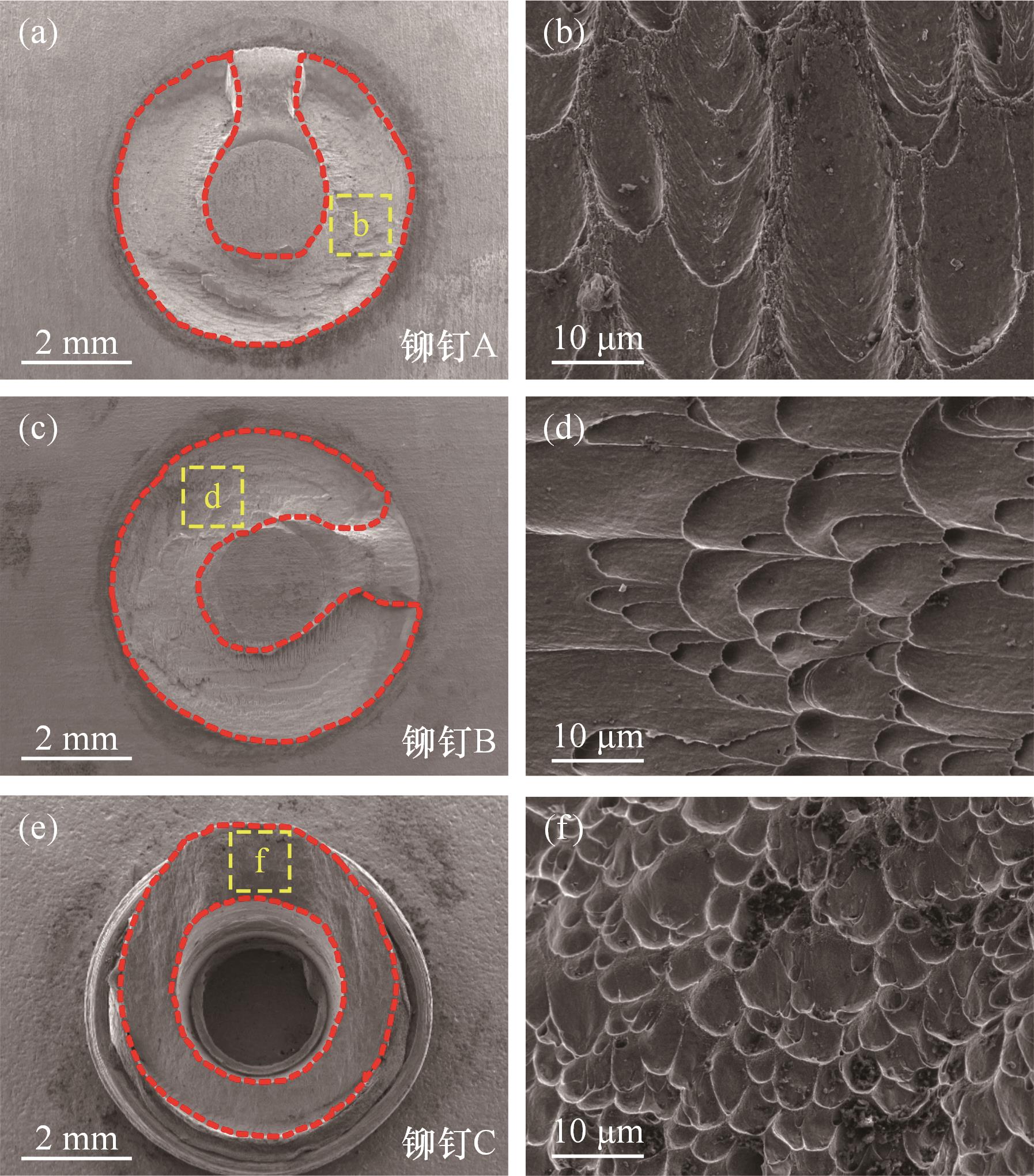
图13 不同铆钉接头的断口SEM图像
Fig.13 The SEM images of fracture surface for different rivet joints
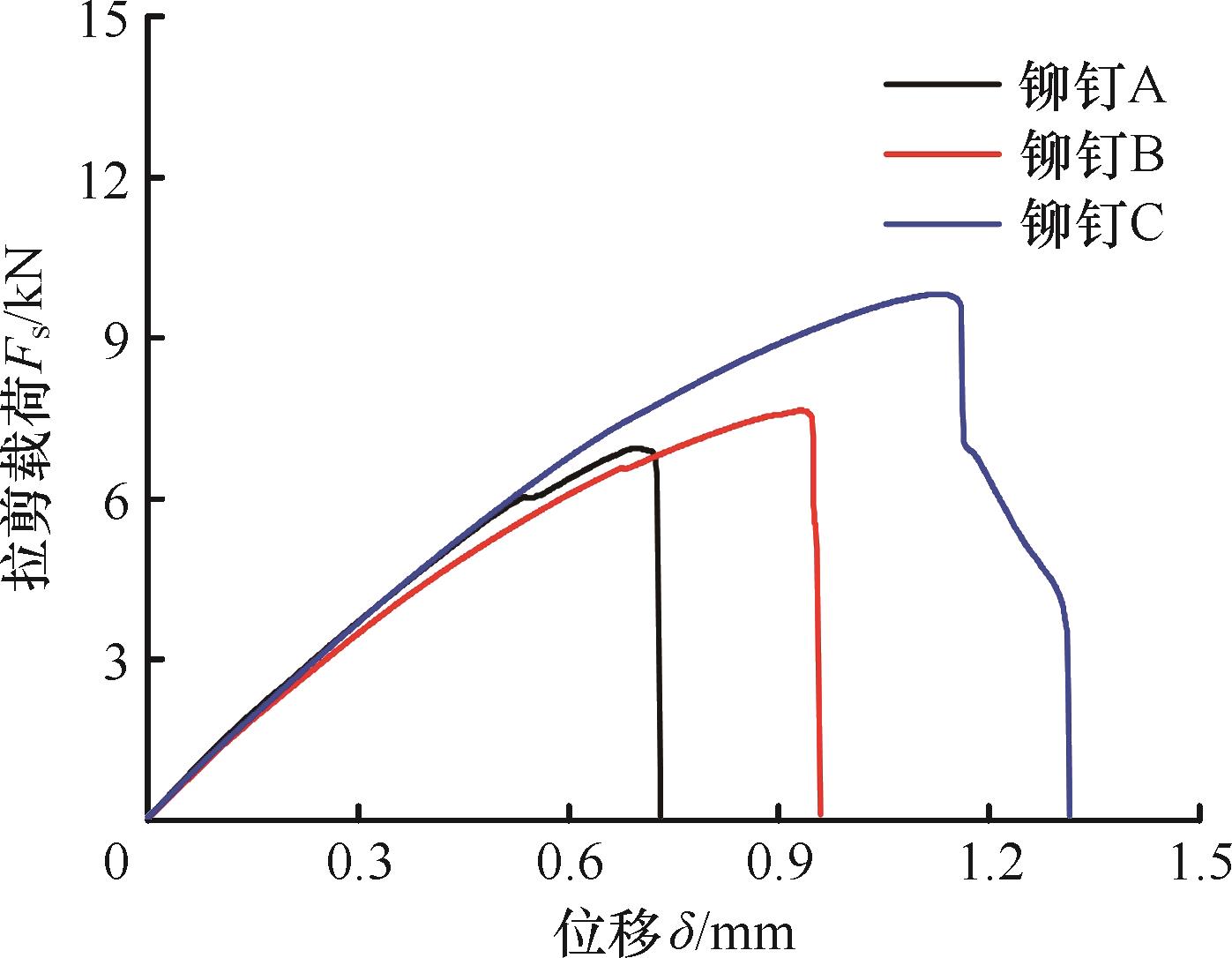
图14 不同铆钉接头的拉剪载荷-位移曲线
Fig.14 The tensile-shear load-displacement curves of different riveted joints
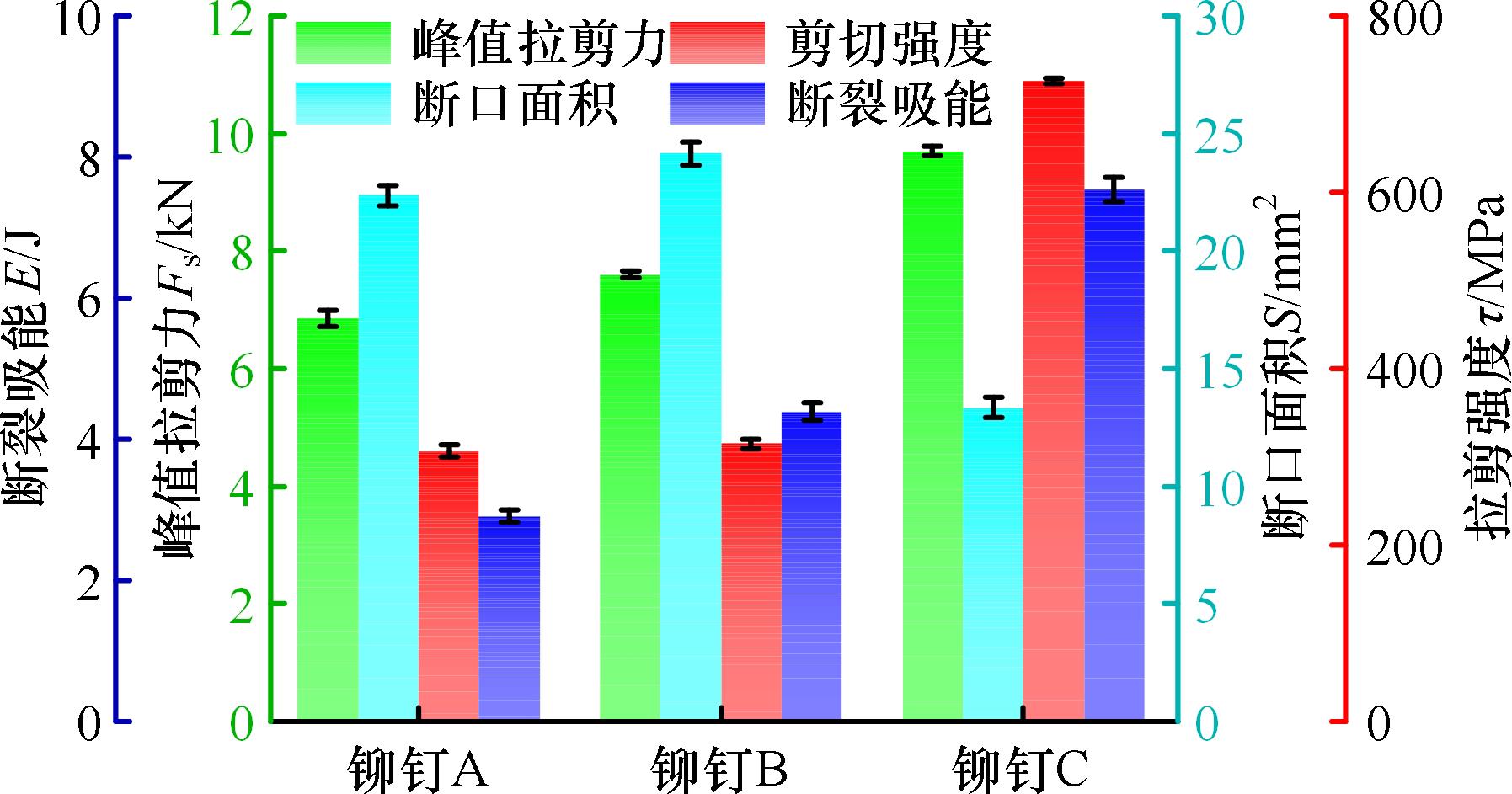
图15 不同铆钉接头的峰值拉剪力、断口面积、拉剪强度以及断裂吸能
Fig.15 The tensile-shear peak load, fracture surface area, tensile-shear strength, and fracture energy absorption of different rivet joints
| [1] | 王芳丽, 刘凯, 潘微, 等. 民机结构绿色维修技术应用与发展[J]. 航空学报, 2023, 44(11): 19-37. |
| WANG Fangli, LIU Kai, PAN Wei, et al. Application and Development of Green Structure Maintenance for Civil Aircraft[J]. Acta Aeronautica et Astronautica Sinica, 2023, 44(11): 19-37. | |
| [2] | 姜丽萍. C919的制造技术热点及最新研制进展[J]. 航空制造技术, 2013, 56(22): 26-31. |
| JIANG Liping. Hot Topic and the Latest Advances in Manufacturing Technology of C919[J]. Aeronautical Manufacturing Technology, 2013, 56(22): 26-31. | |
| [3] | 唐臣升, 王巍. 复合材料叠层结构制孔技术[J]. 工具技术, 2017, 51(4): 83-86. |
| TANG Chensheng, WANG Wei. Hole-making Technology of Composite Laminated Structure[J]. Tool Engineering, 2017, 51(4): 83-86. | |
| [4] | 杨晓娜, 杨友涛. 飞机结构连接件制孔方式优化[J]. 航空精密制造技术, 2022, 58(1): 52-54. |
| YANG Xiaona, YANG Youtao. Optimization of Hole Making Method for Aircraft Structure Connector[J]. Aviation Precision Manufacturing Technology, 2022, 58(1): 52-54. | |
| [5] | 耿大喜, 孟繁星, 孙哲飞, 等. 碳纤维复合材料/钛合金叠层结构振动制孔技术研究进展[J]. 航空制造技术, 2024, 67(23): 14-32. |
| GENG Daxi, MENG Fanxing, SUN Zhefei, et al. Research Progress on Vibration Hole Making Technology of Carbon Fiber Composite/Titanium Alloy Laminated Structure[J]. Aeronautical Manufacturing Technology, 2024, 67(23): 14-32. | |
| [6] | 王春浩, 李鹏南, 邱新义, 等. 纵扭超声辅助钻削CFRP/TC4叠层结构的轴向力理论建模[J]. 机械工程学报, 2025, 61(7): 210-219. |
| WANG Chunhao, LI Pengnan, QIU Xinyi, et al. Prediction of Thrust Force of CFRP/TC4 Stacks Structures in Longitudinal Torsional Ultrasonic Assisted Drilling[J]. Journal of Mechanical Engineering, 2025, 61(7): 210-219. | |
| [7] | 刘凤宇, 陈涛, 段振岩, 等. 变参数超声啄式钻削CFRP/TC4不同钻孔顺序试验研究[J]. 航空制造技术, 2025, 68(7): 92-99. |
| LIU Fengyu, CHEN Tao, DUAN Zhenyan, et al. Experimental Study on Variable-parameters Ultrasonic Pecking Drilling with Different Drilling Sequences for CFRP/TC4 Stacks[J]. Aeronautical Manufacturing Technology, 2025, 68(7): 92-99. | |
| [8] | XU Moran, CAO Longchao, LI Junxiang, et al. Experimental, Modeling, and Numerical Simulation of Ultrasonic Assisted Drilling of CFRP/Ti Stacks[J]. Journal of Manufacturing Processes, 2025, 133: 97-117. |
| [9] | RODRÍGUEZ A, CALLEJA A, De LACALLE L N L, et al. Drilling of CFRP-Ti6Al4V Stacks Using CO2-cryogenic Cooling[J]. Journal of Manufacturing Processes, 2021, 64: 58-66. |
| [10] | KHAN S A, ROYER R, SARAIVA M, et al. In-depth Tool Wear Analysis in Drilling of CFRP-Ti Stacks by DLC Coated Drills[J]. Composite Structures, 2025, 363: 119110. |
| [11] | 金希红, 曹琼方, 魏杨, 等. 考虑温度效应的胶接接头力学性能及失效机理[J]. 科学技术与工程, 2024, 24(29): 12497-12505. |
| JIN Xihong, CAO Qiongfang, WEI Yang, et al. Mechanical Properties and Failure Mechanism of Adhesive Joints with Temperature Effect[J]. Science Technology and Engineering, 2024, 24(29): 12497-12505. | |
| [12] | 王伟, 王蔚, 姚天昊, 等. 激光去除碳纤维复合材料表面树脂工艺试验及胶接性能研究[J]. 红外与激光工程, 2025, 54(6): 20240556. |
| WANG Wei, WANG Wei, YAO Tianhao, et al. Experimental Study on Laser Removal of Surface Resin in Carbon Fiber Composites and Adhesive Bonding Performance[J]. Infrared and Laser Engineering, 2025, 54(6): 20240556. | |
| [13] | 单忠德, 范聪泽, 孙启利, 等. 纤维增强树脂基复合材料增材制造技术与装备研究[J]. 中国机械工程, 2020, 31(2): 221-226. |
| SHAN Zhongde, FAN Congze, SUN Qili, et al. Research on Additive Manufacturing Technology and Equipment for Fiber Reinforced Resin Composites[J]. China Mechanical Engineering, 2020, 31(2): 221-226. | |
| [14] | TAO Wang, SU Xuan, CHEN Yanbin, et al. Joint Formation and Fracture Characteristics of Laser Welded CFRP/TC4 Joints[J]. Journal of Manufacturing Processes, 2019, 45: 1-8. |
| [15] | 龚浩, 程东海, 刘钊泽, 等. CFRP/TC4激光连接工艺及接头组织和性能[J]. 材料导报, 2024, 38(7): 166-170. |
| GONG Hao, CHENG Donghai, LIU Zhaoze, et al. Study on Laser Bonding Technology and Microstructure and Properties of CFRP/TC4 Joint[J]. Materials Reports, 2024, 38(7): 166-170. | |
| [16] | ZHANG Yu, WANG Fuji, WANG Qi. Effect of Interfacial Temperature on the Bonding Morphology and Fracture Mechanism of TC4-CFRTP Laser Bonding Joints with Polymer Interlayer[J]. Optics & Laser Technology, 2025, 184: 112463. |
| [17] | ZHANG Bowen, MA Yunwu, YU Feilong, et al. Strengthening Flat-die Friction Self-pierce Riveting Joints via Manipulating Stir Zone Geometry by Tailored Rivet Structures[J]. International Journal of Machine Tools and Manufacture, 2024, 203: 104223. |
| [18] | LIU Yunpeng, MA Yunwu, LOU Ming, et al. Effects of Rotation Speed on Microstructure and Mechanical Properties of Non-prehole Riveting Process for High-strength Aluminium Alloys[J]. Materials & Design, 2025, 249: 113539. |
| [1] | 李鹏南, 刘文杰, 邱新义, 宋梓贤, 唐依. CFRP/钛合金叠层结构制孔刀具磨损研究进展[J]. 中国机械工程, 2026, 37(9): 2216-2229. |
| [2] | 易军, 陈洪峰, 苗长春, 尹泽清, 邓辉. TC4钛合金射流电解质等离子体微加工流场仿真与实验研究[J]. 中国机械工程, 2026, 37(9): 2305-2313. |
| [3] | 乐庾忻, 李聪波, 黄康华, 汪广平, 苏栗, 安庆强. 考虑刀具磨损的TB6钛合金镗削表面粗糙度预测及工艺参数优化[J]. 中国机械工程, 2026, 37(8): 1965-1975. |
| [4] | 啜世达, 叶林征, 祝锡晶, 刘瑶, 王润宇. 超声空化微磨粒协同抛光改性TC17钛合金的机理[J]. 中国机械工程, 2026, 37(7): 1635-1640. |
| [5] | 龙玉朋, 蔡维, 李丽, 彭涛, 董国军. 并行超声振动切削对钛合金轴表面完整性的影响研究[J]. 中国机械工程, 2026, 37(3): 726-734. |
| [6] | 杨自豪, 范增华, 张翔, 高军. 钛合金管内表面的化学辅助磁性剪切增稠抛光实验研究[J]. 中国机械工程, 2025, 36(12): 2846-2853. |
| [7] | 王亚辉1, 2, 3, 黄亮1, 2, 刘翔1, 2. 固溶处理对锻/增复合成形TC4钛合金件的显微组织和力学性能的影响[J]. 中国机械工程, 2025, 36(06): 1314-1321. |
| [8] | 郑金滔, 马浩然, 王进, 刘国梁. 超声辅助纳米流体微量润滑车削钛合金实验研究[J]. 中国机械工程, 2025, 36(04): 743-752,759. |
| [9] | 周金华1, 2, 齐琪1, 2, 任军学1, 2, 詹梅1, 2. 锥度球头刀四轴铣削TC4残余应力梯度分布反解[J]. 中国机械工程, 2025, 36(04): 770-779. |
| [10] | 谭靓1, 2, 樊怡3, 姚倡锋1, 2. 400 ℃高周疲劳下TC17超声冲击强化表面状态演化规律研究[J]. 中国机械工程, 2025, 36(04): 790-801. |
| [11] | 焦纪强1, 2, 蒙峻2, 谢文君2, 郭方准1. 钛合金内衬薄壁腔体结构设计与性能研究[J]. 中国机械工程, 2025, 36(02): 265-270. |
| [12] | 徐成宇, 张万一, 张天鸿, 朱永伟. 固结磨料小工具头修形抛光钛合金叶片试验研究[J]. 中国机械工程, 2024, 35(09): 1606-1612. |
| [13] | 钱萍, 陈驰, 陈文华, 吴山奇, 郭明达. 电连接器用聚氨酯胶密封件贮存可靠性统计模型的加速试验验证与评估[J]. 中国机械工程, 2024, 35(05): 886-894. |
| [14] | 韩晓辉, 林森, 方喜风, 王振中, 孙兆刚, 余飞龙, 李磊, 马运五, 李永兵, . 铆钉镀层对单边摩擦铆焊接头成形及力学性能的影响[J]. 中国机械工程, 2024, 35(04): 721-730. |
| [15] | 康仁科, 陆冰伟, 陈凯良, 李晟超, 戴晶滨, 董志刚, 鲍岩. 超声振动辅助磨削CFRP复合材料薄管撕裂损伤研究[J]. 中国机械工程, 2024, 35(03): 524-533,540. |
| 阅读次数 | ||||||
|
全文 |
|
|||||
|
摘要 |
|
|||||
