



ISSN 1004-132X
CN 42-1294/TH
CN 42-1294/TH
中国机械工程 ›› 2026, Vol. 37 ›› Issue (2): 285-294.DOI: 10.3969/j.issn.1004-132X.2026.02.004
• 先进流体系统设计与优化专栏 • 上一篇
陈誉1,2( ), 赵琛1, 何玉文1, 翟富刚1,2, 孔祥东1,2
收稿日期:2025-04-17
出版日期:2026-02-25
发布日期:2026-03-13
通讯作者:
陈誉
作者简介:陈 誉*(通信作者),男,1990年生,讲师。研究方向为液压系统流体动力传输、流体机械过渡过程及系统稳定调控等。E-mail:yuchen@njit.edu.cn。
基金资助:
CHEN Yu1,2(), ZHAO Chen1, HE Yuwen1, ZHAI Fugang1,2, KONG Xiangdong1,2
Received:2025-04-17
Online:2026-02-25
Published:2026-03-13
Contact:
CHEN Yu
摘要:
针对不同参数对高速开关阀液压力的影响,采用计算流体动力学(CFD)技术对阀内流场进行瞬态数值模拟。在非空化和空化工况下,分别探究压差、背压、温度对阀芯液压力的影响,揭示不同开度下的空化流场特性和阀芯液压力的演变;选取空化较严重的工况,探究空化波动和液压力振荡之间的关联。结果表明:随着开度的增加,阀芯所受液压力呈减小趋势;随着压差的不断增大,非空化工况阀芯液压力减幅远大于空化工况,在6 MPa与10 MPa压差下尤为明显;背压的增大一定程度上抑制了空化的发生,使得空化时的液压力呈近似线性减小,但几乎不影响非空化下的液压力大小;温度升高使小开度下更易发生空化,且空化时液压力演变更加平滑。另外,阀口空化产生的气泡以非对称“活塞”特性型式依次排出阀体,导致阀内气泡体积以1355 Hz主频周期性振荡,进一步诱导阀芯头部及整个阀体液压力以相同主频波动。
中图分类号:
陈誉, 赵琛, 何玉文, 翟富刚, 孔祥东. 空化与非空化下高速开关阀阀芯液压力特性研究[J]. 中国机械工程, 2026, 37(2): 285-294.
CHEN Yu, ZHAO Chen, HE Yuwen, ZHAI Fugang, KONG Xiangdong. Research on Hydraulic Pressure Characteristics of High Speed Switching Valve under Cavitation and Non Cavitation Conditions[J]. China Mechanical Engineering, 2026, 37(2): 285-294.
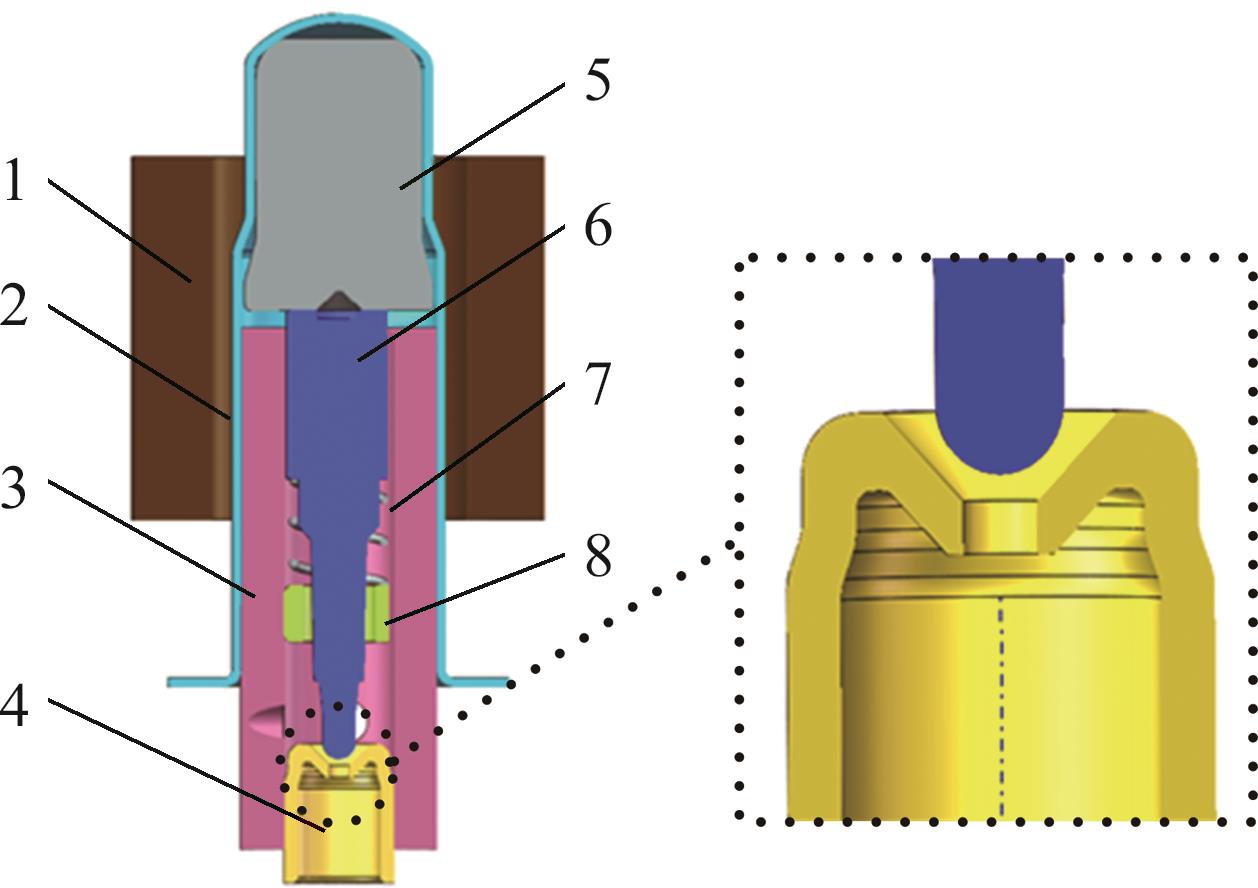
图1 高速开关阀结构与阀口局部放大图1.线圈 2.隔磁管 3.阀体 4.阀座 5.动铁 6.阀芯7.弹簧 8.挡圈
Fig.1 High-speed switching valve structure and valve port local amplification diagram
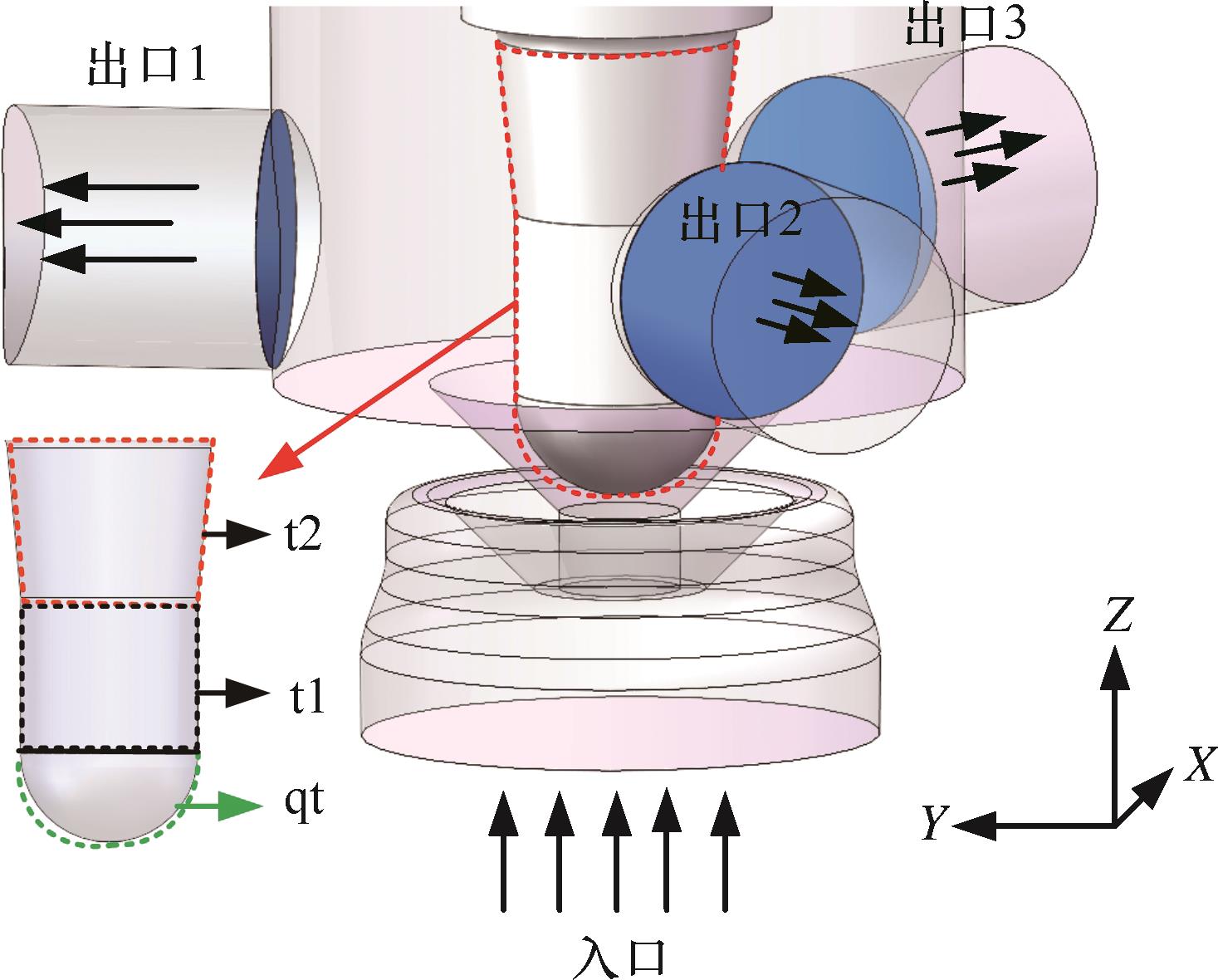
图2 开关阀阀内油液流动示意图
Fig.2 Flow diagram of oil in switching valve
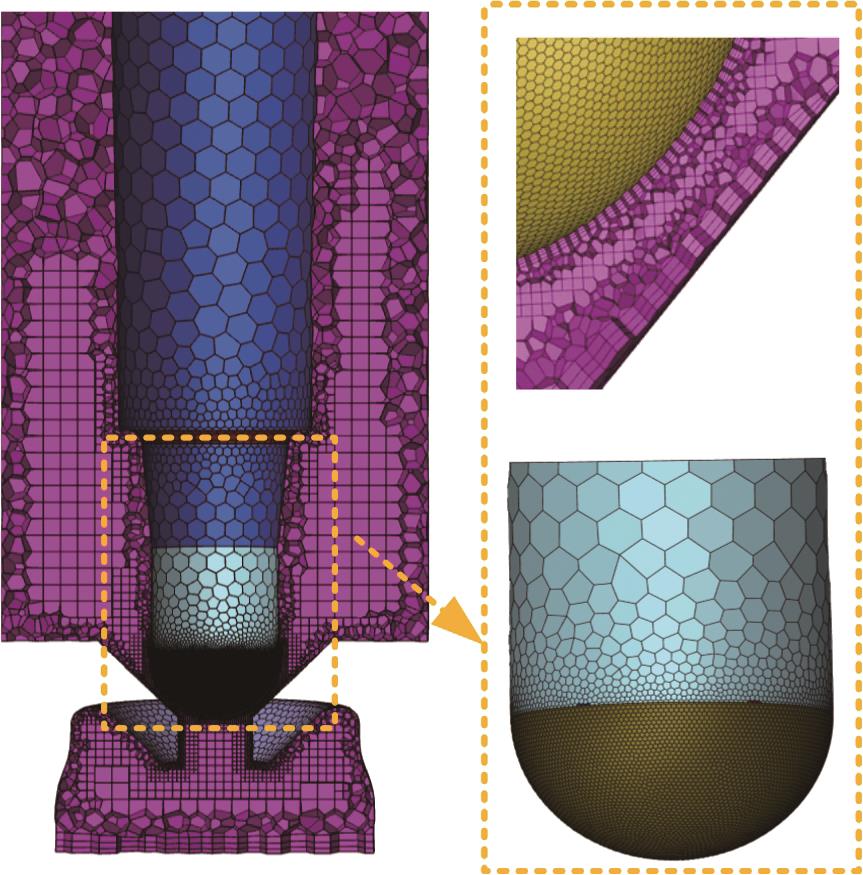
图3 开关阀网格划分图
Fig.3 Grid division diagram of switch valve
| 液压油密度/(kg·m3) | 850 |
|---|---|
| 液压油空化压力/Pa | 400 |
| 计算时间步长/s | 1×10 |
表1 仿真模型参数
Tab.1 Simulation model parameters
| 液压油密度/(kg·m3) | 850 |
|---|---|
| 液压油空化压力/Pa | 400 |
| 计算时间步长/s | 1×10 |
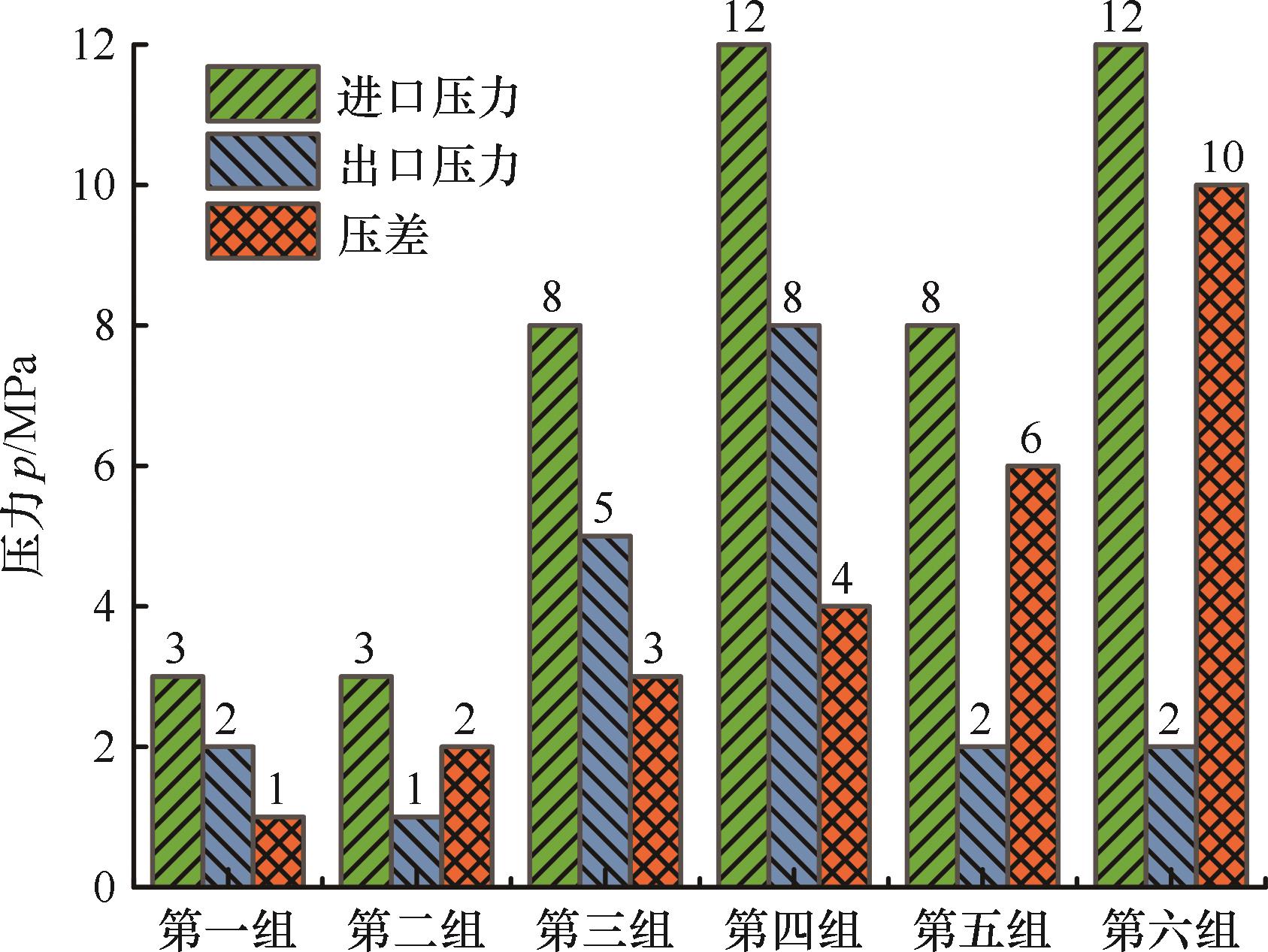
图4 进出口压力及压差边界条件
Fig.4 Boundary condition of inlet, outlet pressure and pressure difference
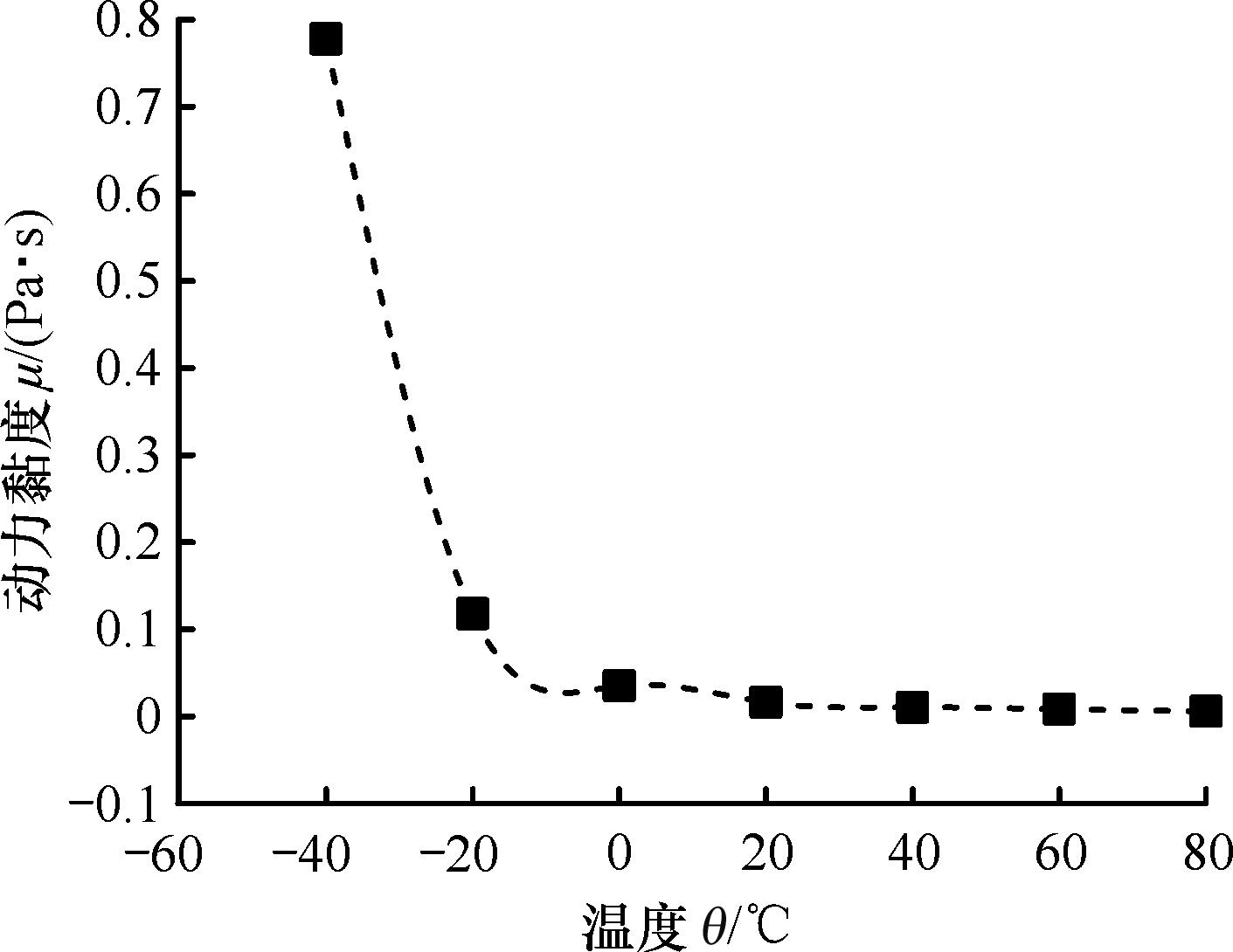
图5 DOT4液压油的温度动力黏度曲线
Fig.5 Temperature dynamic viscosity curve of DOT4 hydraulic oil
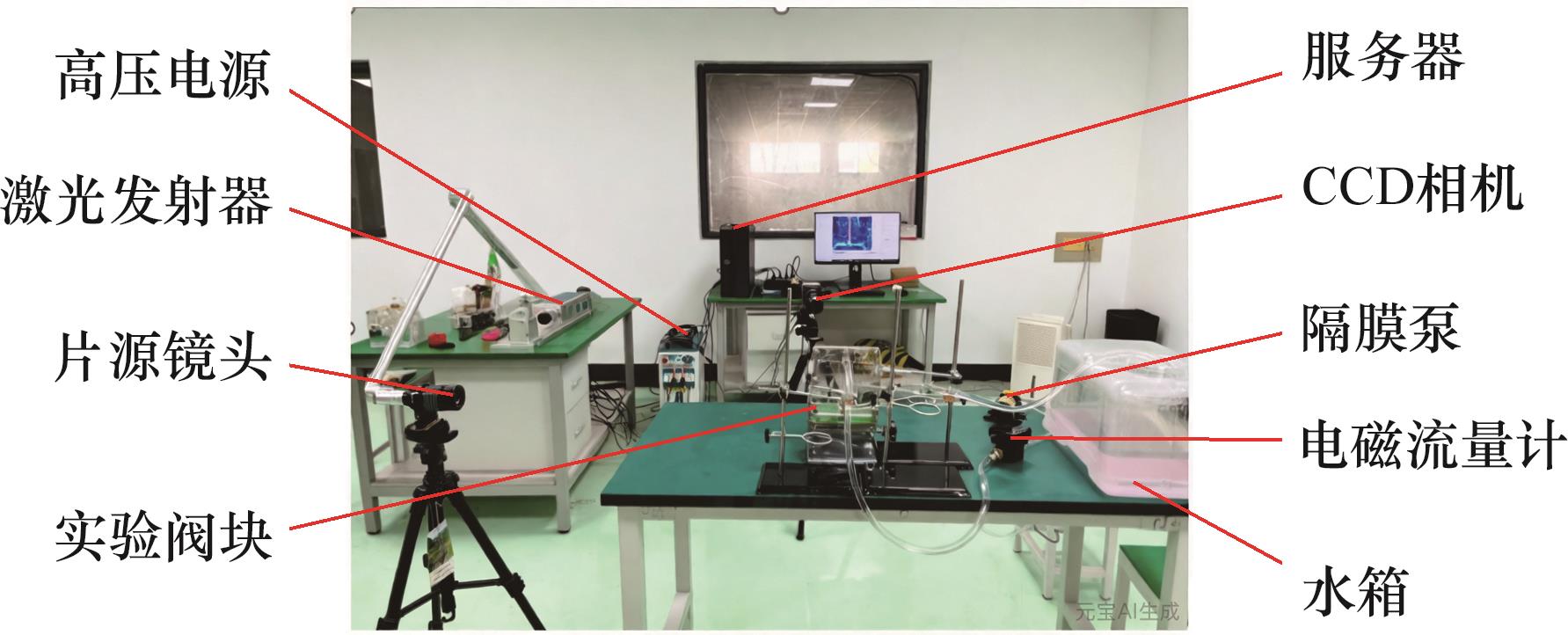
图6 PIV试验测试台
Fig.6 PIV test rig and system
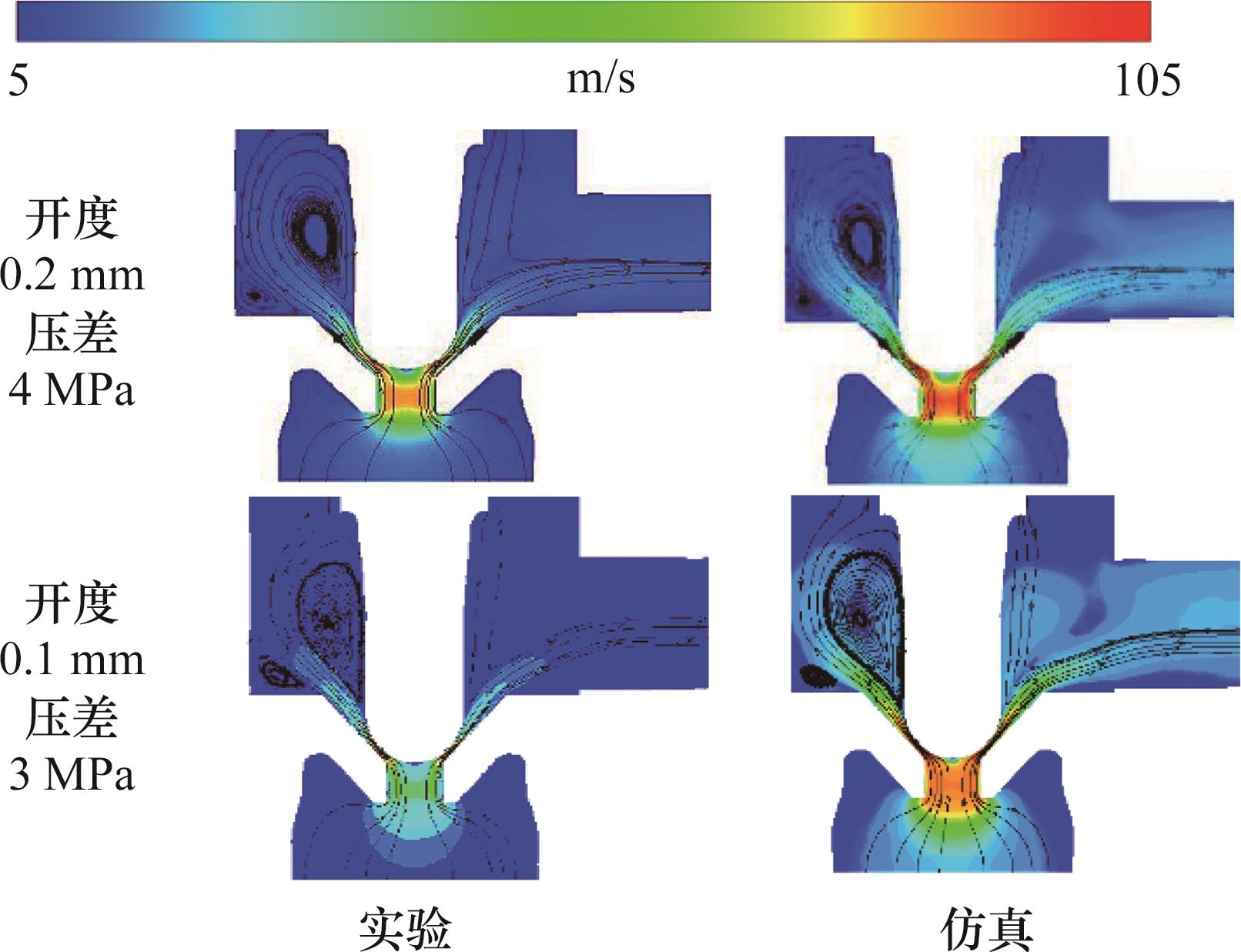
图7 实验与仿真流场对比
Fig.7 Flow field comparison between experiment and simulation
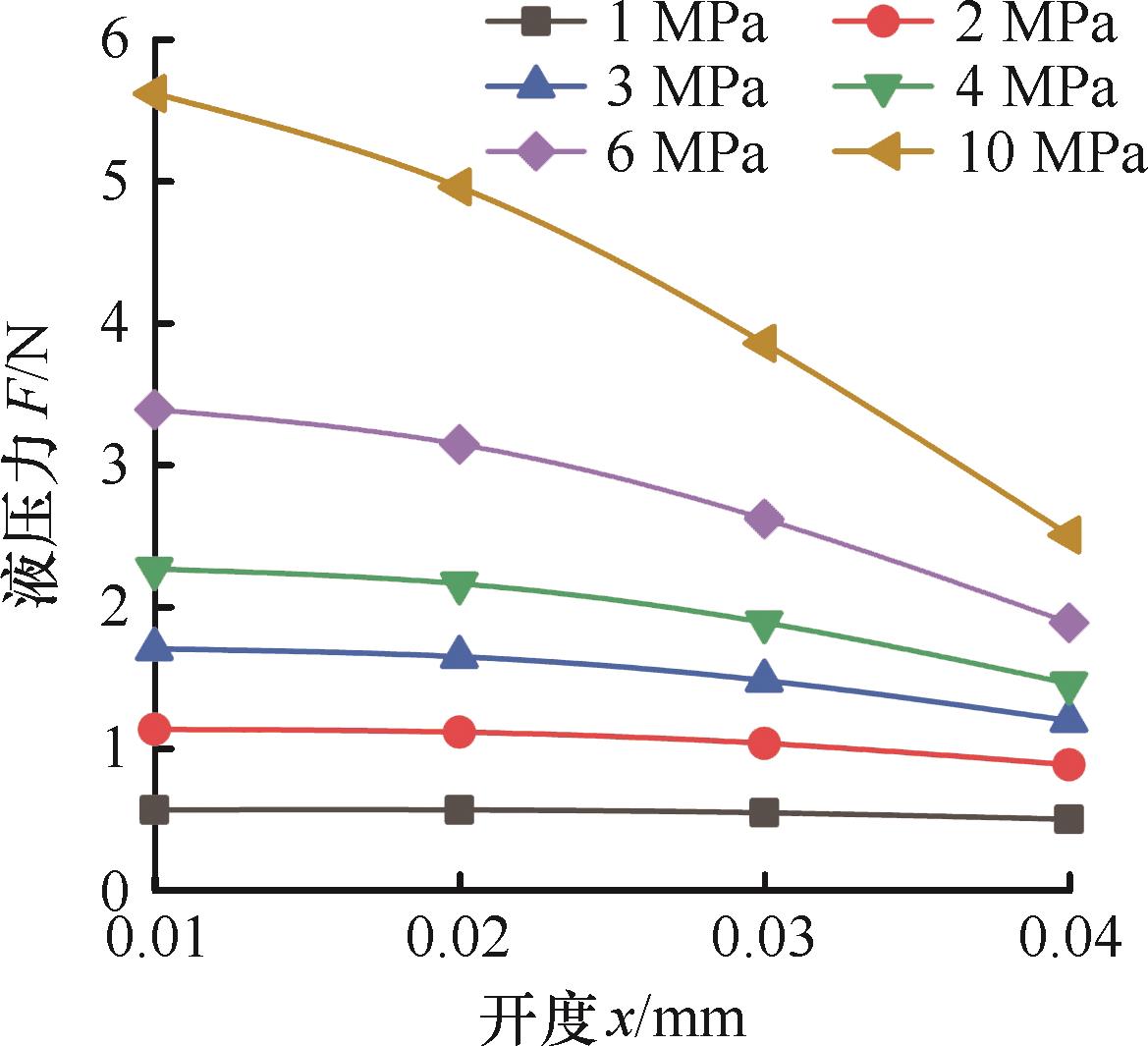
图8 小开度压差与液压力曲线
Fig.8 Pressure difference and hydraulic force curve at small openings
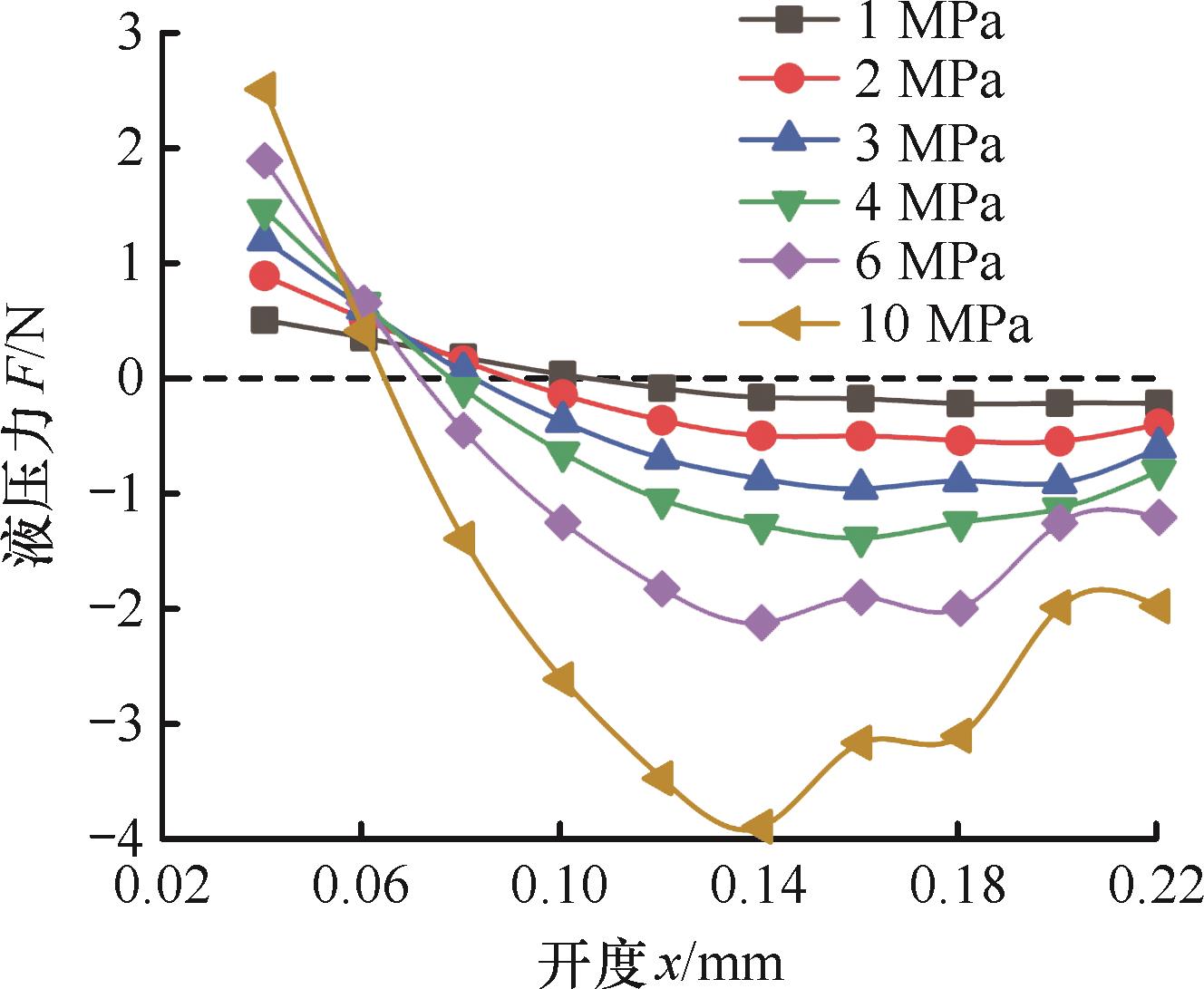
图9 大开度压差与液压力曲线
Fig.9 Pressure difference and hydraulic force curve at large openings
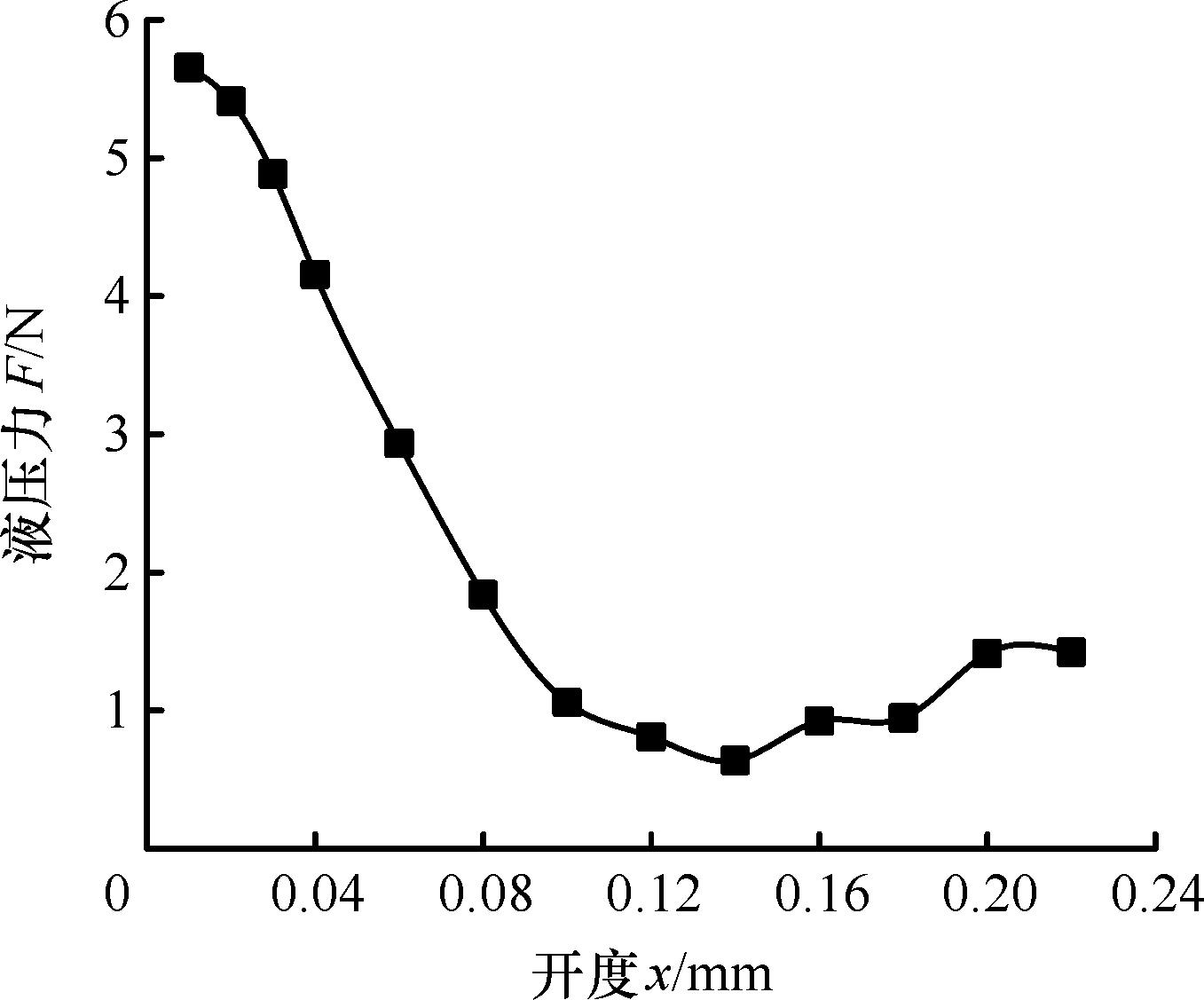
图10 压差6 MPa下qt区域液压力
Fig.10 Hydraulic force of qt part under the pressure difference of 6 MPa
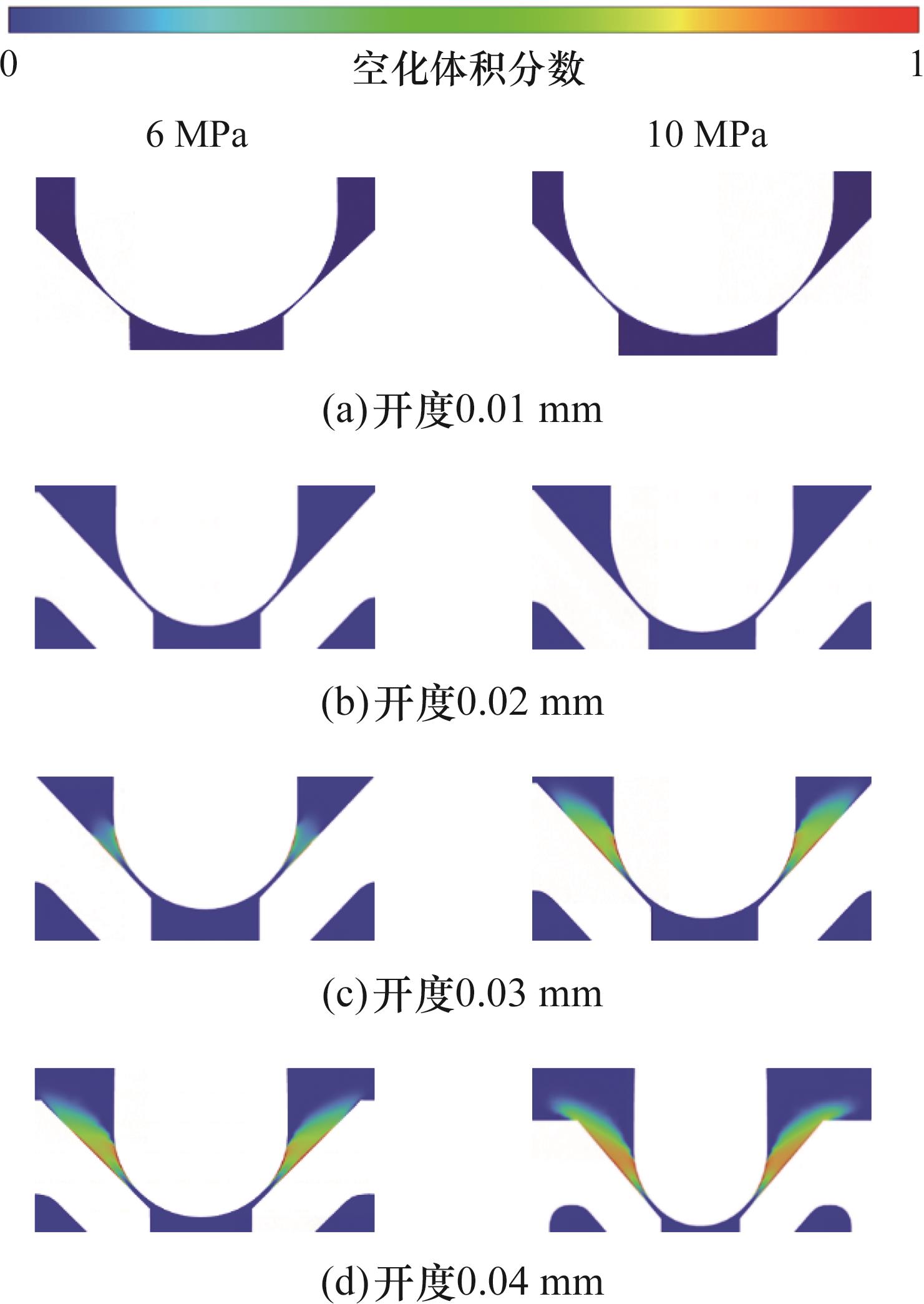
图11 气相体积分布
Fig.11 Distribution of gas phase
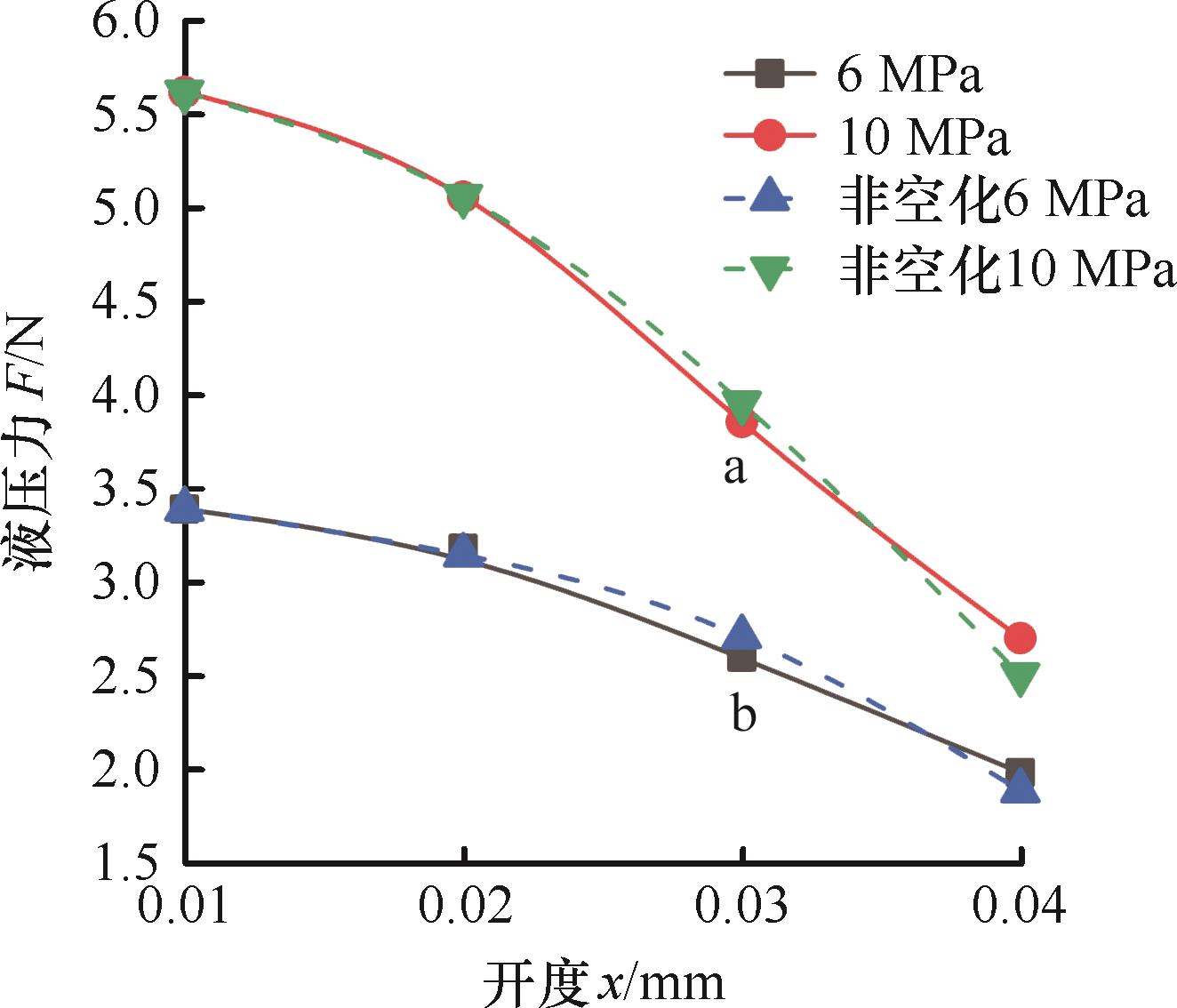
图12 小开度下空化与非空化液压力
Fig.12 Cavitation and non-cavitation hydraulic force at small openings
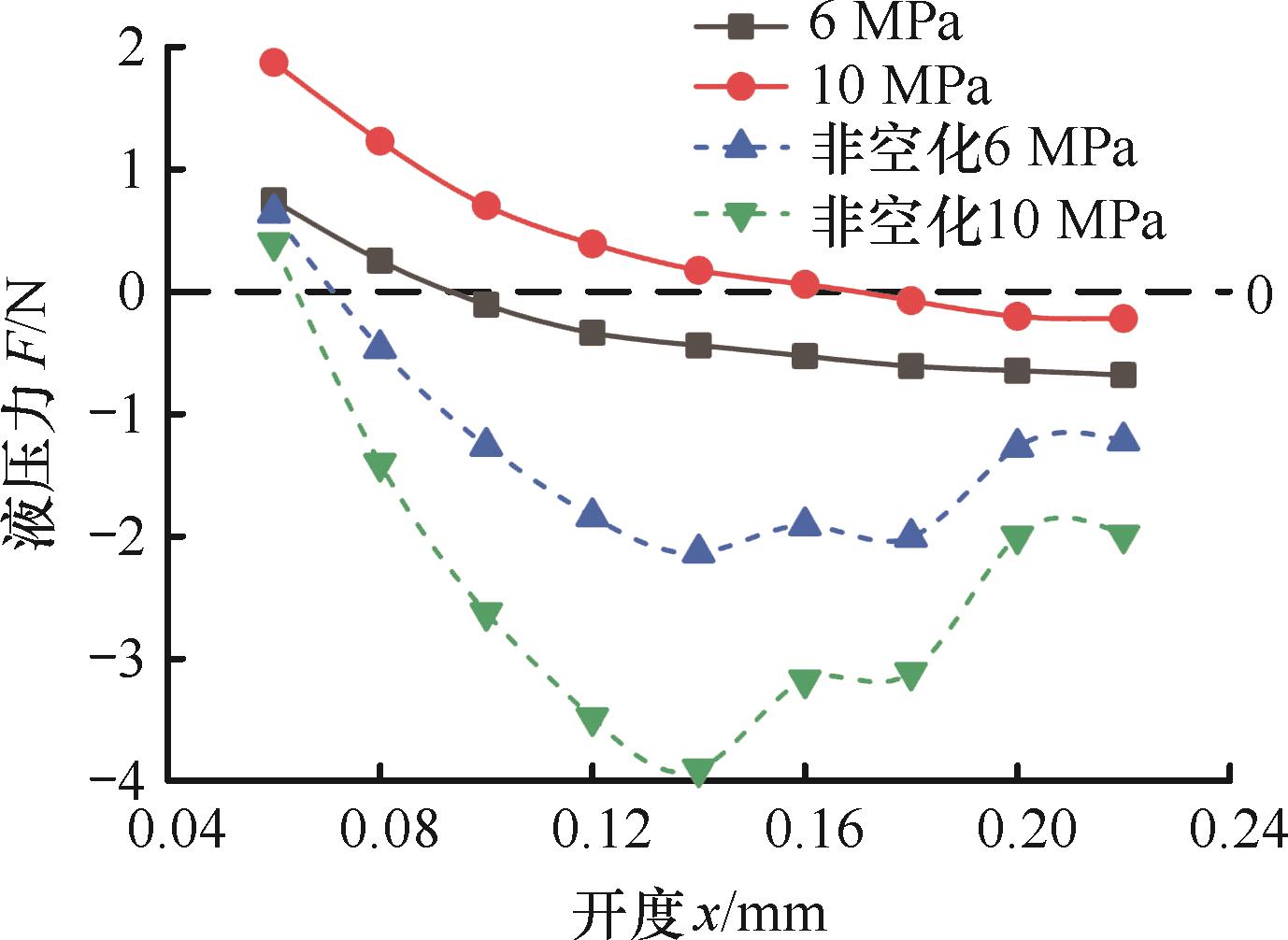
图13 大开度下空化与非空化液压力
Fig.13 Cavitation and non-cavitation hydraulic force at large openings
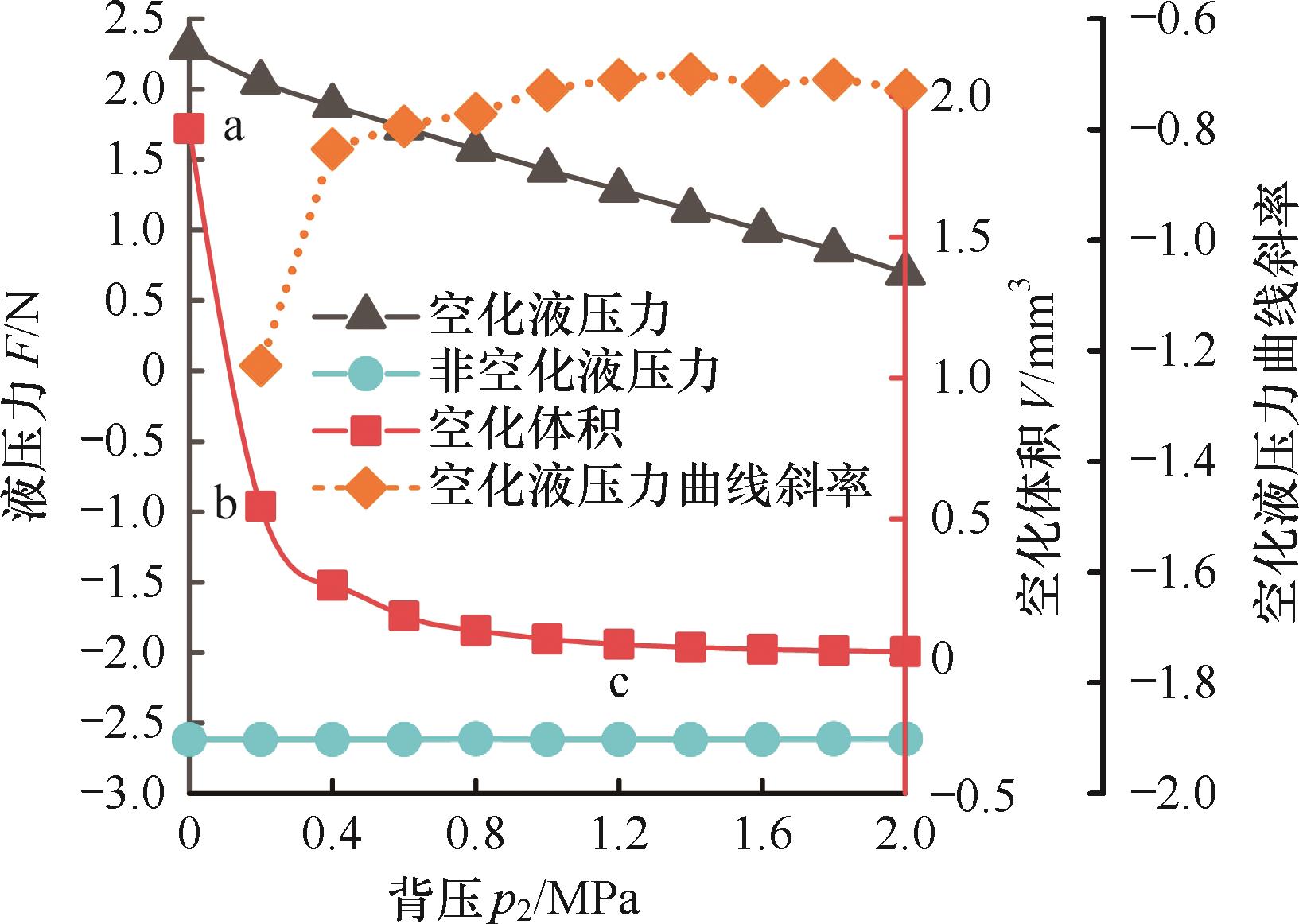
图14 空化体积和液压力随背压变化
Fig.14 Cavitation volume and hydraulic force against back pressure
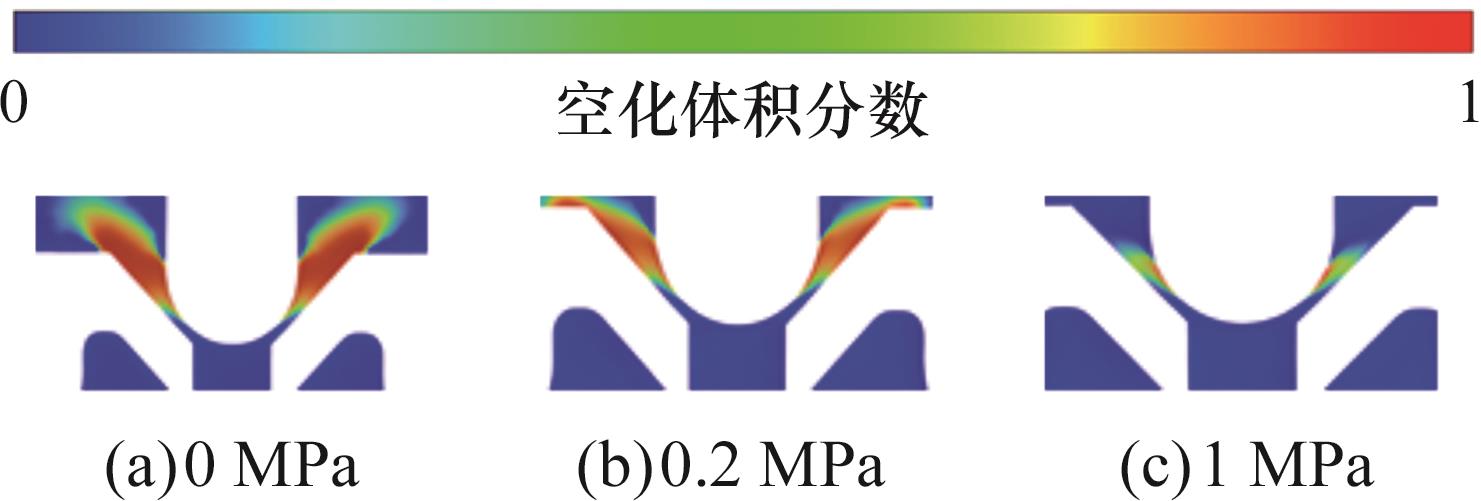
图15 不同背压下空化云图
Fig.15 Cavitation contour under different back pressure
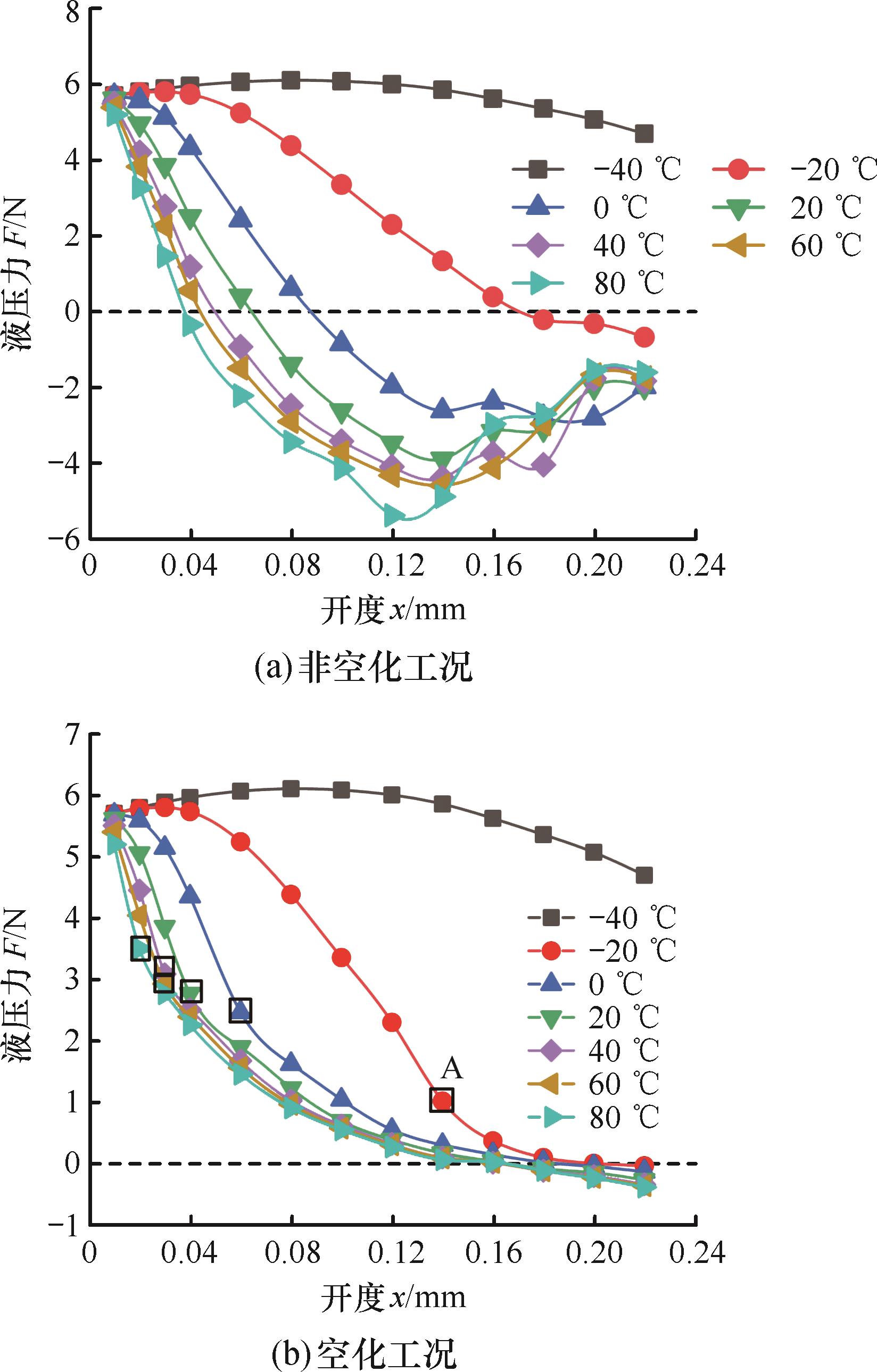
图16 不同温度下液压力随开度变化
Fig.16 Variation of hydraulic force with opening at different temperatures
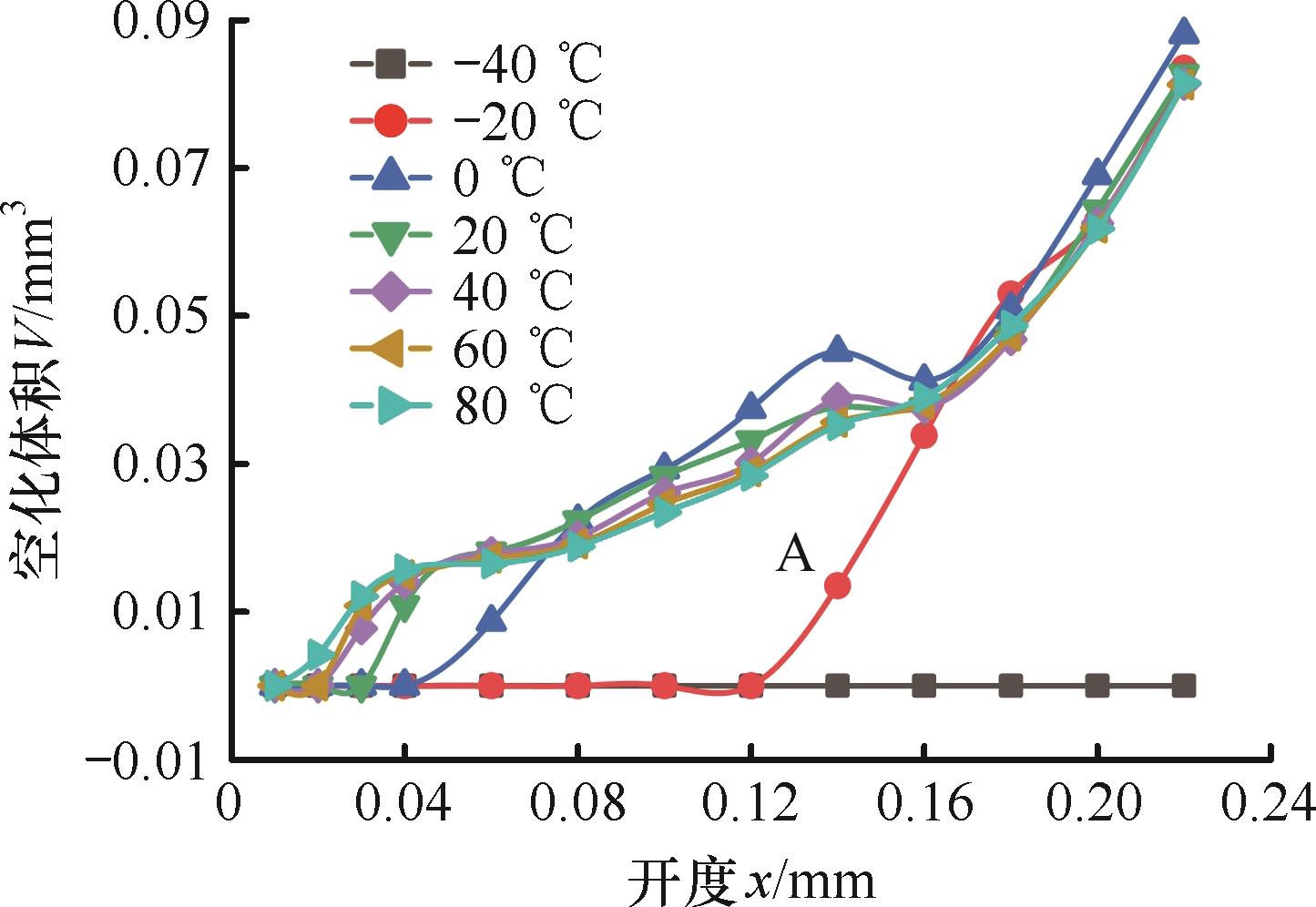
图17 不同温度下空化体积随开度变化
Fig.17 Variation of cavitation volume with opening at different temperatures
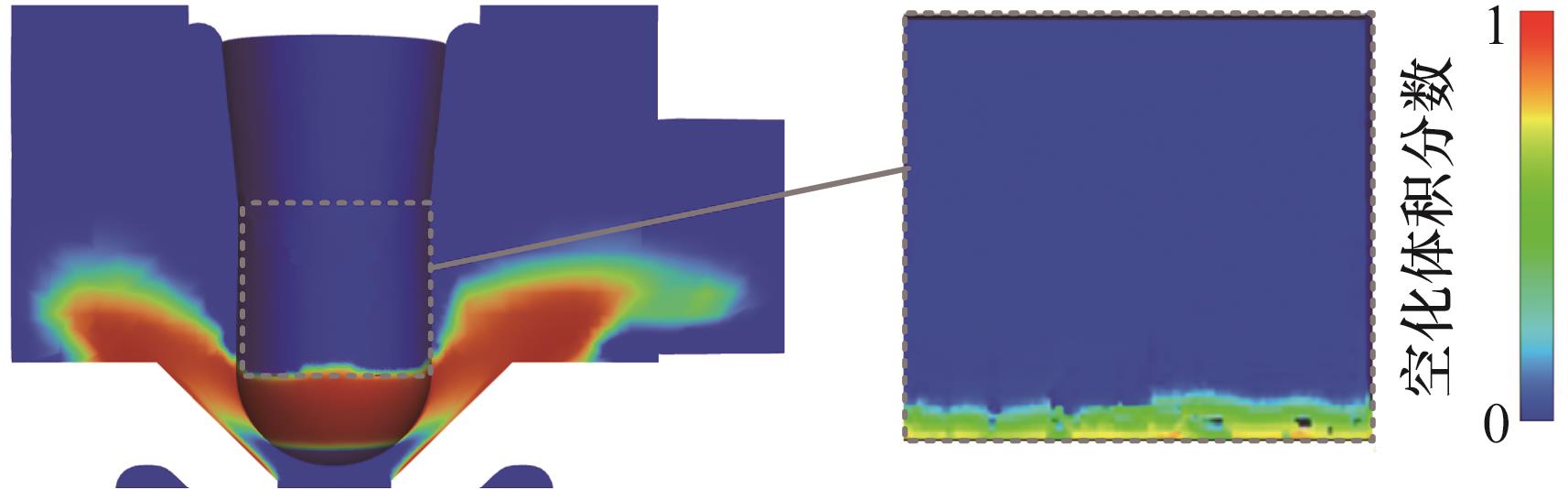
图18 阀内空化体积分数云图
Fig.18 Contour of cavitation volume fraction in valve
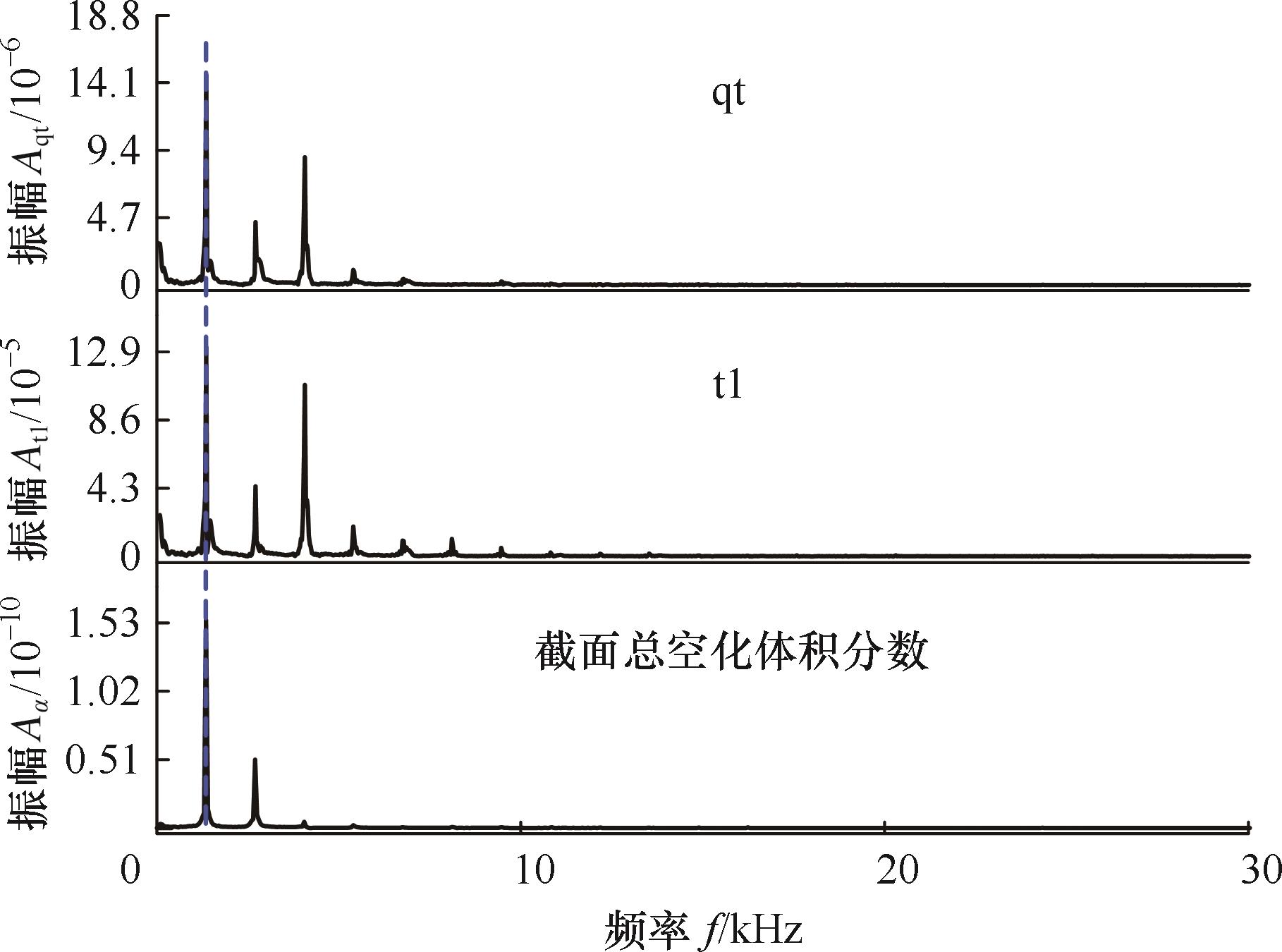
图19 qt和t1液压力与监测面总空化体积分数频谱
Fig.19 Frequency spectrum of hydraulic force and total cavitation volume fraction on monitoring surfaces
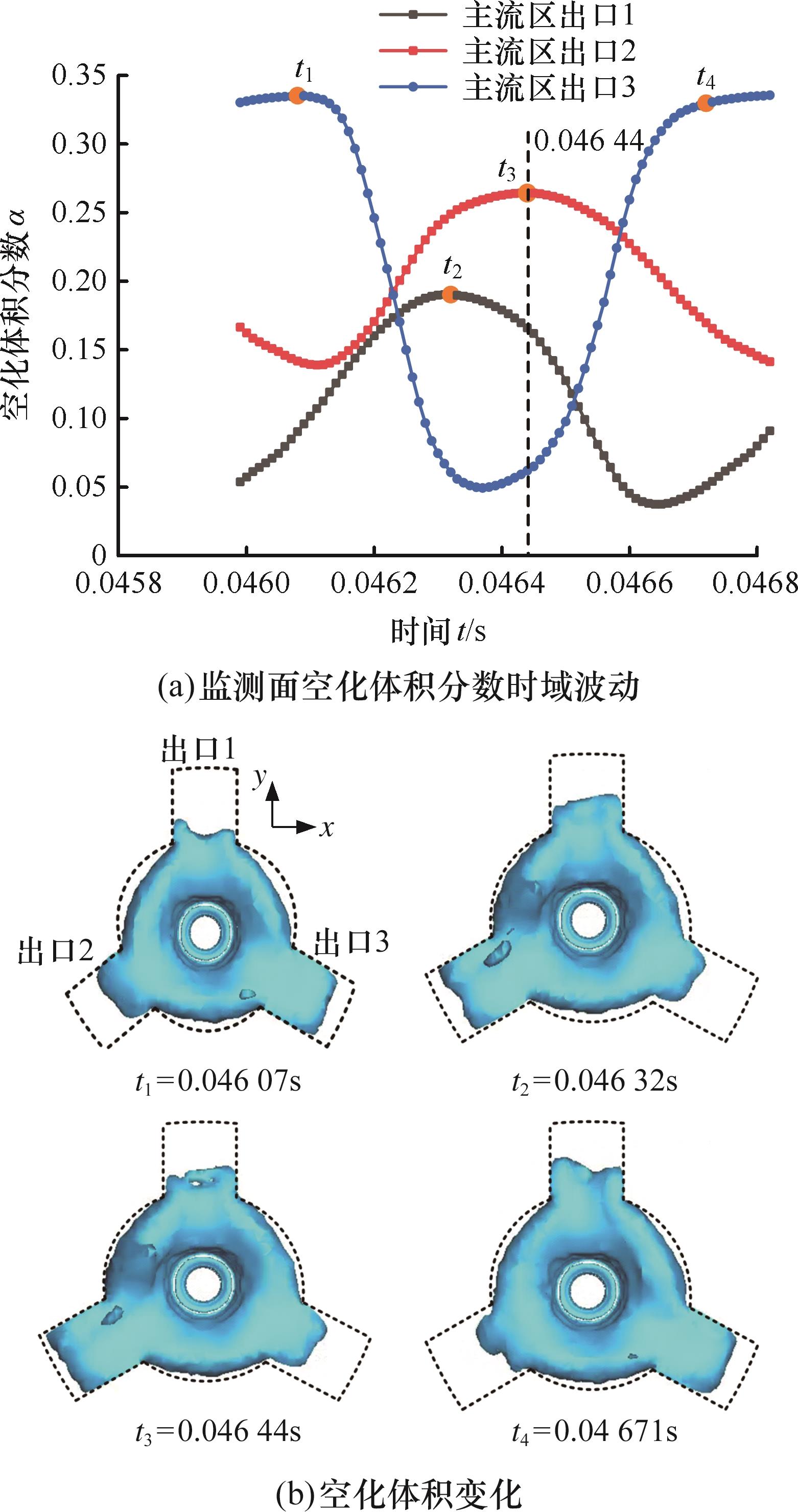
图20 监测面空化体积分数曲线与空化体积变化
Fig.20 Cavitation volume fraction on monitoring surfaces and cavitation volume variation
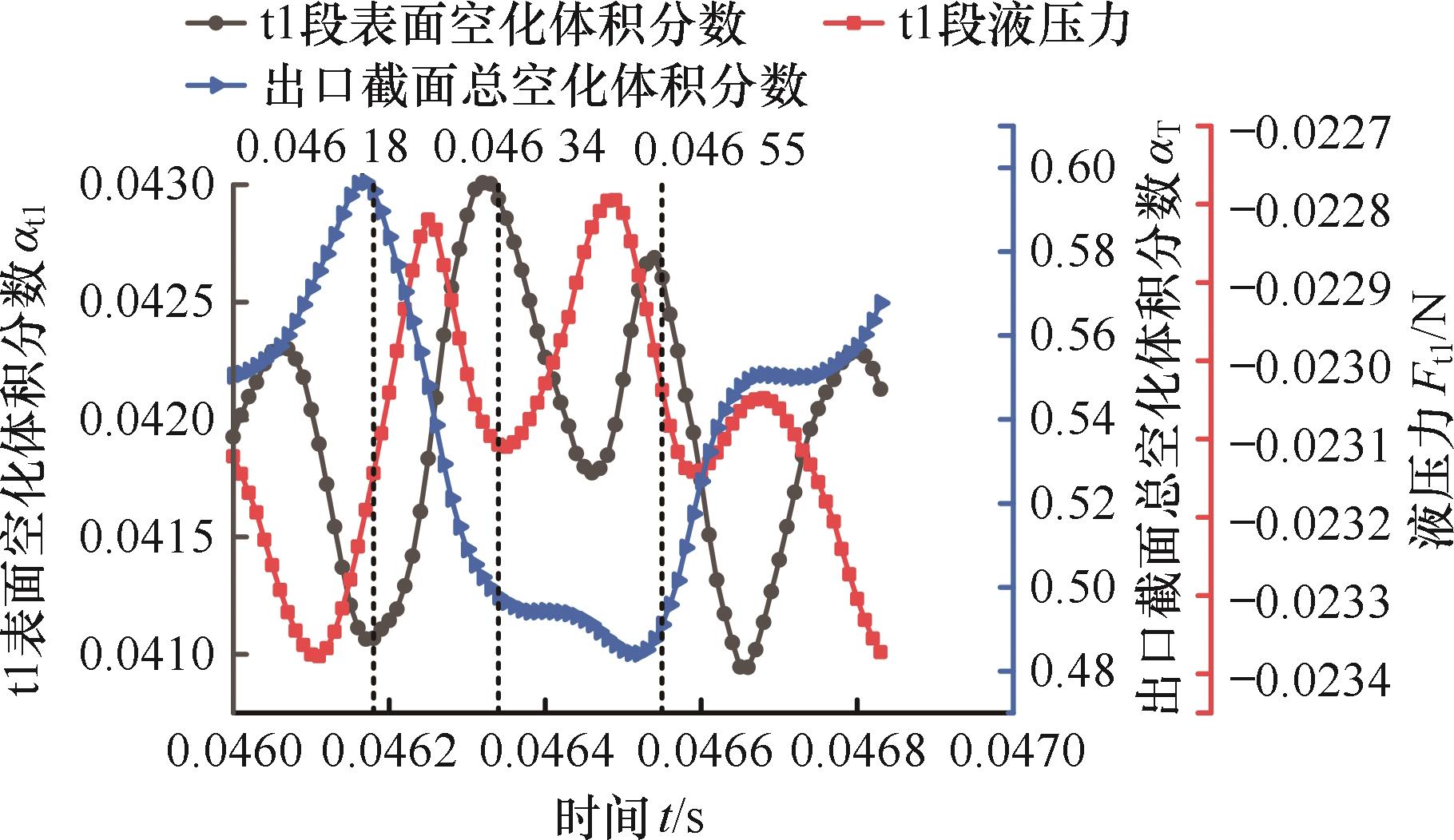
图21 t1段液压力与空化体积分数变化
Fig.21 Variation of t1 hydraulic force and cavitation volume fraction
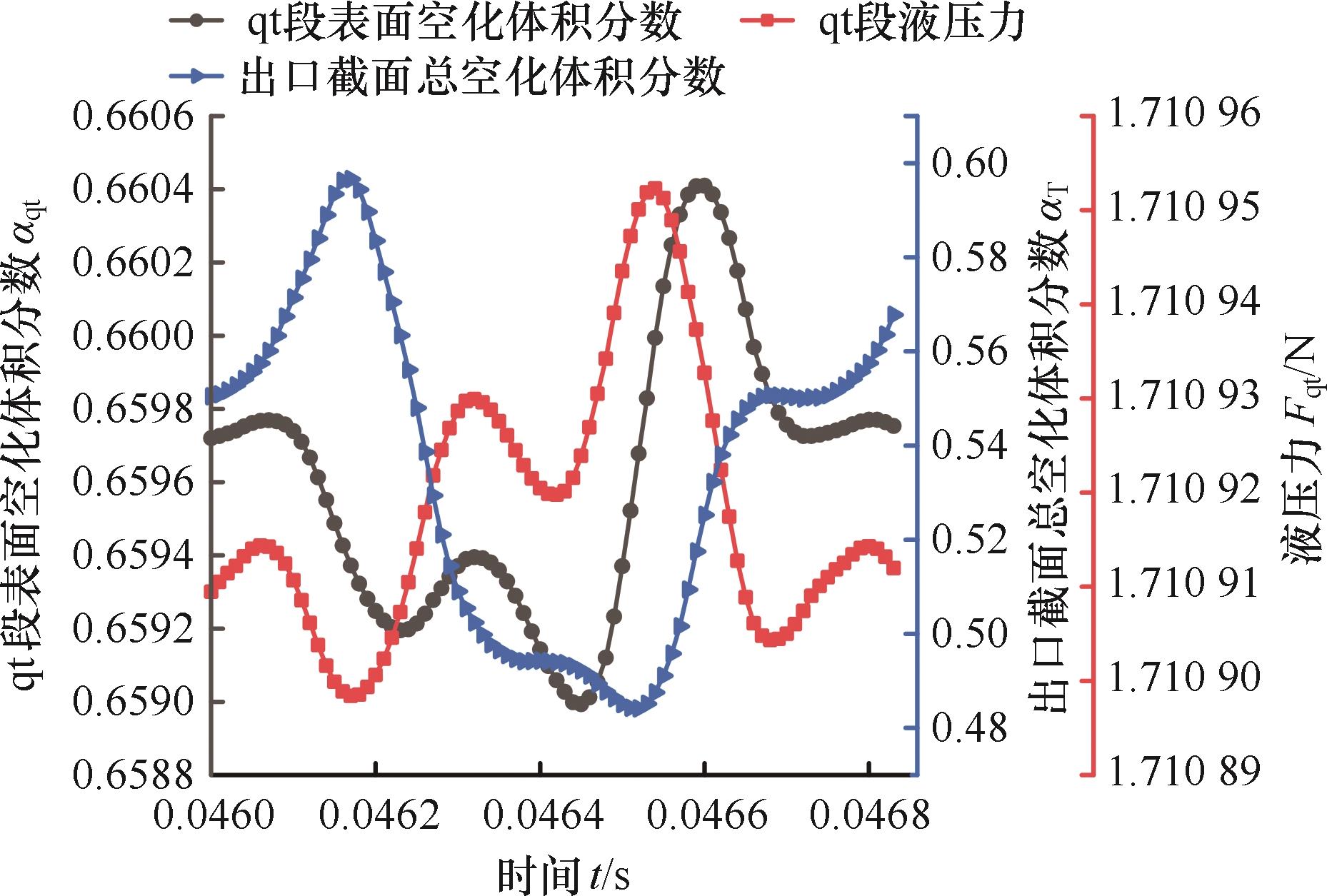
图22 qt段液压力与空化体积分数变化
Fig.22 Variation of qt hydraulic force and cavitation volume fraction
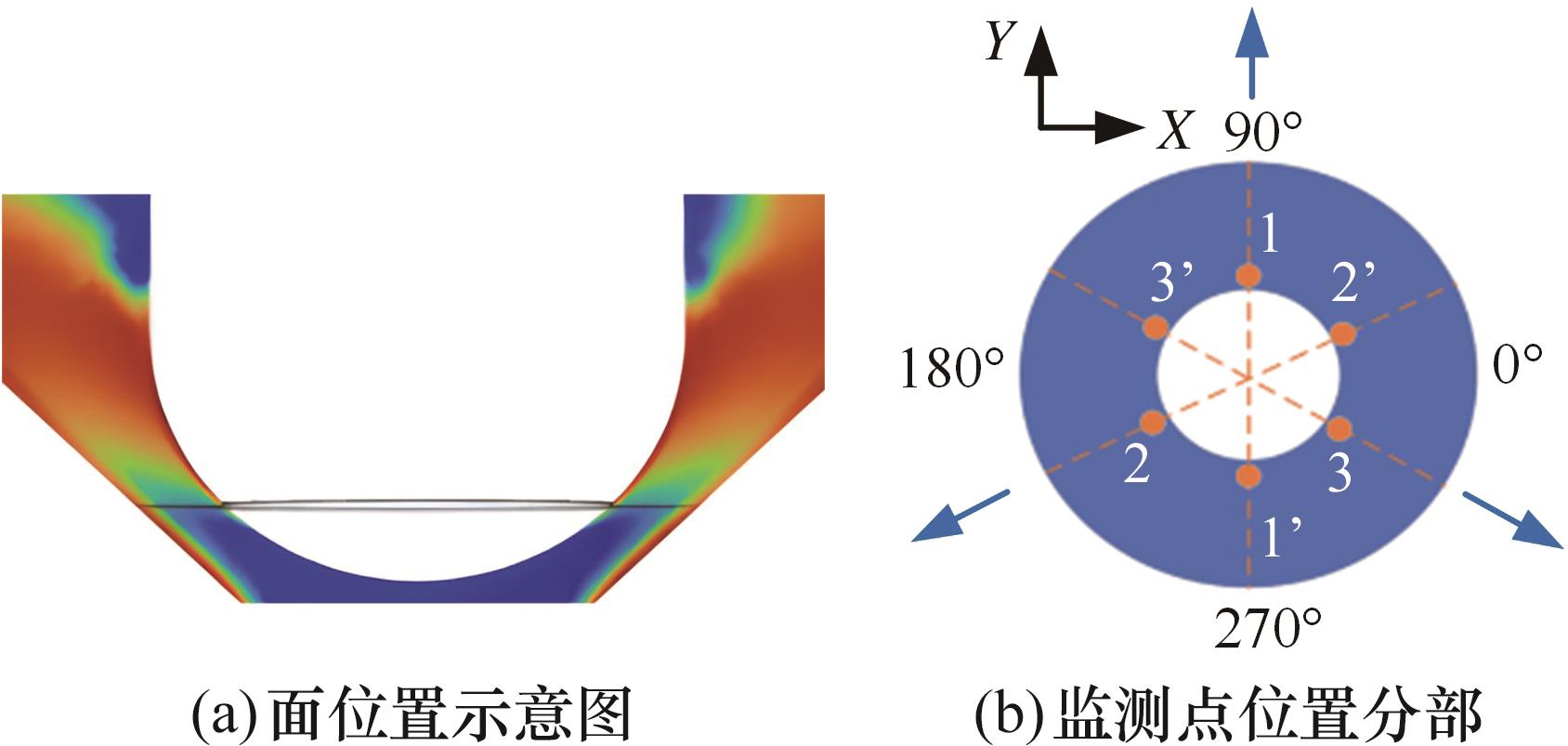
图23 点位置示意图
Fig.23 point position diagram
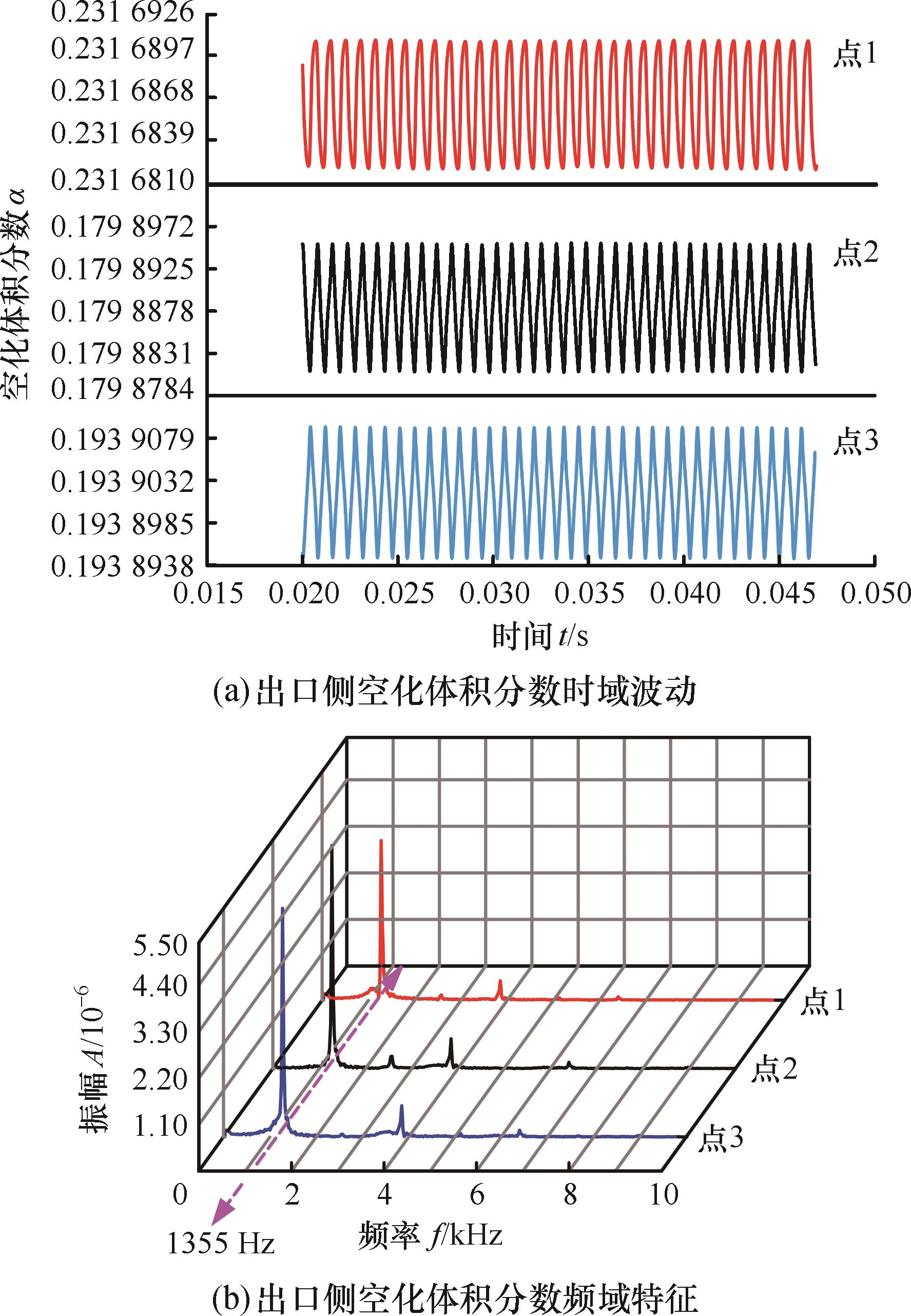
图24 出口侧三点空化体积分数波动特征
Fig.24 Fluctuation of cavitation volume fraction at three points near the outlets
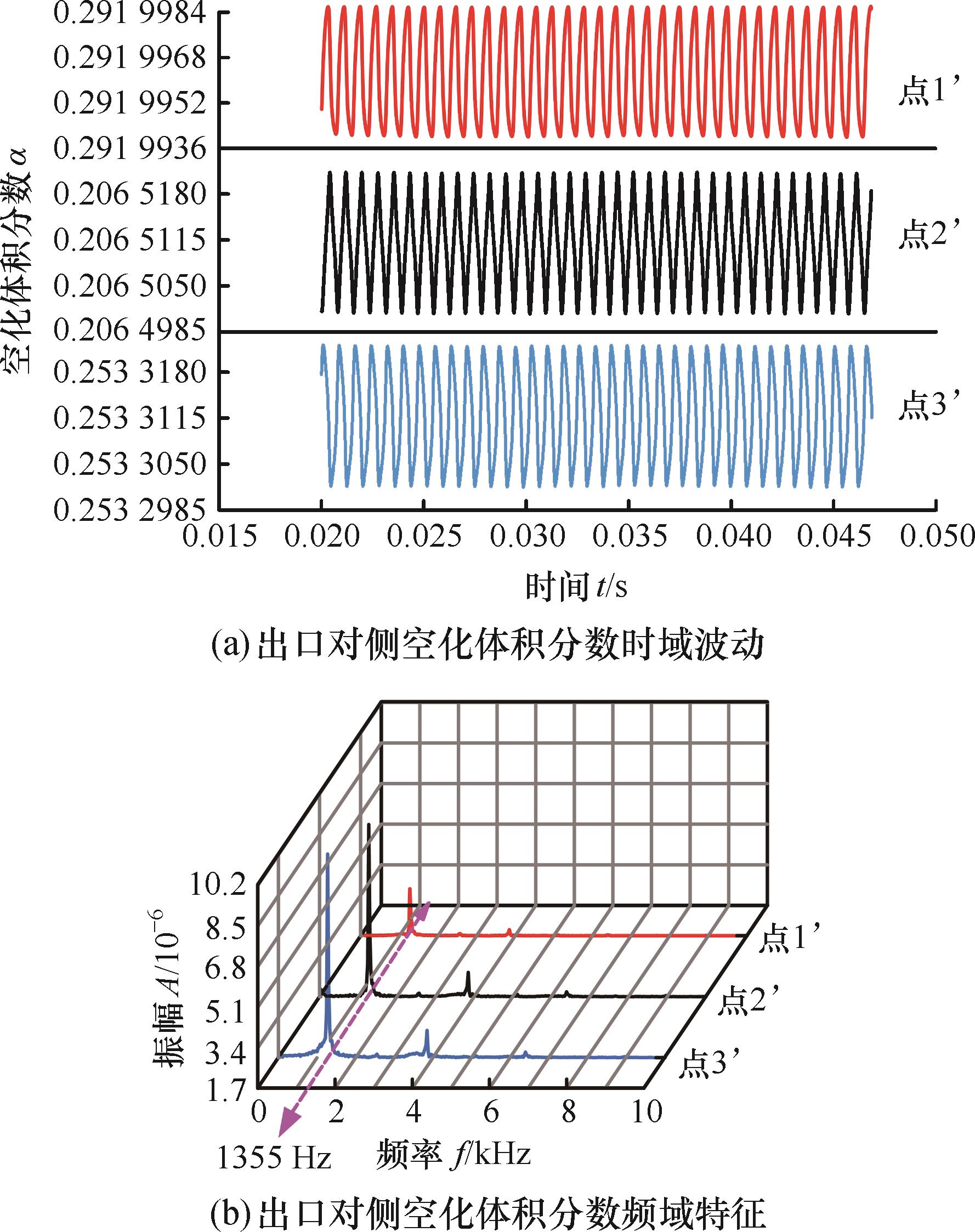
图25 出口对侧三点空化体积分数波动特征
Fig.25 Fluctuation of cavitation volume fraction at three points opposite the outlets
| [1] | 王鹏飞. 油压锥阀阀口空化流动数值模拟[D]. 兰州: 兰州理工大学, 2016. |
| WANG Pengfei. Numerical Simulation of Cavitation Flow in Hydraulic Oil Poppet Valve[D]. Lanzhou: Lanzhou University of Technology, 2016. | |
| [2] | XU Xiaogang, FANG Liang, LI Anjun, et al. Numerical Analysis of the Energy Loss Mechanism in Cavitation Flow of a Control Valve[J]. International Journal of Heat and Mass Transfer, 2021, 174: 121331. |
| [3] | BERNAD S I, SUSAN-RESIGA R. Numerical Model for Cavitational Flow in Hydraulic Poppet Valves[J]. Modelling and Simulation in Engineering, 2012, 2012(1): 742162. |
| [4] | LIU Jingbin, LIU Zhenming, WU Jiechang, et al. Numerical Study on Cavitation Flow Characteristics in Diesel Fuel Injector Control Valve[J]. International Journal of Automotive Technology, 2022, 23(4): 881-897. |
| [5] | 陈震. 阀芯旋转式高速开关阀特性研究[D]. 太原: 太原理工大学, 2022. |
| CHEN Zhen. Research on Characteristics of Spool Rotary High-speed On-off Valve[D]. Taiyuan: Taiyuan University of Technology, 2022. | |
| [6] | 李树勋, 沈恒云, 张万年, 等. 活塞式流量调节阀空化特性及其压力脉动响应[J]. 华中科技大学学报(自然科学版), 2020, 48(12): 44-48. |
| LI Shuxun, SHEN Hengyun, ZHANG Wannian, et al. Cavitation Characteristics and Pressure Pulsation Response of Piston Type Flow Control Valve[J]. Journal of Huazhong University of Science and Technology (Nature Science Edition), 2020, 48(12): 44-48. | |
| [7] | 李森林. 锥阀阀口空化瞬态周期性及效应的数值模拟[D]. 兰州: 兰州理工大学, 2020. |
| LI Senlin. Numerical Simulation of Transient Periodicity and Effect of Cavitation in Cone Valve Port[D]. Lanzhou: Lanzhou University of Technology, 2020. | |
| [8] | LU Liang, LIANG Zhongdong, LIU Yuming, et al. Geometrical Transition Properties of Vortex Cavitation and Associated Flow-choking Characteristics in Poppet Valves[J]. Journal of Zhejiang University: Science A, 2024, 25(6): 455-469. |
| [9] | 赵才虎, 陈誉, 朱天龙, 等. 不同结构参数对高速开关阀液压力的影响研究[J]. 机电工程, 2024, 41(1): 33-42. |
| ZHAO Caihu, CHEN Yu, ZHU Tianlong, et al. Influence of Different Structural Parameters on the Hydraulic Pressure of High-speed Switching Valves[J]. Mechanical & Electrical Engineering Magazine, 2024, 41(1): 33-42. | |
| [10] | 顾岩城, 白军, 罗红英, 等. 高海拔下ZGB空化模型的修正及其对水翼空化的影响[J]. 中国农村水利水电, 2024(3): 255-261. |
| GU Yancheng, BAI Jun, LUO Hongying, et al. Modification of the ZGB Cavitation Model and Analysis of Its Effect on Hydrofoil Cavitation[J]. China Rural Water and Hydropower, 2024(3): 255-261. | |
| [11] | 谢永伟. 液控调节阀空化流场及压力脉动特性研究[D]. 徐州: 中国矿业大学, 2021. |
| XIE Yongwei. Study on Cavitation Flow Field and Pressure Pulsation Characteristics in Hydraulic Control Valve[D]. Xuzhou: China University of Mining and Technology, 2021. | |
| [12] | 王春光, 刘晓薇, 刘展麟, 等. 某高速开关阀阀芯液压力影响因素研究[J]. 机床与液压, 2018, 46(13): 50-54. |
| WANG Chunguang, LIU Xiaowei, LIU Zhanlin, et al. Research on Factors that Affect Hydraulic Pressure of High Speed On-off Valve[J]. Machine Tool & Hydraulics, 2018, 46(13): 50-54. | |
| [13] | 汪健生, 刘志毅. 管道节流过程中气蚀的数值模拟[J]. 机械工程学报, 2008, 44(12): 100-104. |
| WANG Jiansheng, LIU Zhiyi. Numerical Simulation on Cavitation of Throttle in Tube[J]. Journal of Mechanical Engineering, 2008, 44(12): 100-104. | |
| [14] | 王万春. 液压锥阀阀口空化流动数值模拟[D]. 兰州: 兰州理工大学, 2019. |
| WANG Wanchun. Numerical Simulation of Cavitation Flow in Hydraulic Poppet Valve[D]. Lanzhou: Lanzhou University of Technology, 2019. | |
| [15] | 贺杰, 李文华, 李怀义, 等. 锥形节流阀中背压对空化流场的影响[J]. 流体机械, 2018, 46(2): 41-45. |
| HE Jie, LI Wenhua, LI Huaiyi, et al. Effect of back Pressure on Cavitation Flow Inside Throttle Valve[J]. Fluid Machinery, 2018, 46(2): 41-45. | |
| [16] | GE Mingming, ZHANG Guangjian, PETKOVŠEK M, et al. Intensity and Regimes Changing of Hydrodynamic Cavitation Considering Temperature Effects[J]. Journal of Cleaner Production, 2022, 338: 130470. |
| [17] | HE Jie, ZHANG Yujia, LIU Xiumei, et al. Experiment and Simulation Study on Cavitation Flow in Pressure Relief Valve at Different Hydraulic Oil Temperatures[J]. Flow Measurement and Instrumentation, 2023, 89: 102289. |
| [18] | 赵一峰. 空化撞击流场压力波动特性研究[D]. 沈阳: 沈阳工业大学, 2020. |
| ZHAO Yifeng. Research on Pressure Fluctuation Characteristics of Cavitation Impinging Stream Field[D]. Shenyang: Shenyang University of Technology, 2020. |
| [1] | 付博宇, 许泽华, 李康帅, 王浩宇, 贺嘉琪, 何强. 高海拔环境下无人机螺旋桨流场与电机温度场的数值模拟与试验分析[J]. 中国机械工程, 2025, 36(12): 2894-2902. |
| [2] | 马学忠, 李聪聪. 双列反向台阶型机械密封空化流动与冷却机理[J]. 中国机械工程, 2025, 36(10): 2266-2273. |
| [3] | 张鹏1, 3, 4, 5, 朱学卫2, 3, 4, 于保洋1, 3, 4, 武天枫1, 3, 4, 朱锦州1, 3, 4. 304不锈钢极薄带微流道气胀成形材料流动行为及微观组织[J]. 中国机械工程, 2025, 36(07): 1416-1422. |
| [4] | 范治松, 李宁, 徐立凯, 邓将华. 6063铝/20钢管磁脉冲胀形连接工艺研究[J]. 中国机械工程, 2024, 35(12): 2185-2192. |
| [5] | 李燕乐, 潘忠涛, 戚小霞, 崔维强, 陈健, 李方义. 热处理工艺对激光熔覆316L温度场与应力场的影响规律[J]. 中国机械工程, 2024, 35(04): 666-677. |
| [6] | 彭文飞, 张成, 林龙飞, 黄明辉, 余丰. 基于连续损伤力学的楔横轧芯部损伤建模及预测[J]. 中国机械工程, 2024, 35(04): 711-720,751. |
| [7] | 李坤航, 张思琦, 吴玮, 胡明卓, 孙娅铃, 熊鑫, 黄宏. 三层异种不等厚钢电阻点焊多场耦合模拟与分析[J]. 中国机械工程, 2023, 34(24): 2996-3003. |
| [8] | 骆文泽, 成慧梅, 刘红艳, 王义峰, 叶延洪, 邓德安. 高强钢Q960E对接接头残余应力与焊接变形的数值模拟[J]. 中国机械工程, 2023, 34(17): 2095-2105,2141. |
| [9] | 丁川, 章立超, 夏宁, 陈豪奇, 阮健, 孟彬, . 二维活塞/缸体副微间隙流场的剪切空化实验研究[J]. 中国机械工程, 2023, 34(12): 1395-1406. |
| [10] | 朱玉龙, 赵迎松, 方阳, 陈洪恩, 陈振茂, . 孔边裂纹的旋转涡流检测[J]. 中国机械工程, 2023, 34(08): 883-891. |
| [11] | 秦登, 戴志远, 周宁, 李田. 受电弓下沉对其气动和声学行为的影响[J]. 中国机械工程, 2022, 33(20): 2509-2519. |
| [12] | 李伟, 郑颢, 刘彦梅, 范松. 汽车副车架安装螺栓碰撞断裂的数值模拟研究[J]. 中国机械工程, 2022, 33(19): 2388-2393. |
| [13] | 胡福泰, . 薄壁扇形筋板挤压成形开裂抑制及翻转展宽策略[J]. 中国机械工程, 2022, 33(14): 1734-1740. |
| [14] | 马艺, 陈宇涛, 孟祥铠, 赵文静, 彭旭东, . 牙轮钻头用单金属密封瞬态启动动力学模型与密封性能[J]. 中国机械工程, 2022, 33(07): 777-785. |
| [15] | 许明三, 周春辉, 张正, 曾寿金, . 激光熔覆过程中的粉、气、光耦合温度场[J]. 中国机械工程, 2022, 33(01): 70-77. |
| 阅读次数 | ||||||
|
全文 |
|
|||||
|
摘要 |
|
|||||
