



ISSN 1004-132X
CN 42-1294/TH
CN 42-1294/TH
中国机械工程 ›› 2026, Vol. 37 ›› Issue (4): 866-874.DOI: 10.3969/j.issn.1004-132X.2026.04.011
顾文婷1,2( ), 陈修泓1,2, 冯少科1,2, 严鲁涛1,2(), 高亚祥3
收稿日期:2025-11-28
出版日期:2026-04-25
发布日期:2026-05-11
通讯作者:
严鲁涛
作者简介:顾文婷,女,2001年生,博士研究生。研究方向为超声科学与机器人应用。E-mail:1922270637@qq.com基金资助:
GU Wenting1,2(), CHEN Xiuhong1,2, FENG Shaoke1,2, YAN Lutao1,2(), GAO Yaxiang3
Received:2025-11-28
Online:2026-04-25
Published:2026-05-11
Contact:
YAN Lutao
摘要:
现有线材干燥采用的高速气流吹除工艺方法存在线材表面液膜极薄、气流作用面积小等问题。将超声能量作用于线材结构,使固液接触面高频振动,产生超声雾化效果。建立了超声雾化与高速空气射流的能耗模型,并围绕超声功率和液滴体积等关键参数开展对比试验测试。研究结果表明:超声通过毛细波与声空化诱发液滴快速铺展与雾化,液膜去除效率显著快于空气射流;在液滴体积10
中图分类号:
顾文婷, 陈修泓, 冯少科, 严鲁涛, 高亚祥. 超声赋能线材表面节能干燥试验技术研究[J]. 中国机械工程, 2026, 37(4): 866-874.
GU Wenting, CHEN Xiuhong, FENG Shaoke, YAN Lutao, GAO Yaxiang. Experimental Investigation of Ultrasonically-assisted Energy-saving Surface Drying Techniques for Wire Materials[J]. China Mechanical Engineering, 2026, 37(4): 866-874.
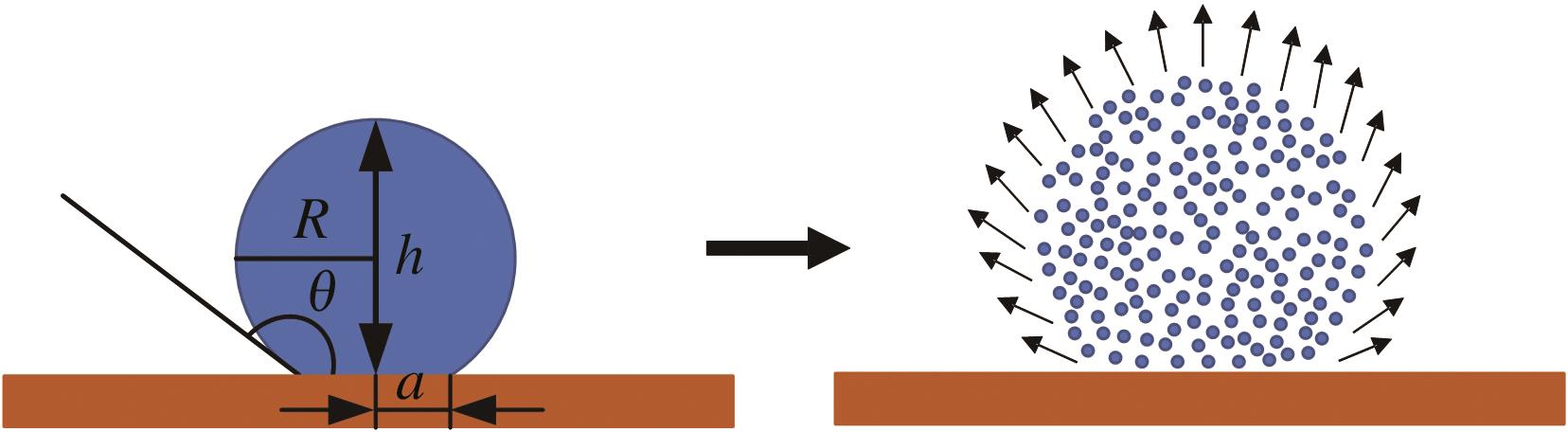
图1 超声雾化去除附着液滴
Fig.1 Removal of adhering droplets by ultrasonic atomization
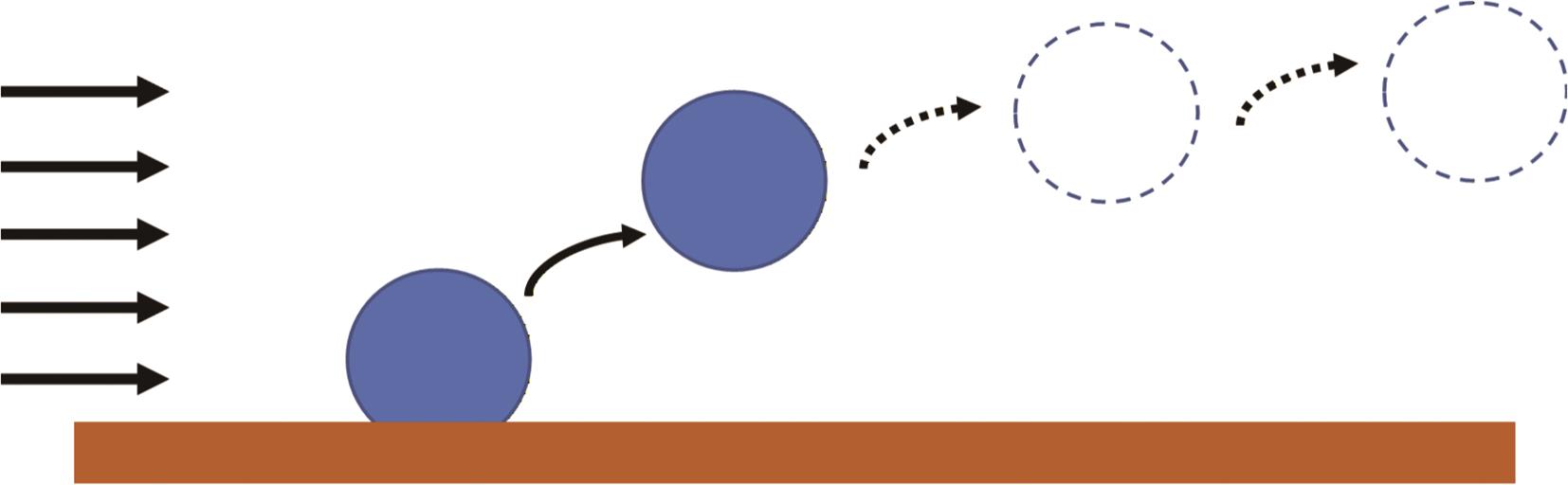
图2 高速空气射流去除附着液滴
Fig.2 Removal of adhering droplets by high-speed air jets
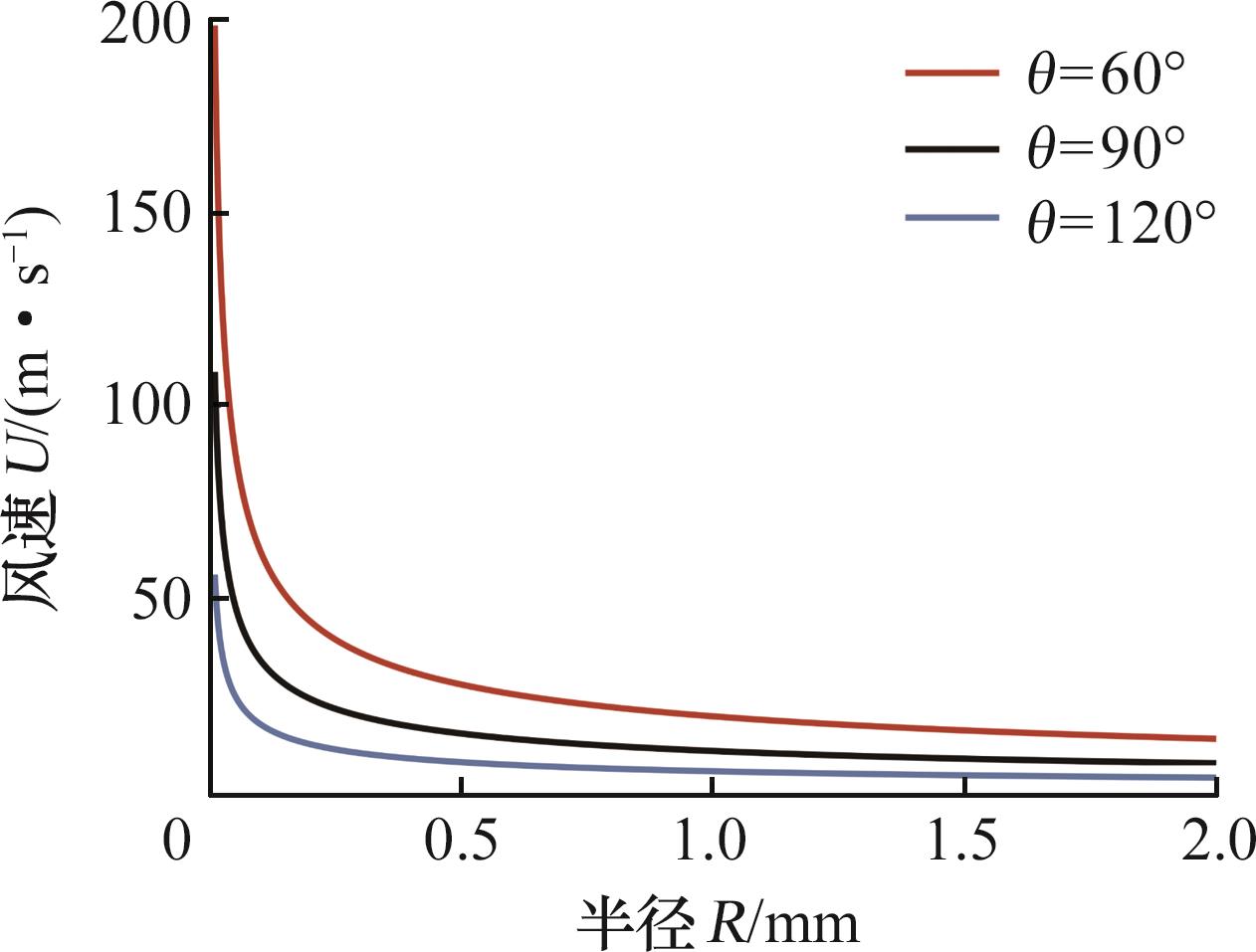
图3 驱动液滴滚动的风速与液滴半径之间的关系
Fig.3 Relationship between the air velocity driving droplet rolling and the droplet radius
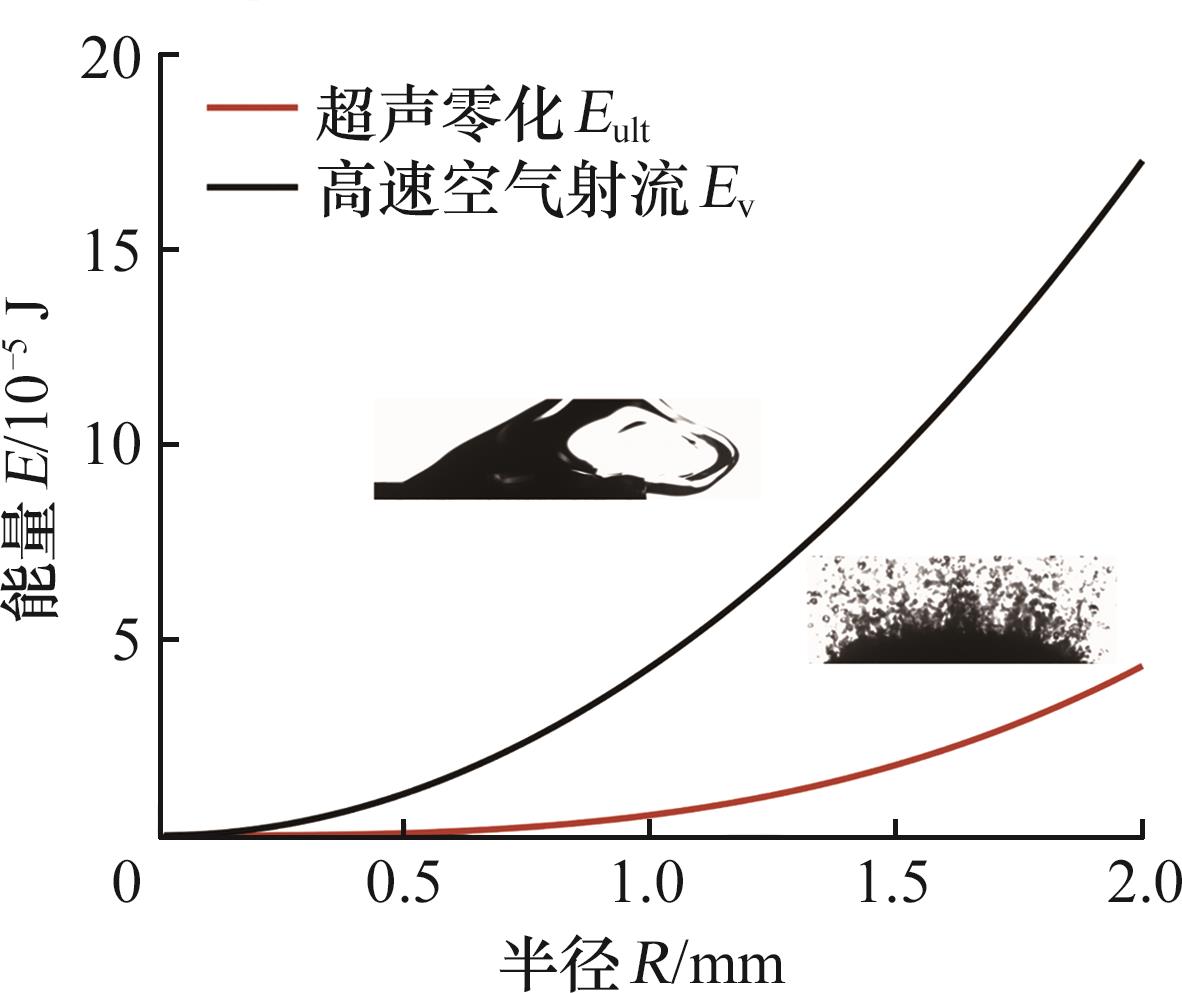
图4 超声雾化和高速空气射流消耗能量对比
Fig.4 Comparison of energy consumption between ultrasonic atomization and high-speed air jets
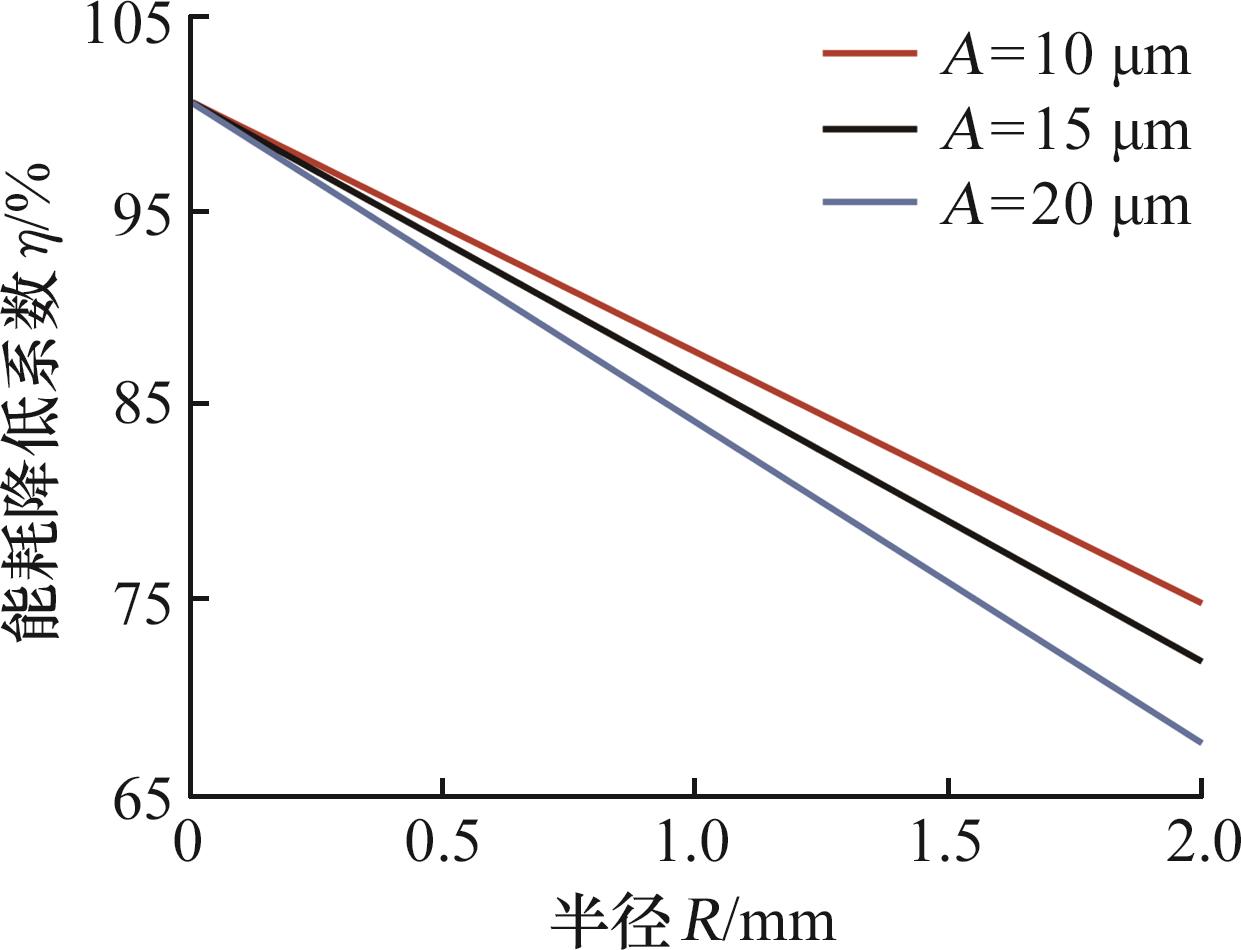
图5 能耗降低系数与液滴半径之间的关系
Fig.5 Relationship between the energy consumption reduction coefficient and droplet radius
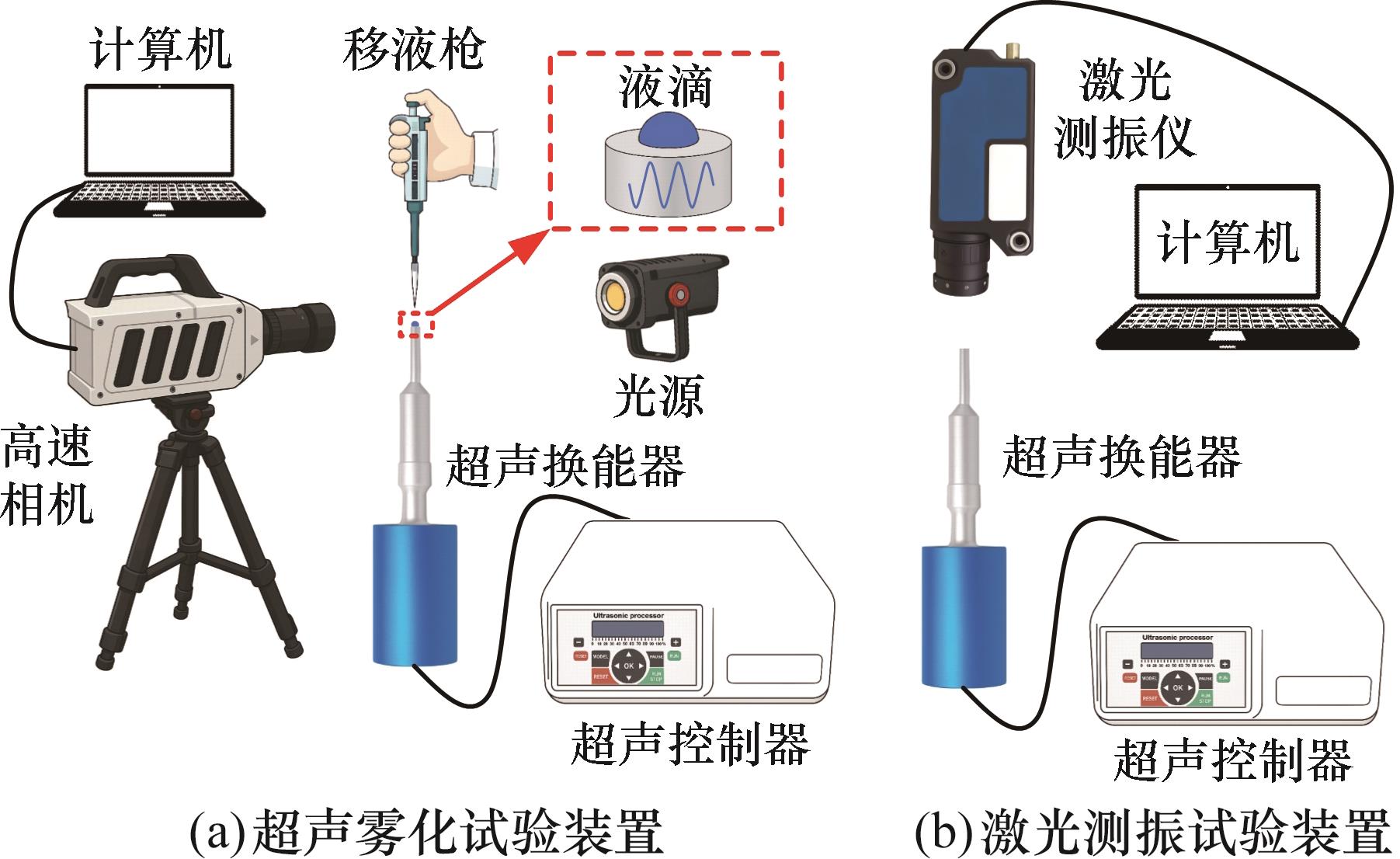
图6 试验装置示意
Fig.6 Schematic diagram of the experimental setup
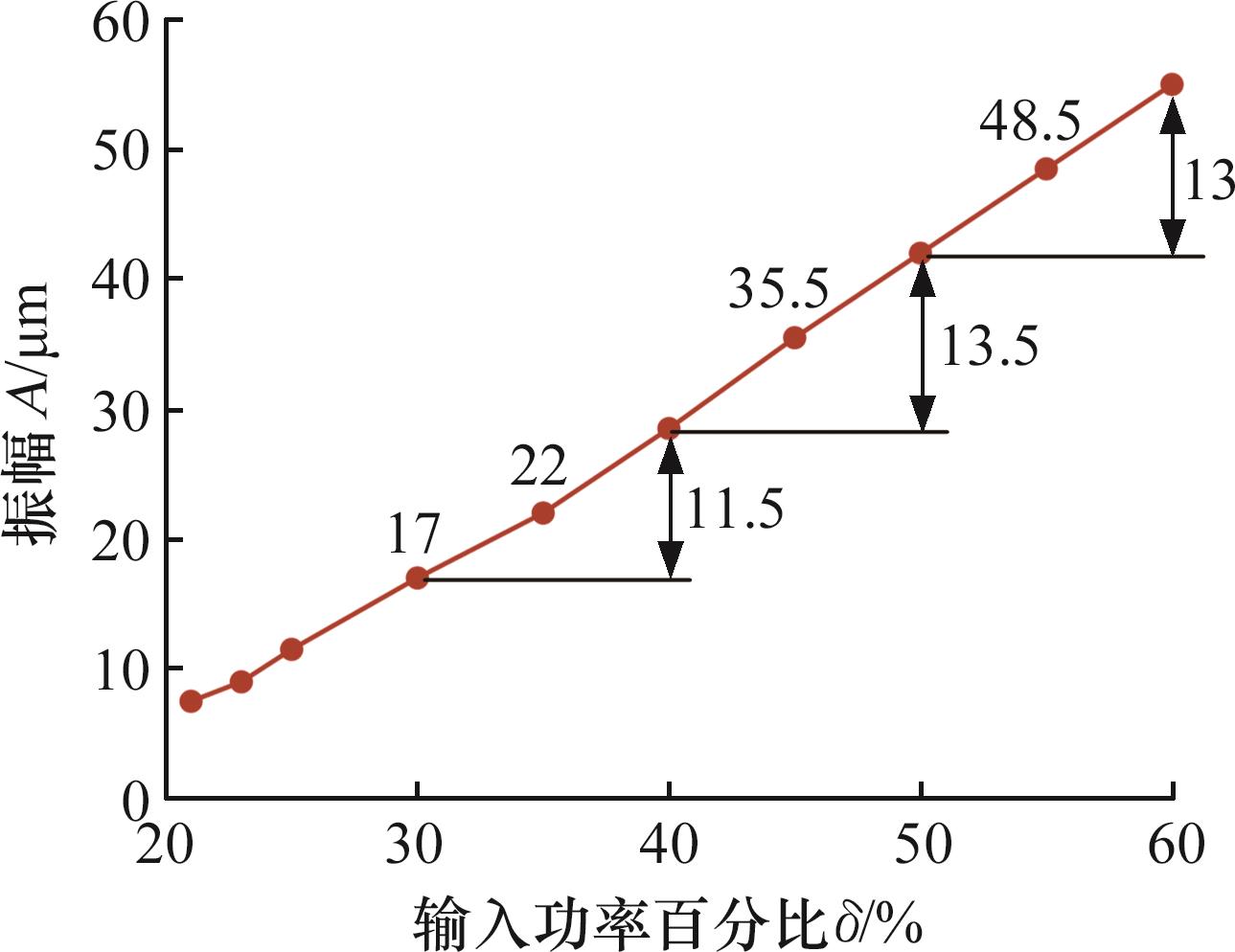
图7 振幅与输入功率百分比之间的关系
Fig.7 Relationship between vibration amplitude and input power percentage
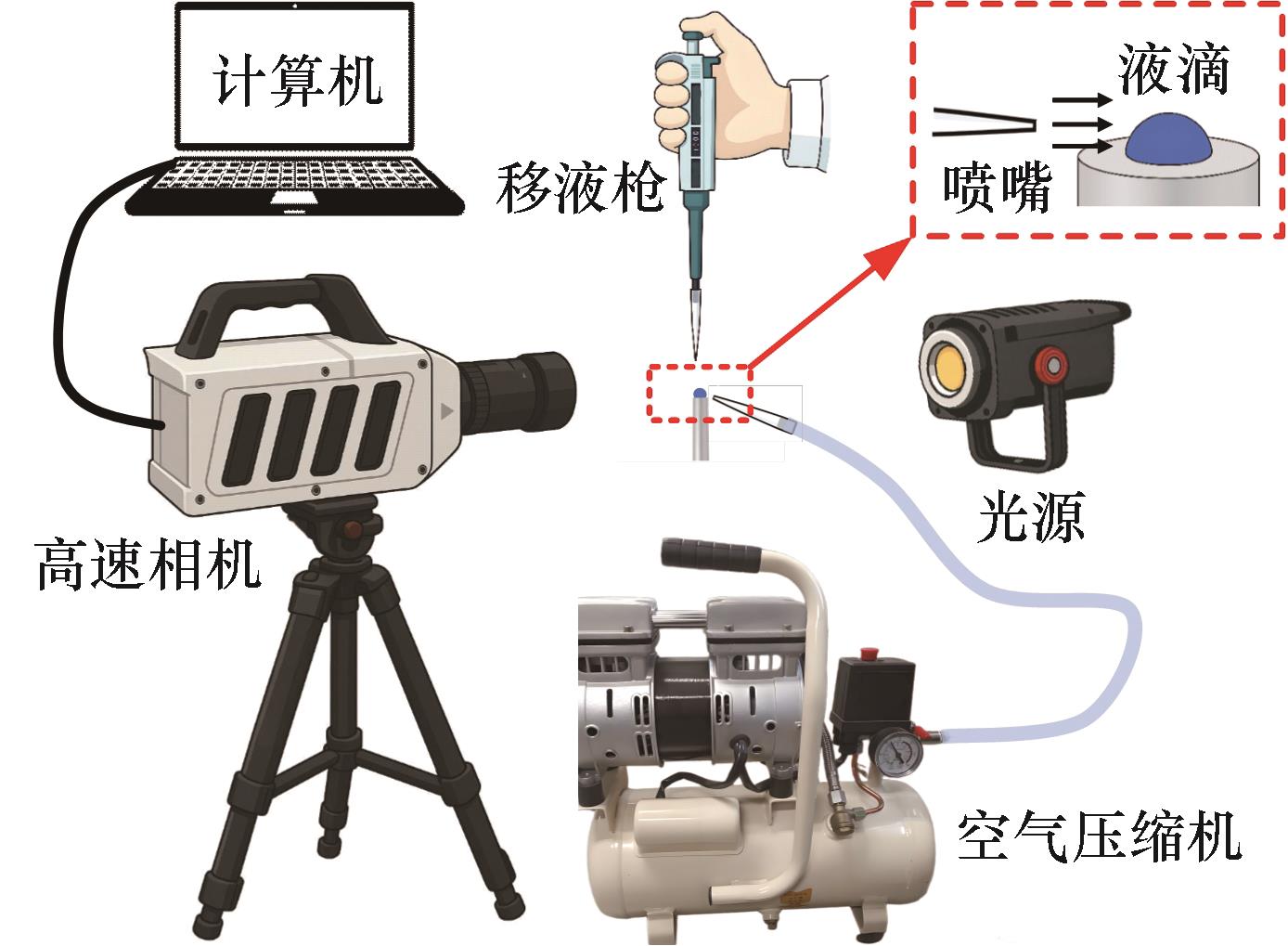
图8 高速空气射流试验装置示意
Fig.8 Schematic diagram of the experimental setup for high-speed air jets
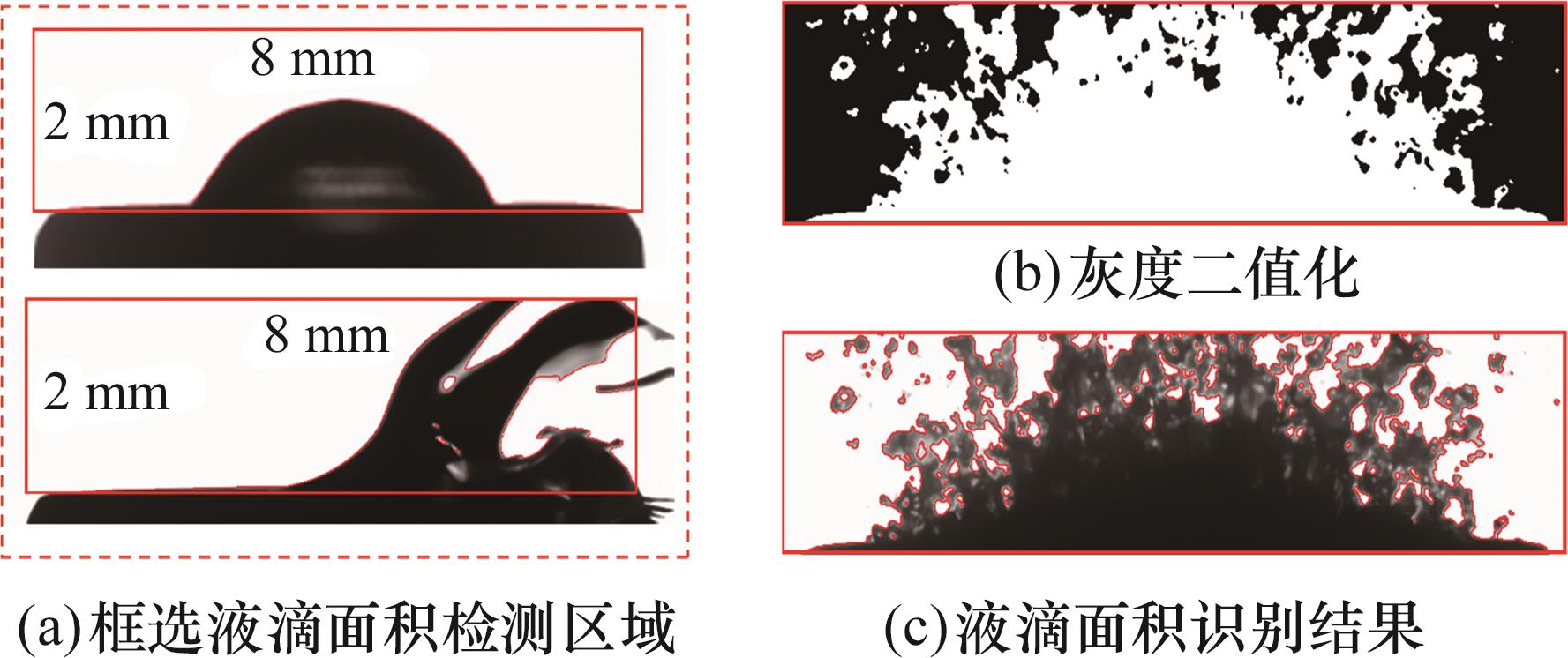
图9 液滴面积获取过程
Fig.9 Process of acquiring droplet area

图10 高速空气射流去除附着液滴过程
Fig.10 Process of removing adhering droplets by high-speed air jets
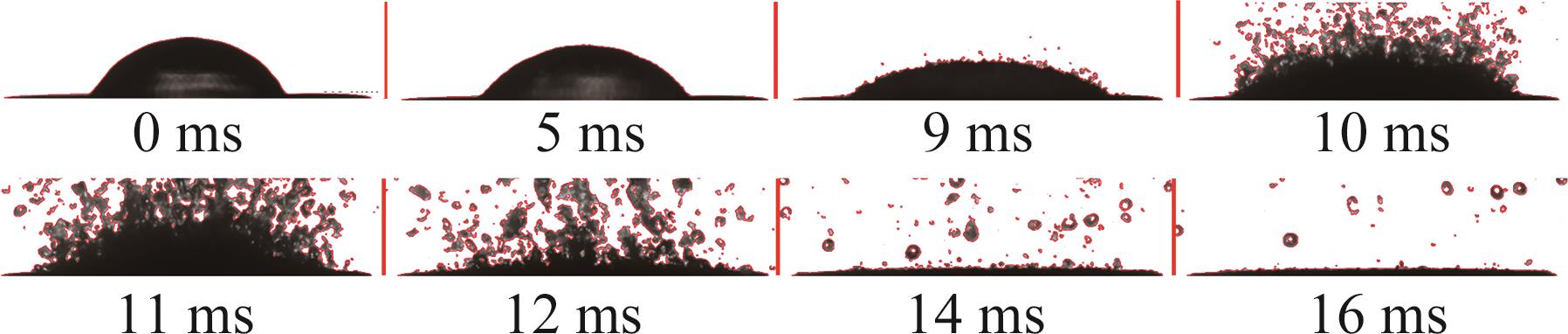
图11 超声雾化去除附着液滴过程
Fig.11 Process of removing adhering droplets by ultrasonic atomization
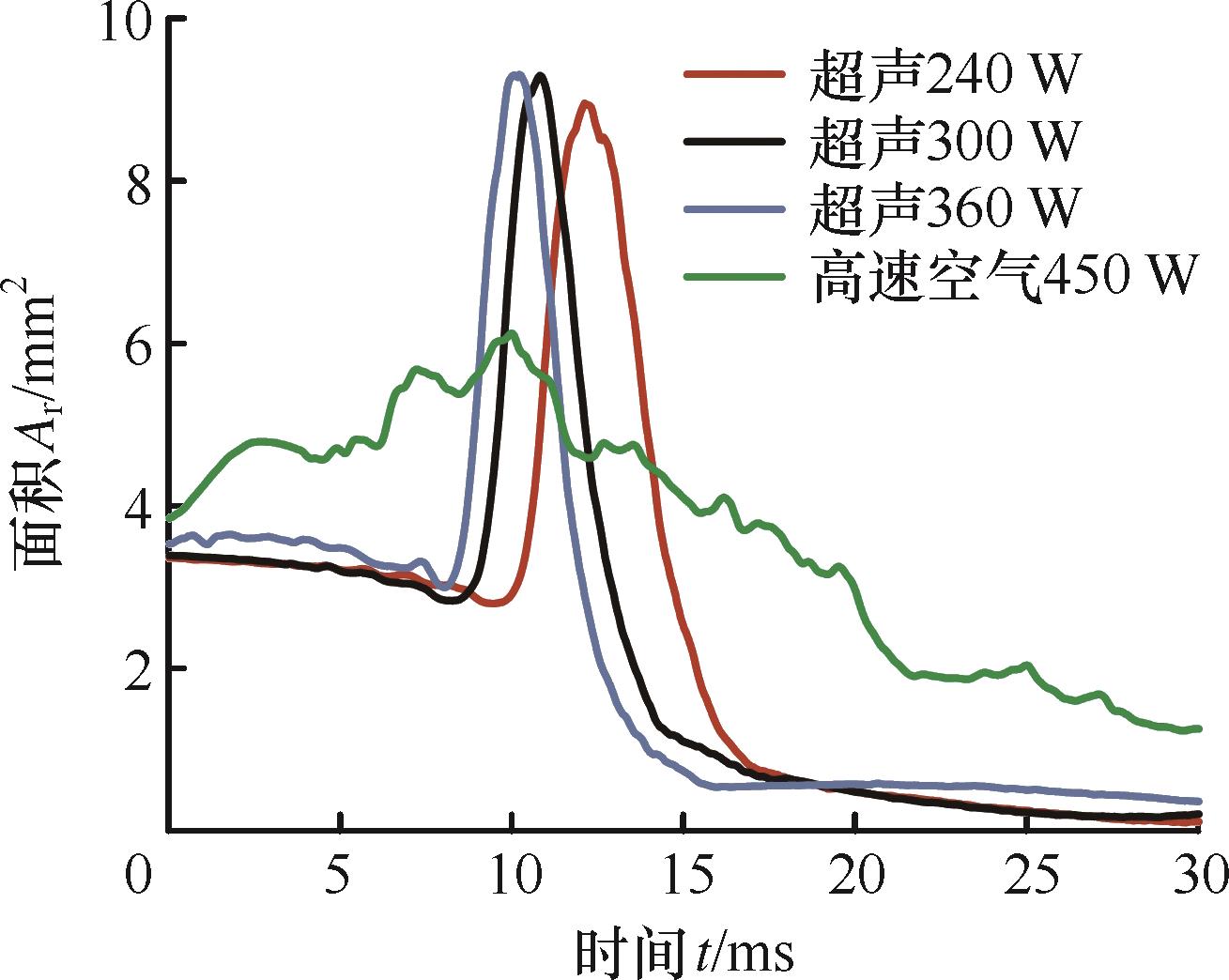
图12 不同去除方式下液滴面积变化情况
Fig.12 Variation of droplet area under different removal methods
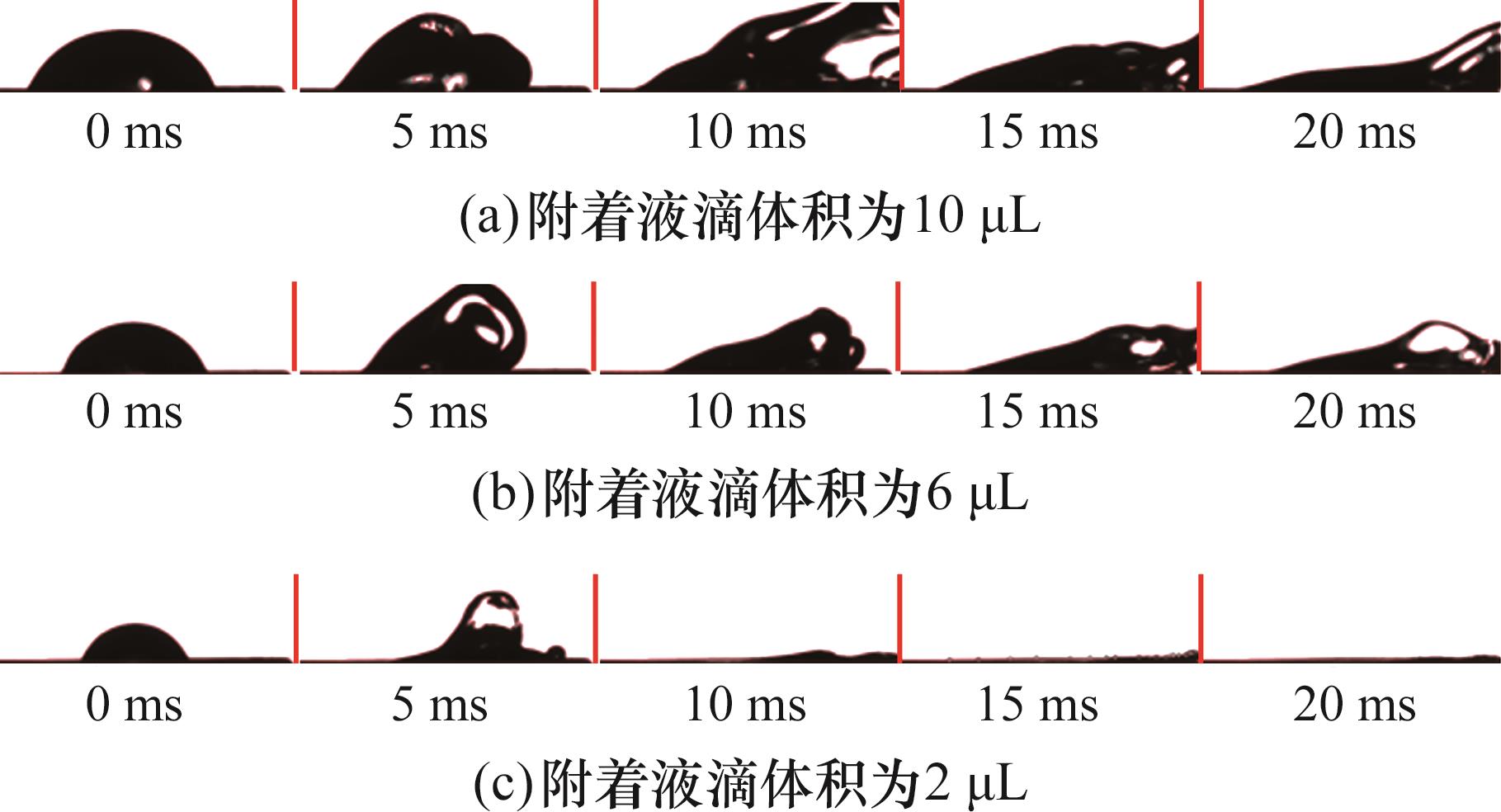
图13 高速空气射流去除不同体积附着液滴
Fig.13 Removal of adhering droplets with different volumes by high-speed air jets
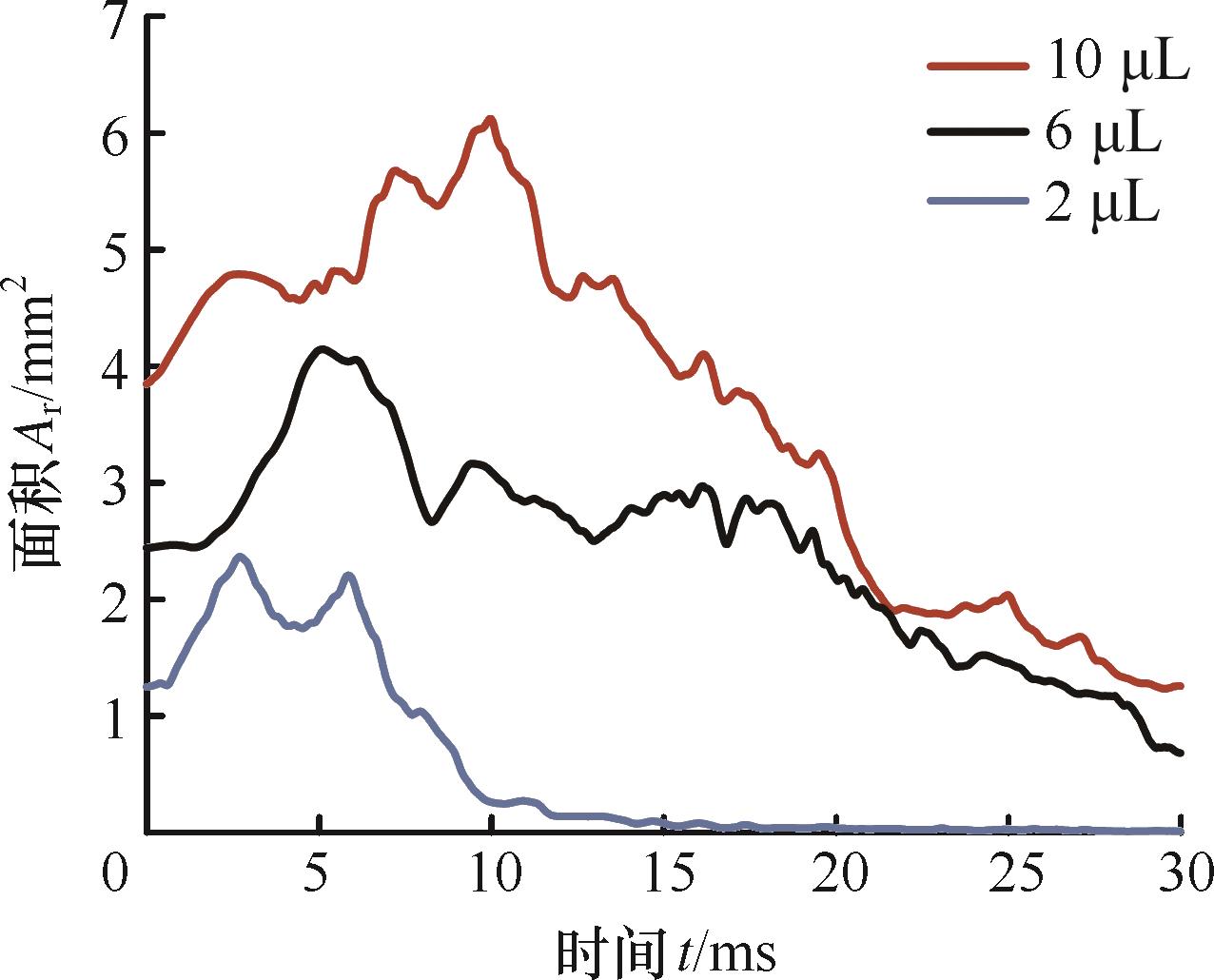
图14 高速空气射流去除不同体积液滴面积变化情况
Fig.14 Variation of droplet area during removal of different droplet volumes by high-speed air jets
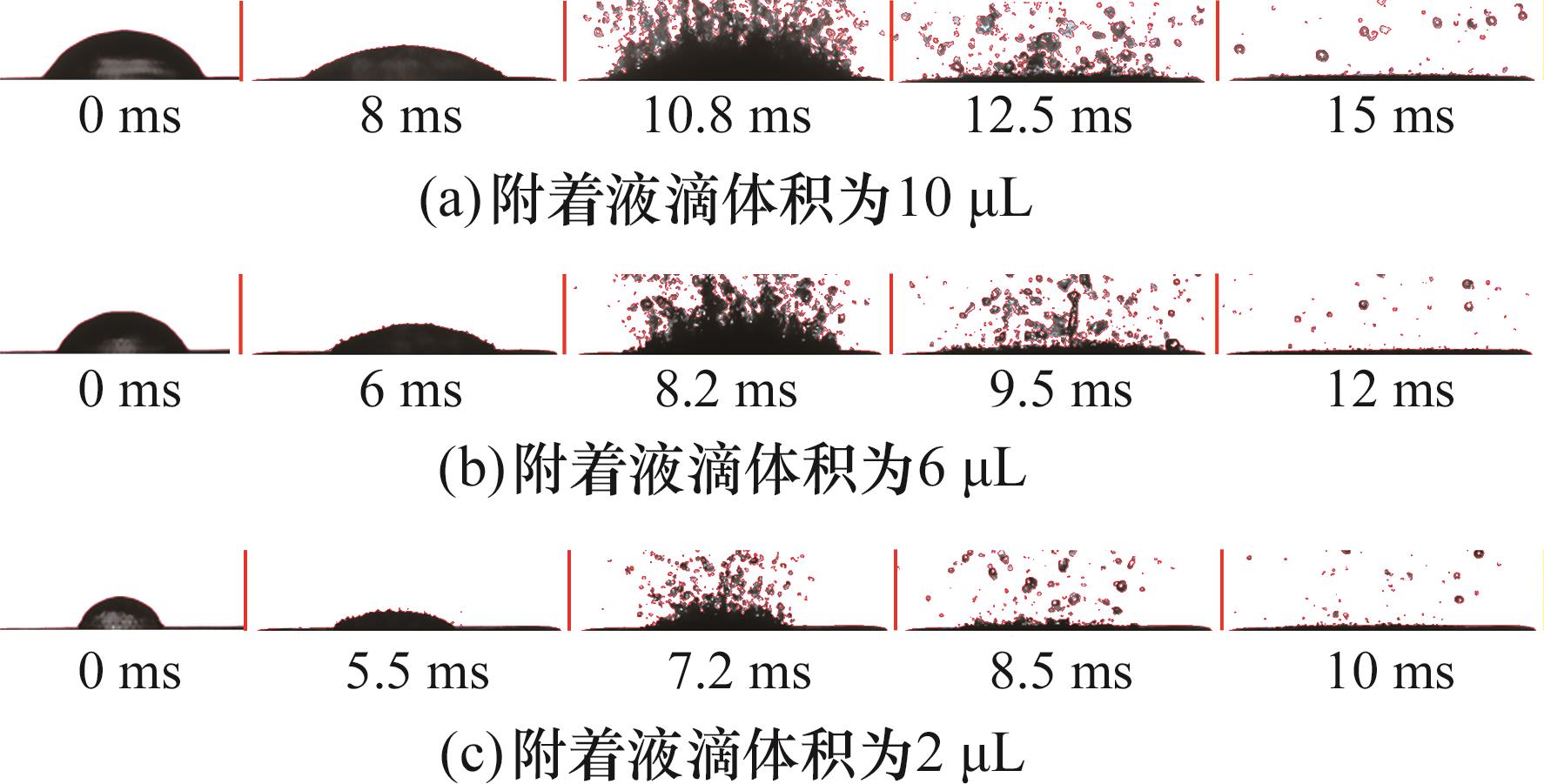
图15 超声振动去除不同体积附着液滴
Fig.15 Removal of adhering droplets with different volumes by ultrasonic vibration
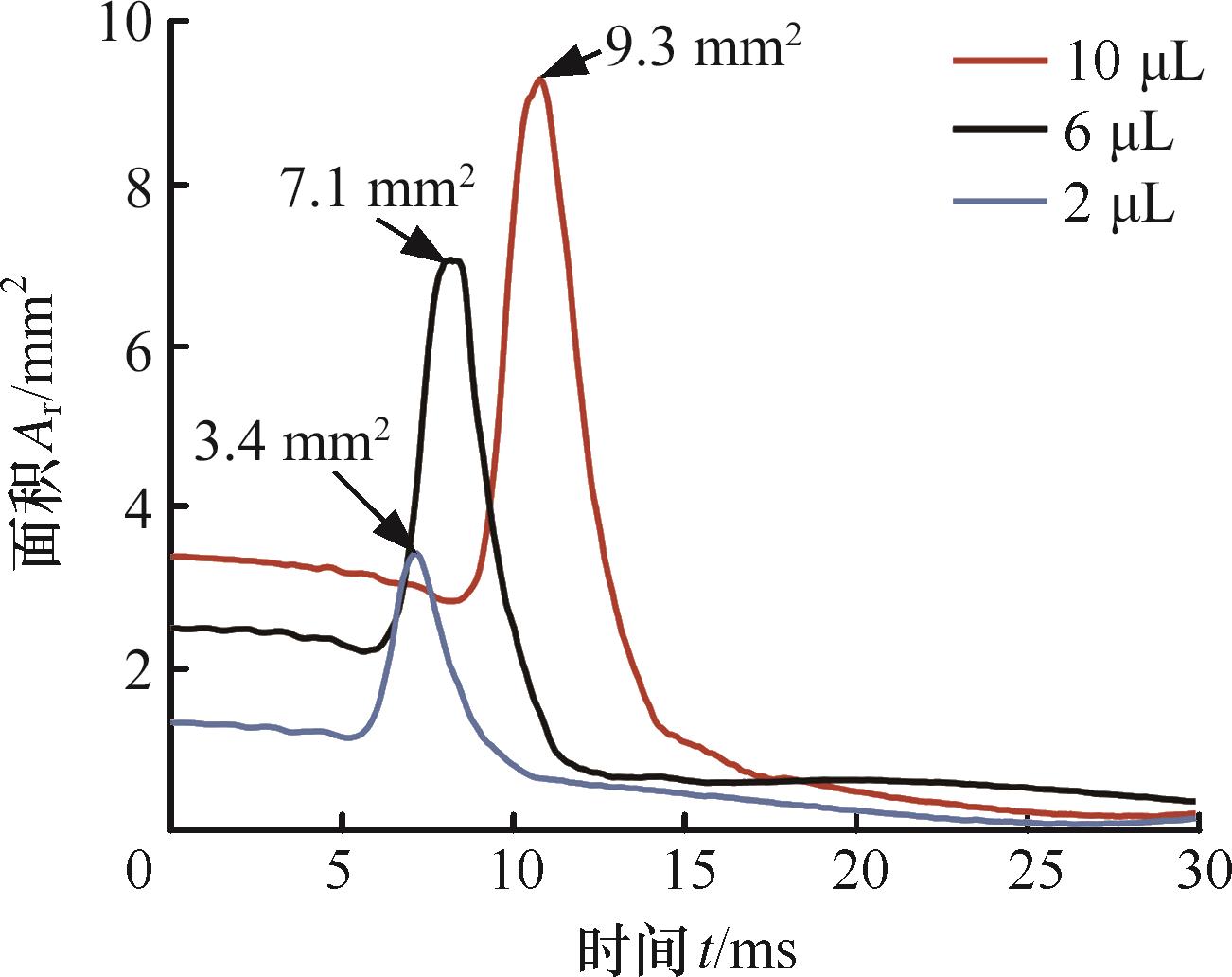
图16 超声振动去除不同体积液滴面积变化情况
Fig.16 Variation of droplet area during removal of different droplet volumes by ultrasonic vibration
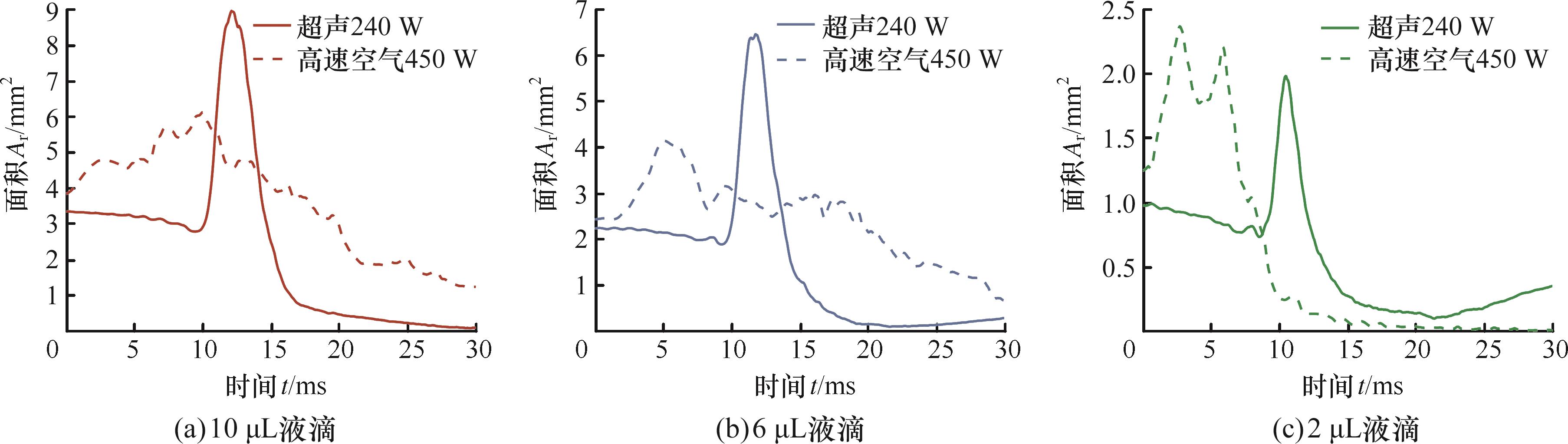
图17 超声振动和高速空气射流去除不同体积附着液滴
Fig.17 Removing adhering droplets with different volumes by ultrasonic vibration and high-speed air jets
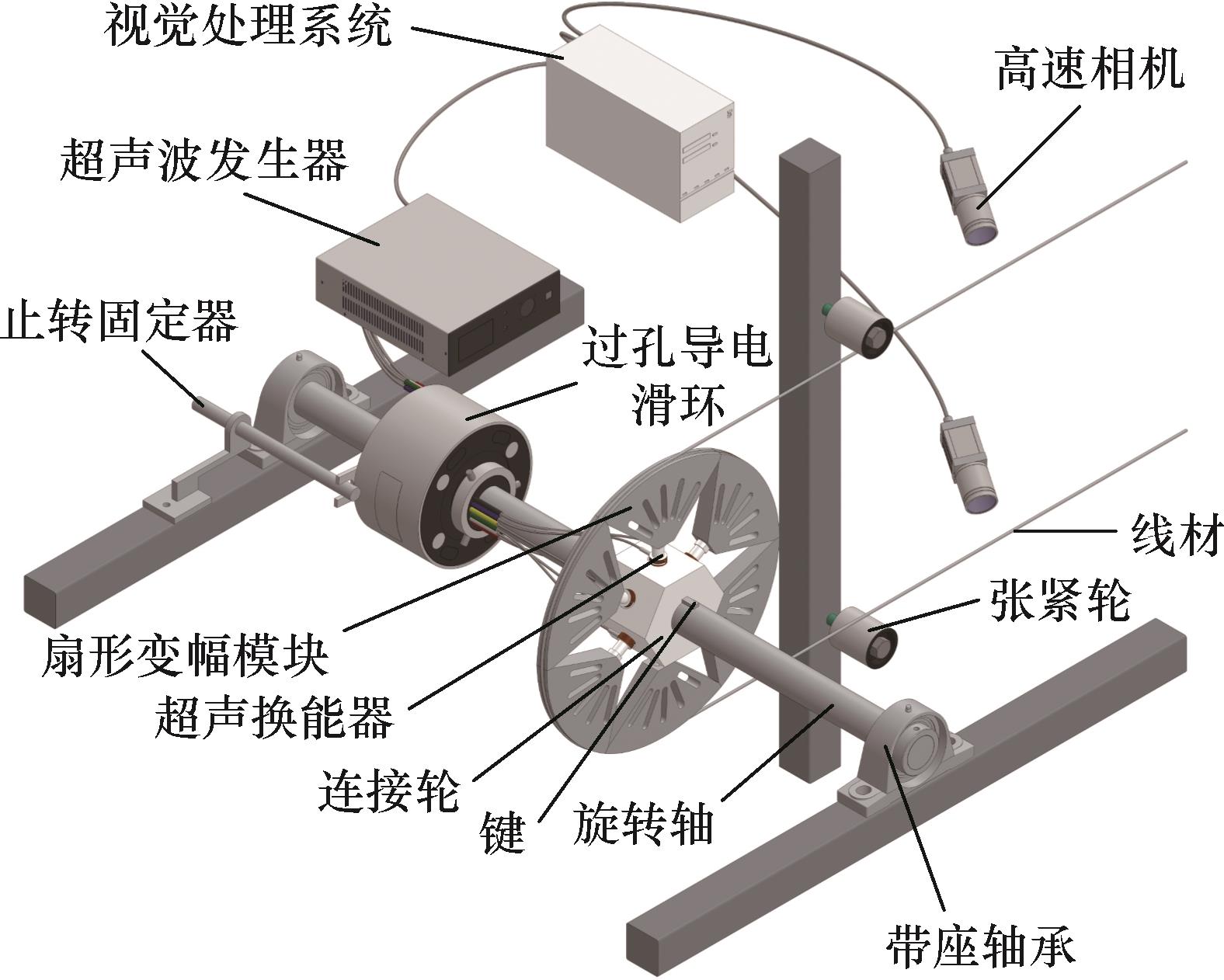
图18 一种用于线材结构清洁的径向超声波滚轮装置[22]
Fig. 18 A radial ultrasonic roller device for wire structure cleaning[22]
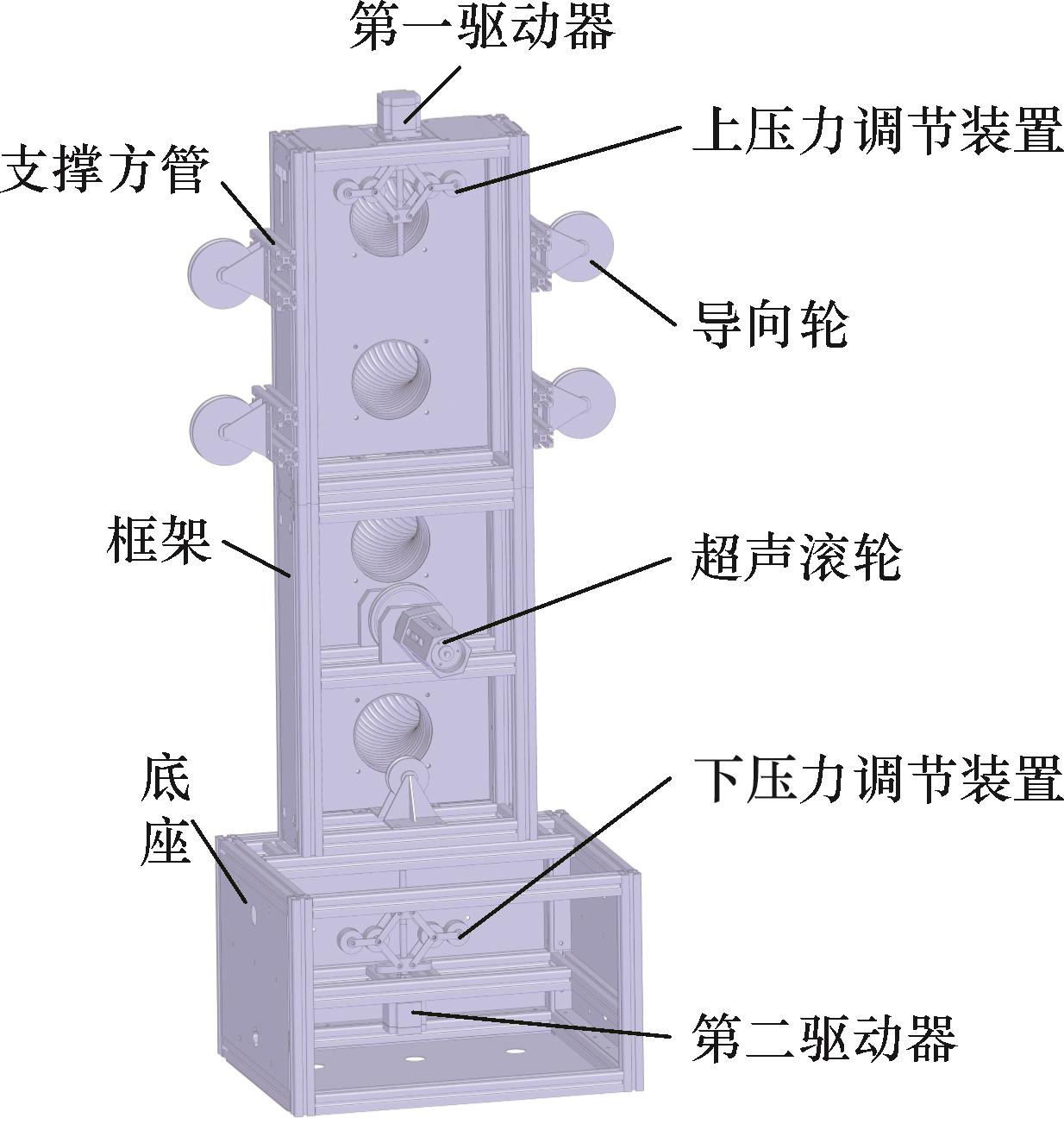
图19 一种高速线材的超声清洁除水装置[23]
Fig.19 An ultrasonic water removal device for high-speed wire[23]
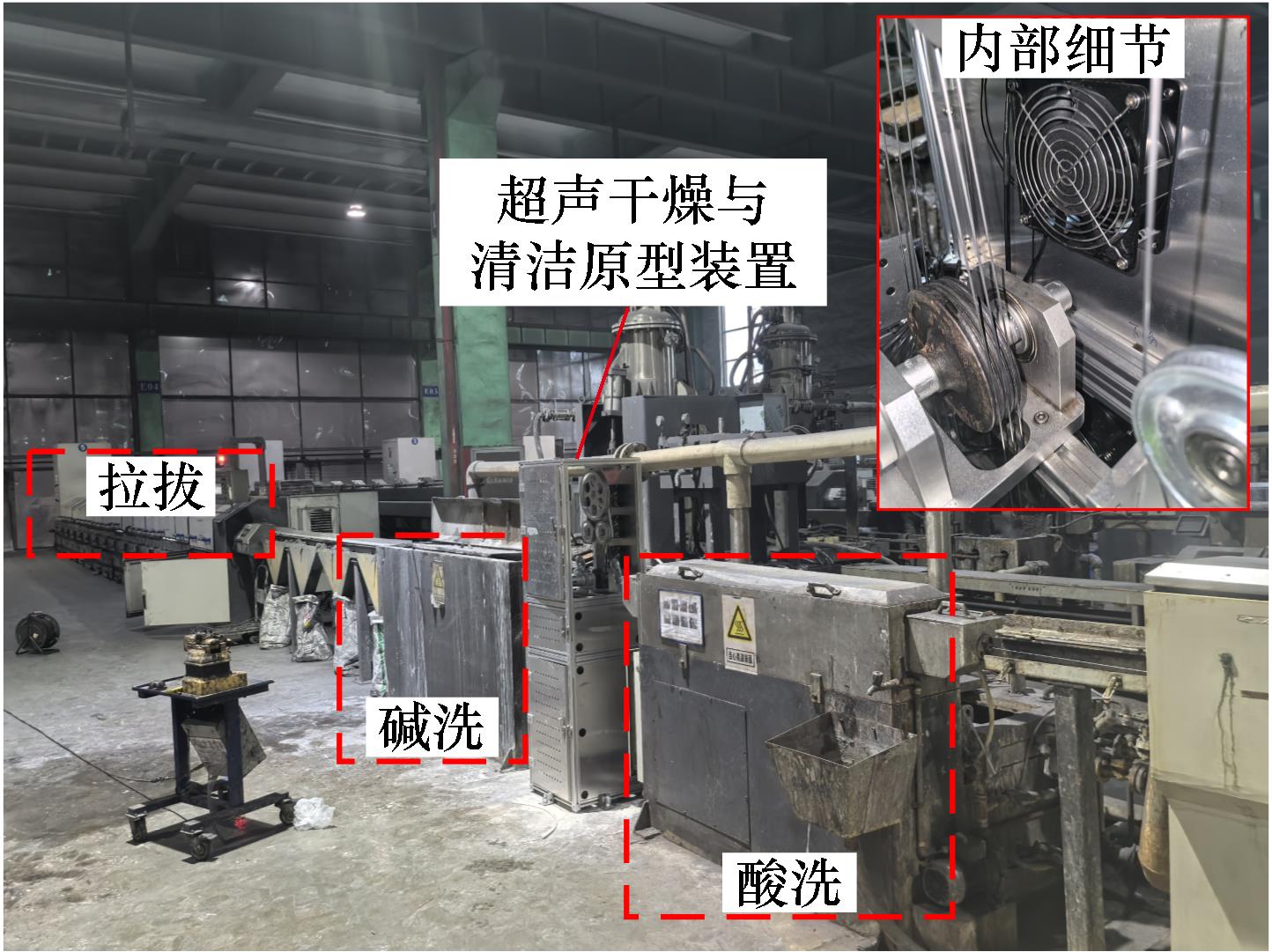
图20 装置测试现场
Fig.20 Device testing site
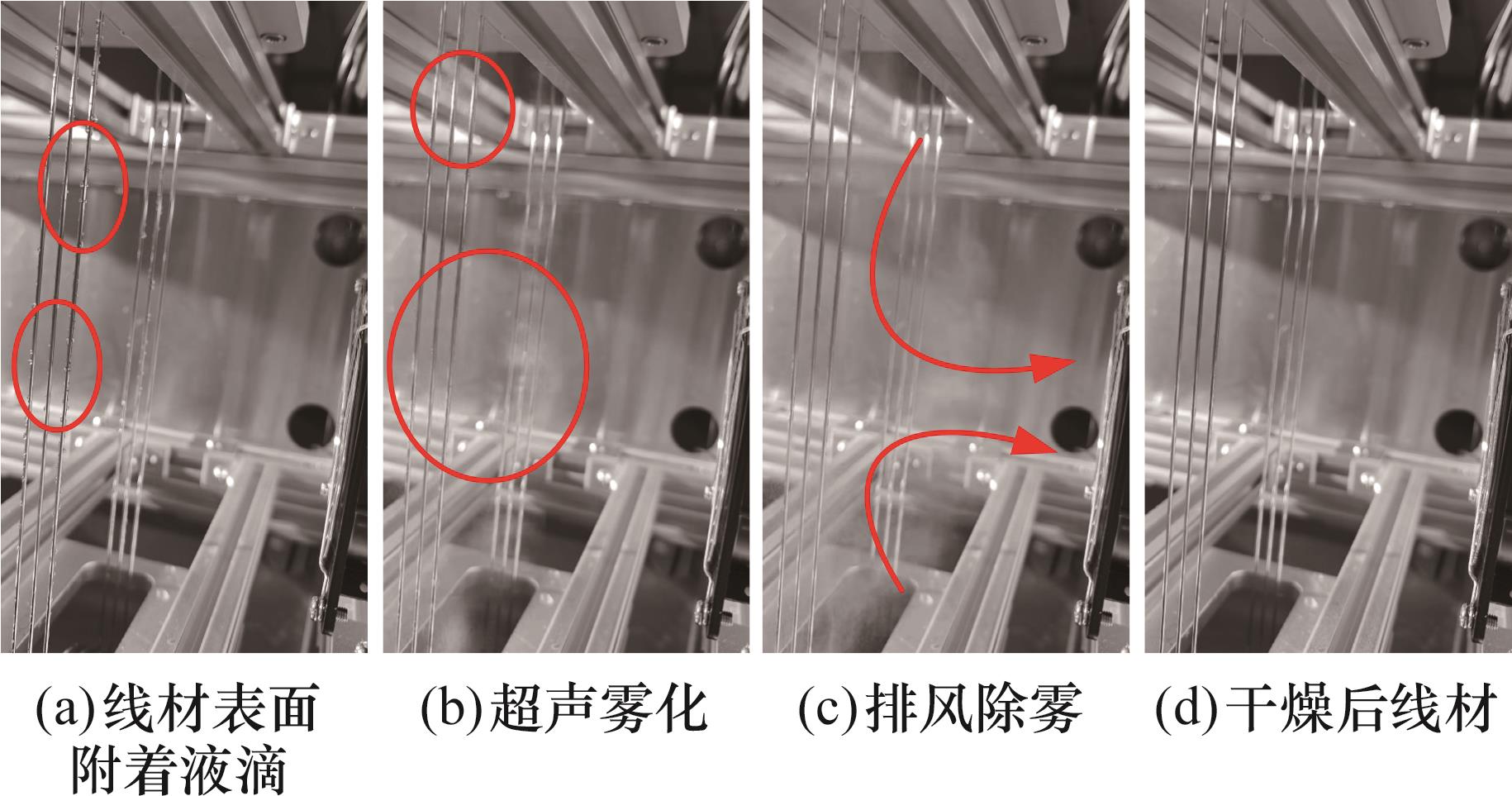
图21 超声去除线材上附着液滴
Fig.21 Ultrasonic removal of adhered droplets on the wire
| [1] | 陈宇豪, 薛松柏, 王博, 等. 汽车轻量化焊接技术发展现状与未来[J]. 材料导报, 2019, 33(): 431-440. |
| CHEN Yuhao, XUE Songbai, WANG Bo, et al. Development Status and Future Direction of Welding Technology in the Automotive Lightweight[J]. Materials Review, 2019, 33(S2): 431-440. | |
| [2] | 黄会强, 车平, 裴雪峰, 等. 我国桥梁钢结构焊接技术发展现状及展望[J]. 焊接技术, 2019, 48(): 60-63. |
| HUANG Huiqiang, CHE Ping, PEI Xuefeng, et al. Present Situation and Prospect of Welding Technology for Bridge Steel Structure in China[J]. Welding Technology, 2019, 48(S2): 60-63. | |
| [3] | 陈国庆, 张秉刚, 冯吉才, 等. 电子束焊接在航空航天工业中的应用[J]. 航空制造技术, 2011, 54(11): 42-45. |
| CHEN Guoqing, ZHANG Binggang, FENG Jicai, et al. Application of Electron Beam Welding Technology in Aerospace Industry[J]. Aeronautical Manufacturing Technology, 2011, 54(11): 42-45. | |
| [4] | 薛松柏, 王博, 张亮, 等. 中国近十年绿色焊接技术研究进展[J]. 材料导报, 2019, 33(17): 2813-2830. |
| XUE Songbai, WANG Bo, ZHANG Liang, et al. Development of Green Welding Technology in China during the Past Decade[J]. Materials Review, 2019, 33(17): 2813-2830. | |
| [5] | 贺龙龙, 孔凡旭, 刘铁岭, 等. 河钢邯钢邯宝公司压缩空气管网降压节能的应用与实践[J]. 冶金设备, 2024(): 99-103. |
| HE Longlong, KONG Fanxu, LIU Tieling, et al. Application and Practice of Reducing Pressure and Saving Energy in Compressed Air Pipe Network of Hegang Hanbao Company[J]. Metallurgical Equipment, 2024(S1): 99-103. | |
| [6] | 李红梅. 钢铁企业压缩空气系统能耗分析与节能措施[J]. 金属材料与冶金工程, 2016, 44(3): 57-61. |
| LI Hongmei. Energy Consumption Analysis and Energy Saving Measures for Compressed Air System in Iron and Steel Enterprises[J]. Metal Materials and Metallurgy Engineering, 2016, 44(3): 57-61. | |
| [7] | 王晓东, 彭晓峰, 张欣欣, 等. 水平壁面上液滴吹离的临界风速[J]. 应用基础与工程科学学报, 2006, 14(3): 403-410. |
| WANG Xiaodong, PENG Xiaofeng, ZHANG Xinxin, et al. Investigation on Critical Airflow Velocity about Departure of Droplet from Horizontal Wall[J]. Journal of Basic Science and Engineering, 2006, 14(3): 403-410. | |
| [8] | 郗华, 许宏庆, 张锡文, 等. 气枪喷嘴除尘除水效率的实验研究[J]. 机械开发, 2000(4): 6-11. |
| XI Hua, XU Hongqing, ZHANG Xiwen, et al. Experimental Investigation of Particle and Water Removal Efficiency of Air Jet[J]. Machinery Development,2000(4): 6-11. | |
| [9] | 郝鹏飞, 张锡文, 何枫, 等. 气枪喷嘴高速射流的除水效率研究[J]. 应用力学学报, 2001, 18(2): 103-107. |
| HAO Pengfei, ZHANG Xiwen, HE Feng, et al. A Pseudo Variable Method for Mechanical Reliability Design[J]. Chinese Journal of Applied Mechanics, 2001, 18(2): 103-107. | |
| [10] | 郗华, 张锡文, 何枫, 等. 基于粒子图像法的气枪喷嘴除尘效率研究[J]. 流体力学实验与测量, 2000, 14(2): 40-43. |
| XI Hua, ZHANG Xiwen, HE Feng, et al. The Investigation of Particle Removal Efficiency beneath an Impinging Jet with Image Processing[J]. Experiments and Measurements in Fluid Mechanics, 2000, 14(2): 40-43. | |
| [11] | BENEDETTI M, BONFA' F, BERTINI I, et al. Explorative Study on Compressed Air Systems’ Energy Efficiency in Production and Use: First Steps towards the Creation of a Benchmarking System for Large and Energy-intensive Industrial Firms[J]. Applied Energy, 2018, 227(C): 436-448. |
| [12] | 蔡茂林, 石岩. 压缩空气系统节能关键技术体系及其应用[J]. 液压气动与密封, 2012, 32(12): 63-66. |
| CAI Maolin, SHI Yan. Energy-saving Key Technologies System of Compressed Air System and Its Applications[J]. Hydraulics Pneumatics & Seals, 2012, 32(12): 63-66. | |
| [13] | 姜忠爱, 于赢水, 熊伟, 等. 气动系统节能方法研究进展综述[J]. 液压与气动, 2022, 46(9): 14-21. |
| JIANG Zhongai, YU Yingshui, XIONG Wei, et al. Review on Energy Saving Methods of Pneumatic System[J]. Chinese Hydraulics & Pneumatics, 2022, 46(9): 14-21. | |
| [14] | 莫润阳, 林书玉, 王成会. 超声空化的研究方法及进展[J]. 应用声学, 2009, 28(5): 389-400. |
| MO Runyang, LIN Shuyu, WANG Chenghui. Methods of Study on Sound Cavitation[J]. Journal of Applied Acoustics, 2009, 28(5): 389-400. | |
| [15] | ZHANG L, SHI J, XU B, et al. Experimental Study on Distribution Characteristics of Condensate Droplets under Ultrasonic Vibration[J]. Microgravity Science and Technology, 2018, 30(6): 737-746. |
| [16] | 李帅, 李栋, 赵孝保. 超声作用下圆板表面液滴铺展雾化特性[J]. 工程热物理学报, 2021, 42(3): 676-679. |
| LI Shuai, LI Dong, ZHAO Xiaobao. Characteristics of Droplet Spreading and Atomizing on Circular Plate under Ultrasonic Excitation[J]. Journal of Engineering Thermophysics, 2021, 42(3): 676-679. | |
| [17] | DEEPU P, PENG C, MOGHADDAM S. Dynamics of Ultrasonic Atomization of Droplets[J]. Experimental Thermal and Fluid Science, 2018, 92: 243-247. |
| [18] | 李栋, 赵孝保, 陈振乾, 等. 超声波去除铝表面残留液滴的试验研究[J]. 工程热物理学报, 2015, 36(9): 2018-2021. |
| LI Dong, ZHAO Xiaobao, CHEN Zhenqian, et al. Experimental Study on Residual Water Droplets Removal from Aluminum Surface by Means of Ultrasonic Vibration[J]. Journal of Engineering Thermophysics, 2015, 36(9): 2018-2021. | |
| [19] | 李栋, 赵孝保, 陈振乾, 等. 超声波去除铝表面残留液滴的试验研究[J]. 工程热物理学报, 2015, 36(9): 2018-2021. |
| LI Dong, ZHAO Xiaobao, CHEN Zhenqian, et al. Experimental Study on Residual Water Droplets Removal from Aluminum Surface by Means of Ultrasonic Vibration[J]. Journal of Engineering Thermophysics, 2015, 36(9): 2018-2021. | |
| [20] | PRIYADARSHI A, PRENTICE P, ESKIN D, et al. Synchronized Acoustic Emission and High-speed Imaging of Cavitation-induced Atomization: the Role of Shock Waves[J]. Ultrasonics Sonochemistry, 2025, 113: 107233. |
| [21] | HUANG Q, NING J, HUANG J, et al. Influence of Amplitude Modulation and Substrate Hydrophilicity Treatment on Surface Acoustic Wave Atomization[J]. Surface and Coatings Technology, 2025, 499: 131775. |
| [22] | 严鲁涛, 陈修泓, 冯少科, 等. 一种用于线材结构清洁的径向超声波滚轮装置: CN120038163A[P].2025-05-27. |
| YAN Lutao, CHEN Xiuhong, FENG Shaoke, et al. A Radial Ultrasonic Roller Device for Wire Structure Cleaning: CN120038163A[P].2025-05-27. | |
| [23] | 严鲁涛, 冯少科, 陈修泓, 等.一种高速线材的超声清洁除水装置: 202510997783.3[P].2025-10-21. |
| YAN Lutao, FENG Shaoke, CHEN Xiuhong, et al. An Ultrasonic Water Removal Device for High-speed Wire: CN120819977A[P].2025-10-21. |
| [1] | 张冀, 袁海博, 王智璇, 朱思华, 白振华. 物理引导的神经网络模型预测铝带冷轧轧制力[J]. 中国机械工程, 2026, 37(5): 1199-1209. |
| [2] | 郭玉琴, 尹航, 杨栋杰, 刘晨曦, 李富柱. 频率偏移补偿协同分步逐级优化的端/侧两面加工宽刃超声工具头设计方法[J]. 中国机械工程, 2025, 36(12): 2903-2910. |
| [3] | 李润祥, 杨宇恒, 蒙晨琛, 纪跃波. 一种压电换能器等效电路参数的实时测量方法[J]. 中国机械工程, 2025, 36(10): 2322-2328. |
| [4] | 董国军, 赖睿达, 代勇, 郭志清, 吴孟为. 基于河冰细观结构的超声辅助切削仿真分析及验证实验[J]. 中国机械工程, 2025, 36(10): 2405-2412. |
| [5] | 吴慧, 李晓高, 沈国浪, 王兴国, 马成文. 基于超声导波技术的双层粘接结构界面质量检测[J]. 中国机械工程, 2024, 35(05): 916-927. |
| [6] | 柯庆镝, 罗俊友, 蒋守志, 黄海鸿, . 基于涂层材料分布状态的超声应力反演模型构建[J]. 中国机械工程, 2023, 34(18): 2230-2237. |
| [7] | 杜文杰, 郑慧峰, 张凯胜, 唐佳玄. 多层介质内部缺陷远聚焦成像方法研究[J]. 中国机械工程, 2023, 34(09): 1045-1051. |
| [8] | 曹腾, 李晓牛, 王柏权, 温智益, 吴大伟. 单相压电电机驱动的高精度孔径光阑设计[J]. 中国机械工程, 2022, 33(20): 2414-2419. |
| [9] | 蔡卓越, 涂君, 张旭, 邓志扬, , 吴樵, 宋小春, . 厚壁铝管斜入射线聚焦垂直剪切波电磁超声探头设计[J]. 中国机械工程, 2022, 33(07): 804-810. |
| [10] | 丁文锋, 李本凯, 傅玉灿, 徐九华. 涡轮盘榫槽加工技术现状与展望[J]. 中国机械工程, 2021, 32(23): 2785-2798. |
| [11] | 顾震华, 李可, 顾杰斐, 宿磊, 苏文胜. 基于非线性预测滤波算法的疲劳裂纹扩展预测[J]. 中国机械工程, 2021, 32(14): 1709-1715. |
| [12] | 刘增华1,2;张婷婷1,2;苏瑞祥1,2;陈洪磊1,2;何存富1,2;吴斌1,2. 基于十字形阵列和2D-MUSIC算法的Lamb波检测[J]. 中国机械工程, 2020, 31(17): 2038-2044. |
| [13] | 原路生, 赵波, 王毅, 赵重阳. 椭圆振动辅助车削7075铝合金表面微织构及其特性[J]. 中国机械工程, 2020, 31(15): 1831-1838. |
| [14] | 宋小春;文辉;涂君;张旭;黄松岭. 变厚度板中水平剪切波的传播特性分析[J]. 中国机械工程, 2020, 31(04): 417-424. |
| [15] | 强鹭升;王均山;陈超;王福飞. 基于超声作用的磁流变液阻尼器设计与分析[J]. 中国机械工程, 2019, 30(14): 1665-1672. |
| 阅读次数 | ||||||
|
全文 |
|
|||||
|
摘要 |
|
|||||
