



ISSN 1004-132X
CN 42-1294/TH
CN 42-1294/TH
中国机械工程 ›› 2026, Vol. 37 ›› Issue (10): 2466-2475.DOI: 10.3969/j.issn.1004-132X.2026.10.009
费凡1( ), 吴剑钊1,2(), 仲刘洋1, 张超勇2, 刘文辉1, 刘筱1
收稿日期:2025-11-30
出版日期:2026-10-25
发布日期:2026-11-10
通讯作者:
吴剑钊
作者简介:费凡,男,2002年生,硕士研究生。研究方向为激光直接能量沉积。E-mail: 202411802008@jmu.edu.cn基金资助:
FEI Fan1(), WU Jianzhao1,2(), ZHONG Liuyang1, ZHANG Chaoyong2, LIU Wenhui1, LIU Xiao1
Received:2025-11-30
Online:2026-10-25
Published:2026-11-10
Contact:
WU Jianzhao
摘要:
针对激光定向能量沉积制备TC4钛合金,以激光功率、扫描速度和粉末进给速度为主要工艺参数,采用L₁₆(4³)正交试验设计,系统研究了各工艺参数对能量利用率、比能耗及沉积层高宽比的影响规律。通过极差分析与方差分析,明确了各参数对能效与形貌指标的影响显著性,并确定了优化的工艺参数组合(激光功率800 W,扫描速度600 mm/min,粉末进给速度6 g/min)。试验验证表明,相较于正交试验组的平均值,该优化参数下比能耗与高宽比偏差分别改善了21.8%与69.5%,且能量利用率提高了22.4%;微观组织分析显示,沉积层主要由细小的针状α'-Ti马氏体组成,其平均晶粒尺寸小于轧制态基板;力学性能测试表明,沉积态TC4硬度、屈服强度与抗拉强度相较于轧制基板提高25.63%、9.94%和9.60%,但延伸率略有下降,断口呈韧-脆混合断裂特征。
中图分类号:
费凡, 吴剑钊, 仲刘洋, 张超勇, 刘文辉, 刘筱. 考虑比能耗、能量利用率和高宽比的激光定向能量沉积工艺参数优化及性能分析[J]. 中国机械工程, 2026, 37(10): 2466-2475.
FEI Fan, WU Jianzhao, ZHONG Liuyang, ZHANG Chaoyong, LIU Wenhui, LIU Xiao. Optimization of Process Parameters and Performance Analysis of Laser Directed Energy Deposition Considering Specific Energy Consumption, Energy Utilization Rate, and Height-to-width Ratio[J]. China Mechanical Engineering, 2026, 37(10): 2466-2475.
| Ti | Al | V | Fe |
|---|---|---|---|
| 余量 | 5.5~6.75 | 3.5~4.5 | ≤0.30 |
| C | N | H | O |
| ≤0.08 | ≤0.05 | ≤0.008 | ≤0.20 |
表1 Ti-6Al-4V的化学成分(质量分数)
Tab.1 Chemical composition of Ti-6Al-4V(mass friction)
| Ti | Al | V | Fe |
|---|---|---|---|
| 余量 | 5.5~6.75 | 3.5~4.5 | ≤0.30 |
| C | N | H | O |
| ≤0.08 | ≤0.05 | ≤0.008 | ≤0.20 |
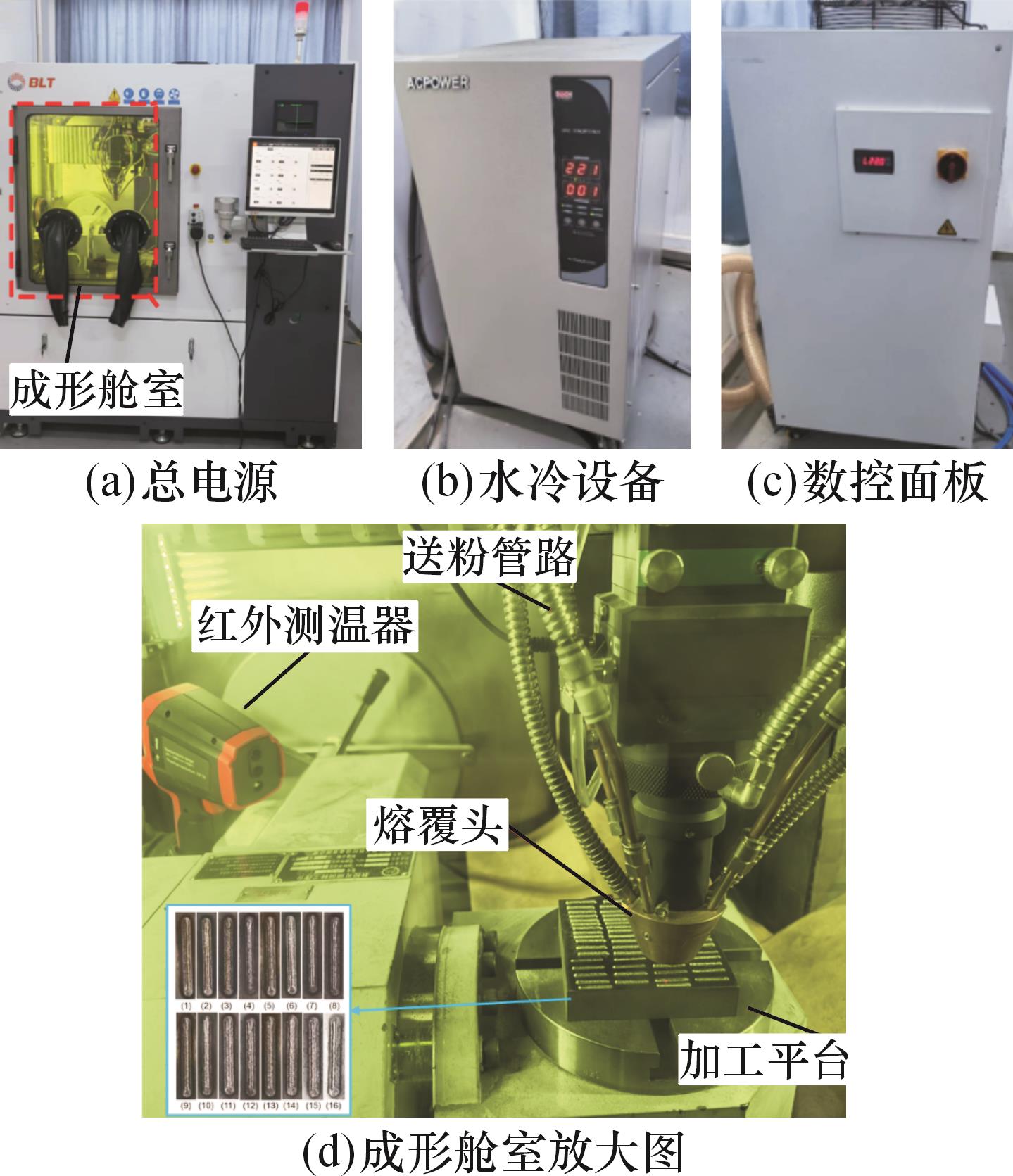
图1 LDED试验平台
Fig.1 Experimental platform of LDED
| 水平 | 因素A/W | 因素B/(mm·min-1) | 因素C/(g·min-1) |
|---|---|---|---|
| 1 | 650 | 450 | 2.4 |
| 2 | 700 | 500 | 3.6 |
| 3 | 750 | 550 | 4.8 |
| 4 | 800 | 600 | 6.0 |
表2 正交试验因素与水平
Tab.2 Factors and levels of the orthogonal experiment
| 水平 | 因素A/W | 因素B/(mm·min-1) | 因素C/(g·min-1) |
|---|---|---|---|
| 1 | 650 | 450 | 2.4 |
| 2 | 700 | 500 | 3.6 |
| 3 | 750 | 550 | 4.8 |
| 4 | 800 | 600 | 6.0 |
| 序号 | 因素A | 因素B | 因素C | 序号 | 因素A | 因素B | 因素C |
|---|---|---|---|---|---|---|---|
| 1 | 1 | 1 | 1 | 9 | 3 | 1 | 3 |
| 2 | 1 | 2 | 2 | 10 | 3 | 2 | 4 |
| 3 | 1 | 3 | 3 | 11 | 3 | 3 | 1 |
| 4 | 1 | 4 | 4 | 12 | 3 | 4 | 2 |
| 5 | 2 | 1 | 2 | 13 | 4 | 1 | 4 |
| 6 | 2 | 2 | 1 | 14 | 4 | 2 | 3 |
| 7 | 2 | 3 | 4 | 15 | 4 | 3 | 2 |
| 8 | 2 | 4 | 3 | 16 | 4 | 4 | 1 |
表3 L16(43)正交试验方案
Tab.3 L₁₆(43) orthogonal experimental array
| 序号 | 因素A | 因素B | 因素C | 序号 | 因素A | 因素B | 因素C |
|---|---|---|---|---|---|---|---|
| 1 | 1 | 1 | 1 | 9 | 3 | 1 | 3 |
| 2 | 1 | 2 | 2 | 10 | 3 | 2 | 4 |
| 3 | 1 | 3 | 3 | 11 | 3 | 3 | 1 |
| 4 | 1 | 4 | 4 | 12 | 3 | 4 | 2 |
| 5 | 2 | 1 | 2 | 13 | 4 | 1 | 4 |
| 6 | 2 | 2 | 1 | 14 | 4 | 2 | 3 |
| 7 | 2 | 3 | 4 | 15 | 4 | 3 | 2 |
| 8 | 2 | 4 | 3 | 16 | 4 | 4 | 1 |
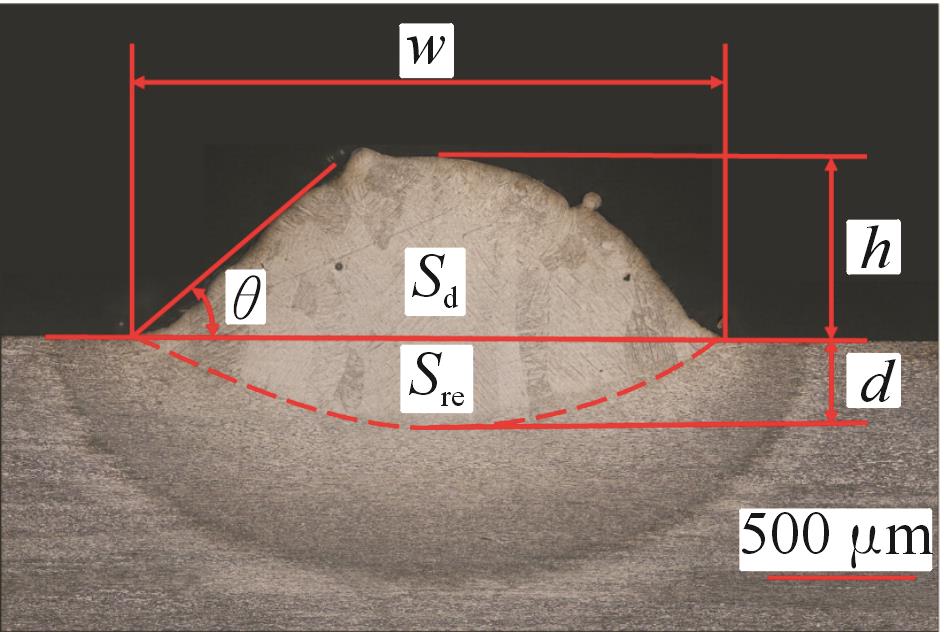
图2 典型的LDED沉积层截面
Fig.2 Cross-sectional morphology of a representative LDED deposit deposited layer
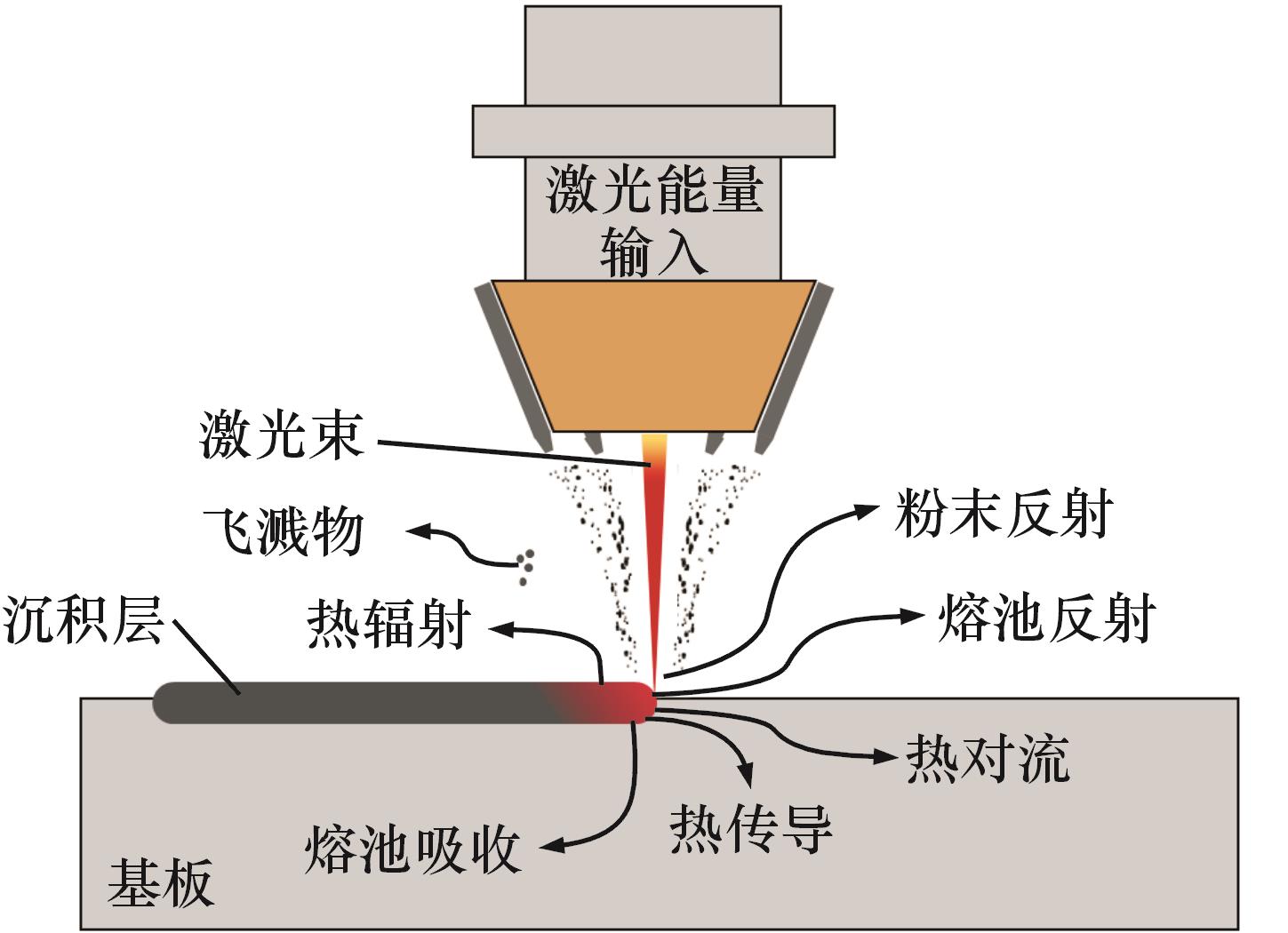
图3 LDED过程能量分配
Fig.3 Energy distribution in the LDED process
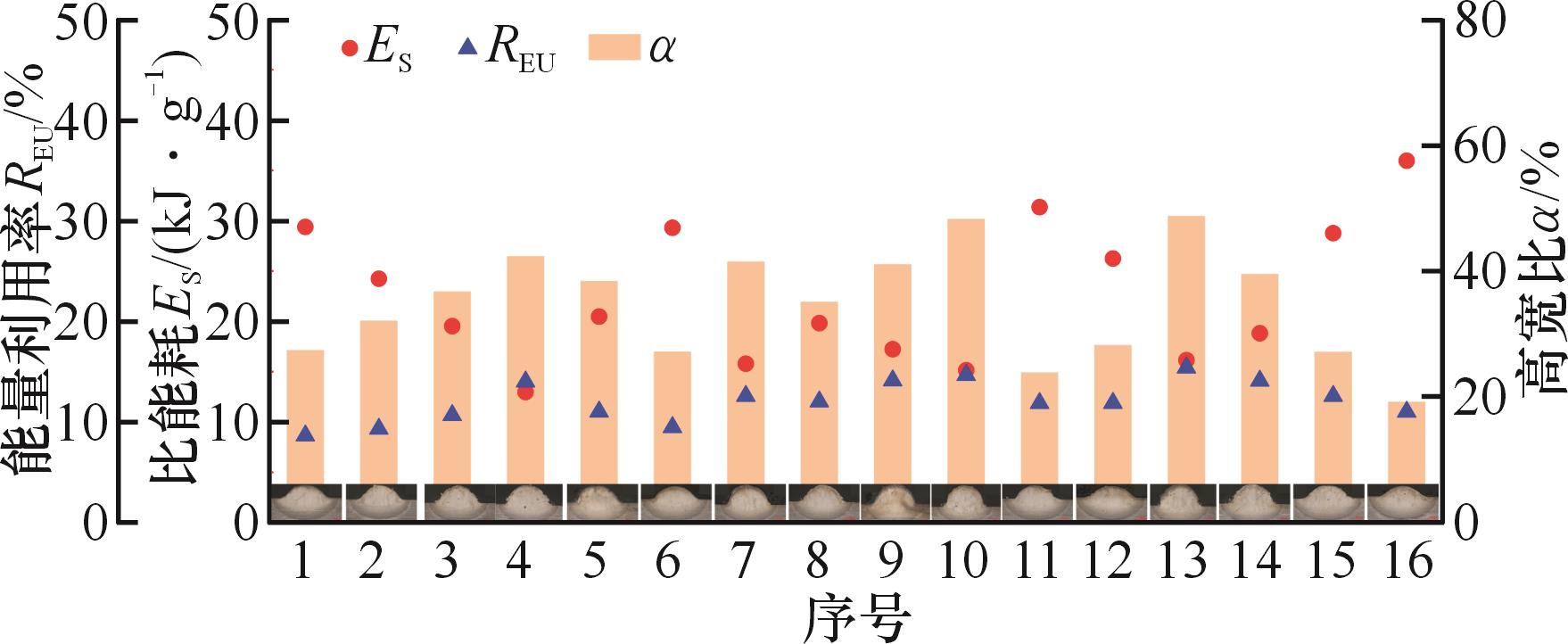
图4 正交试验测量计算结果
Fig.4 Outcomes from the orthogonal experimental tests
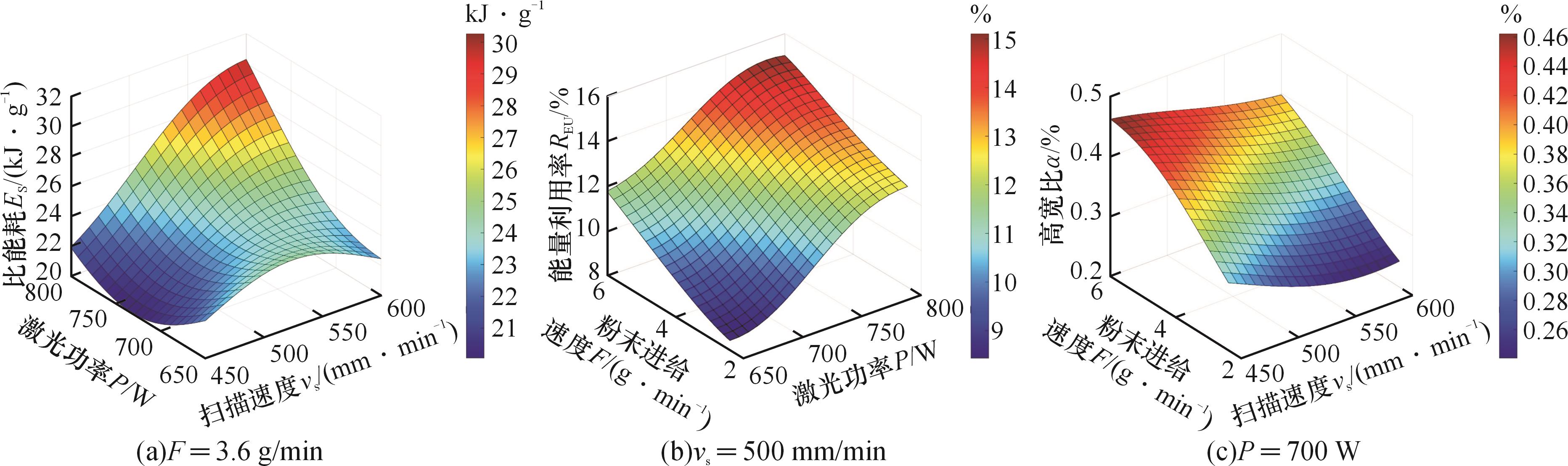
图5 能效指标与LDED工艺参数的关系
Fig.5 Relationship between energy efficiency indicators and LDED process parameters
| 统计量 | 能量利用率 | 比能耗 | 高宽比 | ||||||
|---|---|---|---|---|---|---|---|---|---|
| 因素A | 因素B | 因素C | 因素A | 因素B | 因素C | 因素A | 因素B | 因素C | |
| K1 | 42.64 | 49.19 | 41.01 | 86 120.21 | 83 241.71 | 126 004.43 | 138.51 | 155.54 | 97.54 |
| K2 | 45.11 | 47.52 | 44.80 | 85 382.96 | 87 494.52 | 99 726.82 | 142.06 | 146.97 | 125.74 |
| K3 | 52.52 | 47.71 | 50.91 | 89 966.55 | 95 421.67 | 75 399.90 | 141.34 | 129.14 | 152.35 |
| K4 | 53.08 | 48.92 | 56.63 | 99 691.26 | 95 003.08 | 60 029.83 | 134.51 | 124.77 | 180.79 |
| k1 | 10.66 | 12.30 | 10.25 | 21 530.05 | 20 810.43 | 31 501.11 | 34.63 | 38.88 | 24.39 |
| k2 | 11.28 | 11.88 | 11.20 | 21 345.74 | 21 873.63 | 24 931.71 | 35.51 | 36.74 | 31.44 |
| k3 | 13.13 | 11.93 | 12.73 | 22 491.64 | 23 855.42 | 18 849.97 | 35.34 | 32.29 | 38.09 |
| k4 | 13.27 | 12.23 | 14.16 | 24 922.81 | 23 750.77 | 15 007.46 | 33.63 | 31.19 | 45.20 |
| R | 2.61 | 0.42 | 3.91 | -3577.07 | -3044.99 | -16493.65 | -1.89 | -7.69 | -20.81 |
| 因素主次顺序 | C>A>B | C>A>B | C>B>A | ||||||
| 因素最佳水平 | 4 | 1 | 4 | 2 | 1 | 4 | 4 | 4 | 1 |
表4 极差分析结果
Tab.4 Range analysis results
| 统计量 | 能量利用率 | 比能耗 | 高宽比 | ||||||
|---|---|---|---|---|---|---|---|---|---|
| 因素A | 因素B | 因素C | 因素A | 因素B | 因素C | 因素A | 因素B | 因素C | |
| K1 | 42.64 | 49.19 | 41.01 | 86 120.21 | 83 241.71 | 126 004.43 | 138.51 | 155.54 | 97.54 |
| K2 | 45.11 | 47.52 | 44.80 | 85 382.96 | 87 494.52 | 99 726.82 | 142.06 | 146.97 | 125.74 |
| K3 | 52.52 | 47.71 | 50.91 | 89 966.55 | 95 421.67 | 75 399.90 | 141.34 | 129.14 | 152.35 |
| K4 | 53.08 | 48.92 | 56.63 | 99 691.26 | 95 003.08 | 60 029.83 | 134.51 | 124.77 | 180.79 |
| k1 | 10.66 | 12.30 | 10.25 | 21 530.05 | 20 810.43 | 31 501.11 | 34.63 | 38.88 | 24.39 |
| k2 | 11.28 | 11.88 | 11.20 | 21 345.74 | 21 873.63 | 24 931.71 | 35.51 | 36.74 | 31.44 |
| k3 | 13.13 | 11.93 | 12.73 | 22 491.64 | 23 855.42 | 18 849.97 | 35.34 | 32.29 | 38.09 |
| k4 | 13.27 | 12.23 | 14.16 | 24 922.81 | 23 750.77 | 15 007.46 | 33.63 | 31.19 | 45.20 |
| R | 2.61 | 0.42 | 3.91 | -3577.07 | -3044.99 | -16493.65 | -1.89 | -7.69 | -20.81 |
| 因素主次顺序 | C>A>B | C>A>B | C>B>A | ||||||
| 因素最佳水平 | 4 | 1 | 4 | 2 | 1 | 4 | 4 | 4 | 1 |
| 方差来源 | 平方和Sj | 自由度df | 均方MS | F* | P* | 显著性(α0=0.05) | |
|---|---|---|---|---|---|---|---|
| 能量利用率 | 因素A | 20.720 | 3 | 6.907 | 10.712 | 0.008 | 显著 |
| 因素B | 0.529 | 3 | 0.176 | 0.274 | 0.843 | 不显著 | |
| 因素C | 35.393 | 3 | 11.798 | 18.298 | 0.002 | 显著 | |
| 比能耗 | 因素A | 32 488 603.690 | 3 | 10 829 534.563 | 3.808 | 0.077 | 不显著 |
| 因素B | 26 510 073.075 | 3 | 8 836 691.025 | 3.107 | 0.110 | 不显著 | |
| 因素C | 625 491 795.136 | 3 | 208 497 265.045 | 73.310 | <0.001 | 显著 | |
| 高宽比 | 因素A | 8.804 | 3 | 2.935 | 0.903 | 0.493 | 不显著 |
| 因素B | 159.185 | 3 | 53.062 | 16.335 | 0.003 | 显著 | |
| 因素C | 954.656 | 3 | 318.219 | 97.961 | <0.001 | 显著 | |
表5 方差分析结果
Tab.5 ANOVA results
| 方差来源 | 平方和Sj | 自由度df | 均方MS | F* | P* | 显著性(α0=0.05) | |
|---|---|---|---|---|---|---|---|
| 能量利用率 | 因素A | 20.720 | 3 | 6.907 | 10.712 | 0.008 | 显著 |
| 因素B | 0.529 | 3 | 0.176 | 0.274 | 0.843 | 不显著 | |
| 因素C | 35.393 | 3 | 11.798 | 18.298 | 0.002 | 显著 | |
| 比能耗 | 因素A | 32 488 603.690 | 3 | 10 829 534.563 | 3.808 | 0.077 | 不显著 |
| 因素B | 26 510 073.075 | 3 | 8 836 691.025 | 3.107 | 0.110 | 不显著 | |
| 因素C | 625 491 795.136 | 3 | 208 497 265.045 | 73.310 | <0.001 | 显著 | |
| 高宽比 | 因素A | 8.804 | 3 | 2.935 | 0.903 | 0.493 | 不显著 |
| 因素B | 159.185 | 3 | 53.062 | 16.335 | 0.003 | 显著 | |
| 因素C | 954.656 | 3 | 318.219 | 97.961 | <0.001 | 显著 | |
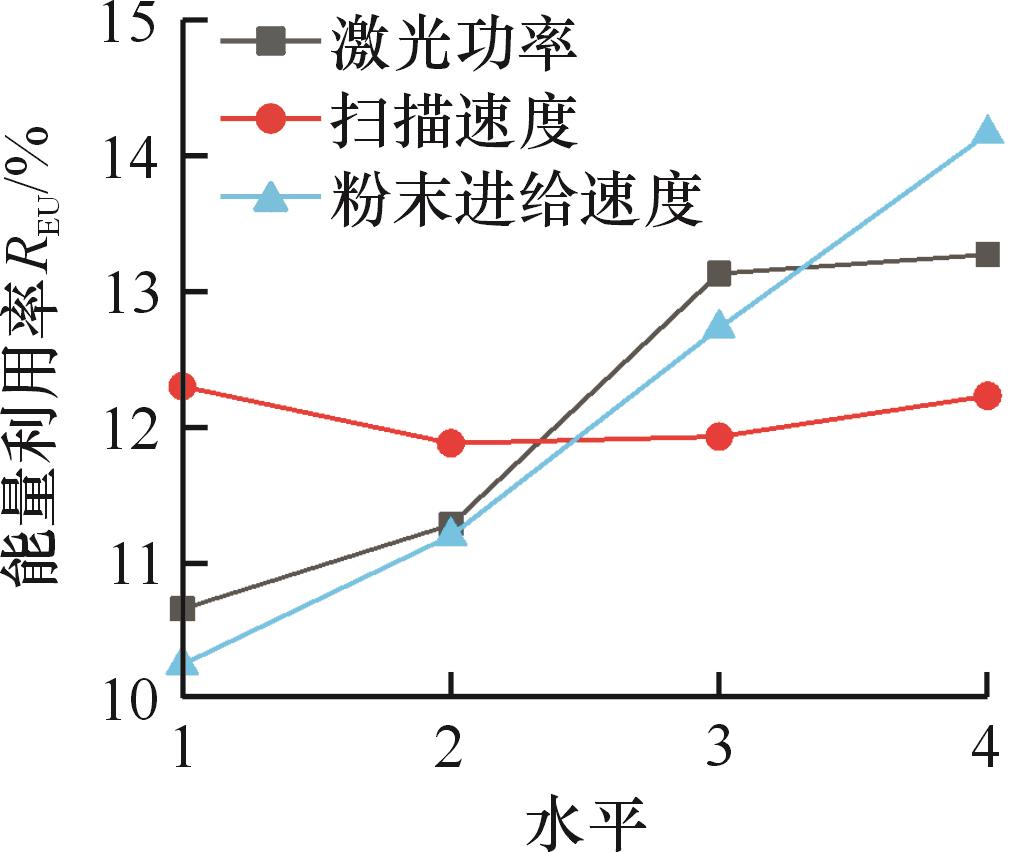
图6 各因素平均水平对能量利用率的影响
Fig.6 Main effects plot of process parameters on REU
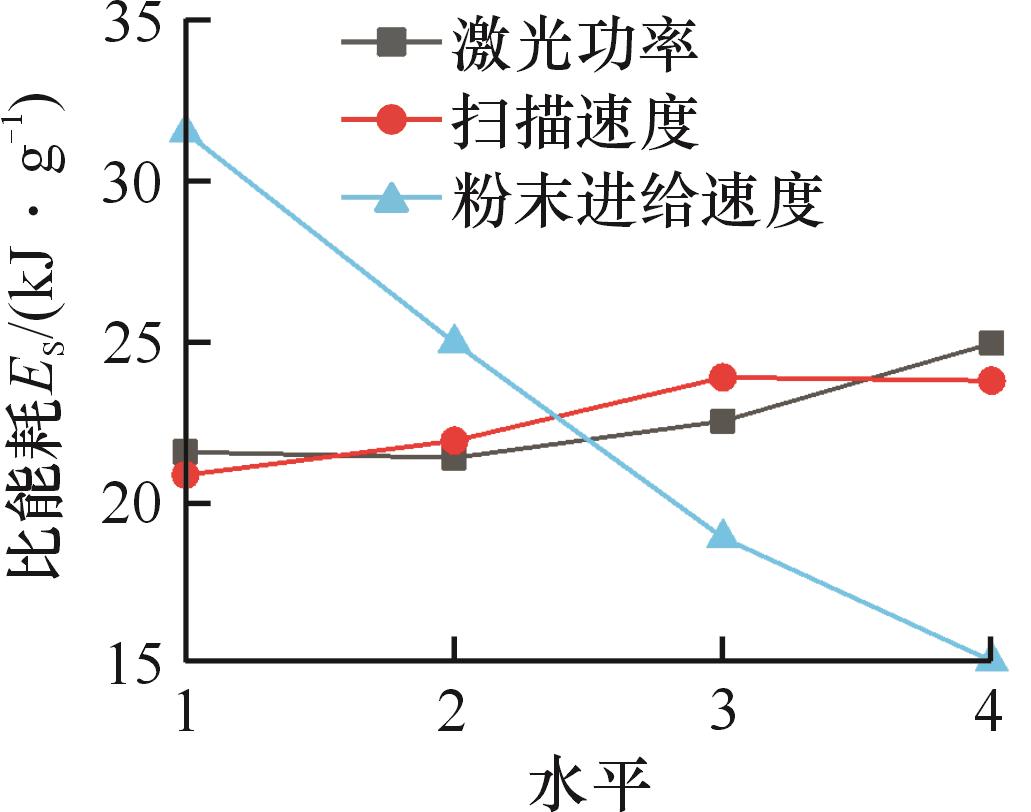
图7 各因素平均水平对比能耗的影响
Fig.7 Main effects plot of process parameters on ES
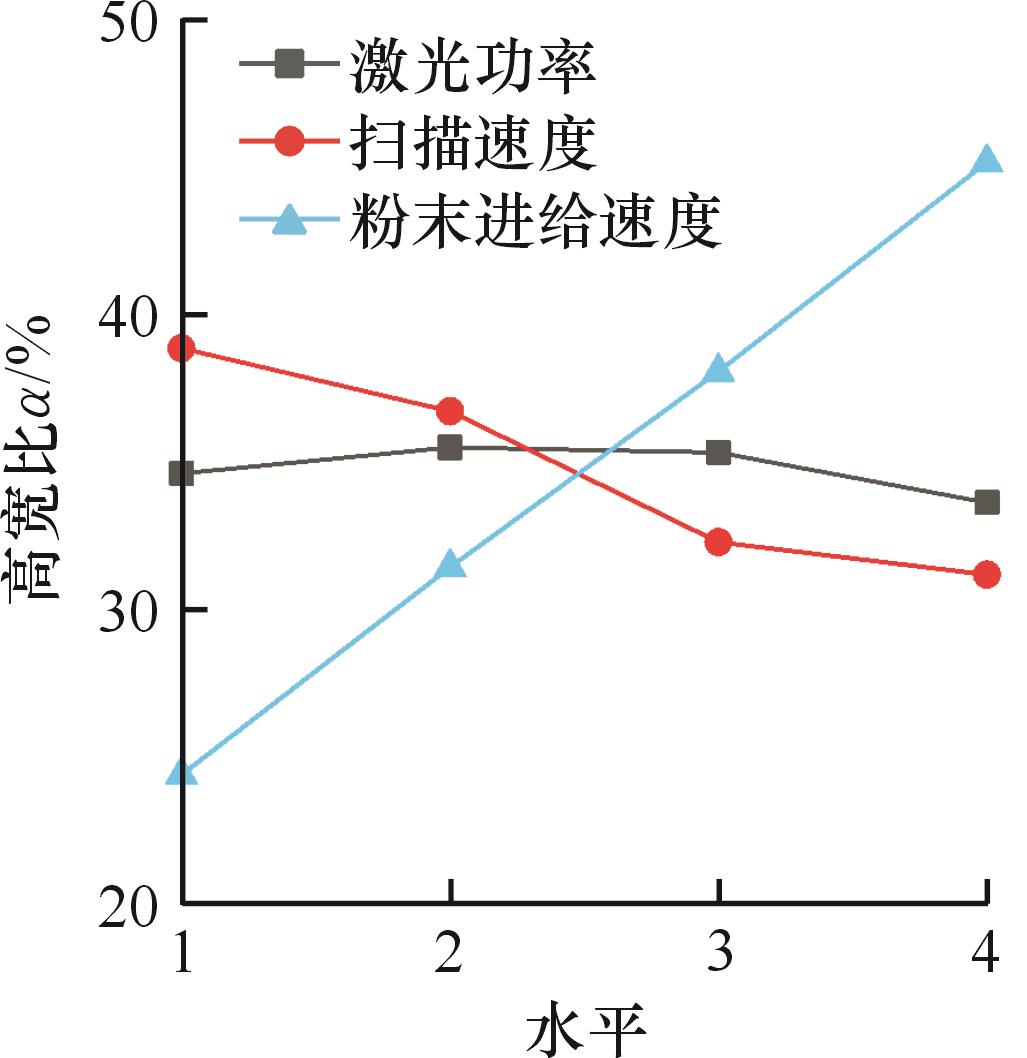
图8 各因素平均水平对高宽比的影响
Fig.8 Main effects plot of process parameters on α
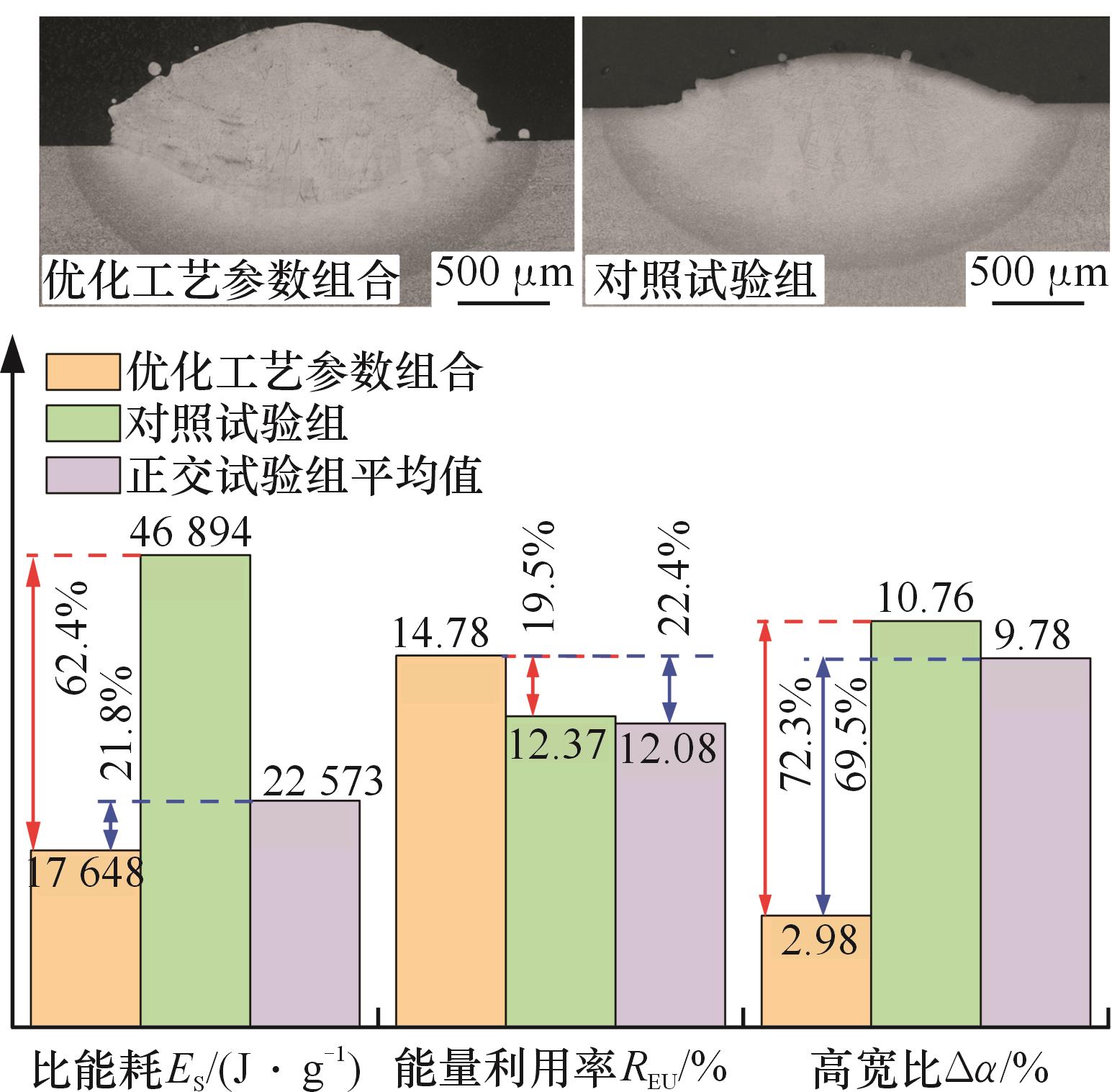
图9 优化工艺参数组合下沉积层横截面形貌及评价指标对比
Fig.9 Cross-sectional morphology and evaluation metrics
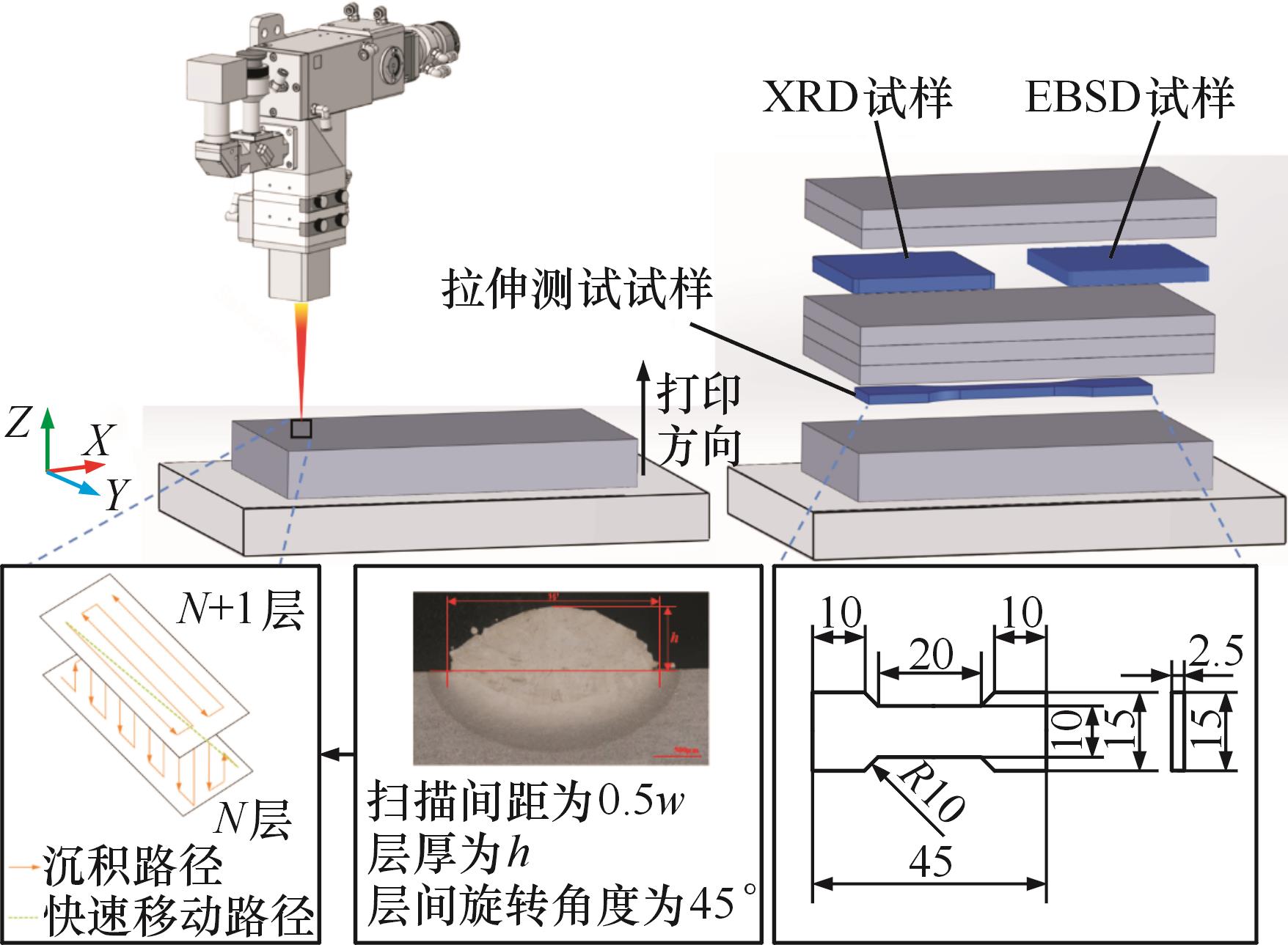
图10 块体打印策略
Fig.10 The bulk deposition strategy
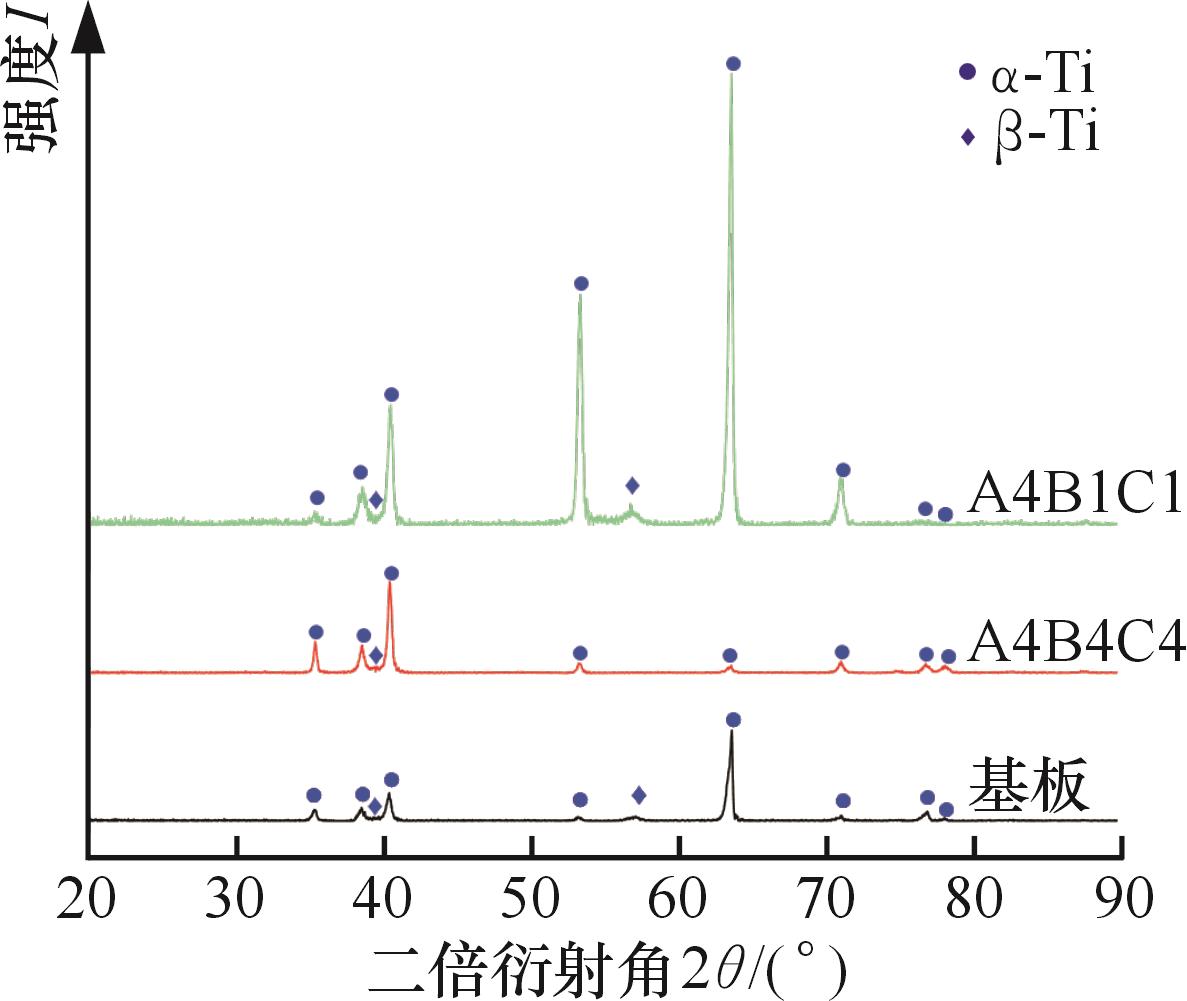
图11 沉积层与基板的XRD图谱
Fig.11 Comparative XRD patterns of the deposited layer and the substrate
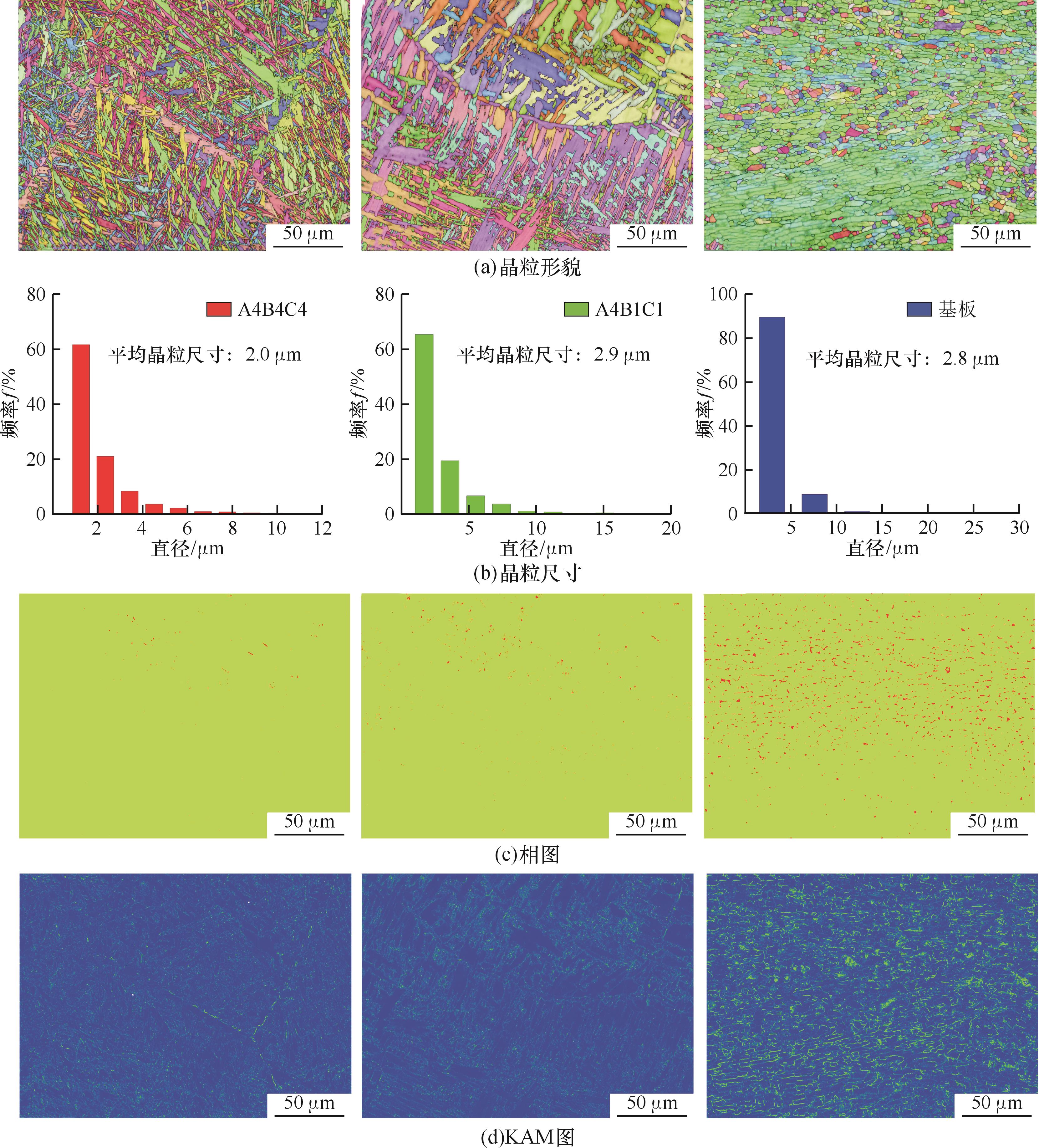
图12 优化工艺参数沉积层、对照试验组沉积层、基板的EBSD测试结果
Fig.12 EBSD analysis of deposited layers under optimized versus control parameters, and the substrate
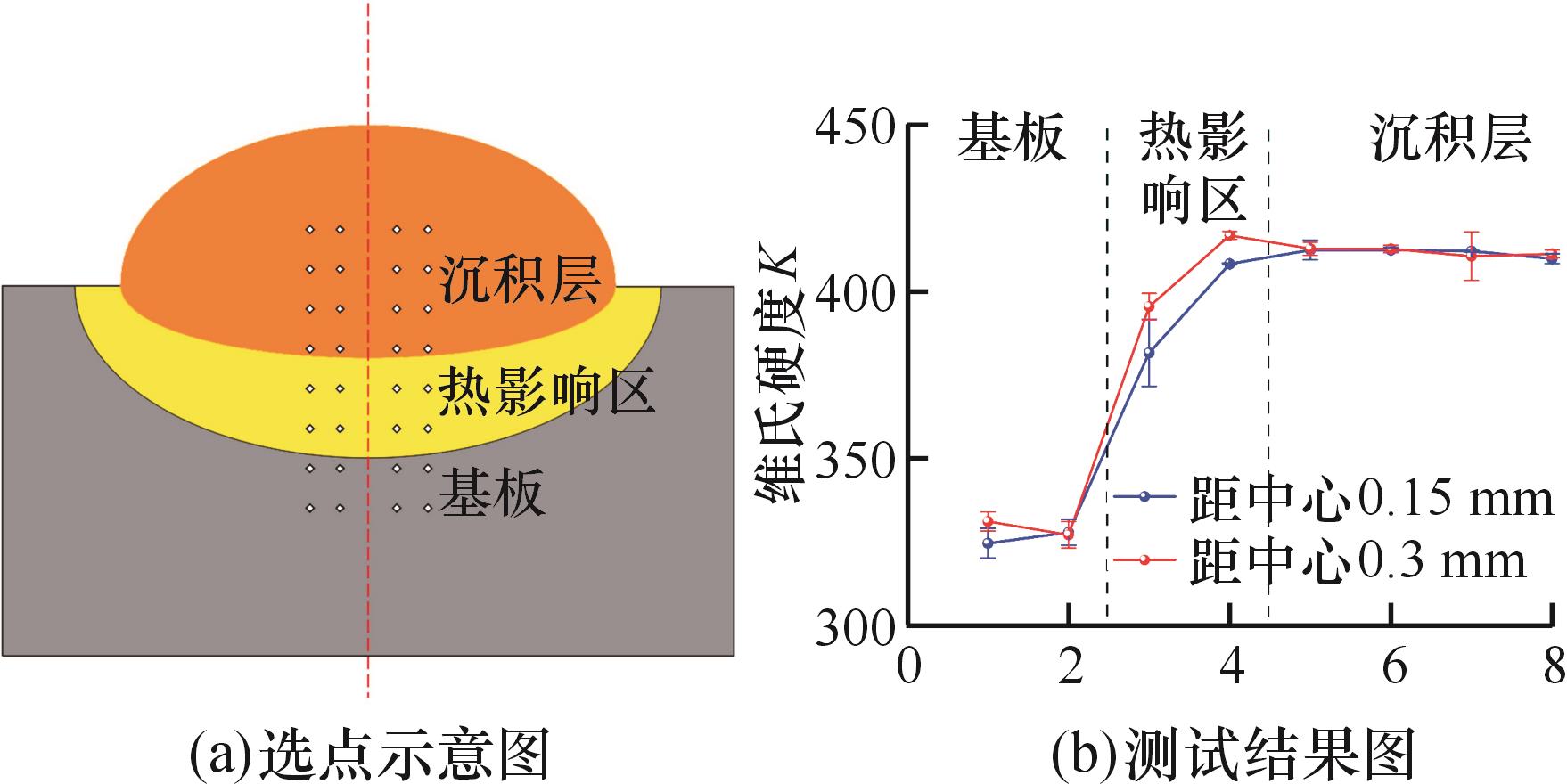
图13 硬度测试
Fig.13 Hardness tests
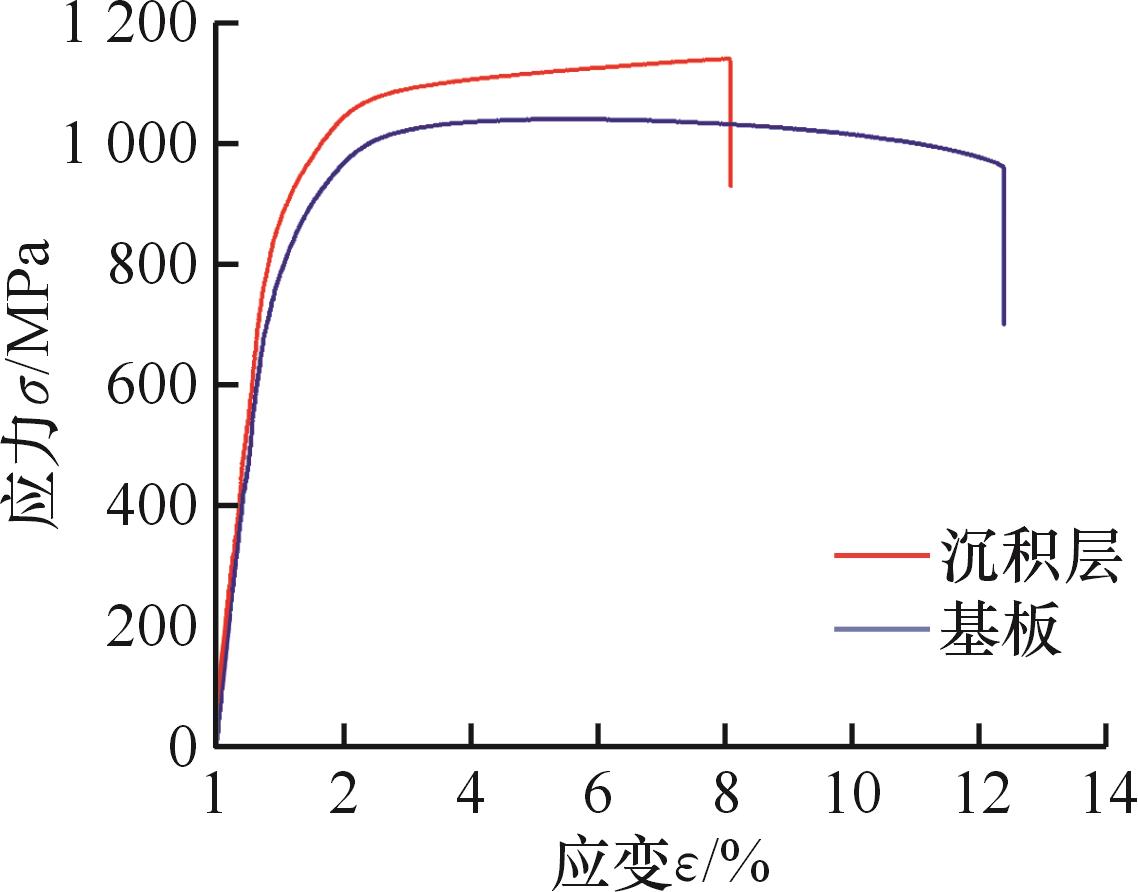
图14 应力-应变曲线
Fig.14 Stress-strain curve
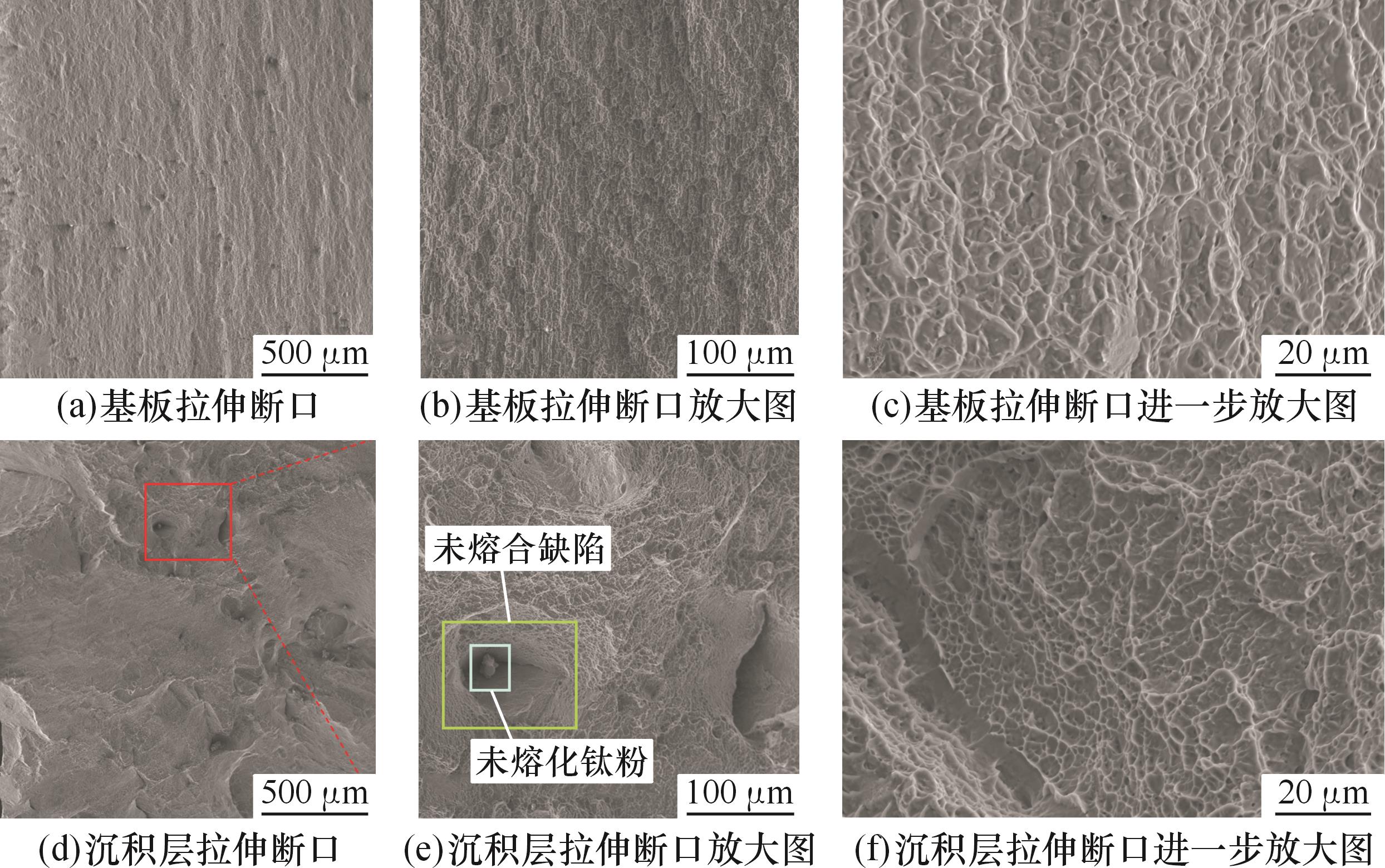
图15 拉伸断口微观形貌图
Fig.15 Micrograph of the tensile fracture surface
| [1] | SEO G, AHSAN M R, LEE Y, et al. A Functional Modeling Approach for Quality Assurance in Metal Additive Manufacturing[J]. Rapid Prototyping Journal, 2021, 27(2): 288-303. |
| [2] | SU Y, WANG C, XU X, et al. Pore Defects and Corrosion Behavior of AISI 316L Stainless Steel Fabricated by Laser Directed Energy Deposition under Closed-loop Control[J]. Surface and Coatings Technology, 2023, 463: 129527. |
| [3] | SUN J, LU H, LIANG Y, et al. Integrated Manufacturing Method for Compressor Blisks: LDED Ti65 on Sheet Ti-6Al-4V[J]. Materials Science and Engineering: A, 2025, 932: 148266. |
| [4] | YOON H S, LEE J Y, KIM H S, et al. A Comparison of Energy Consumption in Bulk Forming, Subtractive, and Additive Processes: Review and Case Study[J]. International Journal of Precision Engineering and Manufacturing-Green Technology, 2014, 1(3): 261-279. |
| [5] | GEDDA H, POWELL J, WAHLSTRÖM G, et al. Energy Redistribution during CO2 Laser Cladding[J]. Journal of Laser Applications, 2002, 14(2): 78-82. |
| [6] | JIANG X, TIAN Z, LIU W, et al. An Energy-efficient Method of Laser Remanufacturing Process[J]. Sustainable Energy Technologies and Assessments, 2022, 52: 102201. |
| [7] | WU J, LIAN K, DENG Y, et al. Multi-objective Parameter Optimization of Fiber Laser Welding Considering Energy Consumption and Bead Geometry[J]. IEEE Transactions on Automation Science and Engineering, 2022, 19(4): 3561-3574. |
| [8] | LI J, HU J, ZHOU Q, et al. Transfer Learning-based Quality Monitoring of Laser Powder Bed Fusion across Materials[J]. Expert Systems with Applications, 2024, 252: 124150. |
| [9] | GAO B, PENG S, LI T, et al. Integration of Improved Meta-heuristic and Machine Learning for Optimizing Energy Efficiency in Additive Manufacturing Process[J]. Energy, 2024, 306: 132518. |
| [10] | NIU J, LI Y, QI X, et al. An Image-physics Dual-driven Machine Learning Framework for Cross-sectional Geometry Prediction in Laser Direct Energy Deposition[J]. Optics & Laser Technology, 2025, 192: 114150. |
| [11] | ZHANG R, WEI C, SHI T, et al. Study on Process Method and Forming Quality of Large-overhang Thin-walled Curved Tubes Fabricated by Annular Laser Metal Deposition[J]. Journal of Materials Processing Technology, 2025, 344: 119011. |
| [12] | OLIVEIRA J P, SANTOS T G, MIRANDA R M. Revisiting Fundamental Welding Concepts to Improve Additive Manufacturing: From Theory to Practice[J]. Progress in Materials Science, 2020, 107: 100590. |
| [13] | YUSUF S M, GAO N. Influence of Energy Density on Metallurgy and Properties in Metal Additive Manufacturing[J]. Materials Science and Technology, 2017, 33(11): 1269-1289. |
| [14] | ZHU Y, PENG T, JIA G, et al. Electrical Energy Consumption and Mechanical Properties of Selective-laser-melting-produced 316L Stainless Steel Samples Using Various Processing Parameters[J]. Journal of Cleaner Production, 2019, 208: 77-85. |
| [15] | PENG T, LV J, MAJEED A, et al. An Experimental Investigation on Energy-effective Additive Manufacturing of Aluminum Parts via Process Parameter Selection[J]. Journal of Cleaner Production, 2021, 279: 123609. |
| [16] | LIU W, WEI H, LIU A, et al. Multi-index Co-evaluation of Metal Laser Direct Deposition: an Investigation of Energy Input Effect on Energy Efficiency and Mechanical Properties of 316l Parts[J]. Journal of Manufacturing Processes, 2022, 76: 277-290. |
| [17] | LU Q, JIN J, ZHANG P, et al. Performance of Vibration-assisted Laser Welded Joints Based on Orthogonal Experiment Design[J]. Journal of Materials Engineering and Performance, 2022, 31(3): 2147-2158. |
| [18] | VINOD A R, SRINIVASA C K, KESHAVAMURTHY R, et al. A Novel Technique for Reducing Lead-time and Energy Consumption in Fabrication of Inconel-625 Parts by Laser-based Metal Deposition Process[J]. Rapid Prototyping Journal, 2016, 22(2): 269-280. |
| [19] | SHAO D, BI X, HONG M, et al. Optimization of Process Parameters for Laser-directed Energy Deposition Coatings of FeCoNi + 1%Y2O3 High-entropy Alloy Based on Response Surface Methodology[J]. Materials, 2025, 18(4): 883. |
| [20] | MENGHINI A, MAFFIA S, DEMIR A G, et al. Performance of Laser Metal Deposition on Hot-rolled Stainless Steel for Hybrid Steel Structures[J]. Construction and Building Materials, 2024, 443: 137744. |
| [21] | LIU Y, WANG F, XU D, et al. Microstructure and Mechanical Properties of Laser Metal Deposited Ti6Al4V Alloy with near Equiaxed β Grain Structure[J]. Journal of Materials Research and Technology, 2023, 22: 1935-1947. |
| [22] | DE FORMANOIR C, BRULARD A, VIVÈS S, et al. A Strategy to Improve the Work-hardening Behavior of Ti-6Al-4V Parts Produced by Additive Manufacturing[J]. Materials Research Letters, 2017, 5(3): 201-208. |
| [23] | EL-HADAD S, NADY M, KHALIFA W, et al. Influence of Heat Treatment Conditions on the Mechanical Properties of Ti-6Al-4V Alloy[J]. Canadian Metallurgical Quarterly, 2018, 57(2): 186-193. |
| [1] | 王超, 于万元, 解维杰, 成艾国, 何智成. 预钻孔自冲铆接钢/铝接头工艺和性能的仿真与参数化研究[J]. 中国机械工程, 2026, 37(9): 2362-2371. |
| [2] | 王国彪, 苗恺, 宋建丽. 增材制造的前世今生:从快速原型(RP)到“3D打印+X”[J]. 中国机械工程, 2026, 37(9): 2372-2381. |
| [3] | 徐郑和, 杨高炜, 卢昌亨, 贾富淳, 蒙建国, 王少锋. 基于支链力学模型的冗余/非冗余过约束2R1T并联机构刚度性能对比分析[J]. 中国机械工程, 2026, 37(8): 1909-1916. |
| [4] | 李志强, 杜军, 崔骜, 万志豪. 熔滴复合电弧增材制造钢/铅双金属结构界面特性与剪切失效分析[J]. 中国机械工程, 2026, 37(6): 1296-1304. |
| [5] | 卢海飞, 王振宇, 罗开玉, 鲁金忠. 热处理对激光定向能量沉积GH5188钴基合金微观组织与力学性能的影响[J]. 中国机械工程, 2026, 37(6): 1305-1317. |
| [6] | 姜永亮, 冻瑞岚, 李阳, 李晨龙, 李志鹏, 陈国达. 陶瓷基复合材料增材制造工艺研究进展[J]. 中国机械工程, 2026, 37(6): 1325-1344. |
| [7] | 姜世杰, 郭佳欣, 刁龙越, 刘显赫, 王金榜, 王宁. ZrO2生物陶瓷挤出成形支架及其性能研究[J]. 中国机械工程, 2026, 37(6): 1345-1352. |
| [8] | 杨浩秦, 单忠德, 闫丹丹, 吴润谋, 孔祥浩. 航空发动机涡轮叶片光固化增材制造陶瓷型芯轻量化结构力学性能研究[J]. 中国机械工程, 2026, 37(6): 1353-1361. |
| [9] | 张勇, 杨树华, 太兴宇, 吴天健, 安仁鹏, 英洪玮, 姜世杰. 陶瓷材料挤出成形工艺及其制品静力学性能研究[J]. 中国机械工程, 2026, 37(6): 1362-1370. |
| [10] | 马帅印, 张成豪, 李家杰, 吕景祥, 蔡维, 赵云贵, 李超, 尹恩怀, 张映锋. 电子3D打印技术制备有机薄膜晶体管及其应用研究进展[J]. 中国机械工程, 2026, 37(6): 1371-1382. |
| [11] | 郭炯棋, 于攀宇, 刘清涛, 吕景祥, 张义超. 基于响应面法与改进灰狼算法的柔性电路喷墨打印工艺优化[J]. 中国机械工程, 2026, 37(6): 1383-1392. |
| [12] | 曾凯, 张文韬, 张洪申, 邢保英, 黄俊智, 李银波. 镁/铝异质材料实心自冲铆接有限元建模及试验研究[J]. 中国机械工程, 2026, 37(6): 1531-1539. |
| [13] | 李欢, 高振泽, 曾才有, 王磊磊, 李银银, 曾云. 316L不锈钢电弧增材制造轨迹规划与验证[J]. 中国机械工程, 2026, 37(6): 1318-1324. |
| [14] | 王亚男, 彭涛, 熊异, 王黎明, 唐云龙, 唐任仲. 面向增材制造的生态设计:知识驱动的技术框架与应用[J]. 中国机械工程, 2026, 37(4): 780-791. |
| [15] | 王帅普, 赵磊, 王云龙, 陈琦, 王俊红, 吴志林. 6061铝合金厚层搅拌摩擦增材工具凸台的影响[J]. 中国机械工程, 2026, 37(10): 2476-2483. |
| 阅读次数 | ||||||
|
全文 |
|
|||||
|
摘要 |
|
|||||
