



ISSN 1004-132X
CN 42-1294/TH
CN 42-1294/TH
中国机械工程 ›› 2026, Vol. 37 ›› Issue (10): 2577-2585.DOI: 10.3969/j.issn.1004-132X.2026.10.020
赵克刚1, 陈浩强1, 梁志豪2, 叶杰3( ), 王炽军4
收稿日期:2025-09-01
出版日期:2026-10-25
发布日期:2026-11-10
通讯作者:
叶杰
作者简介:赵克刚,男,1977年生,副教授。研究方向为先进传动系统的设计与控制、混合动力汽车的能量管理策略、智能网联汽车的控制与规划基金资助:
ZHAO Kegang1, CHEN Haoqiang1, LIANG Zhihao2, YE Jie3(), WANG Chijun4
Received:2025-09-01
Online:2026-10-25
Published:2026-11-10
Contact:
YE Jie
摘要:
高精度动力学模型是基于模型的强化学习框架实现智能汽车路径跟踪控制器参数自动整定的关键基础。针对物理模型因简化假设导致精度不足、数据驱动模型泛化性差的问题,提出一种物理内嵌高斯过程(PEGP)模型,将物理模型的预测状态嵌入高斯过程的特征空间,引导高斯过程学习物理模型的建模误差,实现物理信息与数据驱动的融合。实车试验结果表明,PEGP模型的预测精度和泛化性能优于物理模型与纯数据驱动模型等基准模型。在此基础上,提出一种PEGP-RL控制器参数自动整定方法,该方法仅需少量实车交互即可实现控制器参数的有效整定,中低速工况下的实车验证结果表明,其跟踪性能与人工多次整定的控制器相当。
中图分类号:
赵克刚, 陈浩强, 梁志豪, 叶杰, 王炽军. 物理内嵌高斯过程模型及其在智能汽车路径跟踪控制器参数整定中的应用[J]. 中国机械工程, 2026, 37(10): 2577-2585.
ZHAO Kegang, CHEN Haoqiang, LIANG Zhihao, YE Jie, WANG Chijun. Physics-embedded Gaussian Process Model and Its Application in Parameter Tuning of Intelligent Vehicle Path Tracking Controllers[J]. China Mechanical Engineering, 2026, 37(10): 2577-2585.
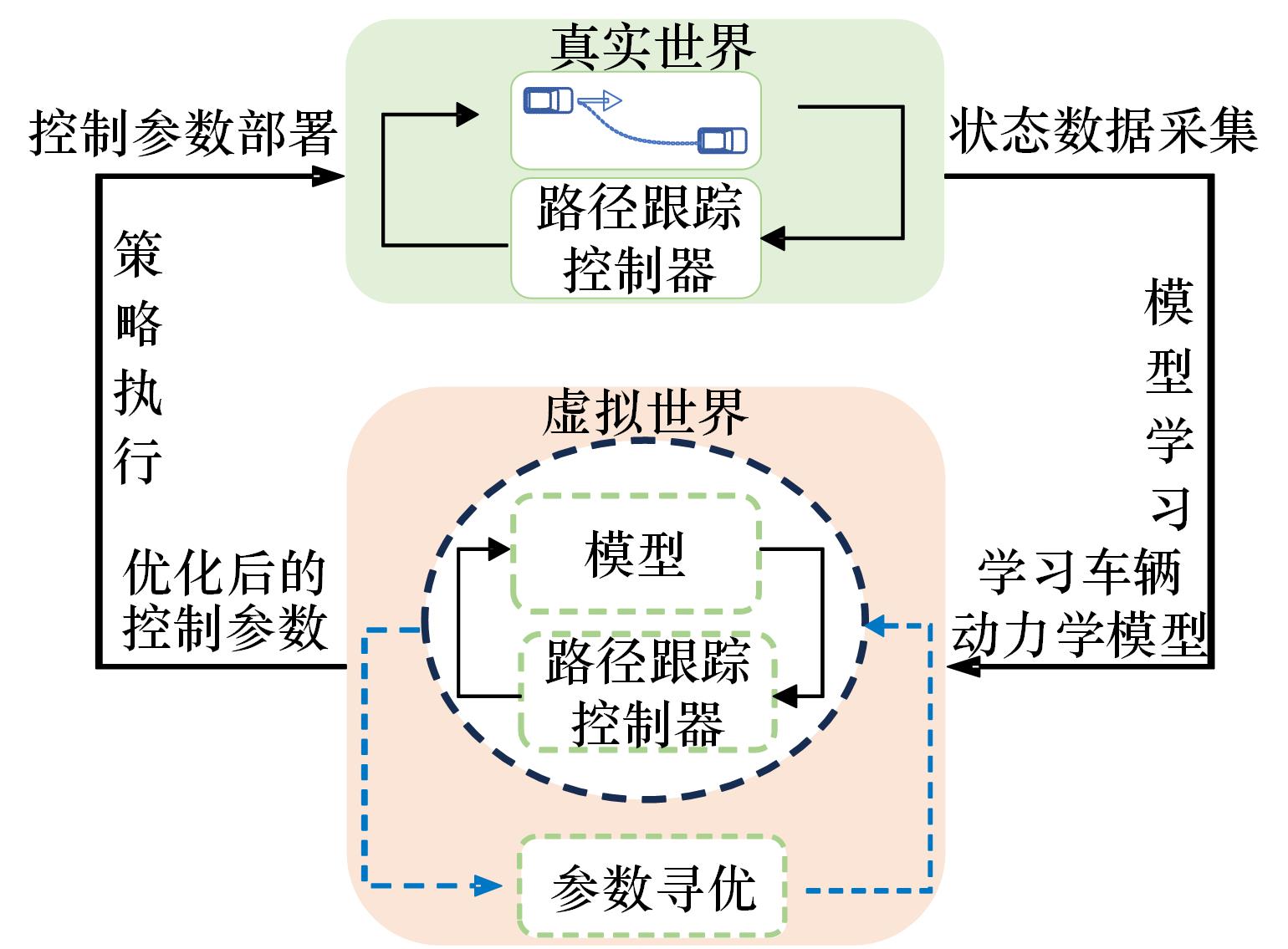
图1 路径跟踪控制器参数自动整定流程
Fig.1 The procedure of parameter auto-tuning of path tracking controller
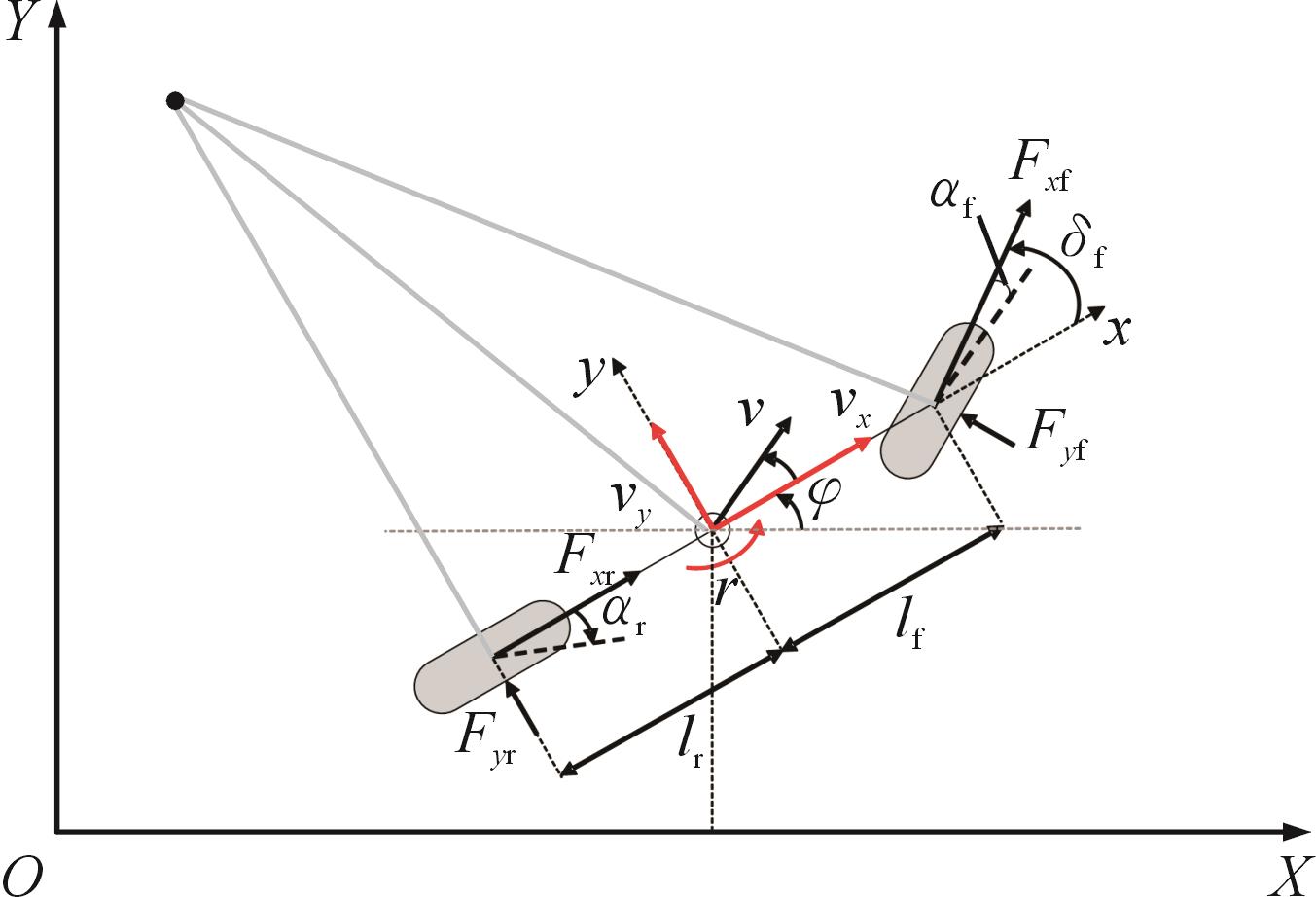
图2 单轨动力学模型
Fig.2 Single-track dynamic model
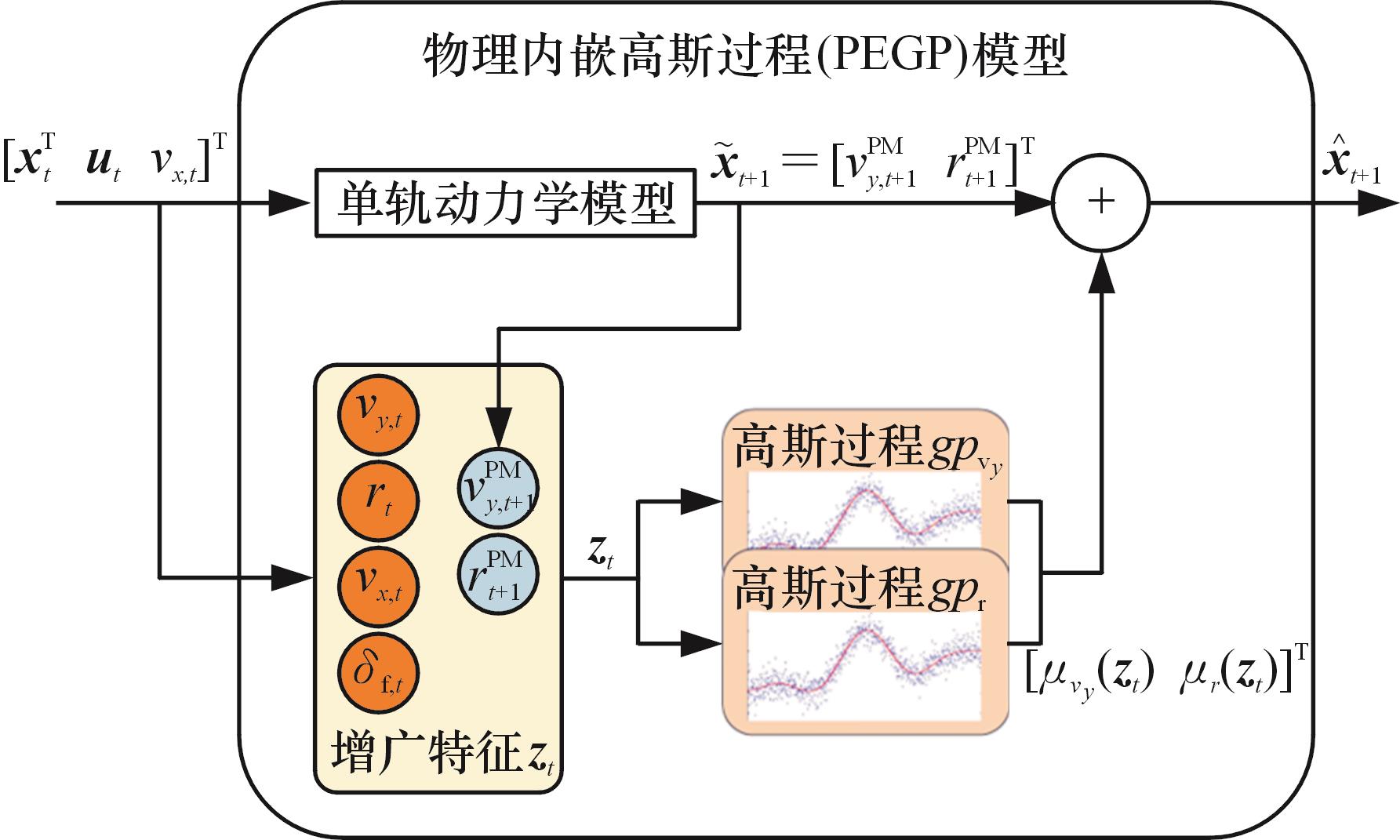
图3 PEGP模型结构
Fig.3 Structure of PEGP model
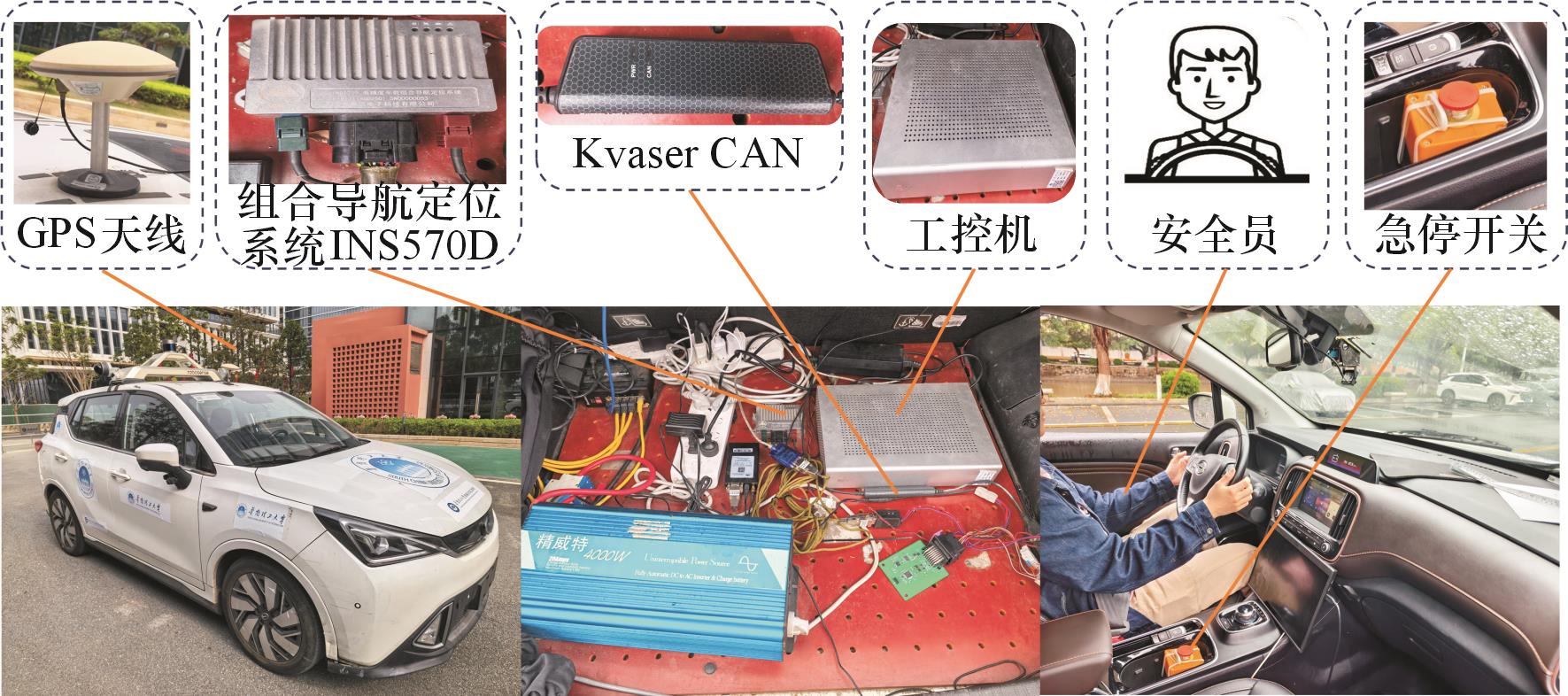
图4 实车试验平台
Fig.4 Real vehicle test platform
| 车辆参数 | 数值 |
|---|---|
| 整车质量m | 1667 kg |
| 横摆转动惯量Iz | 2500 kg·m2 |
| 质心至前轴的距离lf | 1.10 m |
| 质心至后轴的距离lr | 1.46 m |
| 前轮侧偏刚度Cf | -65 kN/rad |
| 后轮侧偏刚度Cr | -65 kN/rad |
| 转向传动比isw | 17 |
表1 车辆参数
Tab.1 The parameters of vehicle
| 车辆参数 | 数值 |
|---|---|
| 整车质量m | 1667 kg |
| 横摆转动惯量Iz | 2500 kg·m2 |
| 质心至前轴的距离lf | 1.10 m |
| 质心至后轴的距离lr | 1.46 m |
| 前轮侧偏刚度Cf | -65 kN/rad |
| 后轮侧偏刚度Cr | -65 kN/rad |
| 转向传动比isw | 17 |
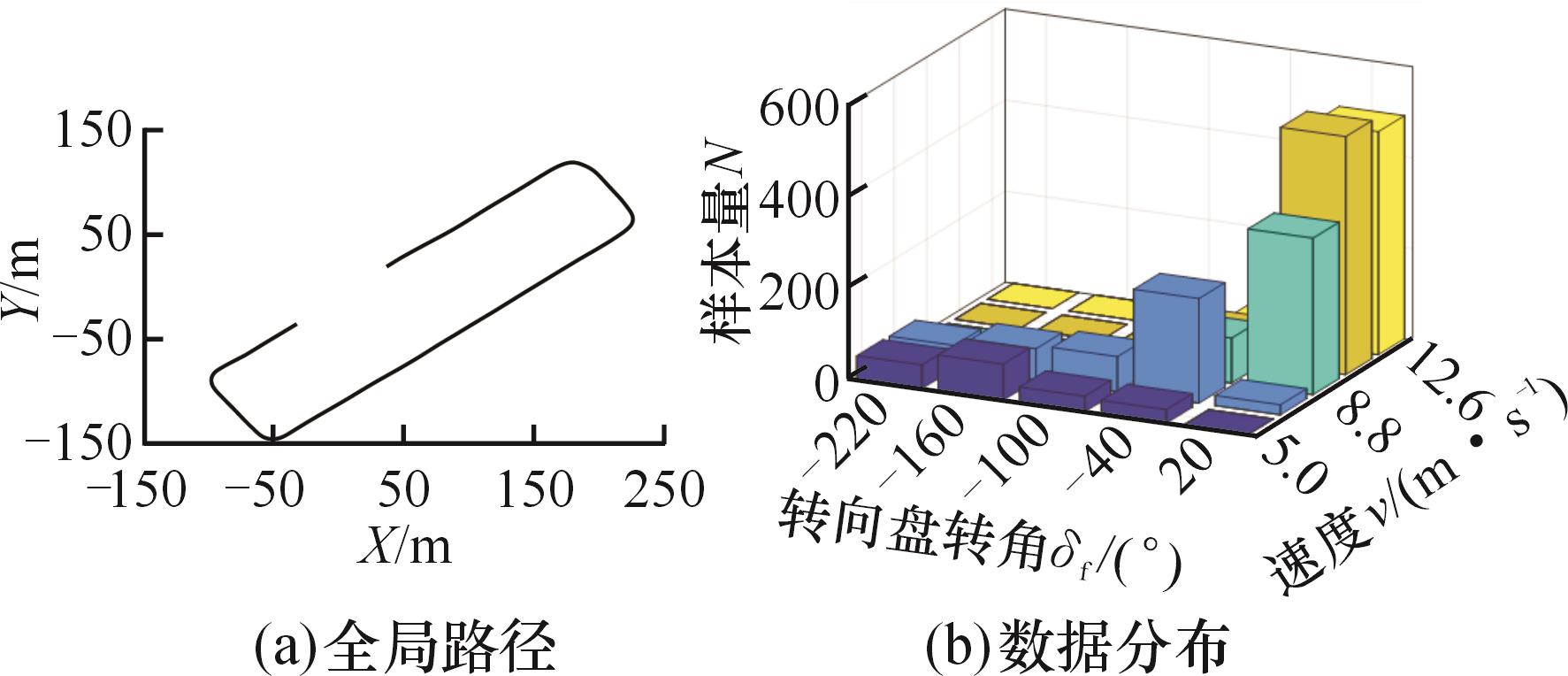
图5 实车训练集
Fig.5 Real training set
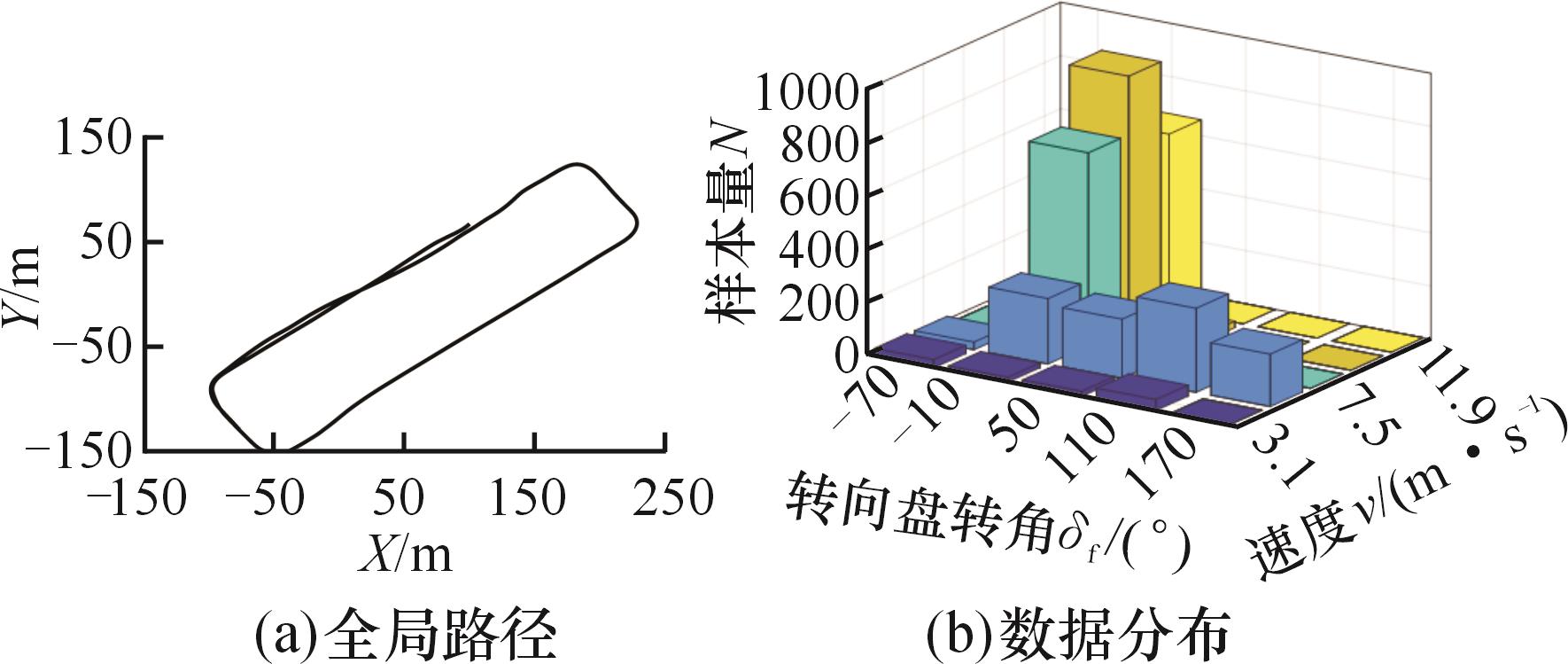
图6 实车测试集1
Fig.6 Real test set 1
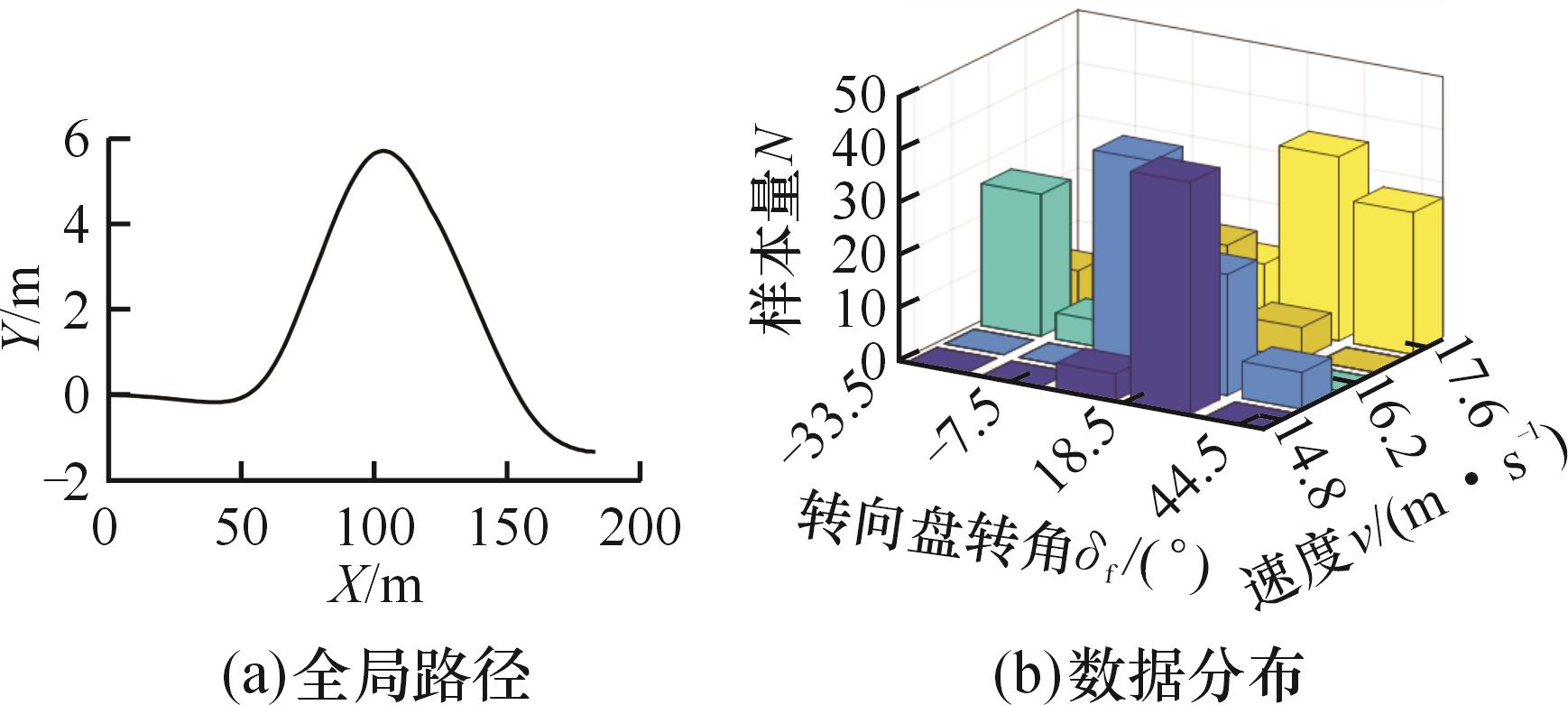
图7 实车测试集2
Fig.7 Real test set 2
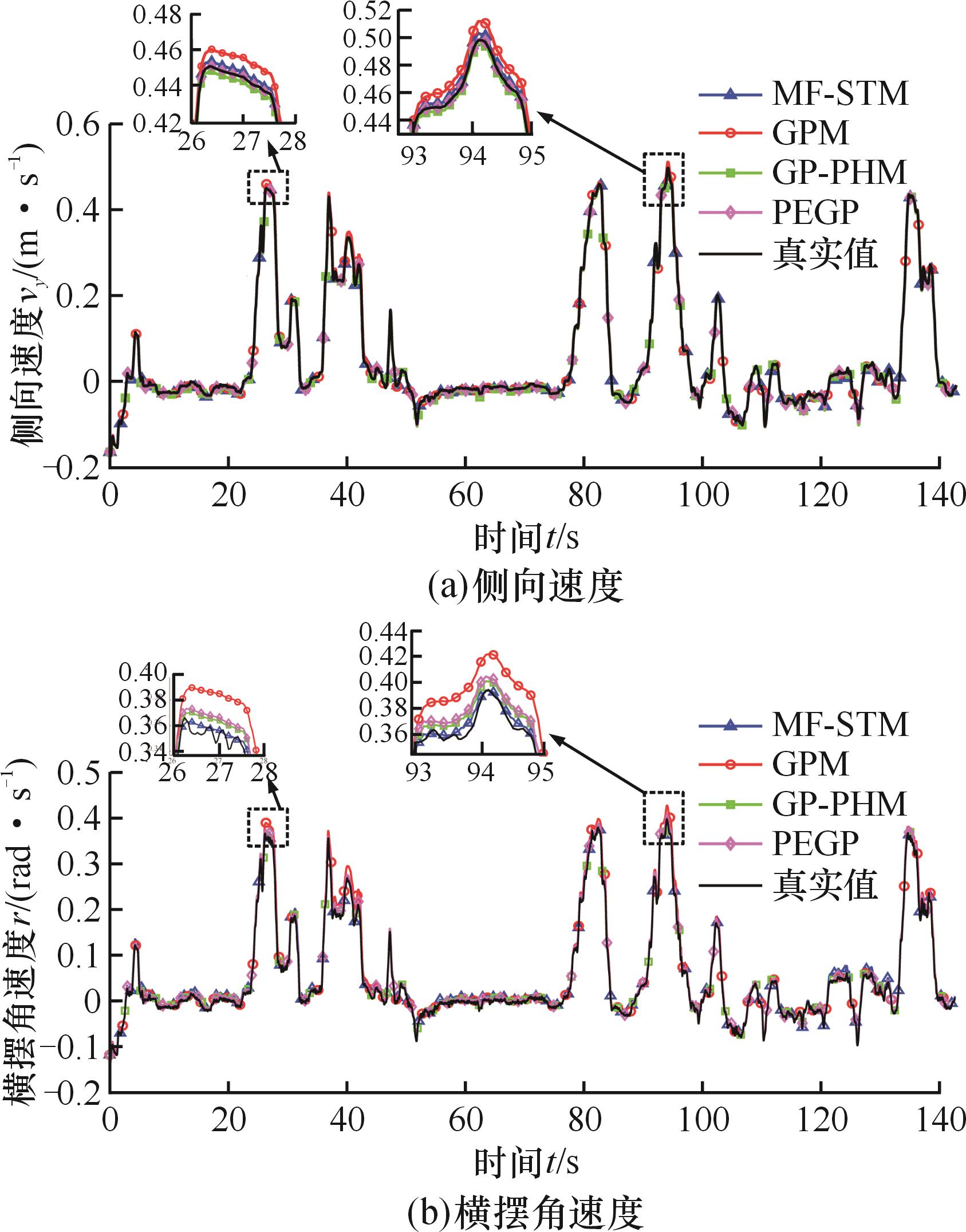
图8 实车测试集1下状态预测曲线对比
Fig.8 The comparison of state predictions in real test set 1
| 模型 | vy /(m·s-1) | r/(rad·s-1) | ||
|---|---|---|---|---|
| RMSE | RMSE | |||
| MF-STM | 0.0038 | 0.0162 | 0.0076 | 0.0279 |
| GPM | 0.0042 | 0.0269 | 0.0121 | 0.0463 |
| GP-PHM | 0.0039 | 0.0155 | 0.0073 | 0.0266 |
| PEGP | 0.0020 | 0.0104 | 0.0072 | 0.0272 |
表2 实车测试集1下预测误差对比
Tab.2 The comparison of prediction error in real test set 1
| 模型 | vy /(m·s-1) | r/(rad·s-1) | ||
|---|---|---|---|---|
| RMSE | RMSE | |||
| MF-STM | 0.0038 | 0.0162 | 0.0076 | 0.0279 |
| GPM | 0.0042 | 0.0269 | 0.0121 | 0.0463 |
| GP-PHM | 0.0039 | 0.0155 | 0.0073 | 0.0266 |
| PEGP | 0.0020 | 0.0104 | 0.0072 | 0.0272 |
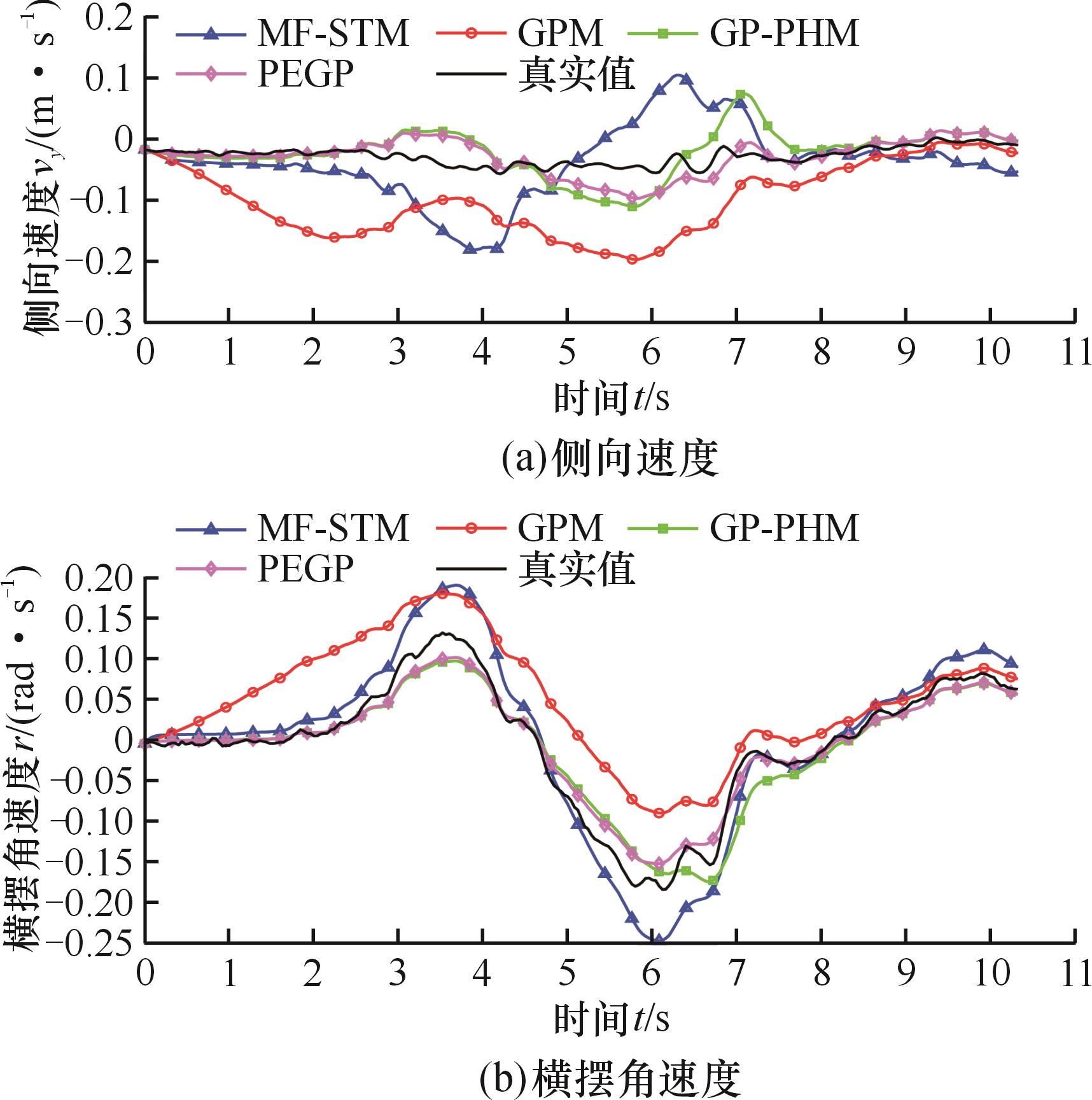
图9 实车测试集2下状态预测曲线对比
Fig.9 The comparison of state predictions in real test set 2
| 模型 | vy /(m·s-1) | r/(rad·s-1) | ||
|---|---|---|---|---|
| RMSE | RMSE | |||
| MF-STM | 0.0594 | 0.1352 | 0.0322 | 0.0759 |
| GPM | 0.0837 | 0.1531 | 0.0586 | 0.1043 |
| GP-PHM | 0.0318 | 0.1014 | 0.0202 | 0.0746 |
| PEGP | 0.0211 | 0.0532 | 0.0139 | 0.0372 |
表3 实车测试集2下预测误差对比
Tab.3 The comparison of prediction error in real test set 2
| 模型 | vy /(m·s-1) | r/(rad·s-1) | ||
|---|---|---|---|---|
| RMSE | RMSE | |||
| MF-STM | 0.0594 | 0.1352 | 0.0322 | 0.0759 |
| GPM | 0.0837 | 0.1531 | 0.0586 | 0.1043 |
| GP-PHM | 0.0318 | 0.1014 | 0.0202 | 0.0746 |
| PEGP | 0.0211 | 0.0532 | 0.0139 | 0.0372 |
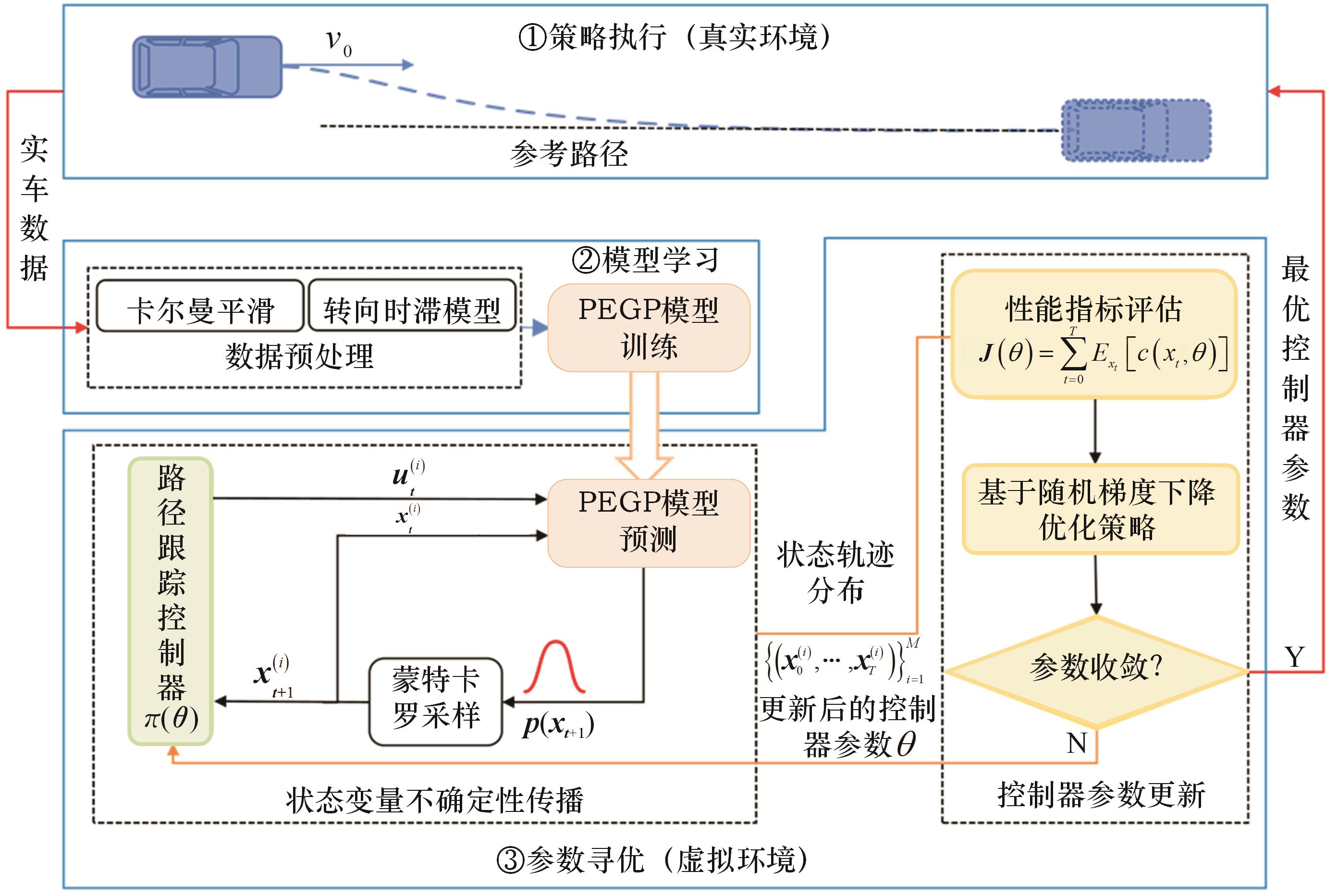
图10 PEGP-RL控制器参数自动整定方法示意图
Fig.10 Schematic diagram of the PEGP-RL controller parameter auto-tuning method
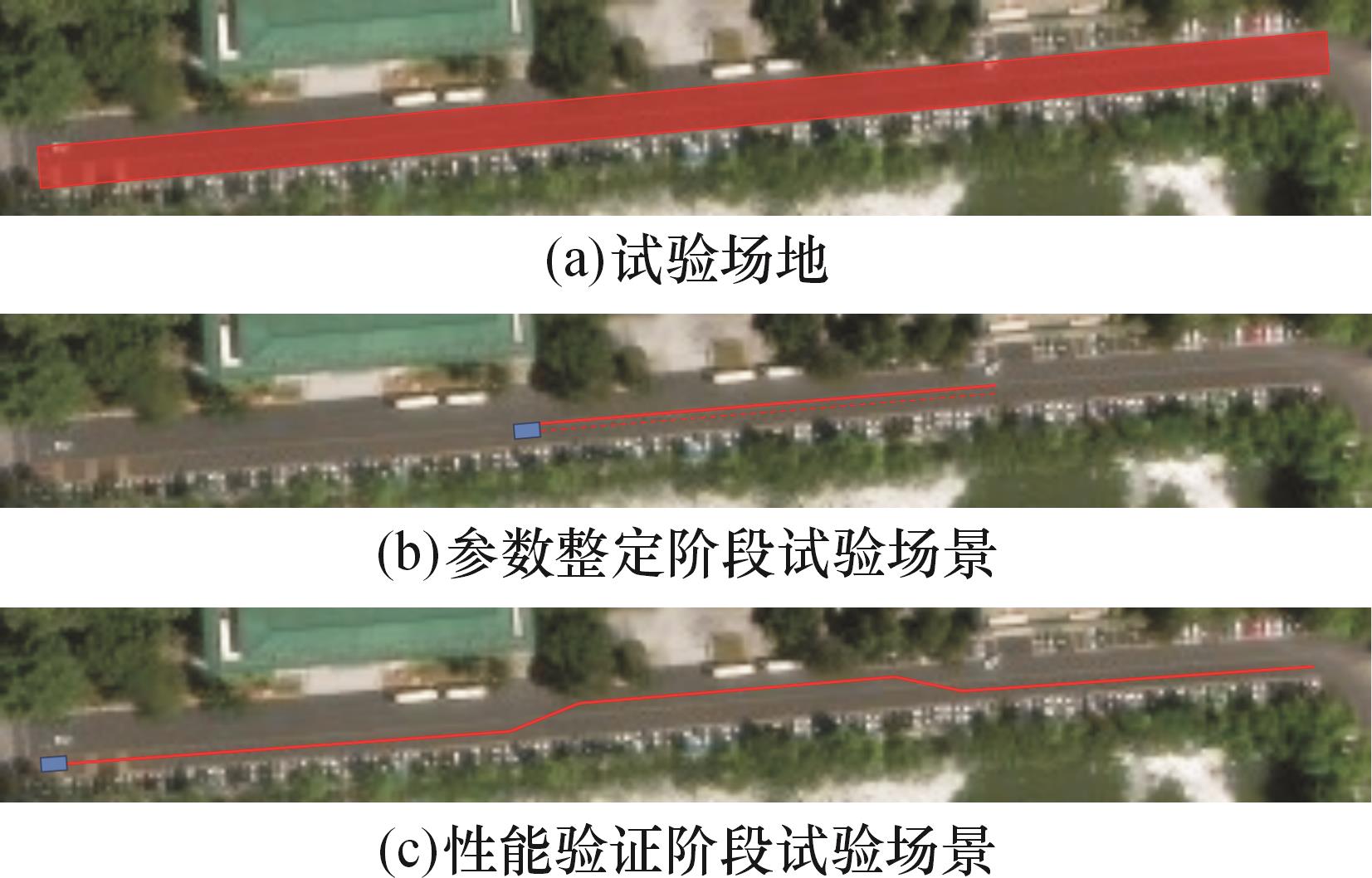
图11 PEGP-RL算法验证场景
Fig.11 Tracking performance of LQR controller under different tuning iterations
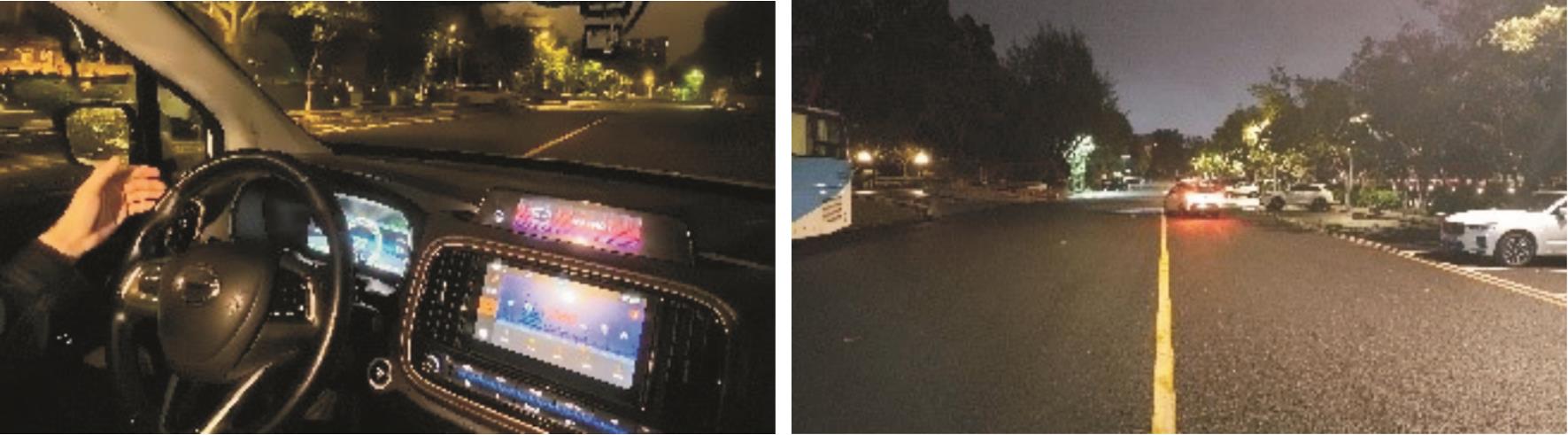
图12 试验现场
Fig.12 Test Site
| 整定次数 | ey /m | eφ /(°) | 累计 代价 | ||
|---|---|---|---|---|---|
| RMSE | RMSE | ||||
| 0 | 0.30 | 1.00 | 2.81 | 9.27 | 35.85 |
| 1 | 0.31 | 1.00 | 2.03 | 5.96 | 22.04 |
| 2 | 0.31 | 1.00 | 2.06 | 6.15 | 21.81 |
| 3 | 0.31 | 1.00 | 2.08 | 6.37 | 21.60 |
| 4 | 0.31 | 1.00 | 2.08 | 6.39 | 21.61 |
| 5 | 0.31 | 1.00 | 2.07 | 6.35 | 21.76 |
| 提高 | -3.33% | 25.98% | 31.28% | 39.75% | |
表4 不同整定次数下LQR控制器的跟踪性能对比
Tab. 4 The comparison of tracking performance of LQR controller under different tuning iterations
| 整定次数 | ey /m | eφ /(°) | 累计 代价 | ||
|---|---|---|---|---|---|
| RMSE | RMSE | ||||
| 0 | 0.30 | 1.00 | 2.81 | 9.27 | 35.85 |
| 1 | 0.31 | 1.00 | 2.03 | 5.96 | 22.04 |
| 2 | 0.31 | 1.00 | 2.06 | 6.15 | 21.81 |
| 3 | 0.31 | 1.00 | 2.08 | 6.37 | 21.60 |
| 4 | 0.31 | 1.00 | 2.08 | 6.39 | 21.61 |
| 5 | 0.31 | 1.00 | 2.07 | 6.35 | 21.76 |
| 提高 | -3.33% | 25.98% | 31.28% | 39.75% | |
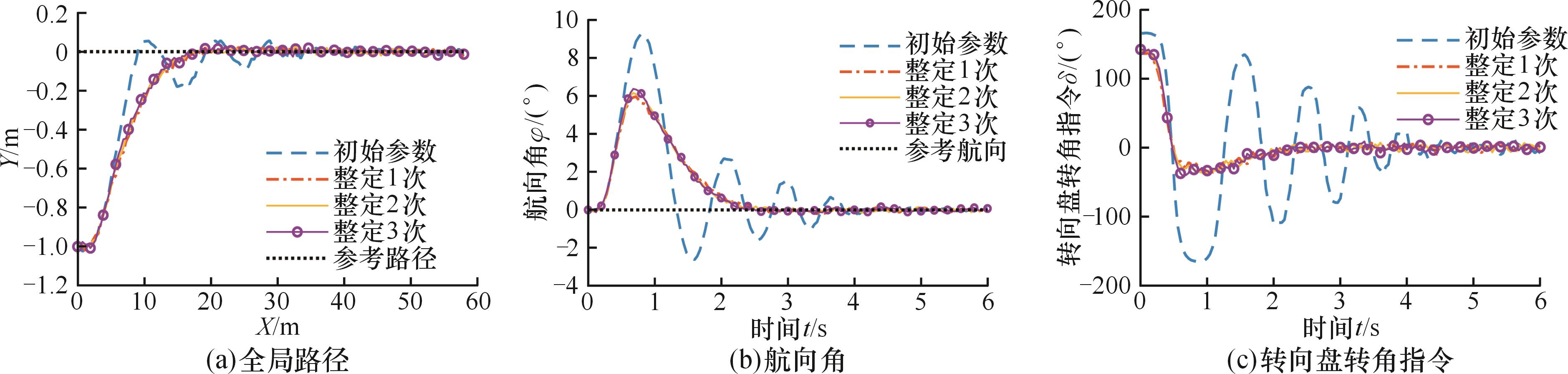
图13 不同整定次数下LQR控制器的跟踪效果
Fig.13 Tracking performance of LQR controller under different tuning iterations
| 控制器类型 | 整定次数 | ||||
|---|---|---|---|---|---|
| RMSE | RMSE | ||||
| MPC | 1 | 0.06 | 0.18 | 0.66 | 2.00 |
| 2 | 0.06 | 0.17 | 0.57 | 1.63 | |
| 3 | 0.06 | 0.15 | 0.47 | 1.51 | |
| 4 | 0.06 | 0.16 | 0.48 | 1.34 | |
| 5 | 0.05 | 0.13 | 0.44 | 1.24 | |
| LQR | 3 | 0.05 | 0.11 | 0.31 | 0.71 |
表5 不同控制器在双移线工况下的跟踪性能对比
Tab.5 The comparison of tracking performance of different controllers in double-lane change maneuver
| 控制器类型 | 整定次数 | ||||
|---|---|---|---|---|---|
| RMSE | RMSE | ||||
| MPC | 1 | 0.06 | 0.18 | 0.66 | 2.00 |
| 2 | 0.06 | 0.17 | 0.57 | 1.63 | |
| 3 | 0.06 | 0.15 | 0.47 | 1.51 | |
| 4 | 0.06 | 0.16 | 0.48 | 1.34 | |
| 5 | 0.05 | 0.13 | 0.44 | 1.24 | |
| LQR | 3 | 0.05 | 0.11 | 0.31 | 0.71 |

图14 不同控制器在双移线工况下的跟踪性能对比
Fig.14 The comparison of tracking performance of different controllers in double-lane change maneuver
| [1] | 熊璐, 杨兴, 卓桂荣, 等. 无人驾驶车辆的运动控制发展现状综述[J]. 机械工程学报, 2020, 56(10): 127-143. |
| XIONG Lu, YANG Xing, ZHUO Guirong, et al. Review on Motion Control of Autonomous Vehicles[J]. Journal of Mechanical Engineering, 2020, 56(10): 127-143. | |
| [2] | 赵克刚, 区伟麟, 张政, 等. 一种循迹控制参数调节器及其训练集构建方法[J]. 汽车工程, 2025, 47(2): 248-258. |
| ZHAO Kegang, OU Weilin, ZHANG Zheng, et al. A Tuner of Trajectory Control Parameters and the Construction Method of Its Training Set[J]. Automotive Engineering, 2025, 47(2): 248-258. | |
| [3] | AMADIO F, DALLA LIBERA A, ANTONELLO R, et al. Model-based Policy Search Using Monte Carlo Gradient Estimation with Real Systems Application[J]. IEEE Transactions on Robotics, 2022, 38(6): 3879-3898. |
| [4] | 王秋, 曲婷, 陈虹. 基于随机模型预测控制的自主车辆转向控制[J]. 信息与控制, 2015, 44(4): 499-506. |
| WANG Qiu, QU Ting, CHEN Hong. Steering Control of Autonomous Vehicles Based on Stochastic Model Predictive Control[J]. Information and Control, 2015, 44(4): 499-506. | |
| [5] | CHEN J, YU C, WANG Y, et al. Hybrid Modeling for Vehicle Lateral Dynamics via AGRU with a Dual-attention Mechanism under Limited Data[J]. Control Engineering Practice, 2024, 151: 106015. |
| [6] | ZHOU Z, WANG Y, ZHOU G, et al. Vehicle Lateral Dynamics-inspired Hybrid Model Using Neural Network for Parameter Identification and Error Characterization[J]. IEEE Transactions on Vehicular Technology, 2024, 73(11): 16173-16186. |
| [7] | 方培俊, 蔡英凤, 陈龙, 等. 基于车辆动力学混合模型的智能汽车轨迹跟踪控制方法[J]. 汽车工程, 2022, 44(10): 1469-1483. |
| FANG Peijun, CAI Yingfeng, CHEN Long, et al. Trajectory Tracking Control Method Based on Vehicle Dynamics Hybrid Model for Intelligent Vehicle[J]. Automotive Engineering, 2022, 44(10): 1469-1483. | |
| [8] | SPIELBERG N A, BROWN M, KAPANIA N R, et al. Neural Network Vehicle Models for High-performance Automated Driving[J]. Science Robotics, 2019, 4(28): eaaw1975. |
| [9] | LIANG Z, ZHAO K, XIE J, et al. Ultra-fast Tuning of Neural Network Controllers with Application in Path Tracking of Autonomous Vehicle[J]. ISA Transactions, 2024, 149: 394-408. |
| [10] | LIANG Z, ZHAO K, ZHANG Z, et al. Improvement of a Learning-based Tuning Approach for Trajectory Tracking Controller[J]. IEEE Transactions on Vehicular Technology, 2025, 74(3): 4033-4047. |
| [11] | GRÄBER T, LUPBERGER S, UNTERREINER M, et al. A Hybrid Approach to Side-slip Angle Estimation with Recurrent Neural Networks and Kinematic Vehicle Models[J]. IEEE Transactions on Intelligent Vehicles, 2019, 4(1): 39-47. |
| [12] | KIM T, LEE H, LEE W. Physics Embedded Neural Network Vehicle Model and Applications in Risk-aware Autonomous Driving Using Latent Features[C]//2022 IEEE/RSJ International Conference on Intelligent Robots and Systems (IROS). Kyoto, 2022: 4182-4189. |
| [13] | JIANG Y, CHEN J, ZHOU H, et al. Residual Learning of the Dynamics Model for Feeding System Modelling Based on Dynamic Nonlinear Correlate Factor Analysis[J]. Applied Intelligence, 2021, 51(7): 5067-5080. |
| [14] | CHROSNIAK J, NING J, BEHL M. Deep Dynamics: Vehicle Dynamics Modeling with a Physics-constrained Neural Network for Autonomous Racing[J]. IEEE Robotics and Automation Letters, 2024, 9(6): 5292-5297. |
| [15] | HEWING L, LINIGER A, ZEILINGER M N. Cautious NMPC with Gaussian Process Dynamics for Autonomous Miniature Race Cars[C]//2018 European Control Conference (ECC). Limassol, 2018: 1341-1348. |
| [16] | KABZAN J, HEWING L, LINIGER A, et al. Learning-based Model Predictive Control for Autonomous Racing[J]. IEEE Robotics and Automation Letters, 2019, 4(4): 3363-3370. |
| [17] | LIU H, ONG Y S, SHEN X, et al. When Gaussian Process Meets Big Data: a Review of Scalable GPs[J]. IEEE Transactions on Neural Networks and Learning Systems, 2020, 31(11): 4405-4423. |
| [18] | RASMUSSEN C E, WILLIAMS C K I. Gaussian Processes for Machine Learning[M]. Cambridge, MA: The MIT Press, 2005. |
| [19] | van der LAAN N, COHEN M, ARSENAULT J, et al. The Invariant Rauch-tung-Striebel Smoother[J]. IEEE Robotics and Automation Letters, 2020, 5(4): 5067-5074. |
| [20] | 边伟, 龚佳慧, 文爱民, 等. 基于遗传算法的魔术公式轮胎模型参数两级辨识[J]. 重庆交通大学学报(自然科学版), 2017, 36(5): 115-120. |
| BIAN Wei, GONG Jiahui, WEN Aimin, et al. Two Levels of Parameter Identification of Magic Formula Tire Model Based on Genetic Algorithm[J]. Journal of Chongqing Jiaotong University (Natural Sciences), 2017, 36(5): 115-120. | |
| [21] | XU S, PENG H, TANG Y. Preview Path Tracking Control with Delay Compensation for Autonomous Vehicles[J]. IEEE Transactions on Intelligent Transportation Systems, 2021, 22(5): 2979-2989. |
| [22] | 张涛, 赵奉奎, 张涌, 等. 基于遗传算法的无人驾驶卡车路径跟踪控制研究[J]. 南京信息工程大学学报, 2024, 16(6): 791-800. |
| ZHANG Tao, ZHAO Fengkui, ZHANG Yong, et al. Path Tracking Control of Unmanned Truck Based on Genetic Algorithm[J]. Journal of Nanjing University of Information Science & Technology, 2024, 16(6): 791-800. | |
| [23] | 王姝, 张海川, 赵轩, 等. 融合稳定性的分布式驱动电动汽车路径跟踪控制策略研究[J]. 中国机械工程, 2023, 34(9): 1035-1044. |
| WANG Shu, ZHANG Haichuan, ZHAO Xuan, et al. Research on Path Tracking Control Method of Distributed Drive Electric Vehicles with Integrated Stability[J]. China Mechanical Engineering, 2023, 34(9): 1035-1044. | |
| [24] | ZHAO K, WANG C, XIAO G, et al. Research for Nonlinear Model Predictive Controls to Laterally Control Unmanned Vehicle Trajectory Tracking[J]. Applied Sciences, 2020, 10(17): 6034. |
| [1] | 齐英杰, 李伟, 刘增华, 周亚波, 温泽峰. 针对地铁车辆晃动的轨道几何不平顺敏感波长分析[J]. 中国机械工程, 2025, 36(09): 1925-1933. |
| [2] | 赵苍鹏, 代亮成, 池茂儒, 郭兆团, 曾鹏程, 孙宝恺. 多功能车体间外风挡在高速动车组上的适用性研究[J]. 中国机械工程, 2025, 36(05): 1111-1122. |
| [3] | 何洋, 李刚, 余孝楠. 基于变论域的高速行驶智能汽车模糊模型预测控制方法研究[J]. 中国机械工程, 2025, 36(03): 604-613. |
| [4] | 李旭阳, 代亮成, 池茂儒, 赵明花, 周荻. 电力动车组变刚度转臂节点的半主动控制[J]. 中国机械工程, 2025, 36(01): 160-167,176. |
| [5] | 朱晨, 池茂儒, 赵明花, 代亮成, 陈仕祺. 连通式横向减振器在地铁车辆上的适用性分析[J]. 中国机械工程, 2023, 34(06): 660-667,676. |
| [6] | 蔡英凤1;李健2;孙晓强1;陈龙1;江浩斌2;何友国1;陈小波1. 智能汽车路径跟踪混合控制策略研究[J]. 中国机械工程, 2020, 31(03): 289-298. |
| [7] | 池茂儒, 蔡吴斌, 梁树林, 李奕潇, 孙建锋, 金学松, 何翔. [表面强化及损伤机理]高速铁路钢轨打磨偏差对车辆动力学性能的影响[J]. 中国机械工程, 2019, 30(03): 261-265,283. |
| [8] | 褚端峰, 崔剑, 邓泽健, 田飞, 吴超仲, . 基于改进TTR算法的车辆侧翻预警研究[J]. 中国机械工程, 2016, 27(11): 1557-1561. |
| [9] | 袁希文, 文桂林, 周兵, 伍新. 基于主动前轮独立转向系统的车辆稳定性控制研究[J]. 中国机械工程, 2015, 26(4): 560-567. |
| [10] | 陈新1, 2, 张桂香1. 基于SDRE方法的汽车线控转向系统控制方法研究[J]. 中国机械工程, 2012, 23(12): 1496-1501. |
| [11] | 徐寅, 陈东. 电动汽车差速系统研究综述 [J]. 中国机械工程, 2011, 22(4): 498-503. |
| [12] | 王伟, 李瑰贤. 高速车辆轮轨碰撞及其非线性动力学分析 [J]. 中国机械工程, 2010, 21(18): 2192-2196. |
| [13] | 王其东;章贵华;陈无畏;祝辉. 基于滑模变结构控制的车辆动力学稳定性控制研究
|
| [14] | 郭磊, 骆泉旭, 王建强, 李克强. 一种应用于车辆识别的去除路面干扰方法[J]. 中国机械工程, 2007, 18(20): 2502-2505. |
| 阅读次数 | ||||||
|
全文 |
|
|||||
|
摘要 |
|
|||||
