



ISSN 1004-132X
CN 42-1294/TH
CN 42-1294/TH
中国机械工程 ›› 2026, Vol. 37 ›› Issue (10): 2502-2510.DOI: 10.3969/j.issn.1004-132X.2026.10.013
王春( ), 申渝秦(), 曾权宏, 唐滔
收稿日期:2025-08-10
出版日期:2026-10-25
发布日期:2026-11-10
通讯作者:
申渝秦
作者简介:王春,男,1984年生,教授。研究方向为先进储能系统人工智能管理与控制。发表论文30余篇。E-mail:susewangchun@163.com基金资助:
WANG Chun(), SHEN Yuqin(), ZENG Quanhong, TANG Tao
Received:2025-08-10
Online:2026-10-25
Published:2026-11-10
Contact:
SHEN Yuqin
摘要:
针对电动汽车混合动力储能系统在复杂动态工况下的多目标协调带来的实时决策与鲁棒性挑战,提出了一种基于软动作-评价(SAC)的能量管理策略。该策略融合专家先验约束以抑制非理性探索,加速在高维连续动作空间中的学习并增强稳定性。显式引入锂离子电池的热效应与老化模型,在充放电与功率分配上实现多目标协同优化,兼顾系统效率与电池寿命。在混合工况的10 ℃、25 ℃、40 ℃条件下,所提策略的能量损失性能分别达到动态规划方法的97.0%、98.2%和97.3%,展现出在复杂动态环境中更优的能效表现与可靠性。研究表明,结合物理特性建模与强化学习的混合方法为混合动力储能系统的智能调度提供了一条有效路径。
中图分类号:
王春, 申渝秦, 曾权宏, 唐滔. 考虑锂电池老化与热效应的电动汽车SAC能量管理策略[J]. 中国机械工程, 2026, 37(10): 2502-2510.
WANG Chun, SHEN Yuqin, ZENG Quanhong, TANG Tao. SAC-based Energy Management Strategy for Electric Vehicles Considering Lithium Battery Aging and Thermal Effects[J]. China Mechanical Engineering, 2026, 37(10): 2502-2510.
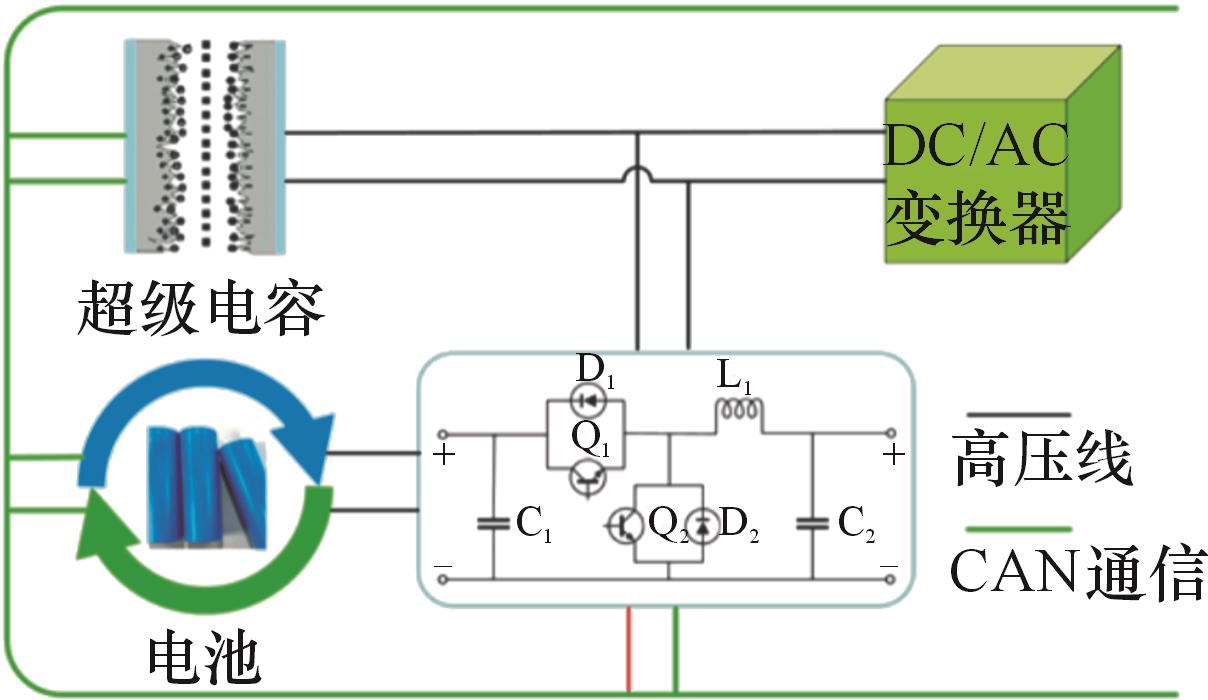
图1 HESS 拓扑结构
Fig.1 Topological structure diagram of the HESS
| 名称 | 取值 | 名称 | 取值 |
|---|---|---|---|
| 整车质量 | 1845 kg | 滚动阻力系数 | 0.025 |
| 重力加速度 | 0.98 m/s2 | 空气阻力系数 | 0.360 |
| 传动效率 | 82.1% | 旋转质量转换系数 | 1.030 |
| 迎风面积 | 2.530 m2 |
表1 电动汽车主要参数
Tab.1 Main parameter of electric vehicle
| 名称 | 取值 | 名称 | 取值 |
|---|---|---|---|
| 整车质量 | 1845 kg | 滚动阻力系数 | 0.025 |
| 重力加速度 | 0.98 m/s2 | 空气阻力系数 | 0.360 |
| 传动效率 | 82.1% | 旋转质量转换系数 | 1.030 |
| 迎风面积 | 2.530 m2 |
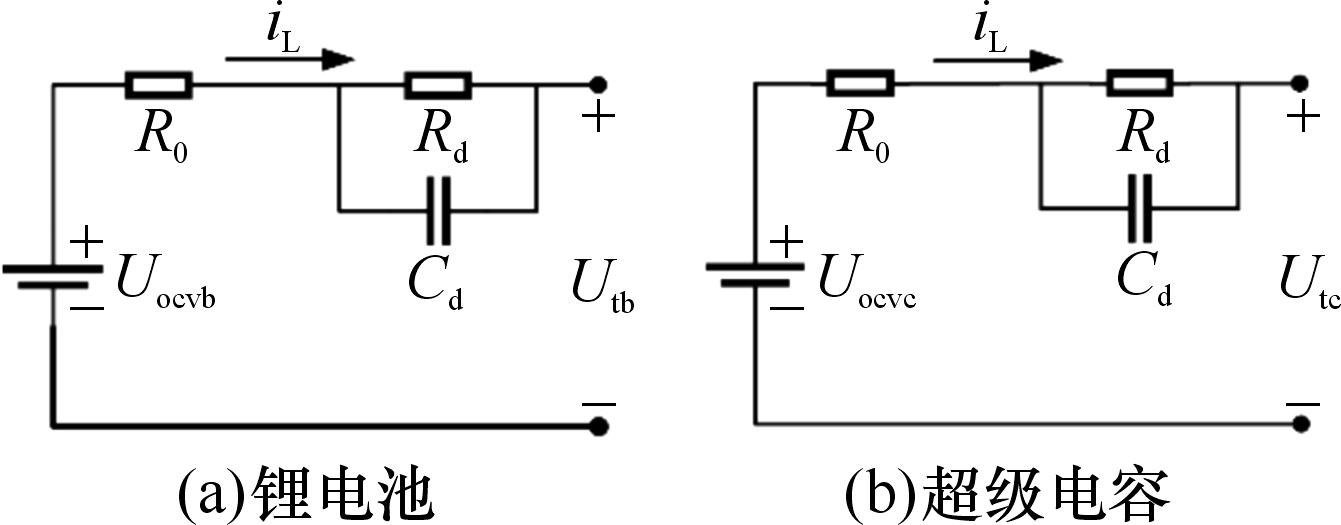
图2 等效电路模型
Fig.2 Equivalent circuit model
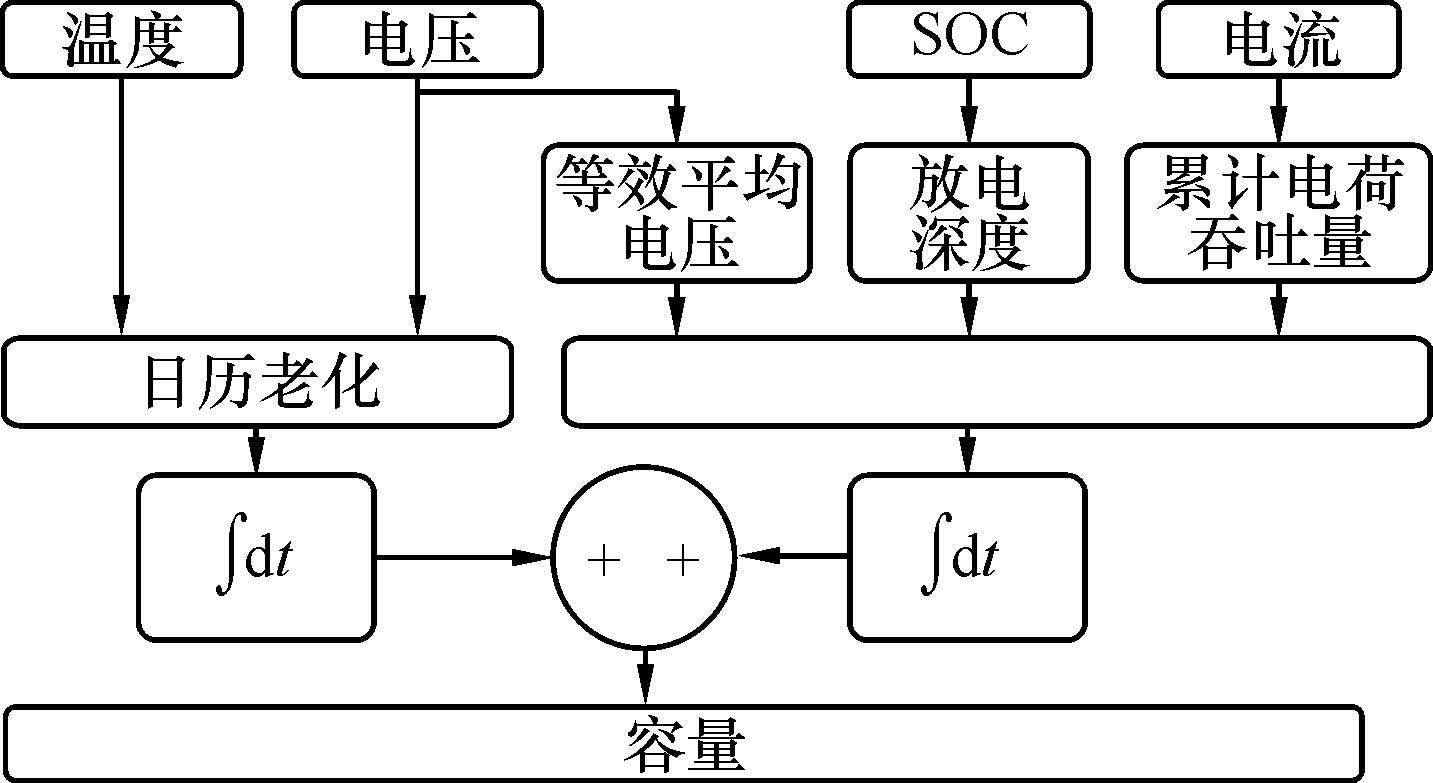
图3 锂电池老化量化计算过程
Fig.3 Lithium battery aging calculation process
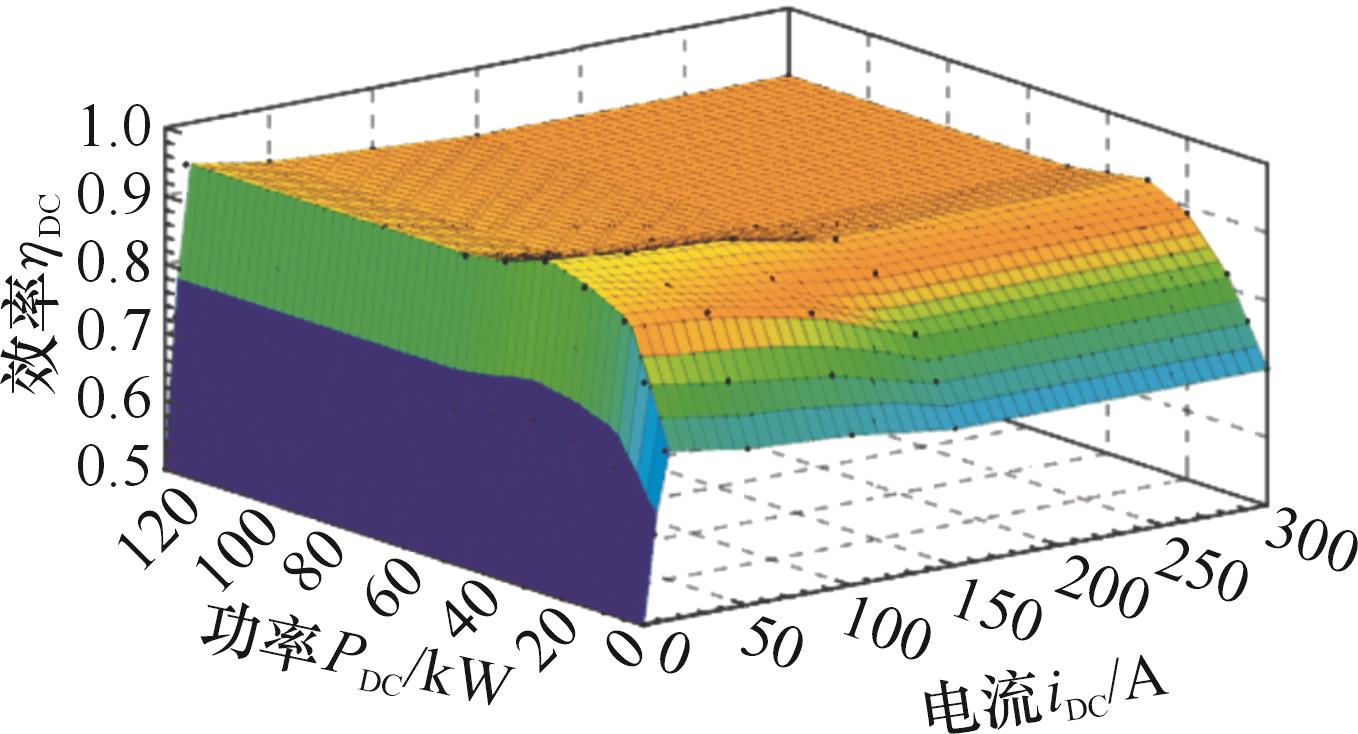
图4 DC/DC变换器效率响应曲面
Fig.4 The efficiency response surface of DC/DC converter
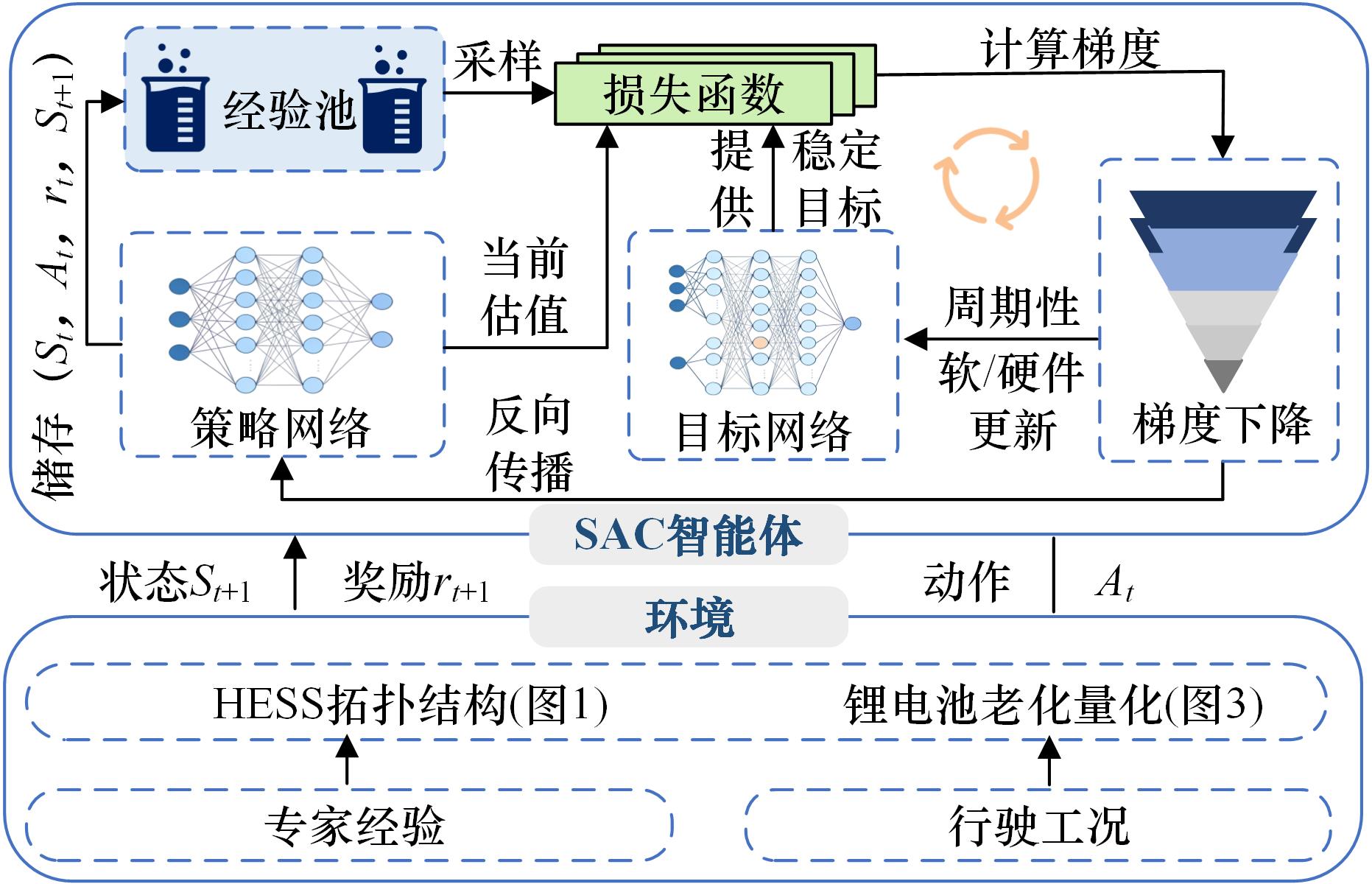
图5 基于SAC-DRL的能量管理框架
Fig.5 EMS framework based on SAC-DRL algorithm
| 参数 | 设置或值 |
|---|---|
| 批评者网络 | Fully-connected Layer 32-32 |
| 批评者网络学习率 | 0.0002 |
| 批评者网络L2正则化系数 | 0.0001 |
| 行动者网络 | Fully-connected Layer 32-32 |
| 行动者网络学习率 | 0.0001 |
| 行动者网络L2正则化系数 | 0.0002 |
| 折扣系数 | 0.999 |
| 经验池缓存大小 | 1 000 000 |
| 随机体验最小批量 | 128 |
| 平滑系数 | 0.001 |
表2 SAC-DRL算法的超参数设置
Tab.2 hyperparameters for SAC-DRL algorithm
| 参数 | 设置或值 |
|---|---|
| 批评者网络 | Fully-connected Layer 32-32 |
| 批评者网络学习率 | 0.0002 |
| 批评者网络L2正则化系数 | 0.0001 |
| 行动者网络 | Fully-connected Layer 32-32 |
| 行动者网络学习率 | 0.0001 |
| 行动者网络L2正则化系数 | 0.0002 |
| 折扣系数 | 0.999 |
| 经验池缓存大小 | 1 000 000 |
| 随机体验最小批量 | 128 |
| 平滑系数 | 0.001 |
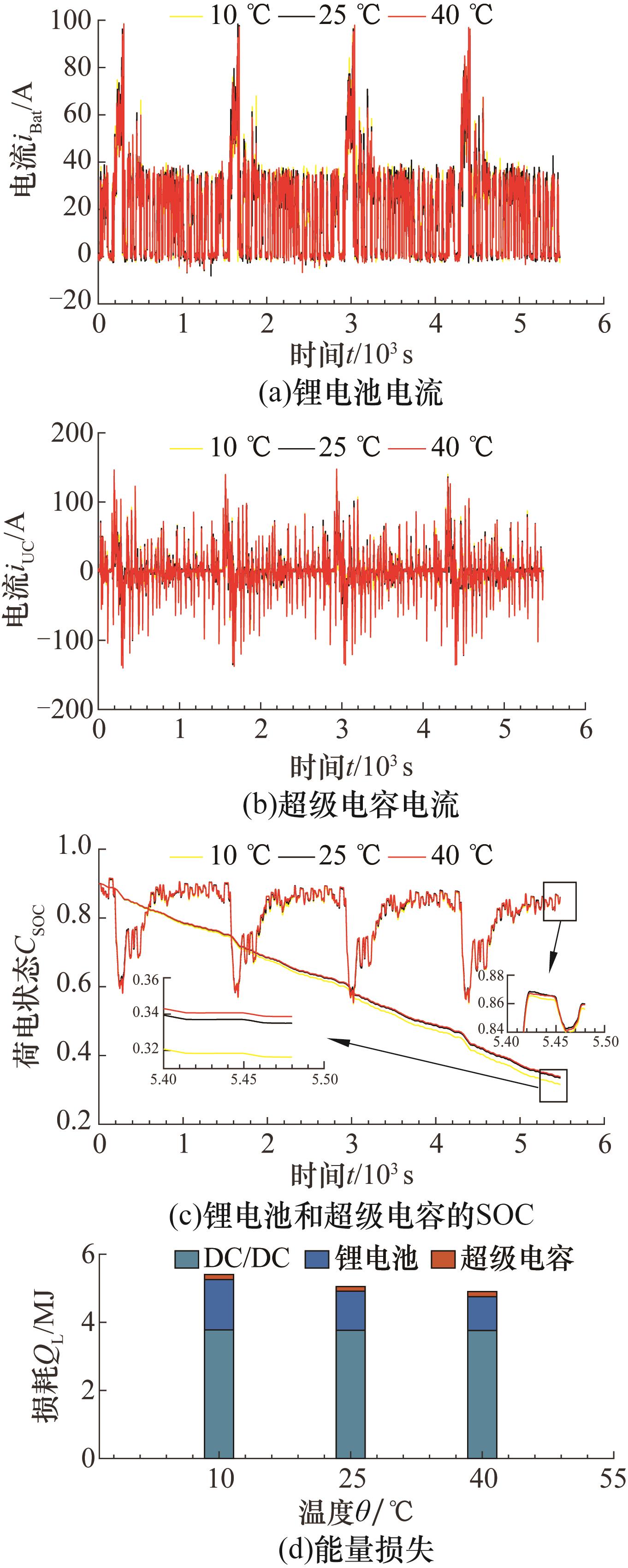
图6 SAC测试结果
Fig.6 Test results of SAC
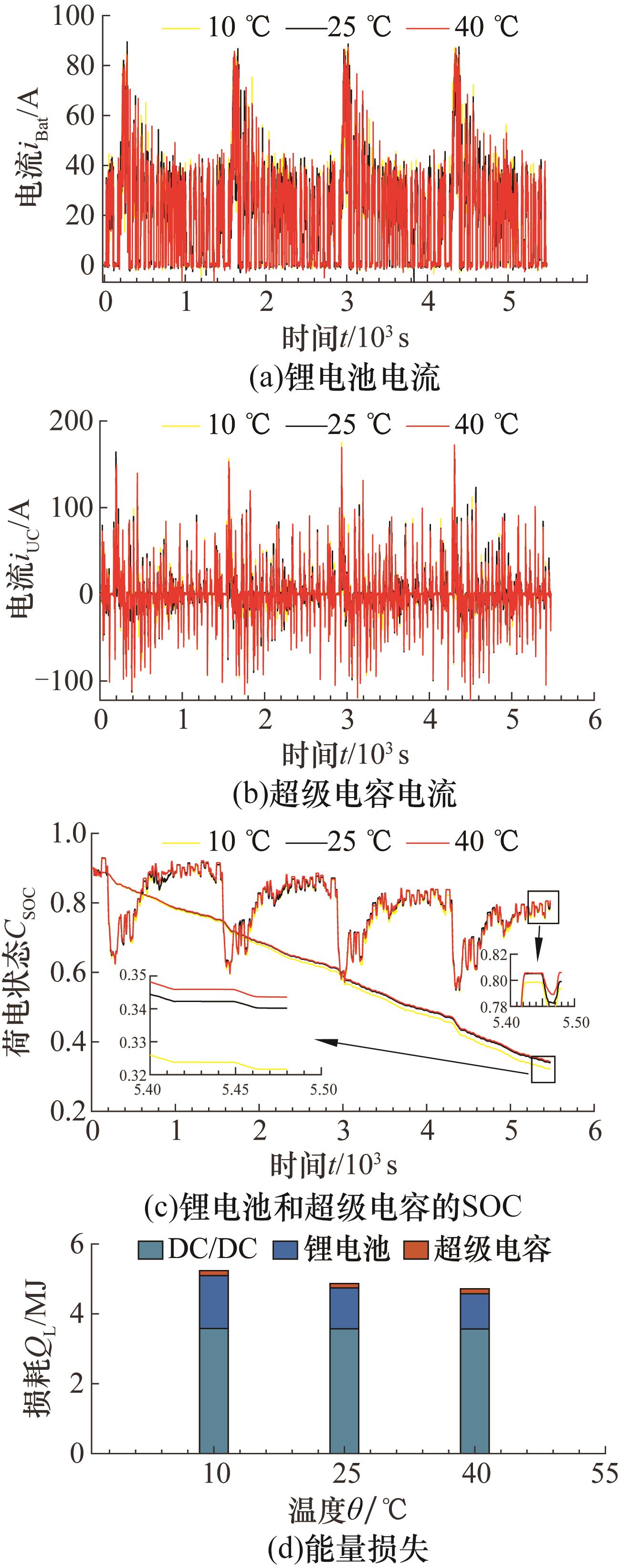
图7 SAC测试结果(专家经验)
Fig.7 Test results of SAC (expertise)
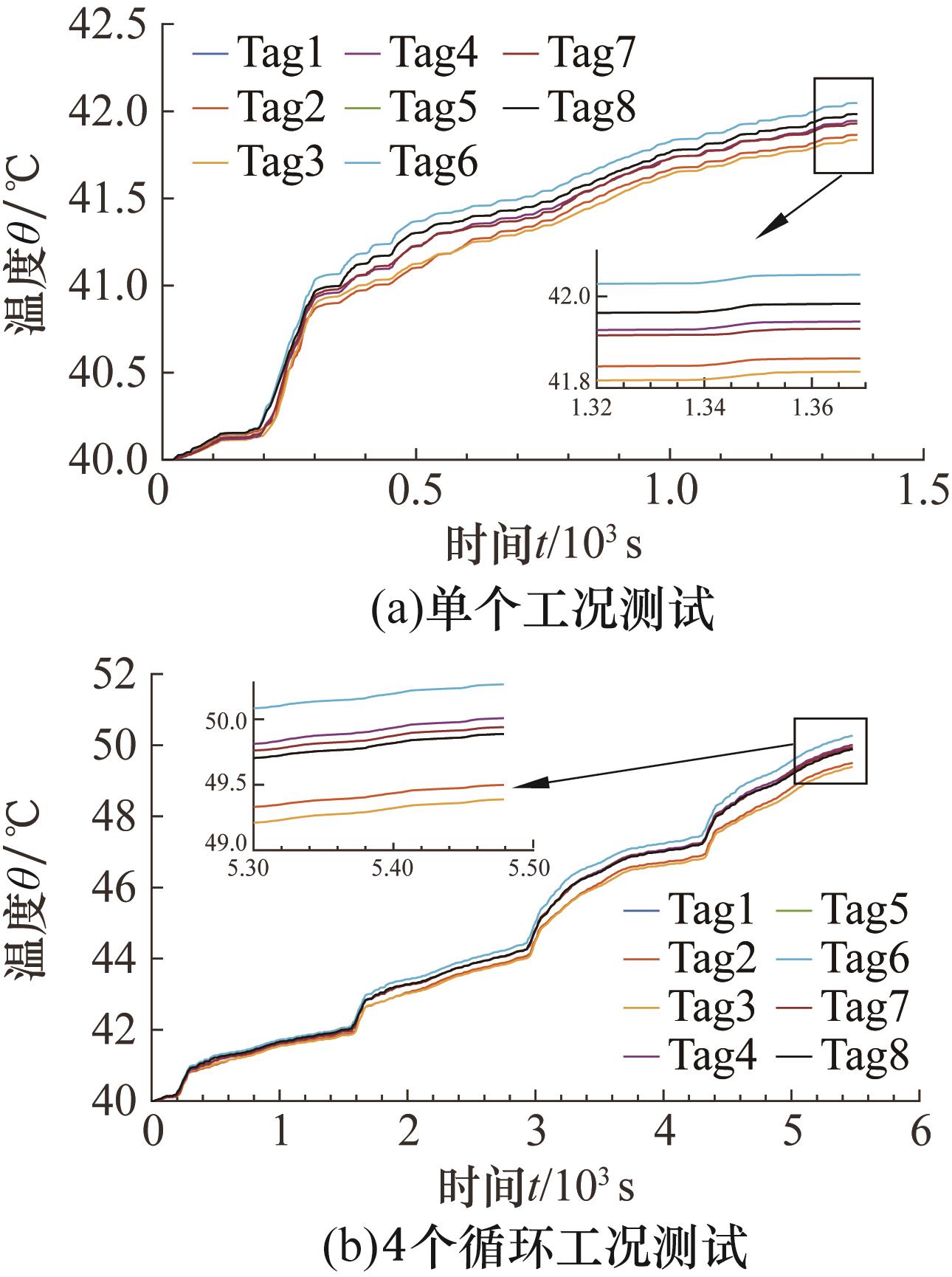
图8 锂电池温度变化曲线
Fig.8 Lithium battery temperature curve
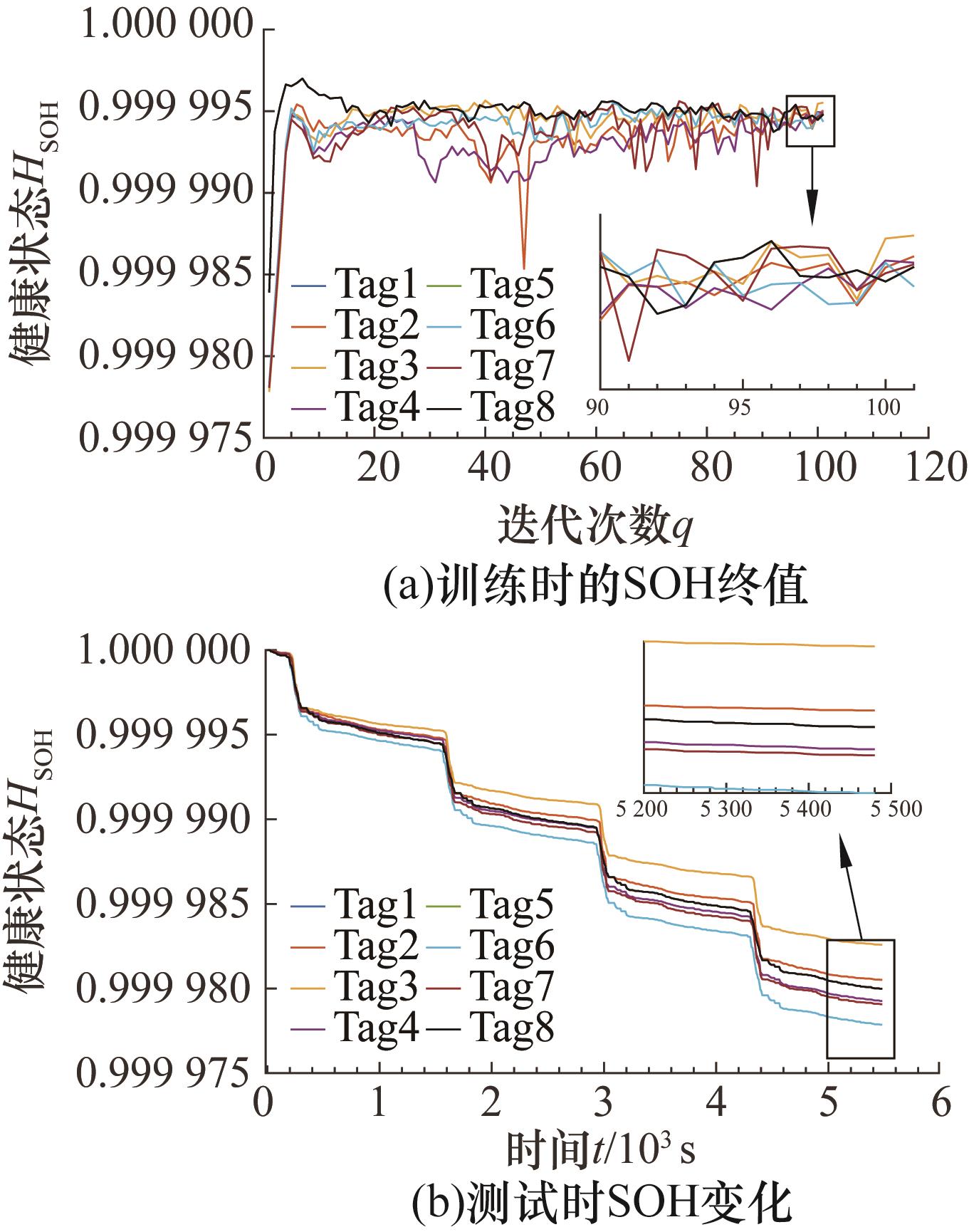
图9 锂电池SOH变化曲线
Fig.9 SOH curve of lithium battery
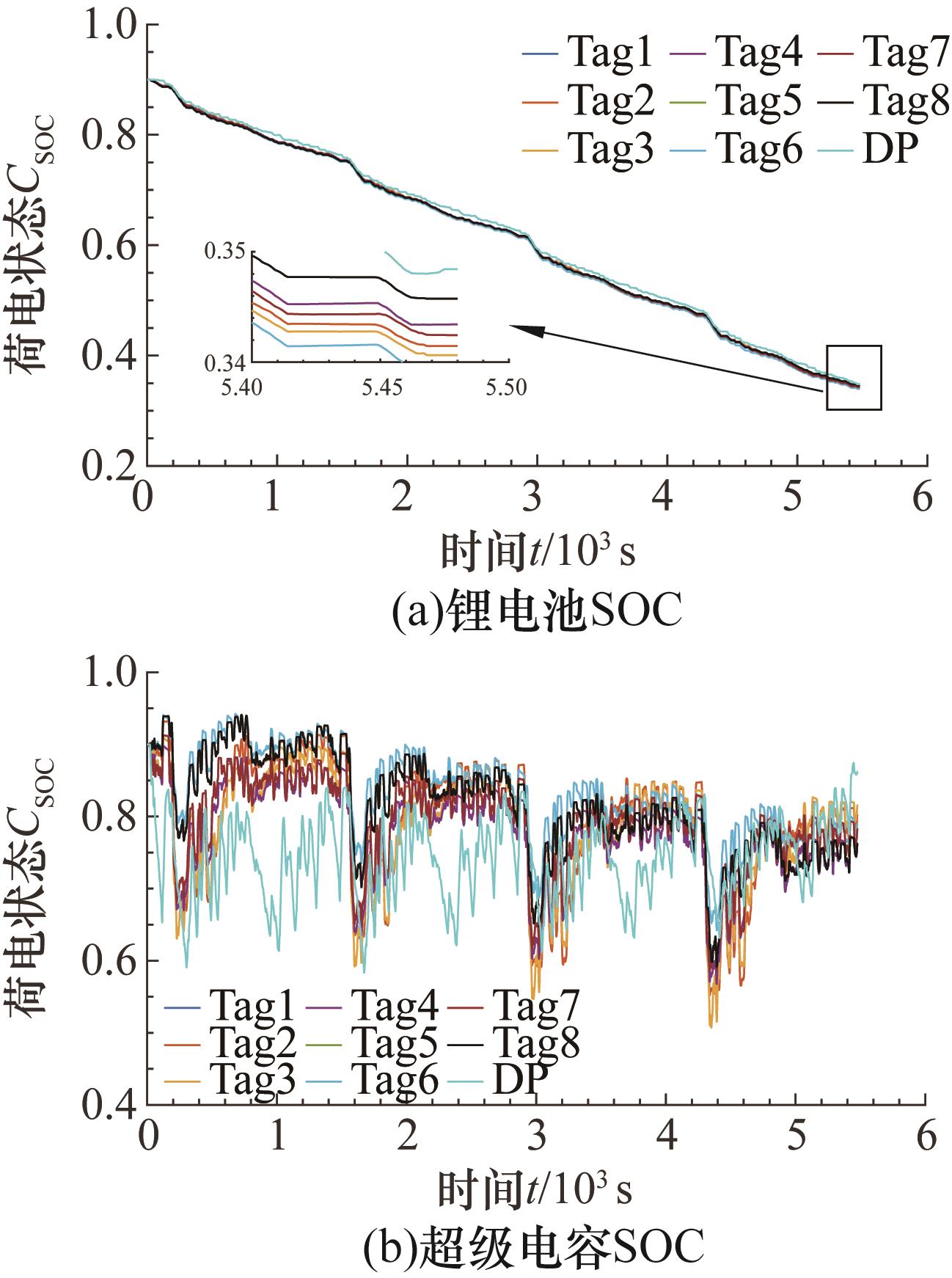
图10 在不同策略下锂电池和超级电容的SOC
Fig.10 Lithium battery and ultracapacitor SOC under different strategies
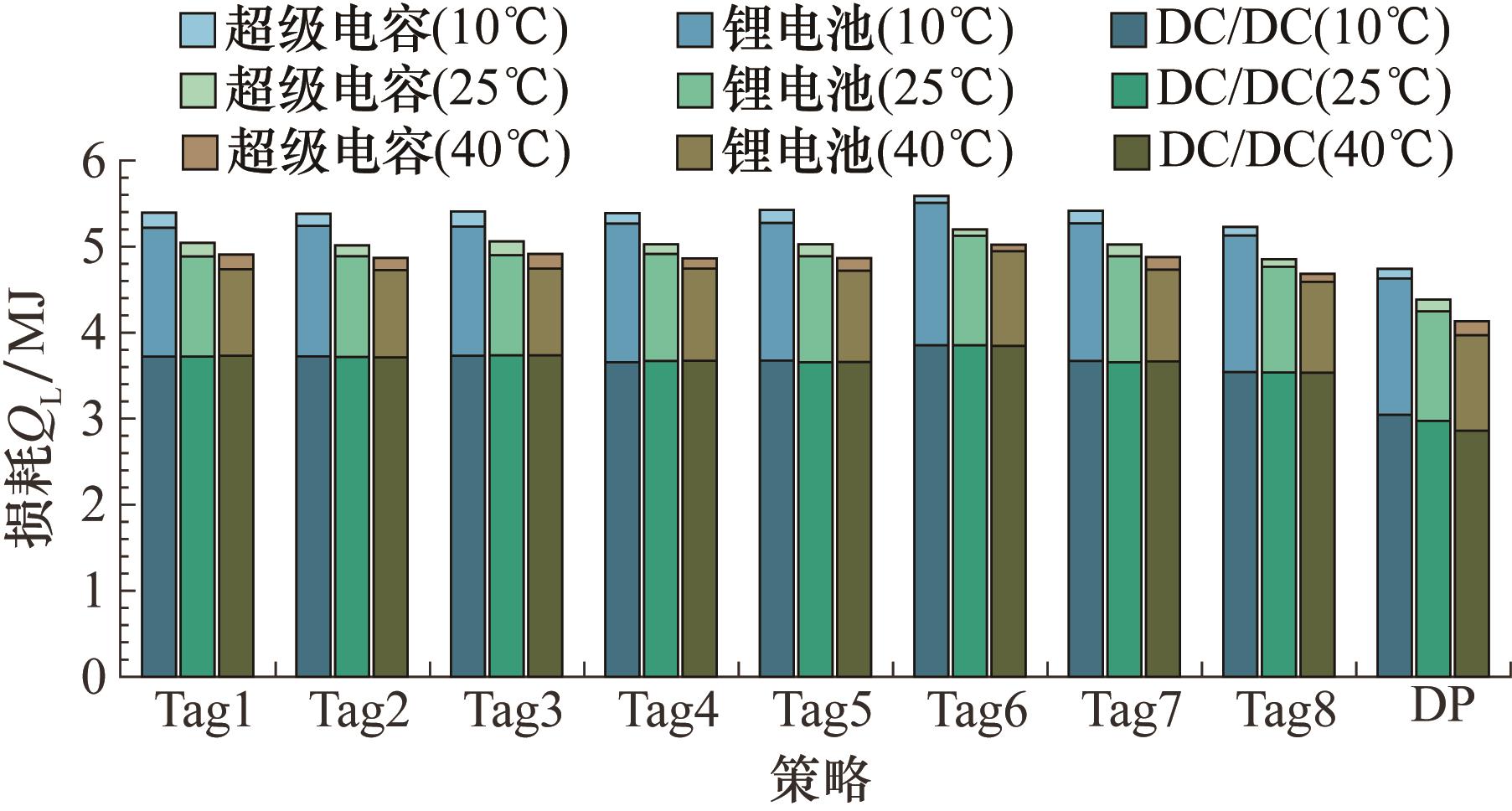
图11 策略能量损失的比较
Fig.11 Comparison of energy loss of strategy
| 温度 | Tag1 | Tag2 | Tag3 | Tag4 | Tag5 | Tag6 | Tag7 | Tag8 | DP |
|---|---|---|---|---|---|---|---|---|---|
| 10℃ | 5394.3 | 5381.4 | 5408.9 | 5389.3 | 5424.4 | 5587.8 | 5416.2 | 5227.1 | 4740.2 |
| 25℃ | 5044.1 | 5014.2 | 5059.7 | 5026.8 | 5026.2 | 5198.1 | 5024.7 | 4853.1 | 4384.6 |
| 40℃ | 4907.6 | 4866.9 | 4913.9 | 4863.9 | 4864.9 | 5020.3 | 4877.1 | 4683.9 | 4133.3 |
表3 策略能量损失统计 (kJ)
Tab.3 Energy loss statistics of strategy
| 温度 | Tag1 | Tag2 | Tag3 | Tag4 | Tag5 | Tag6 | Tag7 | Tag8 | DP |
|---|---|---|---|---|---|---|---|---|---|
| 10℃ | 5394.3 | 5381.4 | 5408.9 | 5389.3 | 5424.4 | 5587.8 | 5416.2 | 5227.1 | 4740.2 |
| 25℃ | 5044.1 | 5014.2 | 5059.7 | 5026.8 | 5026.2 | 5198.1 | 5024.7 | 4853.1 | 4384.6 |
| 40℃ | 4907.6 | 4866.9 | 4913.9 | 4863.9 | 4864.9 | 5020.3 | 4877.1 | 4683.9 | 4133.3 |
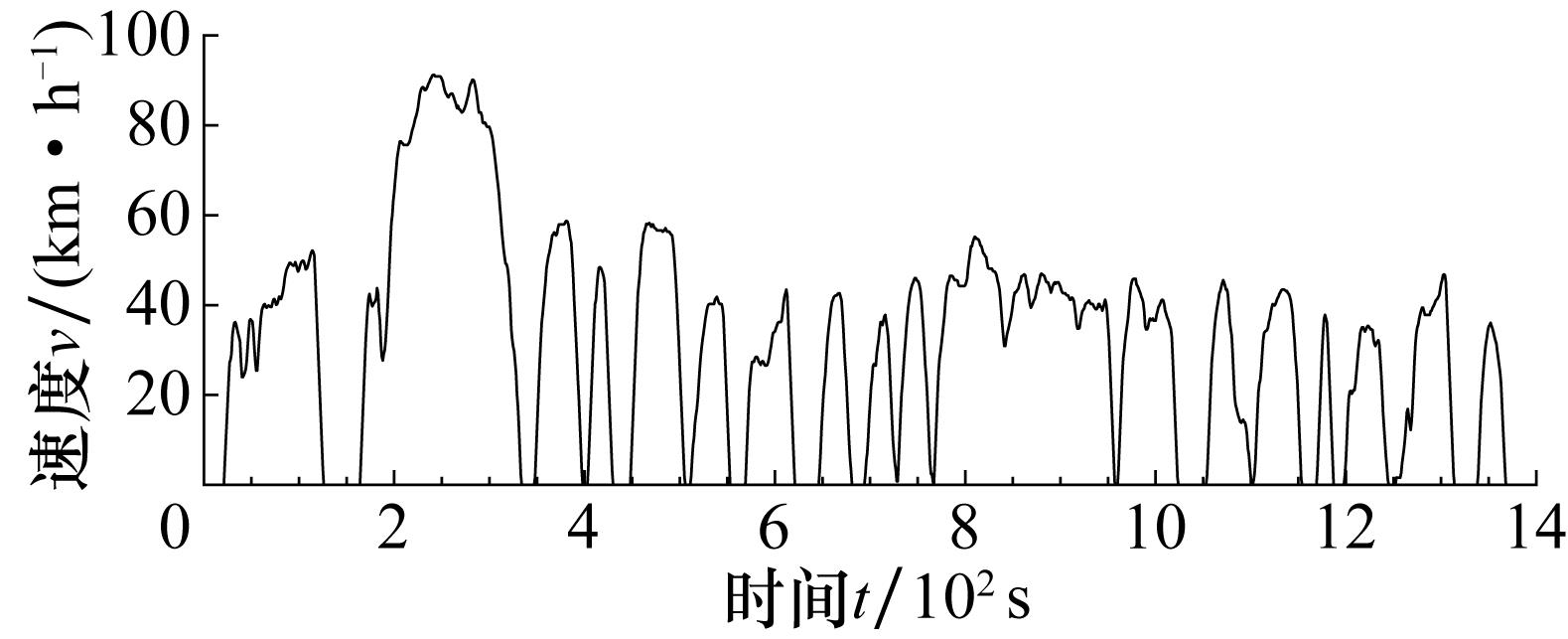
图12 混合工况速度
Fig.12 The speed of the mixed cycle condition
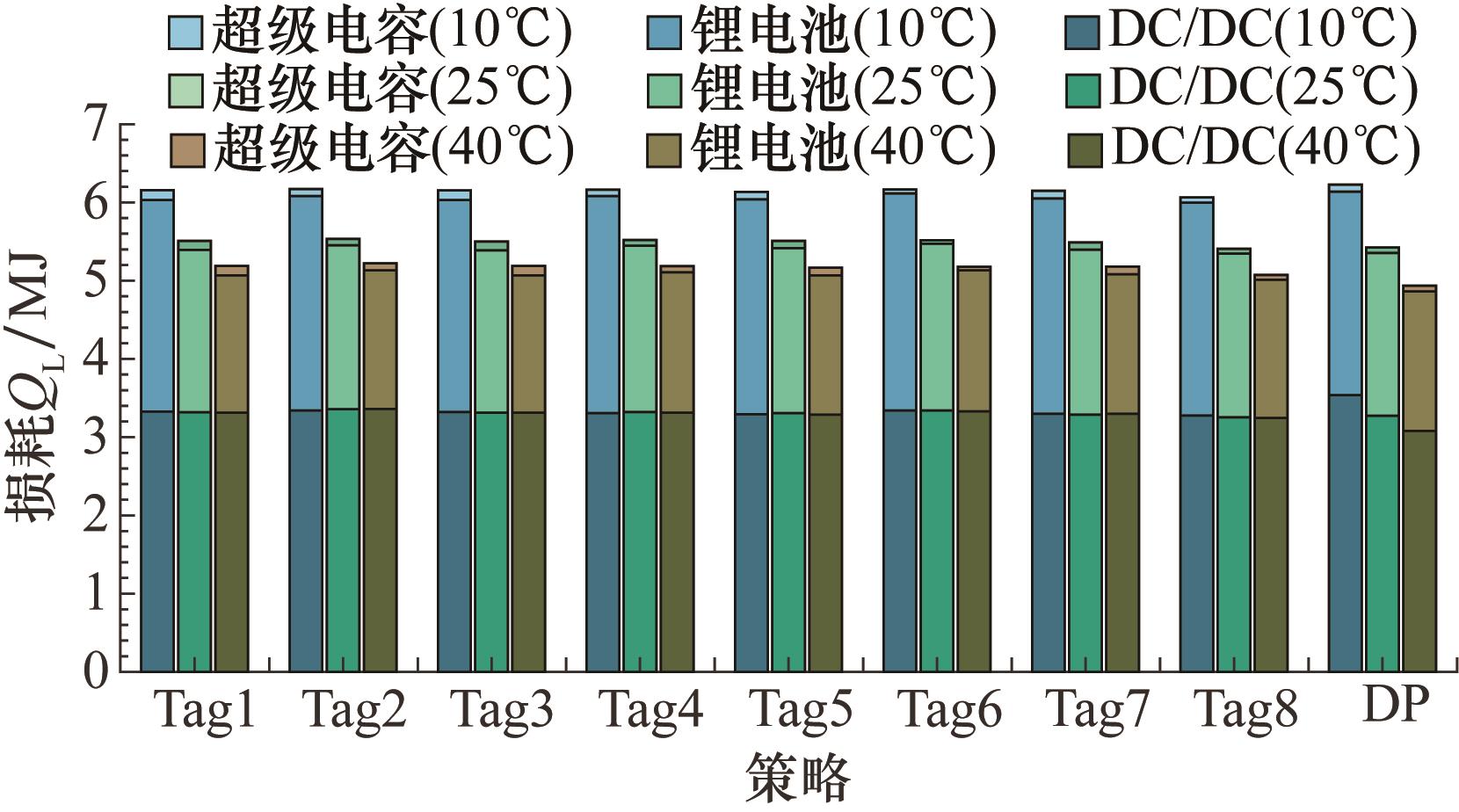
图13 策略能量损失的比较(混合工况测试)
Fig.13 Comparison of energy loss of strategy (composite cycle test)
| 温度 | Tag1 | Tag2 | Tag3 | Tag4 | Tag5 | Tag6 | Tag7 | Tag8 | DP |
|---|---|---|---|---|---|---|---|---|---|
| 10 ℃ | 6157.5 | 6171.3 | 6153.8 | 6161.8 | 6135.8 | 6164.6 | 6149.7 | 6064.9 | 5880.0 |
| 25 ℃ | 5507.5 | 5533.3 | 5500.1 | 5521.1 | 5508.7 | 5515.5 | 5488.2 | 5407.2 | 5308.7 |
| 40 ℃ | 5189.5 | 5222.1 | 5189.3 | 5185.4 | 5166.0 | 5177.9 | 5181.1 | 5074.6 | 4935.6 |
表4 策略能量损失统计(混合工况测试) (kJ)
Tab.4 Energy loss statistics of strategy (composite cycle test)
| 温度 | Tag1 | Tag2 | Tag3 | Tag4 | Tag5 | Tag6 | Tag7 | Tag8 | DP |
|---|---|---|---|---|---|---|---|---|---|
| 10 ℃ | 6157.5 | 6171.3 | 6153.8 | 6161.8 | 6135.8 | 6164.6 | 6149.7 | 6064.9 | 5880.0 |
| 25 ℃ | 5507.5 | 5533.3 | 5500.1 | 5521.1 | 5508.7 | 5515.5 | 5488.2 | 5407.2 | 5308.7 |
| 40 ℃ | 5189.5 | 5222.1 | 5189.3 | 5185.4 | 5166.0 | 5177.9 | 5181.1 | 5074.6 | 4935.6 |
| 随机数种子 | NEDC | HWFET |
|---|---|---|
| 1 | 4728.60 | 14 208.48 |
| 50 | 4725.36 | 14 213.88 |
| 100 | 4738.32 | 14 235.84 |
| 150 | 4728.96 | 14 200.56 |
| 200 | 4733.64 | 14 223.24 |
表5 不同随机种子下NEDC与HWFET工况的总能量损耗 (kJ)
Tab.5 Total energy consumption of NEDC and HWFET driving cycles with different random seeds
| 随机数种子 | NEDC | HWFET |
|---|---|---|
| 1 | 4728.60 | 14 208.48 |
| 50 | 4725.36 | 14 213.88 |
| 100 | 4738.32 | 14 235.84 |
| 150 | 4728.96 | 14 200.56 |
| 200 | 4733.64 | 14 223.24 |
| 工况 | step mean | step max | step min | agent mean | agent max | 总耗时 |
|---|---|---|---|---|---|---|
| UDDS | 3.0 | 37.29 | 1.7 | 1.3 | 35.73 | 16 587.0 |
| HWFET | 3.3 | 12.34 | 1.9 | 1.4 | 11.16 | 10 221.3 |
| NEDC | 3.1 | 12.53 | 1.9 | 1.3 | 11.24 | 14 608.8 |
表6 在不同工况下的单步计算耗时统计 (ms)
Tab.6 Statistics of single-step computation time under different operating conditions
| 工况 | step mean | step max | step min | agent mean | agent max | 总耗时 |
|---|---|---|---|---|---|---|
| UDDS | 3.0 | 37.29 | 1.7 | 1.3 | 35.73 | 16 587.0 |
| HWFET | 3.3 | 12.34 | 1.9 | 1.4 | 11.16 | 10 221.3 |
| NEDC | 3.1 | 12.53 | 1.9 | 1.3 | 11.24 | 14 608.8 |
| [1] | 唐香蕉, 高祖成, 曾令全, 等. 城市道路下混合动力汽车双层能量管理策略[J]. 中国机械工程, 2022, 33(16): 2008-2015. |
| TANG Xiangjiao, GAO Zucheng, ZENG Lingquan, et al. A Double-layer Energy Management Strategy for HEVs under Urban Traffics[J]. China Mechanical Engineering, 2022, 33(16): 2008-2015. | |
| [2] | 严正峰, 蒋光宗, 姚明尧. 驱动系统效率最优的并联混合动力商用车模式切换及换挡控制策略[J]. 中国机械工程, 2024, 35(2): 354-363. |
| YAN Zhengfeng, JIANG Guangzong, YAO Mingyao. Mode Transition and Gear Shifting Control Strategy for Parallel Hybrid Commercial Vehicles Based on Optimal Drive System Efficiency[J]. China Mechanical Engineering, 2024, 35(2): 354-363. | |
| [3] | 吴进军, 颜丙杰, 方继根, 等. 插电式混合动力汽车的次优能量管理策略[J]. 中国机械工程, 2019, 30(11): 1336-1342. |
| WU Jinjun, YAN Bingjie, FANG Jigen,et al.Sub-optimal Energy Management Strategy for Plug-in Hybrid Electric Vehicles[J]. China Mechanical Engineering, 2019, 30(11): 1336-1342. | |
| [4] | 尤国贵, 卢剑伟, 张国军, 等. 插电式混合动力汽车能量管理策略研究综述[J]. 机械工程学报, 2025, 61(4): 195-218. |
| YOU Guogui, LU Jianwei, ZHANG Guojun, et al. Review of Research on Energy Management Strategy for Plug-in Hybrid Electric Vehicles[J]. Journal of Mechanical Engineering, 2025, 61(4): 195-218. | |
| [5] | WANG C, XIONG R, HE H, et al. Comparison of Decomposition Levels for Wavelet Transform Based Energy Management in a Plug-in Hybrid Electric Vehicle[J]. Journal of Cleaner Production, 2019, 210: 1085-1097. |
| [6] | 曾繁琦, 袁晓静, 王旭平, 等. 基于荷电状态惩罚函数的能量管理策略优化方法[J]. 中国机械工程, 2022, 33(7): 852-857. |
| ZENG Fanqi, YUAN Xiaojing, WANG Xuping, et al. Energy Management Strategy Optimization Method Based on SOC Penalty Function[J]. China Mechanical Engineering, 2022, 33(7): 852-857. | |
| [7] | 曹延旭, 魏中宝, 宋若旸, 等. 基于深度强化学习的跟驰场景中燃料电池混合动力汽车多目标能量管理研究[J]. 机械工程学报, 2025, 61(12): 191-203. |
| CAO Yanxu, WEI Zhongbao, SONG Ruoyang, et al. Research on Multi-objective EMS of Fuel Cell Hybrid Electric Vehicle under Car Following Scenario Based on Deep Reinforcement Learning[J]. Journal of Mechanical Engineering, 2025, 61(12): 191-203. | |
| [8] | WANG J, ZHOU J, ZHAO W. Deep Reinforcement Learning Based Energy Management Strategy for Fuel Cell/Battery/Supercapacitor Powered Electric Vehicle[J]. Green Energy and Intelligent Transportation, 2022, 1(2): 100028. |
| [9] | MNIH V, KAVUKCUOGLU K, SILVER D, et al. Human-level Control through Deep Reinforcement Learning[J]. Nature, 2015, 518(7540): 529-533. |
| [10] | 唐小林, 陈佳信, 刘腾, 等. 基于深度强化学习的混合动力汽车智能跟车控制与能量管理策略研究[J]. 机械工程学报, 2021, 57(22): 237-246. |
| TANG Xiaolin, CHEN Jiaxin, LIU Teng,et al.Research on Deep Reinforcement Learning-based Intelligent Car-following Control and Energy Management Strategy for Hybrid Electric Vehicles[J].Journal of Mechanical Engineering, 2021, 57(22): 237-246. | |
| [11] | QI C, ZHU Y, SONG C, et al. Hierarchical Reinforcement Learning Based Energy Management Strategy for Hybrid Electric Vehicle[J]. Energy, 2022, 238: 121703. |
| [12] | LIU R, WANG C, TANG A, et al. A Twin Delayed Deep Deterministic Policy Gradient-based Energy Management Strategy for a Battery-ultracapacitor Electric Vehicle Considering Driving Condition Recognition with Learning Vector Quantization Neural Network[J]. Journal of Energy Storage, 2023, 71: 108147. |
| [13] | BARCELLONA S, COLNAGO S, DOTELLI G, et al. Aging Effect on the Variation of Li-ion Battery Resistance as Function of Temperature and State of Charge[J]. Journal of Energy Storage, 2022, 50: 104658. |
| [14] | MA S, JIANG M, TAO P, et al. Temperature Effect and Thermal Impact in Lithium-ion Batteries: a Review[J]. Progress in Natural Science: Materials International, 2018, 28(6): 653-666. |
| [15] | WANG C, LIU R, TANG A, et al. A Reinforcement Learning-based Energy Management Strategy for a Batter-ultracapacitor Electric Vehicle Considering Temperature Effects[J]. International Journal of Circuit Theory and Applications, 2023, 51(10): 4690-4710. |
| [16] | WANG C, LIU R, TANG A. Energy Management Strategy of Hybrid Energy Storage System for Electric Vehicles Based on Genetic Algorithm Optimization and Temperature Effect[J]. Journal of Energy Storage, 2022, 51: 104314. |
| [17] | 郑悦, 谢长君, 黄亮, 等. 锂电池与超级电容混合电动汽车系统在环综合测试[J]. 中国机械工程, 2016, 27(6): 821-826. |
| ZHENG Yue, XIE Changjun, HUANG Liang, et al. Powertrain in Loop Test System of Hybrid Electric Vehicles Combined Lithium Battery and Super Capacitor[J]. China Mechanical Engineering, 2016, 27(6): 821-826. | |
| [18] | STEIGER J, RICHTER G, WENK M, et al. Comparison of the Growth of Lithium Filaments and Dendrites under Different Conditions[J]. Electrochemistry Communications, 2015, 50: 11-14. |
| [19] | GAO L, LIU S, DOUGAL R A. Dynamic Lithium-ion Battery Model for System Simulation[J]. IEEE Transactions on Components and Packaging Technologies, 2002, 25(3): 495-505. |
| [20] | LI C, XU X, ZHU H, et al. Research on Car-following Control and Energy Management Strategy of Hybrid Electric Vehicles in Connected Scene[J]. Energy, 2024, 293: 130586. |
| [1] | 郭洪飞, 傅文杰, 任亚平. 基于异构图与改进近端策略优化的退役机电产品选择性拆卸序列规划[J]. 中国机械工程, 2026, 37(4): 977-986. |
| [2] | 王建涛, 杨超, 刘帅帅, 张利鹏, 王启军. 考虑系统噪声与载重未知的智能车路况辨识[J]. 中国机械工程, 2026, 37(2): 498-507. |
| [3] | 曾丹, 杨武, 杜彦斌, 吕岩, 李聪波. 基于双注意力网络深度强化学习的柔性作业车间节能调度方法[J]. 中国机械工程, 2026, 37(10): 2511-2519. |
| [4] | 史彪飞, 叶晓明, 吕皓玉, 赖锋. 基于轮胎侧偏的差动转向机理研究[J]. 中国机械工程, 2025, 36(10): 2224-2231. |
| [5] | 尹夕志1, 2, 3, 胡三宝1, 2, 3, 冯智勇1, 2, 3. 基于动态输出反馈的汽车横摆与侧倾稳定性控制[J]. 中国机械工程, 2025, 36(07): 1453-1462. |
| [6] | 孙晓军1, 刘丛浩1, 张乔1, 宋恩哲2. 基于混杂模型预测控制的顺序实时决策混合动力能量管理策略研究[J]. 中国机械工程, 2025, 36(06): 1380-1393. |
| [7] | 阚小博1, 赵又群1, 李丹阳1, 林棻1, 何鲲鹏1, 2, 尤庆伸2. 基于非线性模型预测控制的分布式驱动电动汽车多目标扭矩协调控制[J]. 中国机械工程, 2025, 36(05): 1123-1131. |
| [8] | 李益兵1, 2, 曹岩1, 郭钧1, 2, 王磊1, 2, 李西兴3, 孙利波4. 考虑峰值功率受限约束的柔性作业车间调度研究[J]. 中国机械工程, 2025, 36(02): 280-293. |
| [9] | 胡楷雄1, 宋远航1, 周勇1, 李卫东2. 基于深度强化学习的混杂场景目标物体推抓协同策略[J]. 中国机械工程, 2025, 36(01): 133-140. |
| [10] | 祝正宇1, 郭具涛2, 吕佑龙3, 左丽玲1, 张洁3. 面向柔性作业车间生产调度的深度强化学习方法[J]. 中国机械工程, 2024, 35(11): 2007-2014,2034. |
| [11] | 严正峰, 蒋光宗, 姚明尧. 驱动系统效率最优的并联混合动力商用车模式切换及换挡控制策略[J]. 中国机械工程, 2024, 35(02): 354-363. |
| [12] | 郭具涛, 吕佑龙, 戴铮, 张洁, 郭宇. 基于复合规则和强化学习的混流装配线调度方法[J]. 中国机械工程, 2023, 34(21): 2600-2606,2614. |
| [13] | 王姝, 张海川, 赵轩, 宋函锟. 融合稳定性的分布式驱动电动汽车路径跟踪控制策略研究[J]. 中国机械工程, 2023, 34(09): 1035-1044. |
| [14] | 王凡勋, 殷国栋, 沈童, 任彦君, 汪䶮, 冯斌. 四轮驱动电动汽车质心侧偏角与轮胎侧向力非线性鲁棒融合估计[J]. 中国机械工程, 2022, 33(22): 2673-2683. |
| [15] | 唐香蕉, 高祖成, 曾令全, 赵奕凡. 城市道路下混合动力汽车双层能量管理策略[J]. 中国机械工程, 2022, 33(16): 2008-2015. |
| 阅读次数 | ||||||
|
全文 |
|
|||||
|
摘要 |
|
|||||
