



ISSN 1004-132X
CN 42-1294/TH
CN 42-1294/TH
中国机械工程 ›› 2025, Vol. 36 ›› Issue (11): 2710-2719.DOI: 10.3969/j.issn.1004-132X.2025.11.029
• 智能制造 • 上一篇
梁继煌( ), 汪炜锋, 吴海彬()
收稿日期:2024-10-06
出版日期:2025-11-25
发布日期:2025-12-09
通讯作者:
吴海彬
作者简介:梁继煌,男,2000年生,硕士研究生。研究方向为机器视觉、机器人控制技术。E-mail:525185614@qq.com基金资助:
Jihuang LIANG(), Weifeng WANG, Haibin WU()
Received:2024-10-06
Online:2025-11-25
Published:2025-12-09
Contact:
Haibin WU
摘要:
针对目前工业机器人视觉示教方法存在精度较低、对光照敏感和示教范围易受限等问题,提出一种基于6D光笔的工业机器人高精度示教方法。光笔设有三个红外发光标记球,通过固定于机器人末端的红外双目相机捕捉光笔标记球即可获得其3D位置坐标和3D姿态信息。采取了两种措施提高6D光笔的视觉示教精度,一是提出一种基于红外发光标记球的手眼标定方法,有效提高了相机坐标系到机器人工具坐标系的转换精度;二是提出了一种相机视野自适应跟踪方法,使机器人能够通过固定在末端的相机自动跟踪光笔的位置,从而保证光笔标记球始终处于相机视野中心区域,有效提高了示教精度。最后将捕捉到的示教轨迹转换到机器人基坐标系下实现轨迹的编程跟踪。实验结果表明,利用该光笔得到的单点最大误差为0.63 mm,姿态最大误差为2.1432°,示教轨迹最大误差为0.73 mm,所提出的示教方法能够实现机器人高精度、高效率示教。
中图分类号:
梁继煌, 汪炜锋, 吴海彬. 基于6D光笔的工业机器人高精度示教方法[J]. 中国机械工程, 2025, 36(11): 2710-2719.
Jihuang LIANG, Weifeng WANG, Haibin WU. High-precision Industrial Robot Teaching Method Based on 6D Light Pens[J]. China Mechanical Engineering, 2025, 36(11): 2710-2719.
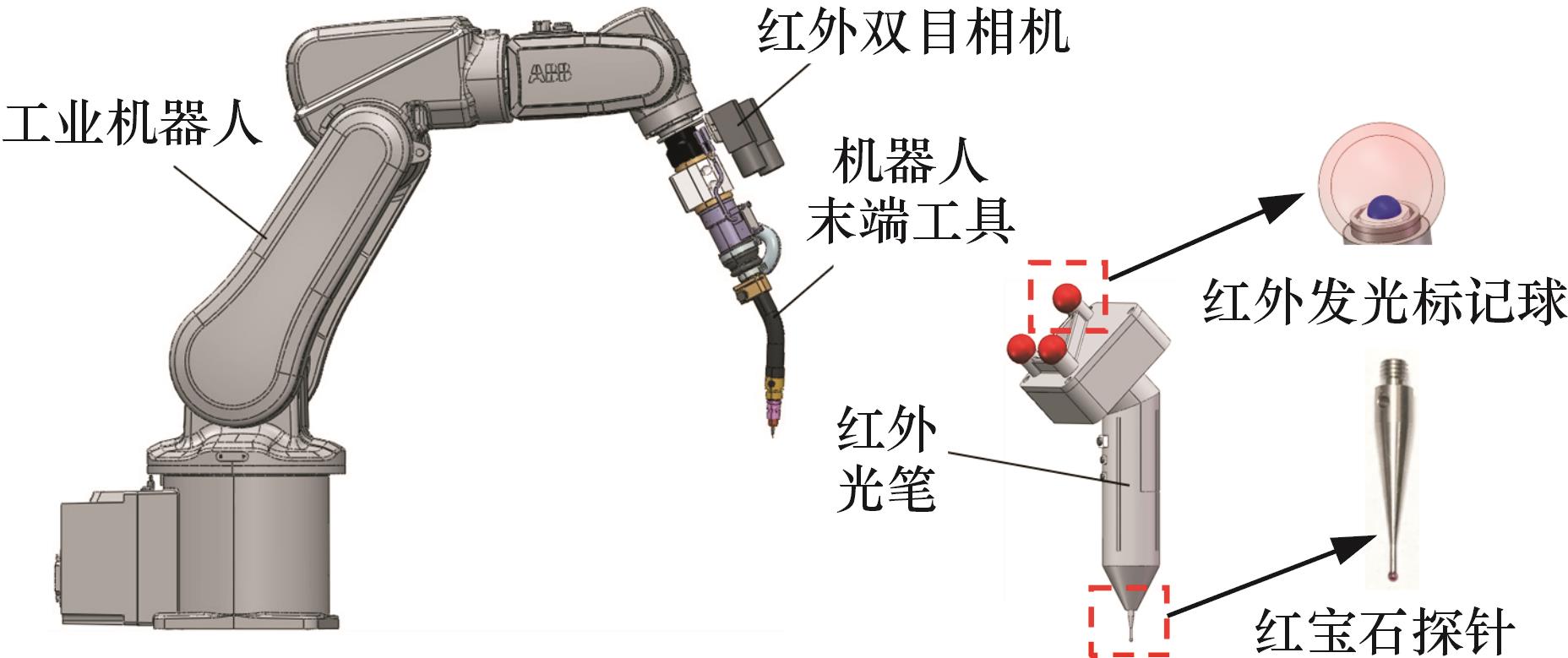
图1 基于6D光笔的工业机器人示教系统
Fig.1 Industrial robot teaching system based on 6D light pen
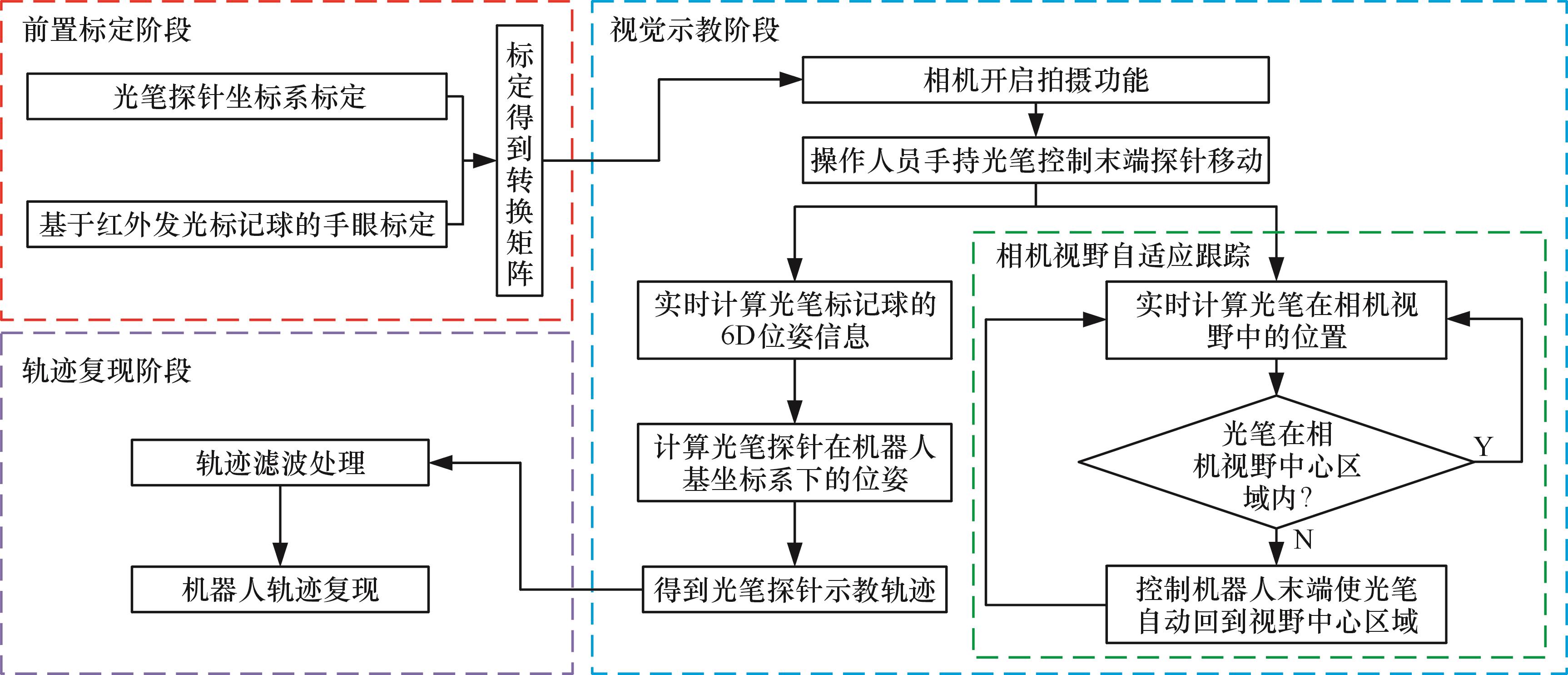
图2 视觉示教方法流程图
Fig.2 Flowchart of vision-based teaching method
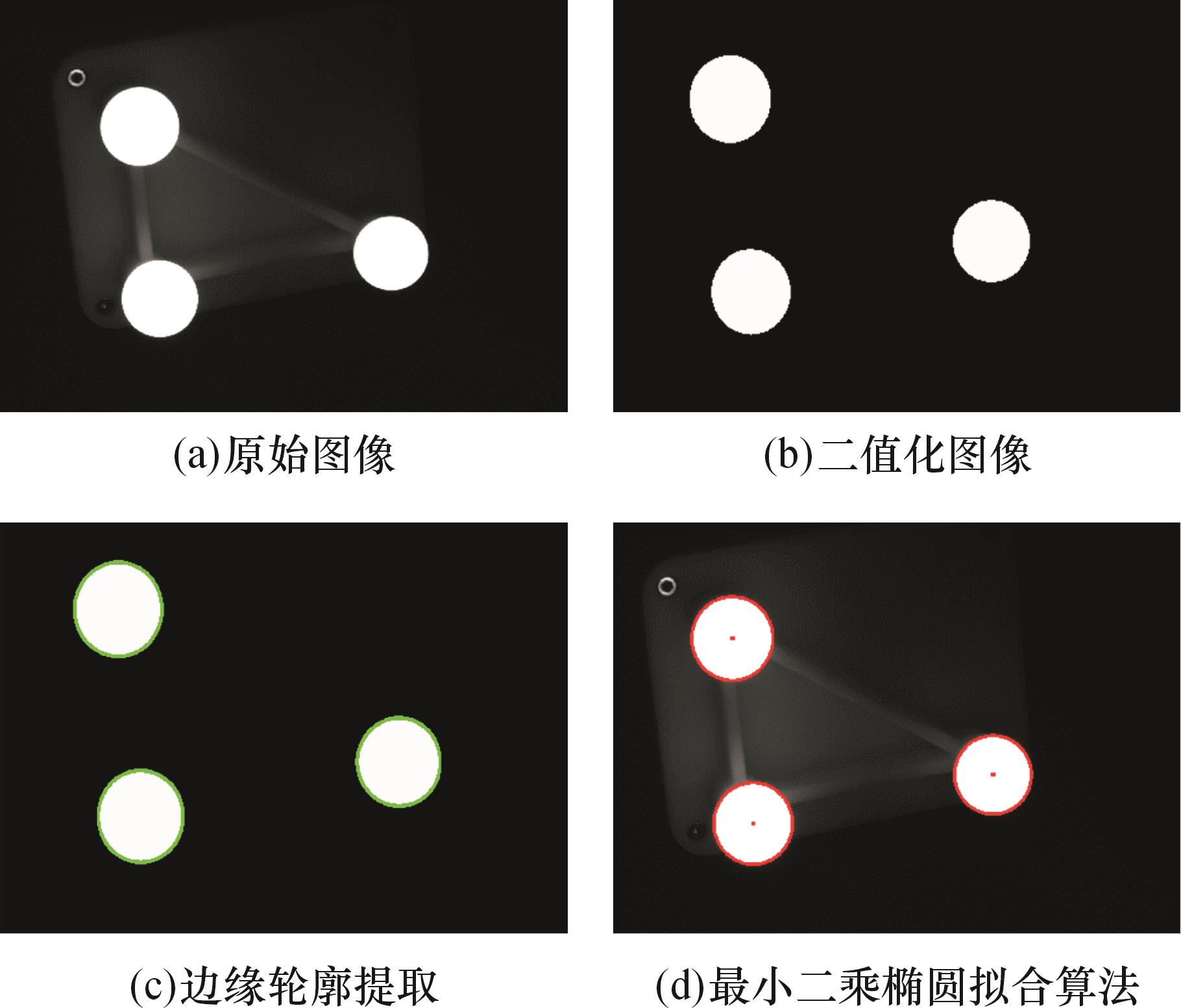
图3 亚像素圆心提取算法
Fig.3 Subpixel circle center extraction algorithm
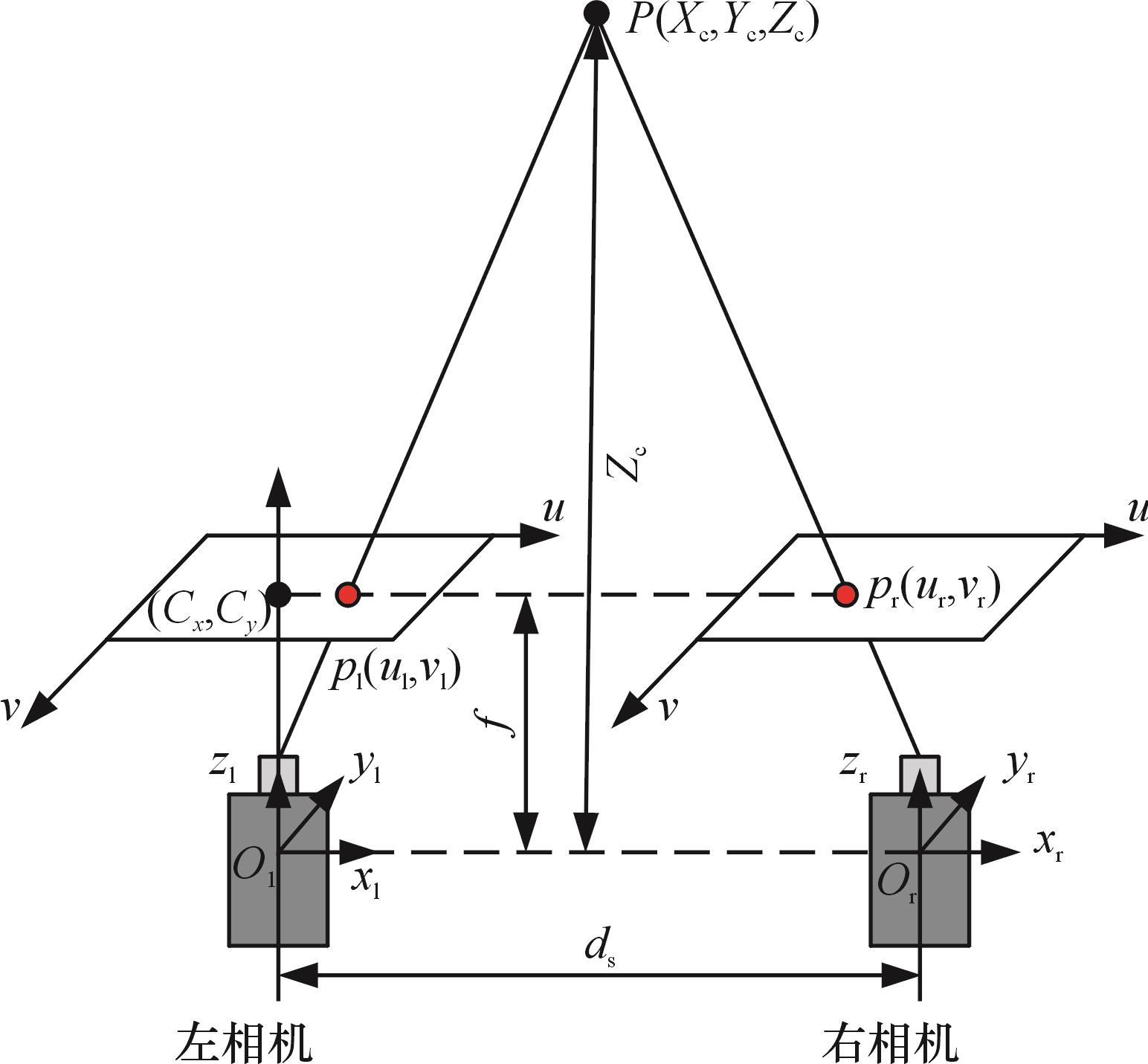
图4 双目立体视觉测量原理
Fig.4 Binocular stereo vision measurement principle
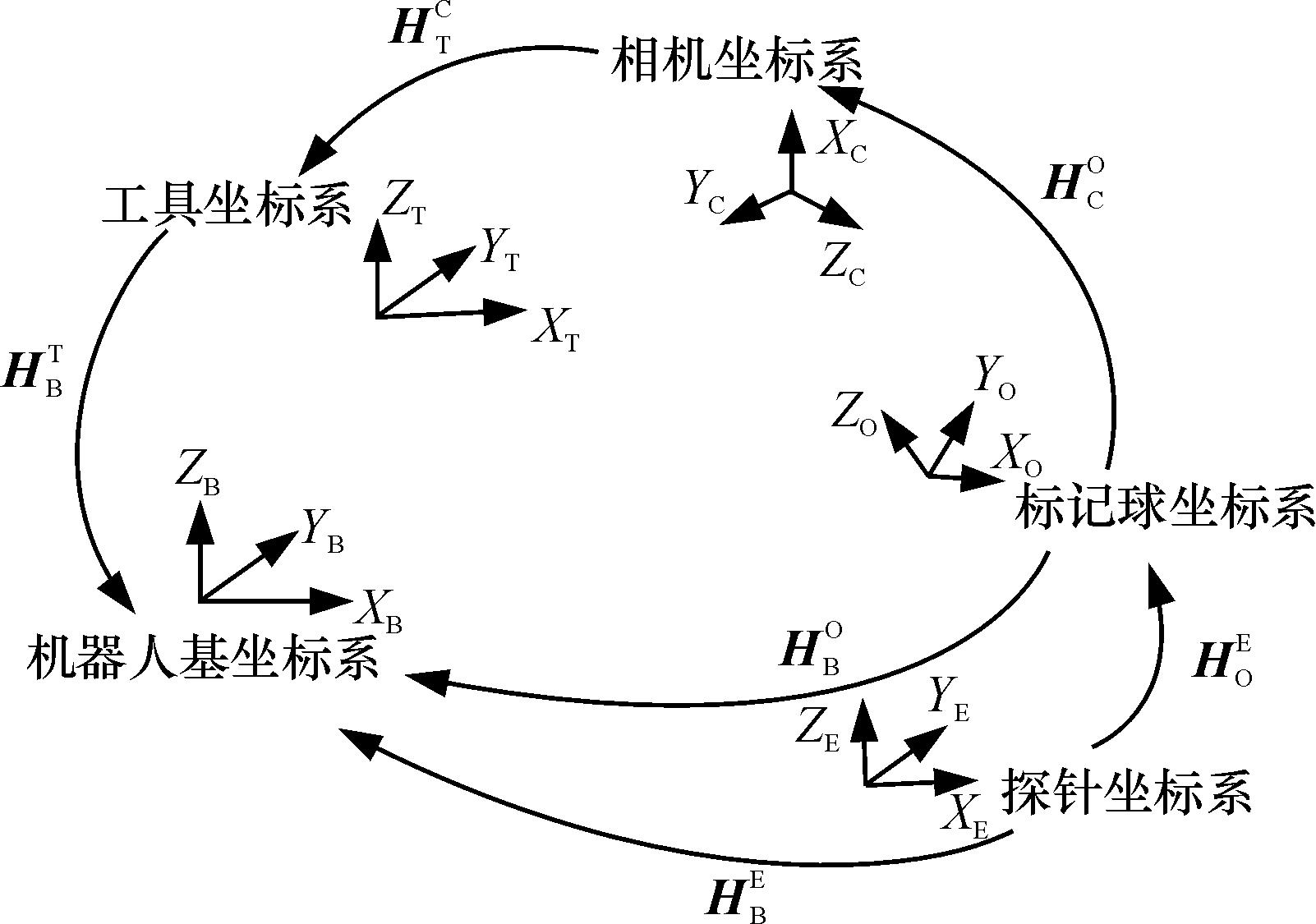
图5 系统坐标系转换关系
Fig.5 System coordinate system transformation relationship
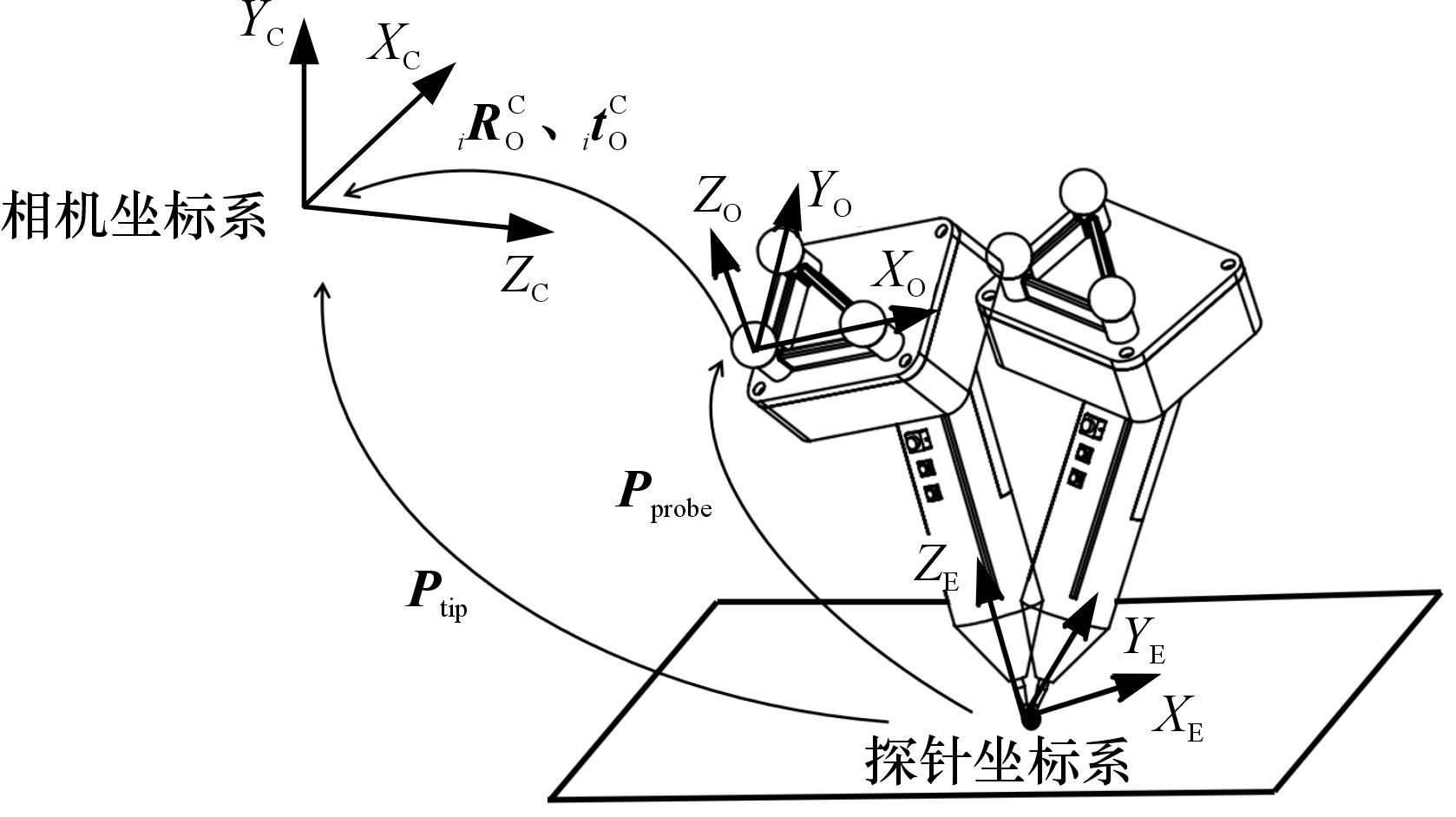
图6 光笔探针校准
Fig.6 Light pen probe calibration
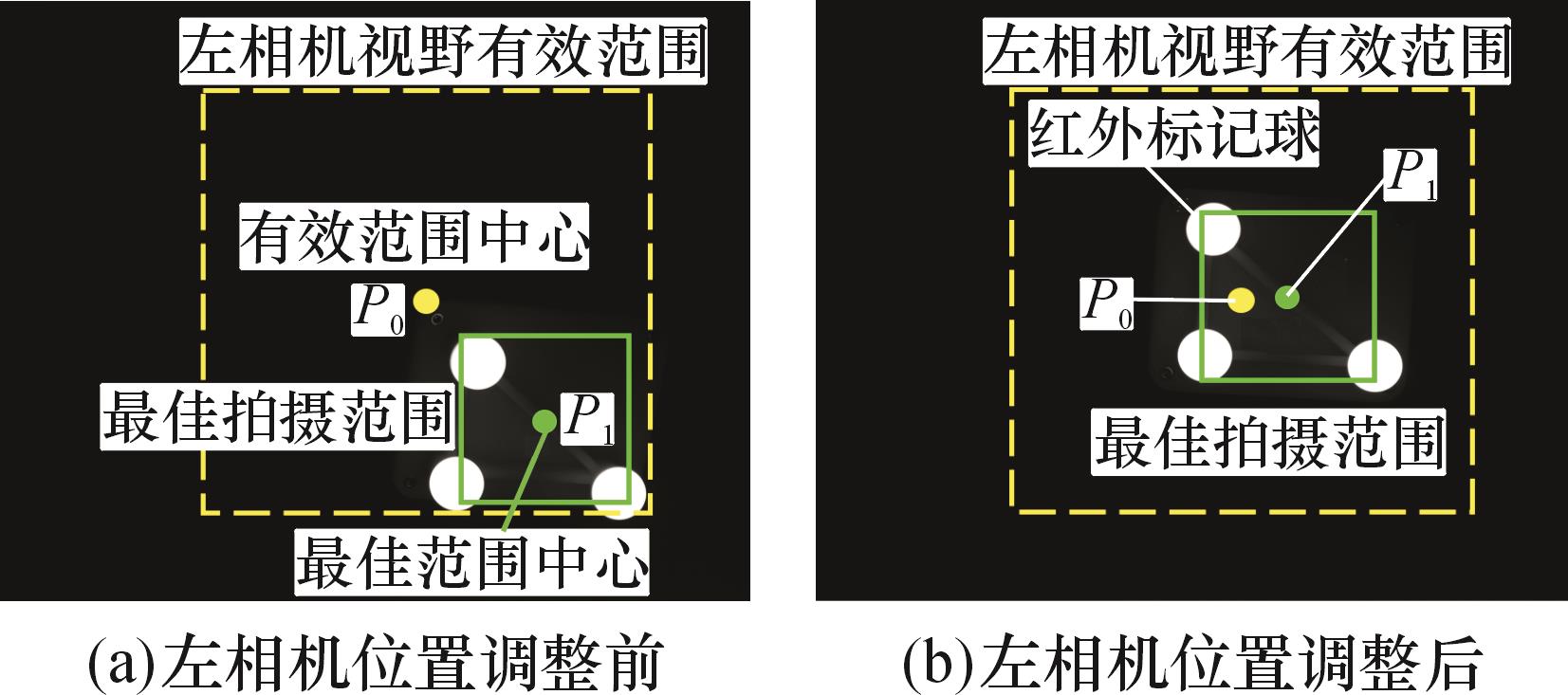
图7 视野自适应跟踪效果
Fig.7 Adaptive tracking effect of the view
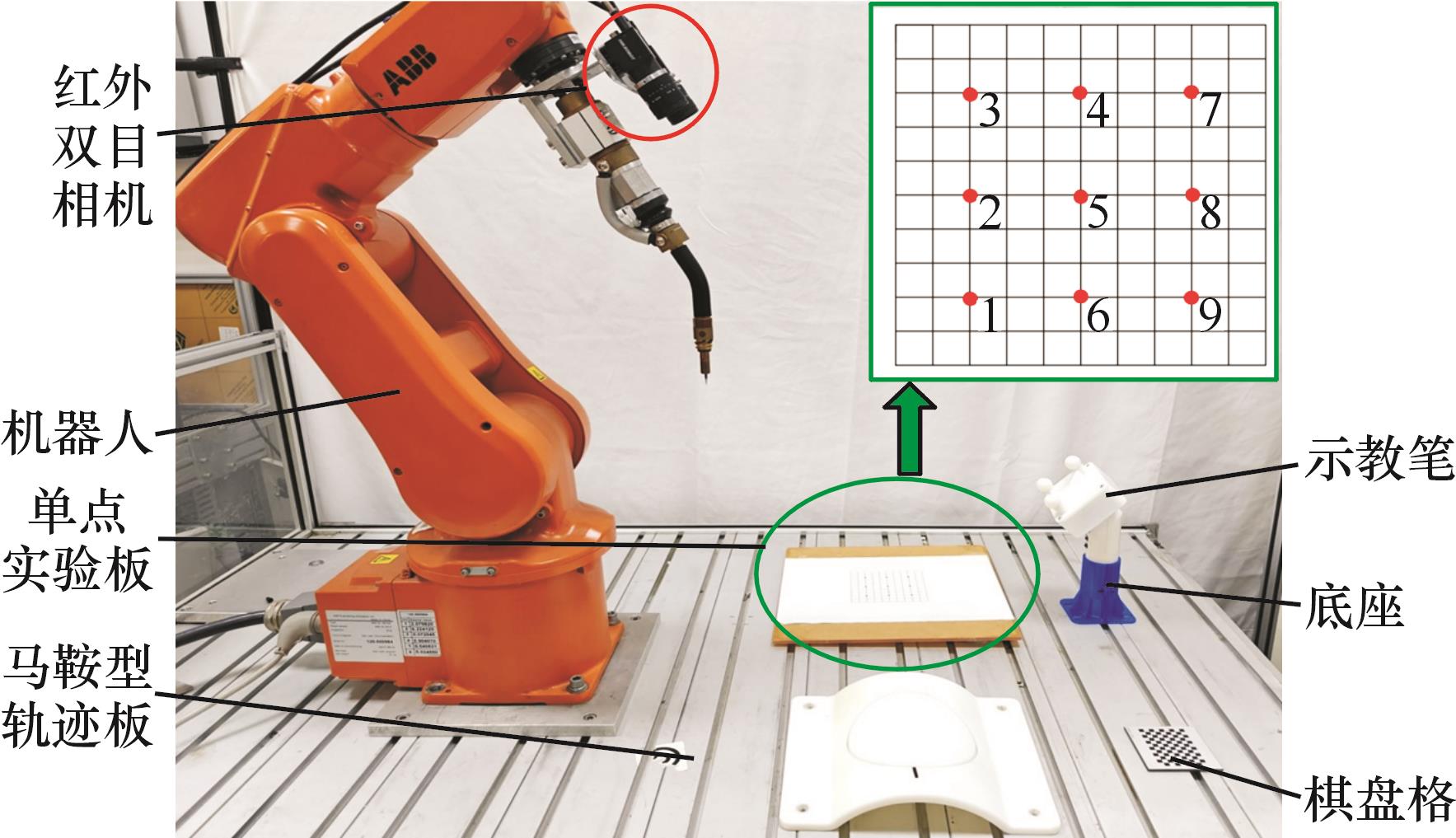
图8 示教实验平台
Fig.8 Teaching experiment platform
| 相机型号 | MV-CE060-10UM |
|---|---|
| 基线/mm | 130 |
| 相机焦距/mm | 12 |
| 分辨率 | 3072×2048 |
| 工作距离/mm | 600 |
| 双目视野区域/(mm×mm) | 299×211 |
表1 视觉系统参数
Tab.1 Vision system parameters
| 相机型号 | MV-CE060-10UM |
|---|---|
| 基线/mm | 130 |
| 相机焦距/mm | 12 |
| 分辨率 | 3072×2048 |
| 工作距离/mm | 600 |
| 双目视野区域/(mm×mm) | 299×211 |
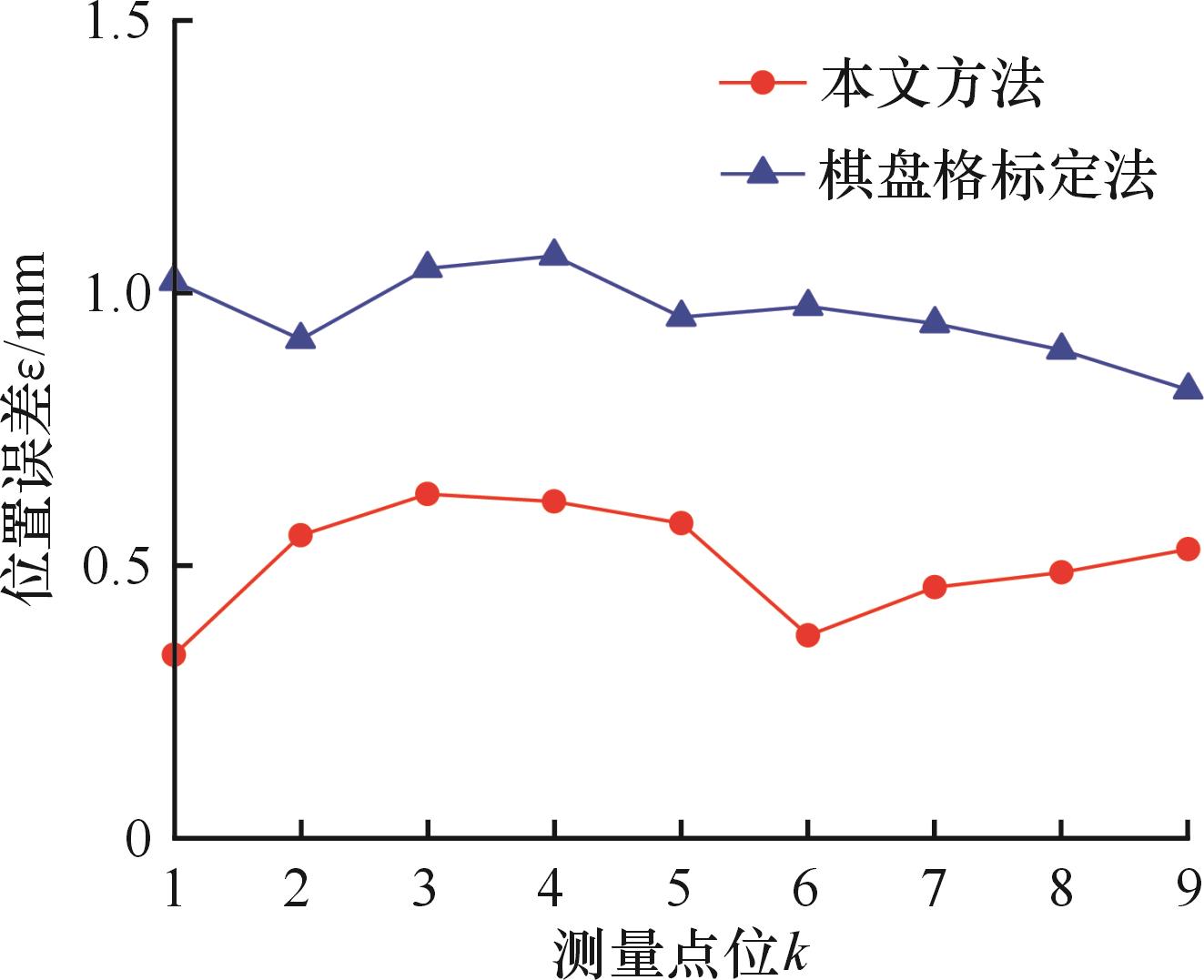
图9 手眼标定对比实验
Fig.9 Hand-eye calibration comparison experiment
| 标定方法 | 最大误差/mm | 平均误差/mm |
|---|---|---|
| 本文方法 | 0.632 | 0.508 |
| 棋盘格标定法 | 1.068 | 0.960 |
表2 手眼标定实验结果
Tab.2 Results of hand-eye calibration experiment
| 标定方法 | 最大误差/mm | 平均误差/mm |
|---|---|---|
| 本文方法 | 0.632 | 0.508 |
| 棋盘格标定法 | 1.068 | 0.960 |
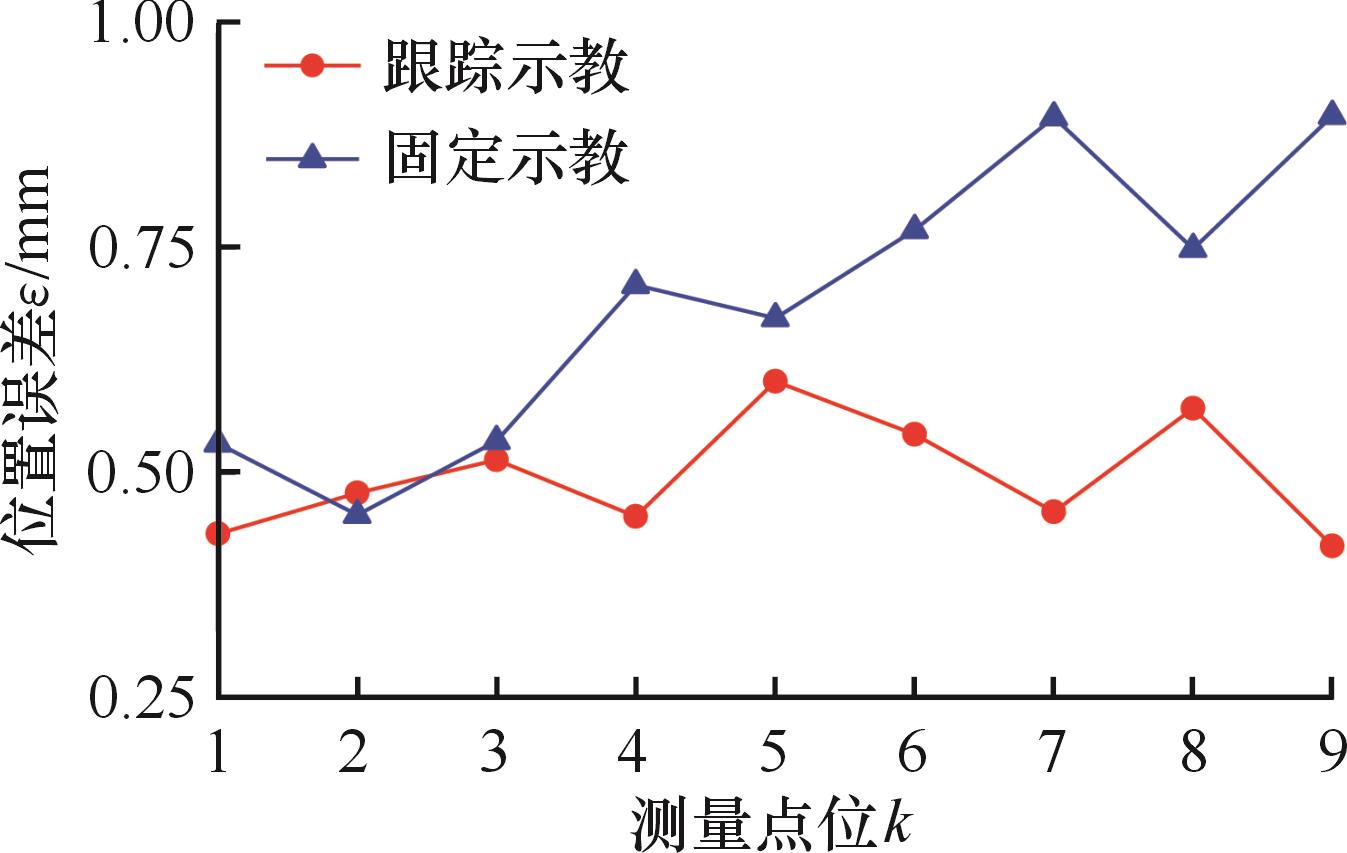
图10 跟踪示教对比实验
Fig.10 Tracking teaching comparison experiment
| 示教方法 | 最大误差/mm | 平均误差/mm |
|---|---|---|
| 跟踪示教 | 0.601 | 0.495 |
| 固定示教 | 0.896 | 0.685 |
表3 跟踪示教实验结果
Tab.3 Results of tracking teaching experiment
| 示教方法 | 最大误差/mm | 平均误差/mm |
|---|---|---|
| 跟踪示教 | 0.601 | 0.495 |
| 固定示教 | 0.896 | 0.685 |
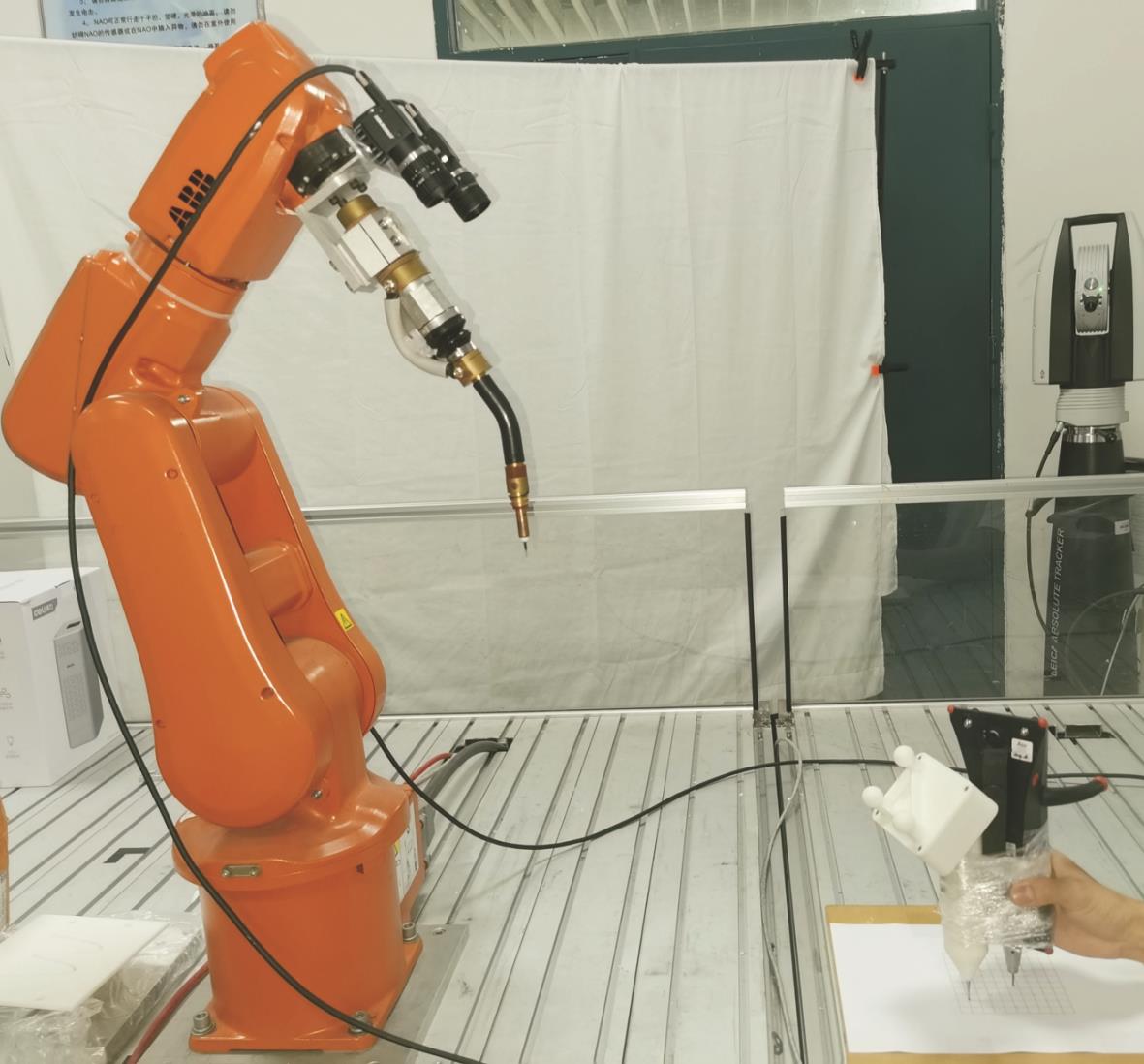
图11 姿态测量实验
Fig.11 Attitude measurement experiment
| 组数 | |||
|---|---|---|---|
| 1 | 1.0545 | 2.1319 | 1.9704 |
| 2 | 1.9295 | 2.0772 | 1.6830 |
| 3 | 1.5376 | 1.2669 | 2.0890 |
| 4 | 2.0401 | 2.0154 | 1.9028 |
| 5 | 2.0536 | 1.9057 | 1.2350 |
| 6 | 1.7436 | 2.1306 | 1.7901 |
| 7 | 2.1239 | 1.7656 | 2.0860 |
| 8 | 1.7591 | 2.1432 | 1.8051 |
表4 姿态测量结果
Tab.4 Results of attitude measurement
| 组数 | |||
|---|---|---|---|
| 1 | 1.0545 | 2.1319 | 1.9704 |
| 2 | 1.9295 | 2.0772 | 1.6830 |
| 3 | 1.5376 | 1.2669 | 2.0890 |
| 4 | 2.0401 | 2.0154 | 1.9028 |
| 5 | 2.0536 | 1.9057 | 1.2350 |
| 6 | 1.7436 | 2.1306 | 1.7901 |
| 7 | 2.1239 | 1.7656 | 2.0860 |
| 8 | 1.7591 | 2.1432 | 1.8051 |
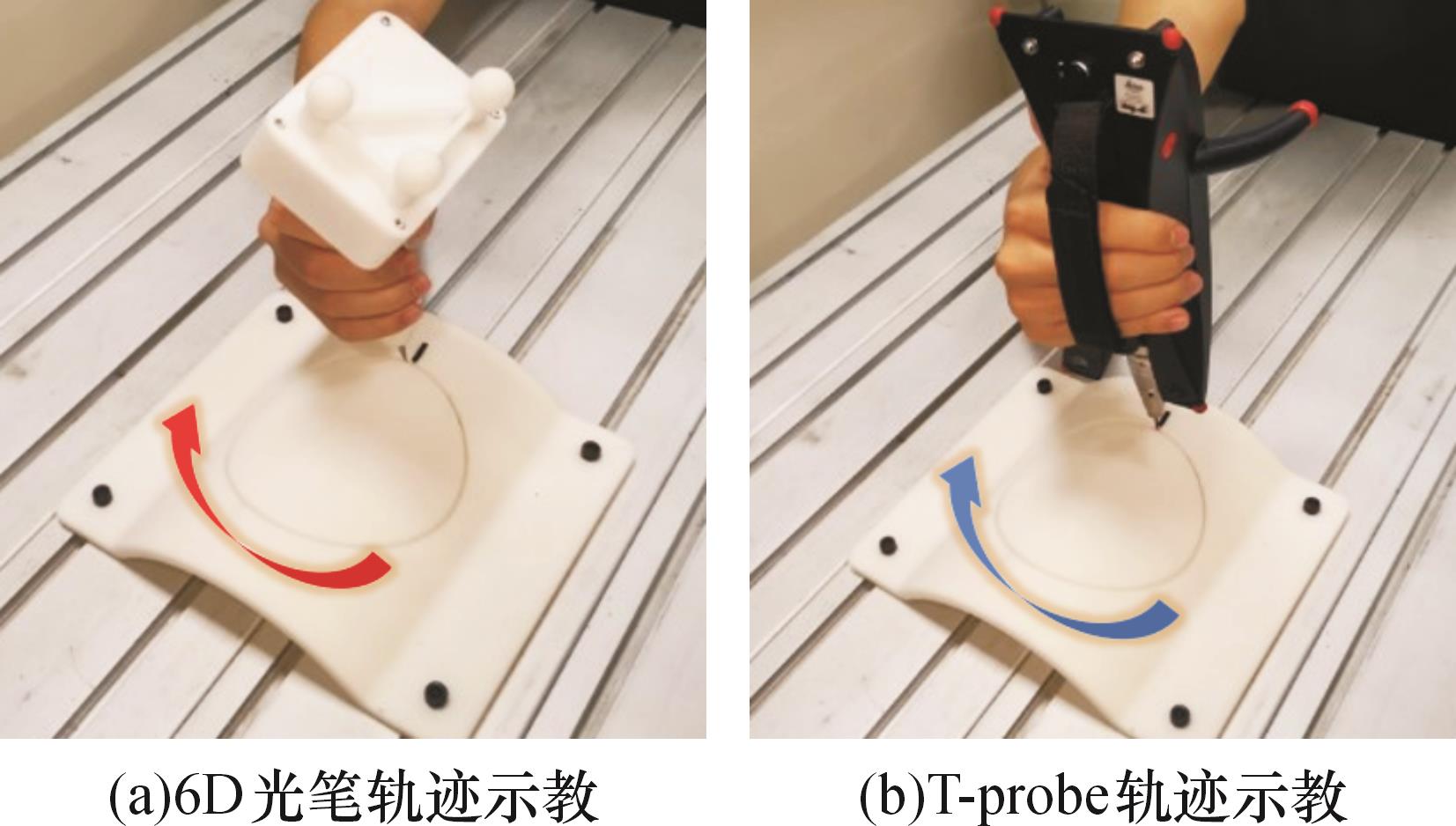
图12 马鞍型轨迹动态示教
Fig.12 Dynamic teaching of saddle-shaped trajectory
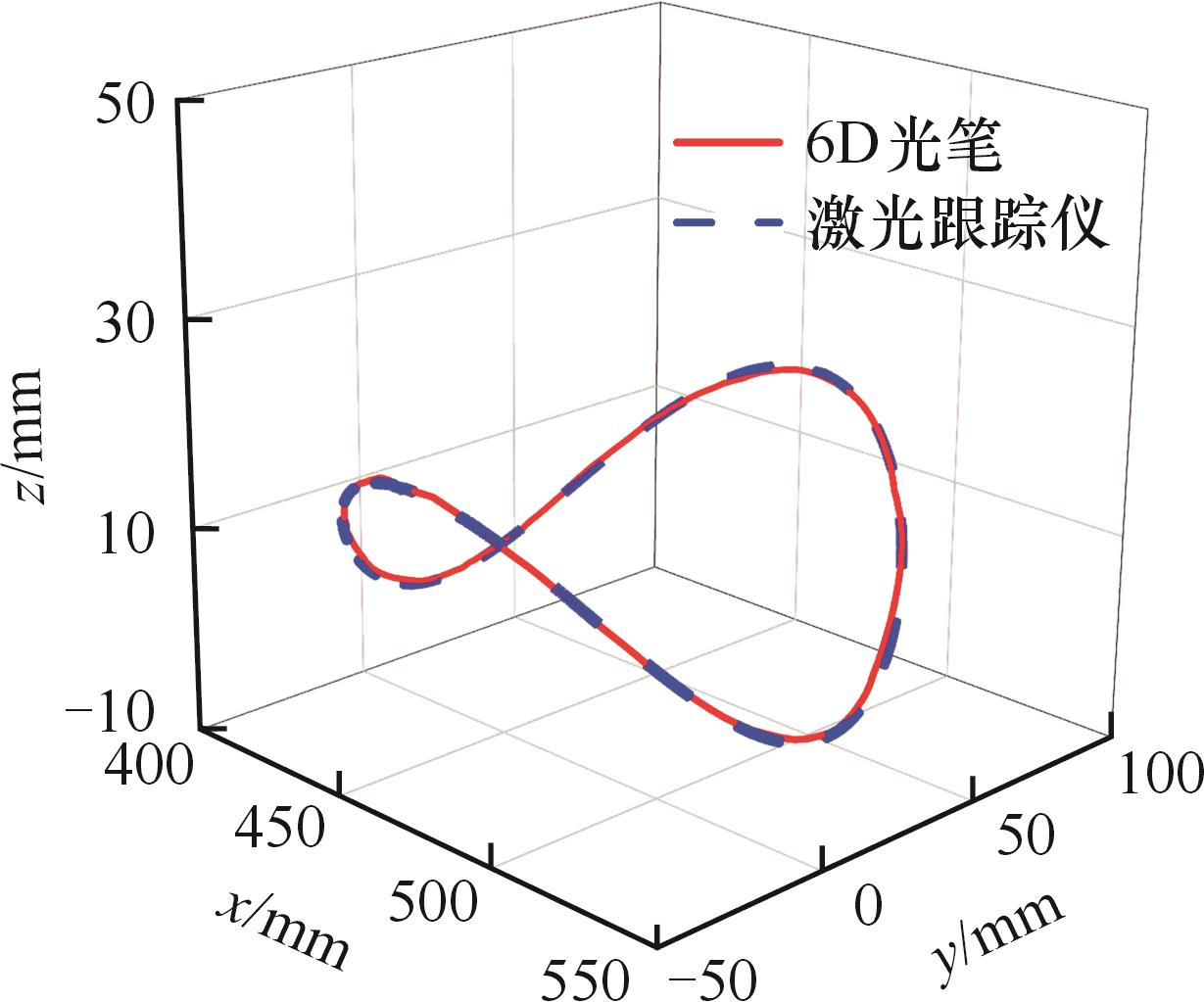
图13 三维轨迹对比
Fig.13 3D trajectory comparison
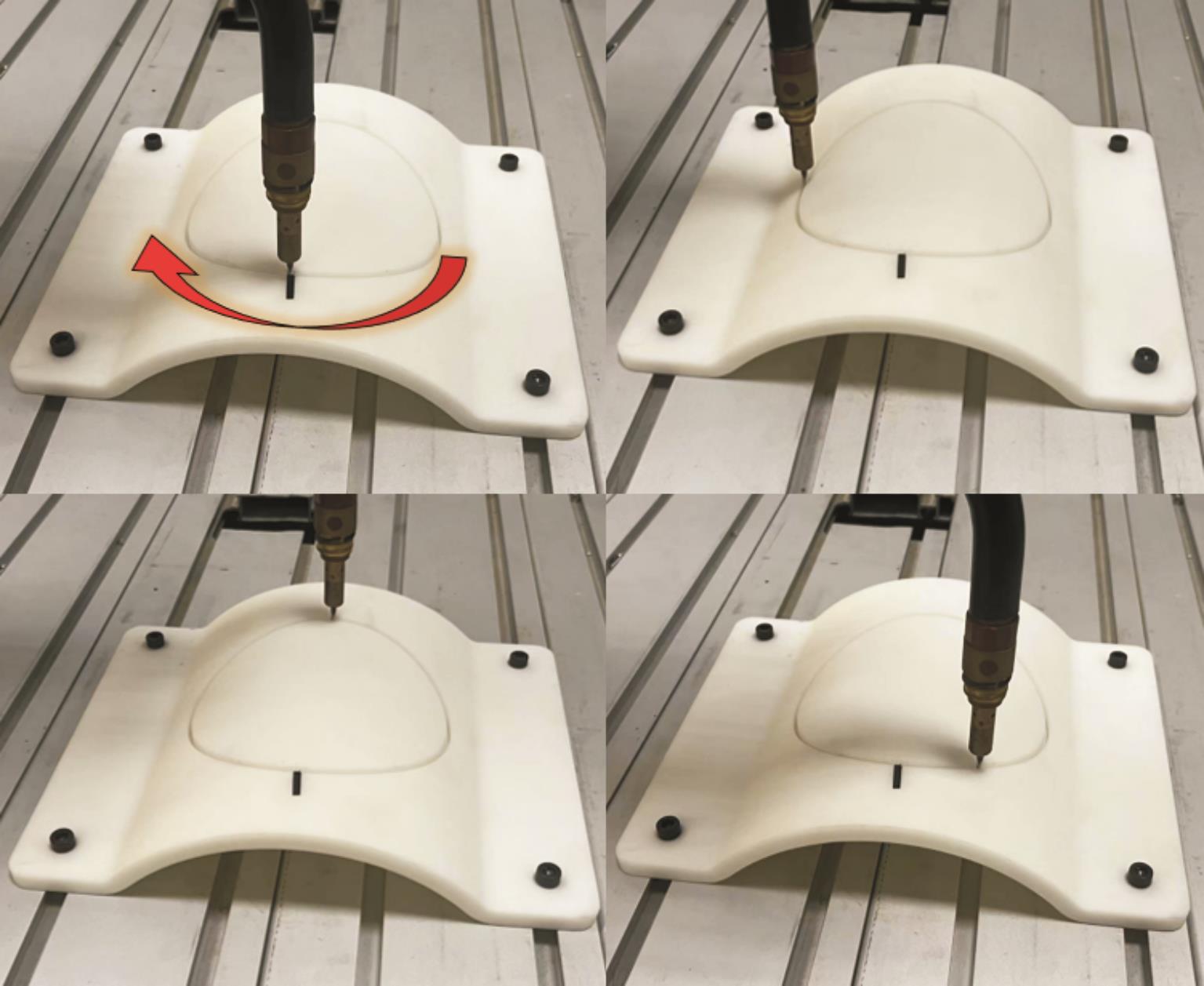
图14 机器人轨迹复现
Fig.14 Robot trajectory reproduction
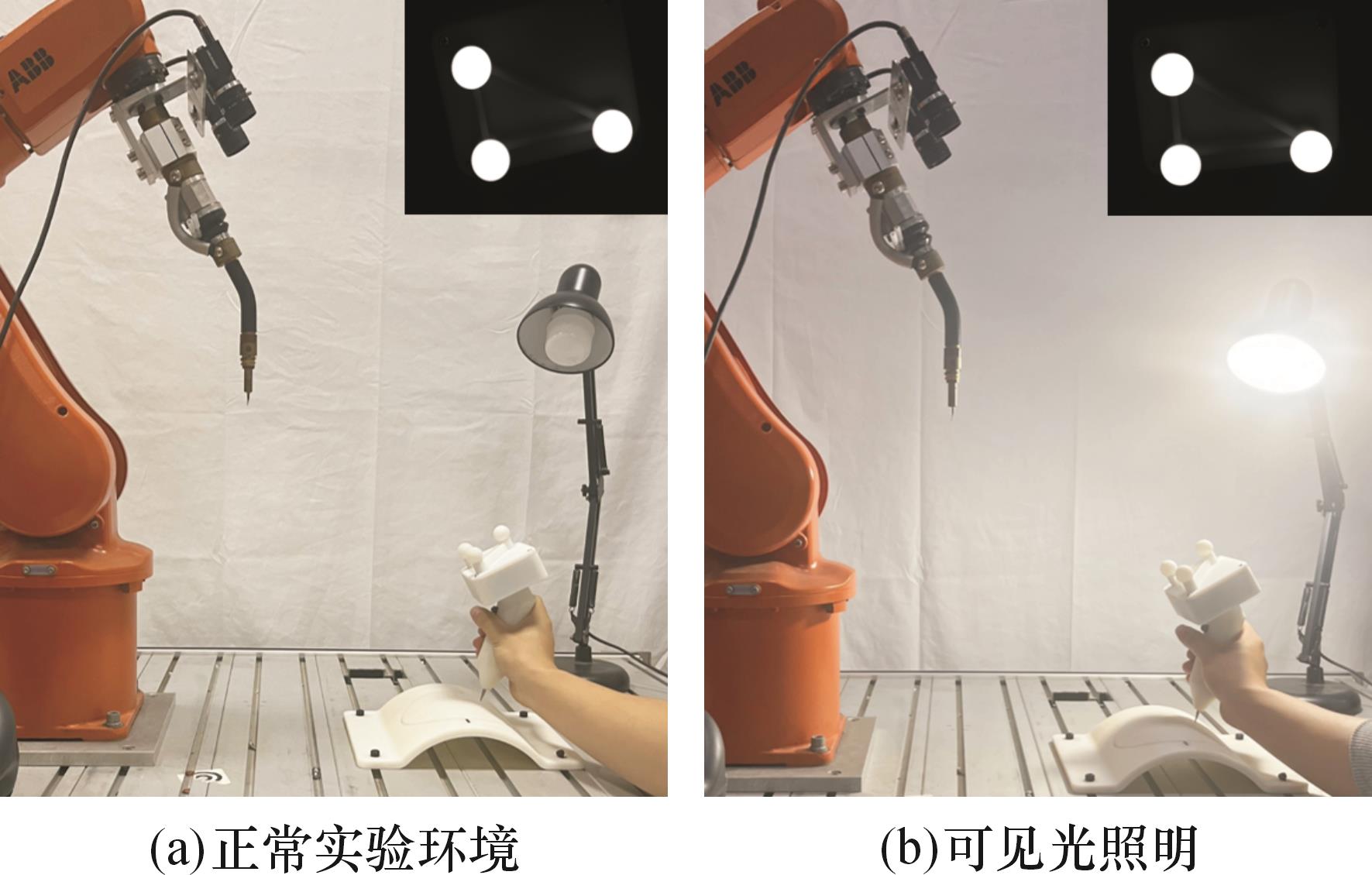
图15 不同光照环境下实验对比
Fig.15 Comparison of experiments under different light environments
| 光照强度 | 最大误差/mm | 平均误差/mm |
|---|---|---|
| 正常光照(67 lx) | 0.734 | 0.618 |
| 弱(153 lx) | 0.715 | 0.634 |
| 中(376 lx) | 0.748 | 0.613 |
| 强(742 lx) | 0.704 | 0.638 |
表5 不同光照环境下误差对比
Tab.5 Comparison of errors under different lighting environments
| 光照强度 | 最大误差/mm | 平均误差/mm |
|---|---|---|
| 正常光照(67 lx) | 0.734 | 0.618 |
| 弱(153 lx) | 0.715 | 0.634 |
| 中(376 lx) | 0.748 | 0.613 |
| 强(742 lx) | 0.704 | 0.638 |
| 示教方法 | 示教精度/mm | 是否受可见光影响 | 允许的示教姿态范围 |
|---|---|---|---|
| 本文方法 | 0.618 | 否 | 较大 |
| 棋盘格[ | 1.18 | 是 | 较小 |
| 多面体[ | 0.8 | 是 | 大 |
| 发光点[ | 1.3 | 是 | 中 |
| 球杆型[ | 2.94 | 是 | 大 |
表6 本文方法与现有方法的精度对比
Tab.6 Precision comparison of this paper's method with existing methods
| 示教方法 | 示教精度/mm | 是否受可见光影响 | 允许的示教姿态范围 |
|---|---|---|---|
| 本文方法 | 0.618 | 否 | 较大 |
| 棋盘格[ | 1.18 | 是 | 较小 |
| 多面体[ | 0.8 | 是 | 大 |
| 发光点[ | 1.3 | 是 | 中 |
| 球杆型[ | 2.94 | 是 | 大 |
| [1] | 吴超群, 赵松, 雷艇. 曲线焊缝的机器人焊接轨迹规划与高频控制[J]. 中国机械工程, 2023, 34(14): 1723-1728. |
| WU Chaoqun, ZHAO Song, LEI Ting. Robot Welding Trajectory Planning and High Frequency Control for Curved Seams [J]. China Mechanical Engineering, 2023, 34(14): 1723-1728. | |
| [2] | 葛吉民, 邓朝晖, 王水仙, 等. 基于点云的机器人焊缝自动化磨削系统与方法[J]. 中国机械工程, 2024, 35(7): 1253-1262. |
| GE Jimin, ZHENG Chaohui, WANG Shuixian, et al. Automated Grinding System and Method for Robotic Weld Seams Based on Point Cloud[J]. China Mechanical Engineering, 2024, 35(7):1253-1262. | |
| [3] | 曾超, 杨辰光, 李强, 等. 人-机器人技能传递研究进展 [J]. 自动化学报, 2019, 45(10): 1813-1828. |
| ZENG Chao, YANG Chenguang, LI Qiang, et al. Research Progress on Human-Robot Skill Transfer [J]. Acta Automatica Sinica, 2019, 45(10): 1813-1828. | |
| [4] | CHANG H T, CHANG J Y. Sensor Glove Based on Novel Inertial Sensor Fusion Control Algorithm for 3-D Real-time Hand Gestures Measurements [J]. IEEE Transactions on Industrial Electronics, 2019, 67(1): 658-666. |
| [5] | TOGIA T, GKOURNELOS C, ANGELAKIS P, et al. Virtual Reality Environment for Industrial Robot Control and Path Design [J]. Procedia CIRP, 2021, 100: 133-138. |
| [6] | PAN Y, CHEN C, LI D, et al. Augmented Reality-based Robot Teleoperation System Using RGB-D Imaging and Attitude Teaching Device[J]. Robotics and Computer-Integrated Manufacturing, 2021, 71: 102167. |
| [7] | 倪自强, 王田苗, 刘达 . 基于视觉引导的工业机器人示教编程系统 [J]. 北京航空航天大学学报, 2016, 42(3): 562-568. |
| NI Ziqiang, WANG Tianmiao, LIU Da. Vision Guide Based Teaching Programming for Industrial Robot[J]. Journal of Beijing University of Aeronautics and Astronautics, 2016, 42(3): 562-568. | |
| [8] | 应再恩, 平雪良, 李正洋, 等.基于视觉跟踪的机器人复杂轨迹模拟再现[J].机械设计与研究, 2014, 30(01): 39-41. |
| YING Zaien, PING Xuelian, LI Zhengyang, et al. The Simulation and Reconstruction of the Complex Robot Trajectories Based on Visual Tracking[J]. Mechanical Design and Research, 2014, 30(1): 39-41. | |
| [9] | LE T S, TRAN Q V, NGUYEN X L, et al. Solpen: an Accurate 6-DOF Positioning Tool for Vision-guided Robotics[J]. Electronics, 2022, 11(4): 618. |
| [10] | LIN H I, LIN Y H. A Novel Teaching System for Industrial Robots [J]. Sensors, 2014, 14(4): 6012-6031. |
| [11] | ZHANG H D, LIU S B, LEI Q J, et al. Robot Programming by Demonstration: a Novel System for Robot Trajectory Programming Based on Robot Operating System[J]. Advances in Manufacturing, 2020, 8: 216-229. |
| [12] | LIU L, ZHU P, GUAN J, et al. A Binocular Reconstruction Method Fused with Laplacian Image Information for Pavement Texture Evaluation[J]. Measurement, 2021, 185: 110039. |
| [13] | 毛成林, 于瑞强, 宋爱国. 一种结合TCP标定的深度相机手眼标定方法 [J]. 仪器仪表学报, 2023, 44(3): 280-286. |
| MAO Chenglin, YU Ruiqiang, SONG Aiguo. A Hand-eye Calibration Method for Depth Camera Combined with TCP Calibration [J]. Chinese Journal of Scientific Instrument, 2023, 44(3): 280-286. | |
| [14] | XU J, LI Q, WHITE BAI. A Novel Hand-eye Calibration Method for Industrial Robot and Line Laser Vision Sensor [J]. Sensor Review, 2023, 43(4): 259-265. |
| [15] | WU L, ZANG X, BAI M, et al. Simple and High‐precision Hand-eye Calibration for 3D Robot Measurement Systems [J]. Advanced Intelligent Systems, 2023, 5(12): 2300307. |
| [16] | PAN B, YU L, WU D, et al. Systematic Errors in Two-dimensional Digital Image Correlation due to Lens Distortion [J]. Optics and Lasers in Engineering, 2013, 51(2): 140-147. |
| [17] | TSAI R Y, LENZ R K. A New Technique for Fully Autonomous and Efficient 3D Robotics Hand-eye Calibration[J]. IEEE Transactions on Robotics and Automation, 1989, 5(3): 345-358. |
| [1] | 吕睿, 彭真, 吕远健, 田林雳, 朱大虎. 基于重定位的叶片机器人磨抛系统手眼标定算法[J]. 中国机械工程, 2022, 33(03): 339-347. |
| [2] | 葛科迪, 赵欢, 陈鹏飞, 丁汉. 面向复杂曲面加工的虚拟夹具辅助机器人示教编程研究[J]. 中国机械工程, 2021, 32(14): 1716-1725. |
| 阅读次数 | ||||||
|
全文 |
|
|||||
|
摘要 |
|
|||||
