



ISSN 1004-132X
CN 42-1294/TH
CN 42-1294/TH
中国机械工程 ›› 2025, Vol. 36 ›› Issue (11): 2583-2592.DOI: 10.3969/j.issn.1004-132X.2025.11.013
刘伟渭( ), 李阔, 王泓霁, 余玺
收稿日期:2024-11-04
出版日期:2025-11-25
发布日期:2025-12-09
通讯作者:
刘伟渭
作者简介:刘伟渭*(通信作者),男,1984年生,副教授。研究方向为轨道车辆和磁悬浮列车系统动力学。 E-mail:liuweiwei1592@163.com。
基金资助:
Weiwei LIU(), Kuo LI, Hongji WANG, Xi YU
Received:2024-11-04
Online:2025-11-25
Published:2025-12-09
Contact:
Weiwei LIU
摘要:
为提高磁悬浮系统的稳定性,考虑气动升力和悬浮力的非线性特征,建立基于Hamilton理论的受控磁悬浮系统随机微分方程。以可靠度最大、平均首次穿越时间最长和最大Lyapunov指数最小为目标,建立最优控制策略的动态规划方程。研究结果表明:考虑PD控制和最优控制联合作用的磁悬浮系统提高了磁悬浮系统的条件可靠性,延长了平均首次穿越时间;经随机稳定化后最大Lyapunov指数始终为负,满足磁悬浮系统平凡解概率为1渐近稳定的条件;经过最优控制后,系统的联合概率密度发生了性态的变化,提高了系统的稳定性;在高斯白噪声强度较低时,以可靠度最大为目标的最优控制策略具有较好的性能指标;以最大Lyapunov指数最小为目标时,仅在某一范围内具有较好的性能指标。通过研究磁悬浮列车的最优控制问题,为提高列车稳定性、延长发生首次穿越失效的时间提供理论依据。
中图分类号:
刘伟渭, 李阔, 王泓霁, 余玺. 磁悬浮列车随机非线性最优控制研究[J]. 中国机械工程, 2025, 36(11): 2583-2592.
Weiwei LIU, Kuo LI, Hongji WANG, Xi YU. Research on Stochastic Nonlinear Optimal Control of Maglev Trains[J]. China Mechanical Engineering, 2025, 36(11): 2583-2592.
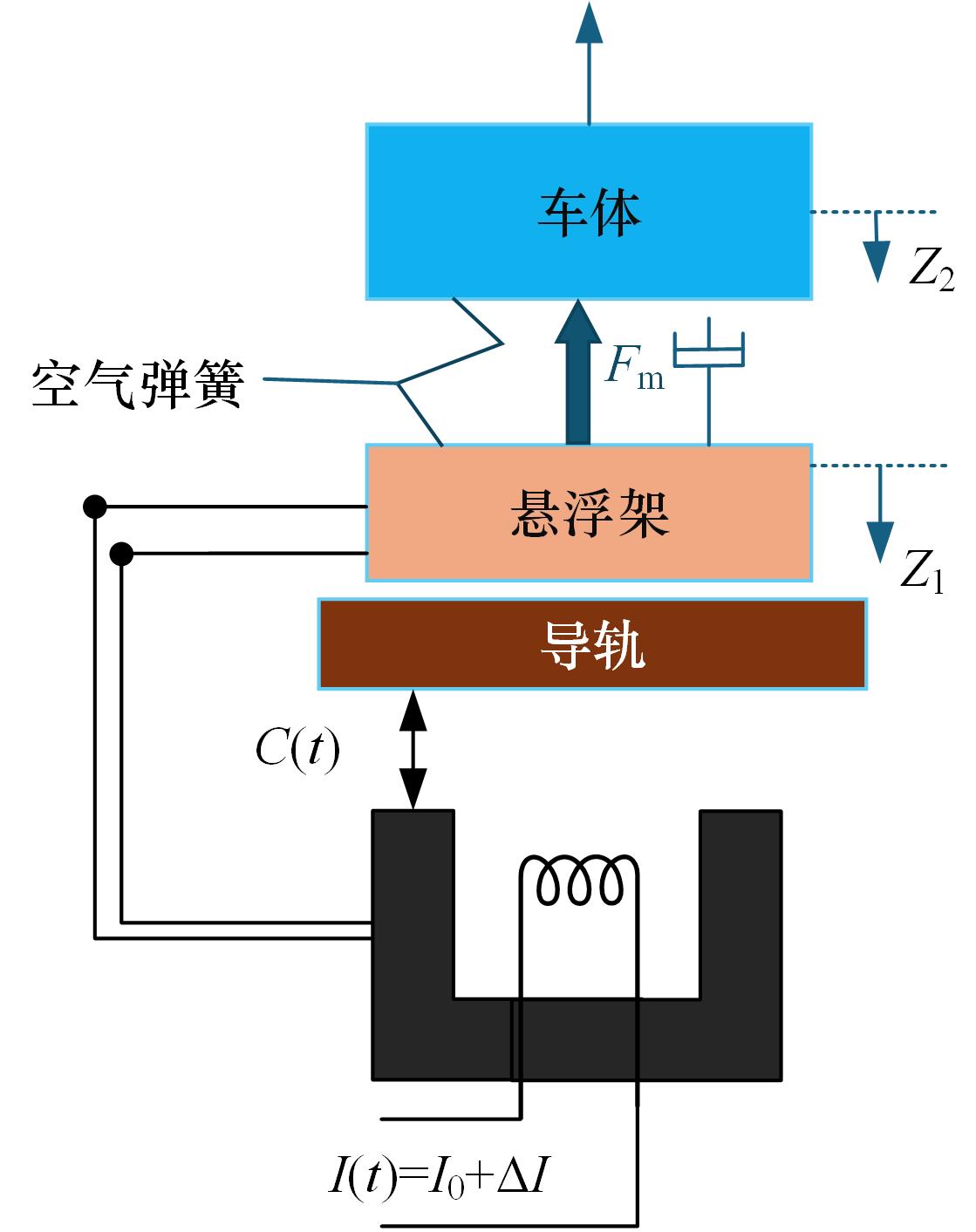
图1 单点悬浮系统示意图
Fig.1 Single-point suspension system diagram
| 参数 | 数值 |
|---|---|
| 悬浮架总质量 | |
| 车体质量 | |
| 空气弹簧垂向刚度 | 120 |
| 空气弹簧垂向阻尼 | 60 |
| 标准悬浮间隙 | 10 |
| 真空磁导率 | |
| 电磁铁有效面积 | 0.023 52 |
| 线圈匝数 | 320 |
| 气动升力系数 | 0.05 |
| 空气密度 | 1.2 |
| 车辆参考面积 | |
| 车速 | 140 |
表1 EMS型磁悬浮车辆参数
Tab.1 Parameters of EMS-type magnetic levitation vehicles
| 参数 | 数值 |
|---|---|
| 悬浮架总质量 | |
| 车体质量 | |
| 空气弹簧垂向刚度 | 120 |
| 空气弹簧垂向阻尼 | 60 |
| 标准悬浮间隙 | 10 |
| 真空磁导率 | |
| 电磁铁有效面积 | 0.023 52 |
| 线圈匝数 | 320 |
| 气动升力系数 | 0.05 |
| 空气密度 | 1.2 |
| 车辆参考面积 | |
| 车速 | 140 |
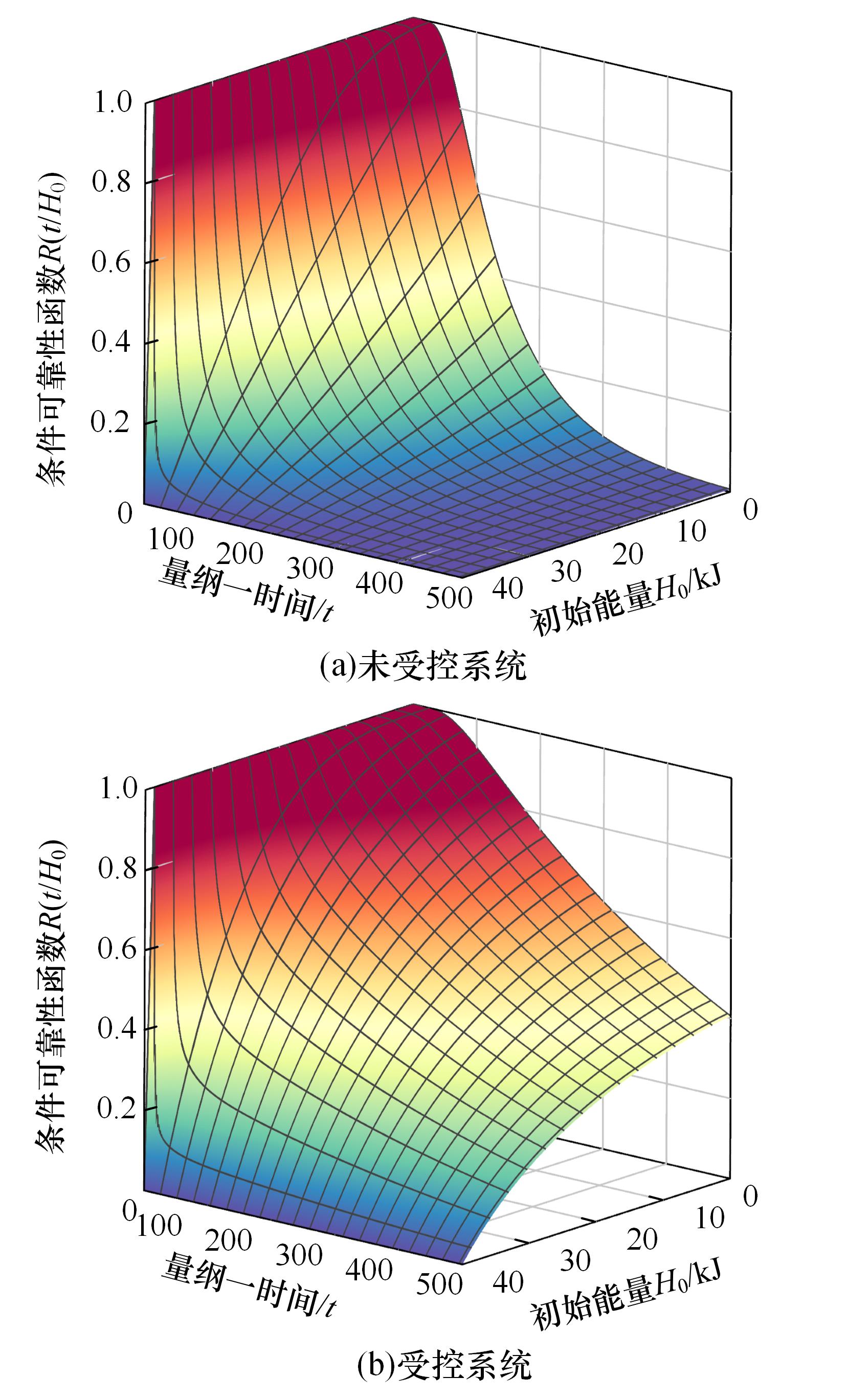
图2 条件可靠性函数
Fig.2 Conditional reliability function
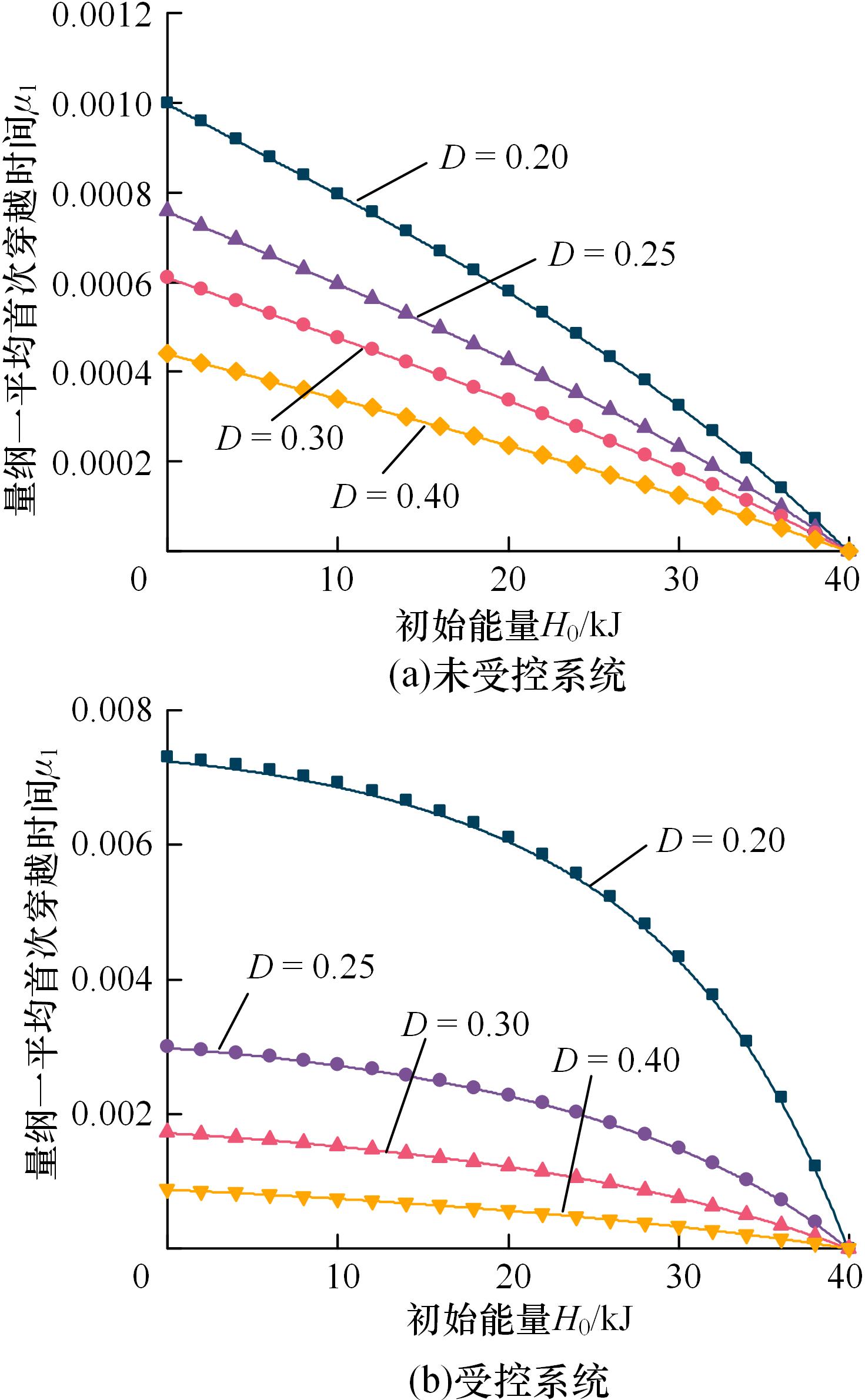
图3 平均首次穿越时间
Fig.3 Mean first-passage time
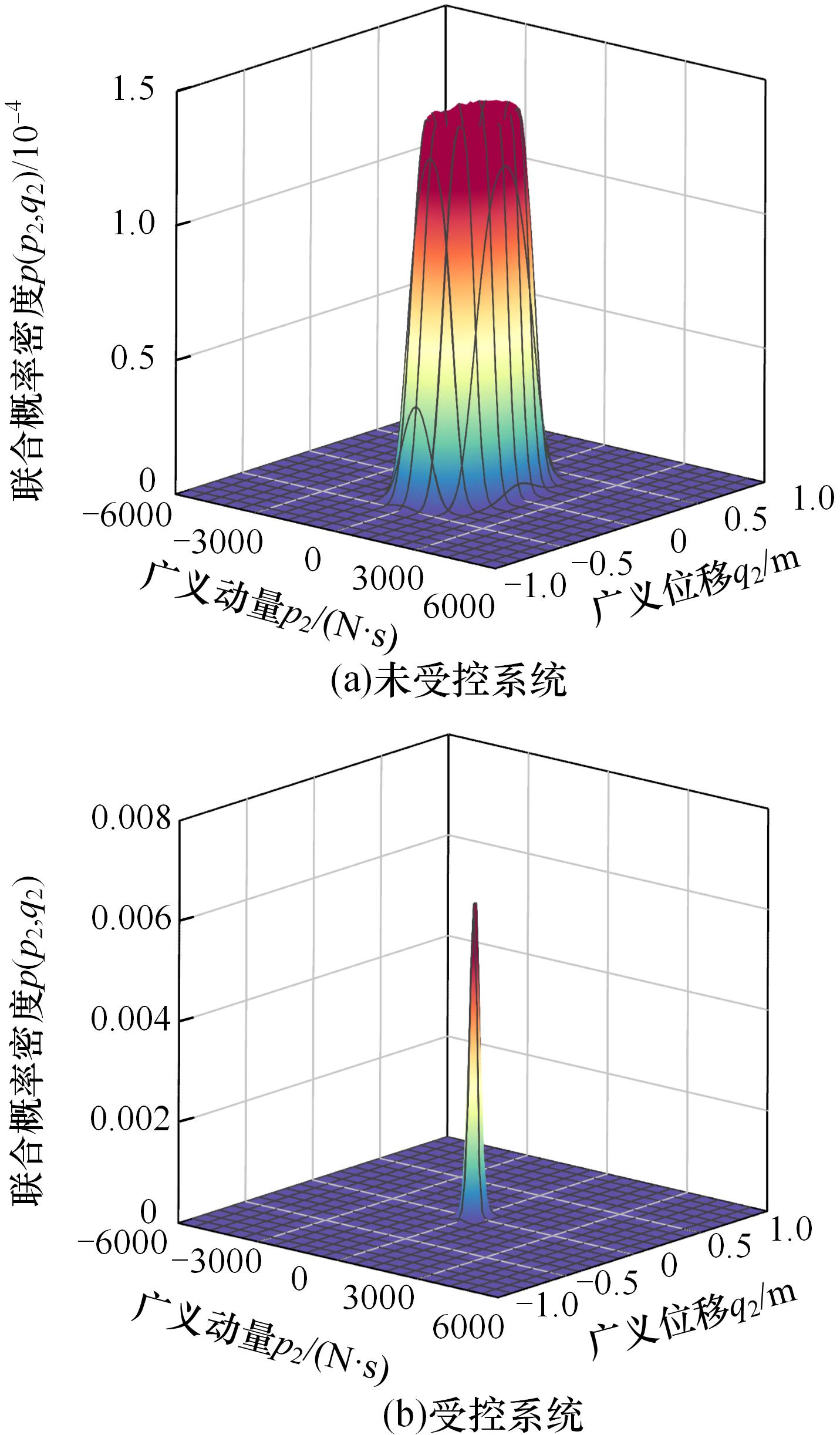
图4 可靠度最大化车体联合概率密度
Fig.4 Maximizing reliability vehicle body joint probability density
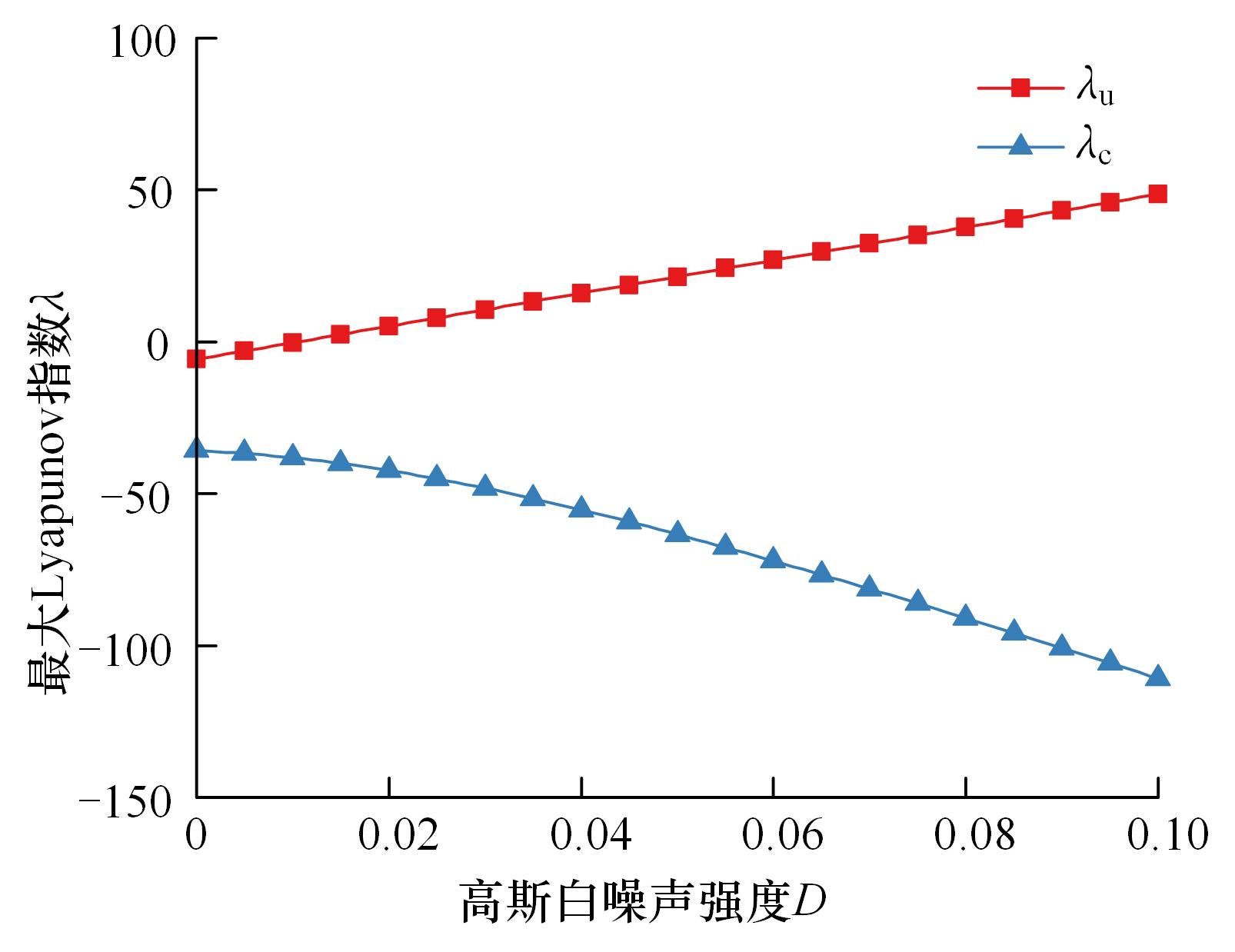
图5 最大Lyapunov指数
Fig5 Maximum Lyapunov exponent
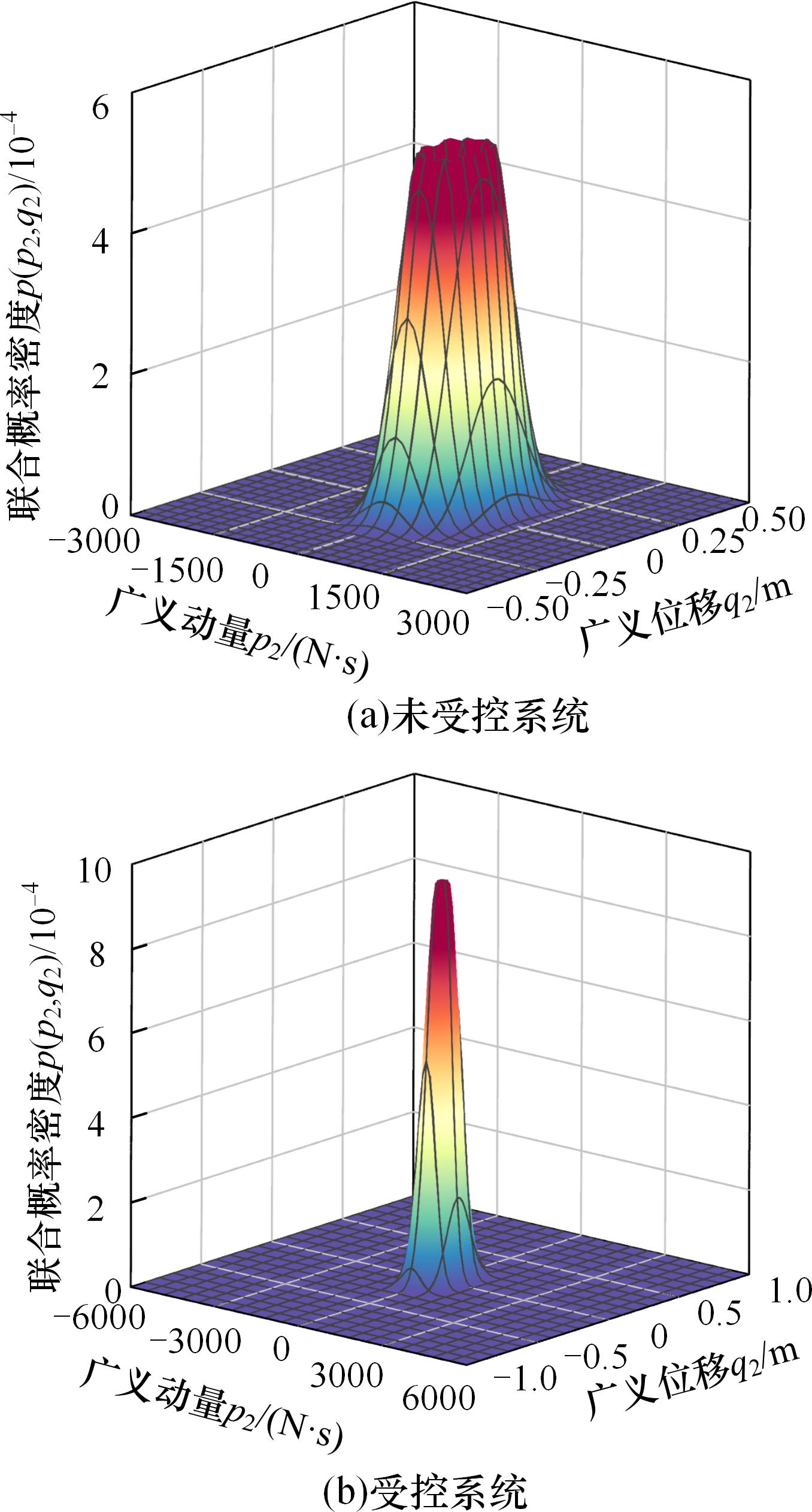
图6 随机稳定化车体联合概率密度
Fig.6 Joint probability density of random stabilized vehicle body
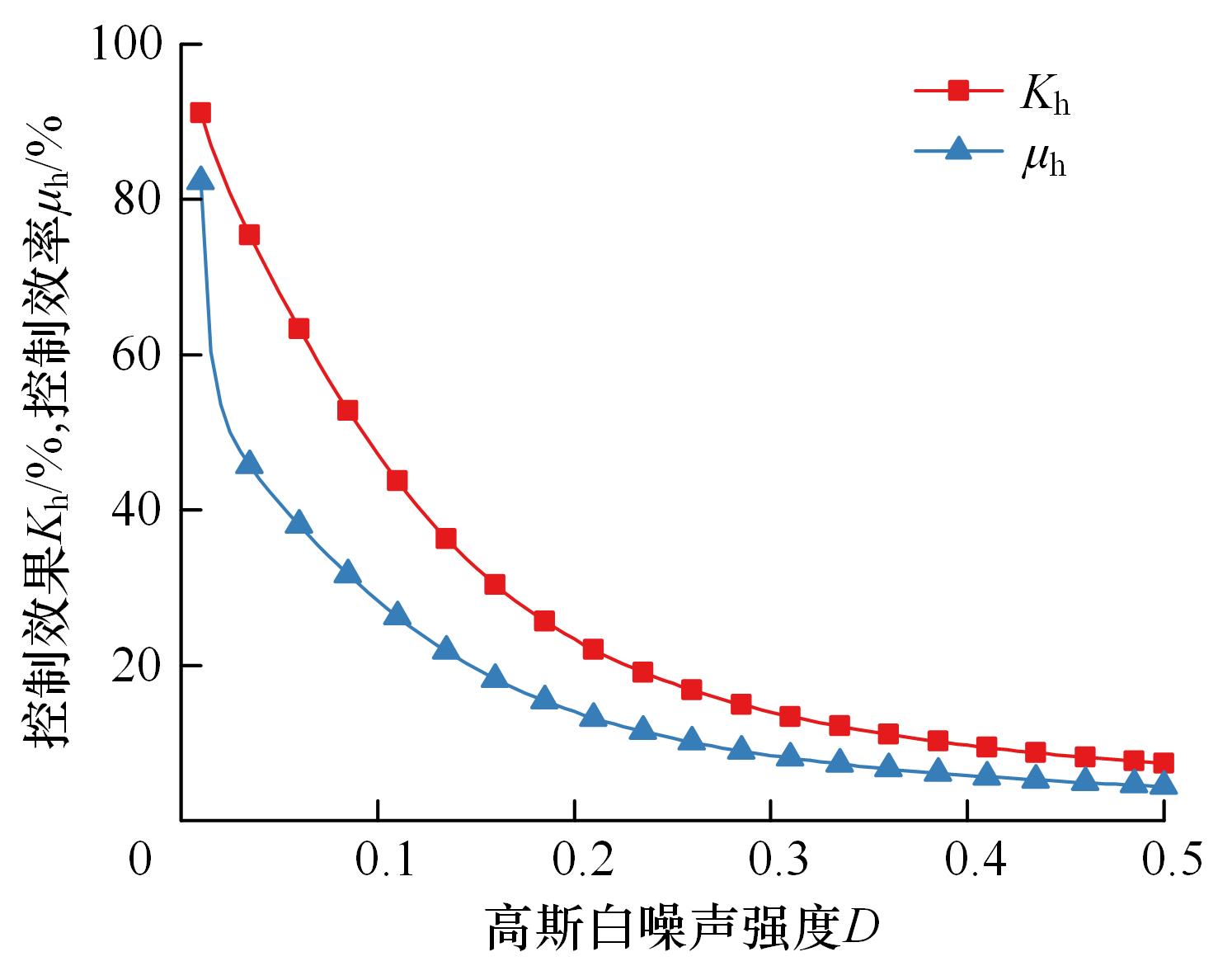
图7 可靠度最大化性能指标
Fig.7 Maximizing reliability performance indicators
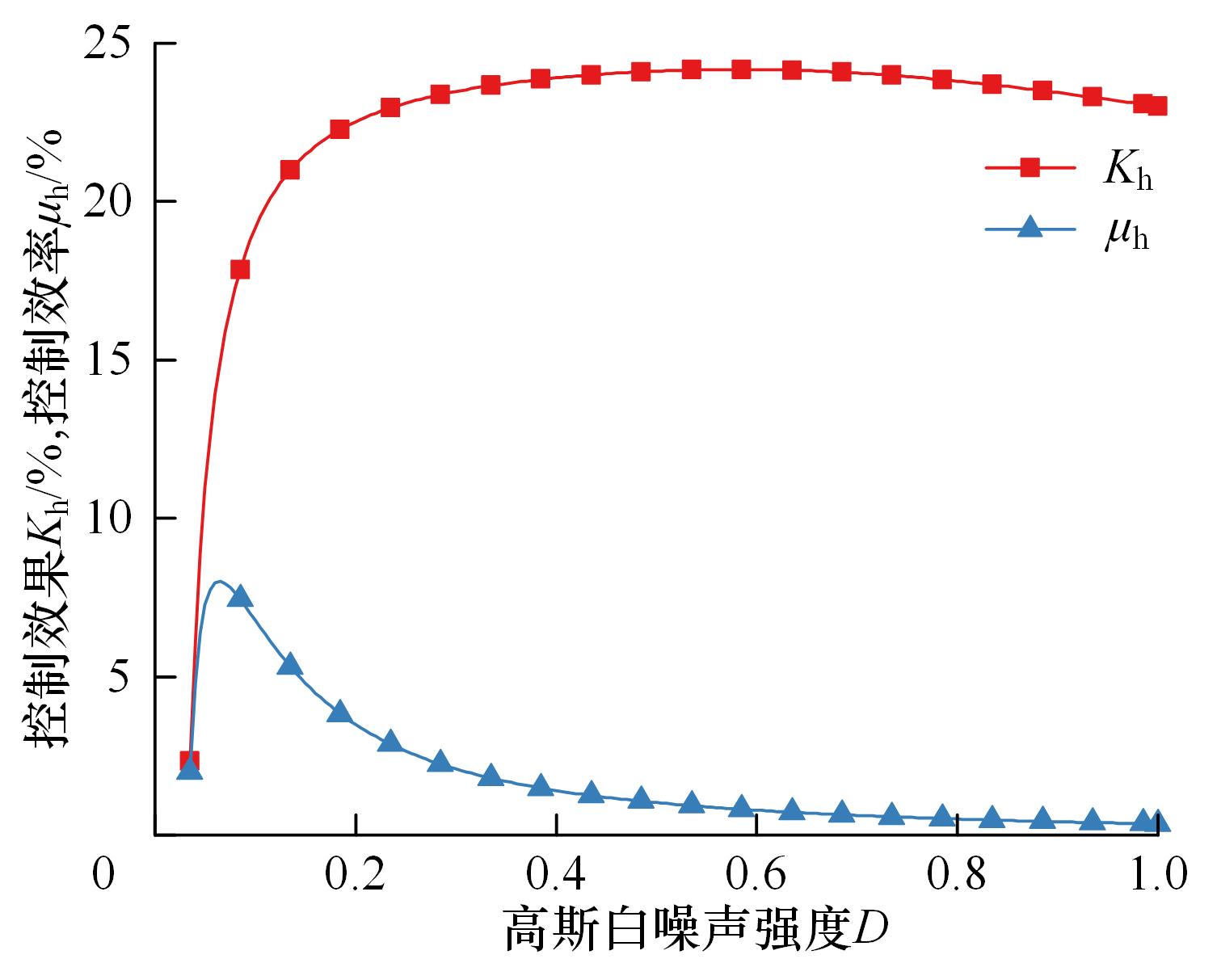
图8 随机稳定化性能指标
Fig.8 Random stabilization performance index
| [1] | 熊嘉阳, 邓自刚. 高速磁悬浮轨道交通研究进展[J]. 交通运输工程学报, 2021, 21(1): 177-198. |
| XIONG Jiayang, DENG Zigang. Research Progress of High-speed Maglev Rail Transit[J]. Journal of Traffic and Transportation Engineering, 2021, 21(01): 177-198. | |
| [2] | 唐文冰, 肖立业, 王粟, 等. 磁悬浮轨道交通中的磁悬浮导向方式研究综述[J]. 电工电能新技术, 2022, 41(5): 45-60. |
| TANG Wenbing, XIAO Liye, WANG Su, et al. Summary of Research on Levitation-guidance Modes in maglev Rail Transportation Technology[J]. Advanced Technology of Electrical Engineering and Energy, 2022, 41(5): 45-60. | |
| [3] | LI J, LI J. A Practical Nonlinear Controller for Levitation System with Magnetic Flux Feedback[J]. Journal of Central South University, 2016, 23(7): 1729-1739. |
| [4] | XU Y, LONG Z, ZHAO Z, et al. Real-time Stabi-lity Performance Monitoring and Evaluation of Maglev Trains' Levitation System: a Data-driven Appro-ach[J]. IEEE Transactions on Intelligent Transportation Systems, 2022, 23(3): 1912-1923. |
| [5] | CHEN X, MA W, LUO S, et al. Study on Lateral Stability of Levitation Modules for Low and Medium-speed Maglev Trains[J]. Archive of Applied Mechanics, 2020, 90(2): 437-447. |
| [6] | YU X, WANG Y, BO K, et al. Research on Parameters Optimum Design of Levitation Electromagnet Based on Orthogonal Design for EMS Maglev Train[J]. Lecture Notes in Electrical Engineering, 2022, 890: 50-58. |
| [7] | 薄凯, 陈俊全, 王东, 等. 常导型高速磁浮列车电磁系统参数优化设计[J]. 电机与控制学报, 2022, 26(11): 49-57. |
| BO Kai, CHEN Junquan, WANG Dong, et al. Research on Parameters Optimum Design Electrimagnet System for EMS Maglev Train[J]. Electric Machines and Control, 2022, 26(11): 49-57. | |
| [8] | CHANG S, LUE Y. A Study of the Nonlinear Response and Chaos Suppression in a Magnetically Levitated System[J]. Australian Journal of Mechanical Engineering, 2020, 18(1): 94-105. |
| [9] | CHEN X, MA W, LUO S. Study on Stability and Bifurcation of Electromagnet-track Beam Coupling System for EMS Maglev Vehicle[J]. Nonlinear Dynamics, 2020, 101(4): 2181-2193. |
| [10] | FENG Y, ZHAO C, WU D, et al. Effect of Levitation Gap Feedback Time Delay on the EMS Maglev Vehicle System Dynamic Response[J]. Nonlinear Dynamics, 2023, 111(8): 7137-7156. |
| [11] | SUN Y, XU J, QIANG H, et al. Hopf Bifurcation Analysis of Maglev Vehicle-guideway Interaction Vibration System and Stability Control Based on Fuzzy Adaptive Theory[J]. Computers in Industry, 2019, 108: 197-209. |
| [12] | SUN Y, HE Z, XU J, et al. Dynamic Analysis and Vibration Control for a Maglev Vehicle-guideway Coupling System with Experimental Verification[J]. Mechanical Systems and Signal Processing, 2023, 188: 109954. |
| [13] | HU W, ZHOU Y, ZHANG Z, et al. Model Predictive Control for Hybrid Levitation Systems of Maglev Trains with State Constraints[J]. IEEE Transactions on Vehicular Technology, 2021, 70(10): 9972-9985. |
| [14] | XU J, CHEN C, SUN Y, et al. Nonlinear Dynamic Analysis of Maglev Vehicle Based on Flexible Guideway and Random Irregularity[J]. International Journal of Applied Electromagnetics and Mechanics, 2019, 60(2): 263-280. |
| [15] | 刘伟渭,戴焕云,曾京.弹性约束轮对系统的随机稳定性研究[J].中国机械工程,2013,24(6):799-804. |
| LIU Weiwei, DAI Huanyun, ZENG Jing. Research on Stochastic Stability of Elastic Constraint Wheelset System[J]. China Mechanical Engineering, 2013,24(6):799-804. | |
| [16] | 吴晗, 曾晓辉. 气动升力下磁浮车辆非线性响应研究[J]. 机械工程学报, 2021, 57(14): 223-231. |
| WU Han, ZENG Xiaohui. Nonlinear Dynamics of Malev Vehicle under Aerodynamic Lift[J]. Journal of Mechanical Engineering, 2021, 57(14): 223-231. | |
| [17] | WU H, ZENG X H, GAO D G, et al. Dynamic Stability of an Electromagnetic Suspension Maglev Vehicle under Steady Aerodynamic Load[J]. Applied Mathematical Modelling, 2021, 97: 483-500. |
| [18] | 陈志贤, 李忠继, 杨吉忠, 等. 常导高速电磁悬浮车辆二系悬挂结构对比优化[J]. 机械工程学报, 2022, 58(10): 160-168. |
| CHEN Zhixian, LI Zhongji, YANG Jizhong, et al. Comparison and Optimization of Secondary Suspension Structure of High Speed EMS Vehicle[J]. Journal of Mechanical Engineering,2022, 58(10): 160- 168. | |
| [19] | 胡帛茹, 赵春发, 蔡文锋, 等. 两种中低速磁浮车辆动力学性能仿真对比分析[J]. 机械工程学报, 2023, 59(10): 311-322. |
| HU Boru, ZHAO Chunfa, CAI Wenfeng, et al. Numerical Simulation and Comparative Analysis on Dynamic Performances of Two Types of Medium-low Speed Maglev Vehicles[J]. Journal of Mechanical Engineering, 2023, 59(10): 311-322. | |
| [20] | 陈琛, 徐俊起, 荣立军, 等. 轨道随机不平顺下磁浮车辆非线性动力学特性[J]. 交通运输工程学报, 2019, 19(4): 115-124. |
| CHEN Chen, XU Junqi, RONG Lijun, et al. Nonlinear Dynamics Characteristics of Maglev Vehicle under Track Random Irregularities[J].Journal of Traffic and Transportation Engineering, 2019, 19(4): 115-124. | |
| [21] | SUN J, XIA L, YING Z, et al. Reliability of Nonlinear Stochastic Controlled Systems Considering the Dynamics of Sensors and Actuators[J]. Journal of Vibration and Control, 2022, 28(15/16):2052-2060. |
| [22] | SUN J, ZHU W, JIANG W, et al. Reliability of a Class of Nonlinear Systems under Switching Random Excitations[J]. Nonlinear Dynamics, 2020, 99(3): 2083-2094. |
| [23] | 刘伟渭, 姜瑞金, 刘凤伟, 等. 约束轮对首次穿越失效的随机非线性最优控制[J]. 铁道学报, 2018, 40(6): 30-35. |
| LIU Weiwei, JIANG Ruijin, LIU Fengwei, et al. Stochastic Nonlinear Optimal Control for First-passage Failure of Constrained Wheelset[J]. Journal of the China Railway Society, 2018, 40(6): 30-35. | |
| [24] | 朱位秋, 应祖光. 拟哈密顿系统非线性随机最优控制[J]. 力学进展, 2013, 43(1): 39-55. |
| ZHU Weiqiu, YING Zuguang. Advances in Research on Nonlinear Stochastic Optimal Control of Quasi-Hamiltonian Systems[J]. Advances in Mechanics, 2013, 43(1): 39-55. | |
| [25] | LIU W, YIN X, GUO Z, et al. Feedback Stabilization of quasi Nonintegrable Hamiltonian Systems under Combined Gaussian and Poisson White Noise Excitations[J]. Probabilistic Engineering Mechanics, 2023, 71: 103-107. |
| [26] | WANG Y, YING Z, ZHU W. Stochastic Minimax Control for Stabilizing Uncertain Quasi-integrable Hamiltonian Systems[J]. Automatica, 2009, 45(8): 1847-1853. |
| [27] | HUAN R, WU Y, ZHU W. Stochastic Optimal Bounded Control of MDOF Quasi Nonintegrable-Hamiltonian Systems with Actuator Saturation[J]. Archive of Applied Mechanics, 2009, 79(2): 157-168. |
| [1] | 林歆悠, 金忠伟, 唐云亮. 融合道路曲率前馈的车辆横向控制策略[J]. 中国机械工程, 2025, 36(11): 2774-2782. |
| [2] | 刘伟渭, 李阔, 余玺, 唐爽权. 磁悬浮列车首次穿越失效可靠性研究[J]. 中国机械工程, 2025, 36(10): 2232-2240. |
| [3] | 张华清, 鲍久圣, 张磊, 胡德平, 魏肖, 阴妍, 颉浩浩, 朱晨钟, 杨姣. 百吨级双桥刚性矿用自卸车功率分流型混动系统设计及控制策略研究[J]. 中国机械工程, 2025, 36(10): 2453-2462. |
| [4] | 任志勇1, 2, 3, 石琴1, 4, 闫凯2, 3. 煤矿电动车辆单踏板再生制动效能分析[J]. 中国机械工程, 2025, 36(02): 209-219. |
| [5] | 张明亮, 杨大伟, 李明远, 杨新梦, 刘丽茹, 张连朋. 永磁轨道参数优化和悬浮力特性研究[J]. 中国机械工程, 2023, 34(19): 2370-2380. |
| [6] | 张明亮, 李明远, 刘鹏飞, 闫杨阳, 刘丽茹, 杨新梦. 面向高温超导钉扎磁悬浮列车悬浮特性研究[J]. 中国机械工程, 2022, 33(22): 2764-2771. |
| [7] | 孙晓军, 宋恩哲, 姚崇. 船用混合动力推进系统能量管理系统关键技术研究现状[J]. 中国机械工程, 2022, 33(04): 469-481,495. |
| [8] | 莫崇相;修彩靖;梁万武. P2混合动力发动机启动控制设计[J]. 中国机械工程, 2021, 32(01): 117-125. |
| [9] | 张凯1;赵鹏2;王友仁1;徐智童1;陈则王1. 基于荷电状态的锂离子电池组主动均衡控制[J]. 中国机械工程, 2020, 31(16): 1931-1939. |
| [10] | 张丽霞, 庞齐齐, 潘福全, 葛小菡, 林炳钦, 何一超, 危银涛, 杜永昌. 磁流变减振器魔术公式模型在悬架控制中的应用[J]. 中国机械工程, 2020, 31(14): 1659-1665. |
| [11] | 李永泉1,2;吴鹏涛1,2;张阳1,2;张立杰2,3. 球面二自由度冗余驱动并联机器人系统动力学参数辨识及控制[J]. 中国机械工程, 2019, 30(16): 1967-1975. |
| [12] | 李春芾1;席军强2;刘春颖3. 多片湿式离合器快充油过程影响因素分析与控制[J]. 中国机械工程, 2019, 30(05): 513-518. |
| [13] | 王永宽1,2;钱立军1;牛礼民2. 基于免疫算法的四驱插电式混合动力汽车控制策略多目标优化[J]. 中国机械工程, 2017, 28(14): 1683-1690. |
| [14] | 谭贤文, 方锦辉, 费树辉, 金月峰. 油液混合动力挖掘机多控制策略参数匹配仿真[J]. 中国机械工程, 2017, 28(09): 1043-1049. |
| [15] | 毛君, 杨振华, 潘德文. 基于自适应模糊滑模变结构的采煤机自动调高控制策略[J]. 中国机械工程, 2016, 27(03): 360-364. |
| 阅读次数 | ||||||
|
全文 |
|
|||||
|
摘要 |
|
|||||
