



ISSN 1004-132X
CN 42-1294/TH
CN 42-1294/TH
中国机械工程 ›› 2026, Vol. 37 ›› Issue (4): 948-958.DOI: 10.3969/j.issn.1004-132X.2026.04.019
孔琳1,2( ), 曾庆良1,2(), 王黎明3, 李方义3, 张鑫1,2, 逯振国4, 王桂杰1
收稿日期:2025-11-20
出版日期:2026-04-25
发布日期:2026-05-11
通讯作者:
曾庆良
作者简介:孔琳,女,1992年生,教授。研究方向为全生命周期低碳设计、低碳优化决策。E-mail: konglin@sdust.edu.cn基金资助:
KONG Lin1,2(), ZENG Qingliang1,2(), WANG Liming3, LI Fangyi3, ZHANG Xin1,2, LU Zhenguo4, WANG Guijie1
Received:2025-11-20
Online:2026-04-25
Published:2026-05-11
Contact:
ZENG Qingliang
摘要:
针对传统碳排放预测方法中制造信息多源异构、参数不确定性强等突出问题,整合加工、能源、资源、排放多维影响因素,识别并定义制造场景,实现了碳排放影响因素的统一表征与描述;融合随机森林的决策树集成机制与贝叶斯算法的自适应超参数优化,形成了“特征筛选-模型训练-参数调优”的三阶预测体系,支持碳排放的高精度预测;构建了蒙特卡罗-贝叶斯优化随机森林不确定性分析方法,甄别碳排放敏感参数并量化其影响,通过参数优化改进来提高可靠性。以风机叶片加工为例验证预测方法的有效性,结果表明,该方法的碳排放预测结果拟合度良好,经不确定性分析后变异系数降低0.0347,显著提高了预测结果可靠性与决策支撑能力。
中图分类号:
孔琳, 曾庆良, 王黎明, 李方义, 张鑫, 逯振国, 王桂杰. 制造场景驱动的机械加工过程碳排放预测与不确定性分析方法[J]. 中国机械工程, 2026, 37(4): 948-958.
KONG Lin, ZENG Qingliang, WANG Liming, LI Fangyi, ZHANG Xin, LU Zhenguo, WANG Guijie. Carbon Emission Prediction and Uncertainty Analysis Method for Machining Processes Driven by Manufacturing Scenarios[J]. China Mechanical Engineering, 2026, 37(4): 948-958.
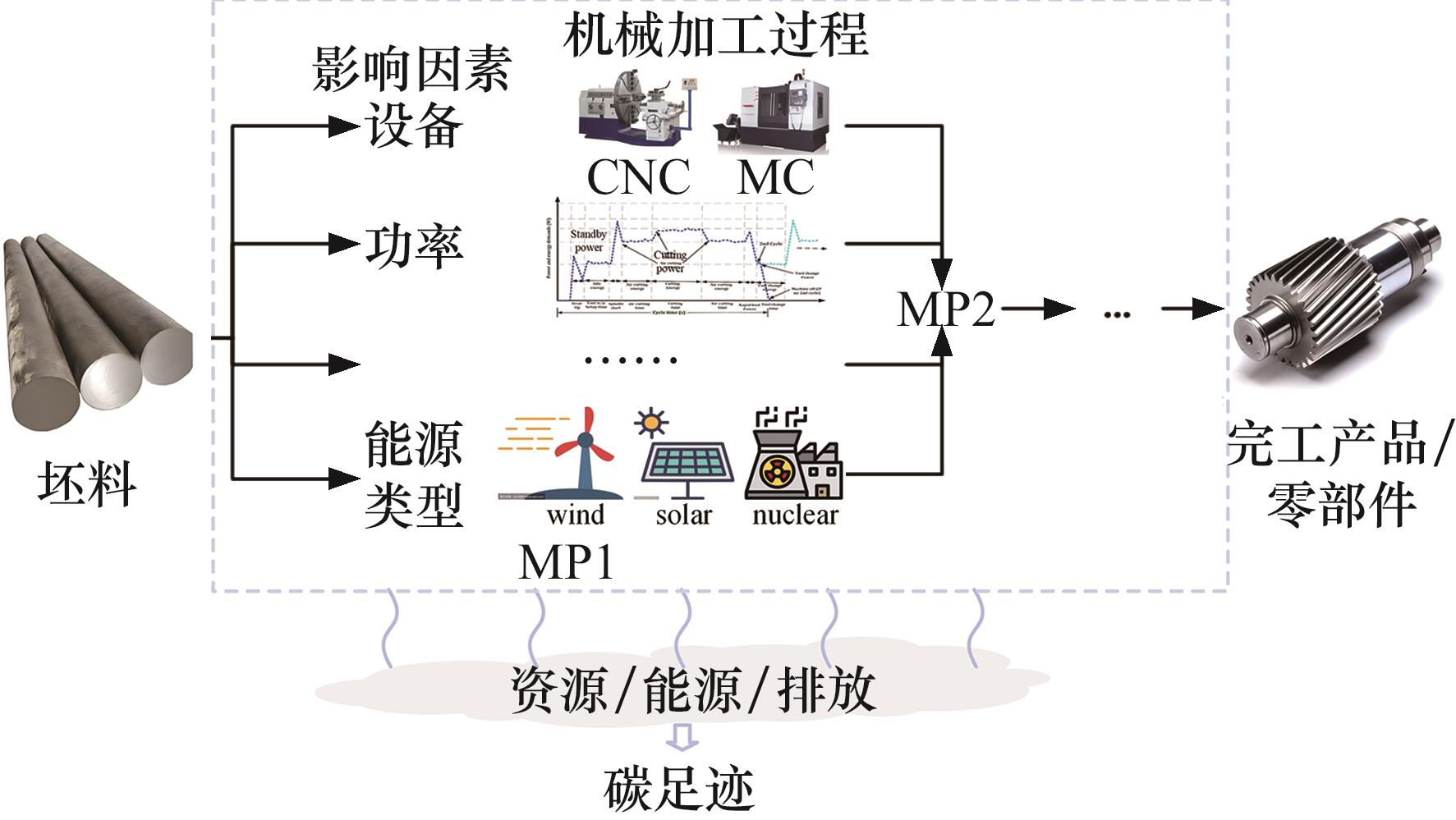
图1 机械加工过程的不同场景
Fig.1 Different scenarios of mechanical processing
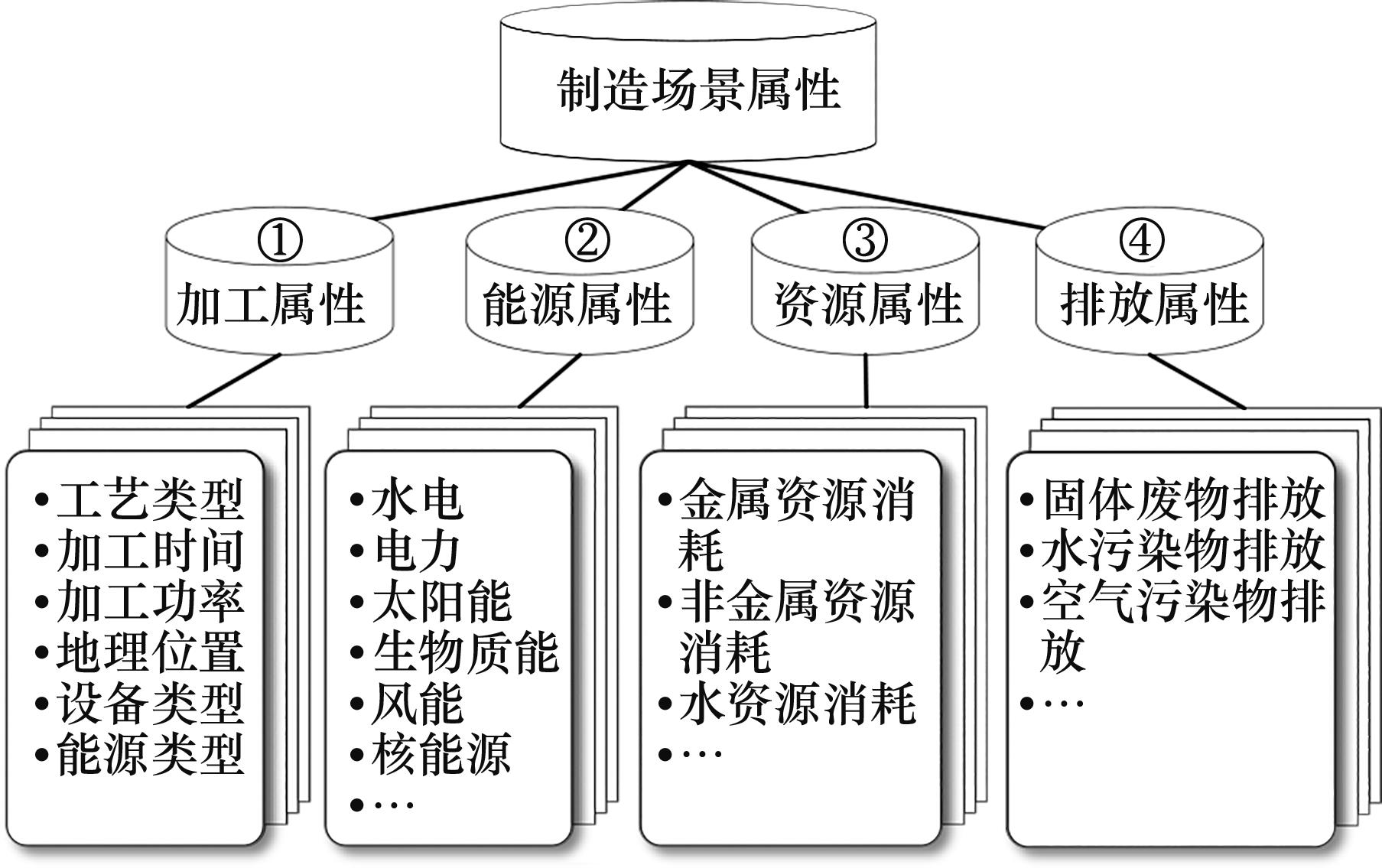
图2 制造场景的分类
Fig.2 Classification of manufacturing scenarios
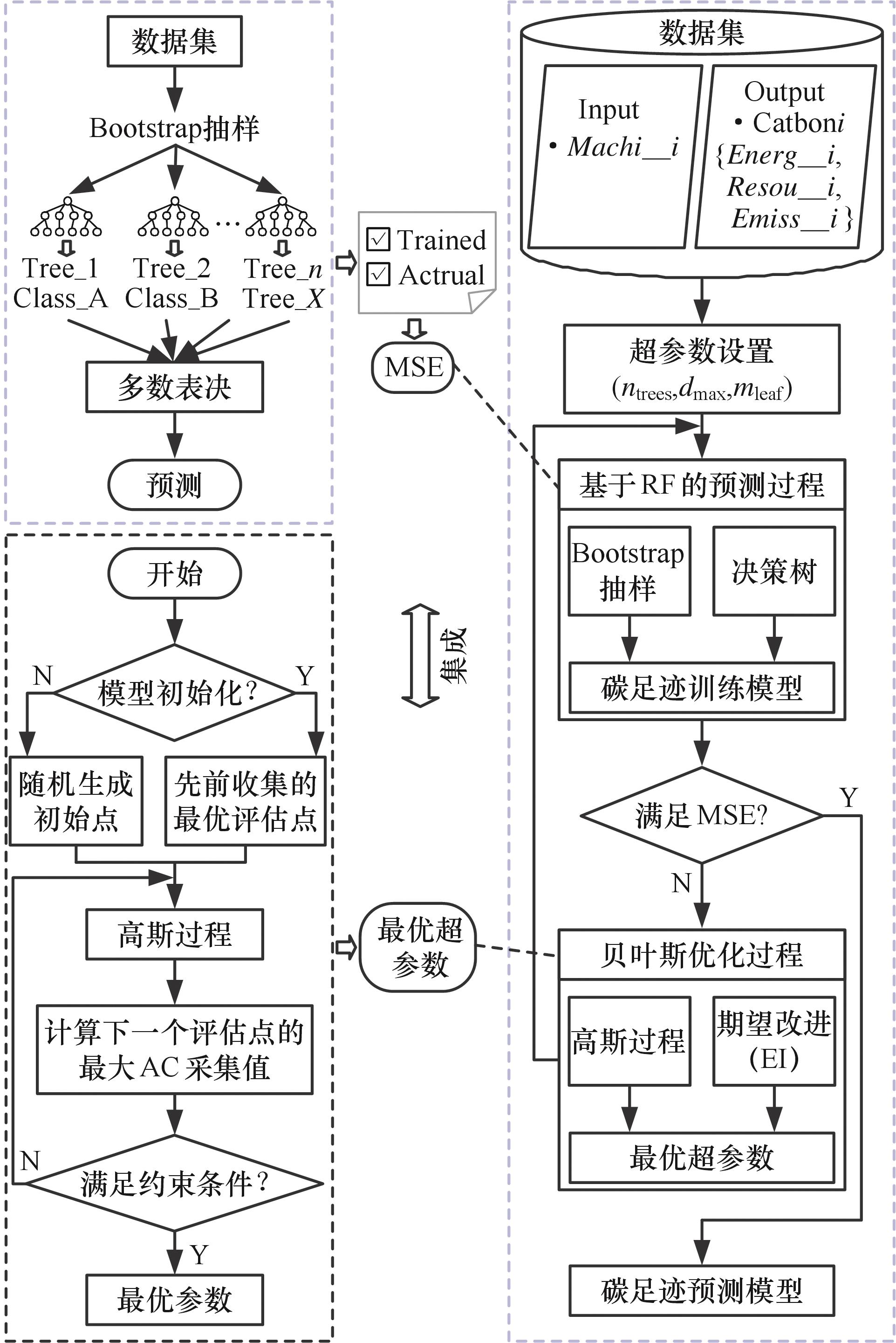
图3 基于贝叶斯优化随机森林的碳排放预测方法
Fig.3 Carbon emission prediction method based on Bayesian-optimized random forest
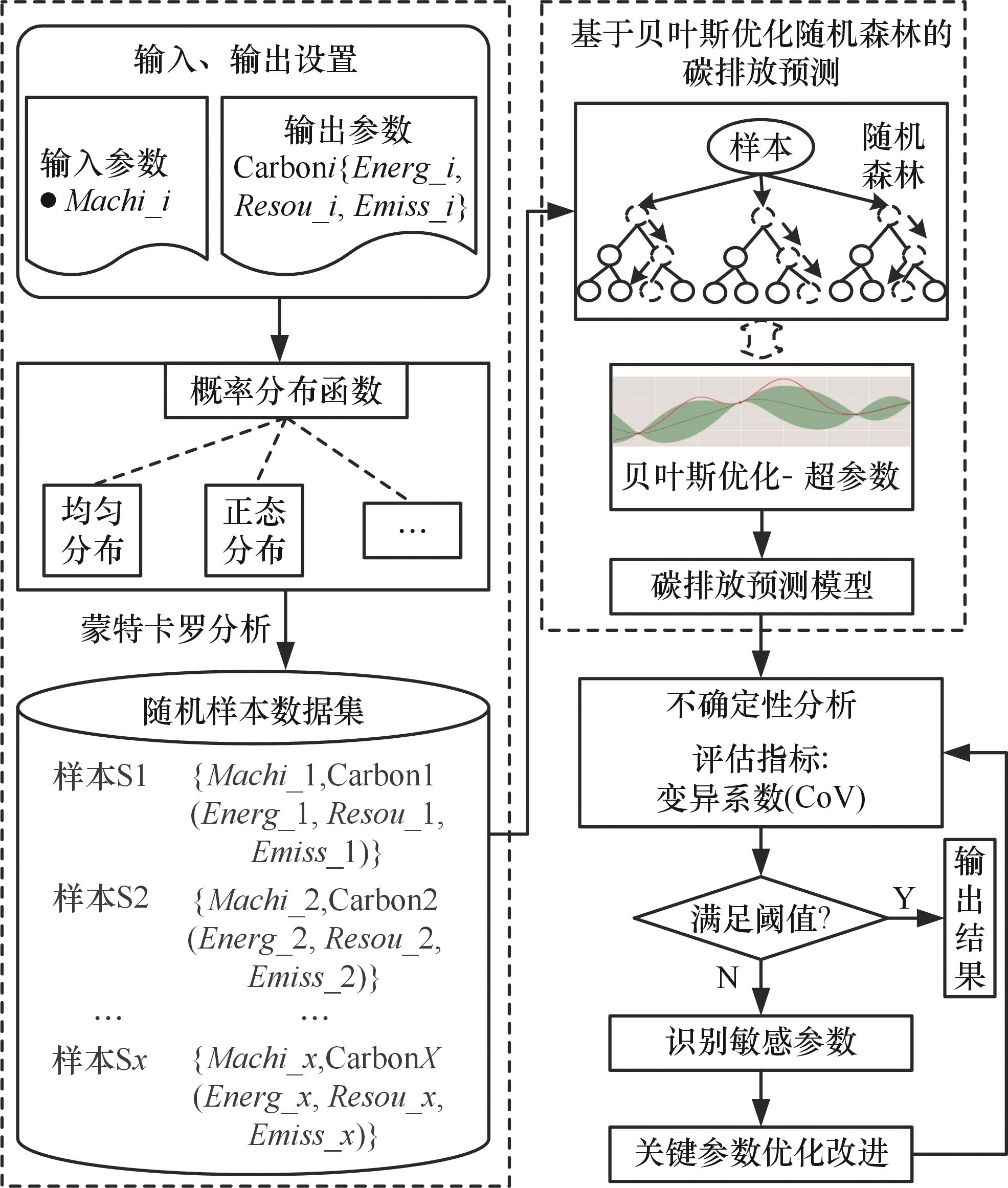
图4 基于MC-BORF的碳排放不确定性分析流程
Fig.4 Flowchart of uncertainty analysis of carbon emissions based on MC-BORF
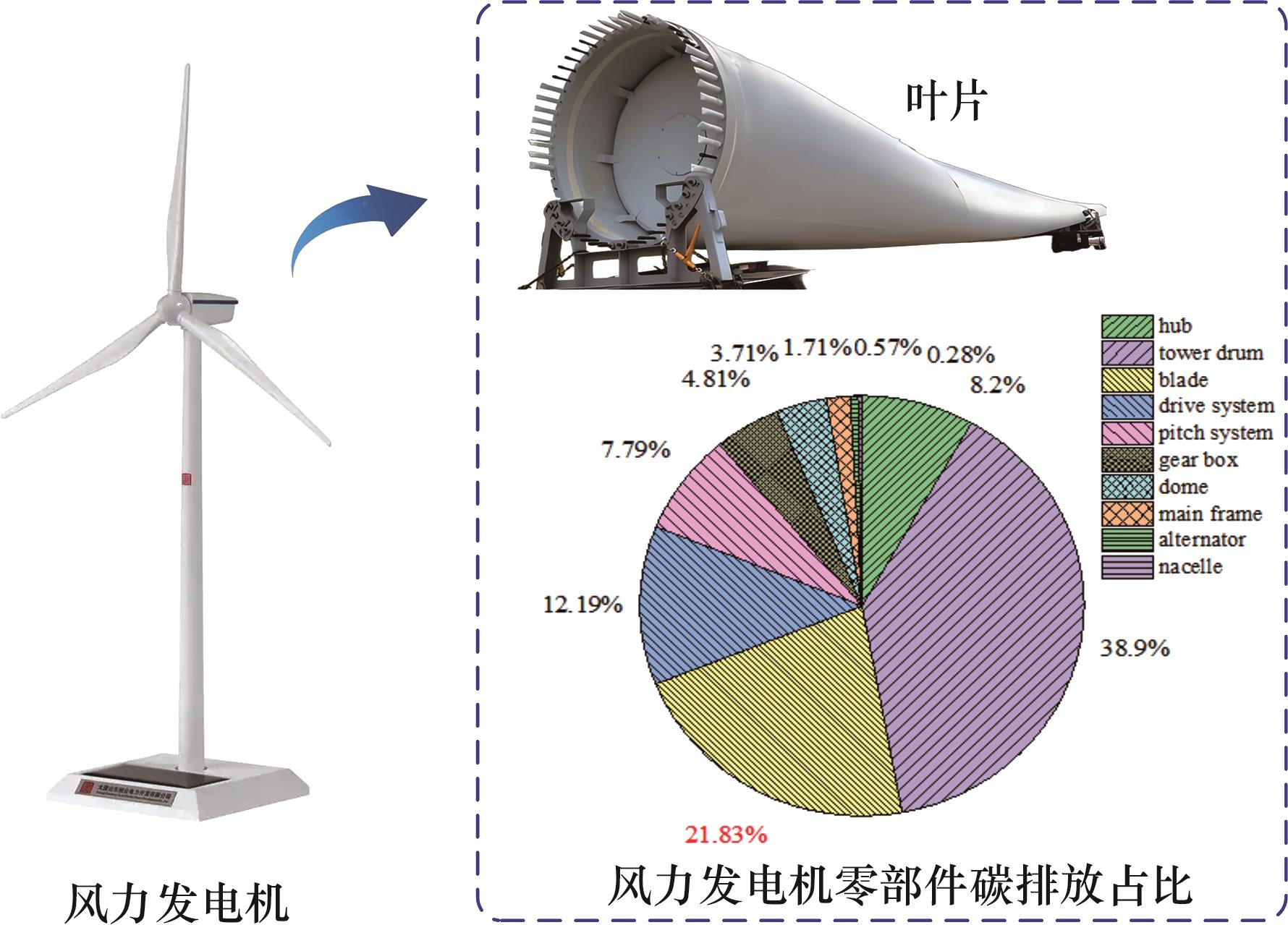
图5 风力发电机叶片
Fig.5 Wind turbine blades
| 输入变量 | 名称 | 变量 |
|---|---|---|
| x1 | 工艺类型 | 预浸料真空袋成形 |
| 真空导入成形 | ||
| 真空辅助树脂传递模塑成形 | ||
| x2 | 地理位置 | 济南 |
| 新疆 | ||
| 无锡 | ||
| x3 | 加工设备类型 | 高真空度真空泵 |
| 超高真空度真空泵 | ||
| 粗真空度真空泵 | ||
| x4 | 加工功率/kW | [ |
| [ | ||
| [ | ||
| x5 | 加工时间/min | [55,80] |
| [40,60] | ||
| [65,95] | ||
| x6 | 能源类型 | 火力发电 |
| 混合发电 |
表1 风力发电机叶片加工属性信息
Tab.1 Wind turbine blade manufacturing scenario information
| 输入变量 | 名称 | 变量 |
|---|---|---|
| x1 | 工艺类型 | 预浸料真空袋成形 |
| 真空导入成形 | ||
| 真空辅助树脂传递模塑成形 | ||
| x2 | 地理位置 | 济南 |
| 新疆 | ||
| 无锡 | ||
| x3 | 加工设备类型 | 高真空度真空泵 |
| 超高真空度真空泵 | ||
| 粗真空度真空泵 | ||
| x4 | 加工功率/kW | [ |
| [ | ||
| [ | ||
| x5 | 加工时间/min | [55,80] |
| [40,60] | ||
| [65,95] | ||
| x6 | 能源类型 | 火力发电 |
| 混合发电 |
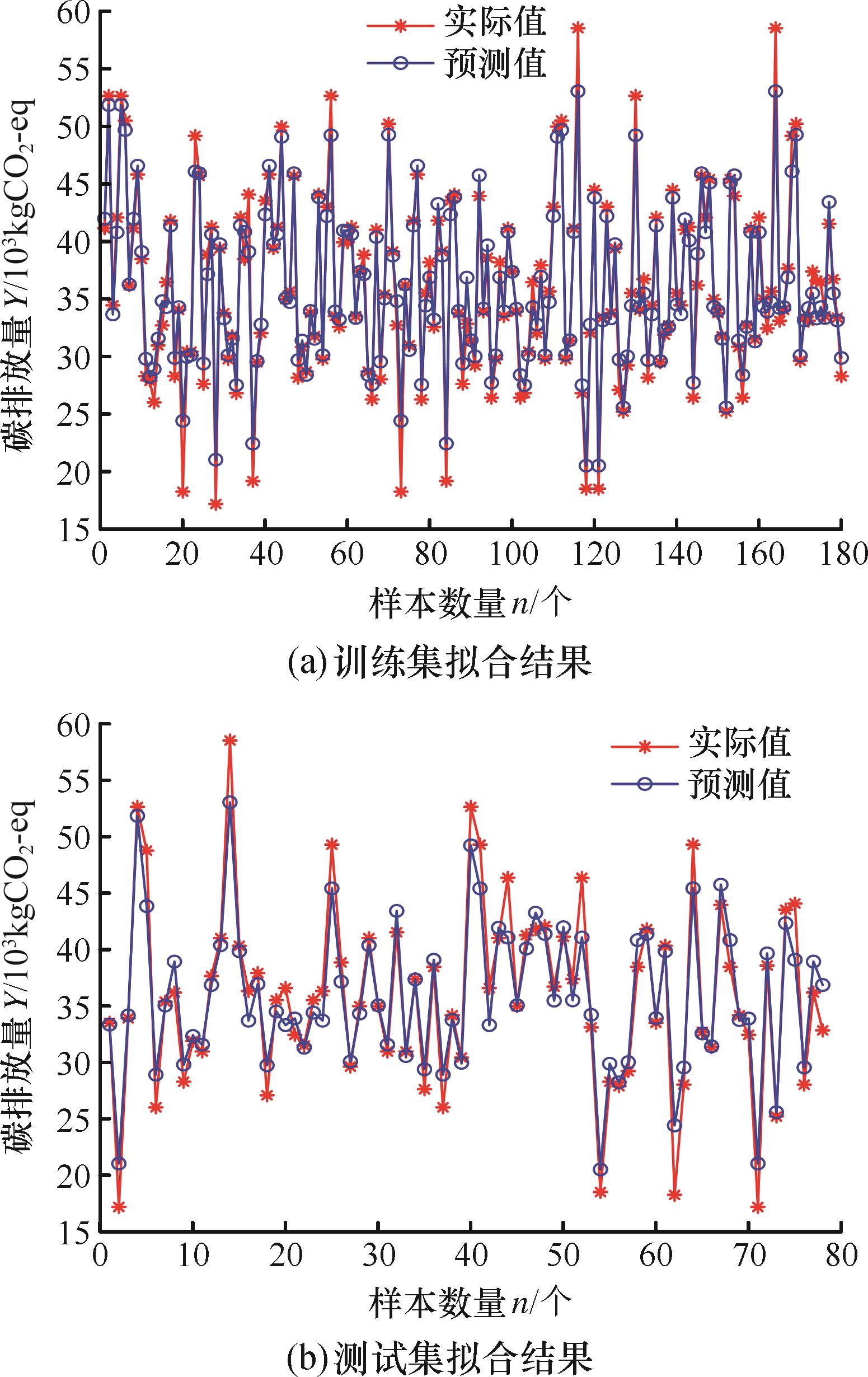
图6 碳排放实际拟合结果与预测拟合结果的比较
Fig.6 Comparison between actual fitting results and predicted fitting results of carbon emissions
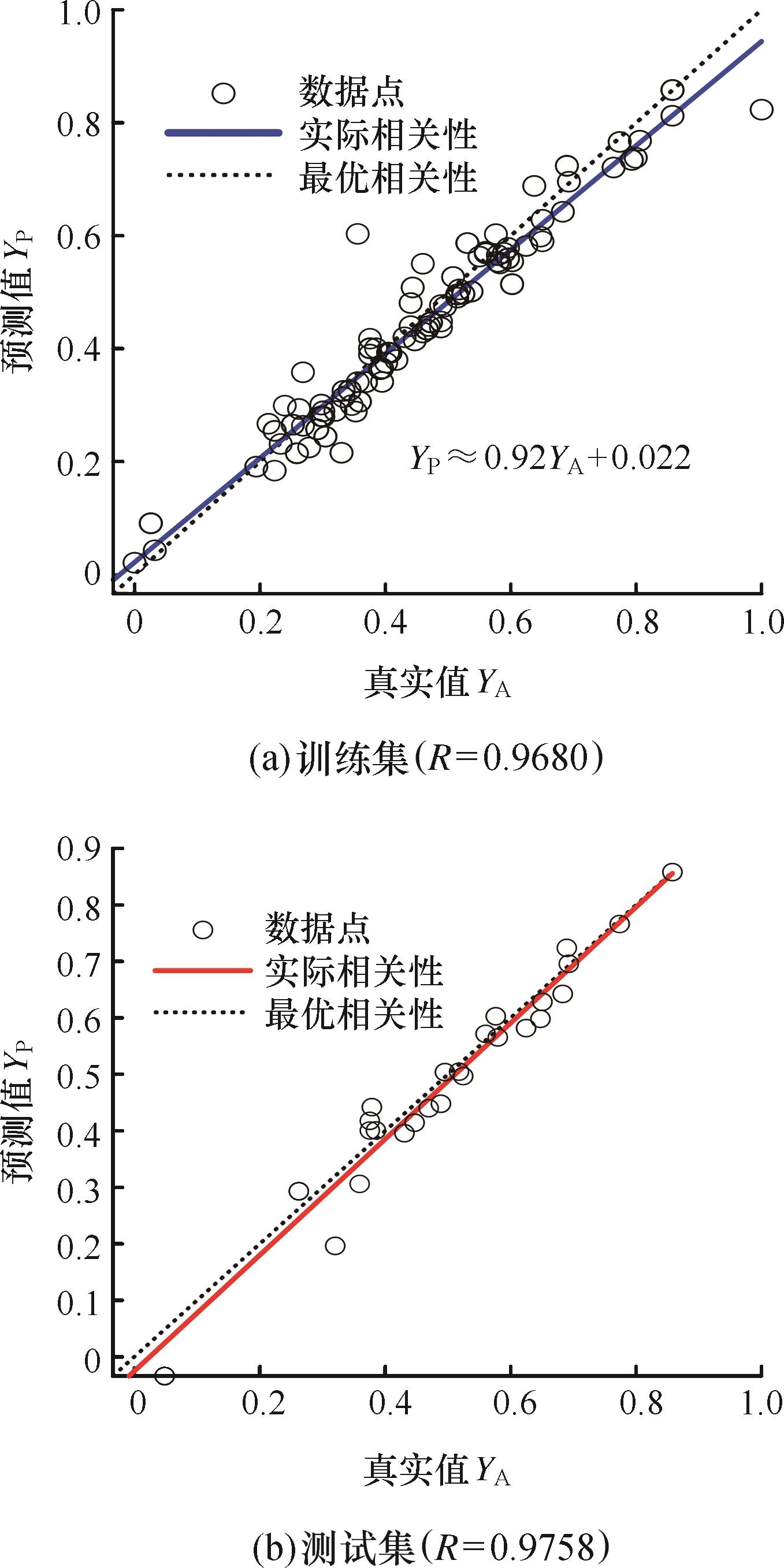
图7 碳排放预测模型的相关系数
Fig.7 Correlation coefficient of carbon emission prediction model
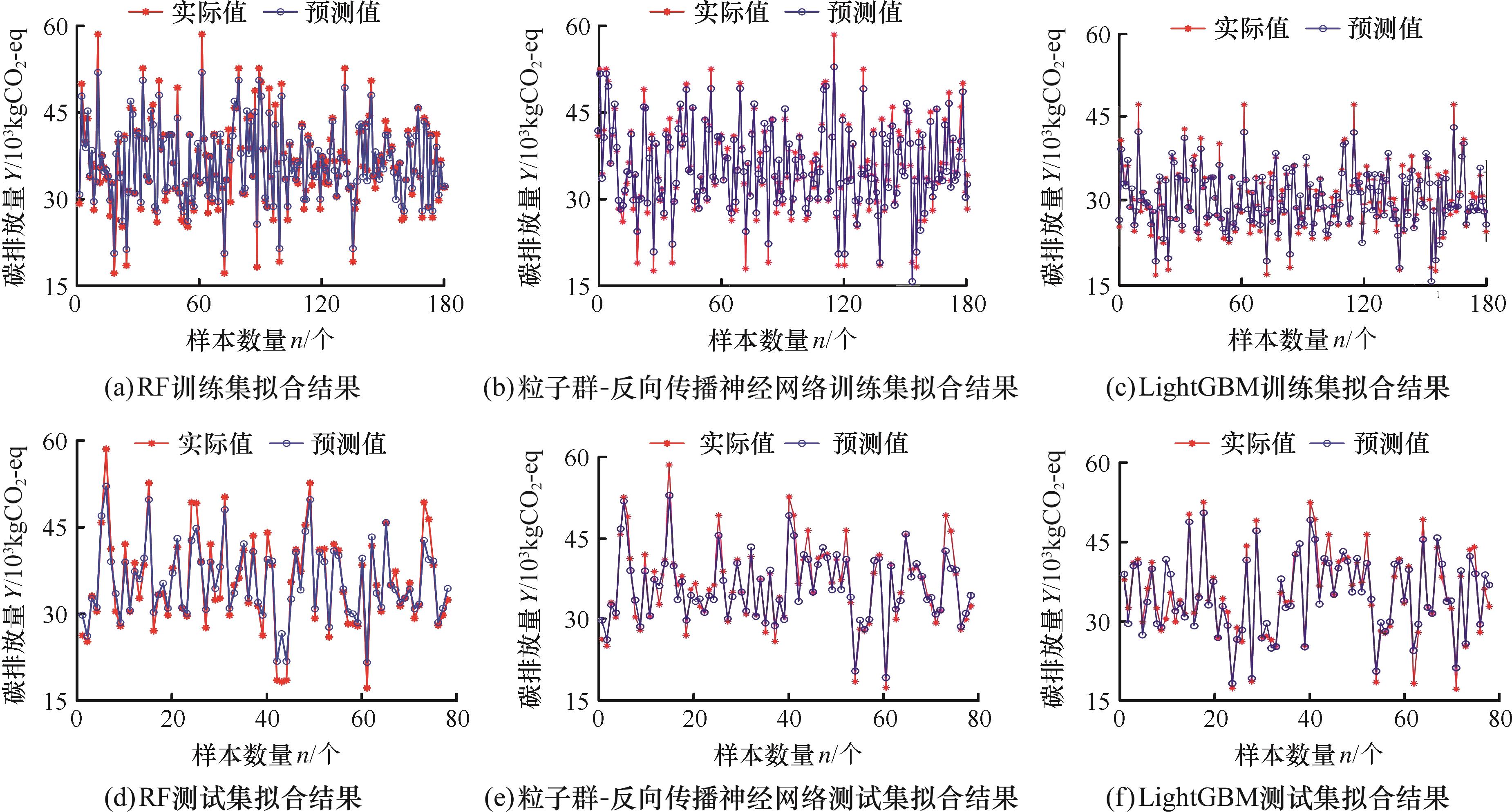
图8 碳排放预测结果
Fig.8 Carbon emission prediction results
| 评估指标 | 预测方法 | 训练集 | 测试集 |
|---|---|---|---|
| 相关系数R | 贝叶斯优化随机森林 | 0.9680 | 0.9758 |
| 随机森林算法 | 0.9543 | 0.9583 | |
| 粒子群-反向传播神经网络 | 0.9615 | 0.9597 | |
| LightGBM | 0.9693 | 0.9626 | |
| 决定系数R2 | 贝叶斯优化随机森林 | 0.9370 | 0.9522 |
| 随机森林算法 | 0.9107 | 0.9184 | |
| 粒子群-反向传播神经网络 | 0.9245 | 0.9210 | |
| LightGBM | 0.9395 | 0.9266 | |
| MAE | 贝叶斯优化随机森林 | 0.0718 | 0.1127 |
| 随机森林算法 | 0.1517 | 0.1380 | |
| 粒子群-反向传播神经网络 | 0.0956 | 0.1203 | |
| LightGBM | 0.0821 | 0.1154 | |
| RMSE | 贝叶斯优化随机森林 | 0.1571 | 0.2309 |
| 随机森林算法 | 0.2165 | 0.2709 | |
| 粒子群-反向传播神经网络 | 0.1897 | 0.2532 | |
| LightGBM | 0.1685 | 0.2378 |
表2 不同算法的评价指标结果
Tab.2 Evaluation index results of different algorithms
| 评估指标 | 预测方法 | 训练集 | 测试集 |
|---|---|---|---|
| 相关系数R | 贝叶斯优化随机森林 | 0.9680 | 0.9758 |
| 随机森林算法 | 0.9543 | 0.9583 | |
| 粒子群-反向传播神经网络 | 0.9615 | 0.9597 | |
| LightGBM | 0.9693 | 0.9626 | |
| 决定系数R2 | 贝叶斯优化随机森林 | 0.9370 | 0.9522 |
| 随机森林算法 | 0.9107 | 0.9184 | |
| 粒子群-反向传播神经网络 | 0.9245 | 0.9210 | |
| LightGBM | 0.9395 | 0.9266 | |
| MAE | 贝叶斯优化随机森林 | 0.0718 | 0.1127 |
| 随机森林算法 | 0.1517 | 0.1380 | |
| 粒子群-反向传播神经网络 | 0.0956 | 0.1203 | |
| LightGBM | 0.0821 | 0.1154 | |
| RMSE | 贝叶斯优化随机森林 | 0.1571 | 0.2309 |
| 随机森林算法 | 0.2165 | 0.2709 | |
| 粒子群-反向传播神经网络 | 0.1897 | 0.2532 | |
| LightGBM | 0.1685 | 0.2378 |
| 属性 | 变量 | 分布类型 | 分布范围 | |
|---|---|---|---|---|
| x1 | 工艺 类型 | 预浸料真空袋成形 | 离散变量 均匀分布 | n=3 |
| 真空导入成形 | ||||
| 真空辅助树脂传递模塑成形 | ||||
| x2 | 地理 位置 | 北京 | 离散变量 均匀分布 | n=3 |
| 新疆 | ||||
| 无锡 | ||||
| x3 | 加工 设备 类型 | 高真空度真空泵 | 离散变量 均匀分布 | n=3 |
| 超高真空度真空泵 | ||||
| 粗真空度真空泵 | ||||
| x4 | 加工 功率 | [ | 连续变量 正态分布 | μ=15,σ=0.83 μ=22,σ=1.17 μ=9,σ=0.67 |
| [ | ||||
| [ | ||||
| x5 | 加工 时间 | [55,80] min | 连续变量 正态分布 | μ=67.5,σ=2.58 μ=50,σ=1.67 μ=80,σ=2.91 |
| [40,60] min | ||||
| [65,95] min | ||||
| x6 | 能源 类型 | 火力发电 | 离散变量 均匀分布 | n=2 |
| 混合发电 |
表3 风机叶片制造场景加工属性分布情况
Tab.3 Distribution of processing attributes in wind turbine blade manufacturing scenarios
| 属性 | 变量 | 分布类型 | 分布范围 | |
|---|---|---|---|---|
| x1 | 工艺 类型 | 预浸料真空袋成形 | 离散变量 均匀分布 | n=3 |
| 真空导入成形 | ||||
| 真空辅助树脂传递模塑成形 | ||||
| x2 | 地理 位置 | 北京 | 离散变量 均匀分布 | n=3 |
| 新疆 | ||||
| 无锡 | ||||
| x3 | 加工 设备 类型 | 高真空度真空泵 | 离散变量 均匀分布 | n=3 |
| 超高真空度真空泵 | ||||
| 粗真空度真空泵 | ||||
| x4 | 加工 功率 | [ | 连续变量 正态分布 | μ=15,σ=0.83 μ=22,σ=1.17 μ=9,σ=0.67 |
| [ | ||||
| [ | ||||
| x5 | 加工 时间 | [55,80] min | 连续变量 正态分布 | μ=67.5,σ=2.58 μ=50,σ=1.67 μ=80,σ=2.91 |
| [40,60] min | ||||
| [65,95] min | ||||
| x6 | 能源 类型 | 火力发电 | 离散变量 均匀分布 | n=2 |
| 混合发电 |
| 序号 | x1 | x2 | x3 | x4 | x5 | x6 |
|---|---|---|---|---|---|---|
| 1 | 真空导入成形 | 济南 | 高真空度 真空泵 | 16.46 | 69.55 | 混电 |
| 2 | 预浸料真空袋成形 | 北京 | 粗真空度 真空泵 | 8.72 | 82.57 | 火电 |
| 3 | 真空导入成形 | 新疆 | 粗真空度 真空泵 | 9.1 | 76.74 | 火电 |
| 4 | 真空导入成形 | 新疆 | 高真空度 真空泵 | 18.77 | 70.37 | 混电 |
| 5 | 真空辅助树脂传递模塑成形 | 济南 | 高真空度 真空泵 | 14.55 | 77.6 | 火电 |
| 6 | 预浸料真空袋成形 | 北京 | 超高真空度真空泵 | 20.99 | 52.19 | 混电 |
| 7 | 预浸料真空袋成形 | 北京 | 高真空度 真空泵 | 14.96 | 76.47 | 火电 |
| 8 | 真空辅助树脂传递模塑成形 | 济南 | 粗真空度 真空泵 | 9.83 | 80.57 | 混电 |
| 9 | 真空辅助树脂传递模塑成形 | 新疆 | 超高真空度真空泵 | 24.20 | 50.16 | 混电 |
| 10 | 真空导入成形 | 济南 | 超高真空度真空泵 | 22.06 | 51.79 | 火电 |
| … | … | … | … | … | … | … |
表4 基于蒙特卡罗的数据模拟
Tab.4 Monte Carlo based data simulation
| 序号 | x1 | x2 | x3 | x4 | x5 | x6 |
|---|---|---|---|---|---|---|
| 1 | 真空导入成形 | 济南 | 高真空度 真空泵 | 16.46 | 69.55 | 混电 |
| 2 | 预浸料真空袋成形 | 北京 | 粗真空度 真空泵 | 8.72 | 82.57 | 火电 |
| 3 | 真空导入成形 | 新疆 | 粗真空度 真空泵 | 9.1 | 76.74 | 火电 |
| 4 | 真空导入成形 | 新疆 | 高真空度 真空泵 | 18.77 | 70.37 | 混电 |
| 5 | 真空辅助树脂传递模塑成形 | 济南 | 高真空度 真空泵 | 14.55 | 77.6 | 火电 |
| 6 | 预浸料真空袋成形 | 北京 | 超高真空度真空泵 | 20.99 | 52.19 | 混电 |
| 7 | 预浸料真空袋成形 | 北京 | 高真空度 真空泵 | 14.96 | 76.47 | 火电 |
| 8 | 真空辅助树脂传递模塑成形 | 济南 | 粗真空度 真空泵 | 9.83 | 80.57 | 混电 |
| 9 | 真空辅助树脂传递模塑成形 | 新疆 | 超高真空度真空泵 | 24.20 | 50.16 | 混电 |
| 10 | 真空导入成形 | 济南 | 超高真空度真空泵 | 22.06 | 51.79 | 火电 |
| … | … | … | … | … | … | … |
| 序号 | 类别 | 结果 |
|---|---|---|
| 1 | 碳足迹最大值/kgCO2-eq | 95 416.29 |
| 2 | 碳足迹最小值/kgCO2-eq | 66 016.95 |
| 3 | 均值/kgCO2-eq | 82 268.58 |
| 4 | 标准差/kgCO2-eq | 313.26 |
| 5 | 离散系数 | 0.1756 |
| 6 | 峰态系数 | 0.3789 |
| 7 | 偏态系数 |
表5 风机发电机叶片加工制造场景的碳排放结果分析
Tab.5 Analysis of carbon emissions in the manufacturing scenario of wind turbine blades
| 序号 | 类别 | 结果 |
|---|---|---|
| 1 | 碳足迹最大值/kgCO2-eq | 95 416.29 |
| 2 | 碳足迹最小值/kgCO2-eq | 66 016.95 |
| 3 | 均值/kgCO2-eq | 82 268.58 |
| 4 | 标准差/kgCO2-eq | 313.26 |
| 5 | 离散系数 | 0.1756 |
| 6 | 峰态系数 | 0.3789 |
| 7 | 偏态系数 |
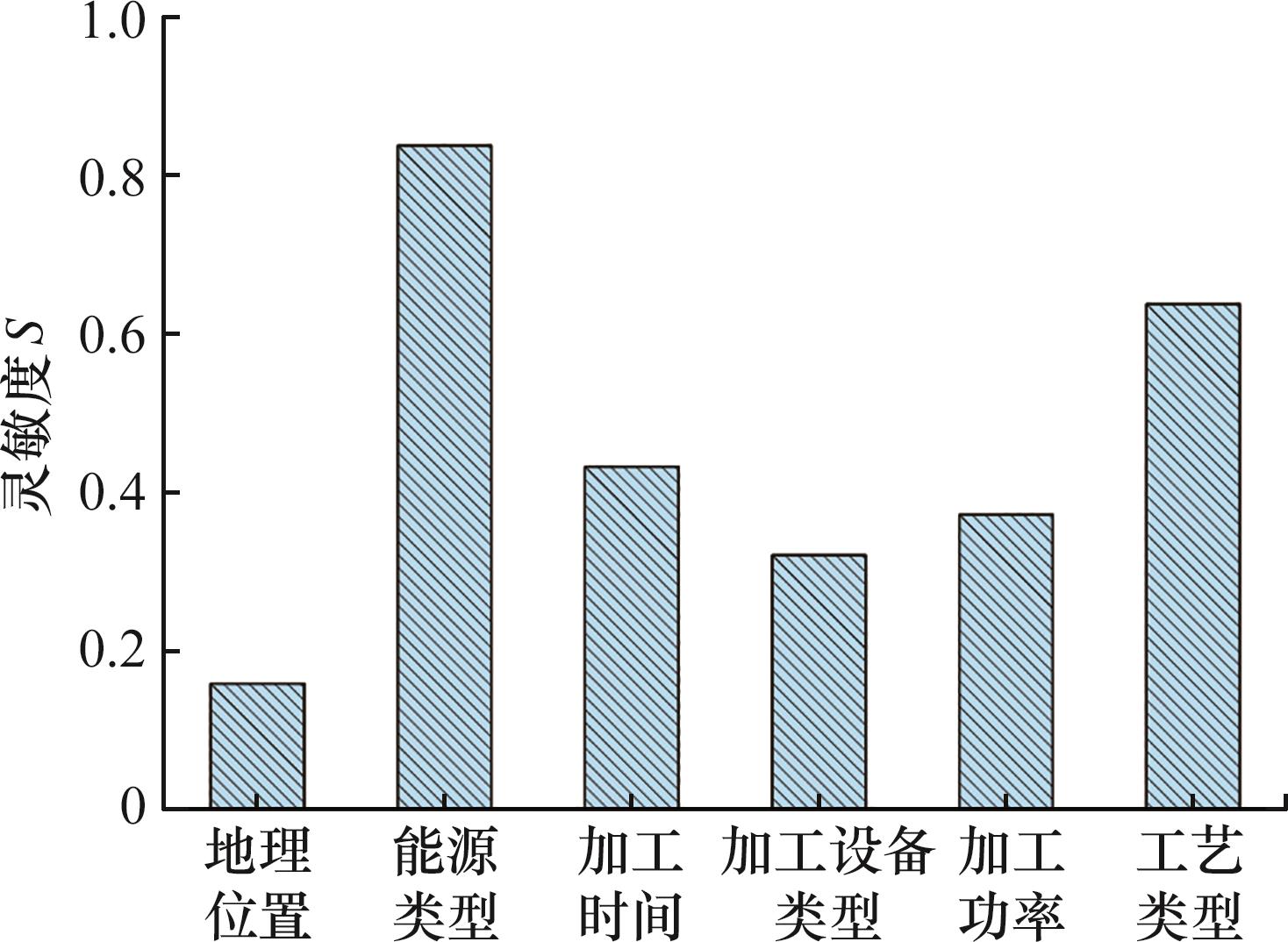
图9 风力发电机叶片加工属性的敏感性分析
Fig.9 Sensitivity analysis of wind turbine blade manufacturing scenarios
加工设备 类型 | 设备参数 | 改进前 | 改进后 | ||
|---|---|---|---|---|---|
分布 函数 | 区间 范围 | 分布 函数 | 区间 范围 | ||
高真空度 真空泵 | 加工功率/kW | 正态 分布 | [ | 正态 分布 | [13.34,16.66] |
| 加工时间/min | 正态 分布 | [55,80] | 正态 分布 | [62.34,72.66] | |
| 超高真空度真空泵 | 加工功率/kW | 正态 分布 | [ | 正态 分布 | [19.66,24.34] |
| 加工时间/min | 正态 分布 | [40,60] | 正态 分布 | [46.66,53.34] | |
粗真空度 真空泵 | 加工功率/kW | 正态 分布 | [ | 正态 分布 | [7.66,10.34] |
| 加工时间/min | 正态 分布 | [65,95] | 正态 分布 | [74.18,85.82] | |
表6 风机叶片制造场景敏感参数的改进
Tab.6 Improvement of sensitive parameters in wind turbine blade manufacturing scenarios
加工设备 类型 | 设备参数 | 改进前 | 改进后 | ||
|---|---|---|---|---|---|
分布 函数 | 区间 范围 | 分布 函数 | 区间 范围 | ||
高真空度 真空泵 | 加工功率/kW | 正态 分布 | [ | 正态 分布 | [13.34,16.66] |
| 加工时间/min | 正态 分布 | [55,80] | 正态 分布 | [62.34,72.66] | |
| 超高真空度真空泵 | 加工功率/kW | 正态 分布 | [ | 正态 分布 | [19.66,24.34] |
| 加工时间/min | 正态 分布 | [40,60] | 正态 分布 | [46.66,53.34] | |
粗真空度 真空泵 | 加工功率/kW | 正态 分布 | [ | 正态 分布 | [7.66,10.34] |
| 加工时间/min | 正态 分布 | [65,95] | 正态 分布 | [74.18,85.82] | |
| 序号 | 类别 | 结果 |
|---|---|---|
| 1 | 碳足迹最大值/kgCO2-eq | 93 895.49 |
| 2 | 碳足迹最小值/kgCO2-eq | 67 659.38 |
| 3 | 均值/kgCO2-eq | 82 375.76 |
| 4 | 标准差/kgCO2-eq | 283.39 |
| 5 | 离散系数 | 0.1409 |
| 6 | 峰态系数 | 0.4205 |
| 7 | 偏态系数 |
表7 改进后制造场景参数对应的碳排放结果分析
Tab.7 Analysis of carbon emissions corresponding to improved manufacturing scenario parameters
| 序号 | 类别 | 结果 |
|---|---|---|
| 1 | 碳足迹最大值/kgCO2-eq | 93 895.49 |
| 2 | 碳足迹最小值/kgCO2-eq | 67 659.38 |
| 3 | 均值/kgCO2-eq | 82 375.76 |
| 4 | 标准差/kgCO2-eq | 283.39 |
| 5 | 离散系数 | 0.1409 |
| 6 | 峰态系数 | 0.4205 |
| 7 | 偏态系数 |
| 制造场景 | 工艺 类型 | 地理 位置 | 加工设备 类型 | 加工 功率/ kW | 加工 时间/ min | 能源 类型 |
|---|---|---|---|---|---|---|
| 1 | 真空导入 成形 | 新疆 | 粗真空度 真空泵 | 9.30 | 75.82 | 火电/ 混电/ 水电 |
| 2 | 真空辅助树脂传递模塑成形 | 北京 | 超高真空 度真空泵 | 22.69 | 50.38 | |
| 3 | 预浸料真空袋 成形 | 新疆 | 高真空度 真空泵 | 15.53 | 68.51 | |
| 4 | 真空导入成形 | 济南 | 高真空度 真空泵 | 15.67 | 68.57 | |
| 5 | 真空辅助树脂传递模塑成形 | 北京 | 超高真空 度真空泵 | 23.56 | 52.61 | |
| 6 | 预浸料真空袋 成形 | 北京 | 超高真空 度真空泵 | 20.99 | 52.19 | |
| 7 | 真空辅助树脂传递模塑成形 | 北京 | 高真空度 真空泵 | 15.27 | 62.38 | |
| 8 | 真空导入成形 | 新疆 | 高真空度 真空泵 | 14.10 | 63.52 | |
| 9 | 预浸料真空袋 成形 | 济南 | 粗真空度 真空泵 | 9.87 | 82.35 | |
| 10 | 预浸料真空袋 成形 | 济南 | 高真空度 真空泵 | 16.21 | 63.05 |
表8 不同能源类型下制造场景信息
Tab.8 Manufacturing scene information under different energy types
| 制造场景 | 工艺 类型 | 地理 位置 | 加工设备 类型 | 加工 功率/ kW | 加工 时间/ min | 能源 类型 |
|---|---|---|---|---|---|---|
| 1 | 真空导入 成形 | 新疆 | 粗真空度 真空泵 | 9.30 | 75.82 | 火电/ 混电/ 水电 |
| 2 | 真空辅助树脂传递模塑成形 | 北京 | 超高真空 度真空泵 | 22.69 | 50.38 | |
| 3 | 预浸料真空袋 成形 | 新疆 | 高真空度 真空泵 | 15.53 | 68.51 | |
| 4 | 真空导入成形 | 济南 | 高真空度 真空泵 | 15.67 | 68.57 | |
| 5 | 真空辅助树脂传递模塑成形 | 北京 | 超高真空 度真空泵 | 23.56 | 52.61 | |
| 6 | 预浸料真空袋 成形 | 北京 | 超高真空 度真空泵 | 20.99 | 52.19 | |
| 7 | 真空辅助树脂传递模塑成形 | 北京 | 高真空度 真空泵 | 15.27 | 62.38 | |
| 8 | 真空导入成形 | 新疆 | 高真空度 真空泵 | 14.10 | 63.52 | |
| 9 | 预浸料真空袋 成形 | 济南 | 粗真空度 真空泵 | 9.87 | 82.35 | |
| 10 | 预浸料真空袋 成形 | 济南 | 高真空度 真空泵 | 16.21 | 63.05 |
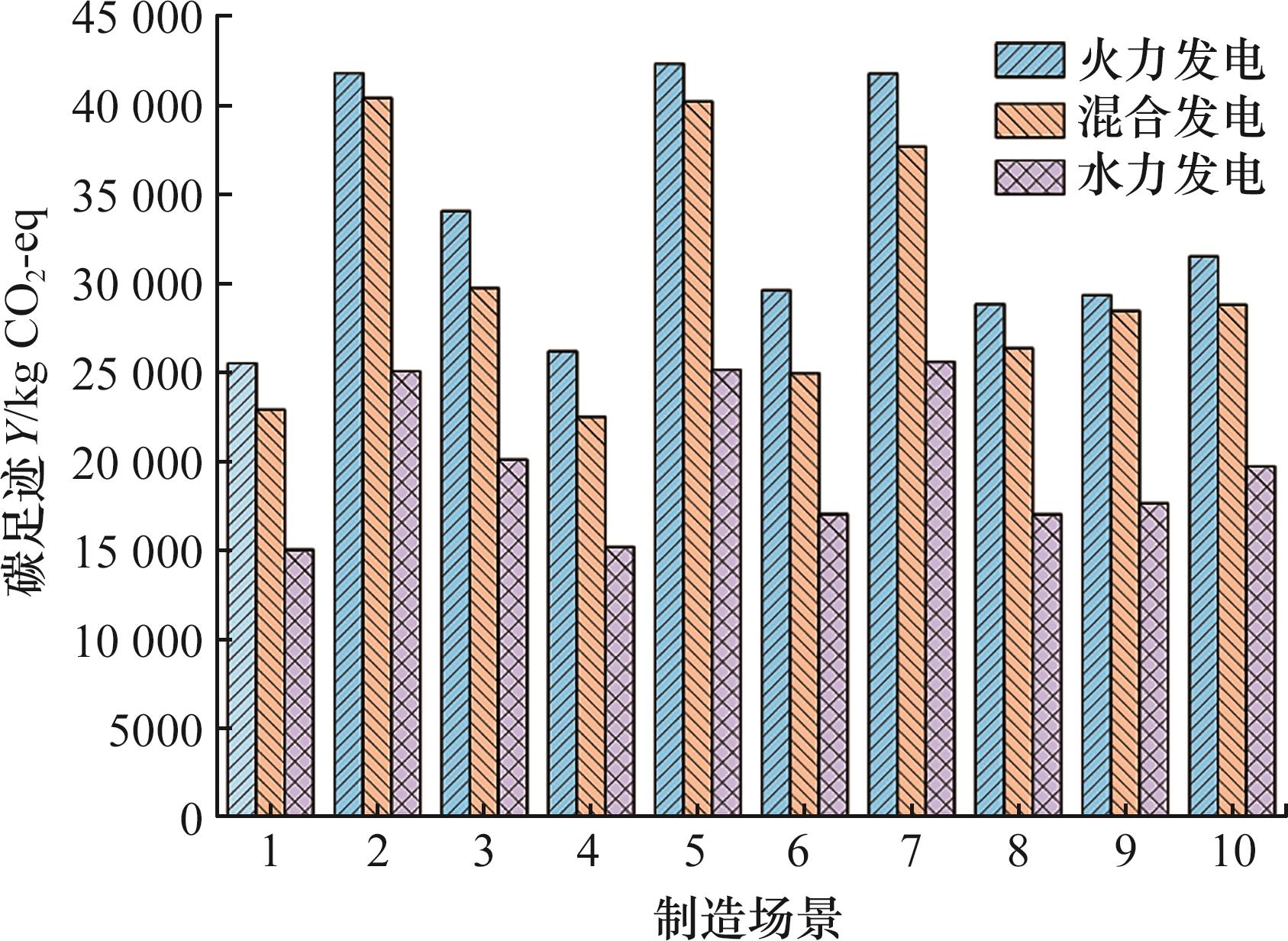
图10 不同能源类型产生的碳排放结果
Fig.10 Carbon emissions results generated by different energy types
| [1] | 闫萌, 李涛, 杨晨, 等. 面向机电产品绿色设计与评价协同的生命周期评价参数计算方法[J]. 中国机械工程, 2023, 34(12): 1453-1464. |
| YAN Meng, LI Tao, YANG Chen, et al. Calculation Method of LCA Parameters for Green Design and Assessment Collaboration of Electromechanical Products[J]. China Mechanical Engineering, 2023, 34(12): 1453-1464. | |
| [2] | BRILLINGER M, WUWER M, SMAJIC B, et al. Novel Method to Predict the Energy Consumption of Machined Parts in the Design Phase to Attain Sustainability Goals[J]. Journal of Manufacturing Processes, 2023, 101: 1046-1054. |
| [3] | PARK J H, LIM S, YEO C, et al. DFGAT for Recognizing Design Features from a B-rep Model for Mechanical Parts[J]. Robotics and Computer-Integrated Manufacturing, 2025, 93: 102938. |
| [4] | ZHOU Tianyu, LI Hengxu, LI Xinming, et al. Feature-based Modeling for Variable Fractal Geometry Design Integrated into CAD System[J]. Advanced Engineering Informatics, 2023, 57: 102006. |
| [5] | 贾康, 唐竟, 任东旭, 等. 面向STEP模型装配特征自动提取的装配信息模型构建[J]. 中国机械工程, 2025, 36(1): 123-132. |
| JIA Kang, TANG Jing, REN Dongxu, et al. Construction of Assembly Information Model Based on Assembly Feature Automatic Extraction for STEP Models[J]. China Mechanical Engineering, 2025, 36(1): 123-132. | |
| [6] | KONG Lin, WANG Liming, LI Fangyi, et al. Multi-layer Integration Framework for Low Carbon Design Based on Design Features[J]. Journal of Manufacturing Systems, 2021, 61: 223-238. |
| [7] | KONG Lin, WANG Liming, LI Fangyi, et al. A Life-cycle Integrated Model for Product Eco-design in the Conceptual Design Phase[J]. Journal of Cleaner Production, 2022, 363: 132516. |
| [8] | UMEDA Y, FUKUSHIGE S, TONOIKE K. Evaluation of Scenario-based Modularization for Lifecycle Design[J]. CIRP Annals, 2009, 58(1): 1-4. |
| [9] | AKASAPU U, HEHENBERGER P. A Design Process Model for Battery Systems Based on Existing Life Cycle Assessment Results[J]. Journal of Cleaner Production, 2023, 407: 137149. |
| [10] | ZHANG Xiufen, ZHANG Shuyou, HU Zhiyong, et al. Identification of Connection Units with High GHG Emissions for Low-carbon Product Structure Design[J]. Journal of Cleaner Production, 2012, 27: 118-125. |
| [11] | 郭洪飞, 陆鑫宇, 任亚平, 等. 基于强化学习的群体进化算法求解双边多目标同步并行拆解线平衡问题[J]. 机械工程学报, 2023, 59(7): 355-366. |
| GUO Hongfei, LU Xinyu, REN Yaping, et al. Reinforcement Learning-based Swarm Evolutionary Algorithm to Solve Two-sided Multi-objective Synchronous Parallel Disassembly Line Balancing Problem[J]. Journal of Mechanical Engineering, 2023, 59(7): 355-366. | |
| [12] | KHALOIE H, DOLÁNYI M, TOUBEAU J F, et al. Review of Machine Learning Techniques for Optimal Power Flow[J]. Applied Energy, 2025, 388: 125637. |
| [13] | RAIAN S, ALI S M, SARKER M R, et al. Assessing Sustainability Risks in the Supply Chain of the Textile Industry under Uncertainty[J]. Resources, Conservation and Recycling, 2022, 177: 105975. |
| [14] | AHN H, CLERMONT M, LANGNER J. Comparative Performance Analysis of Frontier-based Efficiency Measurement Methods—a Monte Carlo Simulation[J]. European Journal of Operational Research, 2023, 307(1): 294-312. |
| [15] | MRÓWCZYŃSKA M, SKIBA M, LEŚNIAK A, et al. A New Fuzzy Model of Multi-criteria Decision Support Based on Bayesian Networks for the Urban Areas' Decarbonization Planning[J]. Energy Conversion and Management, 2022, 268: 116035. |
| [16] | BAUDRY G, MACHARIS C, VALLÉE T. Range-based Multi-actor Multi-criteria Analysis: a Combined Method of Multi-actor Multi-criteria Analysis and Monte Carlo Simulation to Support Participatory Decision Making under Uncertainty[J]. European Journal of Operational Research, 2018, 264(1): 257-269. |
| [17] | PENG Shitong, LI Tao, ZHAO Jiali, et al. Petri Net-based Scheduling Strategy and Energy Modeling for the Cylinder Block Remanufacturing under Uncertainty[J]. Robotics and Computer-Integrated Manufacturing, 2019, 58: 208-219. |
| [18] | MENG Qiang, LI Fangyi, ZHOU Lirong, et al. A Rapid Life Cycle Assessment Method Based on Green Features in Supporting Conceptual Design[J]. International Journal of Precision Engineering and Manufacturing-Green Technology, 2015, 2(2): 189-196. |
| [19] | MIRZAEI D, BEHBAHANINIA A, ABDALISOUSAN A, et al. A Novel Approach to Repair Time Prediction and Availability Assessment of the Equipment in Power Generation Systems Using Fuzzy Logic and Monte Carlo Simulation[J]. Energy, 2023, 282: 128842. |
| [20] | KONG Lin, WANG Liming, LI Fangyi, et al. Life Cycle-oriented Low-carbon Product Design Based on the Constraint Satisfaction Problem[J]. Energy Conversion and Management, 2023, 286: 117069. |
| [1] | 曾光1,2,3;段民封1,2;倪冰雨1,2;姜潮1,2. 机械臂架系统的非随机振动分析[J]. 中国机械工程, 2019, 30(10): 1142-1149. |
| [2] | 智鹏鹏1;李永华2;陈秉智2. 考虑参数不确定性的转向架构架结构强度分析[J]. 中国机械工程, 2019, 30(01): 22-29. |
| 阅读次数 | ||||||
|
全文 |
|
|||||
|
摘要 |
|
|||||
