


中国机械工程 ›› 2026, Vol. 37 ›› Issue (10): 2644-2651.DOI: 10.3969/j.issn.1004-132X.2026.10.027

• 增材制造 • 上一篇    下一篇

大型水轮机转轮电弧增材再制造热力耦合数值模拟及残余应力分析

何乐1,4(), 周岩2, 王卓1, 熊晓晨1(), 黄崇灿1, 周祥曼1, 成传诗3, 华林4, 胡泽启4, 秦训鹏4   

  1. 1.三峡大学石墨增材制造技术与装备湖北省工程研究中心, 宜昌, 443002
    2.武汉商学院智能交通学院, 武汉, 430056
    3.中国长江电力股份有限公司, 宜昌, 443002
    4.武汉理工大学高温轻合金及应用技术全国重点实验室, 武汉, 430070
  • 收稿日期:2025-12-16 出版日期:2026-10-25 发布日期:2026-11-10
  • 通讯作者: 熊晓晨
  • 作者简介:何乐,男,2005年生,硕士研究生。研究方向为机械装备智能制造与再制造。E-mail:HeLe0419@outlook.com
    熊晓晨*(通信作者),男,1989年生,博士、讲师。研究方向为金属增材制造、水电机械设备增材修复与再制造。发表论文30余篇。E-mail:Xiaochen.Xiong@hotmail.com。
  • 基金资助:
    湖北省自然科学基金(2024AFB266);水电机械设备设计与维护湖北省重点实验室基金(2023KJX06);三峡大学科研启动基金(2024RCKJ004)

Thermo-mechanical Coupled Numerical Simulation and Residual Stress Analysis of Wire Arc Additive Remanufacturing for Large Hydraulic Turbine Runners

HE Le1,4(), ZHOU Yan2, WANG Zhuo1, XIONG Xiaochen1(), HUANG Chongcan1, ZHOU Xiangman1, CHENG Chuanshi3, HUA Lin4, HU Zeqi4, QIN Xunpeng4   

  1. 1.Hubei Engineering Research Center for Graphite Additive Manufacturing Technology and Equipment,China Three Gorges University,Yichang,Hubei,443002
    2.School of Intelligent Transportation,Wuhan Business University,Wuhan,430056
    3.China Yangtze Power Co. ,Ltd. ,Yichang,Hubei,443002
    4.State Key Laboratory of Light Superalloys and Application Technology,Wuhan University of Technology,Wuhan,430070
  • Received:2025-12-16 Online:2026-10-25 Published:2026-11-10
  • Contact: XIONG Xiaochen

摘要:

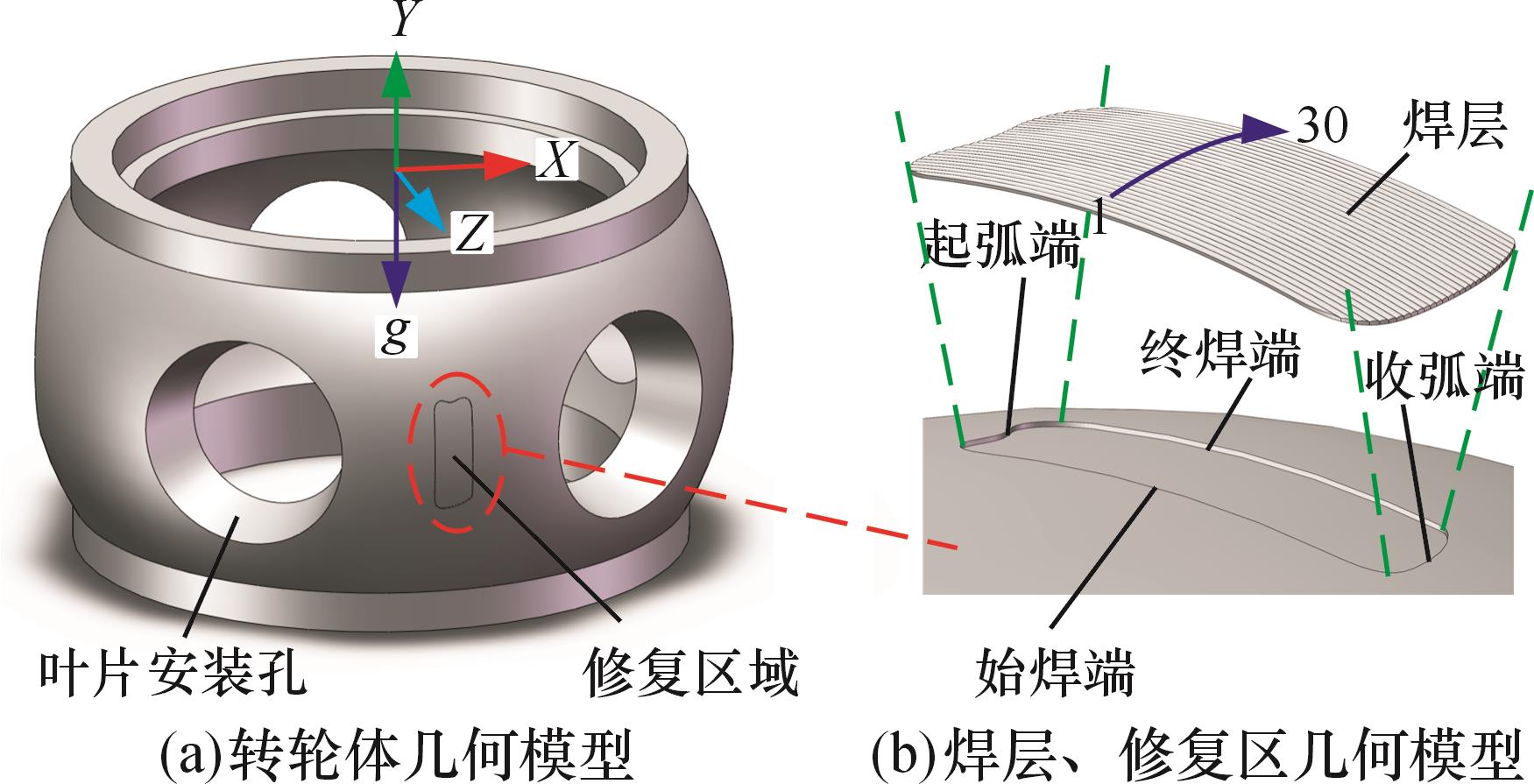
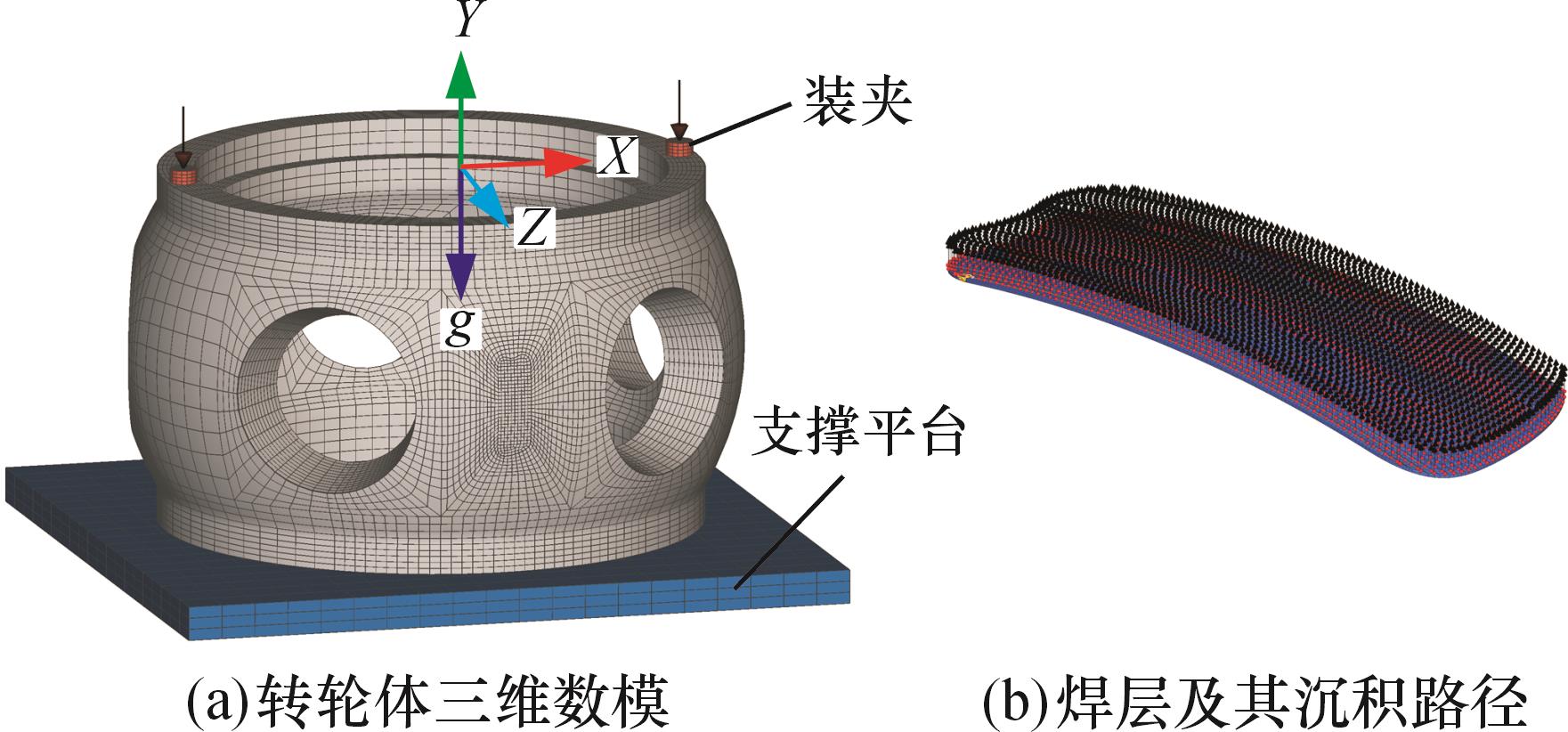
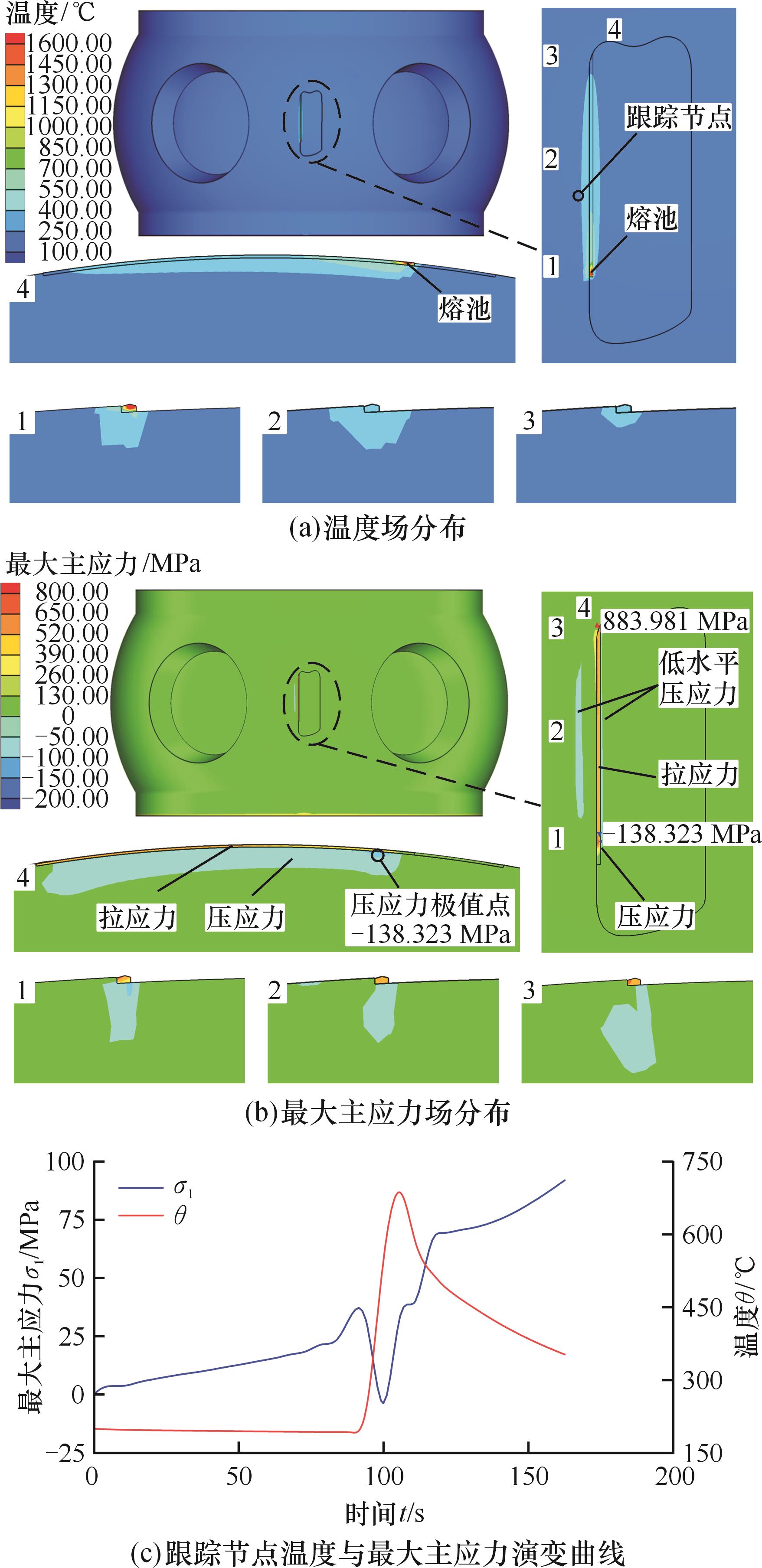
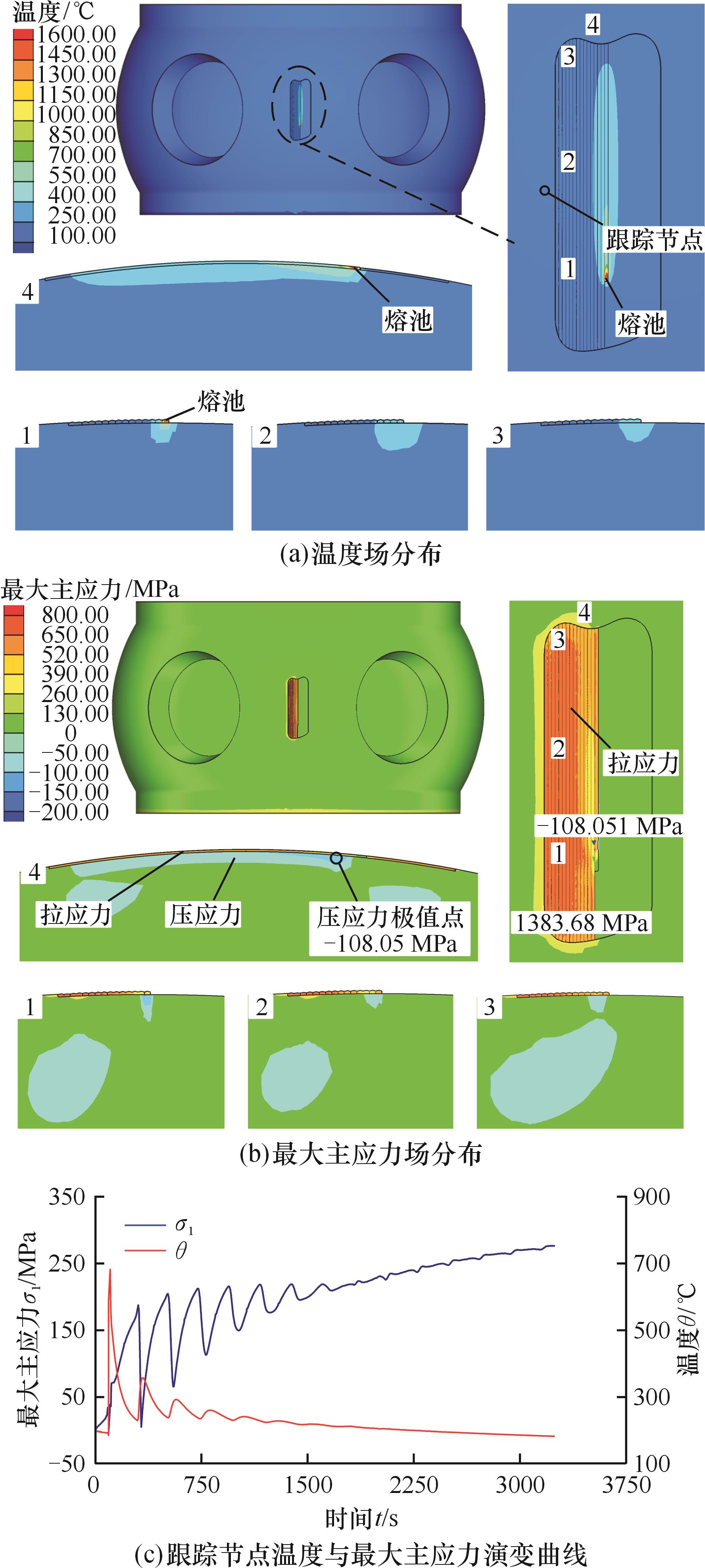
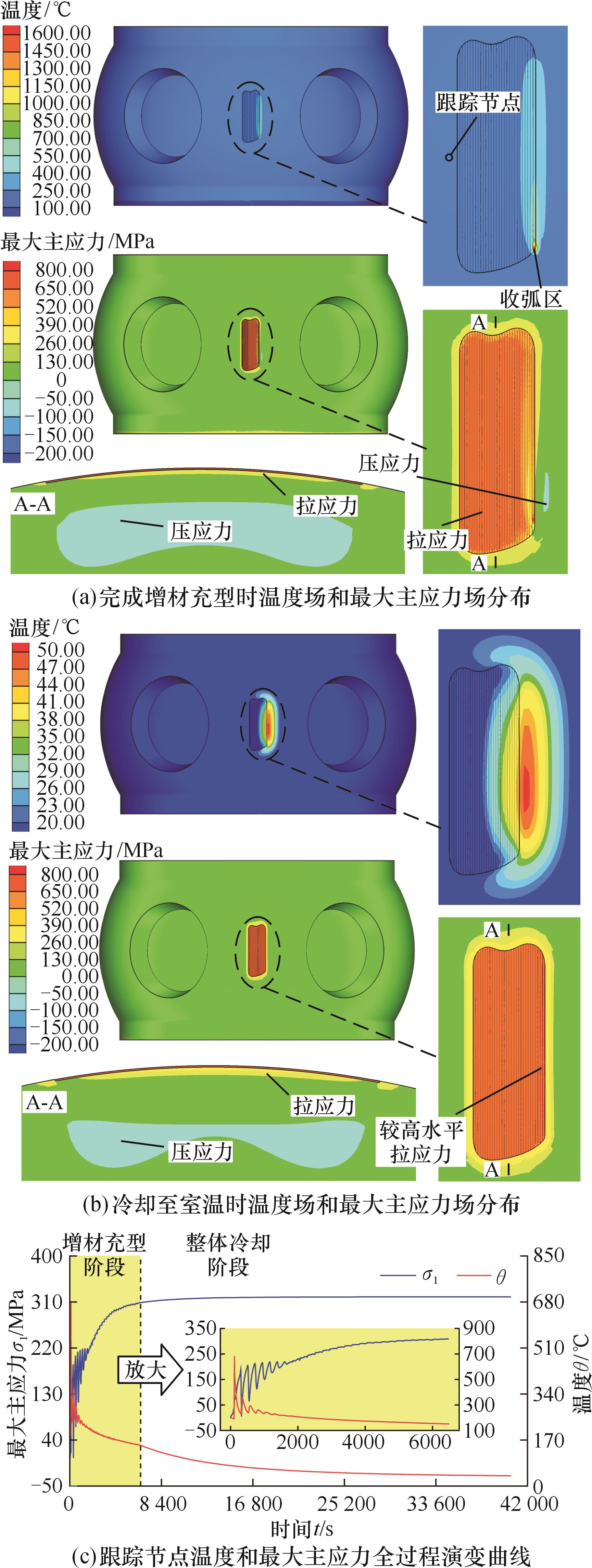
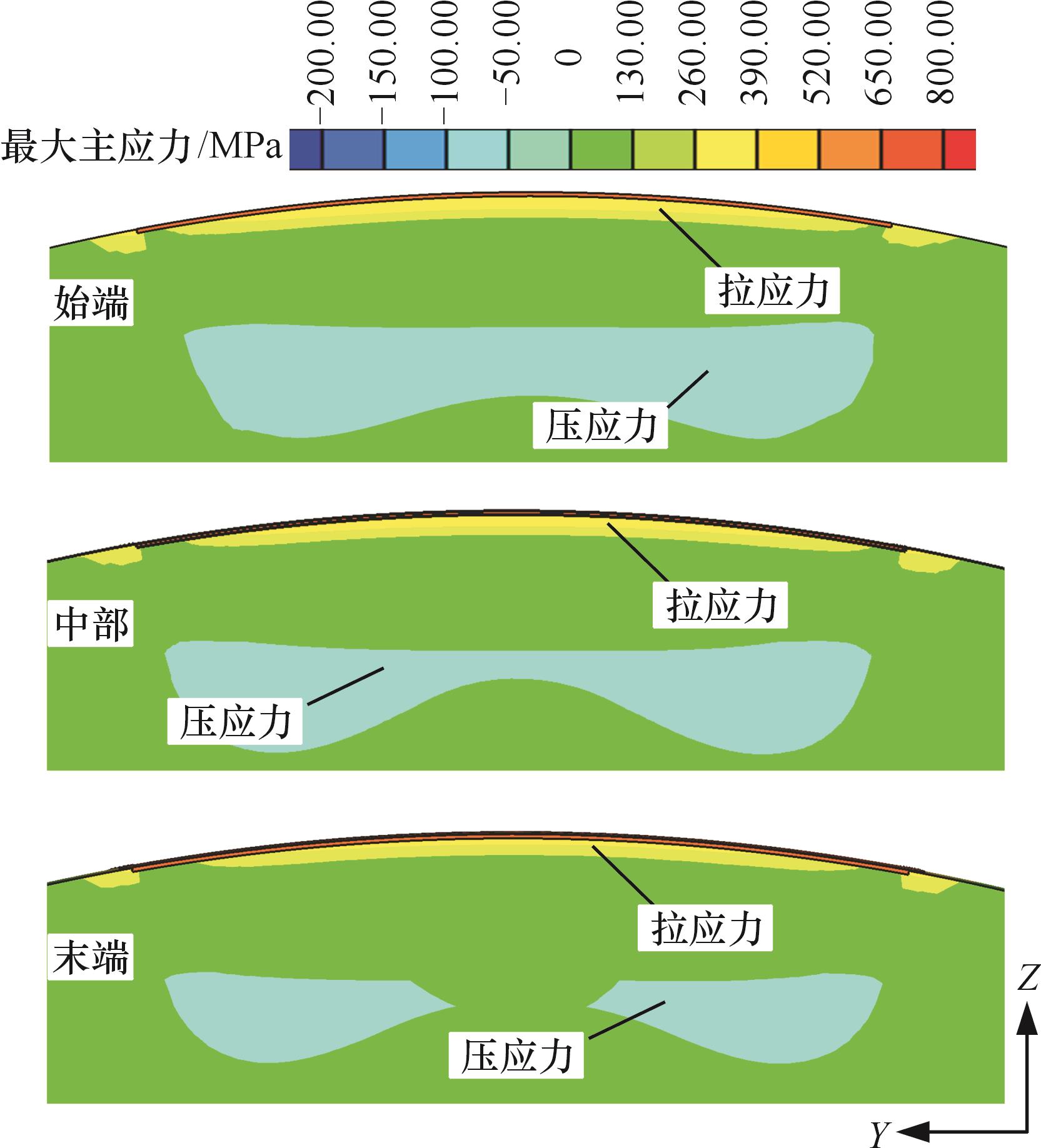
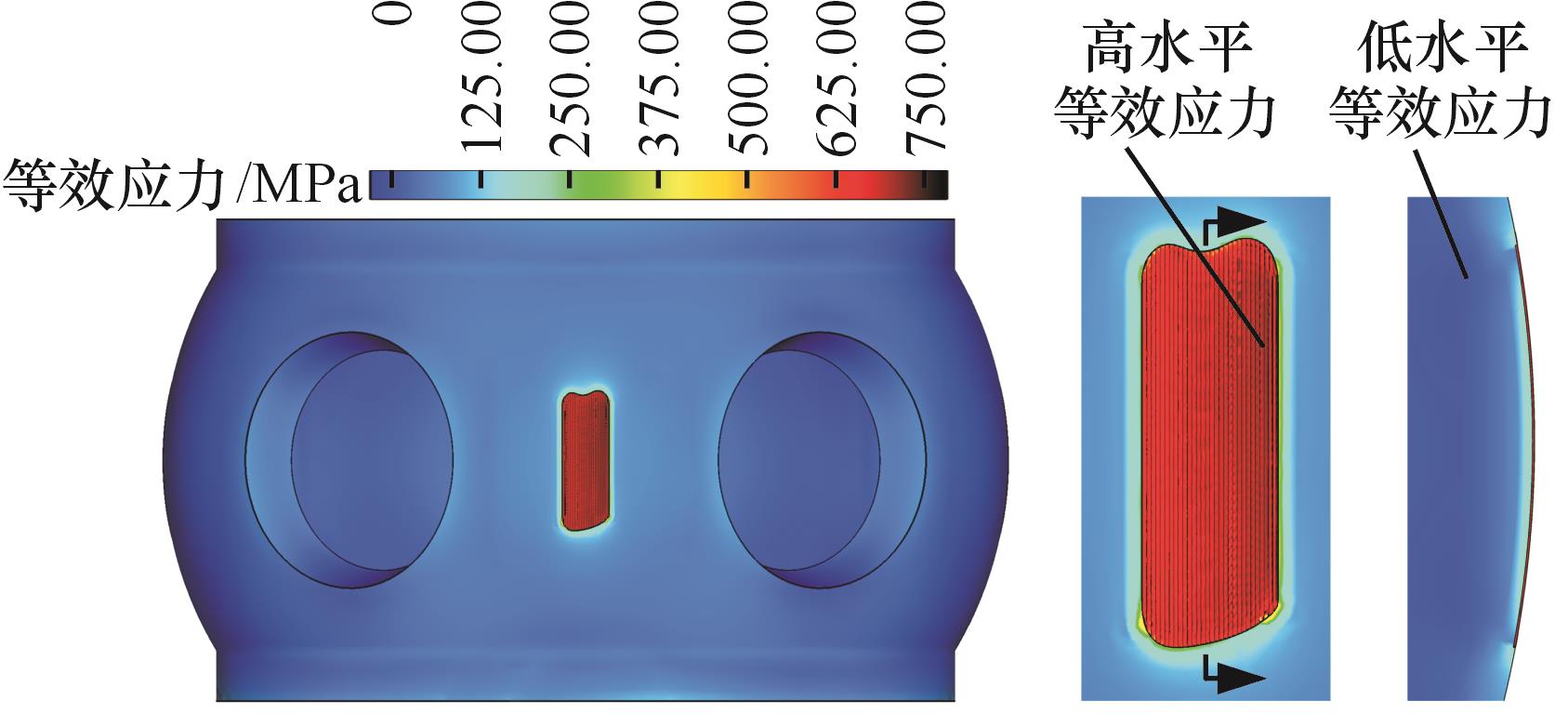
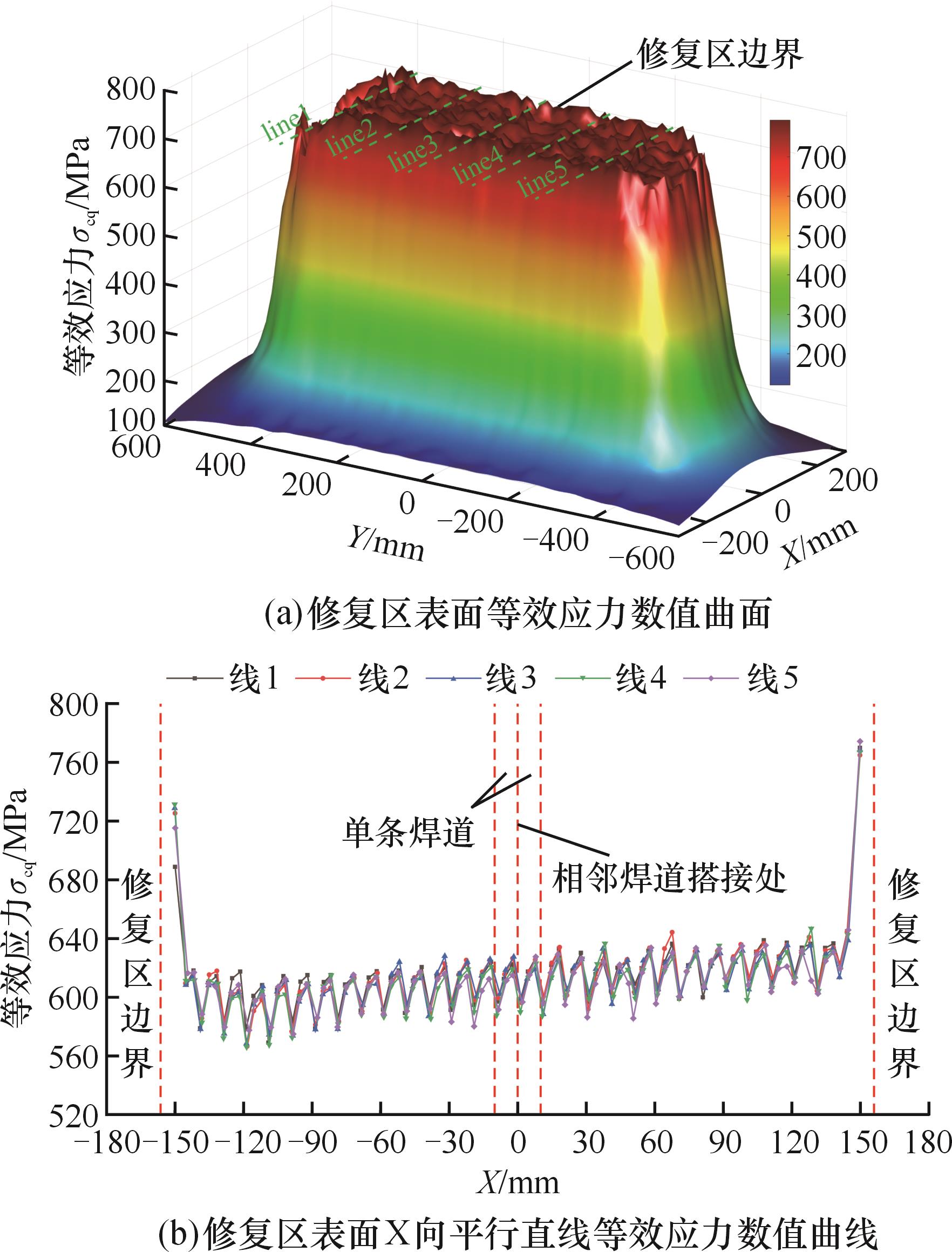
构建了大型水轮机转轮体电弧增材再制造热力耦合有限元模型,解析了温度场、应力场及最终残余应力的变化规律。结果表明:对于转轮体局部失效区电弧增材再制造,修复区及热影响区最终呈整体拉应力状态,纵横向越过修复区的基体区域呈低水平压应力状态。增材充型时,近熔池基体区域因受热膨胀作用呈压应力状态,伴随热源移出,熔池及近熔池基体区域发生冷缩,转变成拉应力状态,而远熔池基体区域因升温小,呈低水平压应力状态;冷却时,伴随发生整体冷缩,修复区呈拉应力状态,而越出修复区的基体区域因持续受热发生膨胀挤压,呈压应力状态。随着冷却进程的加深,修复区拉应力逐步增大,室温时达到峰值(650~800 MPa),基体区域压应力降至-50 MPa以下。修复区与基体结合边缘以及相邻焊道间搭接微区存在明显应力集中,成为裂纹萌生与扩展的危区。

关键词: 水轮机转轮体, 电弧增材再制造, 热力耦合, 残余应力

Abstract:

A thermo-mechanical coupled finite element model for wire arc additive remanufacturing of large hydraulic turbine runner was established, and the variation laws of temperature field, stress field and final residual stress state were analyzed. The results show that for the wire arc additive remanufacturing of local failure zone on the runner, the repair zone and heat-affected zone finally present the overall tensile stress states, while the matrix zones crossing the repair zone in longitudinal and transverse directions present the low-level compressive stress states. During additive filling, the matrix zone near the molten pool presents a compressive stress state due to the thermal expansion. With the removal of heat source, the molten pool and adjacent matrix zone generate cooling shrinkages and transform into tensile stress states, whereas the matrix zone far from the molten pool maintains a low-level compressive stress state owing to the low temperature rise. In the cooling stage, overall cooling shrinkage occurs, and the repair zone presents the tensile stress state. Meanwhile, the matrix zone beyond the repair zone undergoes the expansion and extrusion under the continuous thermal effects, presenting the compressive stress state. As the cooling process develops, the tensile stress in the repair zone increases gradually and reaches the peak (650~800 MPa) at room temperature, while the compressive stress in the matrix zone decreases to lower than 50 MPa. Obvious stress concentrations exist at the bonding edges between the repair zone and the matrix zone as well as at the overlapping micro-zones between adjacent weld beads, which become the critical zones for crack initiation and propagation.

Key words: hydraulic turbine runner, wire arc additive remanufacturing, thermo-mechanical coupling, residual stress

中图分类号: