



ISSN 1004-132X
CN 42-1294/TH
CN 42-1294/TH
中国机械工程 ›› 2026, Vol. 37 ›› Issue (10): 2492-2501.DOI: 10.3969/j.issn.1004-132X.2026.10.012
马峰1,2( ), 王海磊1,3, 黄顺虎1,3, 张华2,3
收稿日期:2025-10-17
出版日期:2026-10-25
发布日期:2026-11-10
通讯作者:
马峰
作者简介:马峰*(通信作者),男,1989年生,副教授、博士研究生导师。研究方向为绿色低碳制造、资源高值化利用。E-mail:MF0425@163.com。
基金资助:
MA Feng1,2(), WANG Hailei1,3, HUANG Shunhu1,3, ZHANG Hua2,3
Received:2025-10-17
Online:2026-10-25
Published:2026-11-10
Contact:
MA Feng
摘要:
提出了一种融合鲸鱼优化算法(WOA)、卷积神经网络(CNN)、门控循环单元(GRU)和自注意力机制(SA)的深度学习模型,用于精准预测退役电池的剩余使用寿命。该模型充分发挥了CNN的特征提取能力、GRU的时序建模优势以及自注意力机制的长程依赖捕捉能力,并通过WOA实现超参数的全局最优配置。基于CALCE公开数据集的对比实验结果表明,所提WOA-CNN-GRU-SA模型在测试集上取得均方根误差(RMSE)为0.809 27%、平均绝对误差(MAE)为0.554 40%、决定系数R²为99.840%的预测性能,相较于次优模型WOA-CNN-LSTM-SA,在RMSE与MAE上分别降低10.35%与13.39%,体现出更高的预测精度与鲁棒性。研究结果可为退役动力电池的精准分级与储能系统的高效可靠管理提供关键技术支撑。
中图分类号:
马峰, 王海磊, 黄顺虎, 张华. 考虑储能工况的退役动力电池退化建模与剩余寿命预测[J]. 中国机械工程, 2026, 37(10): 2492-2501.
MA Feng, WANG Hailei, HUANG Shunhu, ZHANG Hua. Degradation Modeling and Remaining Useful Life Prediction of Retired Power Batteries Considering Energy Storage Conditions[J]. China Mechanical Engineering, 2026, 37(10): 2492-2501.
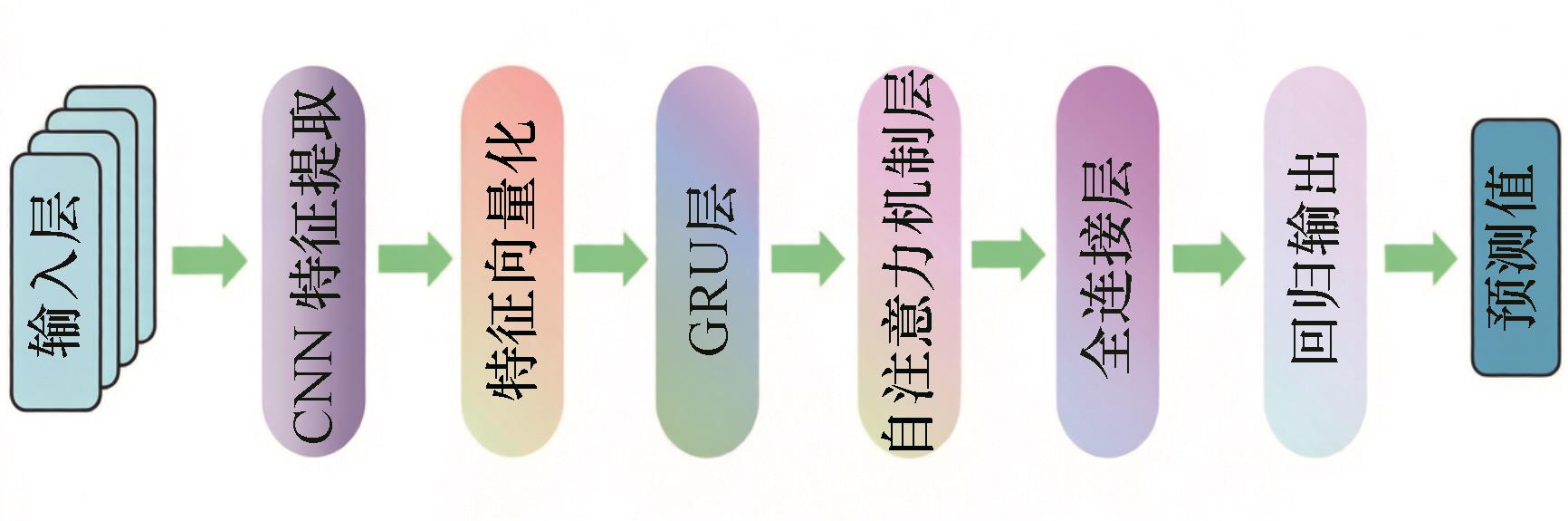
图1 模型整体框架
Fig.1 Overall framework of the proposed model
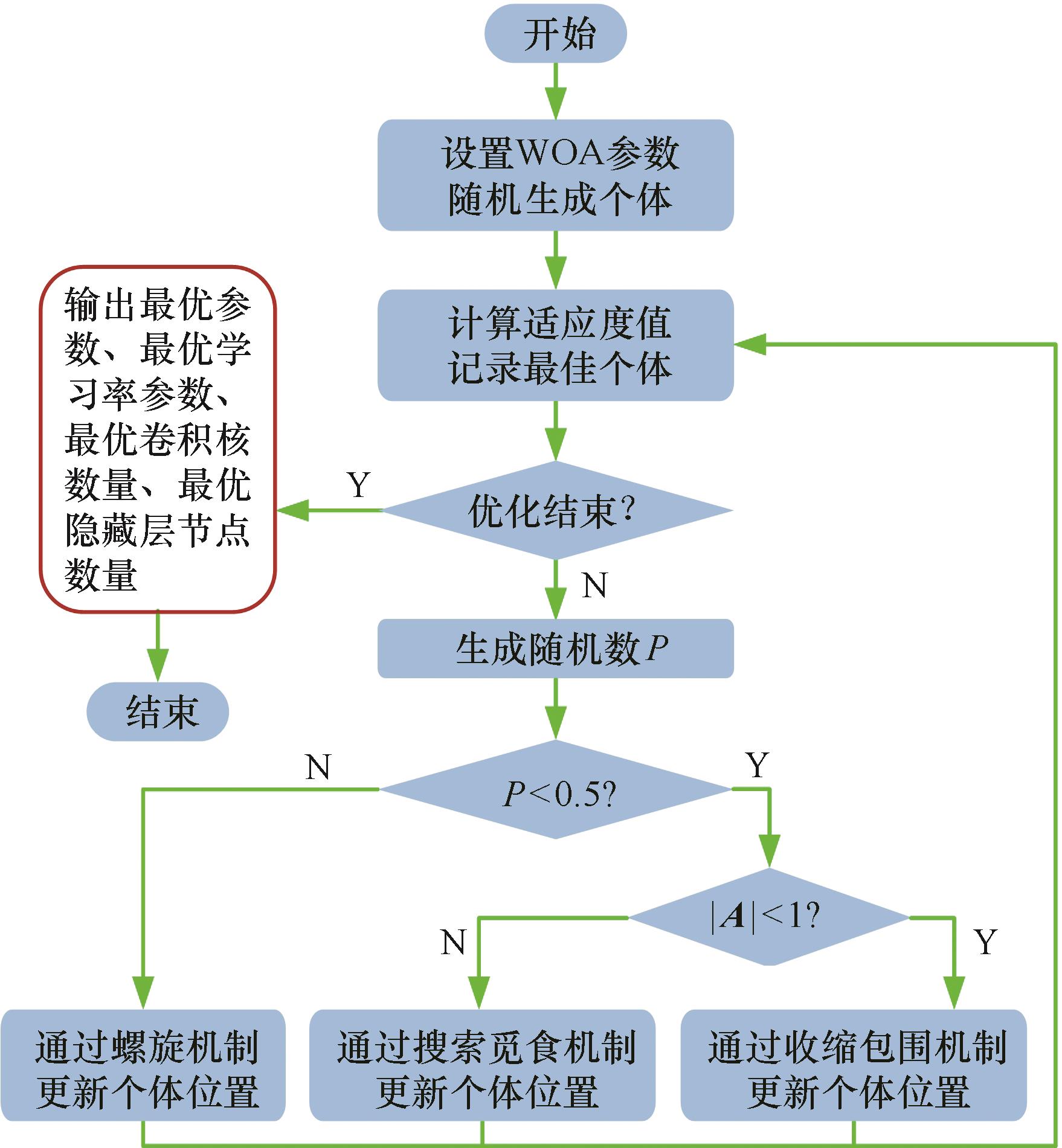
图2 WOA优化流程图
Fig.2 WOA optimization flowchart
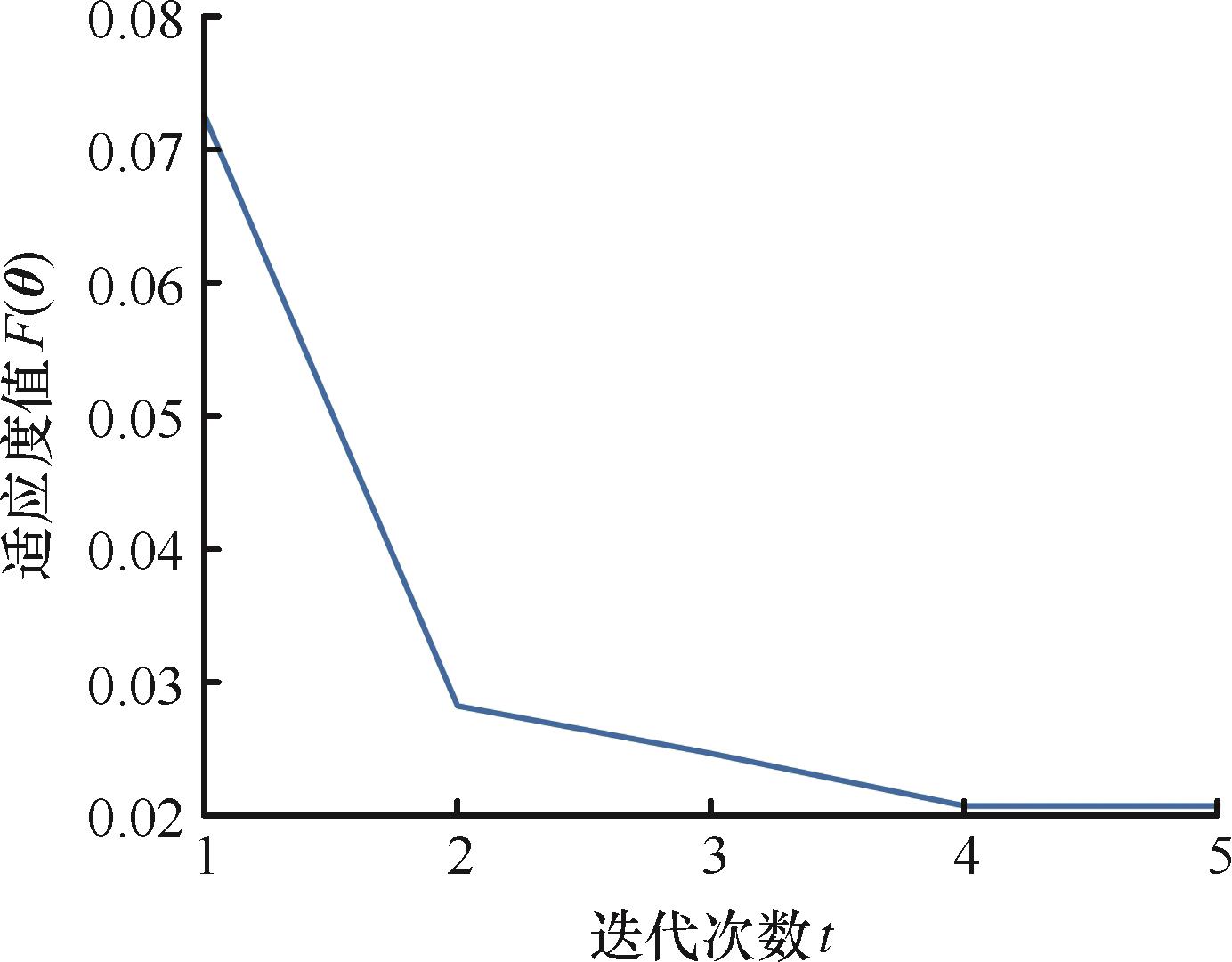
图3 WOA收敛曲线
Fig. 3 WOA convergence curve
| 优化变量 | 类型 | 搜索范围 |
|---|---|---|
| 学习率η | 连续 | [0.001,0.01] |
| GRU隐藏层单元数H | 整数 | [50,100] |
| L2正则化系数λ | 连续 | [0.0001,0.1] |
表1 WOA优化的关键超参数与搜索范围
Tab.1 Key hyperparameters optimized by WOA and their search ranges
| 优化变量 | 类型 | 搜索范围 |
|---|---|---|
| 学习率η | 连续 | [0.001,0.01] |
| GRU隐藏层单元数H | 整数 | [50,100] |
| L2正则化系数λ | 连续 | [0.0001,0.1] |
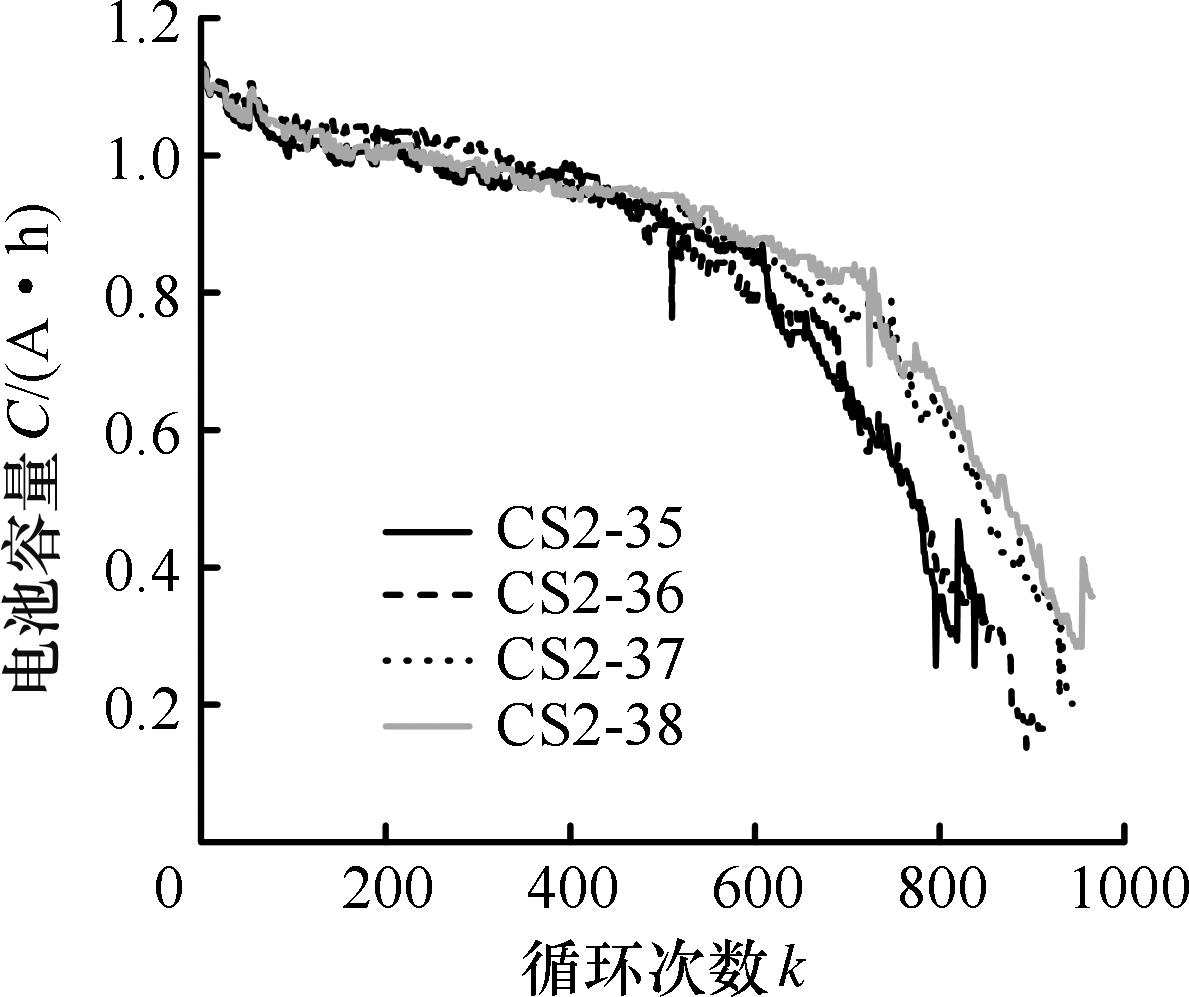
图4 容量随循环次数变化轨迹
Fig.4 Capacity variation trajectory with cycle number
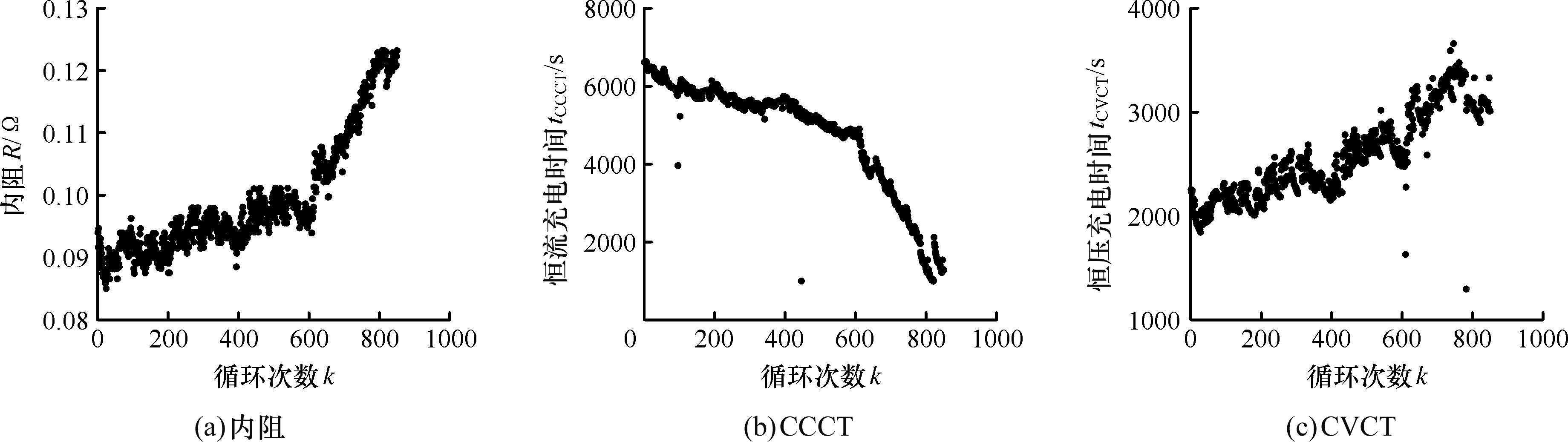
图5 内阻、CCCT、CVCT随循环次数的变化关系
Fig.5 Relationship between cycle number and internal resistance, CCCT, CVCT
| 阶段 | 数据来源 | 划分规则 | 循环数 | 窗口参数 (L,s) | 样本数 |
|---|---|---|---|---|---|
| 训练 | CS35+CS36+CS38 | 全寿命循环 | 2728 | (1, 1) | 2728 |
| 验证 | CS37 | 前 80% 循环(按时间顺序) | 755 | (1, 1) | 755 |
| 测试 | CS37 | 后20%循环(按时间顺序) | 189 | (1, 1) | 189 |
表3 数据集划分
Tab.3 Dataset split
| 阶段 | 数据来源 | 划分规则 | 循环数 | 窗口参数 (L,s) | 样本数 |
|---|---|---|---|---|---|
| 训练 | CS35+CS36+CS38 | 全寿命循环 | 2728 | (1, 1) | 2728 |
| 验证 | CS37 | 前 80% 循环(按时间顺序) | 755 | (1, 1) | 755 |
| 测试 | CS37 | 后20%循环(按时间顺序) | 189 | (1, 1) | 189 |
| 模型 | 输入(L×F) | CNN配置(filters/层数) | RNN(类型/层数/单元) | Attention | Dropout | 输出 |
|---|---|---|---|---|---|---|
| WOA-CNN-GRU-SA | 1×3 | 16→32(2层) | GRU/2层/h* | Self-Attention×2 | 0.01 | 1 |
| WOA-CNN-LSTM-SA | 1×3 | 16→32(2层) | LSTM/2层/h* | Self-Attention×2 | 0.01 | 1 |
| WOA-CNN-GRU | 1×3 | 16→32(2层) | GRU/2层/h* | 无 | 0.01 | 1 |
| WOA-CNN-LSTM | 1×3 | 16→32(2层) | LSTM/2层/h* | 无 | 0.01 | 1 |
| CNN-GRU | 1×3 | 16→32(2层) | GRU/2层/h0 | 无 | 0.01 | 1 |
| CNN-LSTM | 1×3 | 16→32(2层) | LSTM/2层/h0 | 无 | 0.01 | 1 |
表4 基线模型参数设置
Tab.4 Baseline model parameter settings
| 模型 | 输入(L×F) | CNN配置(filters/层数) | RNN(类型/层数/单元) | Attention | Dropout | 输出 |
|---|---|---|---|---|---|---|
| WOA-CNN-GRU-SA | 1×3 | 16→32(2层) | GRU/2层/h* | Self-Attention×2 | 0.01 | 1 |
| WOA-CNN-LSTM-SA | 1×3 | 16→32(2层) | LSTM/2层/h* | Self-Attention×2 | 0.01 | 1 |
| WOA-CNN-GRU | 1×3 | 16→32(2层) | GRU/2层/h* | 无 | 0.01 | 1 |
| WOA-CNN-LSTM | 1×3 | 16→32(2层) | LSTM/2层/h* | 无 | 0.01 | 1 |
| CNN-GRU | 1×3 | 16→32(2层) | GRU/2层/h0 | 无 | 0.01 | 1 |
| CNN-LSTM | 1×3 | 16→32(2层) | LSTM/2层/h0 | 无 | 0.01 | 1 |
| Layer | Activation function | Output data shape |
|---|---|---|
| Input | N/A | None,1,3 |
| CNN1(Convolutional 2D) | Relu | None,1,16 |
| CNN2(Convolutional 2D) | Relu | None,1,32 |
| Pooling Layer | N/A | None,1,32 |
| Flatten Layer | N/A | None,32 |
| GRU Layer 1 | Tanh | None,1,50 |
| Self-Attention Layer 1 | N/A | None,1,50 |
| Fully Connected Layer 1 | N/A | None,1,1 |
| Dropout Layer | N/A | None,1,1 |
| GRU Layer 2 | Tanh | None,50 |
| Self-Attention Layer 2 | N/A | None,50 |
| Fully Connected Layer 2 | N/A | None,1 |
| Output | N/A | None,1 |
表5 神经网络的具体结构
Tab.5 Detailed neural network architecture
| Layer | Activation function | Output data shape |
|---|---|---|
| Input | N/A | None,1,3 |
| CNN1(Convolutional 2D) | Relu | None,1,16 |
| CNN2(Convolutional 2D) | Relu | None,1,32 |
| Pooling Layer | N/A | None,1,32 |
| Flatten Layer | N/A | None,32 |
| GRU Layer 1 | Tanh | None,1,50 |
| Self-Attention Layer 1 | N/A | None,1,50 |
| Fully Connected Layer 1 | N/A | None,1,1 |
| Dropout Layer | N/A | None,1,1 |
| GRU Layer 2 | Tanh | None,50 |
| Self-Attention Layer 2 | N/A | None,50 |
| Fully Connected Layer 2 | N/A | None,1 |
| Output | N/A | None,1 |
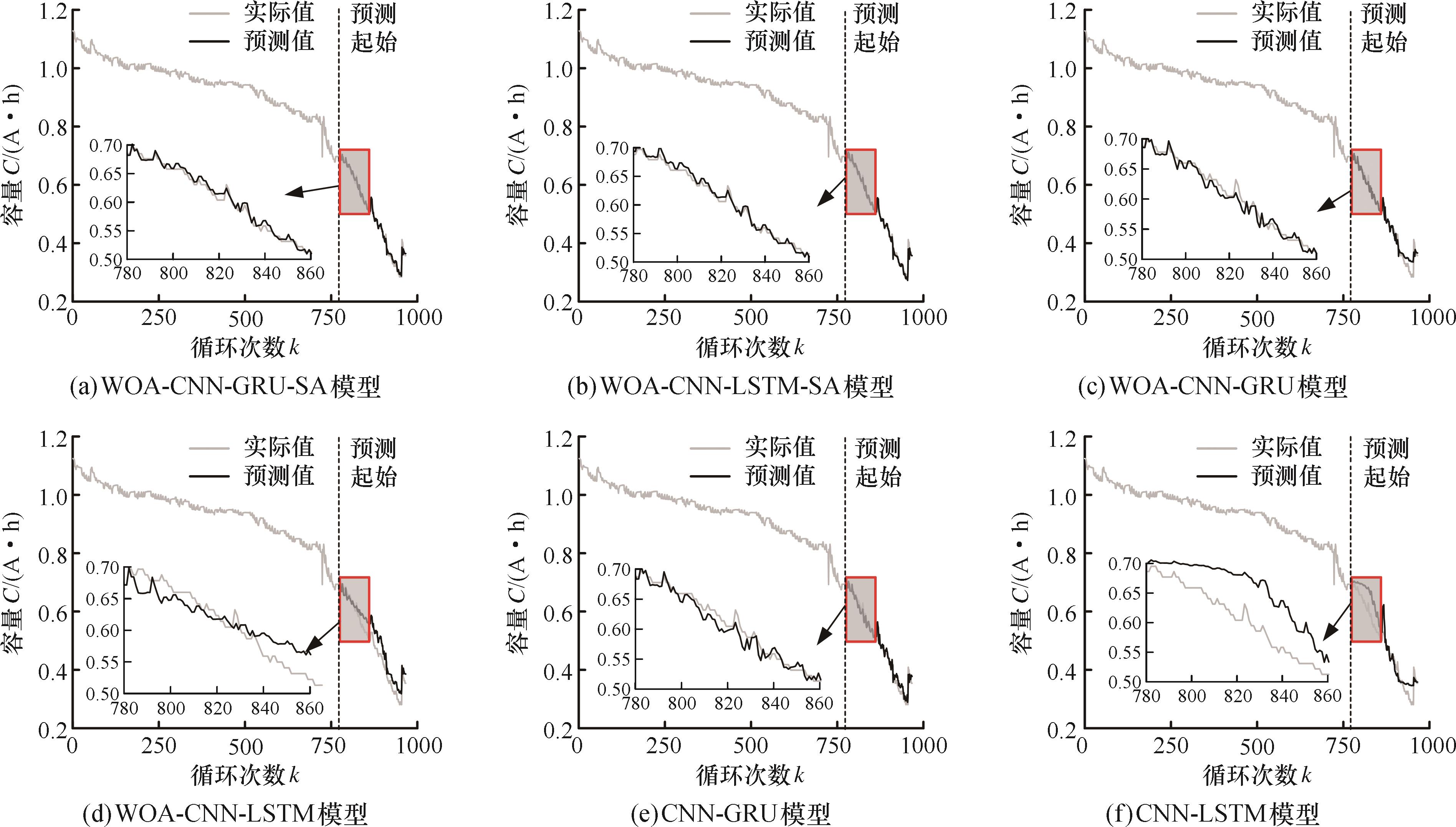
图6 不同模型预测曲线和电池的真实值曲线
Fig.6 Prediction curves of different models and the real value curve of the battery
| 模型 | RMSE/% | MSE/% | MAE/% | R2/% |
|---|---|---|---|---|
| WOA-CNN-GRU-SA | 0.809 27±0.006 48 | 0.006 549 4±0.000 105 0 | 0.554 40±0.005 94 | 99.840±0.007 |
| WOA-CNN-LSTM-SA | 0.902 70±0.007 90 | 0.008 149 1±0.000 142 7 | 0.640 10±0.007 25 | 99.802±0.010 |
| WOA-CNN-GRU | 1.388 73±0.012 81 | 0.019 286 9±0.000 355 8 | 0.878 83±0.010 41 | 99.532±0.016 |
| WOA-CNN-LSTM | 2.138 90±0.019 04 | 0.045 751 3±0.000 813 8 | 1.530 23±0.024 38 | 98.880±0.040 |
| CNN-GRU | 1.472 20±0.014 36 | 0.021 675 1±0.000 423 1 | 1.080 57±0.014 36 | 99.472±0.021 |
| CNN-LSTM | 2.764 80±0.028 75 | 0.076 446 7±0.001 588 4 | 2.014 53±0.029 21 | 98.148±0.066 |
表6 各算法的预测结果
Tab.2 Prediction results of each algorithm
| 模型 | RMSE/% | MSE/% | MAE/% | R2/% |
|---|---|---|---|---|
| WOA-CNN-GRU-SA | 0.809 27±0.006 48 | 0.006 549 4±0.000 105 0 | 0.554 40±0.005 94 | 99.840±0.007 |
| WOA-CNN-LSTM-SA | 0.902 70±0.007 90 | 0.008 149 1±0.000 142 7 | 0.640 10±0.007 25 | 99.802±0.010 |
| WOA-CNN-GRU | 1.388 73±0.012 81 | 0.019 286 9±0.000 355 8 | 0.878 83±0.010 41 | 99.532±0.016 |
| WOA-CNN-LSTM | 2.138 90±0.019 04 | 0.045 751 3±0.000 813 8 | 1.530 23±0.024 38 | 98.880±0.040 |
| CNN-GRU | 1.472 20±0.014 36 | 0.021 675 1±0.000 423 1 | 1.080 57±0.014 36 | 99.472±0.021 |
| CNN-LSTM | 2.764 80±0.028 75 | 0.076 446 7±0.001 588 4 | 2.014 53±0.029 21 | 98.148±0.066 |
| 数据集 | RMSE/% | MSE/% | MAE/% | R2/% |
|---|---|---|---|---|
| 训练集 | 0.792 30 | 0.006 277 4 | 0.543 10 | 99.852 |
| 验证集 | 0.807 90 | 0.006 527 0 | 0.552 80 | 99.842 |
| 测试集 | 0.809 27 | 0.006 549 4 | 0.554 40 | 99.840 |
表7 训练集、验证集与测试集上的预测性能对比
Tab.7 Comparison of prediction performance on the training, validation, and test sets
| 数据集 | RMSE/% | MSE/% | MAE/% | R2/% |
|---|---|---|---|---|
| 训练集 | 0.792 30 | 0.006 277 4 | 0.543 10 | 99.852 |
| 验证集 | 0.807 90 | 0.006 527 0 | 0.552 80 | 99.842 |
| 测试集 | 0.809 27 | 0.006 549 4 | 0.554 40 | 99.840 |
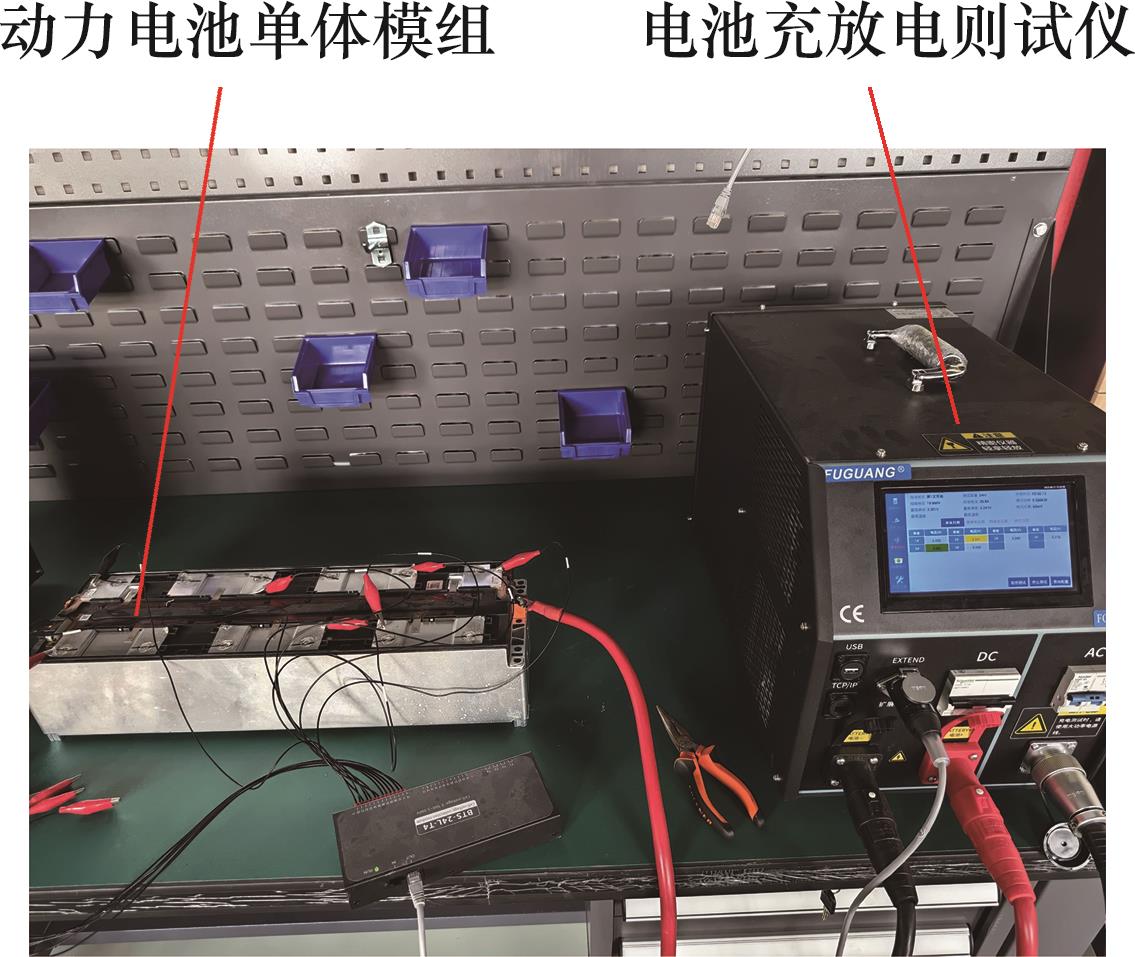
图7 电池充放电测试平台
Fig.7 Battery charge and discharge testing platform
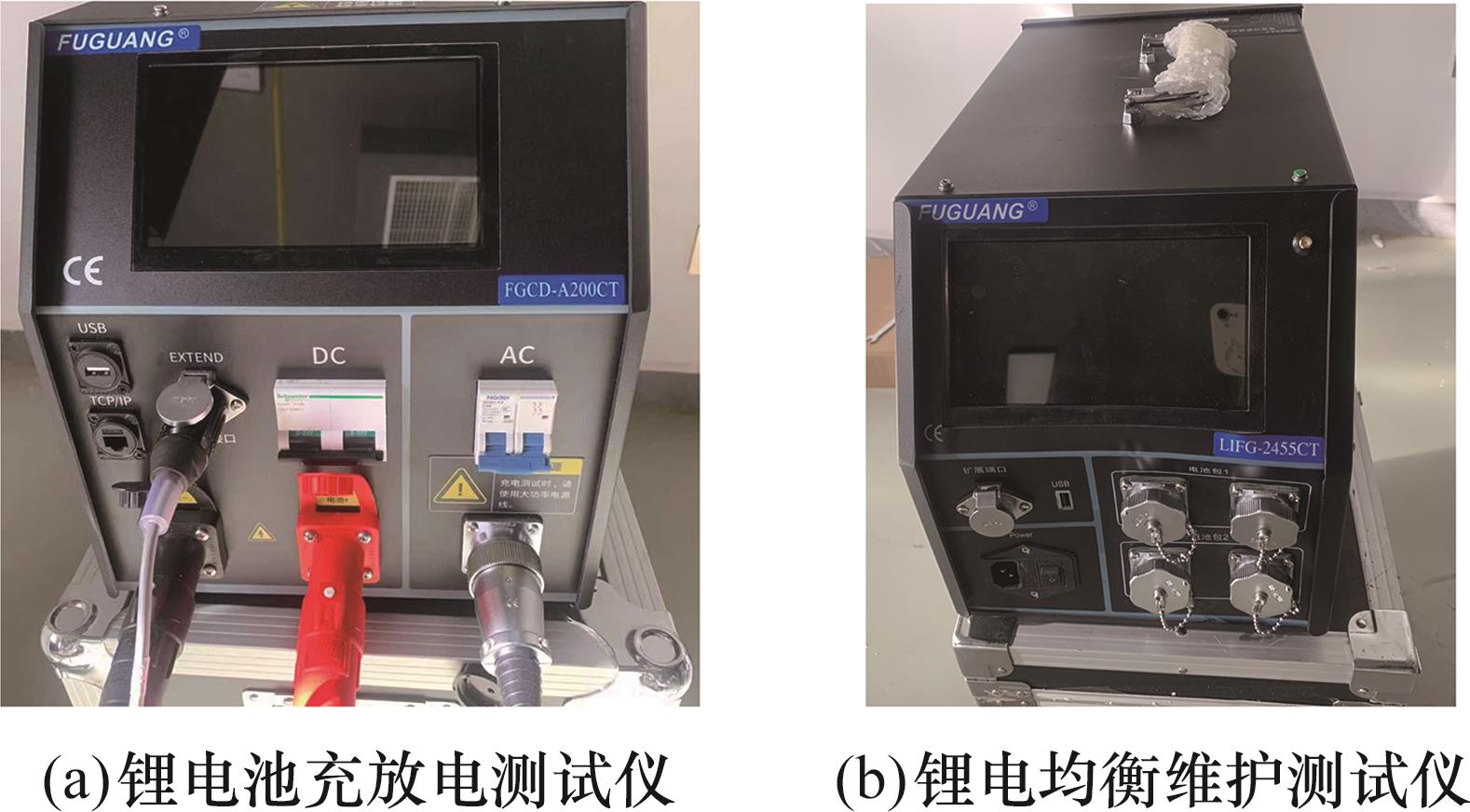
图8 锂电池充放电测试仪和锂电均衡维护测试仪
Fig.8 Lithium-ion battery charge-discharge tester and lithium battery balancing and maintenance tester
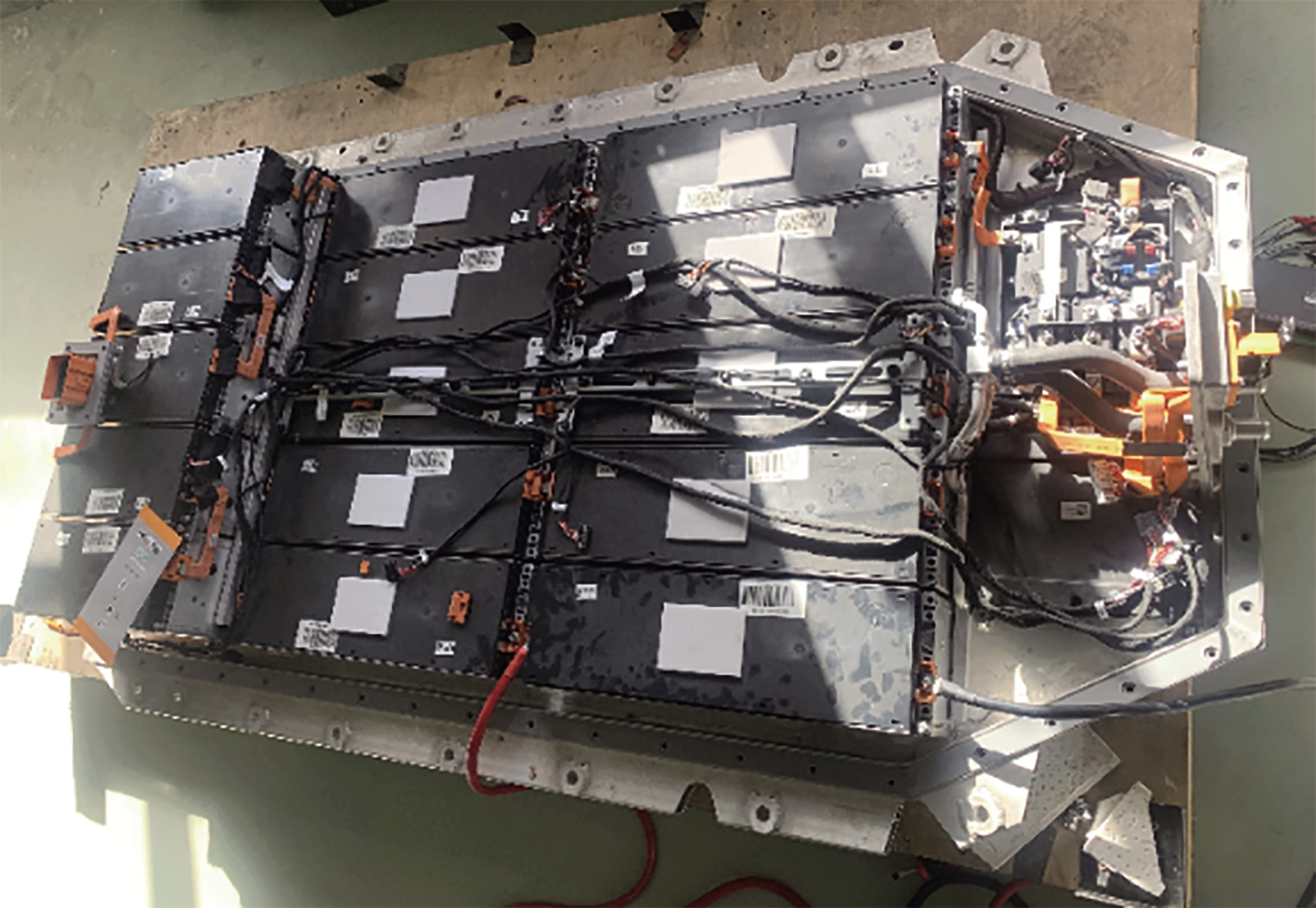
图9 三元锂离子动力电池总成系统
Fig.9 Ternary lithium-ion power battery pack system
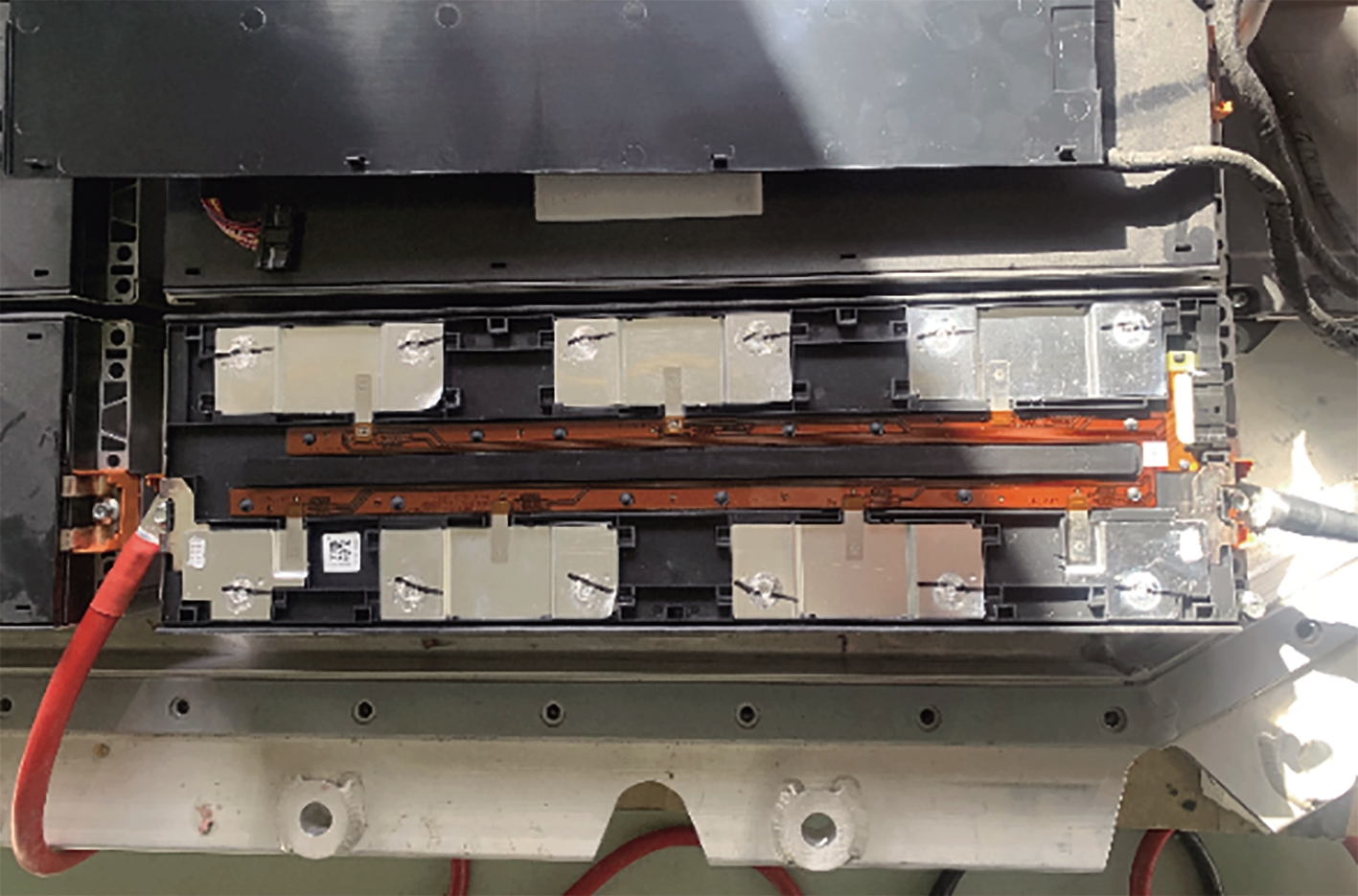
图10 三元锂离子动力电池总成系统单体模组
Fig.10 Single module of the ternary lithium-ion power battery pack system
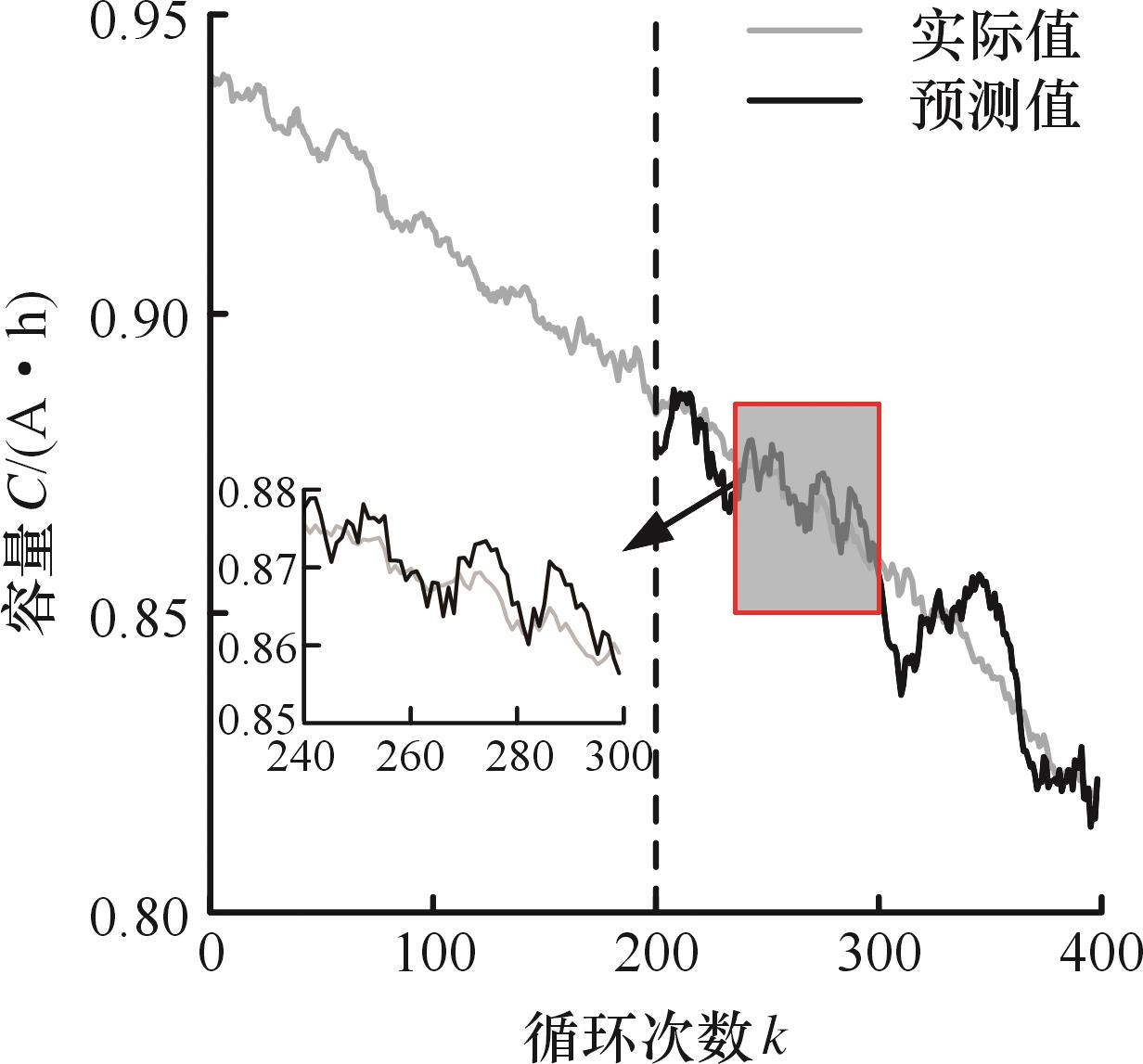
图11 预测结果图
Fig.11 Prediction results plot
| 起点 | 真实RUL | 预测RUL | AE | RE | MAPE | RMSE |
|---|---|---|---|---|---|---|
| 213 | 247 | 225 | 22 | 0.0145 | 0.0058 | 0.0065 |
| 246 | 207 | 210 | 3 | 0.0145 | 0.0060 | 0.0067 |
| 314 | 124 | 124 | 0 | 0 | 0.0065 | 0.0070 |
表8 不同起点下的 RUL 预测结果及误差指标
Tab.8 RUL prediction results and error metrics under different starting points
| 起点 | 真实RUL | 预测RUL | AE | RE | MAPE | RMSE |
|---|---|---|---|---|---|---|
| 213 | 247 | 225 | 22 | 0.0145 | 0.0058 | 0.0065 |
| 246 | 207 | 210 | 3 | 0.0145 | 0.0060 | 0.0067 |
| 314 | 124 | 124 | 0 | 0 | 0.0065 | 0.0070 |
| [1] | LI J, HE S, YANG Q, et al. A Comprehensive Review of Second Life Batteries Toward Sustainable Mechanisms: Potential, Challenges, and Future Prospects[J]. IEEE Transactions on Transportation Electrification, 2023, 9(4): 4824-4845. |
| [2] | CHEN Y, SHI P, CHANG D, et al. Selective Extraction of Valuable Metals from Spent EV Power Batteries Using Sulfation Roasting and Two Stage Leaching Process[J]. Separation and Purification Technology, 2021, 258: 118078. |
| [3] | CONTESTABILE M, PANERO S, SCROSATI B. A Laboratory-scale Lithium-ion Battery Recycling Process[J]. Journal of Power Sources, 2001, 92(1/2): 65-69. |
| [4] | HARPER G, SOMMERVILLE R, KENDRICK E, et al. Recycling Lithium-ion Batteries from Electric Vehicles[J]. Nature, 2019, 575(7781): 75-86. |
| [5] | ZHENG X, ZHU Z, LIN X, et al. A Mini-review on Metal Recycling from Spent Lithium Ion Batteries[J]. Engineering, 2018, 4(3): 361-370. |
| [6] | IQBAL H, SARWAR S, KIRLI D, et al. A Survey of Second-life Batteries Based on Techno-economic Perspective and Applications-based Analysis[J]. Carbon Neutrality, 2023, 2(1): 8. |
| [7] | NIE Y, WANG Y, LI L, et al. Literature Review on Power Battery Echelon Reuse and Recycling from a Circular Economy Perspective[J]. International Journal of Environmental Research and Public Health, 2023, 20(5): 4346. |
| [8] | MARTINEZ-LASERNA E, GANDIAGA I, SARASKETA- ZABALA E, et al. Battery Second Life: Hype, Hope or Reality? a Critical Review of the State of the Art[J]. Renewable and Sustainable Energy Reviews, 2018, 93: 701-718. |
| [9] | LIU Z, LIU X, HAO H, et al. Research on the Critical Issues for Power Battery Reusing of New Energy Vehicles in China[J]. Energies, 2020, 13(8): 1932. |
| [10] | LIU Z, ZHOU T, YANG H, et al. A Review of the Resourceful Utilization Status for Decommissioned Power Batteries[J]. Energies, 2023, 16(23): 7869. |
| [11] | GE M, LIU Y, JIANG X, et al. A Review on State of Health Estimations and Remaining Useful Life Prognostics of Lithium-ion Batteries[J]. Measurement, 2021, 174: 109057. |
| [12] | FAN G. Systematic Parameter Identification of a Control-oriented Electrochemical Battery Model and Its Application for State of Charge Estimation at Various Operating Conditions[J]. Journal of Power Sources, 2020, 470: 228153. |
| [13] | BRUCH M, MILLET L, KOWAL J, et al. Novel Method for the Parameterization of a Reliable Equivalent Circuit Model for the Precise Simulation of a Battery Cell’s Electric Behavior[J]. Journal of Power Sources, 2021, 490: 229513. |
| [14] | HAN X, WANG Z, WEI Z. A Novel Approach for Health Management Online-monitoring of Lithium-ion Batteries Based on Model-data Fusion[J]. Applied Energy, 2021, 302: 117511. |
| [15] | RICHARDSON R R, OSBORNE M A, HOWEY D A. Gaussian Process Regression for Forecasting Battery State of Health[J]. Journal of Power Sources, 2017, 357: 209-219. |
| [16] | ZHOU D, YIN H, FU P, et al. Prognostics for State of Health of Lithium-ion Batteries Based on Gaussian Process Regression[J]. Mathematical Problems in Engineering, 2018, 2018(1): 8358025. |
| [17] | ALI M U, ZAFAR A, MASOOD H, et al. A Hybrid Data-driven Approach for Multistep Ahead Prediction of State of Health and Remaining Useful Life of Lithium-ion Batteries[J]. Computational Intelligence and Neuroscience, 2022, 2022(1): 1575303. |
| [18] | ZHANG M, YIN J, CHEN W. SOH Estimation and RUL Prediction of Lithium Batteries Based on Multidomain Feature Fusion and CatBoost Model[J]. Energy Science & Engineering, 2023, 11(9): 3082-3101. |
| [19] | WU C, FU J, HUANG X, et al. Lithium-ion Battery Health State Prediction Based on VMD and DBO-SVR[J]. Energies, 2023, 16(10): 3993. |
| [20] | WANG K, GAO Q, PANG X, et al. Estimating the Health State of Lithium-ion Batteries Using an Adaptive Gated Sequence Network and Hierarchical Feature Construction[J]. Batteries, 2024, 10(8): 278. |
| [21] | SALEK F, RESALATI S, AZIZI A, et al. State of Health Prediction of Electric Vehicles’ Retired Batteries Based on First-life Historical Degradation Data Using Predictive Time-series Algorithms[J]. Mathematics, 2024, 12(7): 1051. |
| [22] | HE W, WILLIARD N, OSTERMAN M, et al. Prognostics of Lithium-ion Batteries Based on Dempste-shafer Theory and the Bayesian Monte Carlo Method[J]. Journal of Power Sources, 2011, 196(23): 10314-10321. |
| [1] | 张龙, 梁棋钰, 魏骁, 万闯. 基于本构嵌入深度学习模型的板材多点柔性成形回弹预测[J]. 中国机械工程, 2026, 37(6): 1486-1496. |
| [2] | 战庆亮, 曹子涵, 王智勇, 白春锦, 刘鑫. 涡街流量计探头位置优化的流场时程深度学习方法[J]. 中国机械工程, 2026, 37(5): 1105-1110. |
| [3] | 邓晓强, 战韬阳, 项薇, 林文文, 余军合, 郑志鹏. 基于TCN-BiGRU-SE两阶段特征提取与多特征融合的注塑质量预测方法[J]. 中国机械工程, 2026, 37(2): 416-427. |
| [4] | 王春, 申渝秦, 曾权宏, 唐滔. 考虑锂电池老化与热效应的电动汽车SAC能量管理策略[J]. 中国机械工程, 2026, 37(10): 2502-2510. |
| [5] | 王浩, 罗浩东, 施亚中, 王立文, 张威, 王忠. 基于端到端深度学习模型TOPO-U型网的结构拓扑优化方法[J]. 中国机械工程, 2026, 37(1): 174-183. |
| [6] | 崔硕, 刘秀丽, 李相杰, 吴国新. 高端旋转机械剩余使用寿命预测及其不确定性量化评估方法[J]. 中国机械工程, 2026, 37(1): 209-222. |
| [7] | 闫祖龙, 庞启龙, 熊建龙. 基于深度学习的KDP晶体三维已加工表面形貌预测[J]. 中国机械工程, 2025, 36(10): 2329-2334. |
| [8] | 赵昀杰, 贺岩松, 张志飞, 徐中明. 基于生成模型的三维波束形成图像压缩方法[J]. 中国机械工程, 2025, 36(07): 1520-1529. |
| [9] | 曾浩, 曹华军, 董俭雄. 基于ISABO-IBiLSTM模型的刀具磨损预测方法[J]. 中国机械工程, 2024, 35(11): 1995-2006. |
| [10] | 李悦1, 2, 谢恒1, 周公博1, 2, 周坪1, 2, 李猛钢1, 2. 基于半监督贝叶斯Transformer的刀具磨损软测量及不确定性分析方法[J]. 中国机械工程, 2024, 35(11): 2015-2025. |
| [11] | 聂昕, 谭天, 申丹凤. 基于深度学习的汽车梁类件冲压回弹研究[J]. 中国机械工程, 2023, 34(07): 838-846. |
| [12] | 唐东林, 杨洲, 程衡, 刘铭璇, 周立, 丁超. 浅层卷积神经网络融合Transformer的金属缺陷图像识别方法[J]. 中国机械工程, 2022, 33(19): 2298-2305,2316. |
| [13] | 于浩, 黄华贵, 郑加丽, 赵铁琳, 周新亮. 无缝钢管斜轧穿孔顶头表面缺陷非接触在线检测方法[J]. 中国机械工程, 2022, 33(14): 1717-1724. |
| [14] | 杨光友, 刘浪, 习晨博. 自适应辅助分类器生成式对抗网络样本生成模型及轴承故障诊断[J]. 中国机械工程, 2022, 33(13): 1613-1621. |
| [15] | 艾青波, 张洁, 程辉, 吕佑龙, 左丽玲, 胡蓝. 基于PointCPP-LSF方法的航天筒段薄壁件滚弯成形质量分析[J]. 中国机械工程, 2022, 33(08): 977-985. |
| 阅读次数 | ||||||
|
全文 |
|
|||||
|
摘要 |
|
|||||
