



ISSN 1004-132X
CN 42-1294/TH
CN 42-1294/TH
中国机械工程 ›› 2026, Vol. 37 ›› Issue (9): 2343-2353.DOI: 10.3969/j.issn.1004-132X.2026.09.027
• 工程前沿 • 上一篇
陈勇1,2, 左建勇1, 曹文祥2, 刘宏达2, 吴磊3( )
收稿日期:2025-02-20
出版日期:2026-09-25
发布日期:2026-10-21
通讯作者:
吴磊
作者简介:陈勇,男,1981年生,正高级工程师、博士研究生。研究方向为轨道交通控制技术基金资助:
CHEN Yong1,2, ZUO Jianyong1, CAO Wenxiang2, LIU Hongda2, WU Lei3()
Received:2025-02-20
Online:2026-09-25
Published:2026-10-21
Contact:
WU Lei
摘要:
针对虚拟轨道列车因铰接结构与多车轮配置引发的打滑问题,提出了一种三模块分布式防滑控制模型,包含驾驶员控制、防滑控制与转矩协调控制模块。驾驶员控制基于模糊控制算法,以速度误差及其变化率为输入,输出踏板开度,实现车辆目标速度精准跟踪。防滑控制采用基于滑转率偏差的PID算法,调节电机驱动力矩,有效抑制车轮打滑。为解决因力矩差异引起的转向偏差问题,提出“同轴低选”原则,实现同轴车轮力矩协调,保障行驶稳定性。仿真结果表明:该模型在速度控制中的误差小于0.5%;在未施加防滑控制的情况下,车轮滑转率及驱动力矩表现出明显波动,验证了防滑控制措施的必要性;在低附着系数及对接路面工况下,系统可实现滑转率稳定控制与加速性能改善。将该方法与滑模控制方法进行对比实验,结果显示,PID控制在控制精度与系统稳定性方面表现更优。在对开路面工况下,转矩协调模块通过“同轴低选”策略统一同轴车轮力矩,有效避免了转向偏差,提高了车辆操控稳定性。
中图分类号:
陈勇, 左建勇, 曹文祥, 刘宏达, 吴磊. 三模块分布式驱动虚拟轨道列车的驱动防滑控制[J]. 中国机械工程, 2026, 37(9): 2343-2353.
CHEN Yong, ZUO Jianyong, CAO Wenxiang, LIU Hongda, WU Lei. Drive Anti-slip Control of Three-module Distributed Drive Virtual Track Trains[J]. China Mechanical Engineering, 2026, 37(9): 2343-2353.
| 参数 | 数值 |
|---|---|
| 首尾车质量/kg | 7124.24 |
| 中间车质量/kg | 7124.24 |
| 首尾车绕z轴转动惯量/(kg·m2) | 5.41×10⁹ |
| 各车前后轴到质心的距离/m | 2.7 |
| 各车轴距/m | 5.6 |
| 各车轮距/m | 2.4 |
| 质心高度/m | 1.5 |
| 中间车绕z轴转动惯量/(kg·m2) | 5.41×10⁹ |
| 铰接点到前后轴的距离/m | 1.6 |
| 车轮质量/kg | 25 |
表 1 车辆基本参数
Tab. 1 Basic vehicle parameters
| 参数 | 数值 |
|---|---|
| 首尾车质量/kg | 7124.24 |
| 中间车质量/kg | 7124.24 |
| 首尾车绕z轴转动惯量/(kg·m2) | 5.41×10⁹ |
| 各车前后轴到质心的距离/m | 2.7 |
| 各车轴距/m | 5.6 |
| 各车轮距/m | 2.4 |
| 质心高度/m | 1.5 |
| 中间车绕z轴转动惯量/(kg·m2) | 5.41×10⁹ |
| 铰接点到前后轴的距离/m | 1.6 |
| 车轮质量/kg | 25 |
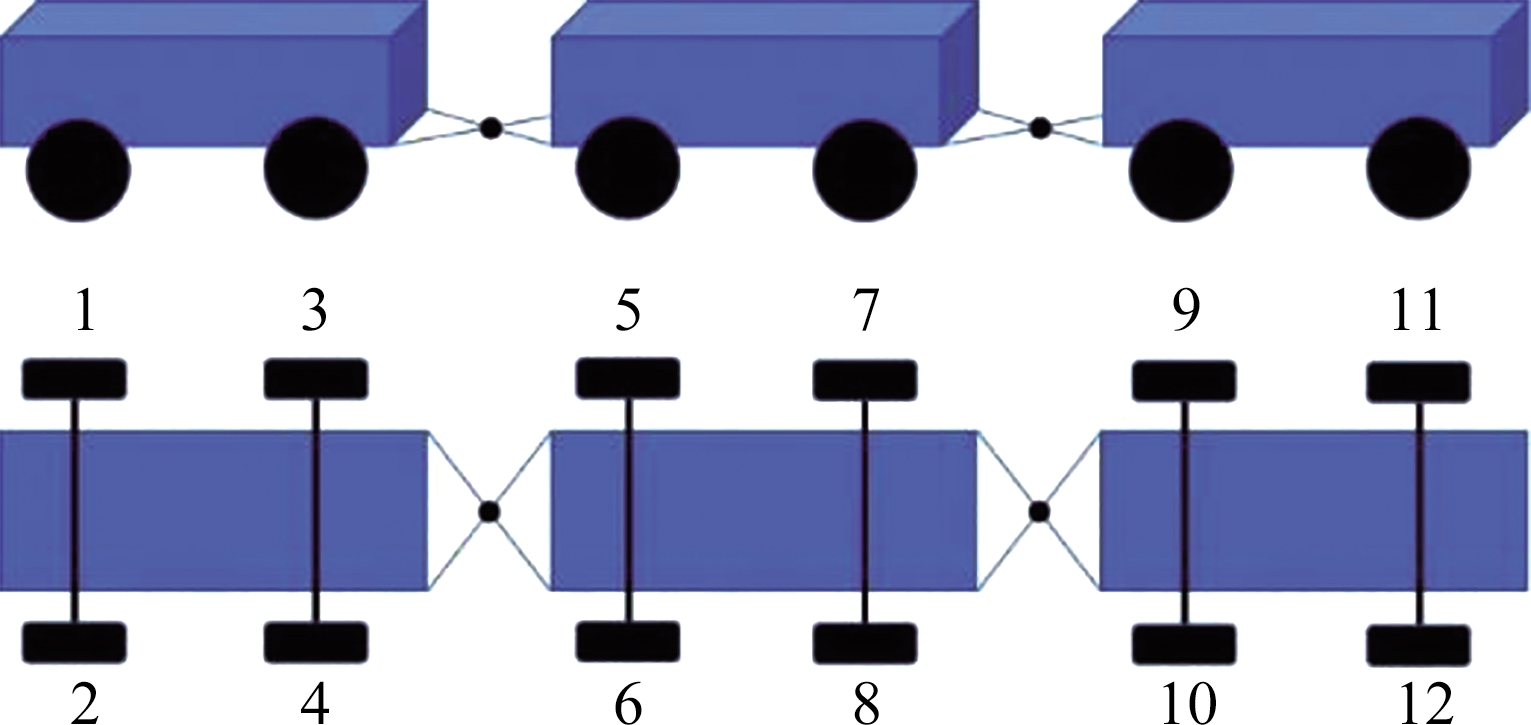
图 1 三模块虚拟轨道列车模型示意图
Fig.1 Schematic diagram of a three-module virtual rail train model
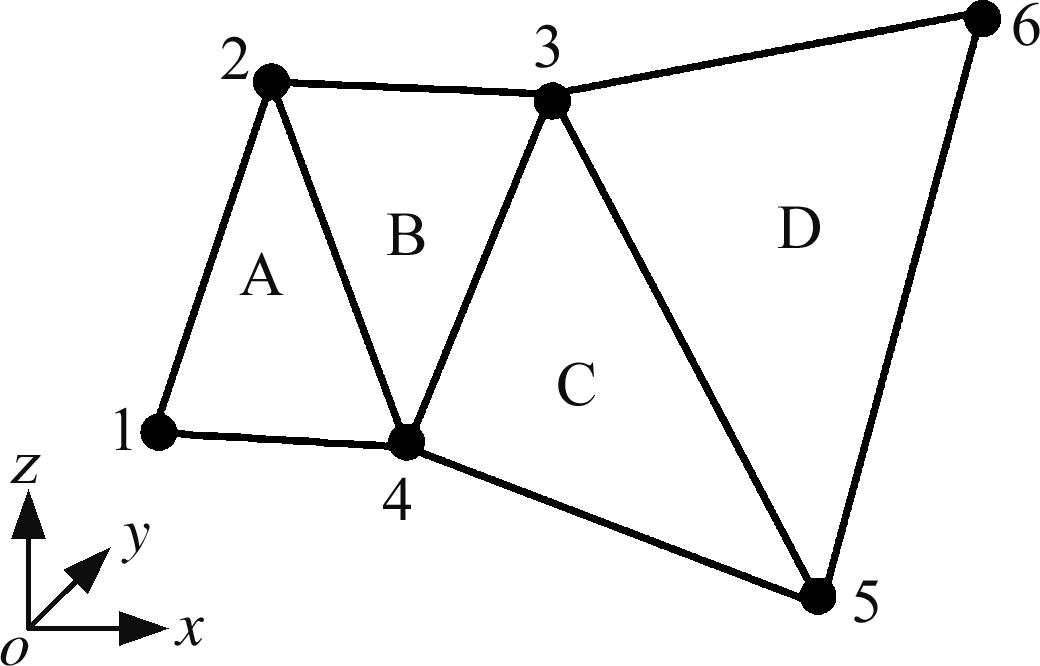
图2 路面创建原理图[19]
Fig.2 Road surface creation schematic[19]
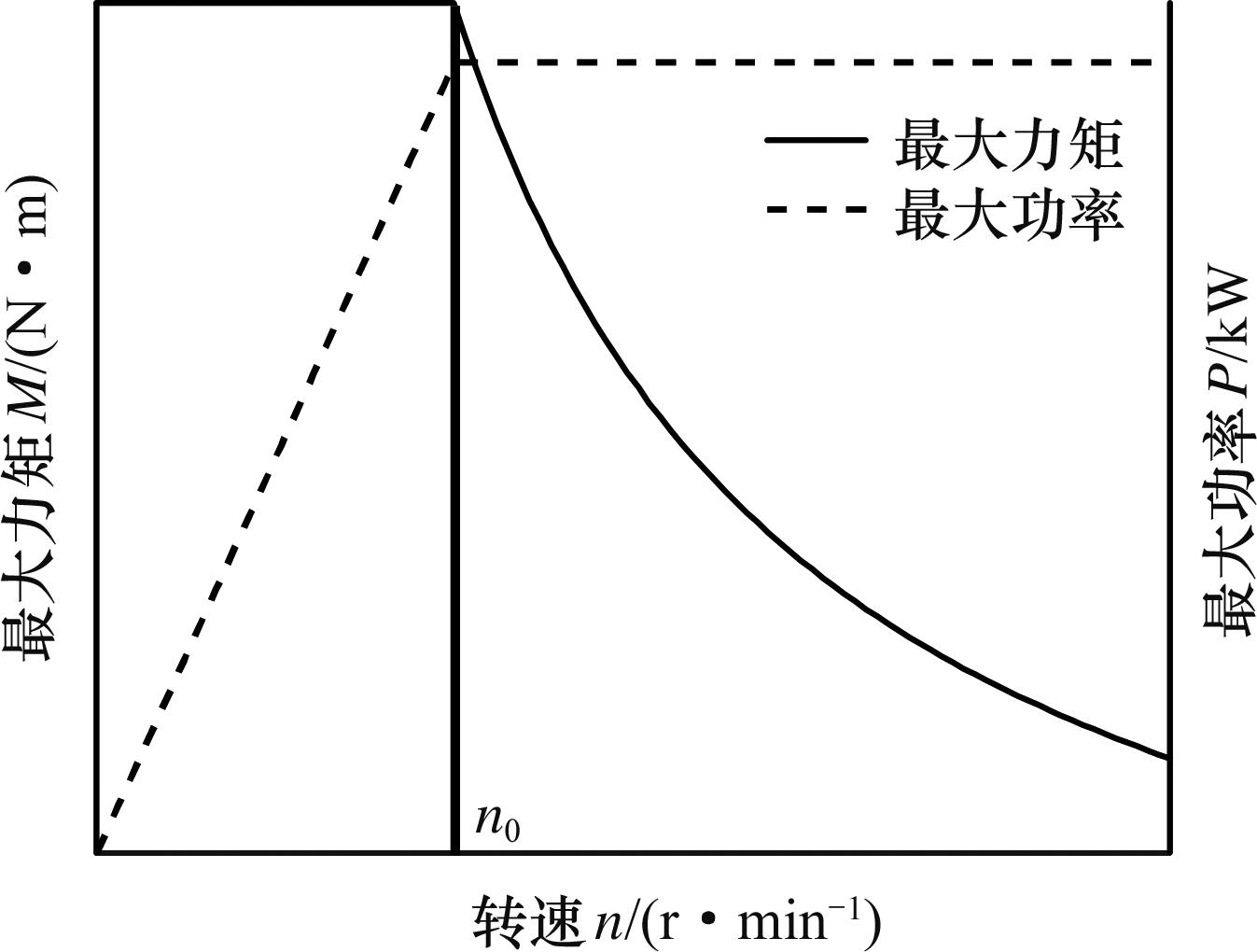
图3 驱动电机外特性曲线
Fig.3 Drive motor external characteristic curve
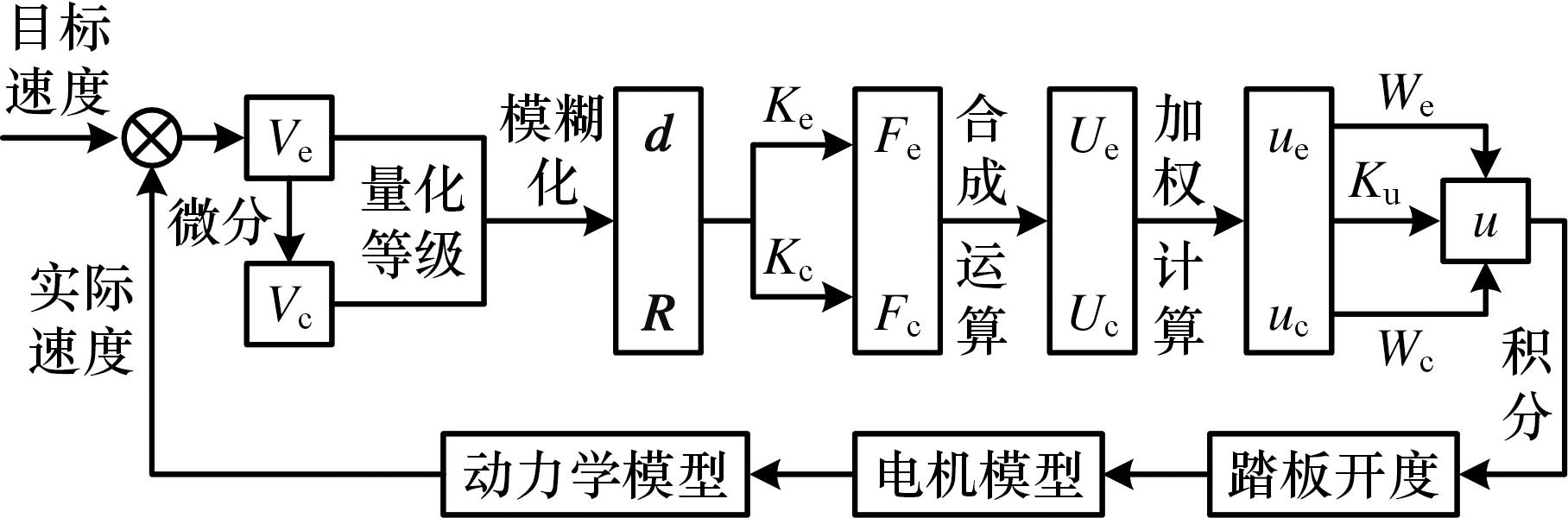
图 4 驾驶员控制模型流程图
Fig.4 Flow chart of driver control model
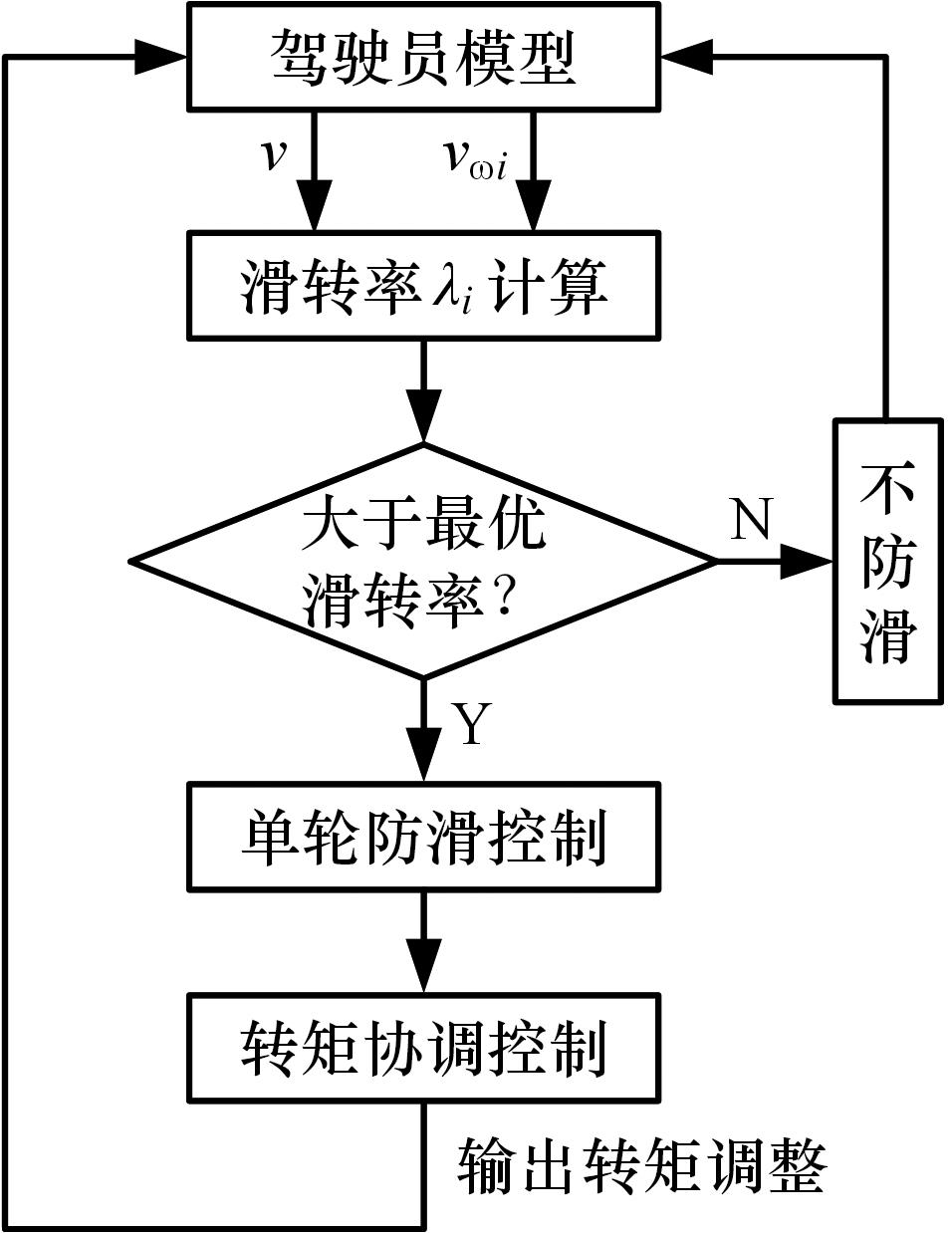
图5 防滑控制模型流程图
Fig.5 Flow chart of anti-slip control model
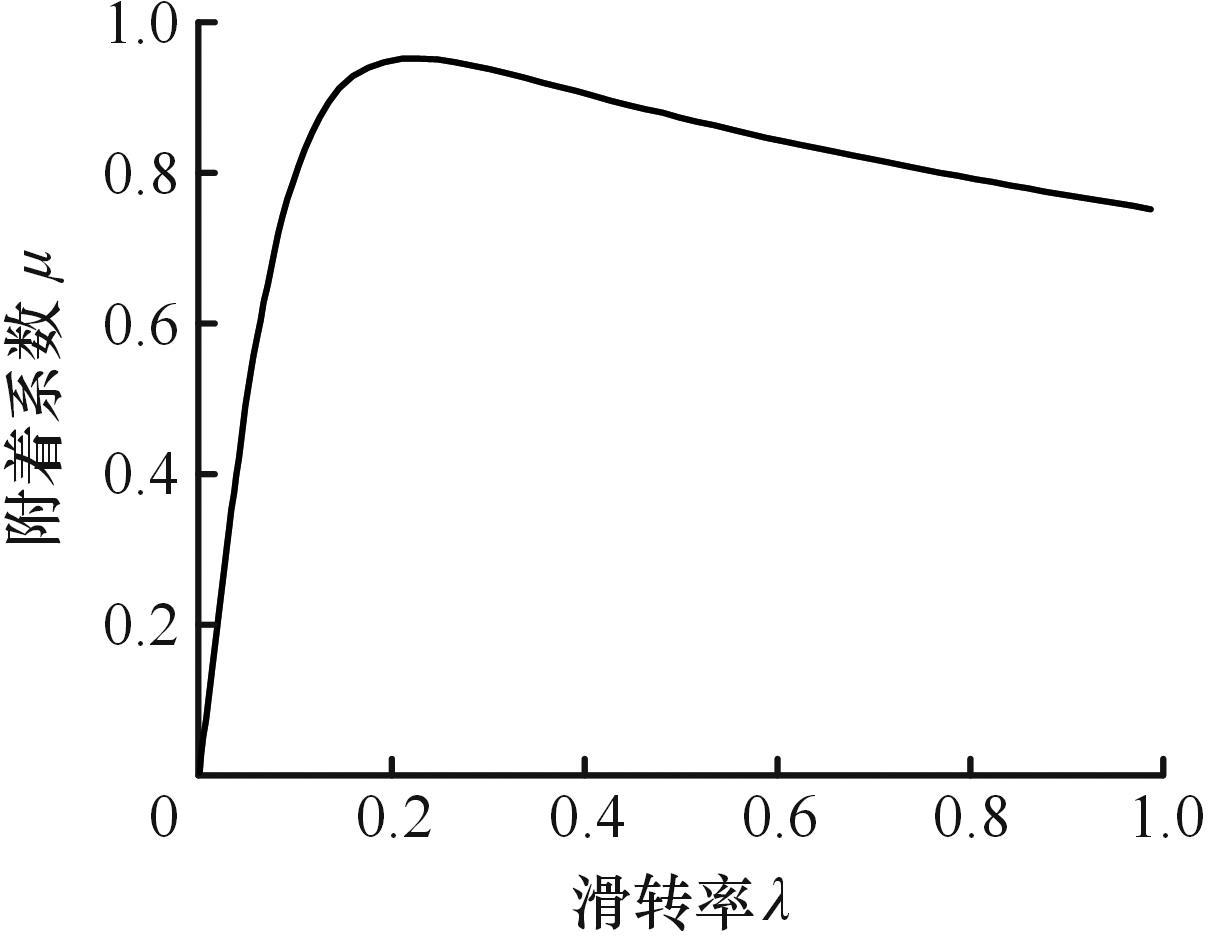
图 6 典型路面下滑转率与附着系数的关系[21]
Fig.6 Relationship between sliding rate and adhesion coefficient of typical road surface[21]
| 路面 | 最优滑转率 |
|---|---|
| 摩擦因数μ=0.2 | 0.35 |
| 摩擦因数μ=0.4 | 0.40 |
表 2 不同路面的最优滑转率
Tab.2 Optimal slip rate for different road surfaces
| 路面 | 最优滑转率 |
|---|---|
| 摩擦因数μ=0.2 | 0.35 |
| 摩擦因数μ=0.4 | 0.40 |
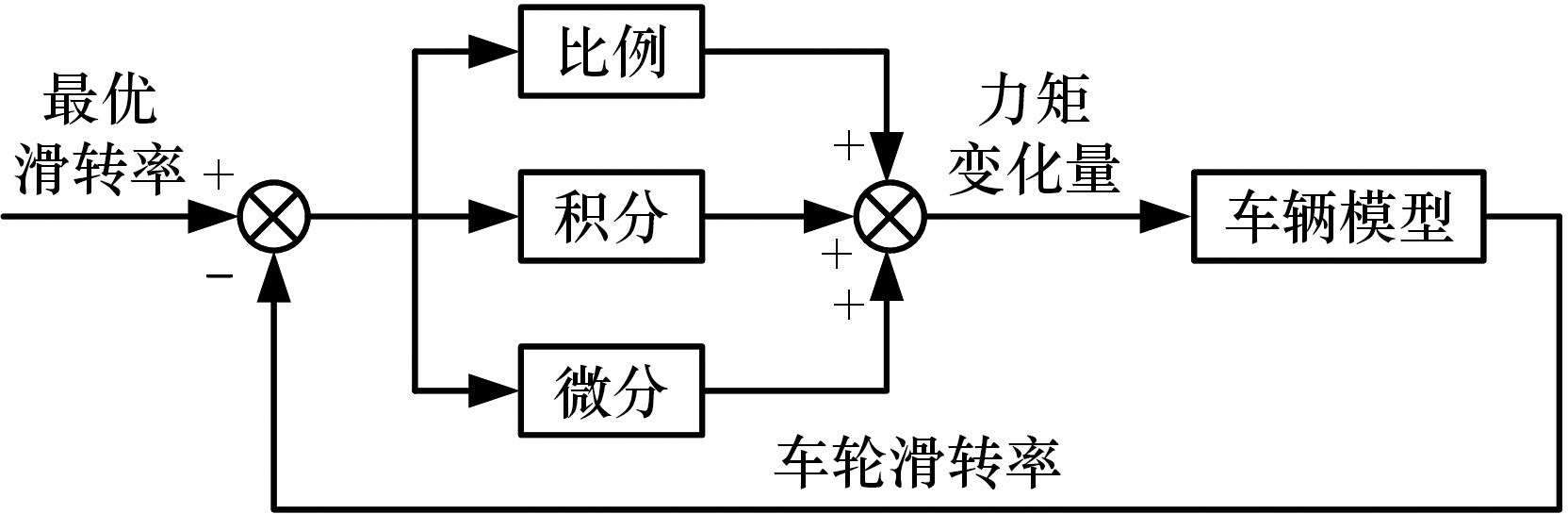
图7 PID防滑控制原理图
Fig.7 Schematic diagram of PID anti-slip control
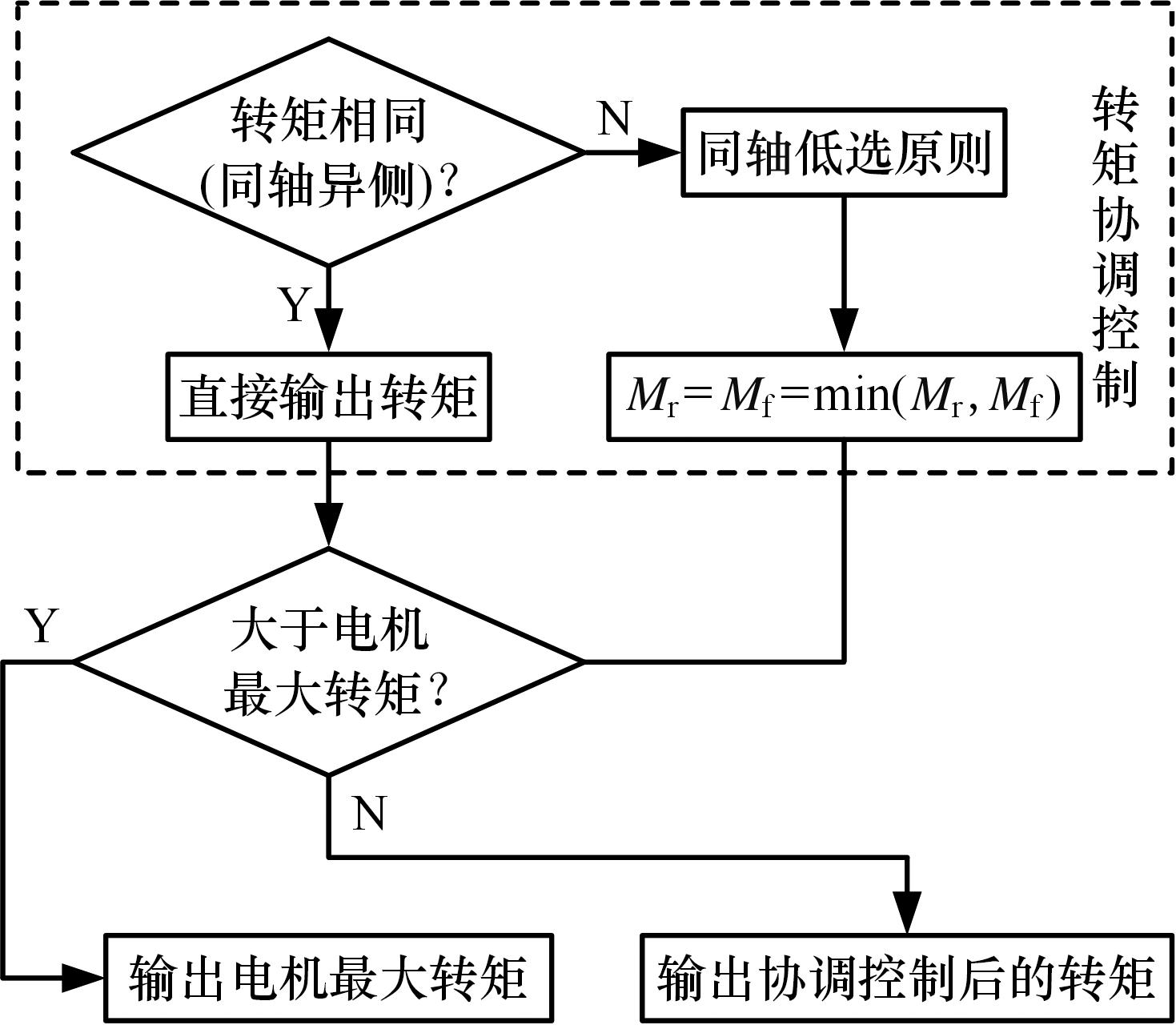
图8 转矩协调控制流程图
Fig.8 Flow chart of torque coordination control
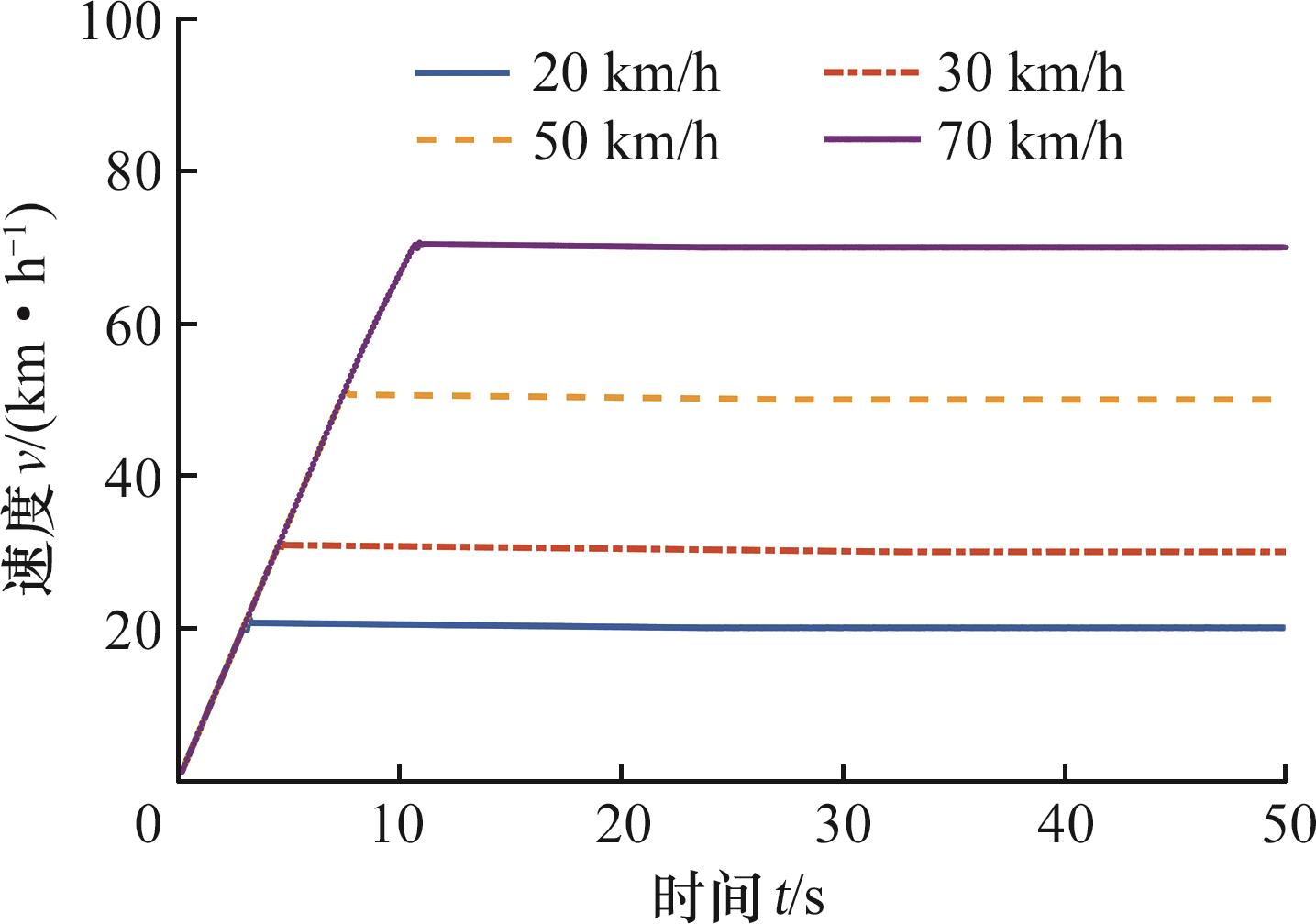
图9 速度控制变化图
Fig.9 Speed control changing diagram
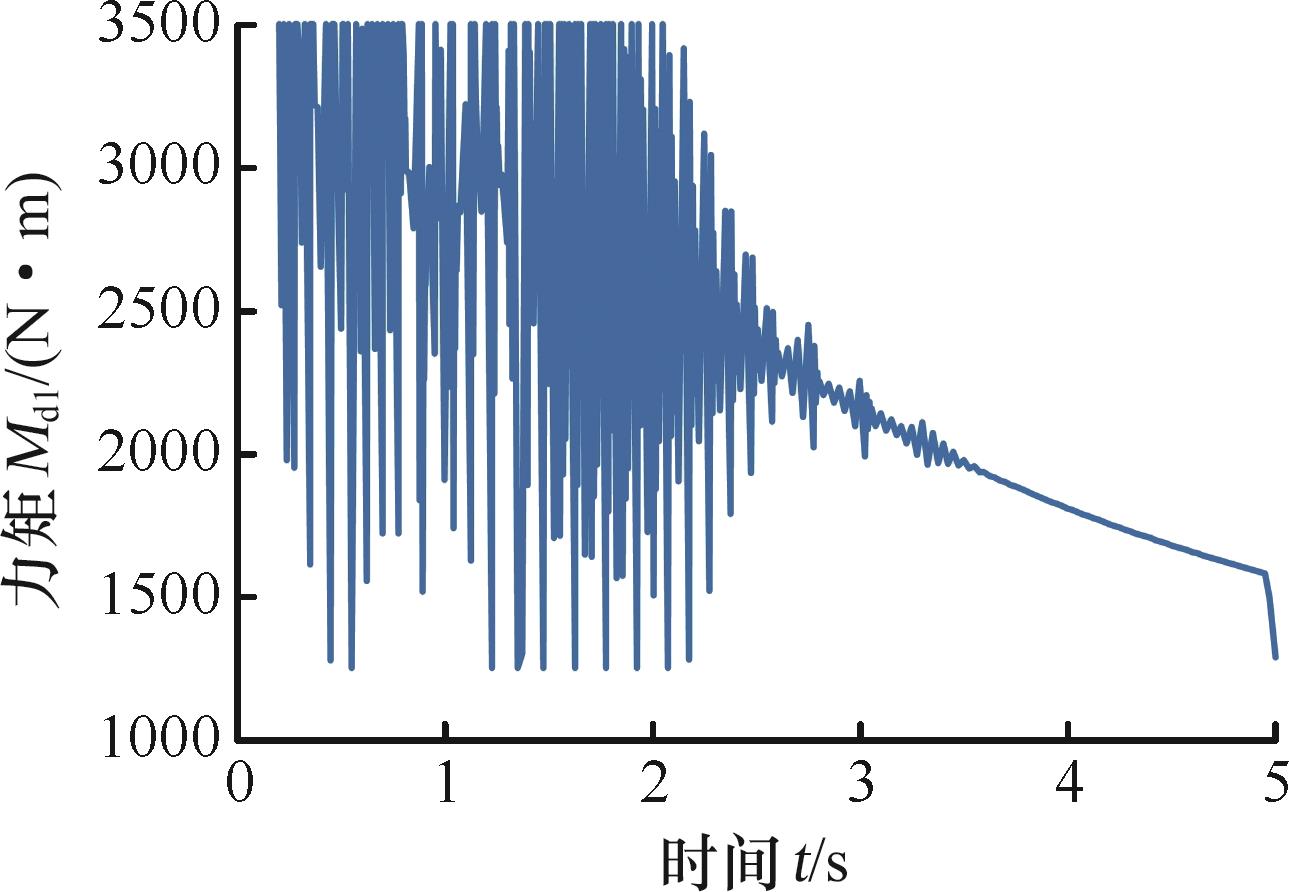
图10 车轮驱动力矩变化曲线
Fig.10 Changing curve of wheel driving torque
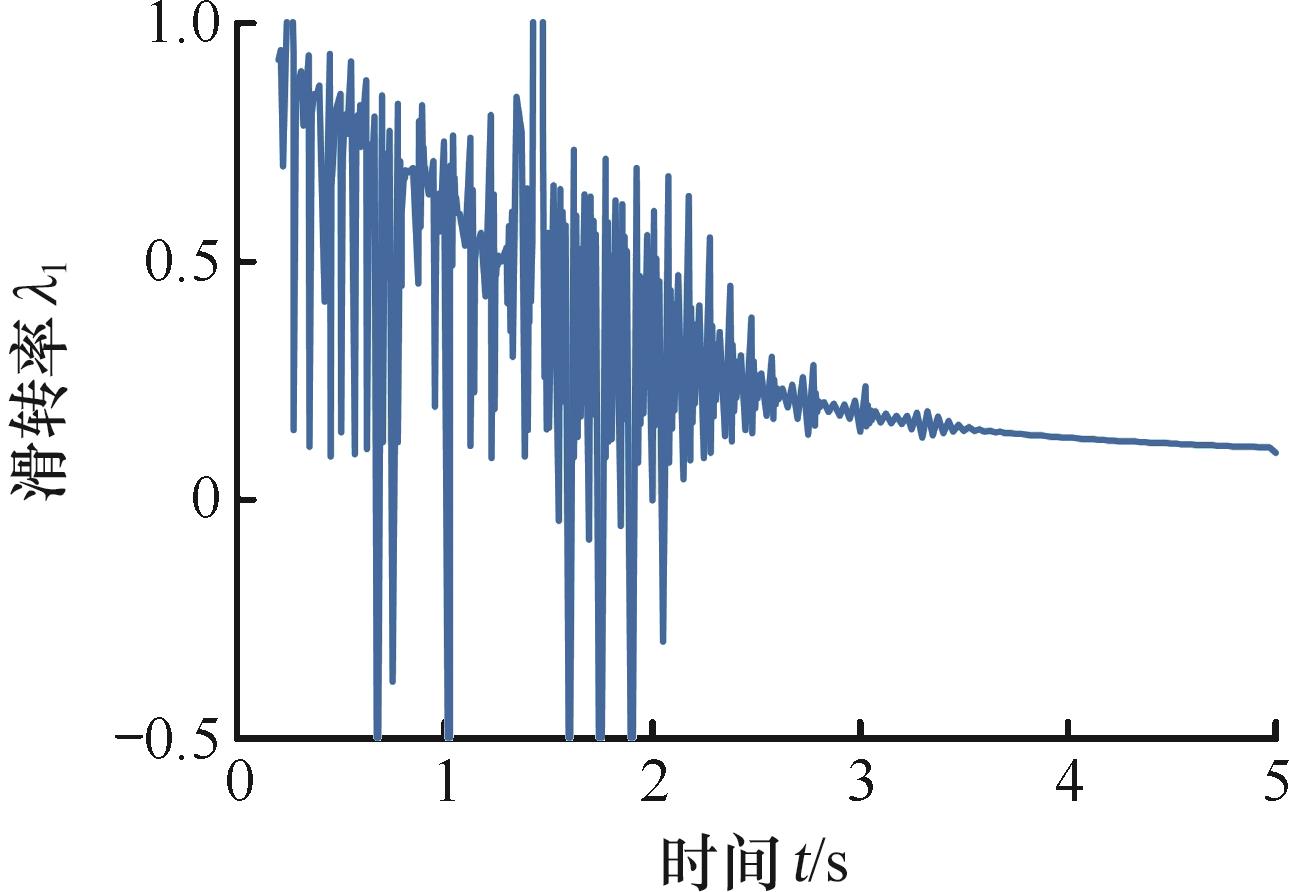
图11 车轮滑转率变化曲线
Fig.11 Changing curve of wheel slip rate
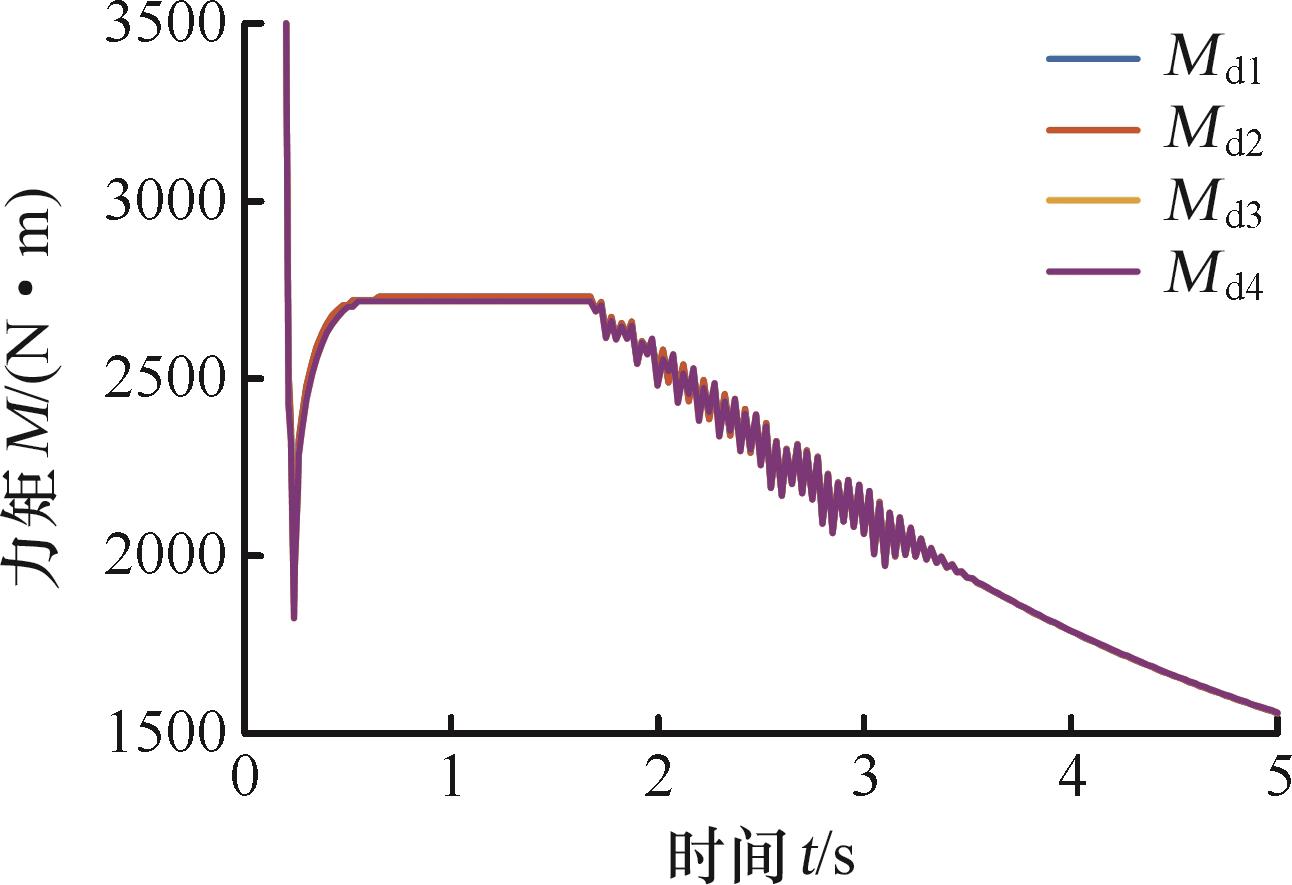
图12 首车车轮力矩变化曲线(路面1)
Fig.12 Changing curves of first car wheel torque (road surface 1)
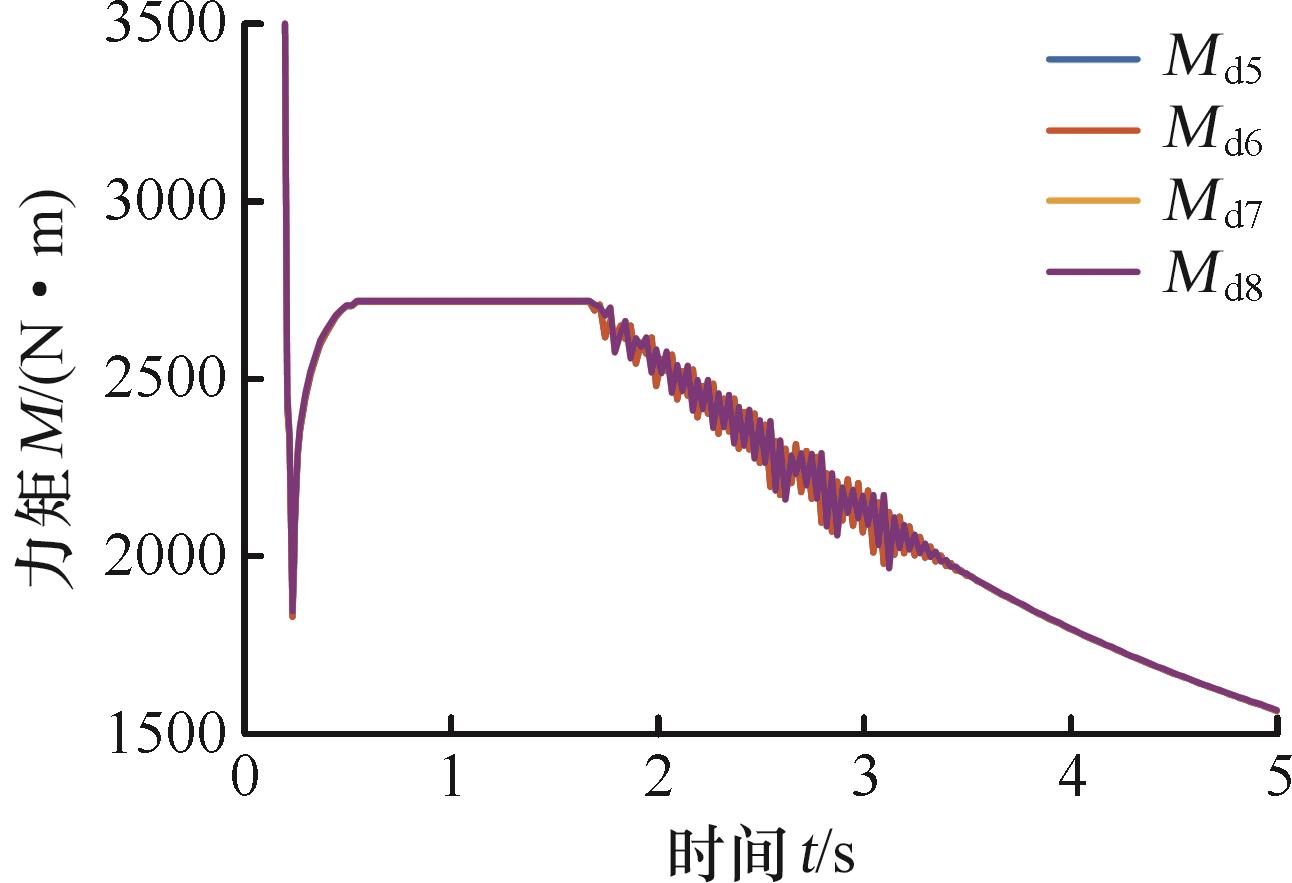
图13 中间车车轮力矩变化曲线(路面1)
Fig.13 Changing curves of middle car wheel torque (road surface 1)
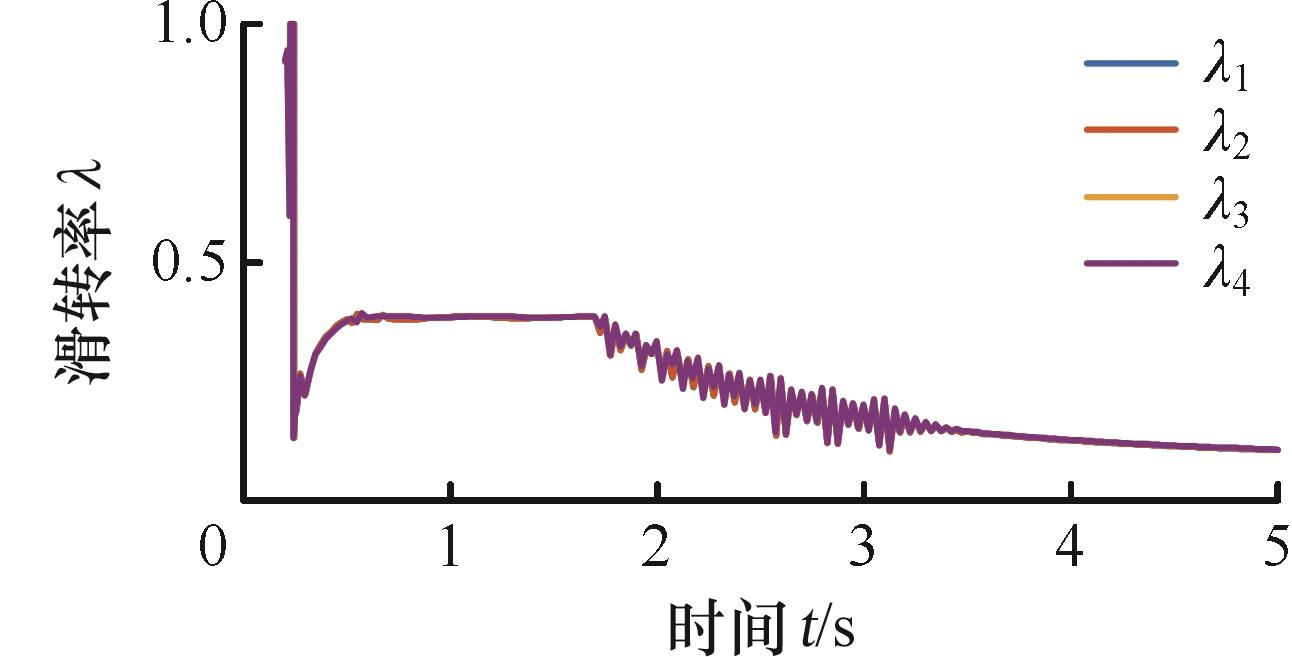
图14 首车车轮滑转率变化曲线(路面1)
Fig.14 Changing curves of first car wheel slip rate (road surface 1)
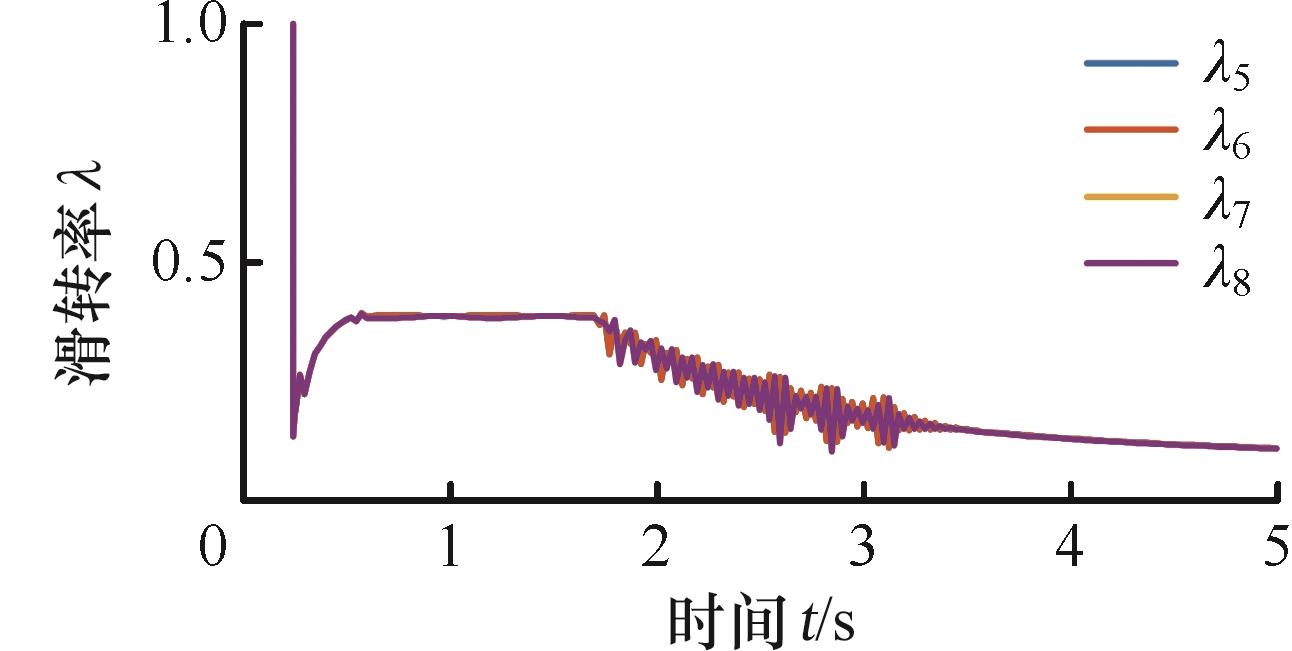
图15 中间车车轮滑转率变化曲线(路面1)
Fig.15 Changing curves of middle car wheel slip rate(road surface 1)
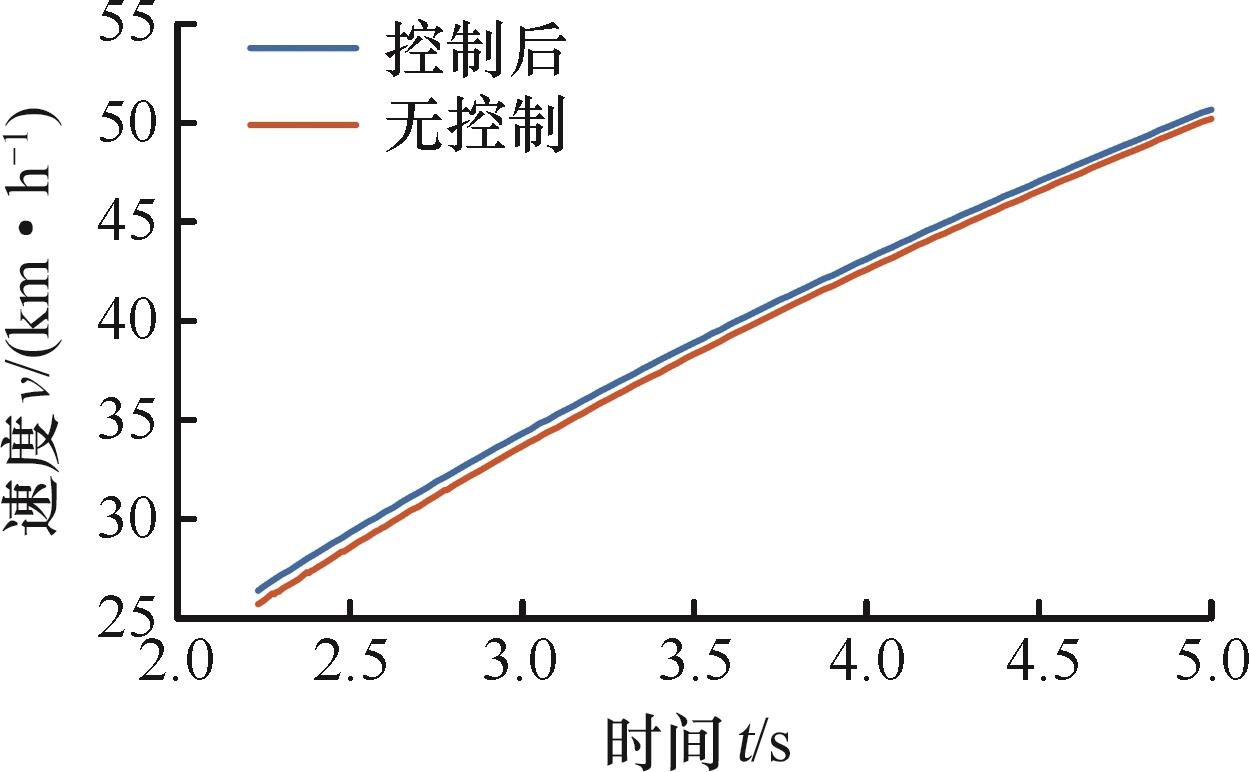
图16 车辆纵向速度变化曲线(路面1)
Fig.16 Changing curves of vehicle longitudinal velocity (road surface 1)
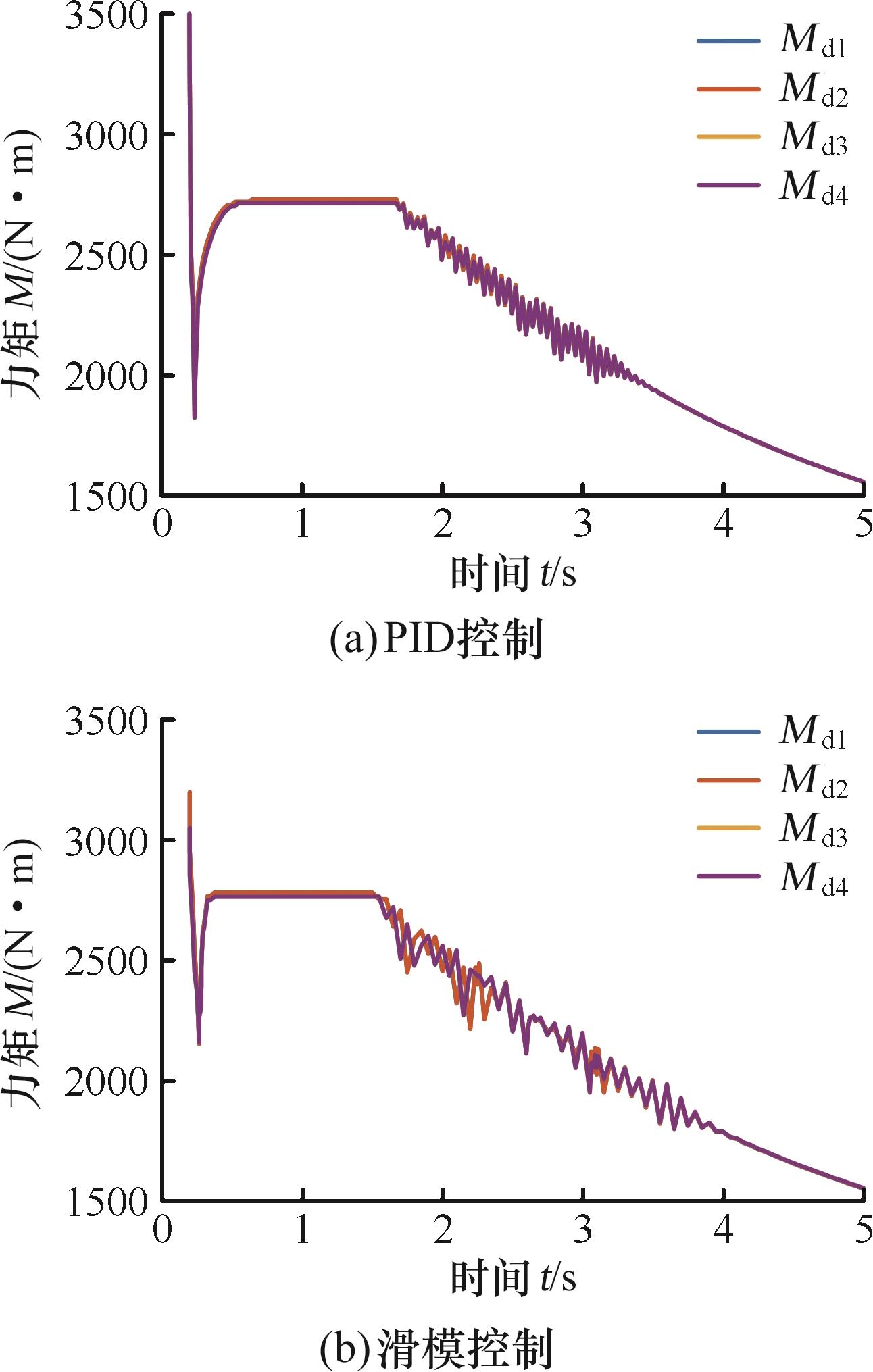
图17 不同算法控制后力矩变化曲线(路面1)
Fig.17 Torque changing curves after control by different algorithms(road surface 1)
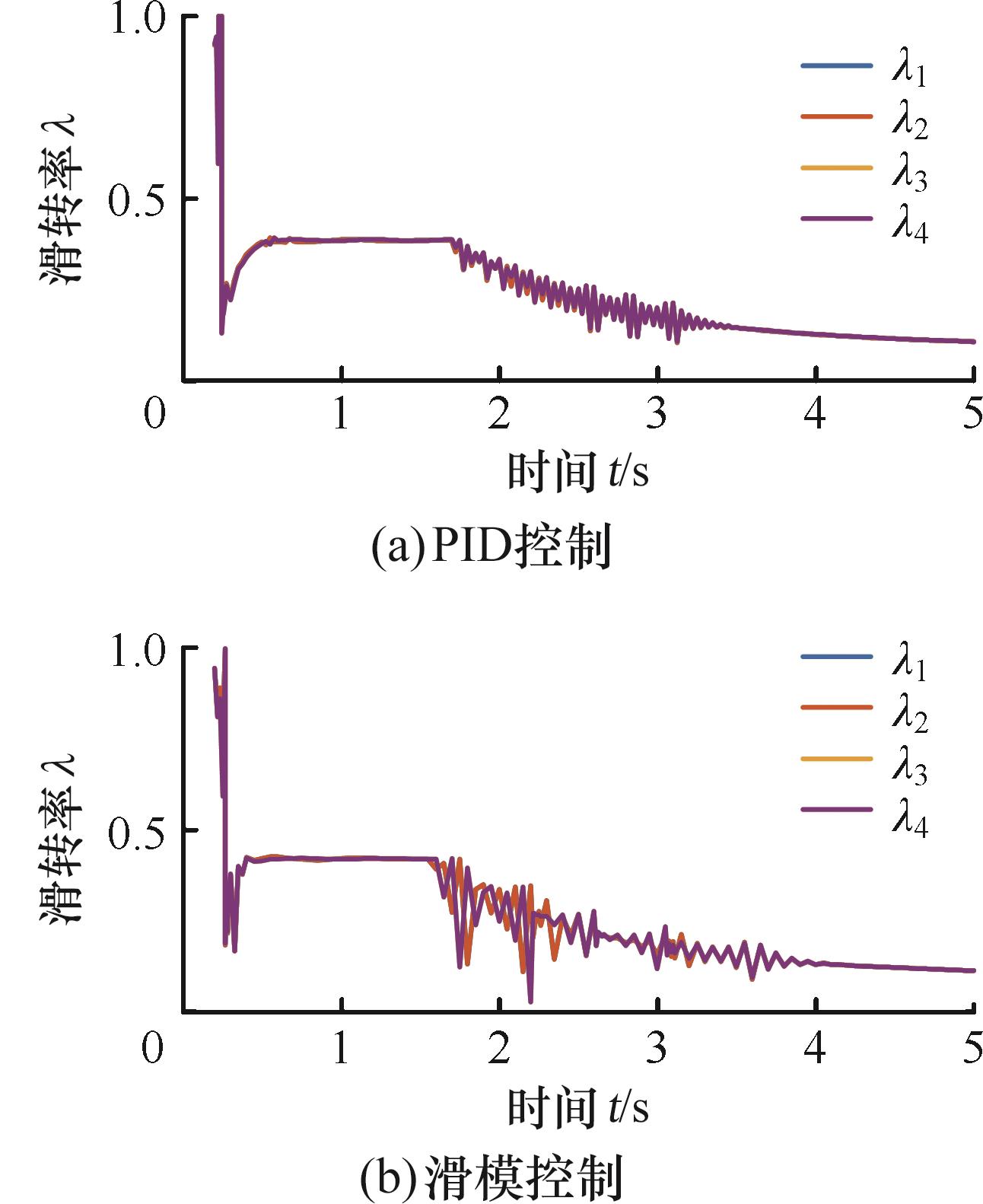
图18 不同算法控制后车轮滑转率变化曲线(路面1)
Fig.18 Wheel slip rate changing curves after control by different algorithms(road surface 1)
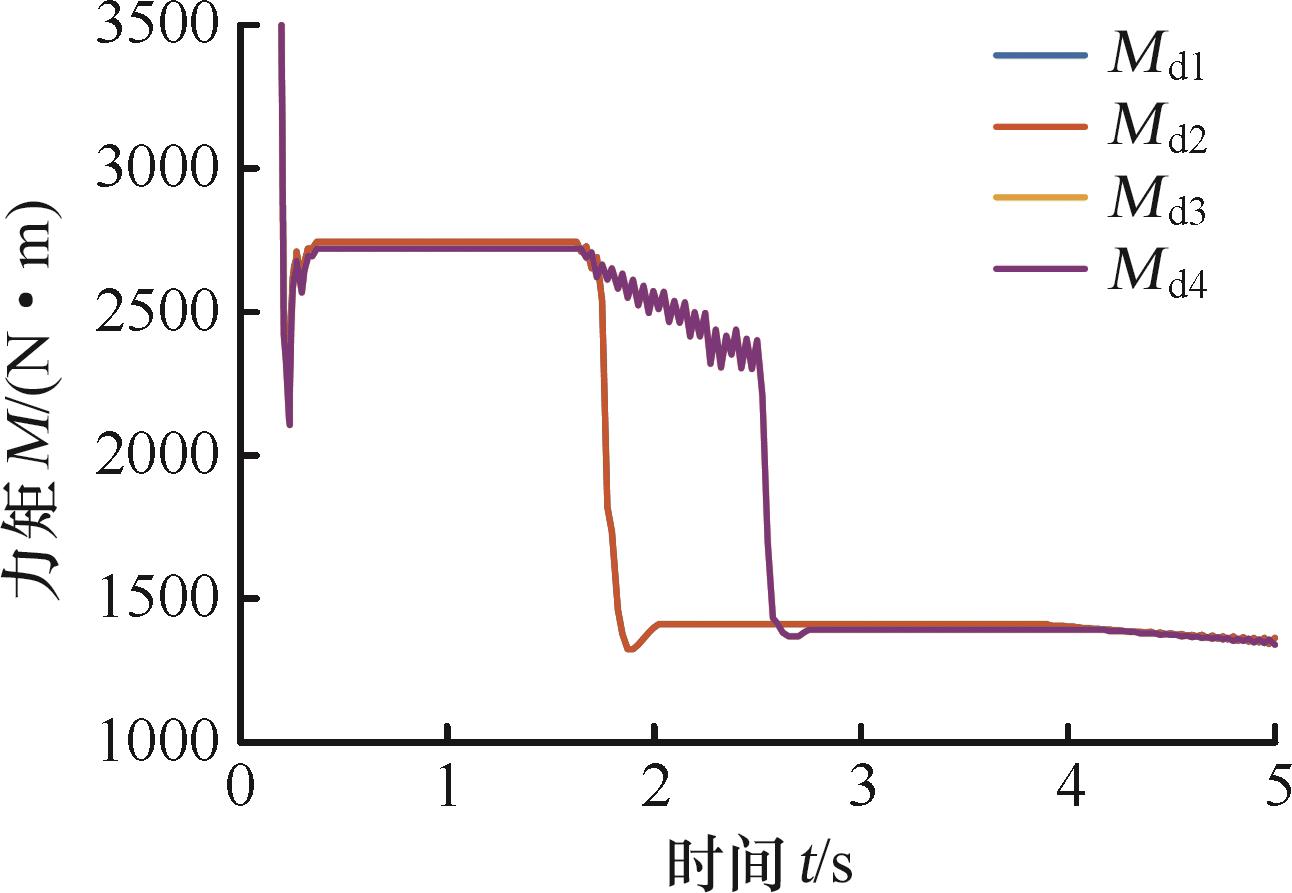
图19 首车车车轮力矩变化曲线(路面2)
Fig.19 Changing curves of first car wheel torque (road surface 2)
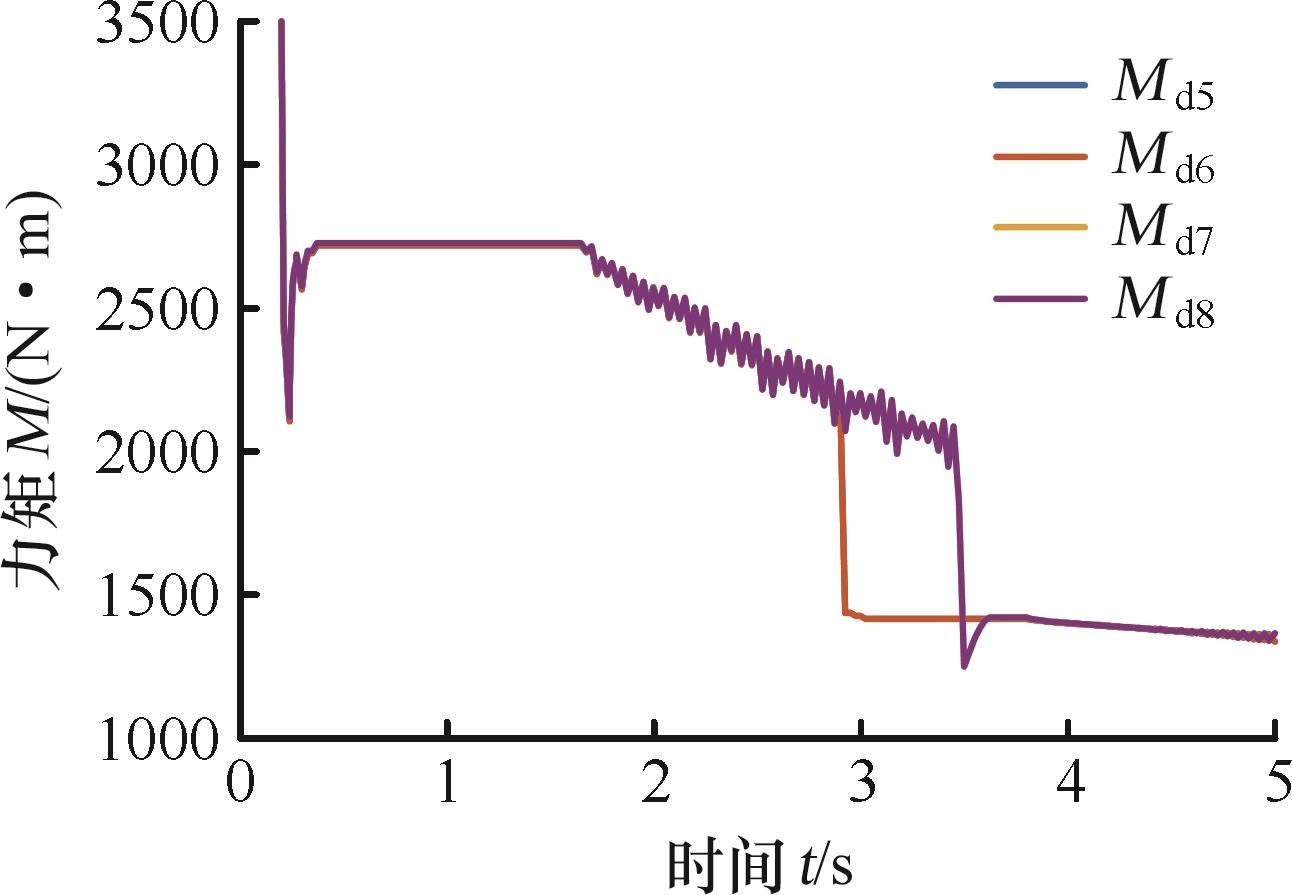
图20 中间车车轮力矩变化曲线(路面2)
Fig.20 Changing curves of middle car wheel torque (road surface 2)
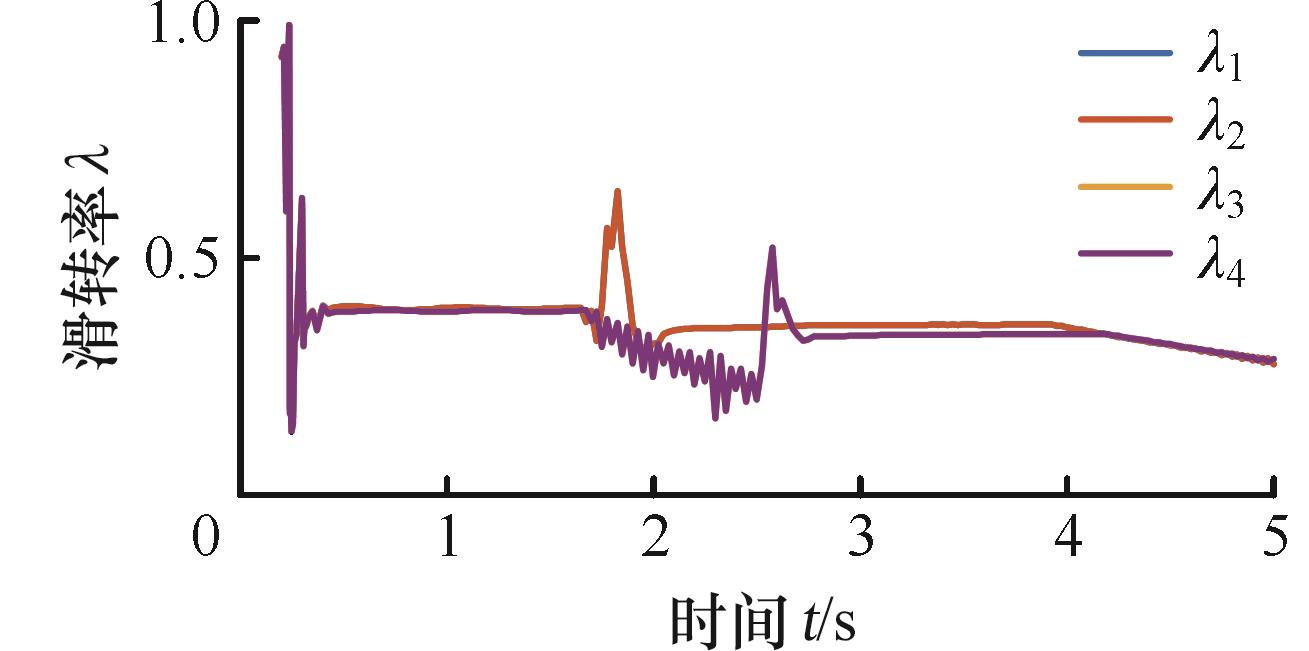
图21 首车车轮滑转率变化曲线(路面2)
Fig.21 Changing curves of first car wheel slip rate (road surface 2)
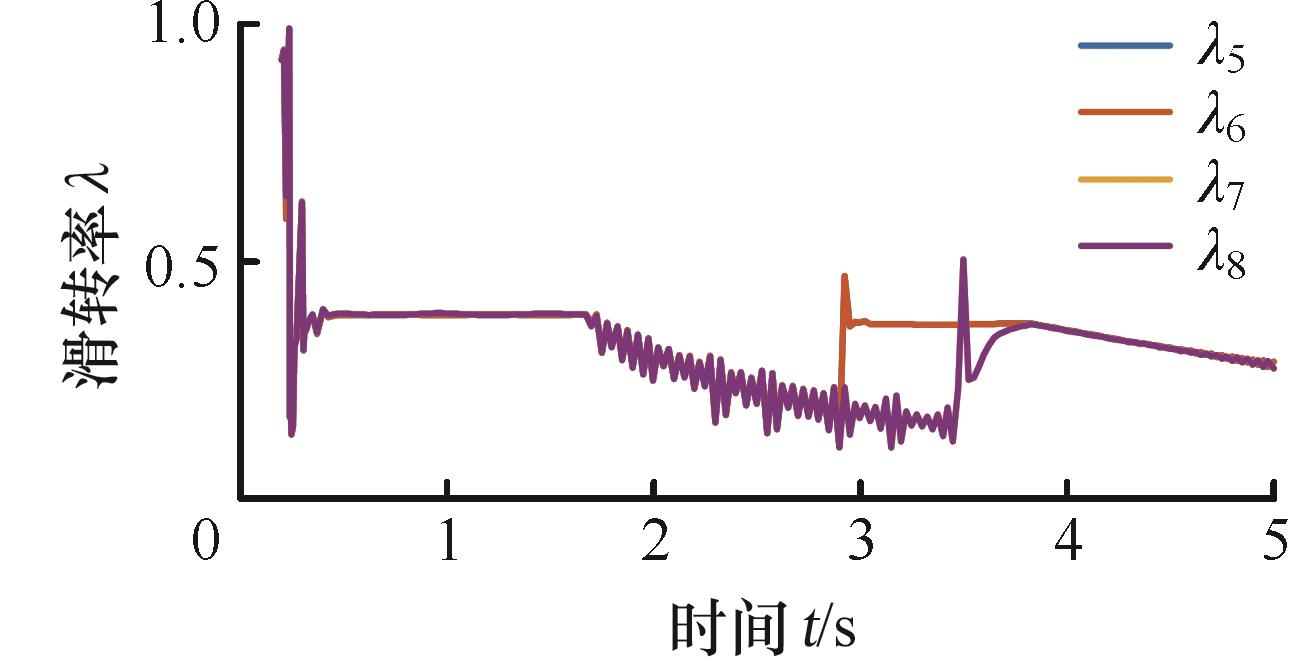
图22 中间车车轮滑转率变化曲线(路面2)
Fig.22 Changing curves of middle car wheel slip rate(road surface 2)
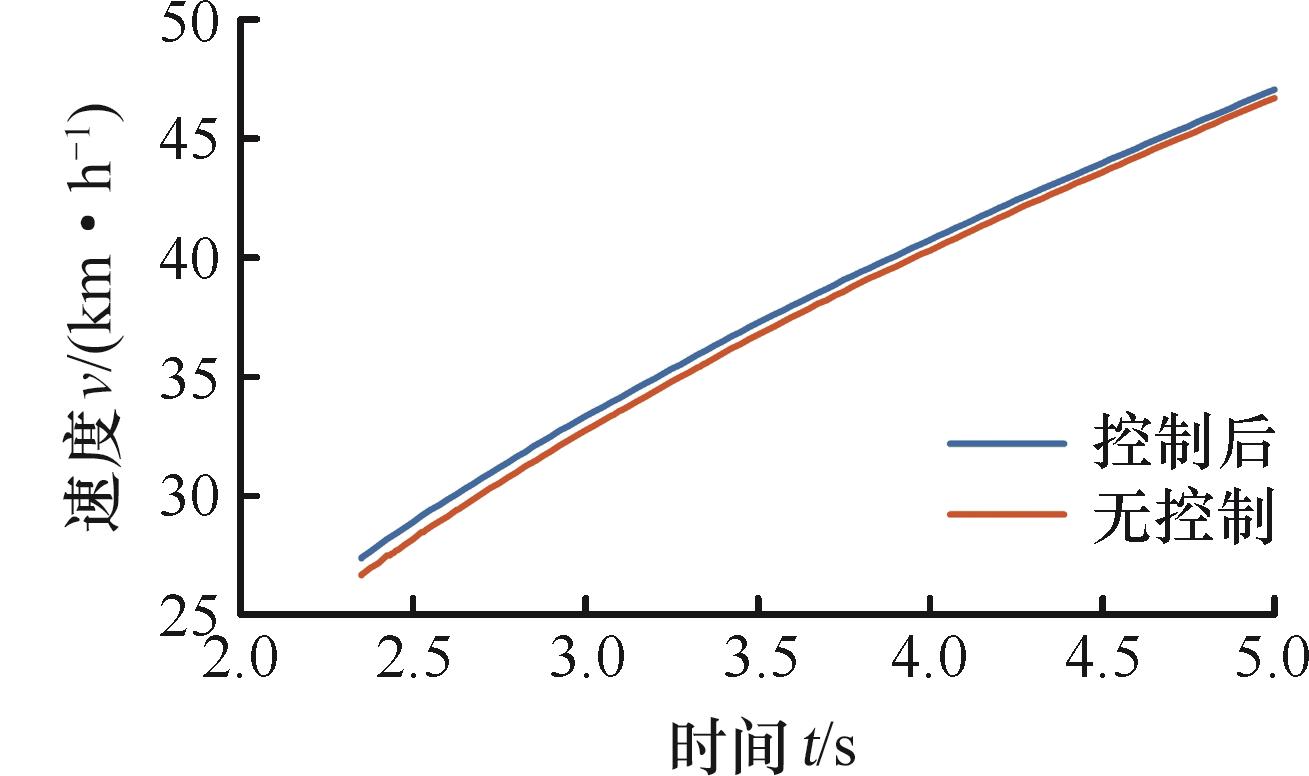
图23 车辆纵向速度变化曲线(路面2)
Fig.23 Changing curves of vehicle longitudinal velocity(road surface 2)
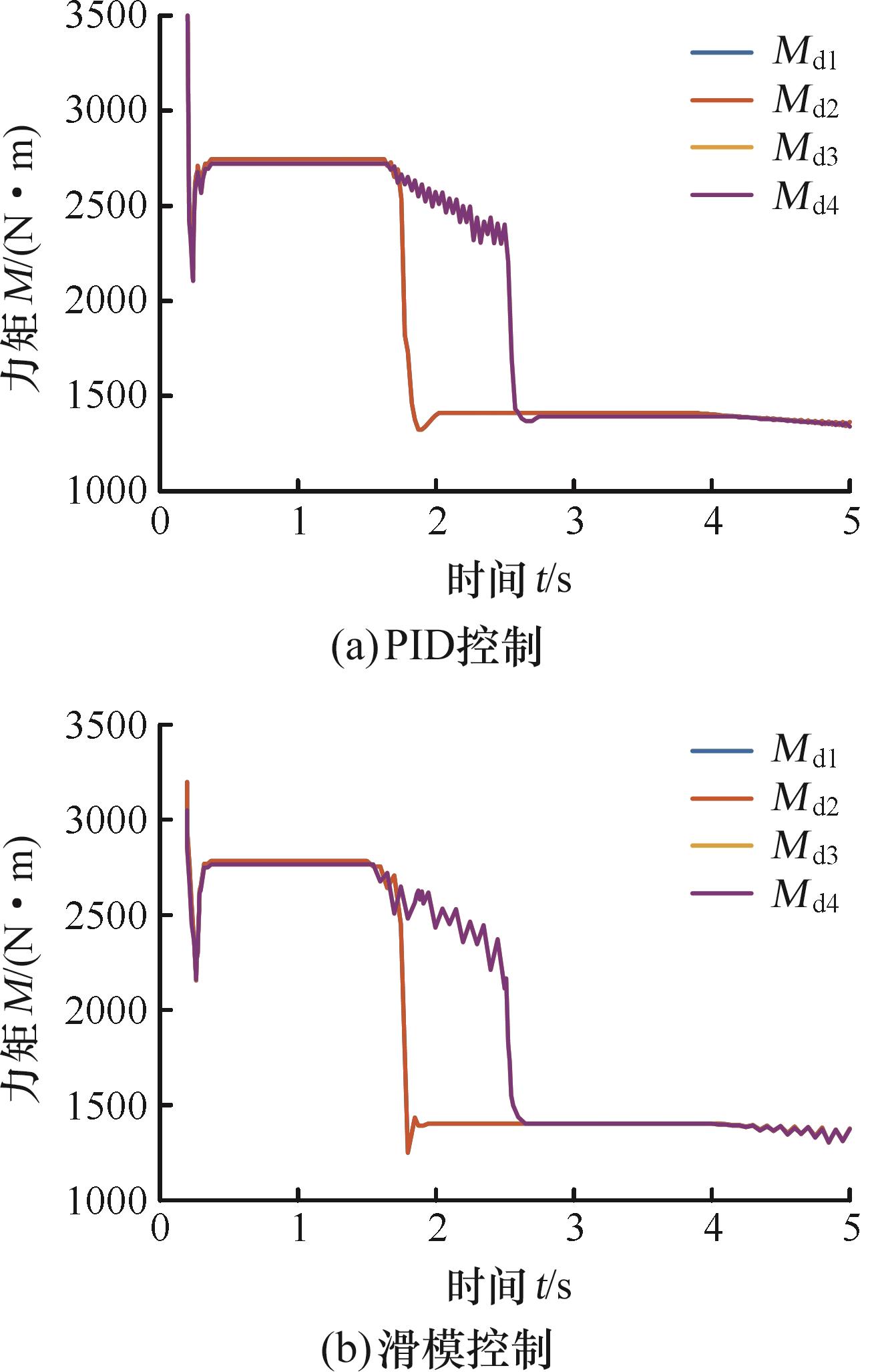
图24 不同算法控制后力矩变化曲线(路面2)
Fig.24 Torque changing curves after control by different algorithms(road surface 2)
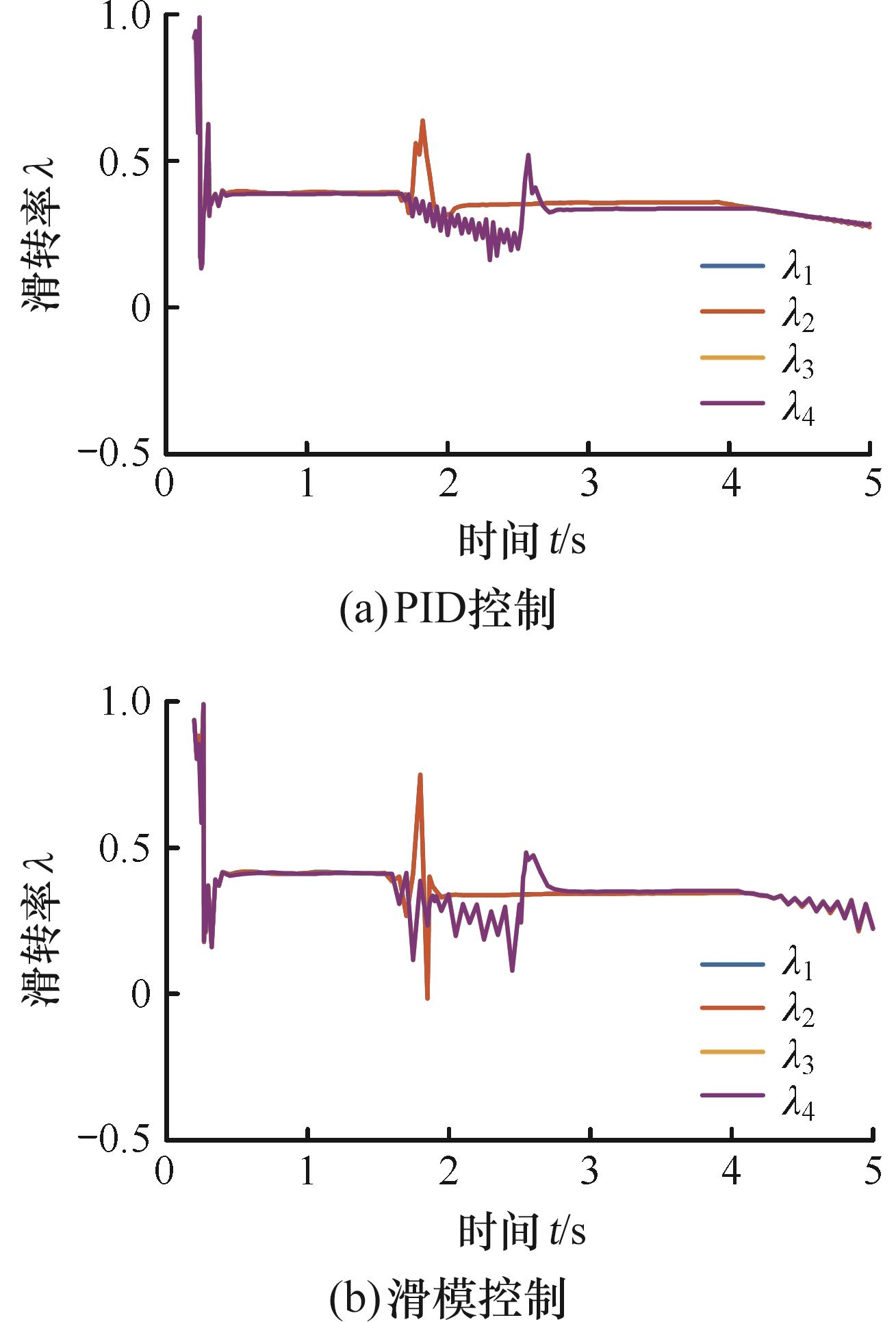
图25 不同算法控制后车轮滑转率变化曲线(路面2)
Fig.25 Wheel slip rate changing curves after control by different algorithms(road surface 2)
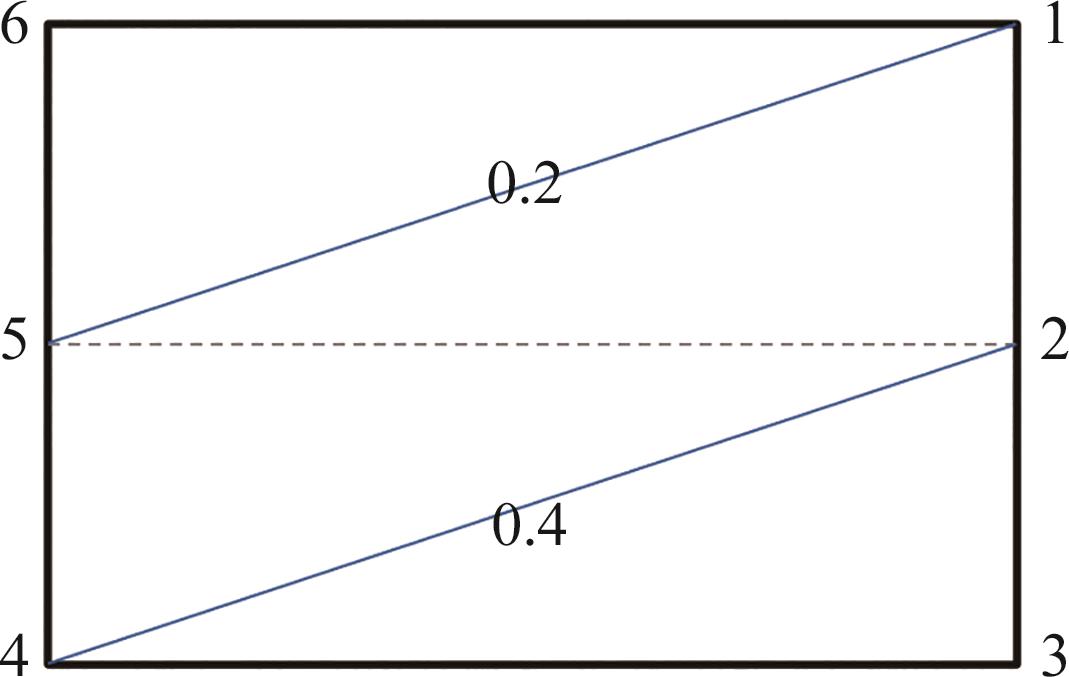
图26 对开路面原理图
Fig.26 Schematic diagram of split road surface
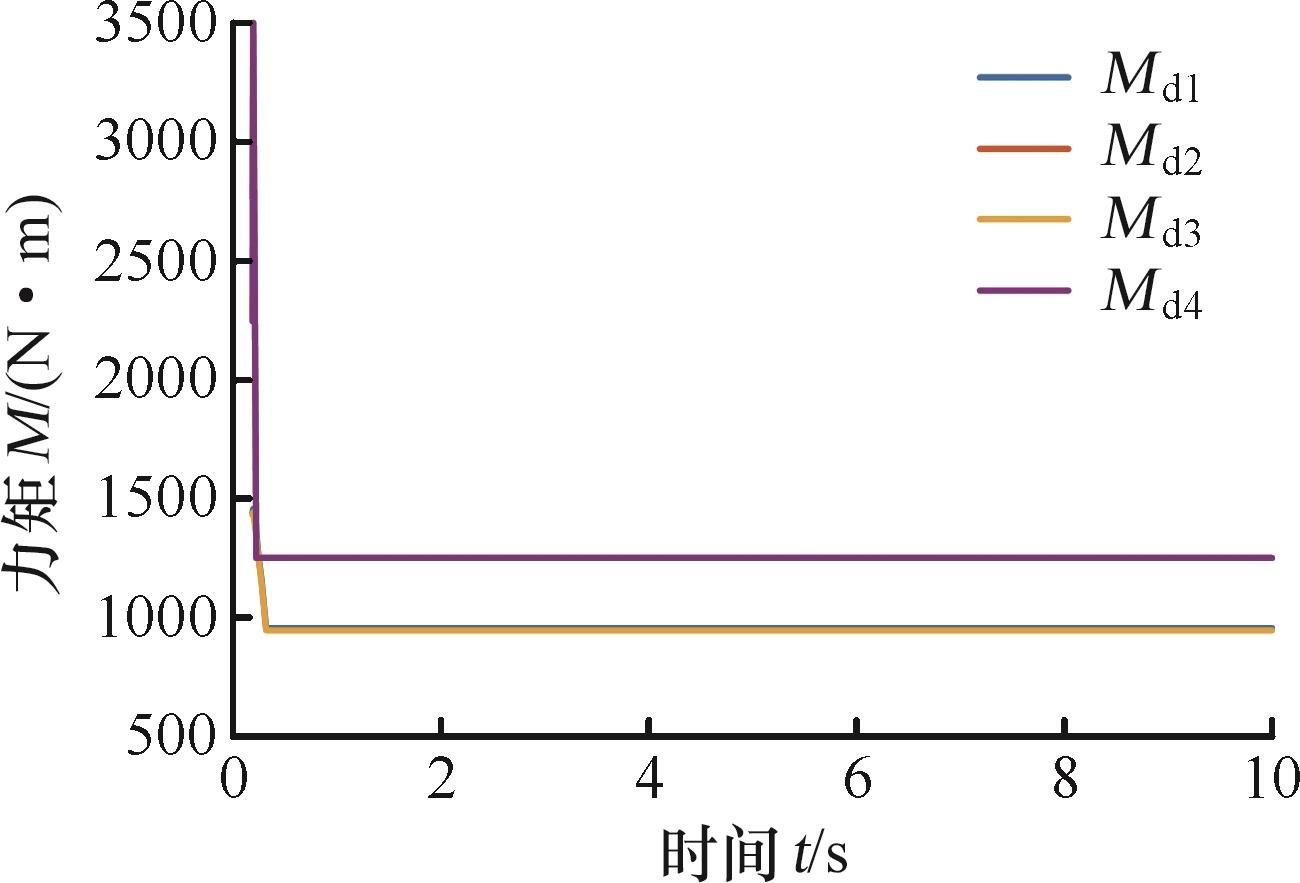
图27 无转矩协调控制驱动力矩变化图
Fig.27 Driving torque changing diagram without torque coordinated control
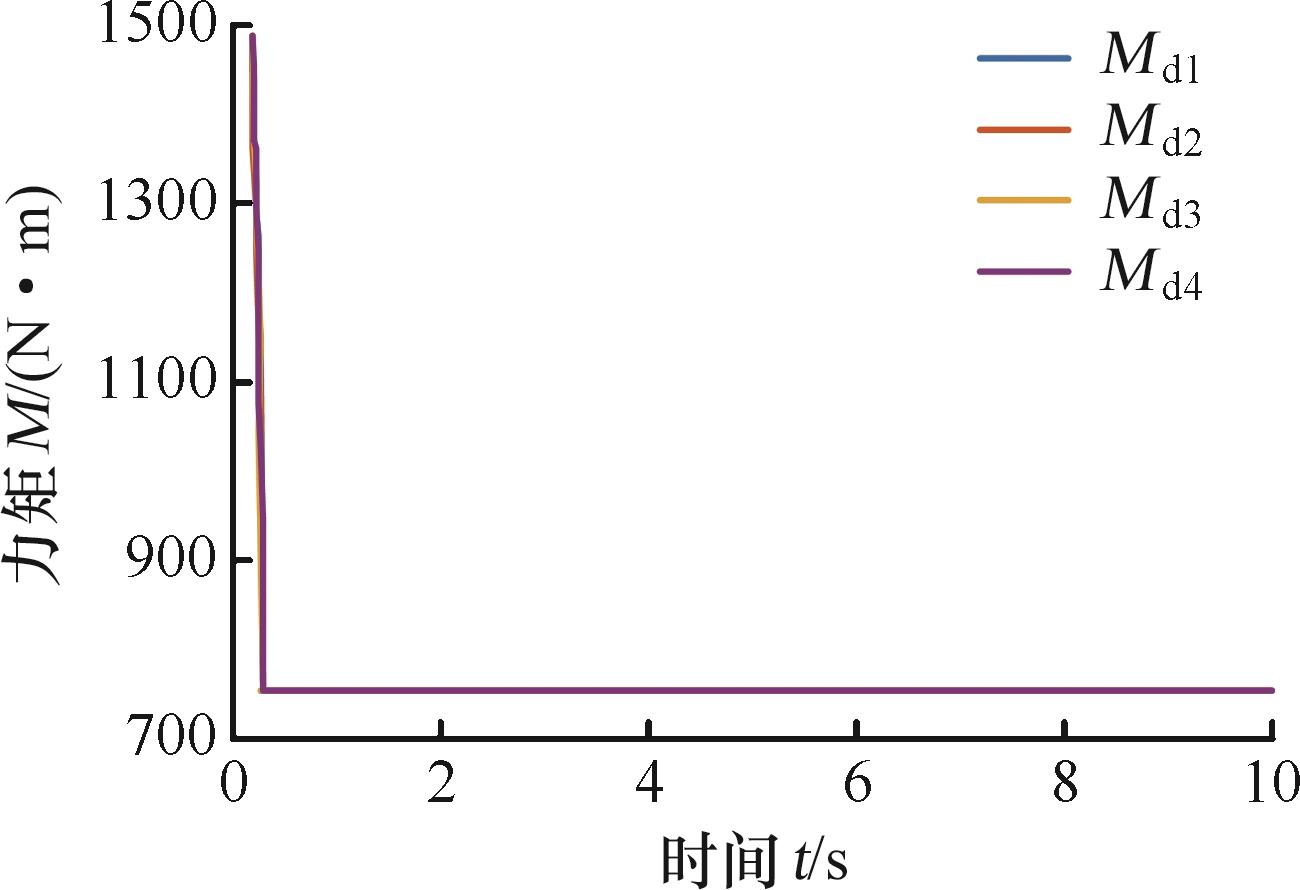
图28 有转矩协调驱动力矩变化图
Fig.28 Driving torque changing diagram with torque coordinated control
| [1] | 飞乐(Phileas)——开辟巴士快速交通(BRT)新时代[C]∥中国巴士快速交通行动大会.上海, 2005:106-110. |
| Phileas — Ushering in a New Era of BRT [C]∥ China BRT Action Conference. Shanghai, 2005:106-110. | |
| [2] | 孙帮成. 虚拟轨道列车及其关键技术研究[D]. 北京:北京交通大学, 2019. |
| SUN Bangcheng. Research on Virtual rail Train and its Key Technologies [D]. Beijing: Beijing Jiaotong University, 2019. | |
| [3] | MICHLER O, WEBER R, FÖRSTER G. Model-based and Empirical Performance Analyses for Passenger Positioning Algorithms in a Specific Bus Cabin Environment[C]∥2015 International Conference on Models and Technologies for Intelligent Transportation Systems (MT-ITS). Budapest, 2015: 200-208. |
| [4] | 冯江华, 肖磊, 胡云卿. 智能轨道快运系统[J]. 控制与信息技术, 2020(1): 1-12. |
| FENG Jianghua, XIAO Lei, HU Yunqing. Autonomous-rail Rapid Transit[J]. Control and Information Technology, 2020(1): 1-12. | |
| [5] | 杨勇, 李晓光, 银应时, 等. 智轨电车总体与轻量化设计[J]. 控制与信息技术, 2020(1): 32-37. |
| YANG Yong, LI Xiaoguang, YIN Yingshi, et al. Overall and Lightweight Design of Autonomous-rail Rapid Tram[J]. Control and Information Technology, 2020(1): 32-37. | |
| [6] | 徐伟. 超级虚拟轨道快运系统(SRT)特点和适应性分析——以盐城市为例[J]. 工程技术研究, 2021, 6(5): 40-41. |
| XU Wei. Characteristics and Adaptability Analysis of Super Virtual Rail Express System (SRT): a Case Study of Yancheng City[J]. Engineering Research, 2021,6(5): 40-41. | |
| [7] | 吕东宇. 分布式驱动电动汽车的驱动防滑研究[D]. 沈阳: 东北大学, 2019. |
| Dongyu LYU. Research on ASR of Distributed Drive Electric Vehicle[D]. Shenyang: Northeastern University, 2019. | |
| [8] | 罗浩. 分布式驱动电动汽车驱动防滑控制策略研究[D]. 北京:北京理工大学, 2016. |
| LUO Hao. Research on Anti-skid Control Strategy of Distributed Drive Electric Vehicle[D]. Beijing:Beijing Institute of Technology, 2016. | |
| [9] | 张伦. 轮边电机驱动电动汽车驱动防滑控制的研究[D]. 南京: 东南大学, 2019. |
| ZHANG Lun. Research on Anti-skid Control of Electric Vehicle Driven by Wheel Edge Motor[D]. Nanjing: Southeast University, 2019. | |
| [10] | 常九健, 吴佳豪, 方建平. 基于路面识别算法的分布式驱动汽车驱动防滑控制策略[J]. 重庆理工大学学报(自然科学), 2024(2): 65-76. |
| CHANG Jiujian, WU Jiahao, FANG Jianping. Research on Acceleration Slip Regulation Strategy Based on Road Surface Recognition Algorithm[J]. Journal of Chongqing University of Technology (Natural Science), 2024(2): 65-76. | |
| [11] | 金永辉. 分布式电驱动半挂汽车列车驱动防滑与转矩协调控制研究[D]. 十堰:湖北汽车工业学院, 2023. |
| JIN Yonghui. Research on Drive Anti-slip and Torque Coordination Control of Distributed Electric Drive Semi-truck Train[D]. Shiyan:Hubei University of Automotive Industry, 2023. | |
| [12] | 蒋振江, 陈旭, 李大伟. 基于路面识别的四轮驱动电动汽车驱动防滑控制[J]. 重庆理工大学学报(自然科学), 2012, 26(7): 17-21. |
| JIANG Zhenjiang, CHEN Xu, LI Dawei. Anti-skid control of Four-wheel drive Electric Vehicle Drive based on Road Surface Recognition [J]. Journal of Chongqing University of Technology (Natural Science), 2012, 26(7): 17-21. | |
| [13] | SAVITSKI D, SCHLEININ D, IVANOV V, et al. Improvement of Traction Performance and Off-road Mobility for a Vehicle with Four Individual Electric Motors: Driving over Icy Road[J]. Journal of Terramechanics, 2017, 69: 33-43. |
| [14] | 张细政, 郑亮. 基于转矩协调分配的分布式驱动电动汽车稳定性控制[J]. 中国机械工程, 2018, 29(15): 1780-1787. |
| ZHANG Xizheng, ZHENG Liang. Vehicle Stability Control of Distributed-driven Electric Vehicles Based on Optimal Torque Allocation[J]. China Mechanical Engineering, 2018, 29(15): 1780-1787. | |
| [15] | 秦健. 基于最优滑转率识别的轮边电驱动客车驱动防滑研究[D]. 合肥:合肥工业大学, 2017. |
| QIN Jian. Research on Driving Anti-skid of Electric Wheel Driven Bus Based on Optimal Slip Rate Recognition [D]. Hefei: Hefei University of Technology, 2017. | |
| [16] | 阚小博, 赵又群, 李丹阳, 等. 基于非线性模型预测控制的分布式驱动电动汽车多目标扭矩协调控制[J]. 中国机械工程, 2025, 36(5): 1123-1131. |
| KAN Xiaobo, ZHAO Youqun, LI Danyang, et al. Multi-objective Torque Coordination Control for Distributed Drive Electric Vehicles Based on Nonlinear MPC [J]. China Mechanical Engineering, 2025, 36(5): 1123-1131. | |
| [17] | 王震坡, 丁晓林, 张雷. 四轮轮毂电机驱动电动汽车驱动防滑控制关键技术综述[J]. 机械工程学报, 2019, 55(12): 99-120. |
| WANG Zhenpo, DING Xiaolin, ZHANG Lei. Overview on Key Technologies of Acceleration Slip Regulation for Four-wheel-independently-actuated Electric Vehicles[J]. Journal of Mechanical Engineering, 2019, 55(12): 99-120. | |
| [18] | 雷雨成. 汽车系统动力学及仿真[M]. 北京: 国防工业出版社, 1997. |
| LEI Yucheng. Vehicle System Dynamics and Simulation[M]. Beijing: National Defense Industry Press, 1997. | |
| [19] | 刘文婷. 基于ADAMS的汽车ABS整车控制技术研究[D]. 成都: 西华大学, 2007. |
| LIU Wenting. Research on ABS Vehicle control Technology Based on ADAMS [D]. Chengdu: Xihua University, 2007. | |
| [20] | 谢季坚, 刘承平. 模糊数学方法及其应用[M]. 武汉:华中科技大学出版社, 2006. |
| XIE Jijian, LIU Chengping. Fuzzy Mathematical Method and Its Application [M]. Wuhan: Huazhong University of Science and Technology Press, 2006. | |
| [21] | 朱绍鹏, 吕超. 轮毂电机分布式驱动控制技术[M]. 北京: 机械工业出版社, 2022. |
| ZHU Shaopeng, Chao LYU. Distributed Drive Control Technology of Hub Motor[M]. Beijing: China Machine Press, 2022. | |
| [22] | 康盛. 分布式驱动电动汽车驱动防滑及转矩协调控制研究[D]. 南昌:华东交通大学, 2020. |
| KANG Sheng. Acceleration Slip Regulation and Torque Distribution Coordination Control for Distributed Drive Electric Vehicle [D]. Nanchang:East China Jiaotong University, 2020. |
| [1] | 史彪飞, 叶晓明, 吕皓玉, 赖锋. 基于轮胎侧偏的差动转向机理研究[J]. 中国机械工程, 2025, 36(10): 2224-2231. |
| [2] | 阚小博1, 赵又群1, 李丹阳1, 林棻1, 何鲲鹏1, 2, 尤庆伸2. 基于非线性模型预测控制的分布式驱动电动汽车多目标扭矩协调控制[J]. 中国机械工程, 2025, 36(05): 1123-1131. |
| [3] | 王姝, 张海川, 赵轩, 宋函锟. 融合稳定性的分布式驱动电动汽车路径跟踪控制策略研究[J]. 中国机械工程, 2023, 34(09): 1035-1044. |
| [4] | 张利鹏, 董闯闯, 张伟, 庞诏文, 张思龙, 贾启康. [分布式驱动电动汽车动力学控制]电动汽车对开坡道双模耦合驱动控制[J]. 中国机械工程, 2018, 29(15): 1788-1795. |
| [5] | 张细政, 郑亮. [分布式驱动电动汽车动力学控制]基于转矩协调分配的分布式驱动电动汽车稳定性控制[J]. 中国机械工程, 2018, 29(15): 1780-1787. |
| [6] | 汪选要, 王其东, 王金波. 基于远近视角驾驶员模型人机合作转向PDC/H∞控制策略[J]. 中国机械工程, 2016, 27(01): 121-128. |
| [7] | 罗剑, 罗禹贡, 张书玮, 李克强. 智能分布式电动车辆柔性化系统平台[J]. 中国机械工程, 2015, 26(8): 1035-1039. |
| [8] | 沈峘, 凌锐, 李舜酩. 基于预瞄最优曲率模型的大曲率转向控制方法[J]. 中国机械工程, 2012, 23(17): 2111-2116. |
| 阅读次数 | ||||||
|
全文 |
|
|||||
|
摘要 |
|
|||||
