



ISSN 1004-132X
CN 42-1294/TH
CN 42-1294/TH
中国机械工程 ›› 2026, Vol. 37 ›› Issue (4): 885-899.DOI: 10.3969/j.issn.1004-132X.2026.04.013
牛秋林( ), 朱陈一, 吴炳辉, 张晟逢, 郭涛, 高菁忆
收稿日期:2025-05-16
出版日期:2026-04-25
发布日期:2026-05-11
通讯作者:
牛秋林
作者简介:牛秋林*(通信作者),男,1983年生,教授、博士研究生导师。研究方向为复杂结构高质高效精密加工方法、微量润滑切削理论与应用、超声振动辅助加工技术、清洁切削与刀具设计方法。E-mail:qlniu2009@163.com。
基金资助:
NIU Qiulin(), ZHU Chenyi, WU Binghui, ZHANG Shengfeng, GUO Tao, GAO Jingyi
Received:2025-05-16
Online:2026-04-25
Published:2026-05-11
Contact:
NIU Qiulin
摘要:
回顾了近年来微量润滑(MQL)与微织构刀具技术在难加工金属材料(DMMs)切削加工中的研究进展,重点分析了两者的协同机理及其对DMMs切削加工性能的影响。相较于干切削,微织构+MQL协同作用可使平均切削力减小25%~48.3%,切削温度下降20%~50%,表面粗糙度减小15%~40%,刀具寿命延长1.5~2.4倍。总结了现有研究在以下方面尚待加强:一是协同机制的定量理论模型;二是针对不同材料的适应性分析;三是工业化条件下长期稳定性的实验验证。未来的研究应集中于构建基于热力学和摩擦学行为的定量协同模型,特别是在钛基合金和铝基合金等高强度、高温材料加工中的应用优化,并通过实际工况下的长期效能评估来验证其工业应用价值。
中图分类号:
牛秋林, 朱陈一, 吴炳辉, 张晟逢, 郭涛, 高菁忆. 刀具表面微织构与微量润滑协同技术研究进展[J]. 中国机械工程, 2026, 37(4): 885-899.
NIU Qiulin, ZHU Chenyi, WU Binghui, ZHANG Shengfeng, GUO Tao, GAO Jingyi. Research Progresses on Synergistic Technology of Micro-textured and Minimum Quantity Lubrication on Tool Surfaces[J]. China Mechanical Engineering, 2026, 37(4): 885-899.
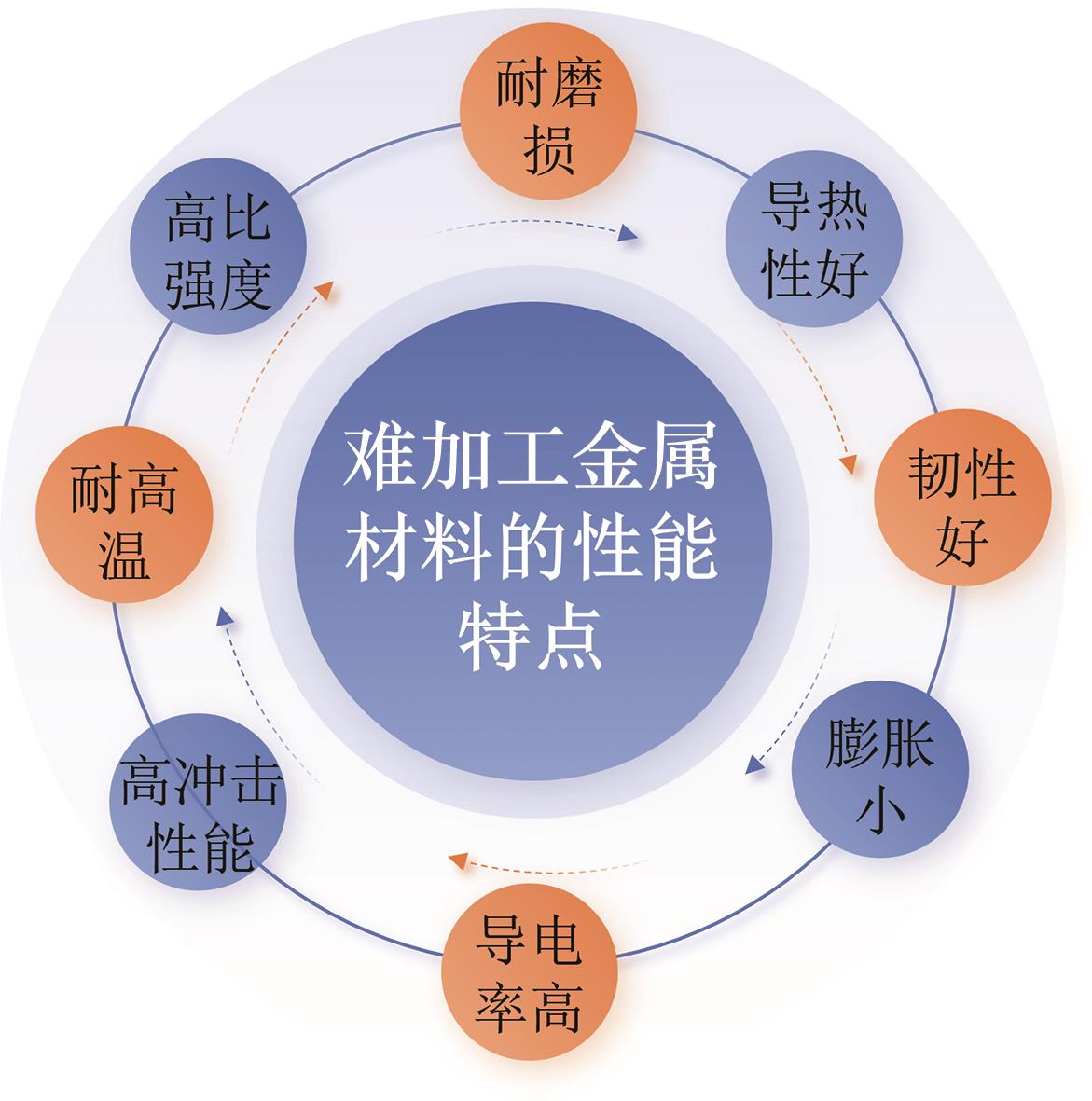
图1 DMMs的性能特点
Fig.1 Performance characteristics of DMMs
| 材料 | 密度/ (g·cm | 比强度/ (MPa·cm³·g | 比模量/ (GPa·cm³·g | 热膨胀系数/(10 |
|---|---|---|---|---|
| 铝基复材 | 2.6~2.9 | 100~270 | 25~40 | 7~15 |
| 镁基复材 | 1.8~2.0 | 130~280 | 20~30 | 8~20 |
| 钛基复材 | 3.8~4.2 | 150~300 | 25~35 | 6~10 |
| 钢基复材 | 6.5~7.8 | 50~110 | 25~30 | 10~14 |
| 镍基复材 | 8.2~9.2 | 65~183 | 20~27 | 10~16 |
| 铝合金 | 2.6~2.9 | 30 ~ 230 | 24 ~30 | 22~24 |
| 镁合金 | 1.7~1.9 | 60 ~200 | 20~ 26 | 25~28 |
| 钛合金 | 4.4~4.45 | 198~215 | 24~26 | 8.6~9.5 |
| 结构钢 | 7.8~7.9 | 32~102 | 25~27 | 11~14 |
| 铸铁 | 6.6~7.4 | 15~140 | 15~34 | 10~12 |
表1 DMMs与传统材料性能对照表
Tab. 1 Comparison of the properties of DMMs and conventional materials
| 材料 | 密度/ (g·cm | 比强度/ (MPa·cm³·g | 比模量/ (GPa·cm³·g | 热膨胀系数/(10 |
|---|---|---|---|---|
| 铝基复材 | 2.6~2.9 | 100~270 | 25~40 | 7~15 |
| 镁基复材 | 1.8~2.0 | 130~280 | 20~30 | 8~20 |
| 钛基复材 | 3.8~4.2 | 150~300 | 25~35 | 6~10 |
| 钢基复材 | 6.5~7.8 | 50~110 | 25~30 | 10~14 |
| 镍基复材 | 8.2~9.2 | 65~183 | 20~27 | 10~16 |
| 铝合金 | 2.6~2.9 | 30 ~ 230 | 24 ~30 | 22~24 |
| 镁合金 | 1.7~1.9 | 60 ~200 | 20~ 26 | 25~28 |
| 钛合金 | 4.4~4.45 | 198~215 | 24~26 | 8.6~9.5 |
| 结构钢 | 7.8~7.9 | 32~102 | 25~27 | 11~14 |
| 铸铁 | 6.6~7.4 | 15~140 | 15~34 | 10~12 |
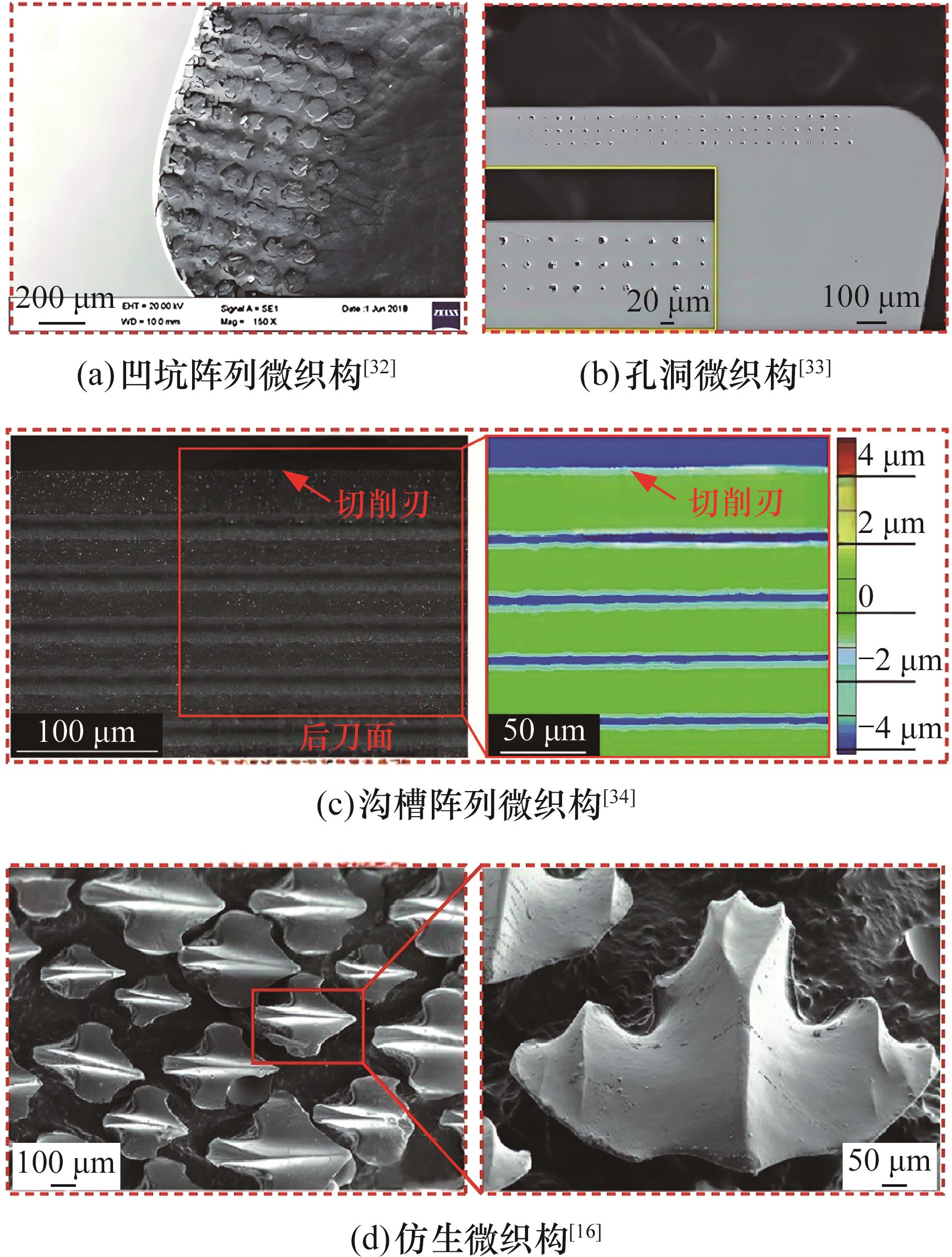
图2 4类典型微织构类型
Fig.2 Four types of typical micro-textured types
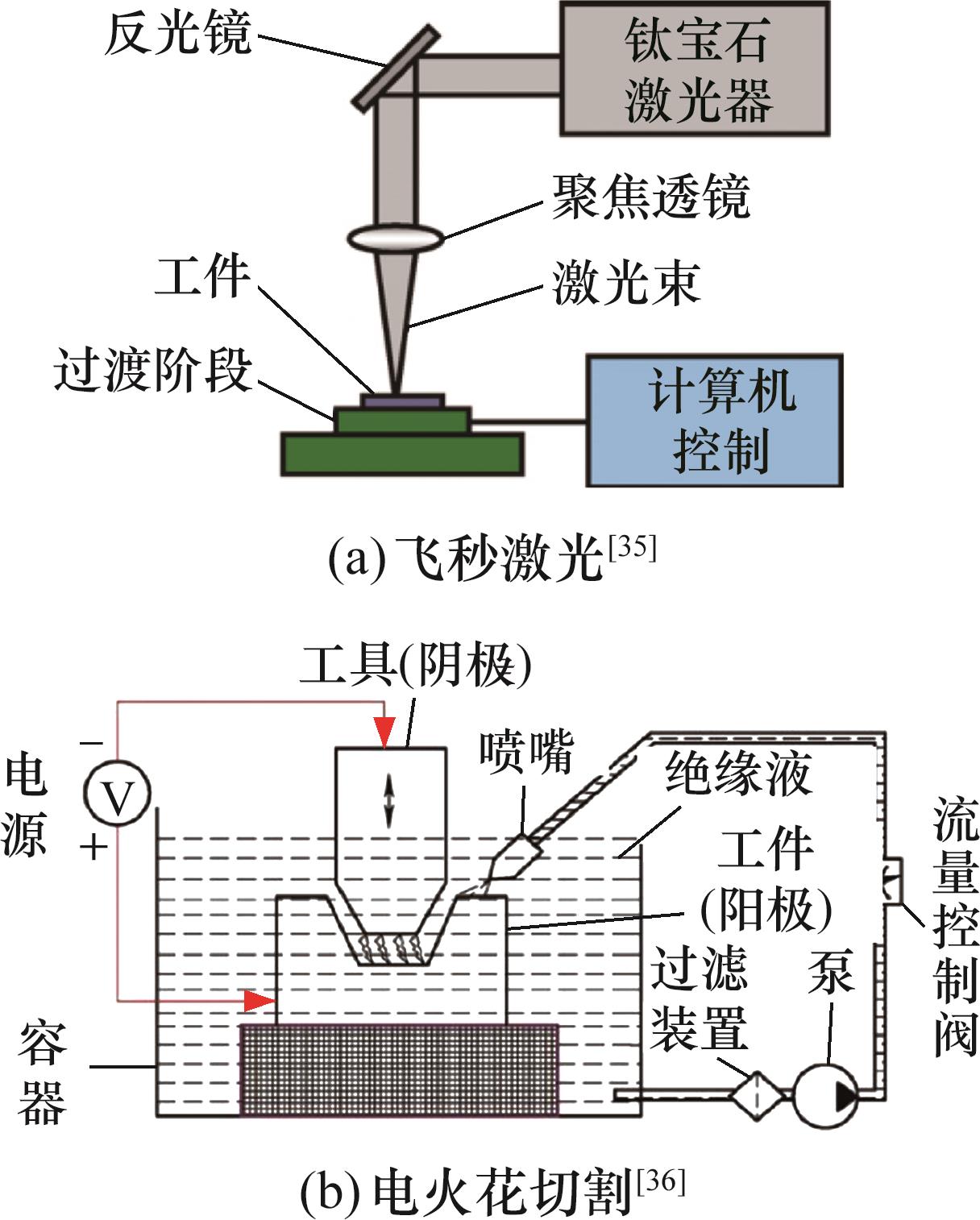
图3 微织构加工方法
Fig.3 Micro-textured processing methods
| 织构形状 | 最佳槽宽参数 |
|---|---|
| 沟槽[ | 典型沟槽宽度40~100 |
| 鲨鱼皮[ | 最优尺度多在30~60 |
| 凹坑[ | 凹坑直径常见范围50~200 |
| 孔洞[ | 孔洞直径常见范围50~150 |
表2 典型微织构的最佳织构参数
Tab.2 Optimal weaving parameters for typical micro-textured
| 织构形状 | 最佳槽宽参数 |
|---|---|
| 沟槽[ | 典型沟槽宽度40~100 |
| 鲨鱼皮[ | 最优尺度多在30~60 |
| 凹坑[ | 凹坑直径常见范围50~200 |
| 孔洞[ | 孔洞直径常见范围50~150 |
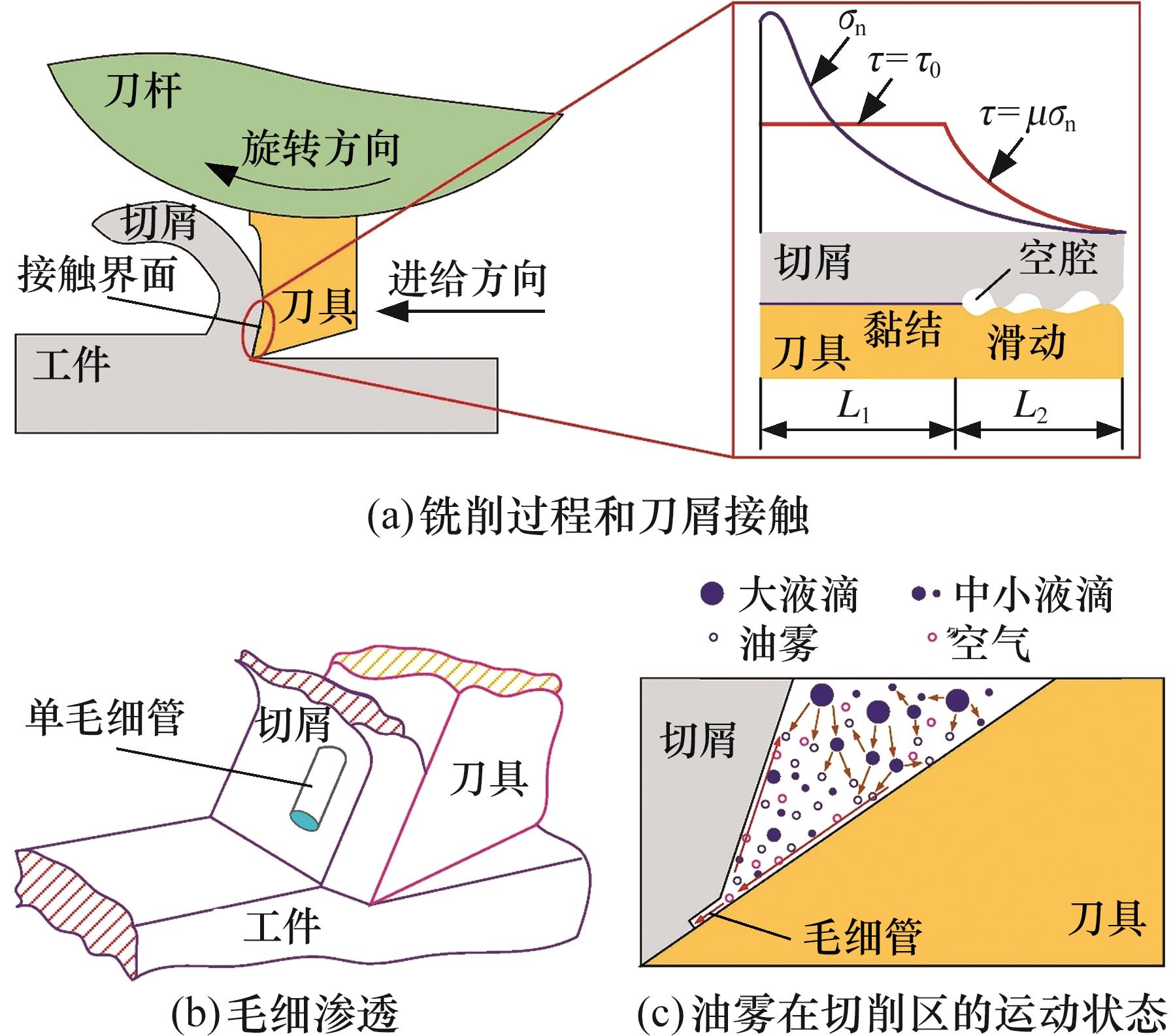
图4 MQL润滑示意图[47]
Fig.4 Schematic diagram of MQL lubrication[47]
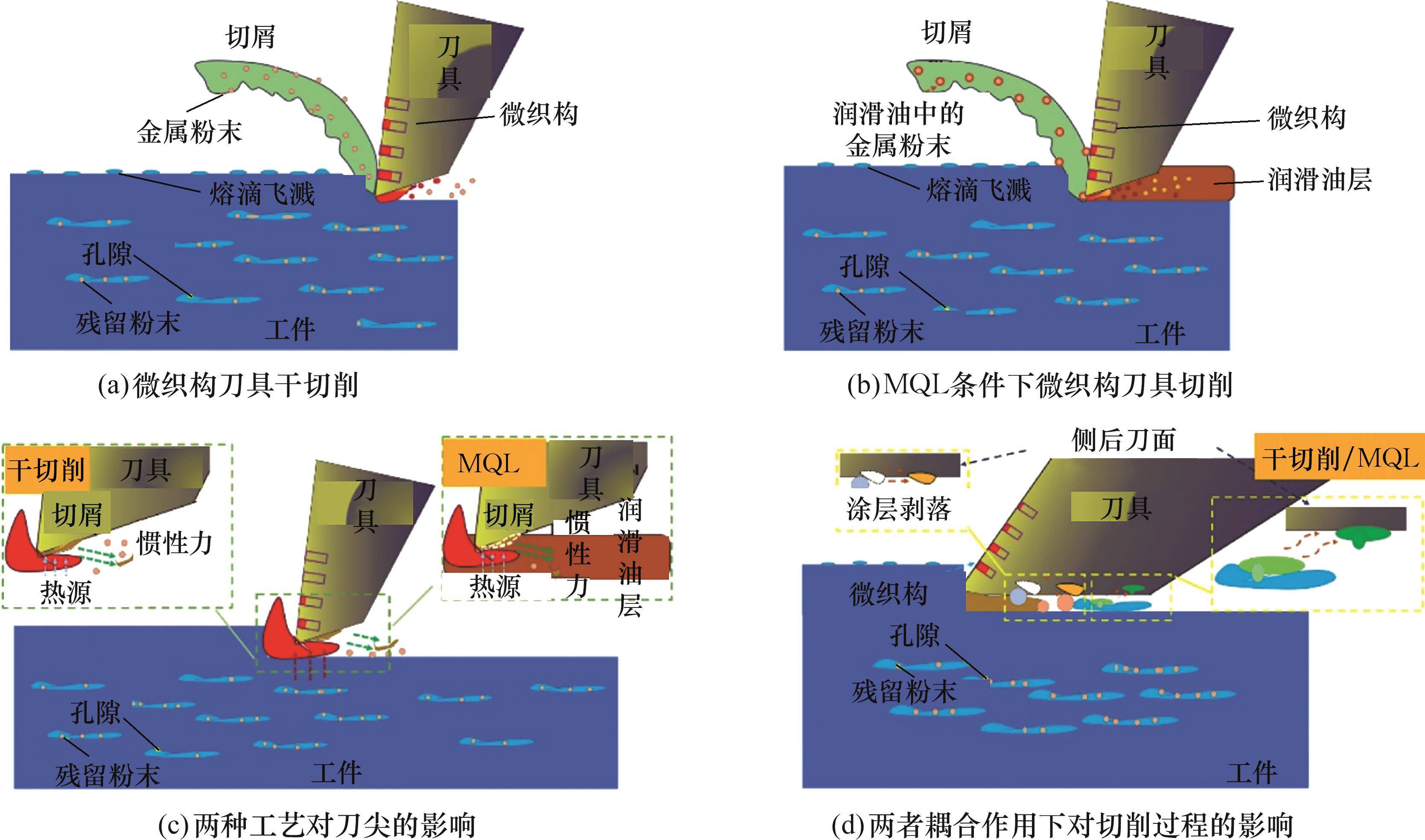
图5 不同条件下切削机制示意图[49]
Fig.5 Schematic illustration of the cutting mechanism under different conditions[49]
| 技术 | 参考文献 | 润滑和冷却 | 寿命和耐磨性 | 加工表面质量 | 环保与成本 | 工艺适用性 |
|---|---|---|---|---|---|---|
| MQL | [ [ | 切削温度一般下降20%~40%,切削力下降15%~35% | 刀具寿命可延长30%~60%,刀具磨损减小达40% | 表面粗糙度通常较干切削降低20%~40% | 减少润滑剂使用量,降低废液处理成本 | 适用于大多数金属加工 |
| 微织构 | [ [ | 温度降低10%~30%,切削力下降10%~30% | 刀具寿命延长30%~70%,刀具磨损减小25%~40% | 表面粗糙度改善约15%~35% | 初期成本高,润滑剂需求低,适合干切削 | 适用于大多数材料,在难加工材料中表现突出 |
| MQL+微织构 | [ | 温度一般降低20%~50%,切削力降低25%~48.3% | 刀具寿命延长1.5~2.4倍,磨损量减小30%~60% | 表面粗糙度降低15%~60% | MQL减少冷却液,微织构进一步减少润滑剂使用 | 结合后扩大加工范围,尤其是难加工材料 |
表3 MQL与微织构刀具优势对照表
Tab.3 Comparison of the advantages of MQL and micro-textured tools
| 技术 | 参考文献 | 润滑和冷却 | 寿命和耐磨性 | 加工表面质量 | 环保与成本 | 工艺适用性 |
|---|---|---|---|---|---|---|
| MQL | [ [ | 切削温度一般下降20%~40%,切削力下降15%~35% | 刀具寿命可延长30%~60%,刀具磨损减小达40% | 表面粗糙度通常较干切削降低20%~40% | 减少润滑剂使用量,降低废液处理成本 | 适用于大多数金属加工 |
| 微织构 | [ [ | 温度降低10%~30%,切削力下降10%~30% | 刀具寿命延长30%~70%,刀具磨损减小25%~40% | 表面粗糙度改善约15%~35% | 初期成本高,润滑剂需求低,适合干切削 | 适用于大多数材料,在难加工材料中表现突出 |
| MQL+微织构 | [ | 温度一般降低20%~50%,切削力降低25%~48.3% | 刀具寿命延长1.5~2.4倍,磨损量减小30%~60% | 表面粗糙度降低15%~60% | MQL减少冷却液,微织构进一步减少润滑剂使用 | 结合后扩大加工范围,尤其是难加工材料 |
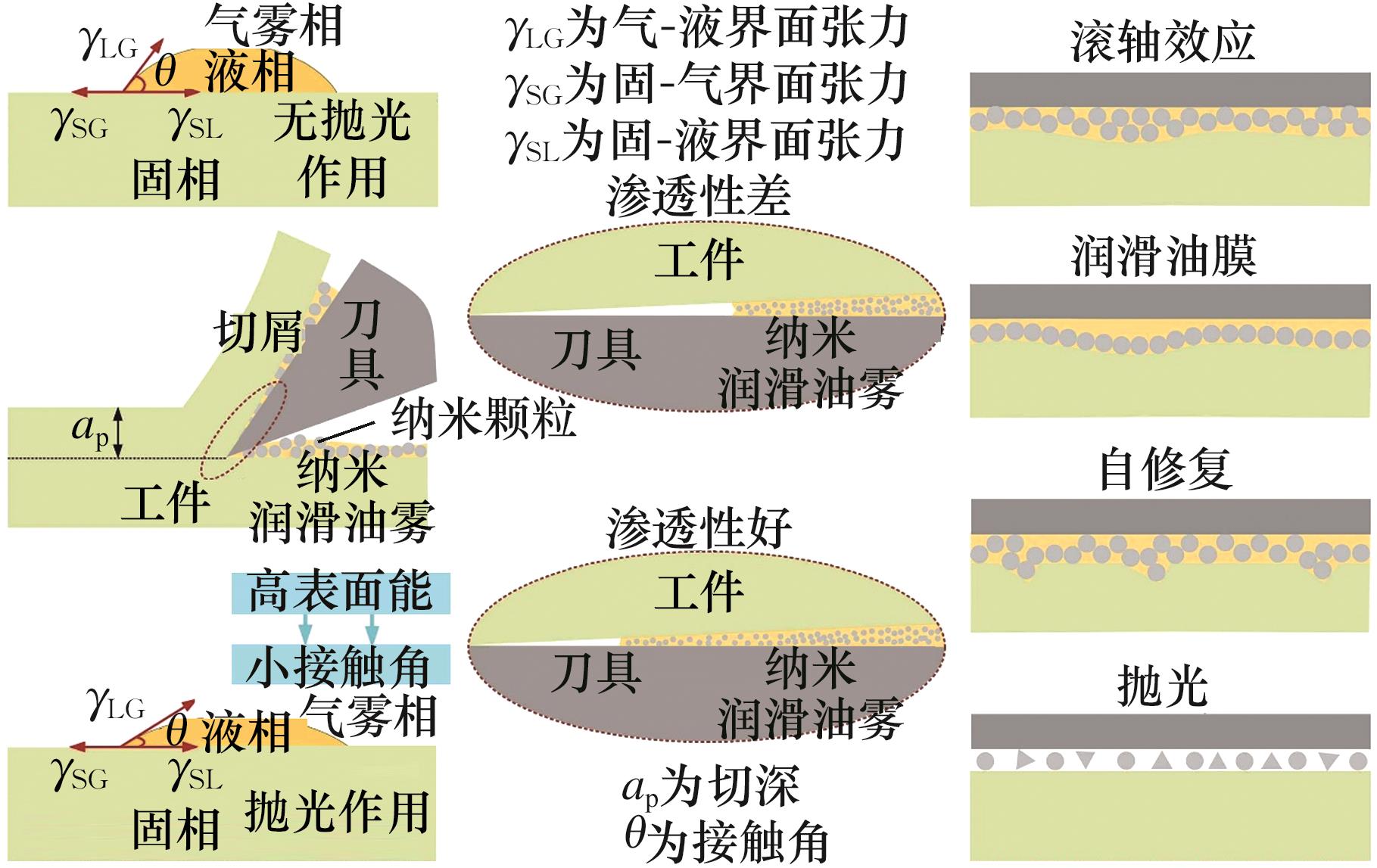
图6 MQL下润滑机理[73]
Fig.6 Lubrication mechanism under MQL[73]
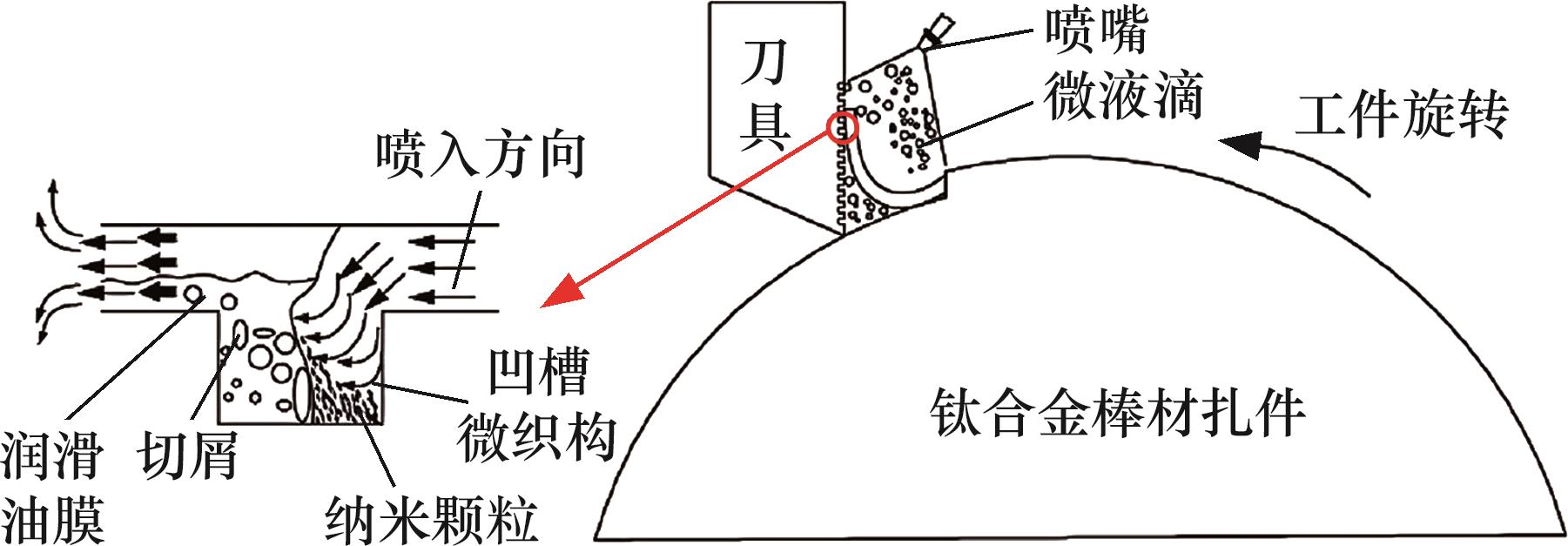
图7 MQL与微织构刀具协同作用润滑机理[72]
Fig.7 Lubrication mechanism of synergistic action of MQL and micro-textured tools[72]
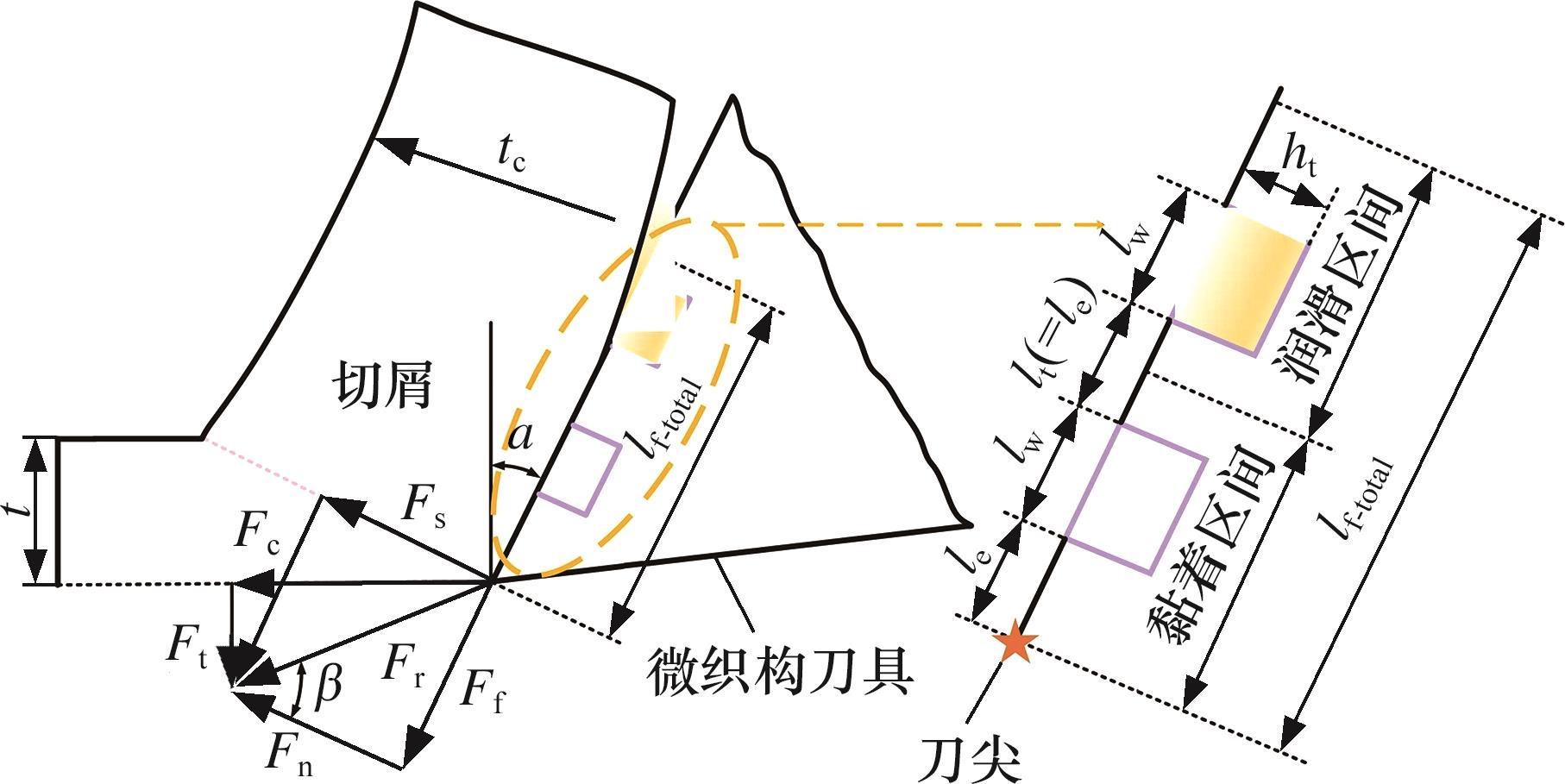
图8 微织构刀具切削过程中刀-屑接触示意图[76]
Fig.8 Schematic diagram of knife-chip contact during cutting process of micro-textured tools[76]
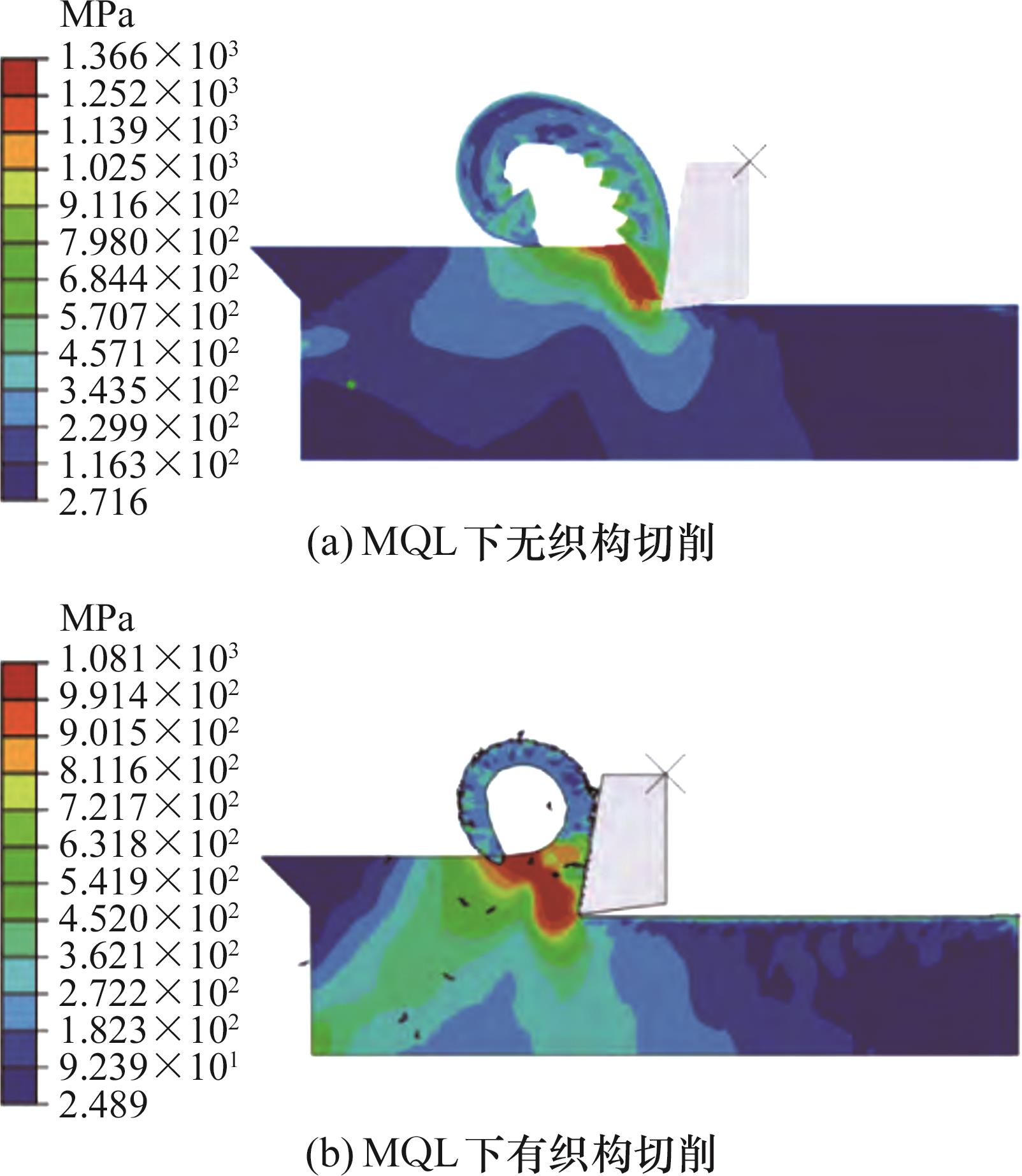
图9 MQL条件下无织构与有织构等效应力云图[72]
Fig.9 Cloud view of the stresses of weave-free and weave-equivalent structures under MQL conditions[72]
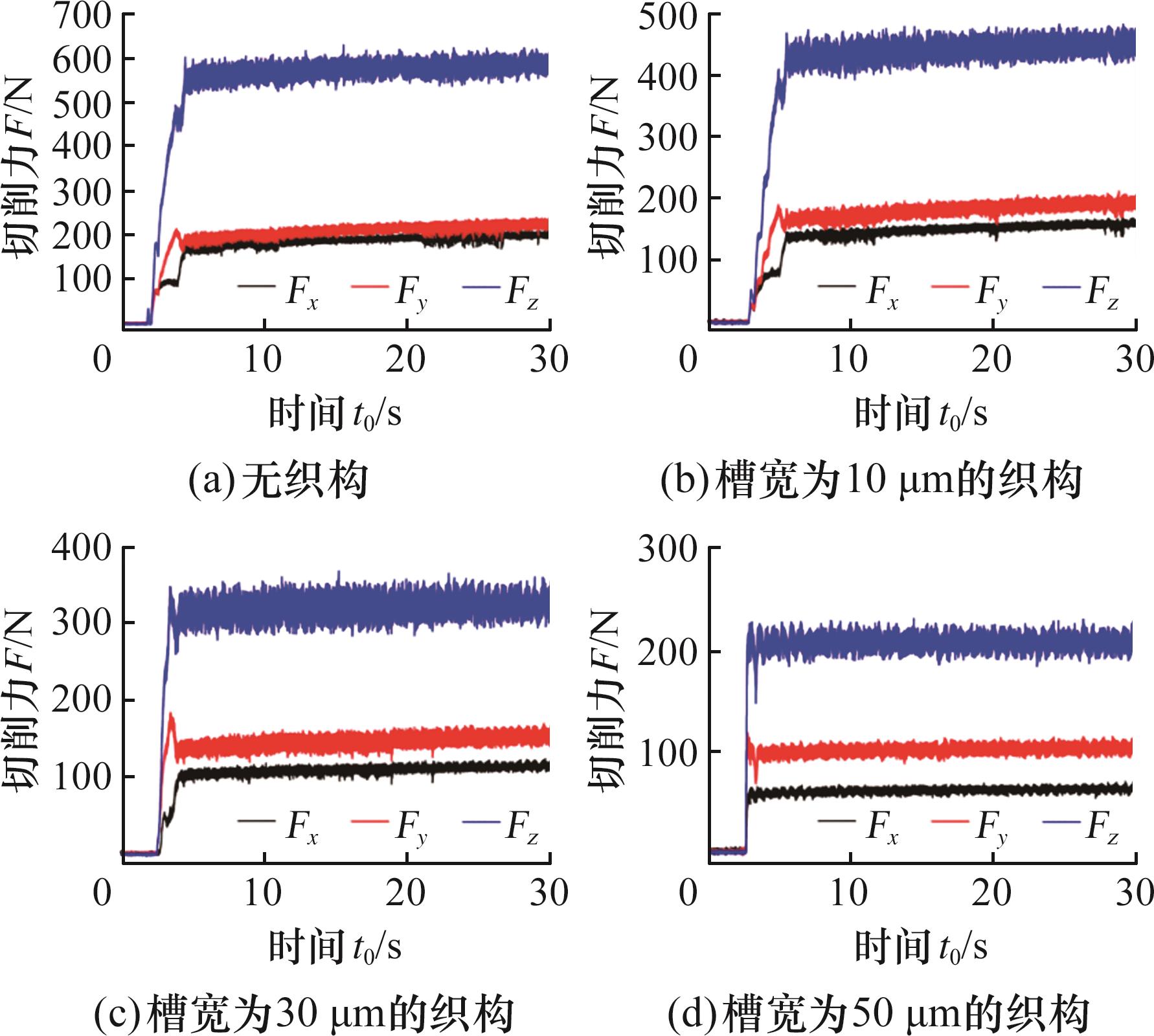
图10 MQL下不同刀具切削力的变化[7]
Fig.10 Variation of cutting force of different tools under MQL[7]
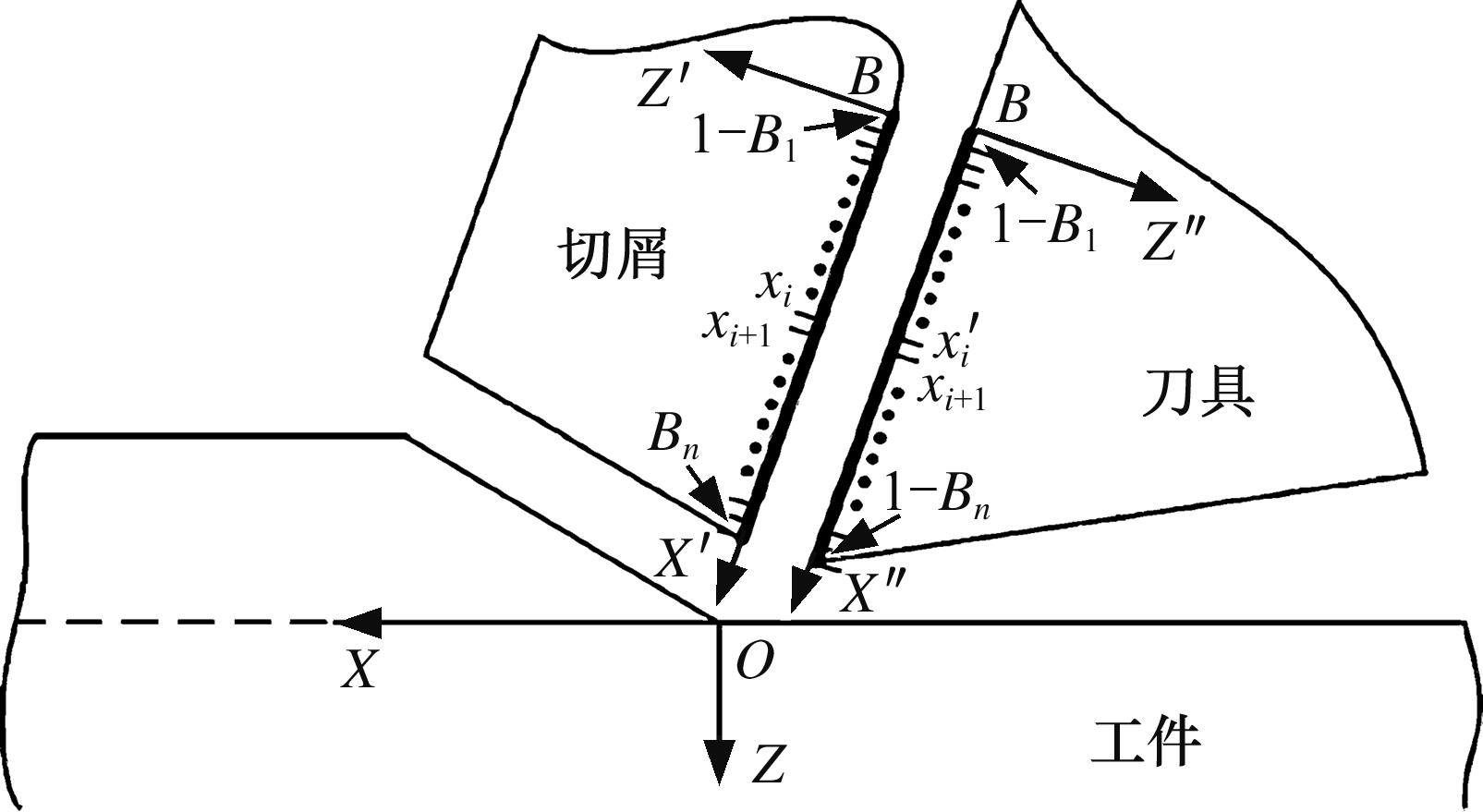
图11 热分配比离散化示意图[79]
Fig.11 Schematic diagram of heat distribution ratio discretization[79]
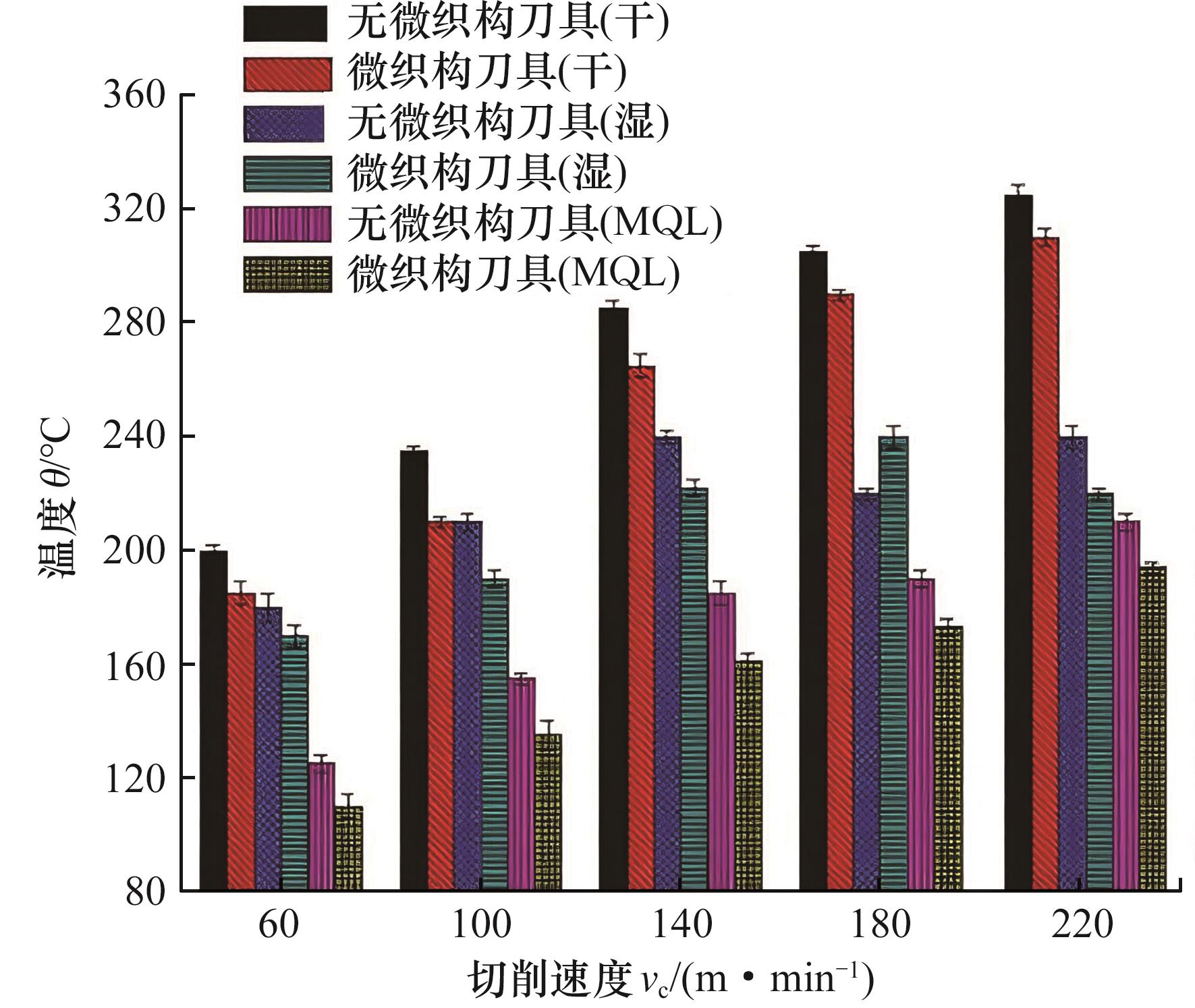
图12 不同条件下切削温度[82]
Fig.12 Cutting temperature at different conditions[82]
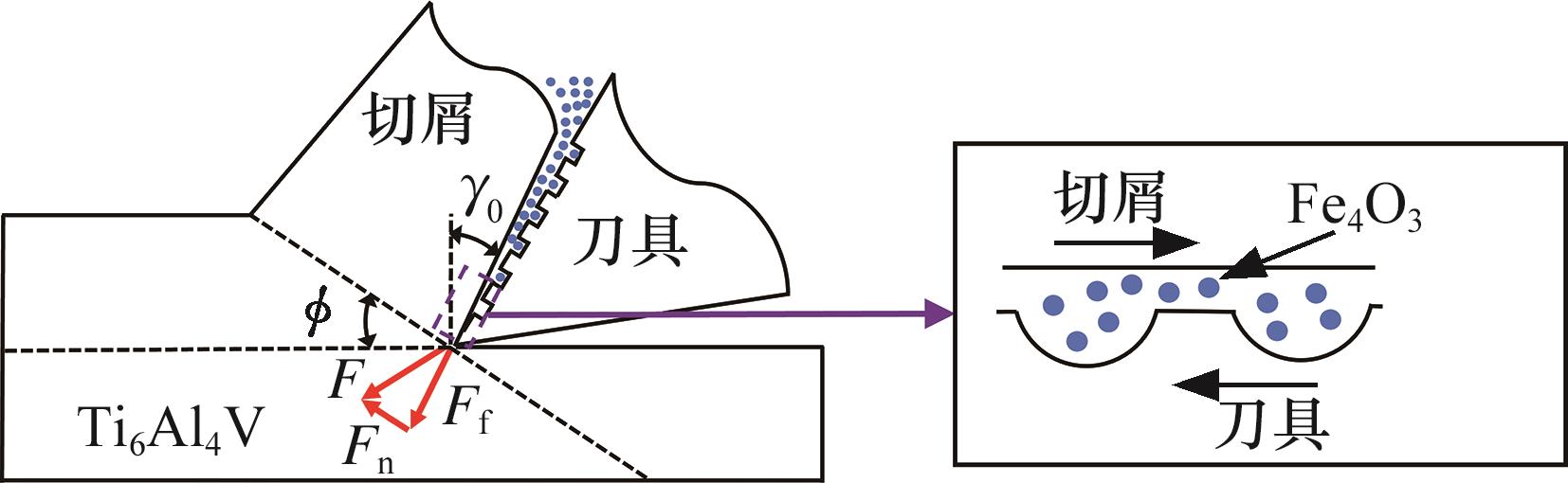
图13 接触区域受力示意图[90]
Fig.13 Schematic representation of forces in the contact area[90]
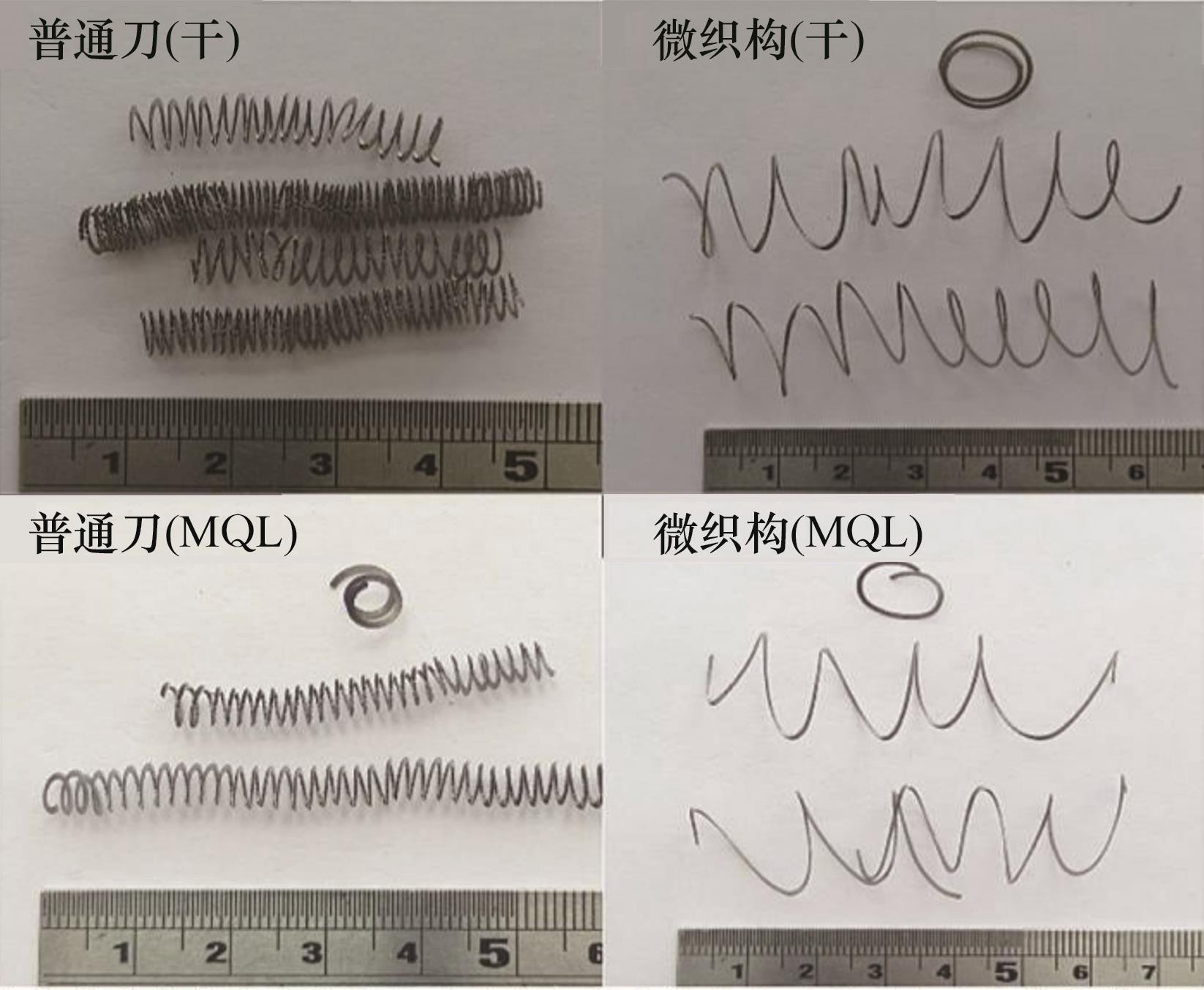
图14 不同切削条件下产生的切屑对比[91]
Fig.14 Comparison of chips produced at different conditions [91]
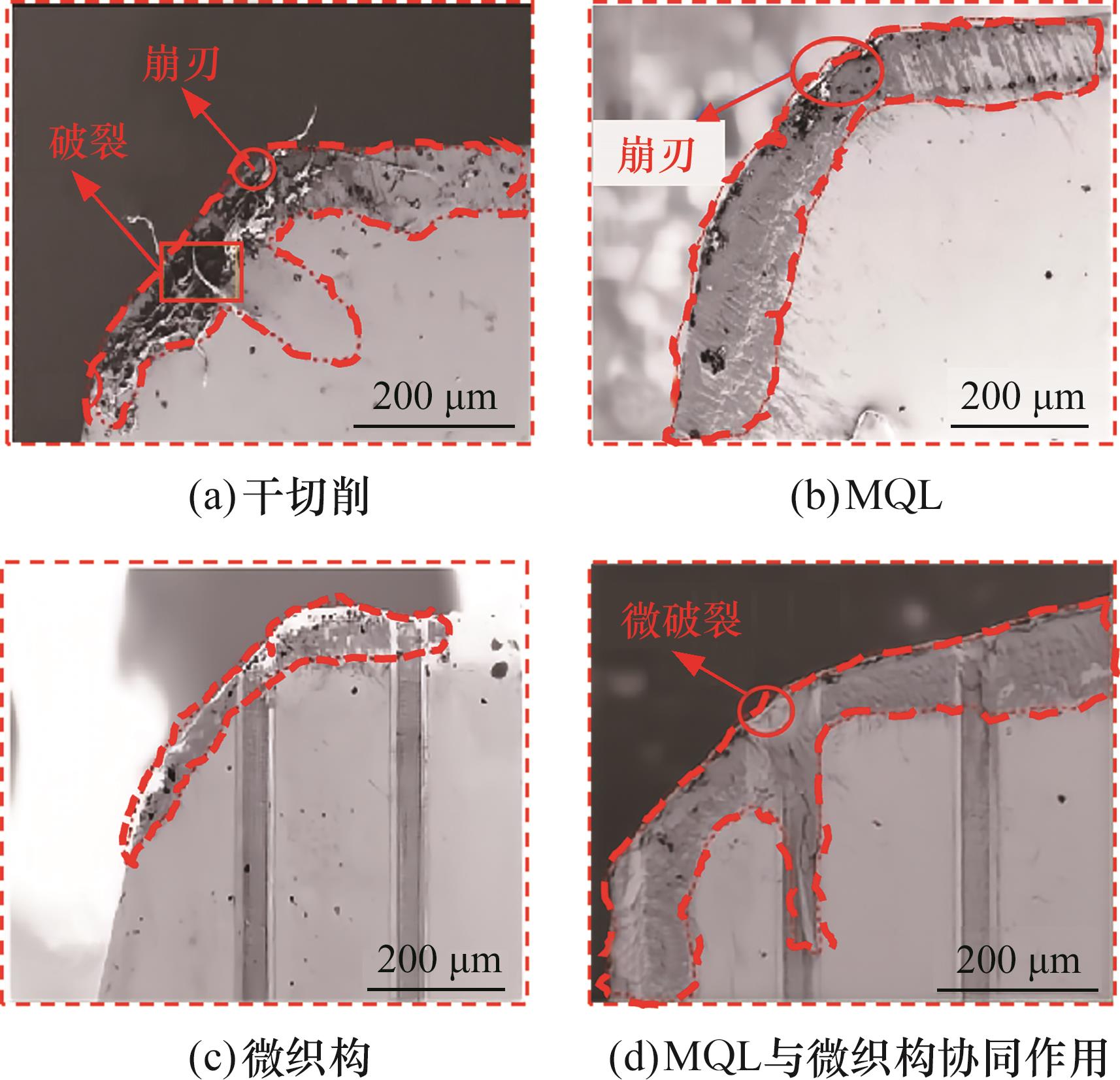
图15 在不同条件下刀具磨损[72]
Fig.15 Tool wear under different conditions[72]
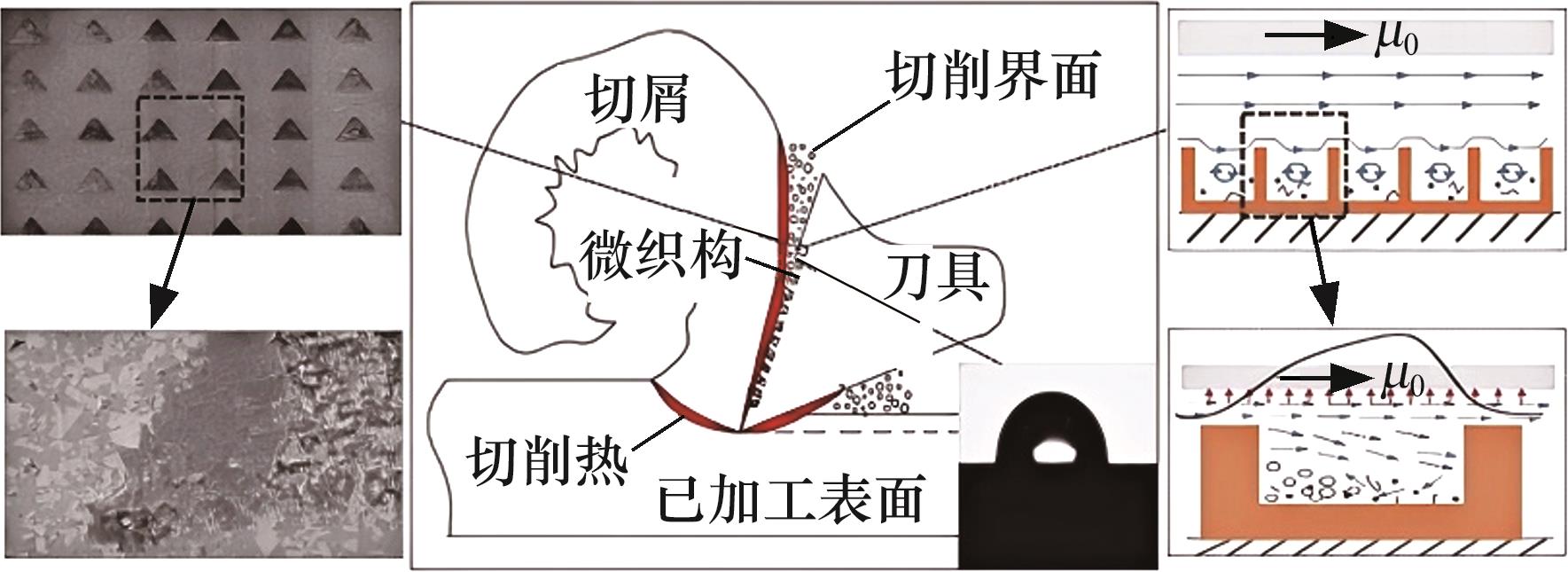
图16 刀具磨损机理图[97]
Fig.16 Diagram of tool wear mechanism[97]
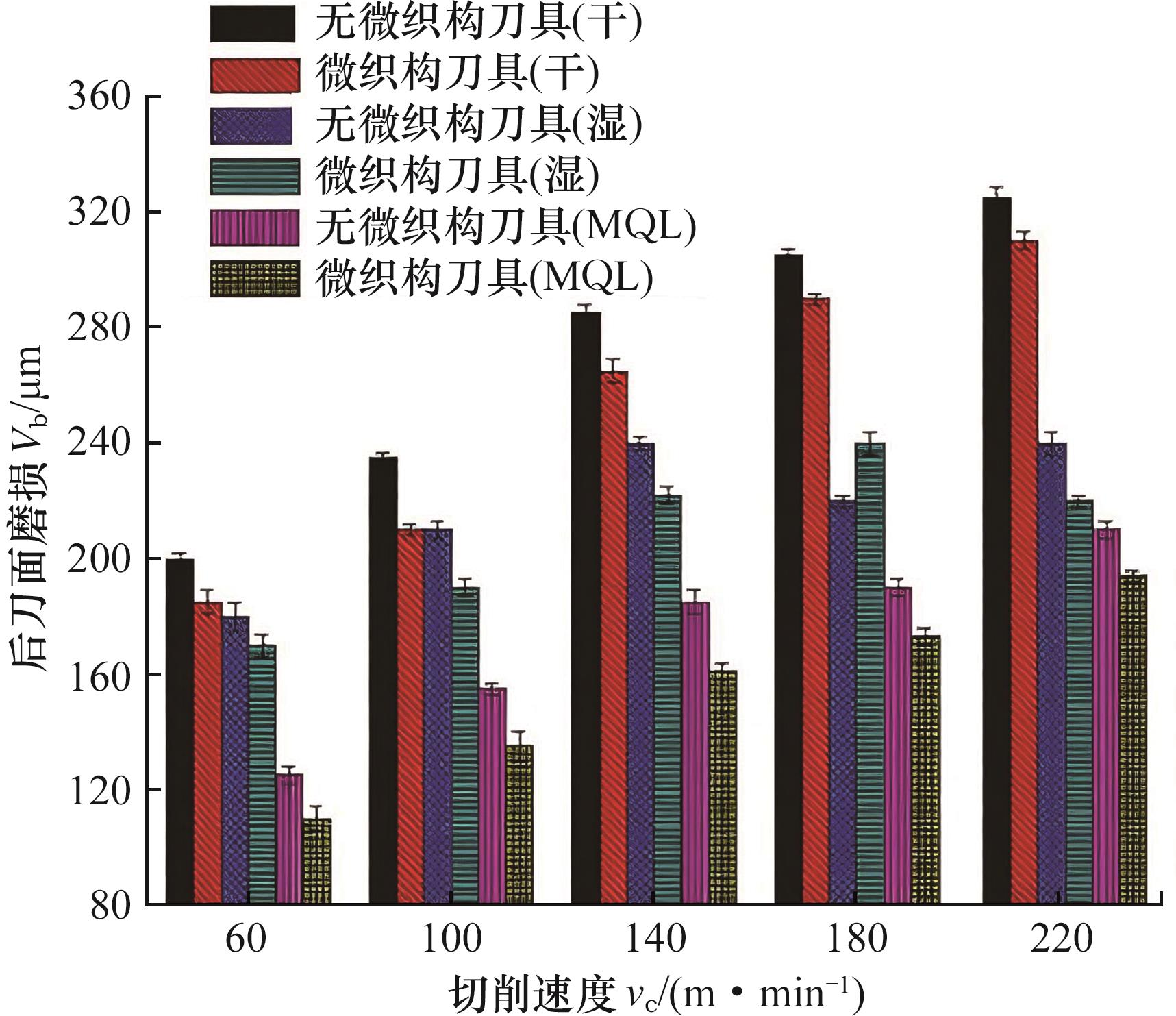
图17 不同条件下刀具后刀面磨损面积[82]
Fig.17 Wear area in front of the knife under different conditions[82]
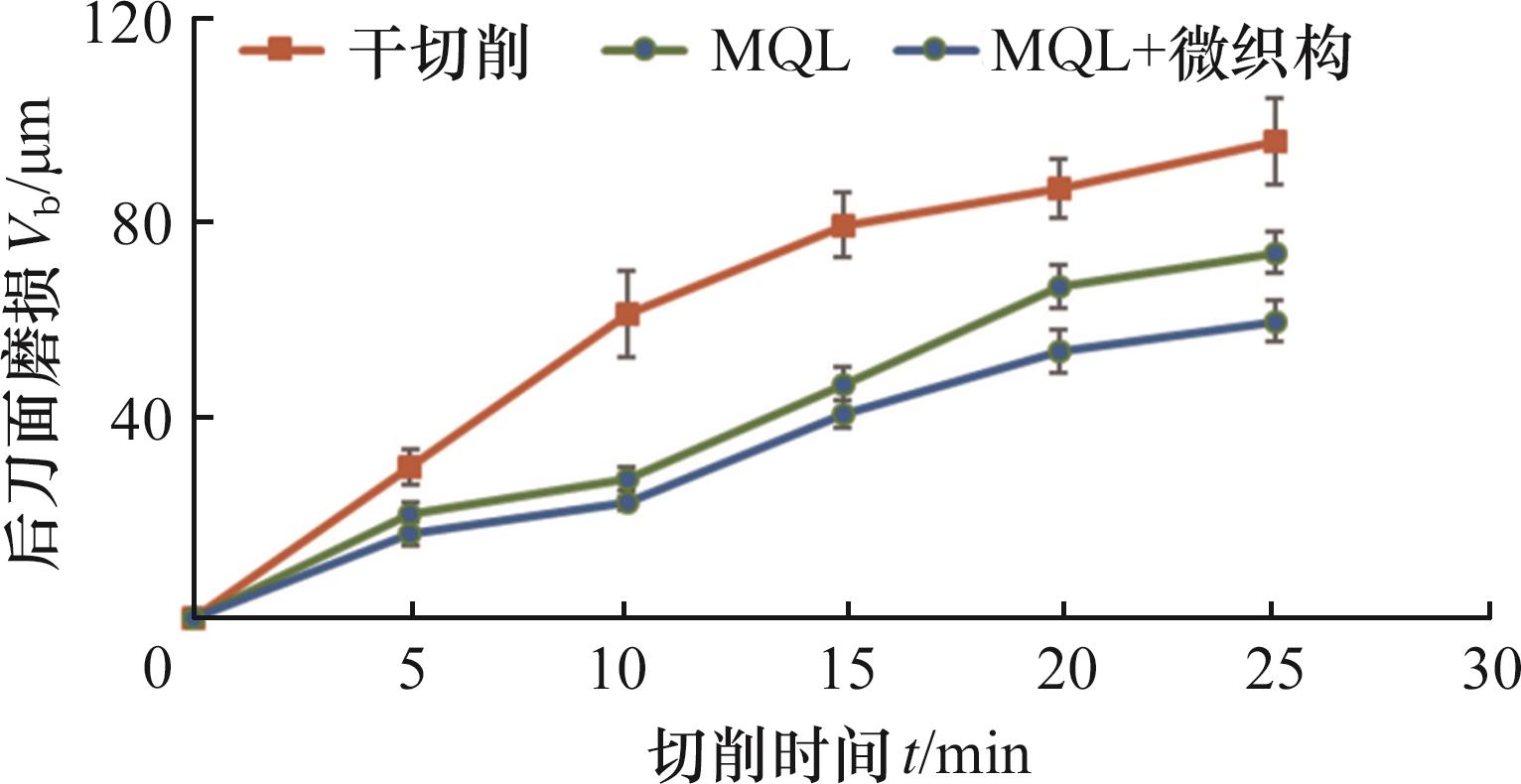
图18 使用织构和非织构刀片车削时后刀面磨损过程[100]
Fig.18 Flank wear process when turning with textured and non-textured inserts[100]
| [1] | 张晓宇, 李纪龙, 慈世伟, 等. 激光熔覆陶瓷颗粒增强金属基复合材料研究进展[J]. 热喷涂技术, 2024, 16(1): 18-34. |
| ZHANG Xiaoyu, LI Jilong, Shiwei CI, et al. Research Progress of Laser Cladding Ceramic Particle Reinforced Metal Matrix Composites[J]. Thermal Spray Technology, 2024, 16(1): 18-34. | |
| [2] | HAO Zhaopeng, XU Yongshuo, FAN Yihang, et al. Overview of Research on Machining Mechanism of Aluminum-based Silicon Carbide Composites (SiCp/Al)[J]. The International Journal of Advanced Manufacturing Technology, 2024, 133(7): 3133-3149. |
| [3] | KISHAWY H A, SALEM A, HEGAB H, et al. Micro-textured Cutting Tools: Phenomenological Analysis and Design Recommendations[J]. CIRP Annals, 2021, 70(1): 65-68. |
| [4] | PALANISAMY D, JAYASURYA S, MANIKANDAN N, et al. Performance Evaluation of Textured Inserts with MQL in Machining of pH Stainless Steel[J]. Materials Today: Proceedings, 2021, 39: 279-284. |
| [5] | GAJRANI K K, PAVAN KUMAR REDDY R, RAVI SANKAR M. Tribo-mechanical and Surface Morphological Comparison of Untextured, Mechanical Micro-textured (MμT), and Coated-MμT Cutting Tools during Machining[J]. Proceedings of the Institution of Mechanical Engineers, Part J: Journal of Engineering Tribology, 2019, 233(1): 95-111. |
| [6] | FOUATHIYA A, MEZIANI S, SAHLI M, et al. Experimental Investigation of Microtextured Cutting Tool Performance in Titanium Alloy via Turning[J]. Journal of Manufacturing Processes, 2021, 69: 33-46. |
| [7] | GE Dongliang, DENG Jianxin, DUAN Ran, et al. Effect of Micro-textures on Cutting Fluid Lubrication of Cemented Carbide Tools[J]. The International Journal of Advanced Manufacturing Technology, 2019, 103(9): 3887-3899. |
| [8] | SARAF G, SHARMA G, KUMAR R, et al. Experimental and Numerical Investigation on Heat Dissipation Capability of Micro-pillar Textured Cutting Tools[J]. Scientific Reports, 2025, 15: 12282. |
| [9] | RANJAN P, HIREMATH S S. Role of Textured Tool in Improving Machining Performance: a Review[J]. Journal of Manufacturing Processes, 2019, 43: 47-73. |
| [10] | ROSAS J, LOPES H, GUIMARÃES B, et al. Influence of Micro-textures on Cutting Insert Heat Dissipation[J]. Applied Sciences, 2022, 12(13): 6583. |
| [11] | ASLANTAS K, HASÇELIK A, ERÇETIN A, et al. Effect of Cutting Conditions on Tool Wear and Wear Mechanism in Micro-milling of Additively Manufactured Titanium Alloy[J]. Tribology International, 2024, 193: 109340. |
| [12] | ALI S, ABDALLAH S, PERVAIZ S. Predicting Cutting Force and Primary Shear Behavior in Micro-textured Tools Assisted Machining of AISI 630: Numerical Modeling and Taguchi Analysis[J]. Micromachines, 2022, 13(1): 91. |
| [13] | SARAF G, IMAM S, NIRALA C K. Machinability Analysis of Additively Manufactured Ti6Al4V Using Micro-pillar Textured Tool under Various Cutting Fluid Strategies[J]. Wear, 2024, 556: 205514. |
| [14] | REDDY V C, VENKAIAH T, NISHKALA T, et al. Effect of Textured Tools in Turning Operation: a Comparison with Conventional Tools[J]. Transactions of the Indian National Academy of Engineering, 2021, 6(3): 697-708. |
| [15] | MUSAVI S H, SEPEHRIKIA M, DAVOODI B, et al. Performance Analysis of Developed Micro-textured Cutting Tool in Machining Aluminum Alloy 7075-T6: Assessment of Tool Wear and Surface Roughness[J]. The International Journal of Advanced Manufacturing Technology, 2022, 119(5): 3343-3362. |
| [16] | WANG Yu, PENG Wenxin, TONG He, et al. A Biomimetic Micro-texture Based on Shark Surface for Tool Wear Reduction and Wettability Change[J]. Journal of Manufacturing Processes, 2024, 129: 202-214. |
| [17] | KANNAN S, KISHAWY H A. Tribological Aspects of Machining Aluminium Metal Matrix Composites[J]. Journal of Materials Processing Technology, 2008, 198(1/2/3): 399-406. |
| [18] | ZHAO Qinyang, SUN Qiaoyan, XIN Shewei, et al. High-strength Titanium Alloys for Aerospace Engineering Applications: a Review on Melting-forging Process[J]. Materials Science and Engineering: A, 2022, 845: 143260. |
| [19] | 罗欢, 张定华, 罗明. 航空难加工材料切削刀具磨损与剩余寿命预测研究进展[J]. 中国机械工程, 2021, 32(22): 2647-2666. |
| LUO Huan, ZHANG Dinghua, LUO Ming. Tool Wear and Remaining Useful Life Estimation of Difficult-to-machine Aerospace Alloys: a Review[J]. China Mechanical Engineering, 2021, 32(22): 2647-2666. | |
| [20] | WU Shixiong, LIU Guangdong, ZHANG Wenfeng, et al. High-speed Milling of Hardened Steel under Minimal Quantity Lubrication with Liquid Nitrogen[J]. Journal of Manufacturing Processes, 2023, 95: 351-368. |
| [21] | DADBAKHSH S, MERTENS R, VANMEENSEL K, et al. In Situ Transformations during SLM of an Ultra-strong TiC Reinforced Ti Composite[J]. Scientific Reports, 2020, 10: 10523. |
| [22] | ARORA G S, SAXENA K K, MOHAMMED K A, et al. Manufacturing Techniques for Mg-based Metal Matrix Composite with Different Reinforcements[J]. Crystals, 2022, 12(7): 945. |
| [23] | YU Chengtao, ZHEN Yu, ZHAO Jing, et al. Microstructures, Mechanical Properties, and Oxidation Behavior of In-situ Ultra-fine Duplex Carbides Reinforced Ni-based Superalloy Composites[J]. Journal of Alloys and Compounds, 2023, 965: 171321. |
| [24] | SAJI V S. Advances in Plasma Electrolytic Oxidation (PEO) on Metal-matrix Composites (MMCS) – a Critical Review[J]. Chemical Engineering Journal, 2024, 498: 155066. |
| [25] | SAMAL P, VUNDAVILLI P R, MEHER A, et al. Reinforcing Effect of Multi-walled Carbon Nanotubes on Microstructure and Mechanical Behavior of AA5052 Composites Assisted by In-situ TiC Particles[J]. Ceramics International, 2022, 48(6): 8245-8257. |
| [26] | ESCAICH C, SHI Zhongde, BARON L, et al. Machining of Titanium Metal Matrix Composites: Progress Overview[J]. Materials, 2020, 13(21):5011. |
| [27] | SARMAH P, GUPTA K, SARMAH P, et al. A Review on the Machinability Enhancement of Metal Matrix Composites by Modern Machining Processes[J]. Micromachines, 2024, 15(8): 947. |
| [28] | NAGARAJA, ADHIKARI R, YASIR T. An Investigation into Tapping of Al6061/SiC Metal Matrix Composite with Straight Flute HSS Machine Tap[J]. Journal of Mechanical Engineering and Sciences, 2019, 13(1): 4575-4595. |
| [29] | SEKHAR R, SHARMA D, SHAH P, et al. State of the Art in Metal Matrix Composites Research: a Bibliometric Analysis[J]. Applied System Innovation, 2021, 4(4):86. |
| [30] | KOSHY P, TOVEY J. Performance of Electrical Discharge Textured Cutting Tools[J]. CIRP Annals, 2011, 60(1): 153-156. |
| [31] | MAHARANA H S, KUMAR R, NARAYANA MURTY S V S, et al. Surface Micro-texturing of Dual Phase Steel and Copper by Combining Laser Machining and Electrochemical Dissolution[J]. Journal of Materials Processing Technology, 2019, 273: 116260. |
| [32] | SIVAIAH P, BODICHERLA U. Effect of Surface Texture Tools and Minimum Quantity Lubrication (MQL) on Tool Wear and Surface Roughness in CNC Turning of AISI 52100 Steel[J]. Journal of the Institution of Engineers (India): Series C, 2020, 101(1): 85-95. |
| [33] | GE Fengrong, YU Zhanjiang, LI Yiquan, et al. Tool-chip Contact Characteristics during Micro-cutting of Compacted Graphite Iron (CGI) with Textured Tools[J]. Journal of Manufacturing Processes, 2023, 99: 592-604. |
| [34] | SUGIHARA T, NISHIMOTO Y, ENOMOTO T. Development of a Novel Cubic Boron Nitride Cutting Tool with a Textured Flank Face for High-speed Machining of Inconel 718[J]. Precision Engineering, 2017, 48: 75-82. |
| [35] | NIU Qiulin, WU Meiyi, LIU Lipeng, et al. A Comprehensive Review of Advances in Design of Micro-texture on Tool Surface and Its Cutting Performance[J]. The International Journal of Advanced Manufacturing Technology, 2024, 135(1): 1-24. |
| [36] | 郭江, 王兴宇, 赵勇, 等. 微织构刀具制备技术及加工性能研究新进展[J]. 机械工程学报, 2021, 57(13): 172-200. |
| GUO Jiang, WANG Xingyu, ZHAO Yong, et al. Recent Progress on Fabrication Technologies and Machining Performance of Textured Cutting Tools[J]. Journal of Mechanical Engineering, 2021, 57(13): 172-200. | |
| [37] | 李丹, 杨学锋, 王守仁, 等. 工件表面微/纳织构的研究现状与进展[J]. 机械强度, 2020(6): 1348-1355. |
| LI Dan, YANG Xuefeng, WANG Shouren, et al. Research Status and Development of Micro/Nano Texture[J]. Journal of Mechanical Strength, 2020(6): 1348-1355. | |
| [38] | LIU Yayun, DENG Jianxin, WU Fengfang, et al. Wear Resistance of Carbide Tools with Textured Flank-face in Dry Cutting of Green Alumina Ceramics[J]. Wear, 2017, 372: 91-103. |
| [39] | XU Tiantian, MA Chunlu, SHI Hu, et al. Effect of Composite Bionic Micro-texture on Cutting Performance of Tools[J]. Lubricants, 2023, 12(1): 4. |
| [40] | KHANI S, RAZFAR M R, HAGHIGHI S S, et al. Optimization of Microtextured Tools Parameters in Thread Turning Process of Aluminum 7075 Aerospace Alloy[J]. Materials and Manufacturing Processes, 2020, 35(12): 1330-1338. |
| [41] | PRADHAN S, INDRANEEL S, SHARMA R, et al. Optimization of Machinability Criteria during Dry Machining of Ti-2 with Micro-groove Cutting Tool Using WASPAS Approach[J]. Materials Today: Proceedings, 2020, 33: 5306-5312. |
| [42] | ZHOU Xiaorong, HE Lin, ZHOU Tao, et al. A Comprehensive Review of Tool Surface Texturing in the Cutting Process[J]. The International Journal of Advanced Manufacturing Technology, 2022, 123(7): 2427-2467. |
| [43] | WAKUDA M, YAMAUCHI Y, KANZAKI S, et al. Effect of Surface Texturing on Friction Reduction between Ceramic and Steel Materials under Lubricated Sliding Contact[J]. Wear, 2003, 254(3/4): 356-363. |
| [44] | ZHENG Guoqiang, LAI Fuqiang, LIN Youxi, et al. Study on the Friction-reducing Mechanisms of Surface Texture Cemented Carbide under Dry Sliding[J]. Journal of Materials Engineering and Performance, 2023, 32(5): 2074-2083. |
| [45] | DUAN Zhenjing, LI Changhe, ZHANG Yanbin, et al. Milling Surface Roughness for 7050 Aluminum Alloy Cavity Influenced by Nozzle Position of Nanofluid Minimum Quantity Lubrication[J]. Chinese Journal of Aeronautics, 2021, 34(6): 33-53. |
| [46] | WU Ze, XING Youqiang, CHEN Jiansong, et al. Improving the Performance of Micro-textured Cutting Tools in Dry Milling of Ti-6Al-4V Alloys[J]. Micromachines, 2021, 12(8):945. |
| [47] | DU Feilong, ZHOU Tao, TIAN Pengfei, et al. Cutting Performance and Cutting Fluid Infiltration Characteristics into Tool-chip Interface during MQL Milling[J]. Measurement, 2024, 225: 113989. |
| [48] | 王晓铭, 刘纪新, 杨敏, 等. 超声赋能仿生微织构刀具微量润滑车削钛合金Ti-6Al-4V力模型与实验验证[J/OL]. 机械工程学报. . |
| WANG Xiaoming, LIU Jixin, YANG Min, et al. Force Model and Experimental Verification of Micro-lubrication Turning Titanium Alloy Ti-6Al-4V with Ultrasonic Energized Bionic Micro-texture Tool[J/OL]. Journal of Mechanical Engineering. . | |
| [49] | JIA Shilong, HAN Jian, LIU Yude, et al. Comparative Study on Cutting Performance of Different Micro-texturing Milling Tools for Preparing the L-PBF-formed TC4 Workpieces[J]. Journal of Manufacturing Processes, 2023, 108: 596-609. |
| [50] | 杨简彰, 王成勇, 袁尧辉, 等. 微量润滑复合增效技术及其应用研究进展[J]. 中国机械工程, 2022, 33(5): 506-528. |
| YANG Jianzhang, WANG Chengyong, YUAN Yaohui, et al. State-of-the-art on MQL Synergistic Technologies and Their Applications[J]. China Mechanical Engineering, 2022, 33(5): 506-528. | |
| [51] | 刘明政, 李长河, 曹华军, 等. 低温微量润滑加工技术研究进展与应用[J]. 中国机械工程, 2022, 33(5): 529-550. |
| LIU Mingzheng, LI Changhe, CAO Huajun, et al. Research Progresses and Applications of CMQL Machining Technology[J]. China Mechanical Engineering, 2022, 33(5): 529-550. | |
| [52] | LI Suyang, ZHANG Liye, MENG Xianna, et al. Enhancing Cutting Performance of Micro-textured and Coated Tool by Synergistically Improving Coating Adhesion Strength and Debris Capture-storage Capacities[J]. Tribology International, 2025, 202: 110357. |
| [53] | NIKETH S, G L S. Drilling Performance of Micro Textured Tools under Dry, Wet and MQL Condition[J]. Journal of Manufacturing Processes, 2018, 32: 254-268. |
| [54] | 程锐, 艾兴, 葛栋良, 等. MQL条件下微织构刀具车削钛合金的切削加工性试验分析[J]. 工具技术, 2018, 52(11): 36-39. |
| CHENG Rui, AI Xing, GE Dongliang, et al. Experimental Analysis of Machinability of Micro-texture Tool Turning Titanium Alloy under Condition of MQL[J]. Tool Engineering, 2018, 52(11): 36-39. | |
| [55] | JIANG Yuanyuan, YAN Zhijun, ZHANG Shengwei, et al. Research on Cavitation Effect of Microtextured Array[J]. Scientific Reports, 2022, 12: 13455. |
| [56] | ZHANG Yanbin, LI Liuyang, CUI Xin, et al. Lubricant Activity Enhanced Technologies for Sustainable Machining: Mechanisms and Processability[J]. Chinese Journal of Aeronautics, 2025, 38(6): 103203. |
| [57] | KUMAR MISHRA S, GHOSH S, ARAVINDAN S. Machining Performance Evaluation of Ti6Al4V Alloy with Laser Textured Tools under MQL and Nano-MQL Environments[J]. Journal of Manufacturing Processes, 2020, 53: 174-189. |
| [58] | GUO Dalin, GUO Xuhong, CHEN Junbao, et al. Improving Lubrication Performance of Cemented Carbide Tools Combined Fe3O4 Nanofluids Lubricating and Micro-groove Textures in High-speed Milling Ti6Al4V[J]. Journal of Advanced Mechanical Design, Systems, and Manufacturing, 2022, 16(1): JAMDSM0004. |
| [59] | ELLERSIEK L, MENZE C, SAUER F, et al. Evaluation of Methods for Measuring Tool-chip Contact Length in Wet Machining Using Different Approaches (Microtextured Tool, In-situVisualization and Restricted Contact Tool)[J]. Production Engineering, 2022, 16(5): 635-646. |
| [60] | YANG Gang, FENG Wei. Short Communication: Experiment Study on Micro-textured Tool with Internal Cooling[J]. Mechanical Sciences, 2022, 13(2): 619-623. |
| [61] | CHEN Zhigao, DING Fei, ZHANG Zhichao, et al. A Review on Machining SiCp/Al Composite Materials[J]. Micromachines, 2024, 15(1):107. |
| [62] | LIU Junwei, CHENG Kai, DING Hui, et al. Simulation Study of the Influence of Cutting Speed and Tool–Particle Interaction Location on Surface Formation Mechanism in Micromachining SiCp/Al Composites[J]. Proceedings of the Institution of Mechanical Engineers, Part C: Journal of Mechanical Engineering Science, 2018, 232(11): 2044-2056. |
| [63] | HAN Xiao, XU Dongdong, AXINTE D, et al. On Understanding the Specific Cutting Mechanisms Governing the Workpiece Surface Integrity in Metal Matrix Composites Machining[J]. Journal of Materials Processing Technology, 2021, 288: 116875. |
| [64] | SUN Wei, DUAN Chuanzheng, YIN Wendian. Chip Formation Mechanism in Machining of Al/SiCp Composites Based on Analysis of Particle Damage[J]. Journal of Manufacturing Processes,2021,64:861-877. |
| [65] | 史红艳, 赵先锋, 王自勤, 等. 断裂力学在塑性金属材料切削过程中应用的研究现状[J]. 西北工业大学学报, 2019, 37(6): 1209-1222. |
| SHI Hongyan, ZHAO Xianfeng, WANG Ziqin, et al. Research of Fracture Mechanics Applied in the Cutting Process of Plastic Metals[J]. Journal of Northwestern Polytechnical University, 2019, 37(6): 1209-1222. | |
| [66] | UMER U, KISHAWY H, GHANDEHARIUN A, et al. On Modeling Tool Performance while Machining Aluminum-based Metal Matrix Composites[J]. The International Journal of Advanced Manufacturing Technology, 2017, 92(9): 3519-3530. |
| [67] | AURICH J C, ZIMMERMANN M, SCHINDLER S, et al. Turning of Aluminum Metal Matrix Composites: Influence of the Reinforcement and the Cutting Condition on the Surface Layer of the Workpiece[J]. Advances in Manufacturing, 2016, 4(3): 225-236. |
| [68] | TENG Xiangyu, HUO Dehong, CHEN Wanqun, et al. Finite Element Modelling on Cutting Mechanism of Nano Mg/SiC Metal Matrix Composites Considering Cutting Edge Radius[J]. Journal of Manufacturing Processes, 2018, 32: 116-126. |
| [69] | 田初春, 蒋宏婉, 袁森, 等. 微纳织构涂层刀具切削性能研究进展[J]. 中国表面工程, 2024, 37(2): 137-160. |
| TIAN Chuchun, JIANG Hongwan, YUAN Sen, et al. Progress on Cutting Performance of Micro-nano Texture Coated Tools[J]. China Surface Engineering, 2024, 37(2): 137-160. | |
| [70] | LAGHARI RALI, HE Ning, JAMIL M, et al. A State-of-the-art Review on Recently Developed Sustainable and Green Cooling/Lubrication Technologies in Machining Metal Matrix Composites (MMCs)[J]. International Journal of Precision Engineering and Manufacturing-Green Technology, 2023, 10(6): 1637-1660. |
| [71] | ZHANG Huiping, WANG Bowen, QU Liqiang, et al. Optimization of Tool Wear and Cutting Parameters in SCCO2-MQL Ultrasonic Vibration Milling of SiCp/Al Composites[J]. Machines, 2024, 12(9): 646. |
| [72] | 刘朝伟, 杨发展, 姜芙林, 等. 微量润滑工况下纳米粒子协同微织构对刀具切削性能的影响[J]. 表面技术, 2024, 53(10): 183-195. |
| LIU Zhaowei, YANG Fazhan, JIANG Fulin, et al. Synergistic Effect of Nano Particles and Micro-texture on Tool Cutting Performance under Micro Lubrication Conditions[J]. Surface Technology, 2024, 53(10): 183-195. | |
| [73] | DUAN Zhenjing, WANG Shuaishuai, WANG Ziheng, et al. Tool Wear Mechanisms in Cold Plasma and Nano-lubricant Multi-energy Field Coupled Micro-milling of Al-li Alloy[J]. Tribology International, 2024, 192: 109337. |
| [74] | KANG Zhengyang, FU Yonghong, CHEN Yun, et al. Experimental Investigation of Concave and Convex Micro-textures for Improving Anti-adhesion Property of Cutting Tool in Dry Finish Cutting[J]. International Journal of Precision Engineering and Manufacturing-Green Technology, 2018, 5(5): 583-591. |
| [75] | SU Yongsheng, LI Zhen, LI Liang, et al. Cutting Performance of Micro-textured Polycrystalline Diamond Tool in Dry Cutting[J]. Journal of Manufacturing Processes, 2017, 27: 1-7. |
| [76] | NI Jing, SU Zhongyue, MENG Zhen, et al. Research on the Correlation between Hybrid Microstructural Parameters and Tool Stability Performance[J]. Journal of Manufacturing Processes, 2024, 119: 878-887. |
| [77] | CAO Tongkun, LI Zonggao, ZHANG Siguo, et al. Cutting Performance and Lubrication Mechanism of Microtexture Tool with Continuous Lubrication on Tool-chip Interface[J]. The International Journal of Advanced Manufacturing Technology, 2023, 125(3): 1815-1826. |
| [78] | LIU Guoliang, ZHENG Jintao, HUANG Chuanzhen, et al. Coupling Effect of Micro-textured Tools and Cooling Conditions on the Turning Performance of Aluminum Alloy 6061[J]. Advances in Manufacturing, 2023, 11(4): 663-681. |
| [79] | SHAN Chenwei, ZHANG Xu, SHEN Bin, et al. An Improved Analytical Model of Cutting Temperature in Orthogonal Cutting of Ti6Al4V[J]. Chinese Journal of Aeronautics, 2019, 32(3): 759-769. |
| [80] | KOMANDURI R, HOU Z B. Thermal Modeling of the Metal Cutting Process Part I—Temperature Rise Distribution Due to Shear Plane Heat Source[J]. International Journal of Mechanical Sciences, 2000, 42(9): 1715-1752. |
| [81] | TONG He, LIU Xu, ZHANG Ning, et al. A Superspreading Bioinspired Micro-texture with the Function of Self-priming Liquid for Enhancing Boiling Heat Transfer of Cutting-fluid on Tool Surface[J]. Journal of Manufacturing Processes, 2025, 133: 556-565. |
| [82] | SIVAIAH P, SUDHEERA M, MURALIDHAR SINGH M, et al. Performance Evaluation of Developed New Textured Tools during Turning of AISI 321 Material[J]. Materials and Manufacturing Processes, 2024, 39(5): 688-699. |
| [83] | 戚宝运, 李亮, 何宁, 等. 表面织构在刀具减磨技术中的应用[J]. 工具技术, 2010, 44(12): 3-6. |
| QI Baoyun, LI Liang, HE Ning, et al. Application of Surface Texture in Tool Antifriction Technology[J]. Tool Engineering, 2010, 44(12): 3-6. | |
| [84] | WANG Xiaoming, LI Changhe, ZHANG Yanbin, et al. Influence of Texture Shape and Arrangement on Nanofluid Minimum Quantity Lubrication Turning[J]. The International Journal of Advanced Manufacturing Technology, 2022, 119(1): 631-646. |
| [85] | VENKATA AJAY KUMAR G, RAMAA A, SHILPA M. Comparative Study of Dry Machining Performance Using Hybrid Textured Cutting Insert[J]. Materials and Manufacturing Processes, 2024, 39(12): 1775-1783. |
| [86] | SUGIHARA T, KOBAYASHI R, ENOMOTO T. Direct Observations of Tribological Behavior in Cutting with Textured Cutting Tools[J]. International Journal of Machine Tools and Manufacture, 2021, 168: 103726. |
| [87] | DARSHAN C, JAIN S, DOGRA M, et al. Influence of Dry and Solid Lubricant-assisted MQL Cooling Conditions on the Machinability of Inconel 718 Alloy with Textured Tool[J]. The International Journal of Advanced Manufacturing Technology, 2019, 105(5): 1835-1849. |
| [88] | AGARI S R, LAKSHMIKANTHAN A, SELVAN C P, et al. Improvement in the Machining Processes by Micro-textured Tools during the Turning Process[C]∥ICPPM 2023. Chennai, 2024: 2. |
| [89] | MERCHANT M E. Basic Mechanics of the Metal-cutting Process[J]. Journal of Applied Mechanics, 1944, 11(3): A168-A175. |
| [90] | ZHANG Kedong, LI Zhihao, WANG Shanshan, et al. Study on the Cooling and Lubrication Mechanism of Magnetic Field-assisted Fe3O4@CNTs Nanofluid in Micro-textured Tool Cutting[J]. Journal of Manufacturing Processes, 2023, 85: 556-568. |
| [91] | SARAF G, NIRALA C K. Experimental Investigation of Micro-pillar Textured WC Inserts during Turning of Ti6Al4V under Various Cutting Fluid Strategies[J]. Journal of Manufacturing Processes, 2024, 113: 61-75. |
| [92] | 陈德雄, 林梦晗, 赵亚文, 等. 微织构刀具对钛合金切屑形成影响的仿真研究[J]. 宇航材料工艺, 2023, 53(5): 15-24. |
| CHEN Dexiong, LIN Menghan, ZHAO Yawen, et al. The Simulation Study on the Effect of Micro-textured Tools on Chip Formation of Titanium Alloy[J]. Aerospace Materials & Technology, 2023, 53(5): 15-24. | |
| [93] | LIANG Xiaoliang, ZHANG Canbin, WANG Chunjin, et al. Tool Wear Mechanisms and Surface Quality Assessment during Micro-milling of High Entropy Alloy FeCoNiCrAl[J]. Tribology International, 2023, 178: 108053. |
| [94] | CHOWDHURY M S I, BOSE B, RAWAL S, et al. Investigation of the Wear Behavior of PVD Coated Carbide Tools during Ti6Al4V Machining with Intensive Built up Edge Formation[J]. Coatings, 2021, 11(3): 266. |
| [95] | ZHANG Yali, ZHANG Quanli, WU Mingtao, et al. High-pressure Cooling Effects on Tool Wear Mechanism and Chip Formation in GH4169 Superalloy Turning[J]. Wear, 2025, 564/565: 205675. |
| [96] | CHEN Tao, SONG Lixing, LI Suyan, et al. Experimental Study on Wear Characteristics of PCBN Tool with Variable Chamfered Edge[J]. Chinese Journal of Mechanical Engineering, 2019, 32(1): 37. |
| [97] | HOU Qimin, YANG Xuefeng, LI Dan, et al. Tribological Performance of Hydrophobic and Micro/Nano Triangle Textured Rake Face of Cutting Tools[J]. Applied Surface Science, 2022, 571: 151250. |
| [98] | WU Fenghe, ZHANG Ning, PENG Wenxin, et al. A Novel Hybrid Micro-texture for Improving the Wear Resistance of PCD Tools on Cutting SiCp/Al Composites[J]. Journal of Manufacturing Processes, 2023, 101: 930-942. |
| [99] | DUAN Ran, DENG Jianxin, LEI Shuting, et al. Effect of Derivative Cutting on Machining Performance of Micro Textured Tools[J]. Journal of Manufacturing Processes, 2019, 45: 544-556. |
| [100] | ELIAS J V, VENKATESH N P, LAWRENCE K D, et al. Tool Texturing for Micro-turning Applications – an Approach Using Mechanical Micro Indentation[J]. Materials and Manufacturing Processes, 2021, 36(1): 84-93. |
| [1] | 袁尧辉, 王成勇, 李伟秋, 郑李娟, 颜炳姜. 微量润滑切削用气动雾化器设计及雾化特性研究[J]. 中国机械工程, 2026, 37(4): 837-845. |
| [2] | 郑金滔, 马浩然, 王进, 刘国梁. 超声辅助纳米流体微量润滑车削钛合金实验研究[J]. 中国机械工程, 2025, 36(04): 743-752,759. |
| [3] | 李书义1, 2, 郭峰1, 黄柏林2, 金薇1, 梁鹏1. 微量供油下的线接触副润滑增效分析[J]. 中国机械工程, 2024, 35(07): 1205-1211. |
| [4] | 张宇, 王德祥, 郭峰, 栗心明, . 球形纳米颗粒在镍基合金纳米流体微量润滑磨削界面摩擦学机制的分子动力学研究[J]. 中国机械工程, 2024, 35(03): 445-456. |
| [5] | 张立峰, 张晓光. 微量润滑变角度高速铣削碳纤维增强复合材料的加工性能与材料去除机理[J]. 中国机械工程, 2023, 34(21): 2622-2628. |
| [6] | 李祥, 郑光明, 颜培, 孙作民, 程祥, 刘焕宝. 清洁切削高温合金涂层刀具切削性能及加工表面完整性[J]. 中国机械工程, 2023, 34(04): 454-463. |
| [7] | 张硕, 邹平, 方锐, 周亮. 微织构车刀椭圆超声辅助切削加工性能研究[J]. 中国机械工程, 2023, 34(03): 287-291,299. |
| [8] | 吴振宇, 郑光明, 颜培, 杨先海, 赵光喜, 李学伟. 表面处理对TiAlSiN涂层刀具表面完整性及切削性能的影响研究[J]. 中国机械工程, 2023, 34(01): 75-83. |
| [9] | 于良, 郑光明, 杨先海, 程祥, 常垲硕, 李学伟. 深冷处理对PCBN刀具切削性能的影响研究[J]. 中国机械工程, 2022, 33(20): 2450-2458. |
| [10] | 关集俱, 高超, 徐正亚, 丁云鹏, 李特, 许雪峰. 多壁碳纳米管/油酸复合物纳米流体车削GCr15钢的性能研究[J]. 中国机械工程, 2022, 33(18): 2205-2214,2226. |
| [11] | 范庆波, 杨帆, 关晓艳, 李浩, 樊小强, 朱旻昊. TiVN涂层的耐磨性与切削性能的关联研究[J]. 中国机械工程, 2022, 33(12): 1493-1503. |
| [12] | 梁赐乐, 袁尧辉, 王成勇, 李伟秋, 杨简彰, 吴华艺. 微量润滑系统油雾调控及雾粒特性研究[J]. 中国机械工程, 2022, 33(05): 607-614. |
| [13] | 余建杭, 颜培, 范雷, 顾慧卿, 焦黎, 仇天阳, 王西彬. 相态对镍钛合金清洁切削性能和表面完整性的影响[J]. 中国机械工程, 2022, 33(05): 569-576. |
| [14] | 王德祥, 赵齐亮, 张宇, 高腾, 江京亮, 刘国梁, 李长河, . 离子液体在微量润滑磨削界面的摩擦学机理研究[J]. 中国机械工程, 2022, 33(05): 560-568,606. |
| [15] | 刘明政, 李长河, 曹华军, 张松, 陈云, 刘波, 张乃庆, 周宗明. 低温微量润滑加工技术研究进展与应用[J]. 中国机械工程, 2022, 33(05): 529-550. |
| 阅读次数 | ||||||
|
全文 |
|
|||||
|
摘要 |
|
|||||
