



ISSN 1004-132X
CN 42-1294/TH
CN 42-1294/TH
中国机械工程 ›› 2026, Vol. 37 ›› Issue (1): 174-183.DOI: 10.3969/j.issn.1004-132X.2026.01.018
王浩1,2( ), 罗浩东3, 施亚中4, 王立文5(), 张威5, 王忠6
收稿日期:2024-11-20
出版日期:2026-01-25
发布日期:2026-02-05
通讯作者:
王立文
作者简介:王浩,男,1985年生,硕士研究生。研究方向为航空器智慧维修、增材制件结构拓扑优化。发表论文5篇。E-mail: wanghao@cauc.edu.cn基金资助:
WANG Hao1,2(), LUO Haodong3, SHI Yazhong4, WANG Liwen5(), ZHANG Wei5, WANG Zhong6
Received:2024-11-20
Online:2026-01-25
Published:2026-02-05
Contact:
WANG Liwen
摘要:
针对结构拓扑优化中的“灰度单元”问题和“计算成本”挑战,提出一种基于端到端深度学习模型TOPO-U-Net的结构拓扑优化方法,该模型包括高低阶特征提取模块、深度可分卷积、组归一化,并设计了一种基于中间密度单元偏移函数的评价方法。实验结果表明,所提模型的中间密度偏移率达到85.42%,平均优化计算时间仅为固体各向同性材料惩罚模型方法的1%,显著减少了“灰度单元”数量,提高了设计的可制造性和结构拓扑优化的效率。
中图分类号:
王浩, 罗浩东, 施亚中, 王立文, 张威, 王忠. 基于端到端深度学习模型TOPO-U型网的结构拓扑优化方法[J]. 中国机械工程, 2026, 37(1): 174-183.
WANG Hao, LUO Haodong, SHI Yazhong, WANG Liwen, ZHANG Wei, WANG Zhong. A Topology Optimization Method Based on End-to-end Deep Learning Framework TOPO-U-Net[J]. China Mechanical Engineering, 2026, 37(1): 174-183.
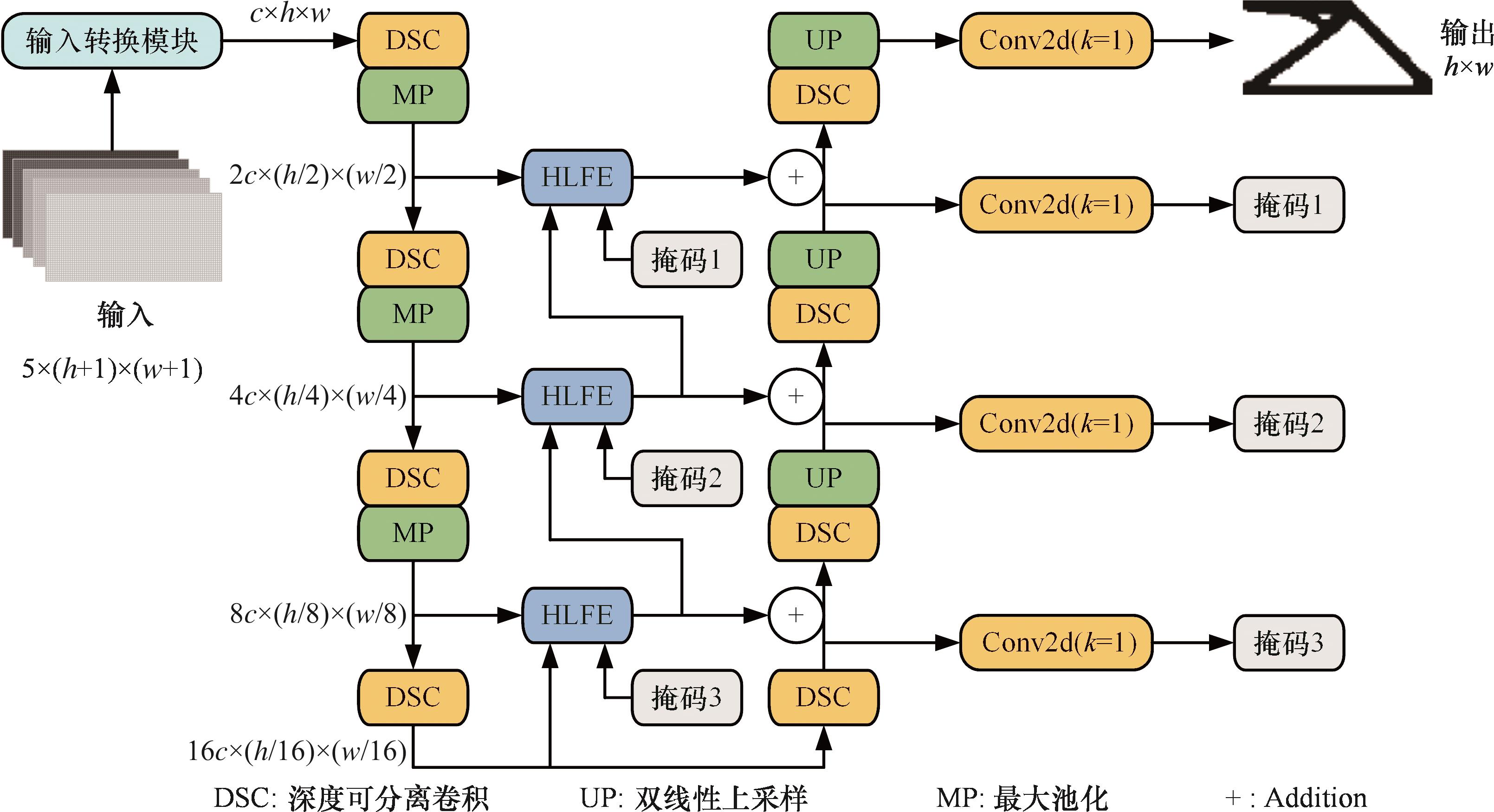
图1 TOPO-U-Net结构
Fig.1 Architecture of TOPO-U-Net
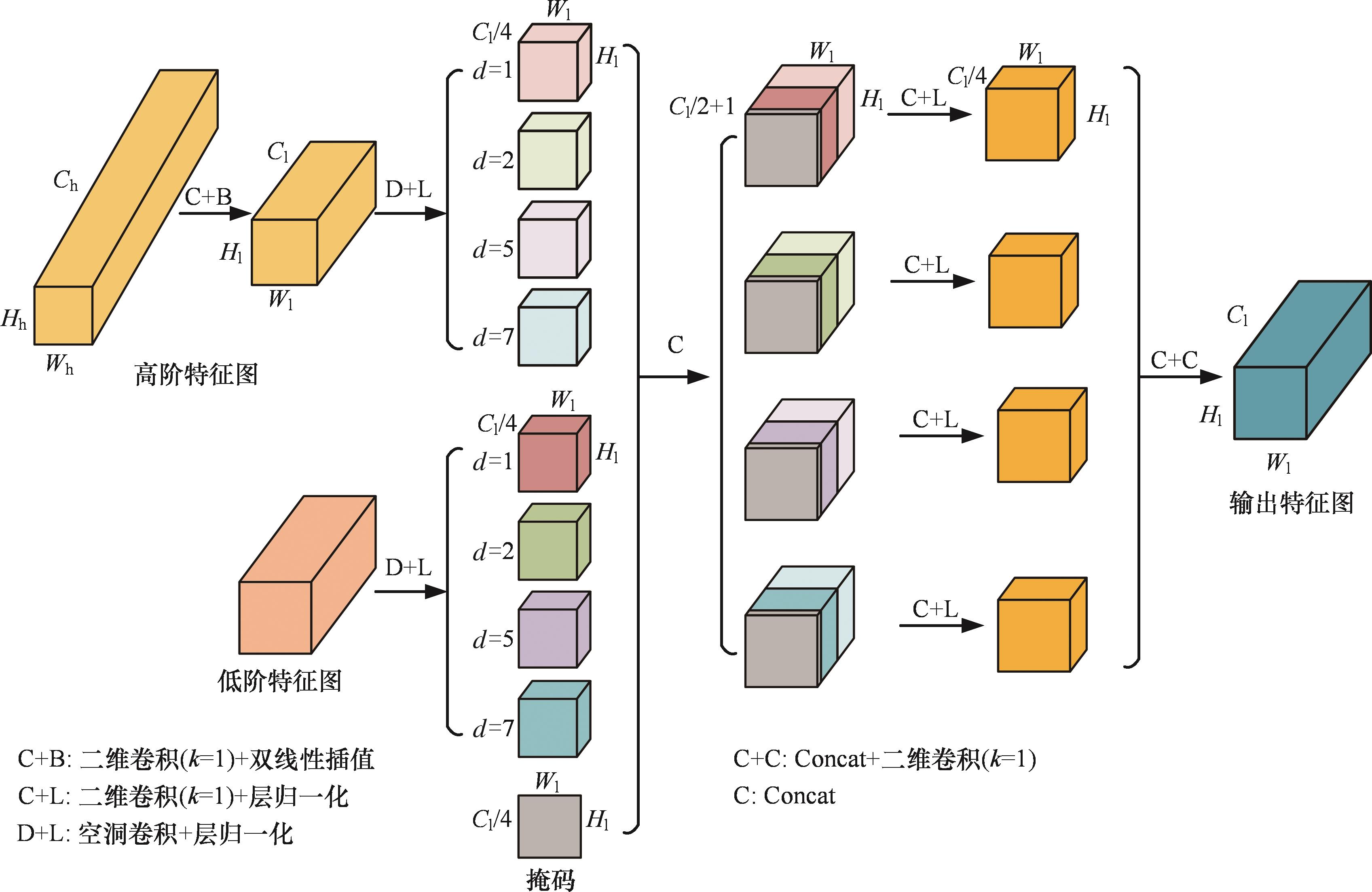
图2 高低阶特征提取模块结构
Fig.2 The architecture of high and low feature extraction module
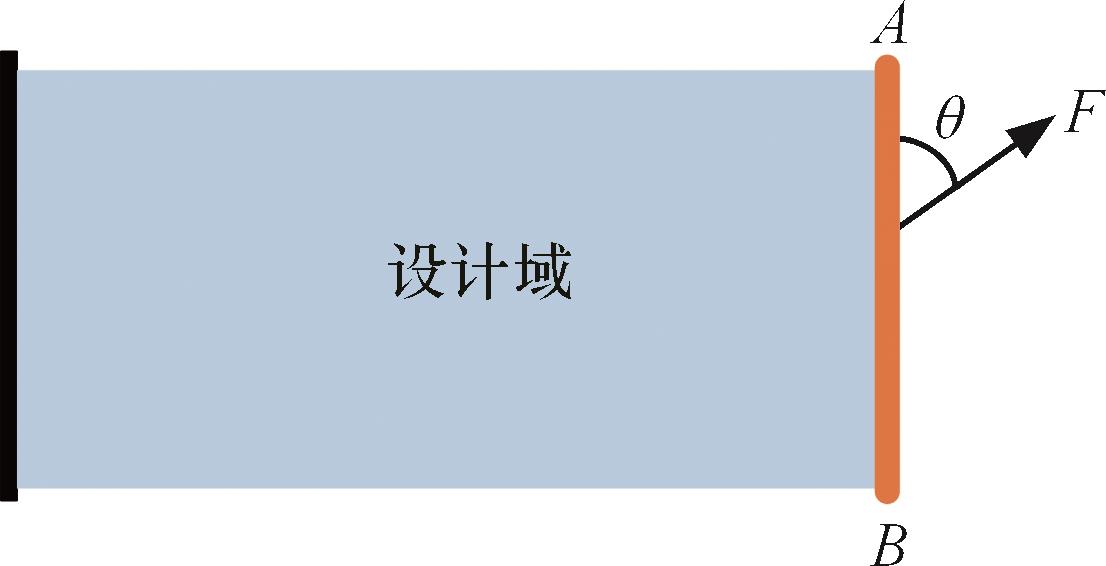
图3 样本的设计域
Fig.3 The design domain of sample
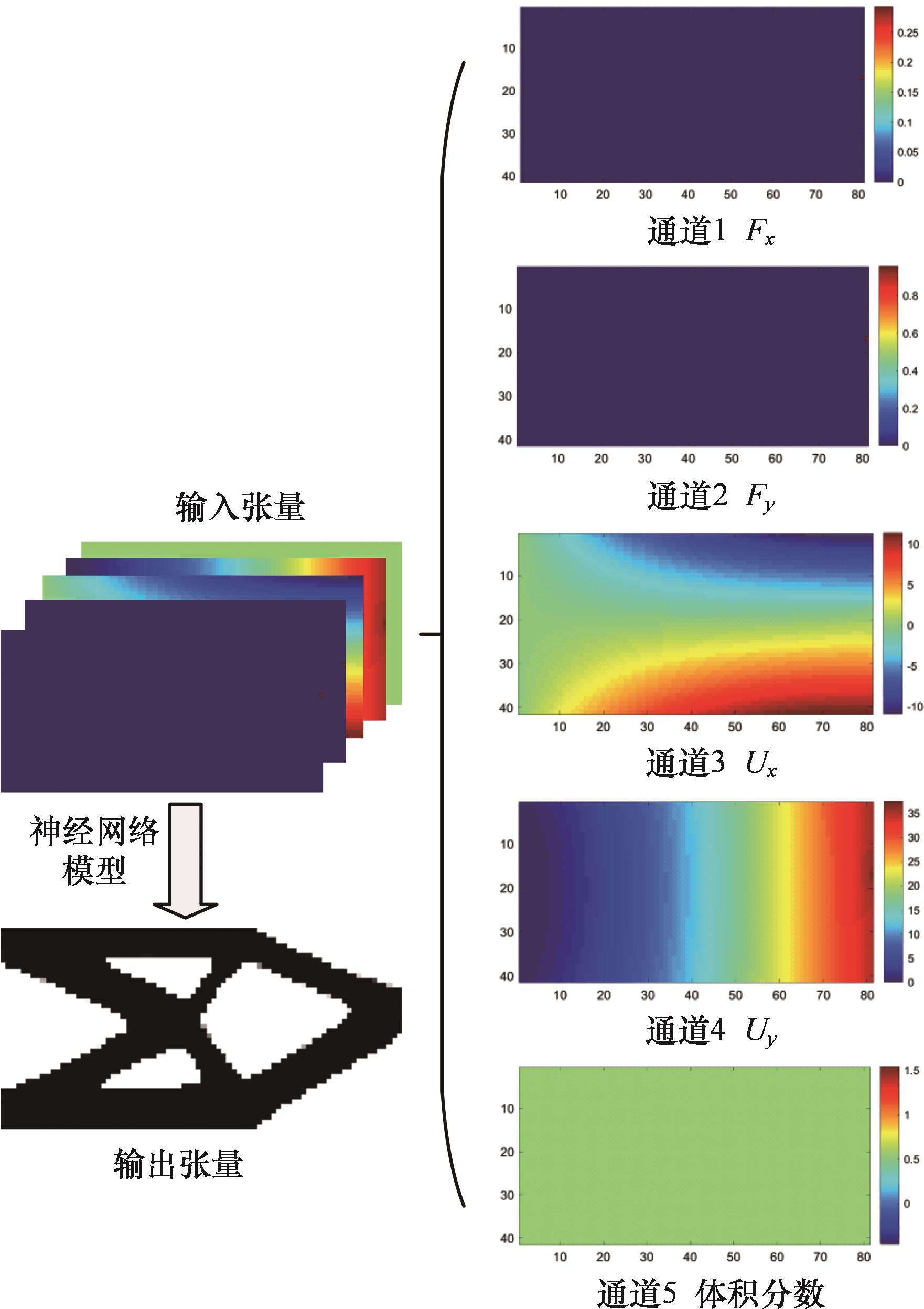
图4 神经网络的输入与输出
Fig.4 The input and output of the neural network
| 训练参数 | 设置 | 说明 |
|---|---|---|
| 优化器 | Adam | 梯度下降算法 |
| 学习率 | 0.001 | 初始学习率 |
| 批大小 | 8 | 每次训练的样本数 |
| 轮次 | 200 | 总训练轮次 |
| CUDNN | enable | GPU加速库 |
表1 模型训练过程的超参数
Tab.1 Hyperparameters of the model training process
| 训练参数 | 设置 | 说明 |
|---|---|---|
| 优化器 | Adam | 梯度下降算法 |
| 学习率 | 0.001 | 初始学习率 |
| 批大小 | 8 | 每次训练的样本数 |
| 轮次 | 200 | 总训练轮次 |
| CUDNN | enable | GPU加速库 |
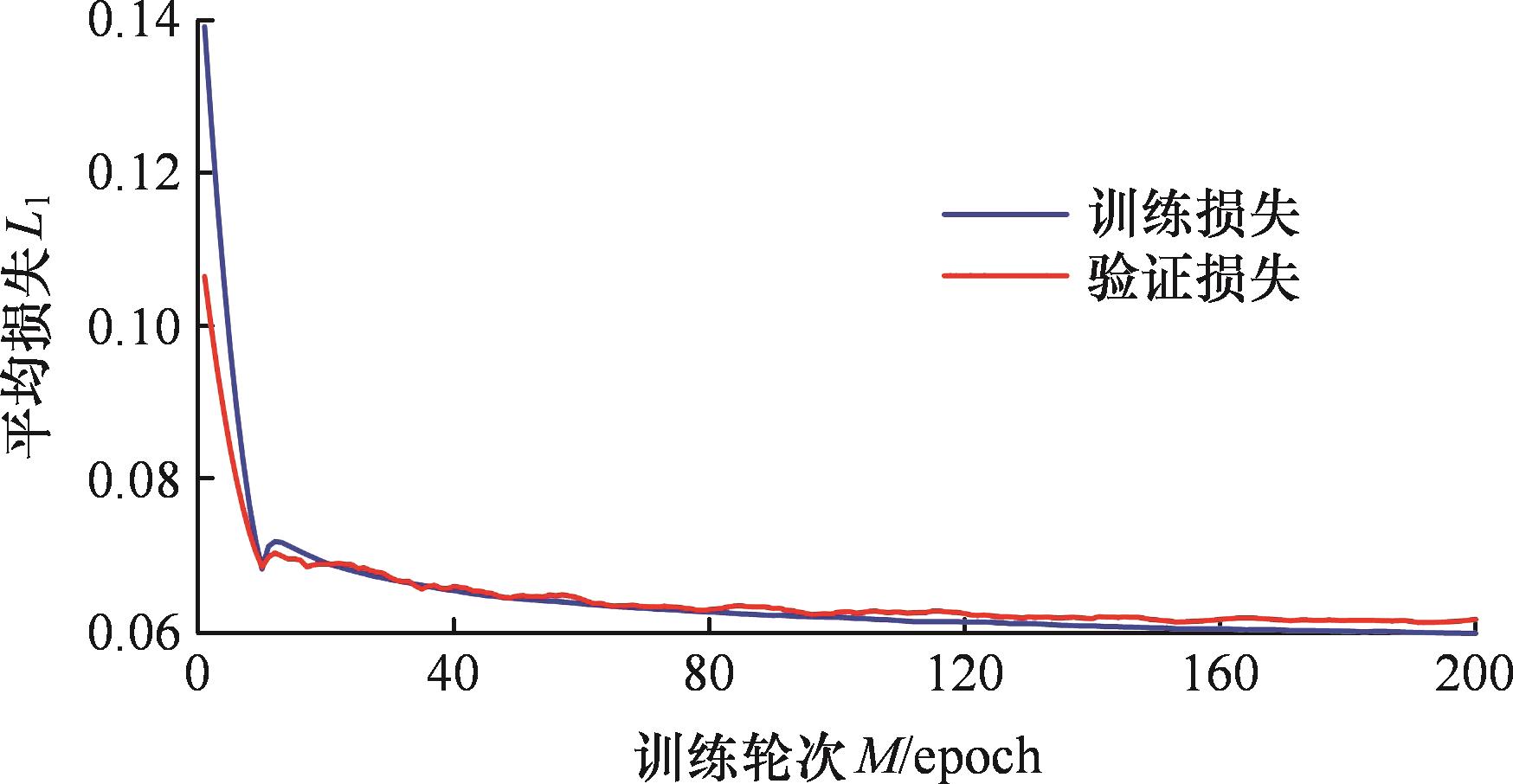
图5 训练与验证损失
Fig.5 Training and validation loss values

图6 模型预测结果的内部细节
Fig.6 Internal details of model prediction results
| IID | RIDD/% | RVFE/% | EMA | |
|---|---|---|---|---|
| 未引入HLFE | 0.6735 | 83.68 | 2.97 | 0.0663 |
| 引入HLFE | 0.7084 | 85.42 | 2.96 | 0.0651 |
表2 HLFE模块消融实验效果对比
Tab.2 Comparison of HLFE module ablation experiment
| IID | RIDD/% | RVFE/% | EMA | |
|---|---|---|---|---|
| 未引入HLFE | 0.6735 | 83.68 | 2.97 | 0.0663 |
| 引入HLFE | 0.7084 | 85.42 | 2.96 | 0.0651 |
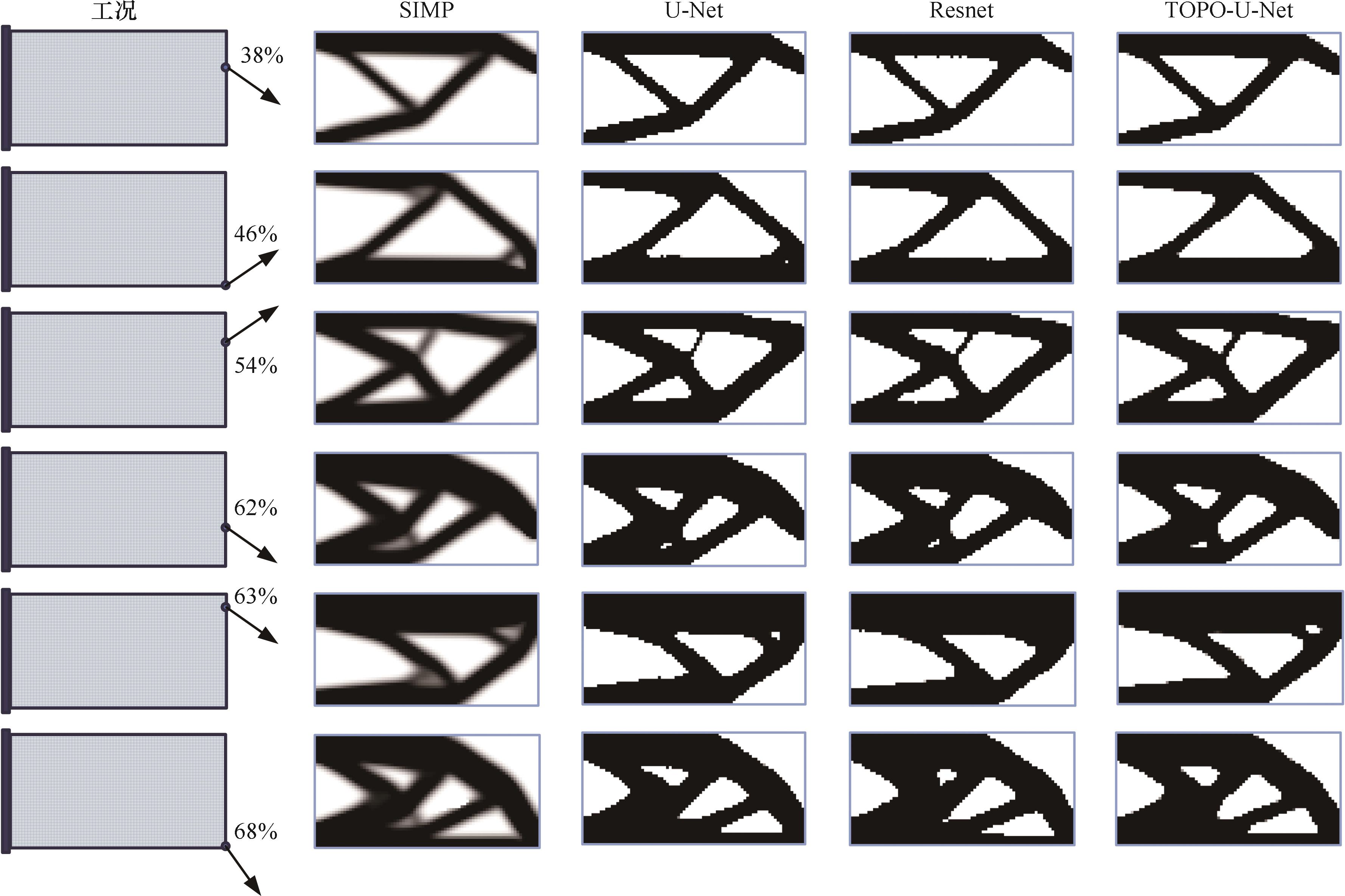
图7 结构拓扑优化效果对比示意图
Fig.7 Comparison of topology optimization results
| 不同模型 | IID | RIDD/% | RVFE/% | EMA |
|---|---|---|---|---|
| U-Net | 0.6798 | 83.99 | 3.76 | 0.0669 |
| Resnet | 0.6467 | 82.34 | 2.94 | 0.0690 |
| TOPO-U-Net | 0.7084 | 85.42 | 2.96 | 0.0651 |
表3 三种神经网络模型的对比
Tab.3 Comparison of three deep learning models
| 不同模型 | IID | RIDD/% | RVFE/% | EMA |
|---|---|---|---|---|
| U-Net | 0.6798 | 83.99 | 3.76 | 0.0669 |
| Resnet | 0.6467 | 82.34 | 2.94 | 0.0690 |
| TOPO-U-Net | 0.7084 | 85.42 | 2.96 | 0.0651 |
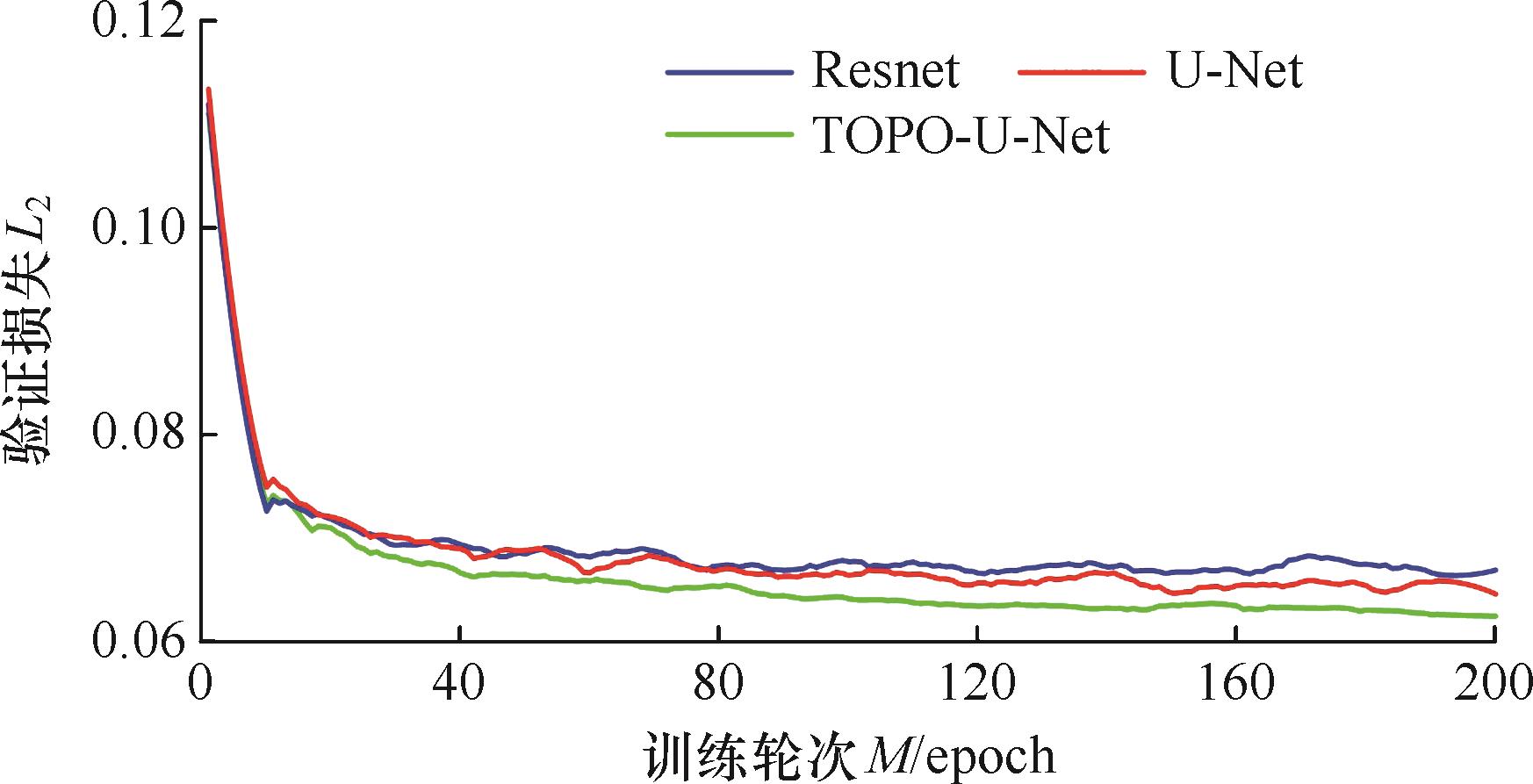
图8 三种神经网络在训练时的验证损失变化
Fig.8 Validation loss variation during training for the 3 neural networks
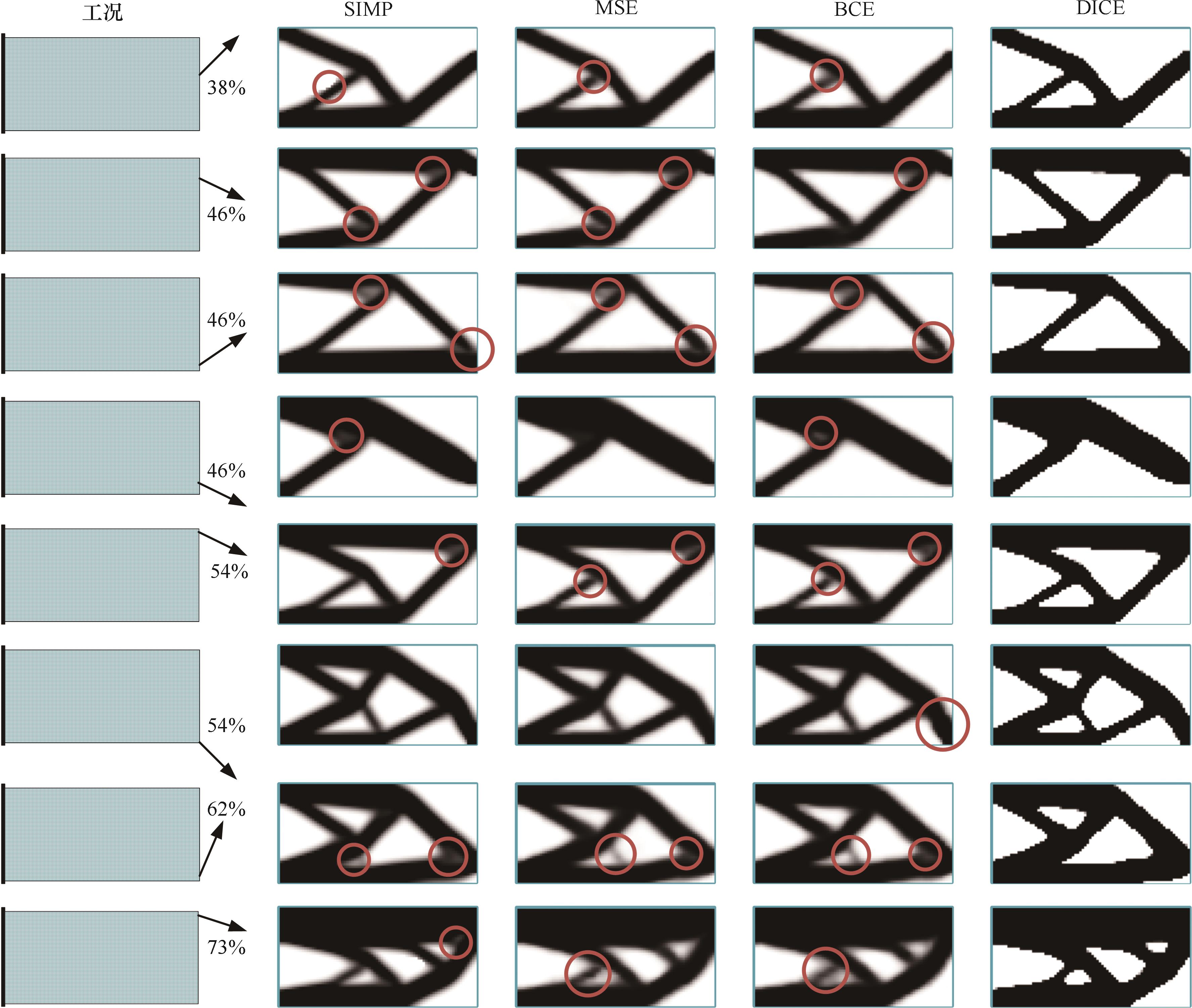
图9 SIMP和三种损失函数的拓扑优化结果对比
Figure. 9 Comparison of topology optimization results of SIMP and three loss functions
| 密度范围 | 方法 | 平均分布 | 密度范围 | 方法 | 平均分布 |
|---|---|---|---|---|---|
| [0, 0.1] | SIMP | 1011.1290 | (0.5, 0.7] | SIMP | 134.3720 |
| MSE | 994.8630 | MSE | 127.5620 | ||
| BCE | 976.6470 | BCE | 129.0490 | ||
| DICE | 1254.0620 | DICE | 2.4320 | ||
| (0.1, 0.3] | SIMP | 155.9580 | (0.7, 0.9] | SIMP | 178.0110 |
| MSE | 175.7750 | MSE | 204.0700 | ||
| BCE | 170.0760 | BCE | 200.2030 | ||
| DICE | 3.8410 | DICE | 3.8170 | ||
| (0.3, 0.5] | SIMP | 122.0810 | (0.9, 1.0] | SIMP | 1598.4490 |
| MSE | 123.3500 | MSE | 1574.3800 | ||
| BCE | 125.0660 | BCE | 1598.9590 | ||
| DICE | 2.4820 | DICE | 1933.3660 |
表4 四种方法在六种密度范围内的平均分布
Tab.4 Average distribution within 6 different density ranges for 4 methods
| 密度范围 | 方法 | 平均分布 | 密度范围 | 方法 | 平均分布 |
|---|---|---|---|---|---|
| [0, 0.1] | SIMP | 1011.1290 | (0.5, 0.7] | SIMP | 134.3720 |
| MSE | 994.8630 | MSE | 127.5620 | ||
| BCE | 976.6470 | BCE | 129.0490 | ||
| DICE | 1254.0620 | DICE | 2.4320 | ||
| (0.1, 0.3] | SIMP | 155.9580 | (0.7, 0.9] | SIMP | 178.0110 |
| MSE | 175.7750 | MSE | 204.0700 | ||
| BCE | 170.0760 | BCE | 200.2030 | ||
| DICE | 3.8410 | DICE | 3.8170 | ||
| (0.3, 0.5] | SIMP | 122.0810 | (0.9, 1.0] | SIMP | 1598.4490 |
| MSE | 123.3500 | MSE | 1574.3800 | ||
| BCE | 125.0660 | BCE | 1598.9590 | ||
| DICE | 2.4820 | DICE | 1933.3660 |
| 密度范围 | 方法 | 平均分布 | 密度范围 | 方法 | 平均分布 |
|---|---|---|---|---|---|
| [0, 0.1] | SIMP | 1011.1290 | (0.5, 0.7] | SIMP | 134.3720 |
| MSE | 81.1290 | MSE | 67.7520 | ||
| BCE | 68.5380 | BCE | 82.0020 | ||
| DICE | 398.9640 | DICE | 110.5270 | ||
| (0.1, 0.3] | SIMP | 155.9580 | (0.7, 0.9] | SIMP | 178.0110 |
| MSE | 87.7060 | MSE | 94.1190 | ||
| BCE | 66.3910 | BCE | 108.0310 | ||
| DICE | 143.3360 | DICE | 171.4260 | ||
| (0.3, 0.5] | SIMP | 122.0810 | (0.9, 1] | SIMP | 1598.4490 |
| MSE | 67.3130 | MSE | 40.9640 | ||
| BCE | 50.3680 | BCE | 45.2150 | ||
| DICE | 77.6050 | DICE | 116.5720 |
表5 4种方法的中间密度偏移的平均分布
Tab.5 Average distribution of IDDR for 4 methods
| 密度范围 | 方法 | 平均分布 | 密度范围 | 方法 | 平均分布 |
|---|---|---|---|---|---|
| [0, 0.1] | SIMP | 1011.1290 | (0.5, 0.7] | SIMP | 134.3720 |
| MSE | 81.1290 | MSE | 67.7520 | ||
| BCE | 68.5380 | BCE | 82.0020 | ||
| DICE | 398.9640 | DICE | 110.5270 | ||
| (0.1, 0.3] | SIMP | 155.9580 | (0.7, 0.9] | SIMP | 178.0110 |
| MSE | 87.7060 | MSE | 94.1190 | ||
| BCE | 66.3910 | BCE | 108.0310 | ||
| DICE | 143.3360 | DICE | 171.4260 | ||
| (0.3, 0.5] | SIMP | 122.0810 | (0.9, 1] | SIMP | 1598.4490 |
| MSE | 67.3130 | MSE | 40.9640 | ||
| BCE | 50.3680 | BCE | 45.2150 | ||
| DICE | 77.6050 | DICE | 116.5720 |
| 工况 | 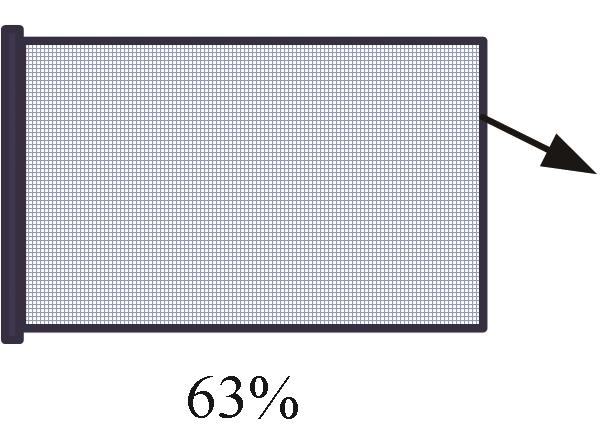 | 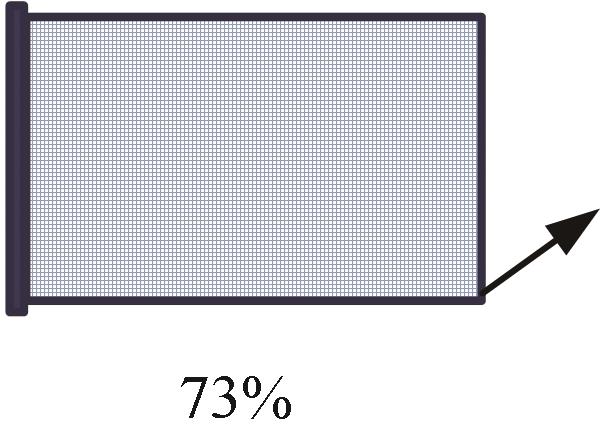 | 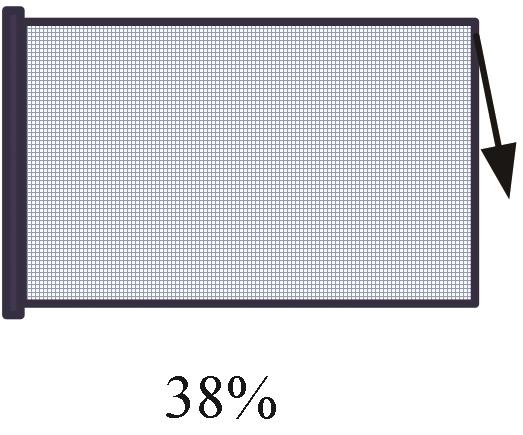 | 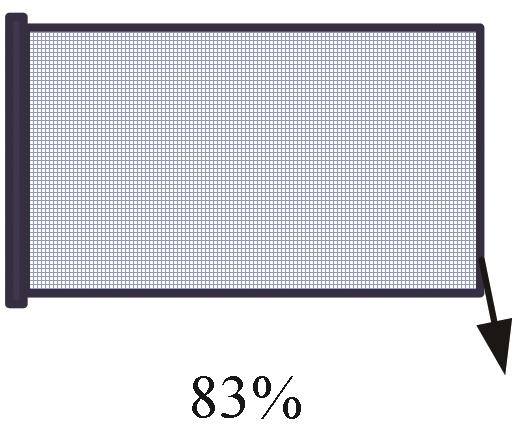 | 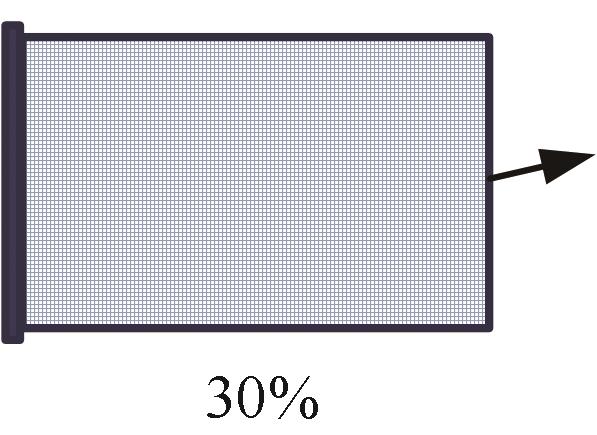 |
|---|---|---|---|---|---|
| SIMP | 2.04 | 2.03 | 1.02 | 0.82 | 0.18 |
| 本文方法 | 0.01 | 0.01 | 0.0099 | 0.0099 | 0.01 |
| 工况 | 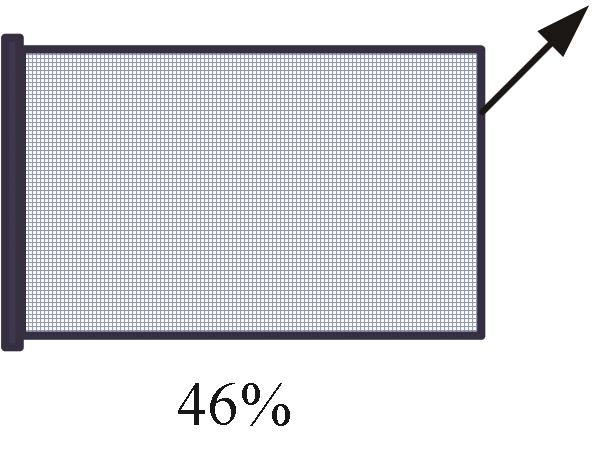 | 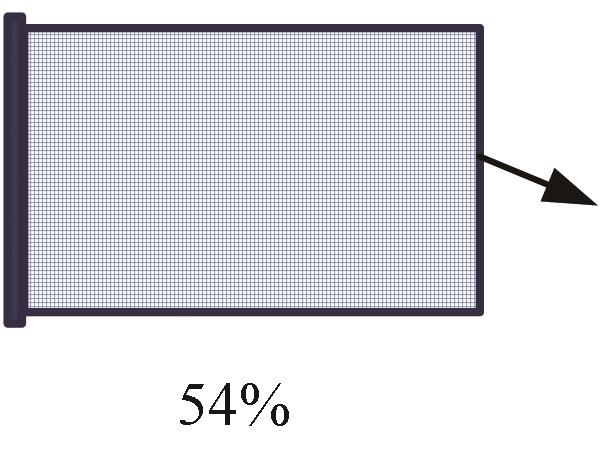 | 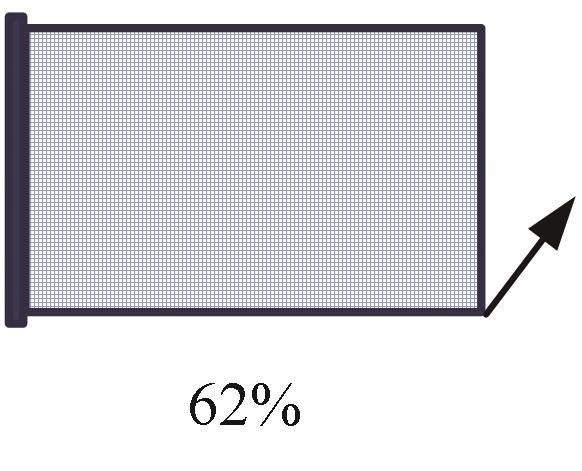 | 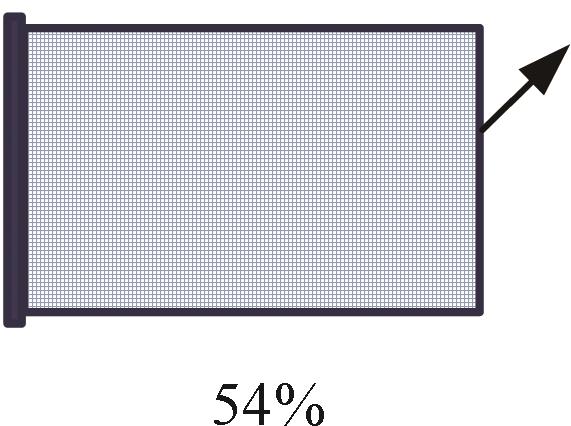 | 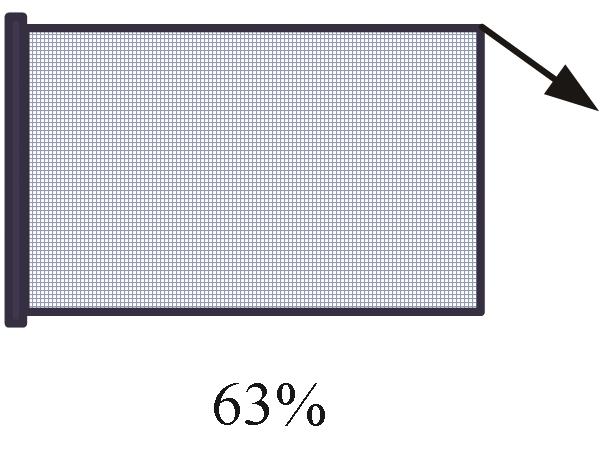 |
| SIMP | 1.46 | 0.6 | 1.15 | 0.94 | 1.21 |
| 本文方法 | 0.009 | 0.0099 | 0.01 | 0.01 | 0.01 |
表6 拓扑优化计算时间 (s)
Tab.6 Computational time of topology optimizations
| 工况 | | | | | |
|---|---|---|---|---|---|
| SIMP | 2.04 | 2.03 | 1.02 | 0.82 | 0.18 |
| 本文方法 | 0.01 | 0.01 | 0.0099 | 0.0099 | 0.01 |
| 工况 | | | | | |
| SIMP | 1.46 | 0.6 | 1.15 | 0.94 | 1.21 |
| 本文方法 | 0.009 | 0.0099 | 0.01 | 0.01 | 0.01 |
| 柔度误差率 | 样本分布数 | 柔度误差率 | 样本分布数 |
|---|---|---|---|
| ( | 0 | [0,0.1) | 47 |
| [ | 19 | [0.1,0.2) | 4 |
| [ | 34 | [0.2,0.6) | 2 |
| [ | 122 | [0.6,1) | 1 |
| [ | 766 | ≥1 | 5 |
表7 测试集样本在不同柔度误差率的分布
Tab.7 Distribution of test-dataset samples in different compliance error rates
| 柔度误差率 | 样本分布数 | 柔度误差率 | 样本分布数 |
|---|---|---|---|
| ( | 0 | [0,0.1) | 47 |
| [ | 19 | [0.1,0.2) | 4 |
| [ | 34 | [0.2,0.6) | 2 |
| [ | 122 | [0.6,1) | 1 |
| [ | 766 | ≥1 | 5 |
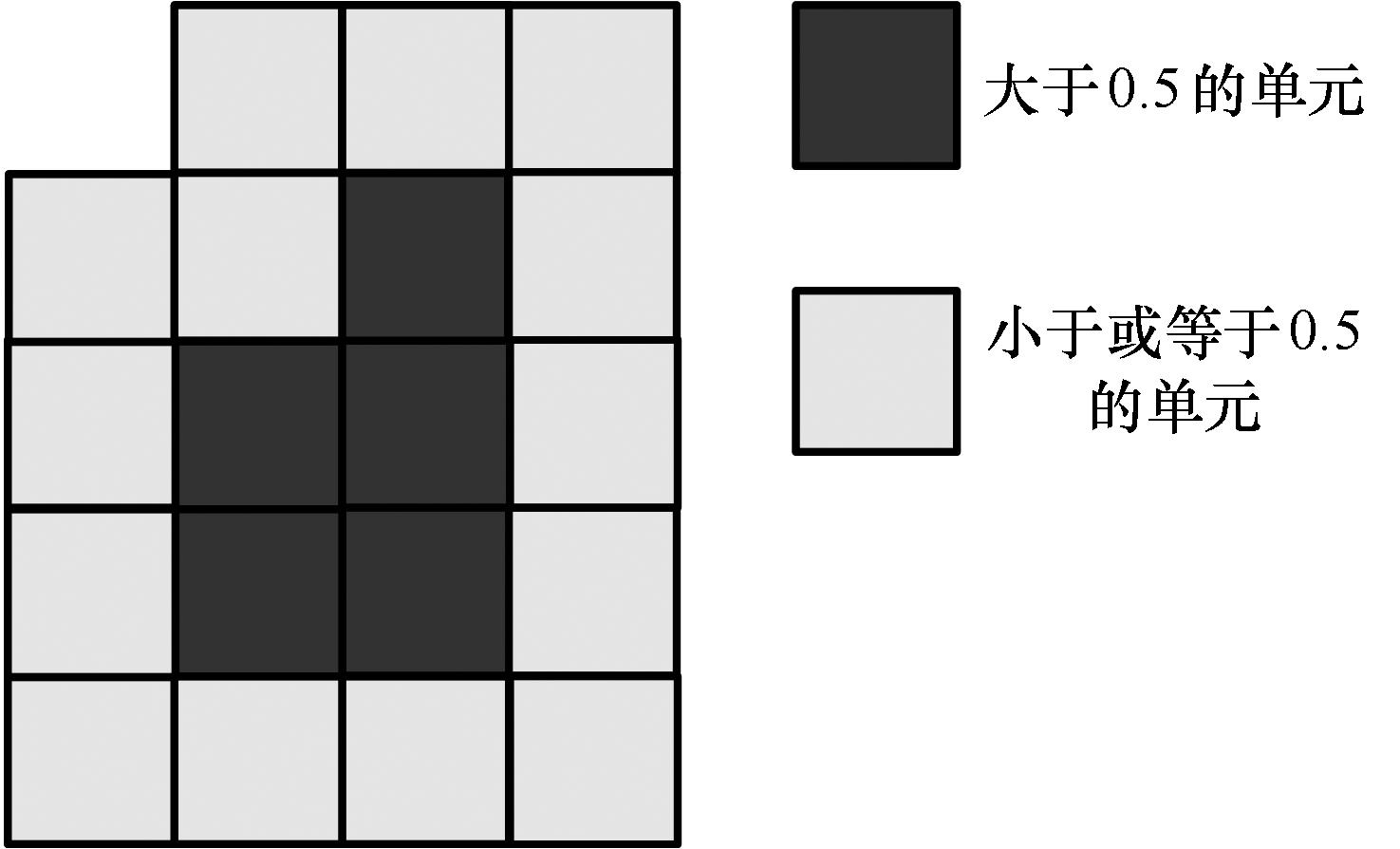
图10 孤立区域示例
Fig.10 The example of isolated region
| 孤立区域数 | ||||
|---|---|---|---|---|
| 1 | 2 | 3 | 大于3 | |
| SIMP | 998 | 2 | 0 | 0 |
| TOPO-U-Net模型 | 981 | 17 | 2 | 0 |
表8 两种方法结果中的孤立区域数目对比
Tab.8 Comparison of the number of isolated regions
| 孤立区域数 | ||||
|---|---|---|---|---|
| 1 | 2 | 3 | 大于3 | |
| SIMP | 998 | 2 | 0 | 0 |
| TOPO-U-Net模型 | 981 | 17 | 2 | 0 |
| [1] | BENDSØE M P, KIKUCHI N. Generating Optimal Topologies in Structural Design Using a Homogenization Method[J]. Computer Methods in Applied Mechanics and Engineering, 1988, 71(2): 197-224. |
| [2] | ZHOU M, ROZVANY G I N. The COC Algorithm, Part II: Topological, Geometrical and Generalized Shape Optimization[J]. Computer Methods in Applied Mechanics and Engineering, 1991, 89(1/3): 309-336. |
| [3] | XIE Y M, STEVEN G P. A Simple Evolutionary Procedure for Structural Optimization[J]. Computers & Structures, 1993, 49(5): 885-896. |
| [4] | WANG M Y, WANG Xiaoming, GUO Dongming. A Level Set Method for Structural Topology Optimization[J]. Computer Methods in Applied Mechanics and Engineering, 2003, 192(1/2): 227-246. |
| [5] | GUO Xu, ZHANG Weisheng, ZHONG Wenliang. Doing Topology Optimization Explicitly and Geometrically—a New Moving Morphable Components Based Framework[J]. Journal of Applied Mechanics, 2014, 81(8): 081009. |
| [6] | SOSNOVIK I, OSELEDETS I. Neural Networks for Topology Optimization[J]. Russian Journal of Numerical Analysis and Mathematical Modelling, 2019, 34(4): 215-223. |
| [7] | QIU Cheng, DU Shanyi, YANG Jinglei. A Deep Learning Approach for Efficient Topology Optimization Based on the Element Removal Strategy[J]. Materials & Design, 2021, 212: 110179. |
| [8] | SENHORA F V, CHI Heng, ZHANG Yuyu, et al. Machine Learning for Topology Optimization: Physics-based Learning through an Independent Training Strategy[J]. Computer Methods in Applied Mechanics and Engineering, 2022, 398: 115116. |
| [9] | YAN Jun, ZHANG Qi, XU Qi, et al. Deep Learning Driven Real Time Topology Optimisation Based on Initial Stress Learning[J]. Advanced Engineering Informatics, 2022, 51: 101472. |
| [10] | ABUEIDDA D W, KORIC S, SOBH N A. Topology Optimization of 2D Structures with Nonlinearities Using Deep Learning[J]. Computers & Structures, 2020, 237: 106283. |
| [11] | SEO J, KAPANIA R K. Topology Optimization with Advanced CNN Using Mapped Physics-based Data[J]. Structural and Multidisciplinary Optimization, 2023, 66(1): 21. |
| [12] | WANG Dalei, XIANG Cheng, PAN Yue, et al. A Deep Convolutional Neural Network for Topology Optimization with Perceptible Generalization Ability[J]. Engineering Optimization, 2022, 54(6): 973-988. |
| [13] | XIANG Cheng, WANG Dalei, PAN Yue, et al. Accelerated Topology Optimization Design of 3D Structures Based on Deep Learning[J]. Structural and Multidisciplinary Optimization, 2022, 65(3): 99. |
| [14] | 李振荣, 夏利娟, 冯朔. 基于UNet深度学习的VLCC横框架拓扑优化分析[J]. 中国舰船研究, 2024, 19(6): 108-116. |
| LI Zhenrong, XIA Lijuan, FENG Shuo. Topology Optimization Analysis of VLCC Transverse Web Based on UNet Deep Learning[J]. Chinese Journal of Ship Research, 2024, 19(6): 108-116. | |
| [15] | 项程, 陈艾荣. 基于深度学习的多材料结构拓扑优化方法[J]. 同济大学学报(自然科学版), 2022, 50(7): 975-982. |
| XIANG Cheng, CHEN Airong. Topology Optimization of Multimaterial Structures Based on Deep Learning[J]. Journal of Tongji University (Natural Science), 2022, 50(7): 975-982. | |
| [16] | RONNEBERGER O, FISCHER P, BROX T. U-Net: Convolutional Networks for Biomedical Image Segmentation[M]∥Medical Image Computing and Computer-assisted Intervention—MICCAI 2015. Cham: Springer International Publishing, 2015: 234-241. |
| [17] | WU Y, HE K. Group Normalization [C]∥Proceedings of the European Conference on Computer Vision(ECCV), Lecture Notes in Computer Science. Munich, 2018: 3-19. |
| [18] | LEI B J, KIROS J R, HINTON G E. Layer normalization[EB/OL]. ArXiv e-prints, 2016: arXiv:. |
| [19] | YAN Jun, GENG Dongling, XU Qi, et al. Real-time Topology Optimization Based on Convolutional Neural Network by Using Retrain Skill[J]. Engineering with Computers, 2023, 39(6): 4045-4059. |
| [20] | ANDREASSEN E, CLAUSEN A, SCHEVENELS M, et al. Efficient Topology Optimization in MATLAB Using 88 Lines of Code[J]. Structural and Multidisciplinary Optimization, 2011, 43(1): 1-16. |
| [1] | 张龙, 梁棋钰, 魏骁, 万闯. 基于本构嵌入深度学习模型的板材多点柔性成形回弹预测[J]. 中国机械工程, 2026, 37(6): 1486-1496. |
| [2] | 战庆亮, 曹子涵, 王智勇, 白春锦, 刘鑫. 涡街流量计探头位置优化的流场时程深度学习方法[J]. 中国机械工程, 2026, 37(5): 1105-1110. |
| [3] | 邓晓强, 战韬阳, 项薇, 林文文, 余军合, 郑志鹏. 基于TCN-BiGRU-SE两阶段特征提取与多特征融合的注塑质量预测方法[J]. 中国机械工程, 2026, 37(2): 416-427. |
| [4] | 何昆, 周和超, 张济民. 列车防爬吸能器负泊松比超材料填充结构设计[J]. 中国机械工程, 2025, 36(12): 3040-3046. |
| [5] | 闫祖龙, 庞启龙, 熊建龙. 基于深度学习的KDP晶体三维已加工表面形貌预测[J]. 中国机械工程, 2025, 36(10): 2329-2334. |
| [6] | 黄昊1, 王曾2, 李波2, 卢泽华1, 刘怀举1. 基于折衷规划法的航发齿轮传动壳体结构热柔度协同拓扑优化[J]. 中国机械工程, 2025, 36(07): 1471-1478. |
| [7] | 赵昀杰, 贺岩松, 张志飞, 徐中明. 基于生成模型的三维波束形成图像压缩方法[J]. 中国机械工程, 2025, 36(07): 1520-1529. |
| [8] | 苏珂1, 王颖1, 梁腾腾1, 魏义礼2, 张楠楠2. 基于知情构造理论的单材料柔性机构拓扑优化[J]. 中国机械工程, 2025, 36(04): 873-881. |
| [9] | 林家辉, 李壮壮, 李学霖, 李军. 一种路径吞噬拓扑优化新方法[J]. 中国机械工程, 2025, 36(03): 504-514. |
| [10] | 王书亭1, 谢晴天1, 杨奥迪1, 李小兵2, 熊体凡1, 谢贤达2. 等几何拓扑优化非齐次边界条件施加技术研究[J]. 中国机械工程, 2025, 36(03): 525-535. |
| [11] | 刘敏1, 2, 卢飞扬1, 占金青1, 2, 吴剑1, 朱本亮3. 考虑最小尺寸约束的内嵌可移动压电驱动柔顺机构拓扑优化设计[J]. 中国机械工程, 2025, 36(02): 255-264. |
| [12] | 曾浩, 曹华军, 董俭雄. 基于ISABO-IBiLSTM模型的刀具磨损预测方法[J]. 中国机械工程, 2024, 35(11): 1995-2006. |
| [13] | 李悦1, 2, 谢恒1, 周公博1, 2, 周坪1, 2, 李猛钢1, 2. 基于半监督贝叶斯Transformer的刀具磨损软测量及不确定性分析方法[J]. 中国机械工程, 2024, 35(11): 2015-2025. |
| [14] | 王浩1, 2, 王江北3, 罗浩东3, 王立文4. 基于改进四叉树和比例边界有限元法的自适应设计域拓扑优化方法[J]. 中国机械工程, 2024, 35(05): 904-915,927. |
| [15] | 杨峰, 罗世杰, 杨江鸿, 王英俊, . 基于GPU加速的等几何拓扑优化高效多重网格求解方法[J]. 中国机械工程, 2024, 35(04): 602-613. |
| 阅读次数 | ||||||
|
全文 |
|
|||||
|
摘要 |
|
|||||
